We unleash your business potential by maximize the business innovation.
Send EmailEthyl Alcohol, Ethanol, Methylcarbinol, Ethyl Hydroxide, Methylcarbinol, Denatured Ethanol, Ethyl Hydrate, Grain Alcohol, Vegetable Alcohol, Fermentation Alcohol, EtOH, 64-17-5
ETHYL ALCOHOL (ETHANOL)
1. PRODUCT DEFINITION AND CHEMICAL IDENTITY
| Parameter | Description |
|---|---|
| Chemical Name (IUPAC) | Ethanol |
| Common Name | Ethyl Alcohol |
| Other Names | EtOH, Ethyl Hydroxide, Ethyl Hydrate, Methylcarbinol, 1-Hydroxyethane, Grain Alcohol, Absolute Ethanol, Denatured Ethanol |
| CAS Number | 64-17-5 |
| Molecular Formula | C₂H₅OH (CH₃CH₂OH) |
| Molecular Weight | 46.07 g/mol |
| Appearance | Clear, colourless liquid |
| Odour | Characteristic, pleasant, pungent (sharp in high concentrations) |
| Chemical Structure | An aliphatic alcohol where a hydroxyl (-OH) group replaces one hydrogen of ethane |
Note: Ethanol is the only type of alcohol that is safe for human consumption (in its pure, non-denatured, food-grade form). It is a versatile solvent, disinfectant, and chemical intermediate produced primarily by the fermentation of sugars or by the industrial hydration of ethylene. Due to its bactericidal properties, it is the most important chemical in the manufacture of disinfectants. It is highly flammable and volatile.
2. PHYSICAL AND CHEMICAL PROPERTIES
| Property | Value / Description |
|---|---|
| Physical form | Clear, colourless liquid |
| Density (20 °C) | 0.789 g/cm³ |
| Boiling point | 78.37 °C |
| Melting point | −114.1 °C |
| Flash point (pure) | 14 °C (highly flammable) |
| Vapour pressure (20 °C) | 5.95 kPa |
| Vapour density (air=1) | 1.6 (vapours are heavier than air and sink to the ground) |
| Solubility in water | Completely miscible in all proportions |
| Solubility in organic solvents | Completely miscible with ether, acetone, and many other organic solvents |
| Viscosity (20 °C) | 1.2 mPa·s |
| Refractive index (n²⁰/D) | 1.361 |
| Autoignition temperature | 363 °C |
3. FUNCTIONAL PROPERTIES AND MODE OF ACTION
-
Excellent Solvent: Ethanol is a highly effective solvent for a vast range of organic compounds, resins, essential oils, dyes, and pharmaceutical actives. This property makes it indispensable in cosmetics, pharmaceuticals, paints, and industrial cleaning.
-
Broad-Spectrum Disinfectant and Antiseptic: Ethanol kills bacteria, viruses, and fungi by denaturing their proteins and dissolving their lipid membranes. A 70% (v/v) aqueous solution is the most effective concentration, as the presence of water facilitates penetration into the microbial cell. Solutions above 90% are less effective because they coagulate surface proteins too rapidly, forming a protective barrier.
-
Central Nervous System (CNS) Depressant: Upon ingestion, ethanol acts as an agonist on GABA receptors and an antagonist on NMDA receptors in the brain, leading to its well-known intoxicating, sedative, and depressant effects. It is rapidly absorbed from the gastrointestinal tract and distributed throughout the body.
-
Chemical Intermediate and Fuel:
-
It undergoes esterification with acids to form esters, used in fragrances and flavours.
-
It is a key precursor for the synthesis of acetaldehyde, acetic acid, and ethyl acetate.
-
Bioethanol is used as a renewable, environmentally friendly fuel additive to improve octane and reduce emissions.
-
It serves as a raw material in the production of adhesives, sealants, and various industrial chemicals.
-
4. PRODUCTION METHODS
-
Fermentation (Biological Route): Sugars from grains (corn, wheat), fruits (grapes), or other biomass (sugar cane, sugar beet) are fermented by yeasts, producing ethanol and CO₂. This method is used for all beverage alcohol and a significant portion of bioethanol.
-
Industrial Hydration of Ethylene (Petrochemical Route): Ethylene gas is reacted with water under high pressure and temperature in the presence of an acid catalyst. This is the most common method for producing large volumes of industrial-grade ethanol.
5. KEY GRADES AND THEIR USABILITY
It is critical to distinguish between different grades of ethanol, as only one is suitable for human consumption:
| Grade / Type | Suitable for Beverages? | Description |
|---|---|---|
| Food Grade Ethanol (Grain/Vegetable Alcohol) | ✅ Suitable | Produced by fermentation from grains, fruits, or sugar crops. Highly purified and safe for consumption. |
| Absolute Ethanol (≥ 99%) | ⚠️ Limited Use (must be diluted) | Very pure form containing <1% water. Used in beverage production only after being diluted with water. |
| Pharmaceutical Ethanol | ⚠️ Limited Use | Intended for medicinal purposes (e.g., as a solvent). Some grades are pure enough for consumption, but its primary use is not beverages. |
| Denatured Ethanol | ❌ Not Suitable - TOXIC | Ethanol rendered undrinkable by adding bitterants (e.g., Bitrex) and toxic denaturants (e.g., methanol). Used for industrial, cleaning, and fuel purposes. |
| Industrial Grade Ethanol | ❌ Not Suitable - TOXIC | Used for cleaning, fuel, and chemical synthesis. Contains impurities and is dangerous to consume. |
| Methanol (Methyl Alcohol) | ❌ ABSOLUTELY FORBIDDEN | Highly toxic. Even small amounts can cause blindness, organ failure, and death. It is the primary cause of fatal "counterfeit alcohol" poisoning. |
6. SECTORAL APPLICATIONS AND USAGE RATES
| Sector | Application | Typical Usage / Concentration |
|---|---|---|
| Alcoholic Beverages | Beer, wine, spirits (vodka, whisky, raki), liqueurs | Beer: 4–6%; Wine: 12–14%; Spirits: 40–50% |
| Healthcare & Medical | Antiseptic, disinfectant, pre-injection skin cleaning, solvent for pharmaceuticals | 70% solution for disinfection; ≥ 96% or ≥ 99% purity for medical applications |
| Cosmetics & Personal Care | Solvent and carrier in perfumes, lotions, tonics, hair sprays, antibacterial gels | 5 – 50% (in formulation) |
| Food Industry (Non-Beverage) | Solvent for flavours, colourings, and as a viscosity modifier in products like vinegar and mustard | Production-specific |
| Industrial & Cleaning | Solvent for paints, varnishes, inks; surface disinfectant; component in automotive maintenance and de-icer products | Varies widely |
| Automotive & Fuel | Bioethanol fuel additive (E10, E85); motor performance enhancer | 10 – 85% blend with gasoline |
| Laboratory | Solvent, sample preservative, sterilization agent | ≥ 95% |
| Beekeeping | Solvent for propolis solution | ≥ 70% |
7. COMPARISON WITH OTHER COMMON ALCOHOLS
| Property | Ethyl Alcohol (Ethanol) | Methyl Alcohol (Methanol) | Isopropyl Alcohol (Isopropanol) |
|---|---|---|---|
| Formula | C₂H₅OH | CH₃OH | C₃H₈O |
| Molecular Weight | 46.07 g/mol | 32.04 g/mol | 60.10 g/mol |
| Boiling Point | 78.37 °C | 64.7 °C | 82.6 °C |
| Toxicity | Low (safe to drink in food-grade form) | Very High (causes blindness, organ failure, death) | Medium (safe for skin, fatal if ingested) |
| Main Use | Beverages, disinfectant, cosmetics | Industrial solvent, antifreeze, feedstock | Disinfectant, electronics cleaning, rubbing alcohol |
| Flammability | High | High | High |
| Production | Fermentation, ethylene hydration | Synthesis from CO + H₂ | Hydration of propylene |
8. ETHANOL TOXICITY AND POISONING
Ethanol is a central nervous system (CNS) depressant. Overconsumption can lead to acute alcohol poisoning, which is a medical emergency.
-
Mechanism of Toxicity: The liver metabolizes alcohol at a constant, limited rate (~1 standard drink per hour). Consuming alcohol faster than it can be metabolized leads to a rapid buildup in the bloodstream, suppressing vital brain functions that control breathing, heart rate, and body temperature.
-
Symptoms of Acute Ethanol Poisoning:
-
Confusion, stupor, inability to be roused
-
Vomiting (the body's attempt to expel the toxin)
-
Slurred speech, loss of coordination
-
Slow or irregular breathing (suppression of the respiratory center)
-
Hypothermia (drop in body temperature), pale or bluish skin
-
Suppressed heart rate, potential coma
-
-
First Aid and Warning: If alcohol poisoning is suspected, immediate medical help must be sought. Home remedies (coffee, lemon, soda) are ineffective. The greatest risk to life is choking on vomit while unconscious and respiratory arrest. Methanol poisoning from counterfeit alcohol is far more dangerous, causing blindness and death even in very small amounts.
9. SAFETY, STORAGE, AND REGULATORY INFORMATION
-
GHS Classification (CLP Regulation):
-
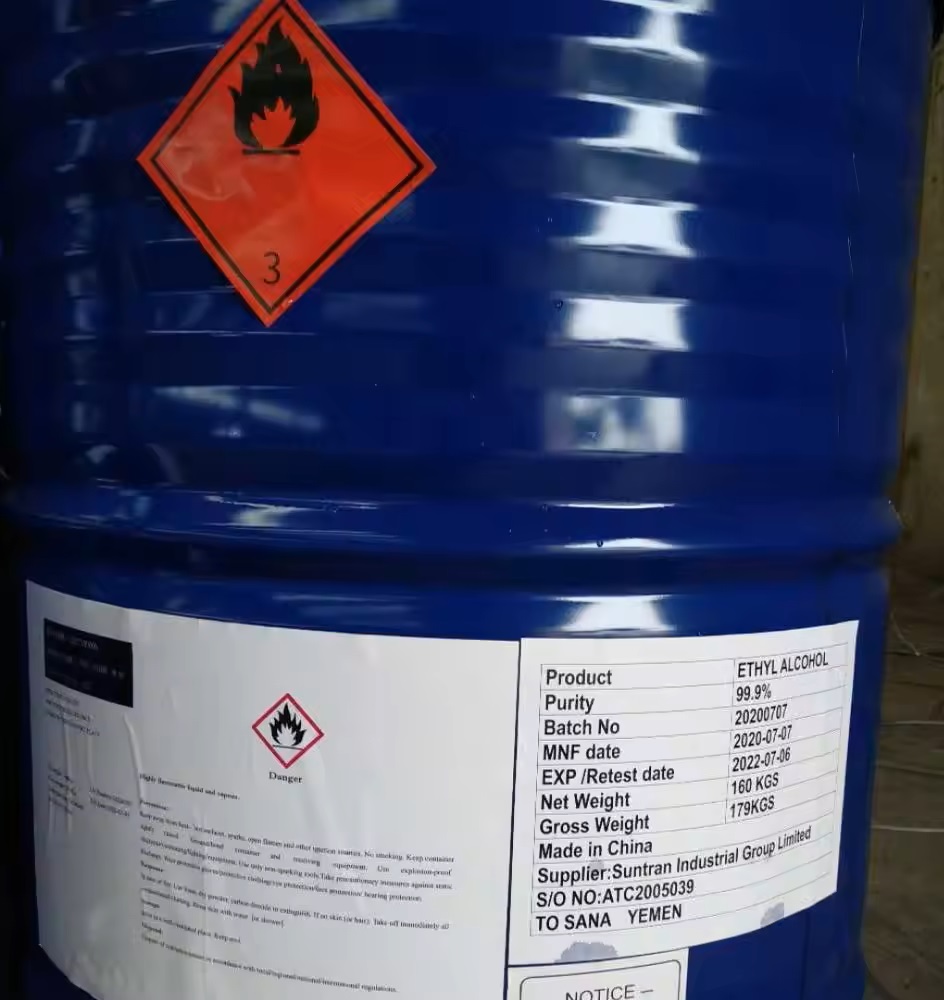
Signal Word: Danger
-
Hazard Statements: H225 (Highly flammable liquid and vapour), H319 (Causes serious eye irritation).
-
Precautionary Statements: P210, P233, P240, P241, P242, P243, P280, P303+P361+P353, P305+P351+P338, P337+P313, P403+P235, P501.
-
-
Storage:
-
Store in a cool (<25 °C), dry, and exceptionally well-ventilated area, away from direct sunlight.
-
Keep away from all sources of heat, sparks, open flames, and static discharge.
-
Containers must be firmly sealed and properly grounded during transfer to prevent static electricity buildup.
-
Store separately from strong oxidizing agents (peroxides, nitric acid, chromic acid).
-
-
Personal Protective Equipment (PPE): Chemical-resistant gloves (nitrile, neoprene), safety goggles, and a lab coat. In case of inadequate ventilation, use a respirator with an organic vapour cartridge.
-
Fire Fighting: Use CO₂, dry chemical powder, or alcohol-resistant foam. A water spray may be ineffective for extinguishing a fire but can be used to cool fire-exposed containers.
10. QUICK REFERENCE TABLE
| Property | Value |
|---|---|
| CAS | 64-17-5 |
| Formula | C₂H₅OH |
| Molecular Weight | 46.07 g/mol |
| Appearance | Clear, colourless liquid |
| Boiling Point | 78.37 °C |
| Flash Point | 14 °C |
| Density | 0.789 g/cm³ |
| Optimal Disinfection | 70% (v/v) aqueous solution |
| Main Uses | Beverages, disinfectant, solvent, fuel |