We unleash your business potential by maximize the business innovation.
Send EmailTriacetin, Glycerol Triacetate, Fungacetin, Triacetoxy Propane, Glyceryl Triacetate, Triacetyl Glycerol, E1518, 102-76-1
TRIACETIN (GLYCERYL TRIACETATE)
Food Code: E1518 | CAS: 102-76-1
1. PRODUCT IDENTIFICATION
| Property | Information |
|---|---|
| Chemical Name | Glycerol triacetate |
| Common Synonyms | Triacetin, Glyceryl triacetate, Triacetylglycerol, 1,2,3-Triacetoxypropane |
| CAS Number | 102-76-1 |
| E Number (Food) | E1518 |
| Chemical Formula | C₉H₁₄O₆ |
| Molecular Weight | 218.20 g/mol |
| REACH Status | Registered |
| Origin | Synthetic (derived from vegetable or animal glycerin) |
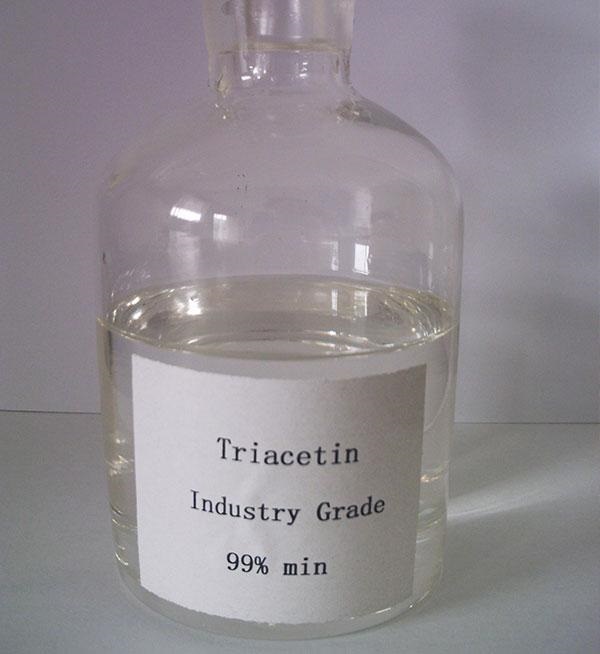
Short Description: Triacetin is a colorless, odorless, low-viscosity liquid with excellent plasticizer, solvent, and humectant properties. It is widely used in food, pharmaceutical, cosmetic, and tobacco industries.
2. PHYSICAL AND CHEMICAL PROPERTIES
| Parameter | Value / Range | Unit | Notes |
|---|---|---|---|
| Appearance | Colorless to pale yellow liquid | - | At 20°C |
| Odor | Characteristic, faint oily | - | Essentially odorless |
| Taste | Slightly bitter and sweet | - | Vinegar-like when diluted |
| Density (20°C) | 1.155 – 1.160 | g/cm³ | - |
| Density (25°C) | ~1.150 | g/cm³ | - |
| Melting Point | -78 to -60 | °C | Glass transition / freezing point |
| Boiling Point | 258 – 260 | °C | At 760 mmHg |
| Flash Point (Closed cup) | 148 | °C | Non-flammable but combustible at high temperature |
| Vapor Pressure (25°C) | < 0.01 | mmHg | Low volatility |
| Viscosity (25°C) | 17 – 23 | cP (mPa·s) | Low, fluid |
| pH (5% solution, 20°C) | 5.0 – 7.0 | - | Near neutral |
| Refractive Index (n²⁵/D) | 1.430 – 1.434 | - | - |
| Solubility in Water (25°C) | ~6.0 | g/100 mL | Sparingly soluble |
| Solubility in Organic Solvents | Ethanol, acetone, ethyl acetate, benzene, chloroform | - | Highly miscible |
| Solubility in Oils | Partially miscible | - | - |
| Log P (Octanol/Water) | 0.25 – 0.35 | - | Low lipophilicity |
| Thermal Decomposition | Begins above 200°C | - | Stable under normal use |
3. TECHNICAL FUNCTIONS
Triacetin serves the following technical roles in formulations:
| Function | Description |
|---|---|
| Plasticizer | Intercalates between polymer chains (e.g., cellulose acetate, PVOH, starch), providing flexibility and processability. |
| Humectant | Hygroscopic nature binds moisture, preventing product drying. |
| Solvent / Carrier | Polar carrier for flavors, drug actives, and oil-soluble components. |
| Stabilizer | Reduces evaporation of volatile flavor compounds, extends shelf life. |
| Viscosity Reducer | Improves fluidity in high-viscosity systems. |
4. QUALITY SPECIFICATIONS (Typical)
Complies with pharmacopoeia (USP/NF, EP, JP) and food additive standards.
| Parameter | Specification | Test Method |
|---|---|---|
| Purity (GC) | ≥ 99.0 – 99.5 % | USP <621> |
| Water Content (KF) | ≤ 0.3 % | USP <921> |
| Acidity (as acetic acid) | ≤ 0.05 % | USP <401> |
| Heavy Metals | ≤ 10 ppm | USP <231> |
| Loss on Drying | ≤ 0.5 % | USP <731> |
| Color (APHA) | ≤ 50 | ASTM D1209 |
| Sulfated Ash | ≤ 0.1 % | USP <281> |
| Residual Solvents | Within Class 3 limits | USP <467> |
| Microbial Limit | Total aerobic ≤ 1000 CFU/g, Yeast/mold ≤ 100 CFU/g | USP <61>, <62> |
5. INDUSTRY APPLICATIONS AND USAGE GUIDELINES
5.1. Food Industry (E1518)
-
Applications: Chewing gum, cream fillings, cakes, ice cream, confectionery, beverage flavors.
-
Function: Flavor carrier, moisture balance control, anti-crystallization agent for fats.
-
Typical Dosage: 0.5 – 5.0% of product weight.
5.2. Pharmaceutical Industry (Excipient)
-
Applications: Soft gelatin capsules (shell plasticizer), tablet coatings, topical creams, oral solutions.
-
Function: Dissolves or disperses drug actives; provides capsule flexibility.
-
Typical Dosage: 20-40% in capsule shells, 1-5% in tablet coatings.
5.3. Cosmetics and Personal Care
-
Applications: Lip balms, lotions, hair sprays, nail polish (pre-removal softener), perfumes.
-
Function: Moisturizer, film former, fixative.
-
Typical Dosage: 0.5 – 10.0%.
5.4. Tobacco Industry
-
Applications: Cigarette filter (cellulose acetate) production.
-
Function: Adjusts hardness and moisture content of filter tow; provides adhesion.
-
Typical Dosage: ~8-12% of filter tow weight.
5.5. Industrial Applications
-
Plastics & Polymers: Biodegradable films, cellulose acetate, polyvinyl alcohol (PVOH) plasticizer.
-
Paints & Coatings: Viscosity control, flow and leveling agent.
-
Explosives: Gelatinizer for nitrocellulose (less common today).
6. HANDLING AND STORAGE
| Parameter | Recommendation |
|---|---|
| Storage Temperature | 5 – 35°C (not sensitive to freezing; viscosity increases at low temperature) |
| Packaging Material | Stainless steel, HDPE, glass, aluminum (prolonged contact with carbon steel not recommended) |
| Moisture Protection | Hygroscopic; store in airtight containers. |
| Light Sensitivity | Low; protection from direct sunlight is sufficient. |
| Shelf Life (under proper conditions) | 24 months (in original sealed container) |
| Cleaning | Can be cleaned with water or dilute alkaline solutions. |
7. SAFETY AND REGULATORY SUMMARY
| Property | Information |
|---|---|
| GHS Classification | Generally not classified (not a hazardous substance) |
| H-Phrases | H320 (Causes eye irritation) – for some formulations |
| LD50 (Oral, rat) | > 5000 mg/kg (Low acute toxicity) |
| Skin Irritation | Mild (dryness upon repeated contact) |
| Eye Irritation | Moderate; rinsing recommended |
| ADI (Acceptable Daily Intake) | Not specified (safest group) – JECFA, FDA |
| Halal / Kosher Status | Can be certified Halal/Kosher if produced from vegetable glycerin. |
| Personal Protective Equipment (PPE) | Safety glasses, nitrile gloves (for prolonged contact) |
Warning: Triacetin is available in technical and pharmaceutical grades. For food and pharmaceutical applications, use the appropriate purity grade (NF, EP, FCC).
8. SOLUBILITY TABLE (25°C, Approximate)
| Solvent | Solubility / Miscibility |
|---|---|
| Water | 6 g/100 mL (Sparingly soluble) |
| Ethanol (96%) | Fully miscible |
| Propylene glycol | Fully miscible |
| Glycerin | Partially miscible |
| Vegetable oil | Partially (<5%) |
| Acetone | Fully miscible |
| Ethyl acetate | Fully miscible |
| Mineral oil | Immiscible (two phases) |
9. COMPARATIVE PROPERTIES (vs. Alternatives)
| Property | Triacetin | Dibutyl Phthalate (DBP) | Propylene Glycol |
|---|---|---|---|
| Primary Use | Plasticizer in food/pharma | Industrial plasticizer | Humectant, solvent |
| Toxicity | Very low | Reproductive toxicity (restricted) | Low |
| Water Solubility | Limited (~6%) | Very low (<0.1%) | Complete |
| Volatility | Low | Low | Moderate |
| Food Approval (E-number) | Yes (E1518) | No | Yes (E1520) |
10. AVAILABLE PACKAGING FORMATS (Typical)
| Container Type | Capacity | Material |
|---|---|---|
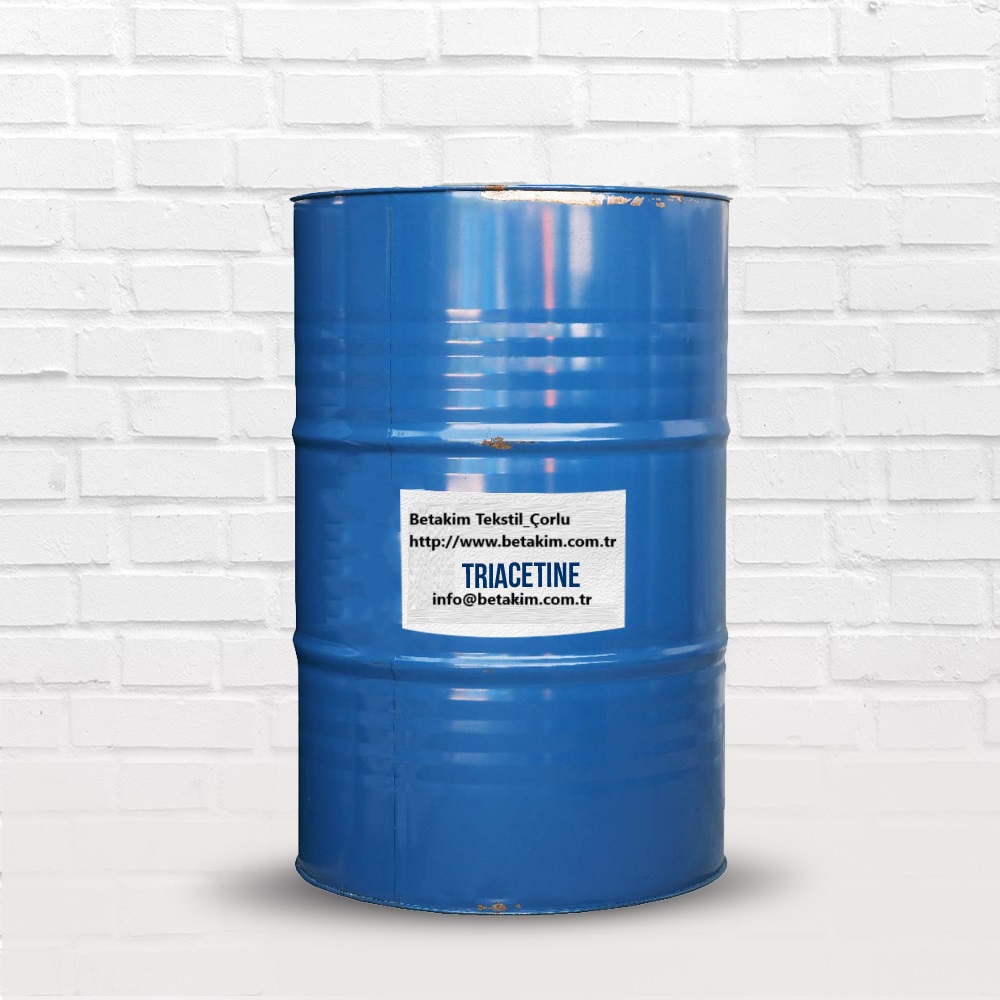
| Plastic drum | 25 kg, 200 kg | HDPE |
| IBC tote | 1000 kg – 1250 kg | Plastic / metal pallet |
| Bulk (tanker) | 20,000 – 24,000 kg | Stainless steel |
11. CERTIFICATIONS AND COMPLIANCE
-
Food: FCC (Food Chemicals Codex), E1518
-
Pharmaceutical: USP/NF, Ph. Eur., JP
-
Biodegradability: Readily biodegradable per OECD 301B
-
Other: REACH registered, Kosher (optional), Halal (optional), ISO 22000 production
12. USER NOTES AND RECOMMENDATIONS
-
Plasticizer effectiveness: For polymers like cellulose acetate, use 10-30% by weight to lower glass transition temperature (Tg).
-
As a flavor carrier: Pre-dissolve volatile flavor components in triacetin before adding to the food matrix.
-
High-temperature applications: Thermal degradation begins above 200°C; acetic acid vapor may form (ensure good ventilation).
-
Viscosity-temperature relationship: Viscosity increases in cold environments; heating to 40-50°C improves pumpability.
-
Incompatibilities: Avoid strong oxidizing agents and strong bases.