We unleash your business potential by maximize the business innovation.
Send EmailLactose, Lactose Monohydrate, Anhydrous Lactose, Milk Sugar, 63-42-3
LACTOSE (LACTOSE MONOHYDRATE AND ANHYDROUS LACTOSE)
Lactose / Milk Sugar / Lactose Monohydrate / Anhydrous Lactose / Süt Şekeri
CAS Numbers: 63-42-3 (Monohydrate); 64044-51-5 (Anhydrous)
EC Numbers: 200-559-2 (Monohydrate); 159220-7 (Anhydrous)
SECTION 1: PRODUCT IDENTIFICATION AND CHEMICAL IDENTITY
| Parameter | Lactose Monohydrate | Anhydrous Lactose |
|---|---|---|
| Product Name | Lactose Monohydrate | Anhydrous Lactose |
| Other Names (Turkish) | Laktaz, Laktos, Laktin, Süt Şekeri | Susuz Laktoz, Anhidrat Laktoz |
| Other Names (English) | Lactose, Milk Sugar, Lactose Monohydrate | Anhydrous Lactose, Lactose Anhydrous |
| CAS Number | 63-42-3 | 64044-51-5 |
| EC Number (EINECS) | 200-559-2 | 159220-7 |
| Chemical Formula | C₁₂H₂₂O₁₁·H₂O | C₁₂H₂₂O₁₁ |
| Molecular Weight | 360.31 g/mol | 342.30 g/mol |
| Chemical Class | Disaccharide (Milk Sugar) | Disaccharide (Milk Sugar) |
| Appearance | White crystalline powder | White crystalline powder |
| Odor | Odorless or slight | Odorless or slight |
| Color | White | White |
| Crystal Structure | Crystalline powder (α-lactose monohydrate) | Crystalline powder (β-lactose or α/β mixture) |
| Solubility | Soluble in water (~216 g/L, 20°C) | Soluble in water (~200 g/L, 20°C) |
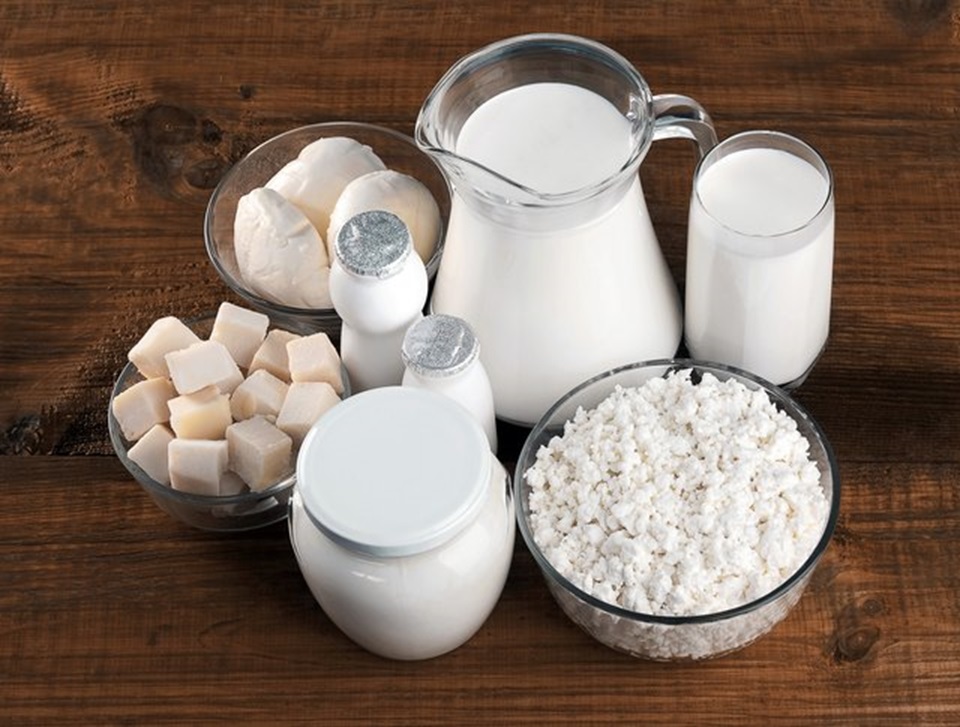
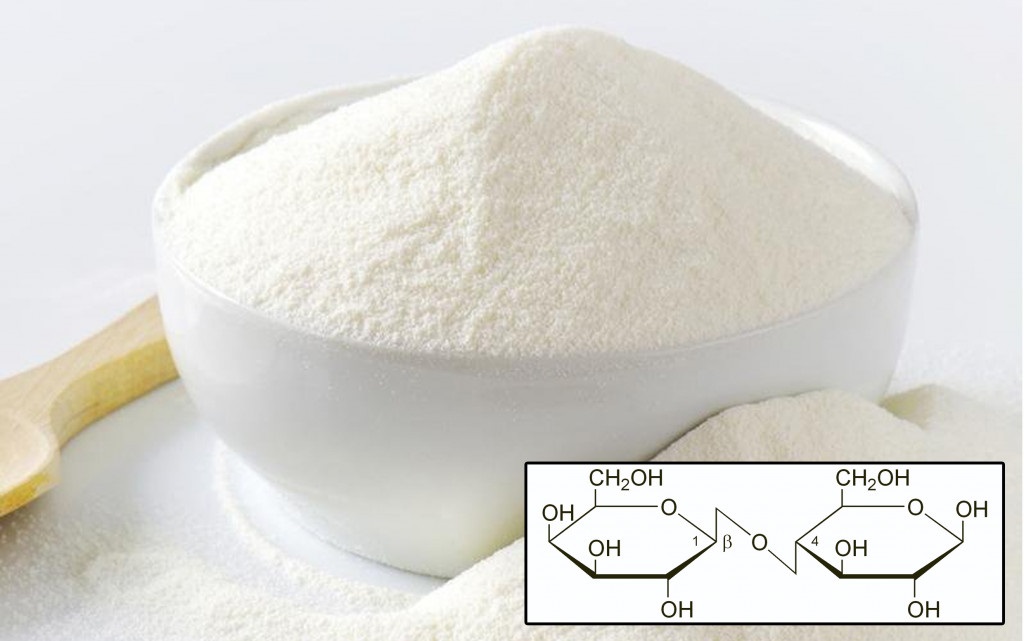
Lactose (milk sugar) is a naturally occurring disaccharide found in mammalian milk, formed by the combination of one glucose and one galactose molecule linked by a β-1,4 glycosidic bond. It exists in two primary forms: Lactose Monohydrate (CAS 63-42-3) , which contains one molecule of water of crystallization, and Anhydrous Lactose (CAS 64044-51-5) , which contains no water of crystallization and is preferred for moisture-sensitive formulations.
SECTION 2: SYNONYMS AND OTHER NAMES
| Type | Lactose Monohydrate | Anhydrous Lactose |
|---|---|---|
| Turkish Names | Laktoz, Laktaz, Laktos, Laktin, Süt Şekeri | Susuz Laktoz, Anhidrat Laktoz |
| English Names | Lactose, Milk Sugar, Lactose Monohydrate | Anhydrous Lactose, Lactose Anhydrous |
| German Names | Lactose, Milchzucker | Lactose wasserfrei |
| French Names | Lactose, Sucre de Lait | Lactose anhydre |
| Spanish Names | Lactosa, Azúcar de Leche | Lactosa anhidra |
| CAS Number | 63-42-3 | 64044-51-5 |
| EC Number | 200-559-2 | 159220-7 |
| Chemical Formula | C₁₂H₂₂O₁₁·H₂O | C₁₂H₂₂O₁₁ |
SECTION 3: CHEMICAL STRUCTURE
3.1. Molecular Structure
Lactose is a disaccharide formed by the linkage of β-D-galactose and α/β-D-glucose units through a β-1,4-glycosidic bond. The molecule is a reducing sugar (contains a free anomeric carbon). The monohydrate form contains one molecule of water of crystallization in its crystal lattice.
Structural Formula:
        CH₂OH                CH₂OH
         |                     |
         O                     O
        / \                   / \
       /   \                 /   \
      /     \               /     \
     H       H             H       H
     |       |             |       |
     C       C             C       C
    / \     / \           / \     / \
   /   \   /   \         /   \   /   \
  H     OH OH    H       H     OH OH    H
   \   /   \   /         \   /   \   /
    \ /     \ /           \ /     \ /
     C - O - C             C - O - C
     |       |             |       |
     H       OH            H       OH
Simplified Representation:
β-D-Gal-(1→4)-D-Glc
3.2. Molecular Formula and Weight
| Parameter | Lactose Monohydrate | Anhydrous Lactose |
|---|---|---|
| Molecular Formula | C₁₂H₂₂O₁₁·H₂O | C₁₂H₂₂O₁₁ |
| Molecular Weight | 360.31 g/mol | 342.30 g/mol |
| Water of Crystallization | 1 molecule (4.5-5.5%) | None (≤ 1.0%) |
3.3. Key Structural Features
| Feature | Description |
|---|---|
| Sugar Units | β-D-Galactose and D-Glucose |
| Glycosidic Bond | β-1,4 linkage |
| Reducing Property | Reducing sugar (contains free anomeric carbon) |
| Anomers | α and β forms exist |
| Optical Rotation ([α]²⁰D) | Monohydrate: +52.2° (c=10, water); Anhydrous: +52.0° to +53.0° |
SECTION 4: LACTOSE MONOHYDRATE VS. ANHYDROUS LACTOSE COMPARISON
| Property | Lactose Monohydrate | Anhydrous Lactose |
|---|---|---|
| CAS Number | 63-42-3 | 64044-51-5 |
| EC Number | 200-559-2 | 159220-7 |
| Molecular Formula | C₁₂H₂₂O₁₁·H₂O | C₁₂H₂₂O₁₁ |
| Molecular Weight | 360.31 g/mol | 342.30 g/mol |
| Water of Crystallization | 1 molecule (4.5-5.5%) | None (≤ 1.0%) |
| Melting Point | ~202°C (decomposes) | ~222°C (decomposes) |
| Water Solubility (20°C) | ~216 g/L | ~200 g/L |
| Hygroscopicity | Low | Higher (readily absorbs moisture) |
| Stability | More stable against moisture | More sensitive to moisture |
| Tablet Compressibility | Good | Excellent |
| Primary Application | General pharmaceutical and food applications | Moisture-sensitive formulations, direct compression |
| Shelf Life | 24-36 months | 24-36 months (under inert atmosphere) |
| Cost | Lower | Higher |
SECTION 5: TYPES AND GRADES OF LACTOSE
5.1. Pharmaceutical Grades (USP / Ph.Eur.)
| Grade | Description | Application |
|---|---|---|
| α-Lactose Monohydrate (Fine Milled) | <75 µm (200 mesh) | Direct compression, dry granulation |
| α-Lactose Monohydrate (Standard) | 75-150 µm (100-200 mesh) | Wet granulation, capsule filling |
| Anhydrous Lactose | Fine powder | Direct compression, moisture-sensitive formulations |
| Spray Dried Lactose | Spherical granules | Flowability improvement, direct compression |
5.2. Food Grades
| Grade | Description | Application |
|---|---|---|
| Food Grade Lactose Monohydrate | White crystalline powder | Dairy products, infant formula, confectionery |
| Food Grade Anhydrous Lactose | White powder | Specific food applications |
SECTION 6: PHYSICAL AND CHEMICAL PROPERTIES
| Property | Lactose Monohydrate | Anhydrous Lactose | Test Method / Note |
|---|---|---|---|
| Appearance | White crystalline powder | White crystalline powder | Visual |
| Odor | Odorless or slight | Odorless or slight | Olfactometric |
| Taste | Mildly sweet | Mildly sweet | Sensory |
| Molecular Weight | 360.31 g/mol | 342.30 g/mol | Calculated |
| Melting Point | ~202°C (decomposes) | ~222°C (decomposes) | DSC |
| Density | ~1.53 g/cm³ | ~1.54 g/cm³ | - |
| Bulk Density | 0.5 – 0.7 g/cm³ | 0.5 – 0.8 g/cm³ | - |
| Water Solubility (20°C) | ~216 g/L | ~200 g/L | - |
| Water Solubility (25°C) | ~250 g/L | ~240 g/L | - |
| Ethanol Solubility | Slightly soluble | Slightly soluble | - |
| pH (aqueous solution) | 4.5 – 7.0 | 4.5 – 7.0 | - |
| Optical Rotation ([α]²⁰D) | +52.2° (c=10, water) | +52.0° to +53.0° | Polarimetry |
| Sweetness (Sucrose=100) | 25 | 25 | Sensory |
| Caloric Value | 4 kcal/g | 4 kcal/g | Calculated |
| Moisture Content | 4.5 – 5.5% (water of crystallization) | ≤ 1.0% | Karl Fischer |
| Hygroscopicity | Low | Higher | - |
| Glycemic Index | ~46 (low) | ~46 (low) | - |
SECTION 7: SOLUBILITY PROFILE
| Solvent | Lactose Monohydrate | Anhydrous Lactose | Conditions |
|---|---|---|---|
| Water (20°C) | Soluble (~216 g/L) | Soluble (~200 g/L) | 20°C |
| Water (25°C) | Soluble (~250 g/L) | Soluble (~240 g/L) | 25°C |
| Ethanol | Slightly soluble | Slightly soluble | 25°C |
| Methanol | Slightly soluble | Slightly soluble | 25°C |
| Ether | Insoluble | Insoluble | 25°C |
| Acetone | Insoluble | Insoluble | 25°C |
SECTION 8: CHEMICAL PROPERTIES AND REACTIVITY
| Parameter | Lactose Monohydrate | Anhydrous Lactose |
|---|---|---|
| Chemical Character | Disaccharide; glucose + galactose | Disaccharide; glucose + galactose |
| Stability | Stable under normal conditions; protect from moisture | Stable under normal conditions; highly sensitive to moisture |
| Reactivity | Soluble in water; hydrolyzed by acids or lactase | Soluble in water; hydrolyzed by acids or lactase |
| Incompatible Materials | Strong acids, strong bases, moisture | Strong acids, strong bases, moisture (especially) |
| Hydrolysis | Lactose + H₂O → Glucose + Galactose | Lactose + H₂O → Glucose + Galactose |
| Reducing Property | Reducing sugar | Reducing sugar |
| Maillard Reaction | Undergoes browning with amino acids | Undergoes browning with amino acids |
| Special Properties | Natural energy source; pharmaceutical filler | Natural energy source; preferred for moisture-sensitive formulations |
SECTION 9: PRODUCTION METHODS
9.1. Lactose Monohydrate Production
| Stage | Process | Description |
|---|---|---|
| 1 | Whey Collection | Liquid waste from cheese production (whey) is collected. |
| 2 | Filtration | Filtration removes impurities (fat, protein). |
| 3 | Concentration | Whey is concentrated under vacuum until lactose reaches saturation. |
| 4 | Crystallization | Concentrated solution is cooled to crystallize lactose. |
| 5 | Centrifugation | Crystals are separated from the whey syrup. |
| 6 | Washing | Crystals are washed with water to remove impurities. |
| 7 | Drying | Washed crystals are dried (monohydrate form). |
| 8 | Milling | Dried crystals are milled to the desired particle size. |
| 9 | Sieving | Sieving for desired particle size distribution. |
| 10 | Packaging | Packaged in moisture-protected containers. |
9.2. Anhydrous Lactose Production
| Stage | Process | Description |
|---|---|---|
| 1 | Lactose Monohydrate | Starting material is lactose monohydrate. |
| 2 | Drying | Lactose monohydrate is dried under vacuum or with hot air at 100-130°C to remove water of crystallization. |
| 3 | Cooling | The dried product is cooled in an inert atmosphere. |
| 4 | Milling | Anhydrous lactose is milled to the desired particle size. |
| 5 | Packaging | Packaged in moisture-protected, inert atmosphere containers. |
SECTION 10: LACTOSE INTOLERANCE
10.1. Definition and Cause
| Parameter | Information |
|---|---|
| Cause | Insufficient lactase enzyme activity in the small intestine |
| Symptoms | Bloating, gas, nausea, diarrhea, cramps |
| Onset Time | Usually 30-60 minutes after consumption |
| Mechanism | Lactose is fermented by bacteria in the large intestine, producing short-chain fatty acids and gas |
10.2. Types of Lactose Intolerance
| Type | Description | Prevalence |
|---|---|---|
| Primary | Decreased lactase production with age | Northern Europe: 5-15%; Southern Europe: 40-70%; Asia/Africa: 80-99% |
| Secondary | Develops after intestinal diseases (Crohn's, celiac, ulcerative colitis, chemotherapy) | Disease-dependent |
| Congenital | Rare, genetic mutation present from birth | Very rare |
| Developmental | Occurs in premature infants due to underdeveloped digestive system | Premature infants |
SECTION 11: APPLICATIONS AND INDUSTRIAL USES
11.1. Pharmaceutical Industry (Most Important Application)
| Application | Form | Function |
|---|---|---|
| Tablet Filler | Monohydrate, Anhydrous | Increases tablet volume, acts as a binder |
| Tablet Binder | Monohydrate (wet granulation) | Holds powder particles together |
| Direct Compression | Anhydrous, Spray Dried | Suitable for direct tablet pressing |
| Capsule Filler | Monohydrate, Anhydrous | Increases capsule volume |
| Lyophilization | Monohydrate, Anhydrous | Stabilizer in freeze-dried pharmaceuticals |
| Moisture-Sensitive Formulations | Anhydrous | For APIs sensitive to moisture |
| Dry Powder Inhalers (DPI) | Anhydrous | Carrier for inhalation devices |
11.2. Food Industry
| Application | Form | Function |
|---|---|---|
| Infant Formula | Monohydrate | Milk sugar source |
| Dairy Products | Monohydrate | Sweetener, texture improver |
| Confectionery | Monohydrate | Sweetener, texture improver |
| Bakery Products | Monohydrate | Flavor enhancer, Maillard browning |
| Ice Cream | Monohydrate | Texture improver, crystallization preventer |
| Dietary Supplements | Monohydrate, Anhydrous | Filler, carrier |
11.3. Other Applications
| Application | Form | Function |
|---|---|---|
| Veterinary Products | Monohydrate, Anhydrous | Filler, binder |
| Cosmetics | Monohydrate | Humectant, texture improver |
| Chemical Synthesis | Monohydrate, Anhydrous | Starting material (lactose derivatives) |
| Animal Feed | Monohydrate | Energy source |
SECTION 12: COMPARISON WITH ALTERNATIVE SUGARS
| Sugar | Source | Sweetness (Sucrose=100) | Calories (kcal/g) | Advantages | Disadvantages |
|---|---|---|---|---|---|
| Lactose | Milk | 25 | 4 | Natural, energy source, pharmaceutical filler | Lactose intolerance risk |
| Sucrose | Sugar cane/beet | 100 | 4 | Common, cheap, strong sweetness | Tooth decay, high glycemic index |
| Fructose | Fruit | 120-170 | 4 | Sweeter, lower GI | Liver burden in excess |
| Glucose | Corn, starch | 70-80 | 4 | Quick energy | Blood sugar fluctuations |
| Stevia | Plant (Stevia rebaudiana) | 200-300 | 0 | Zero calories, natural | Different taste profile, slightly bitter |
| Maltitol | Starch | 90 | 2.1 | Low calorie, tooth-friendly | Laxative effect in excess |
| Erythritol | Fermented corn/sugar | 60-70 | 0.2 | Almost zero calories, low GI | Mild digestive issues at high doses |
SECTION 13: SECTORAL SUITABILITY TABLE
| Sector / Application | Lactose Monohydrate | Anhydrous Lactose | Notes |
|---|---|---|---|
| Pharmaceuticals | HIGH | HIGH | Filler, binder, direct compression, moisture-sensitive formulations |
| Food | HIGH | MEDIUM | Infant formula, dairy products, confectionery, dietary supplements |
| Veterinary | HIGH | MEDIUM | Filler, binder |
| Cosmetics | LOW | LOW | Humectant, texture improver |
| Chemical Synthesis | LOW | LOW | Starting material |
SECTION 14: TOXICOLOGICAL PROFILE
| Parameter | Lactose Monohydrate | Anhydrous Lactose |
|---|---|---|
| Acute Oral Toxicity (LD50, Rat) | > 10,000 mg/kg (very low) | > 10,000 mg/kg (very low) |
| Acute Dermal Toxicity | Low | Low |
| Acute Inhalation Toxicity | Low risk; dust may cause respiratory irritation | Low risk; dust may cause respiratory irritation |
| Skin Irritation | Mild irritant (powder) | Mild irritant (powder) |
| Eye Irritation | Mechanical irritant (powder) | Mechanical irritant (powder) |
| Skin Sensitization | Not a sensitizer | Not a sensitizer |
| Mutagenicity | Negative | Negative |
| Carcinogenicity | Not carcinogenic | Not carcinogenic |
| Lactose Intolerance | May cause digestive issues in individuals with lactase deficiency | May cause digestive issues in individuals with lactase deficiency |
SECTION 15: GHS CLASSIFICATION
GHS Classification (Not Classified as Hazardous):
| Hazard Class | Category | H-Statement |
|---|---|---|
| Not classified as hazardous | - | - |
Signal Word: None
Hazard Pictograms: None
Hazard Statements (H-Codes): None
Safety Phrases (Historically):
| Code | Statement |
|---|---|
| S22 | Do not breathe dust. |
| S24/25 | Avoid contact with skin and eyes. |
| S26 | In case of contact with eyes, rinse immediately with plenty of water and seek medical advice. |
SECTION 16: PRECAUTIONARY STATEMENTS (P-CODES)
| Code | Statement |
|---|---|
| P261 | Avoid breathing dust. |
| P264 | Wash hands thoroughly after handling. |
| P271 | Use only outdoors or in a well-ventilated area. |
| P280 | Wear protective gloves/protective clothing/eye protection/face protection. |
| P302+P352 | IF ON SKIN: Wash with plenty of soap and water. |
| P305+P351+P338 | IF IN EYES: Rinse cautiously with water for several minutes. Remove contact lenses if present. |
| P337+P313 | If eye irritation persists: Get medical advice/attention. |
| P501 | Dispose of contents/container in accordance with local regulations. |
SECTION 17: FIRST AID MEASURES
| Route of Exposure | Action to Be Taken |
|---|---|
| Inhalation | Move to fresh air. If respiratory irritation persists, seek medical attention. |
| Skin Contact | Wash with plenty of soap and water. Remove contaminated clothing. |
| Eye Contact | Rinse thoroughly with plenty of water for at least 15 minutes. Remove contact lenses. If irritation persists, seek medical attention. |
| Ingestion | Rinse mouth with water. Drink plenty of water. Do not induce vomiting. If large amount is swallowed, seek medical attention. |
SECTION 18: FIRE-FIGHTING MEASURES
| Parameter | Information |
|---|---|
| Fire Hazard | Combustible organic dust; may burn at high temperatures. |
| Hazards During Fire | Thermal decomposition produces carbon monoxide and carbon dioxide. |
| Suitable Extinguishing Media | Water spray, CO₂, dry chemical powder, alcohol-resistant foam. |
| Special Protective Equipment | Self-contained breathing apparatus (SCBA), full protective clothing. |
| Special Precautions | Prevent fire-fighting water from entering the environment. |
SECTION 19: ACCIDENTAL RELEASE MEASURES
| Parameter | Information |
|---|---|
| Personal Protection | Dust mask, protective goggles, gloves, coverall. |
| Ventilation | Increase ventilation; use local exhaust in confined spaces. |
| Containment | Cover spilled area to prevent dust dispersion. |
| Cleaning Methods | Collect dry using vacuum or careful sweeping. Avoid washing with water (soluble). |
| Environmental Precautions | Prevent entry into drains, sewers, and water bodies. |
| Waste Disposal | Dispose of in accordance with local regulations. |
SECTION 20: STORAGE AND SHELF LIFE
| Parameter | Lactose Monohydrate | Anhydrous Lactose |
|---|---|---|
| Storage Conditions | Store in a cool, dry, and well-ventilated area; protect from moisture | Store in a cool, dry, and well-ventilated area; strictly protect from moisture |
| Storage Temperature | Room temperature (15-25°C) | Room temperature (15-25°C) |
| Humidity | < 60% relative humidity | < 40% relative humidity |
| Container Requirements | Keep tightly closed in original packaging | Keep tightly closed, under inert atmosphere (nitrogen) in original packaging |
| Materials to Avoid | Moisture, heat, direct sunlight, strong acids, strong bases | Moisture, heat, direct sunlight, strong acids, strong bases |
| Shelf Life | 24-36 months | 24-36 months |
| Stability Note | Relatively stable against moisture; caking may occur | Highly sensitive to moisture; inert atmosphere required to prevent moisture absorption |
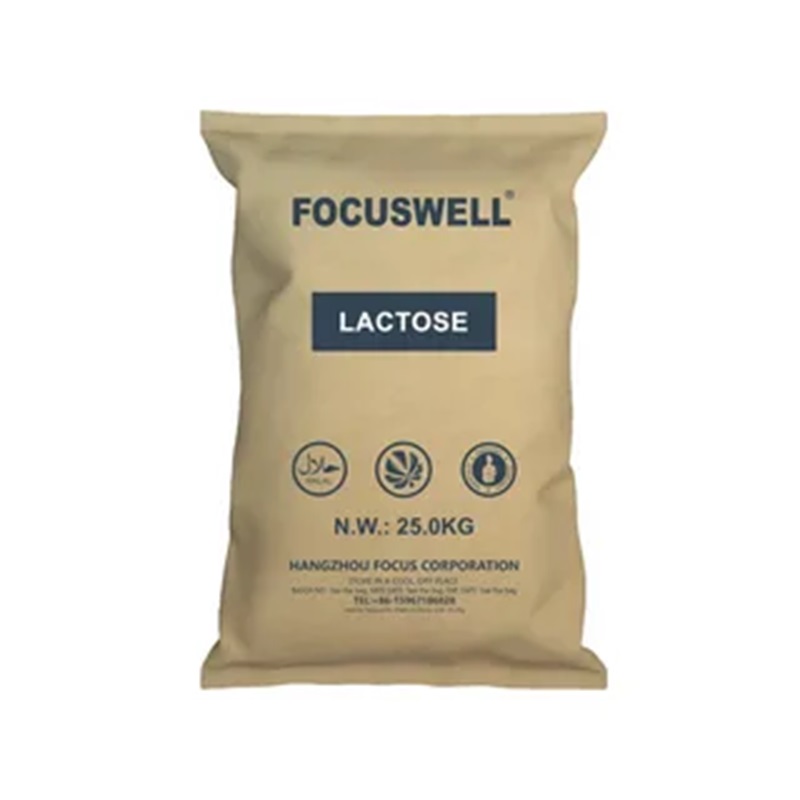
| Packaging Options | 25 kg bags (multi-layer paper/plastic), 500-1000 kg FIBCs | 25 kg bags (moisture-protected), 500-1000 kg FIBCs (inert atmosphere) |
SECTION 21: PACKAGING OPTIONS
| Packaging Type | Quantity | Material |
|---|---|---|
| Kraft Bag + PE Liner | 25 kg | Paper / Polyethylene |
| Plastic Drum | 25-50 kg | HDPE |
| Fiber Drum | 25 kg | Cardboard / Plastic |
| Big-Bag | 500 – 1000 kg | Polypropylene |
SECTION 22: TRANSPORT INFORMATION
| Parameter | Information |
|---|---|
| UN Number | Not regulated (not hazardous) |
| Hazard Class | Not applicable |
| Packing Group | Not applicable |
| ADR/RID (Road) | Not regulated |
| IMDG Code (Sea) | Not regulated |
| IATA (Air) | Not regulated |
| Marine Pollutant | No |
| Transport Temperature | Ambient temperature; protect from moisture. |
SECTION 23: REGULATORY INFORMATION
| Region / Authority | Lactose Monohydrate | Anhydrous Lactose |
|---|---|---|
| European Union | Approved as a food ingredient; no E number | Approved as a food ingredient; no E number |
| USA (FDA) | GRAS (Generally Recognized as Safe) (21 CFR 184.1198) | GRAS (Generally Recognized as Safe) (21 CFR 184.1198) |
| Turkey | Approved as food and pharmaceutical excipient | Approved as food and pharmaceutical excipient |
| USP | Listed in USP monograph | Listed in USP monograph |
| Ph.Eur. | Listed in European Pharmacopoeia monograph | Listed in European Pharmacopoeia monograph |
| JP | Listed in Japanese Pharmacopoeia monograph | Listed in Japanese Pharmacopoeia monograph |
| Halal / Kosher | Can be certified upon request | Can be certified upon request |
| Lactose Intolerance | Not suitable for individuals with lactase deficiency | Not suitable for individuals with lactase deficiency |
SECTION 24: NUTRITIONAL AND HEALTH INFORMATION
| Parameter | Information |
|---|---|
| Energy | 4 kcal/g |
| Glycemic Index | Low (~46) |
| Dietary Suitability | Suitable for dairy consumers; suitable for vegetarians |
| Allergy Note | Caution for individuals with milk allergy; may cause digestive issues in lactose-intolerant individuals |
| Special Note | Derived from milk; lactose-free alternatives are available for lactose-intolerant individuals |
SECTION 25: QUICK REFERENCE TABLE
| Parameter | Lactose Monohydrate | Anhydrous Lactose |
|---|---|---|
| CAS Number | 63-42-3 | 64044-51-5 |
| EC Number | 200-559-2 | 159220-7 |
| Molecular Formula | C₁₂H₂₂O₁₁·H₂O | C₁₂H₂₂O₁₁ |
| Molecular Weight | 360.31 g/mol | 342.30 g/mol |
| Water of Crystallization | 1 molecule (4.5-5.5%) | None (≤ 1.0%) |
| Appearance | White crystalline powder | White crystalline powder |
| Taste | Mildly sweet | Mildly sweet |
| Melting Point | ~202°C (decomposes) | ~222°C (decomposes) |
| Water Solubility (20°C) | ~216 g/L | ~200 g/L |
| Sweetness (Sucrose=100) | 25 | 25 |
| Calories | 4 kcal/g | 4 kcal/g |
| Hygroscopicity | Low | Higher |
| Primary Applications | Food, general pharmaceuticals | Moisture-sensitive pharmaceuticals, direct compression |
| Shelf Life | 24-36 months | 24-36 months |
| UN Number | Not regulated | Not regulated |
SECTION 26: CRITICAL NOTICES AND BEST PRACTICES
CRITICAL NOTICES:
-
CAS Number Correction: The correct CAS number for lactose monohydrate is 63-42-3. The CAS number 14641-93-1 belongs to lactobionic acid or another derivative.
-
Molecular Formula: Lactose monohydrate has the formula C₁₂H₂₂O₁₁·H₂O and contains one molecule of water of crystallization. Anhydrous lactose (64044-51-5) has the formula C₁₂H₂₂O₁₁.
-
Form Selection: Lactose monohydrate is suitable for general applications. Anhydrous lactose is preferred for formulations containing moisture-sensitive active pharmaceutical ingredients (APIs).
-
Lactose Intolerance: May cause digestive issues (bloating, gas, diarrhea, abdominal pain) in lactose-intolerant individuals.
-
Milk Allergy: Caution should be exercised in individuals with milk allergy.
-
Moisture Sensitivity: Anhydrous lactose is highly sensitive to moisture. It should be stored under inert atmosphere (nitrogen) to prevent moisture absorption and conversion to monohydrate.
-
Reducing Property: Lactose is a reducing sugar. It can undergo Maillard reaction (browning) with amino-containing ingredients; caution should be taken in formulations.
-
Heat Sensitivity: Caramelizes at high temperatures. Care should be taken during heat processing.
-
Dust Control: Lactose dust may be inhaled and cause respiratory irritation. Dust control and adequate ventilation should be provided.
-
Purity: High-purity lactose meeting USP/Ph.Eur. standards should be used for pharmaceutical applications.
BEST PRACTICE RECOMMENDATIONS:
-
Formulation Selection: Use monohydrate for wet granulation; use anhydrous lactose for direct compression and moisture-sensitive formulations.
-
Storage: Store in a cool, dry, and well-ventilated area in tightly closed original packaging. Use inert atmosphere (nitrogen) for anhydrous lactose.
-
Personnel Protection: Use dust mask, protective goggles, and gloves when handling powder.
-
Moisture Control: Ensure moisture control in the production area when using anhydrous lactose.
-
Quality Assurance: Perform loss on drying, optical rotation, and particle size distribution tests for each batch.
-
Labeling: Clearly indicate lactose content on product labels for lactose-intolerant individuals.
-
Packaging: Use moisture-protected packaging; for anhydrous lactose, use inert atmosphere packaging.
LEGAL DISCLAIMER:
The information provided in this document is based on our current knowledge and experience and is presented in good faith; however, as all conditions of use are beyond our control, it does not constitute a binding specification or warranty. This Technical Data Sheet is for informational purposes only. Users are obligated to test the suitability of the product for their own applications. For complete safety, storage, handling, transport, waste, and regulatory compliance information, the official Safety Data Sheet (SDS/MSDS) provided by the manufacturer/supplier must be consulted.