We unleash your business potential by maximize the business innovation.
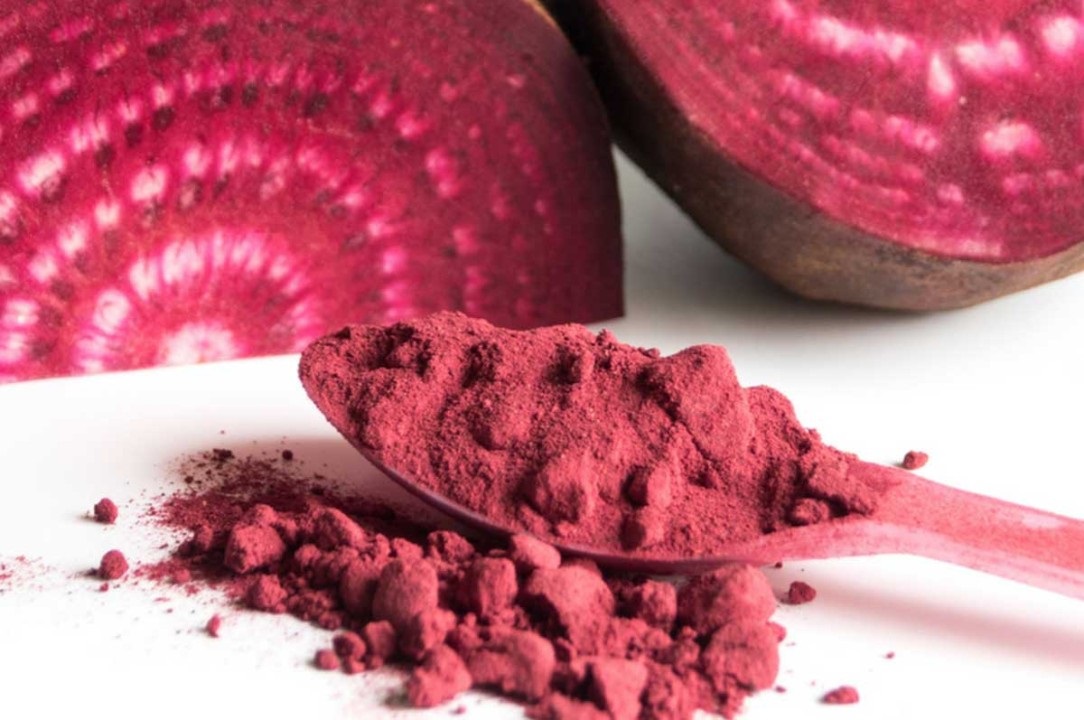
Send EmailBetanin, Extracted From Red Beetroot, Beta Vulgaris Ruba), Red–pink Natural Color, E162, 7659-95-2, 1390-65-4
Betanin (E162)
Identity
-
E number: E162
-
CAS numbers: 1390-65-4, 7659-95-2
-
Source: Extracted from red beetroot (Beta vulgaris ruba)
Pigments
-
Main pigment: Betanin (75–95%)
-
Secondary pigment: Vulgaxanthin (5–25%)
-
Provides a red–pink natural color
Natural Occurrence
-
Red beetroot
-
Certain mushrooms
-
Bougainvillea flowers
Applications in Food Industry
-
Confectionery (candies, coatings, fillings)
-
Ice cream and powdered drinks
-
Bakery products and breakfast cereals
-
Dairy products
-
Processed meat (sausages, salami)
-
Soups, tomato-based products, bacon substitutes
-
Jams, jellies, marmalades
-
Processed fish and vegetable preparations
Stability Characteristics
-
pH: Most stable between 4–6
-
Heat: Retains color for ~14 minutes at 100°C (within pH 4–6)
-
Light/Oxygen: Sensitive; degrades under sunlight and oxygen → best stored in dark, cool conditions
-
Alkaline conditions: Breaks down, turning yellow–brown
Regulation
-
According to Turkish Food Codex, no usage limits are imposed.
In short: Betanin (E162) is a natural red pigment from beetroot, widely used as a food colorant. It is stable in mildly acidic conditions but sensitive to heat, light, and oxygen, making careful storage important.