We unleash your business potential by maximize the business innovation.
Send EmailBetanin, Betanine, Beetroot Red, Beet Red, Natural Red 18, E162, 7659-95-2, 1390-65-4
Betanin (E162) – Beetroot Red (Natural Red Colorant)
| Property | Detail |
|---|---|
| Common Names | Betanin, Betanine, Beetroot Red, Beet Red, Natural Red 18 |
| Food Code | E162 |
| Color Shade | Red to purple-red (violet-red) |
| CAS Numbers | 1390-65-4 (beetroot extract), 7659-95-2 (pure betanin) |
| Source | Natural (beetroot - Beta vulgaris) |
| Chemical Class | Betalain (betacyanin) |
| Solubility | Water-soluble |
| Form | Powder, liquid, or concentrate |
What is Betanin (E162)?
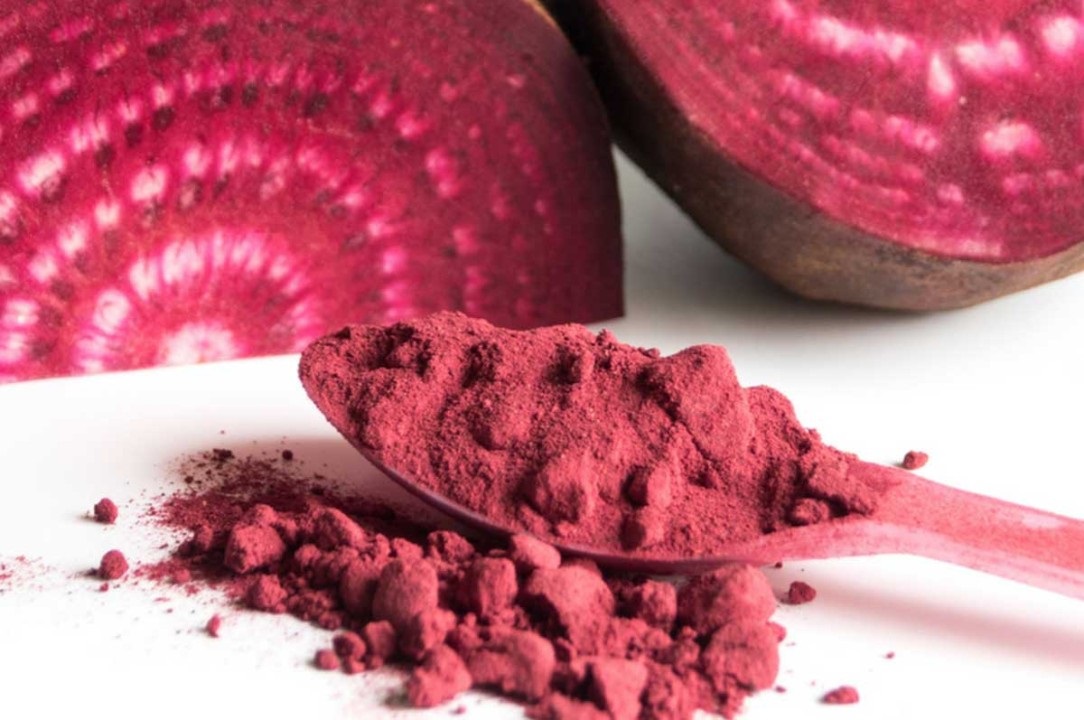
Betanin (E162) is a natural red food colorant derived from beetroot (Beta vulgaris). It is the primary pigment responsible for the characteristic red to purple-red color of beetroots. Betanin belongs to the betalain family (specifically betacyanins) and is widely used as a natural alternative to synthetic red dyes.
Note: E162 is also known as Beetroot Red, Beet Red, or Natural Red 18. It is one of the most popular natural red colorants in the food industry.
Key Characteristics:
-
Natural red pigment from beetroot
-
Water-soluble
-
Provides red to purple-red shades
-
Heat and light sensitive
-
No known side effects
-
Suitable for all dietary groups (halal, vegan, kosher)
Source and Production
| Source Type | Details |
|---|---|
| Natural Source | Beetroot (Beta vulgaris) – red table beet |
| Extraction Method | Pressing or water extraction from beetroot juice |
| Concentration | Spray-dried powder or liquid concentrates |
| Other Sources | Some varieties of cactus fruit, amaranth, and pokeweed (commercially primarily from beetroot) |
| Active Compound | Betanin (main pigment), other betacyanins |
Production Process:
-
Beetroots are harvested and washed
-
Juice is extracted by pressing
-
Juice is concentrated (heat treatment)
-
Spray-dried to produce powder or formulated as liquid
-
Standardized to desired color strength
Physical and Chemical Properties
| Property | Value |
|---|---|
| Appearance | Red to purple-red powder or liquid |
| Solubility | Soluble in water (clear red solution) |
| Color Shade | Red to violet-red (pH dependent) |
| Odor | Slightly earthy, characteristic of beetroot |
| Taste | Slightly sweet (beetroot-like) |
| Heat Stability | Low (degrades above 80°C / 176°F) |
| Light Stability | Low (fades with light exposure) |
| pH Stability | Most stable at pH 4-6 (acidic to neutral) |
| Oxidation Stability | Sensitive to oxygen (requires antioxidants) |
| Maximum Absorption | Approximately 535-538 nm (in water) |
pH Color Behavior:
| pH Level | Color |
|---|---|
| pH < 4 (Acidic) | Bright red |
| pH 4-6 | Red to violet-red |
| pH > 7 (Alkaline) | Blue-violet to purple-brown (degrades) |
Important: Betanin is most stable in acidic to neutral conditions (pH 4-6) . It degrades rapidly in alkaline conditions (pH > 7) and at high temperatures.
Applications and Usage Areas
Betanin (E162) is used as a natural red colorant in various food products, particularly where heat processing is limited.
1. Food Industry
| Product Category | Examples | Notes |
|---|---|---|
| Dairy Products | Yogurt, ice cream, strawberry milk, fruit preparations | Stable at low temperatures |
| Confectionery | Candies, gummies, jelly beans, frostings | Avoid high heat |
| Beverages | Fruit juices, smoothies, soft drinks, sports drinks | Pasteurization may reduce color |
| Bakery | Icings, fillings, cake decorations | Not suitable for baked products (heat degrades) |
| Desserts | Puddings, jellies, fruit fillings, pie fillings | |
| Processed Meats | Sausages, meat analogues, plant-based burgers | Natural red for plant-based meats |
| Sauces & Dressings | Tomato sauce, ketchup, salad dressings, pink sauces | |
| Fruit Preparations | Fruit yogurts, fruit toppings, jam | |
| Breakfast Cereals | Colored cereals, cereal bars (no-bake) |
2. Pharmaceutical Industry
| Application | Examples |
|---|---|
| Tablet Coatings | Natural red color for coated tablets |
| Syrups | Pediatric syrups, cough syrups (natural coloring) |
| Supplements | Chewable vitamins, gummy supplements |
3. Cosmetic Industry
| Product Category | Examples |
|---|---|
| Lip Products | Lip balms, lipsticks (natural red/pink shades) |
| Blush | Natural powder blushes |
| Soaps | Handmade natural soaps |
| Hair Care | Natural shampoos, conditioners (pink/red shades) |
4. Other Applications
| Application | Examples |
|---|---|
| Pet Food | Natural red color for wet pet food |
| Natural Dyes | Textile dyeing (historical/limited) |
Betanin vs. Other Natural Red Colorants
| Feature | E162 (Betanin) | E120 (Carmine) | E163 (Anthocyanins) | E160d (Lycopene) |
|---|---|---|---|---|
| Source | Beetroot (plant) | Insects (cochineal) | Fruits/vegetables (plants) | Tomato (plant) |
| Color Shade | Red to violet-red | Bright red to crimson | Red to blue-purple (pH dependent) | Red (tomato red) |
| Water Solubility | Soluble | Soluble | Soluble | Insoluble (oil-soluble) |
| Heat Stability | Low (degrades at >80°C) | Good | Low to moderate | Good |
| Light Stability | Low | Good | Low | Good |
| pH Stability | pH 4-6 | Stable | pH dependent | Stable |
| Halal/Vegan | Yes (plant) | No (insect) | Yes (plant) | Yes (plant) |
| Cost | Moderate | High | Moderate | Low to moderate |
| Natural Claim | Yes | Yes | Yes | Yes |
Betanin vs. Synthetic Red Dyes
| Feature | E162 (Betanin) | E124 (Ponceau 4R) | E129 (Allura Red) | E127 (Erythrosine) |
|---|---|---|---|---|
| Source | Natural (beetroot) | Synthetic (azo) | Synthetic (azo) | Synthetic (xanthene) |
| Color Shade | Red to violet-red | Bright red | Reddish-orange | Pink-red |
| EU Warning Label | No | Yes | Yes | Yes |
| Heat Stability | Low | High | High | Moderate |
| USA Status | Permitted | Banned | Permitted | Banned (phased) |
| Halal/Vegan | Yes | Yes (synthetic) | Yes (synthetic) | Yes (synthetic) |
| Cost | Moderate | Low | Low | Low |
Safety and Regulatory Status
| Question | Answer |
|---|---|
| Is it safe? | Yes, betanin is a natural colorant with no known side effects. |
| ADI (Acceptable Daily Intake) | Not specified / Not limited (EFSA – very safe) |
| Side Effects | No known side effects at concentrations used in foods. High doses may cause temporary red/pink discoloration of urine or feces (harmless). |
| Toxicity | Very low toxicity; considered safe for all populations. |
| Allergens | Very rare; individuals with beetroot allergy (uncommon) should avoid. |
Regulatory Status:
| Region | Status | Notes |
|---|---|---|
| European Union | Permitted | No restrictions; considered safe |
| Turkey | Permitted | Compliant with EU regulations |
| United States (FDA) | Permitted | Beetroot extract is GRAS (Generally Recognized as Safe) |
| Japan | Permitted | |
| Canada | Permitted | |
| Worldwide | Permitted | Accepted globally as a natural food colorant |
Stability Challenges and Solutions
| Challenge | Effect | Solution |
|---|---|---|
| Heat Sensitivity | Color loss or degradation above 80°C | Use in no-heat or low-heat products; add after pasteurization |
| Light Sensitivity | Fading over time | Use opaque packaging; protect from light |
| pH Sensitivity | Degrades in alkaline conditions (pH > 7) | Use in acidic to neutral products (pH 4-6) |
| Oxidation | Color loss due to oxygen | Use antioxidants (ascorbic acid, EDTA); use airtight packaging |
| Metal Ions | Unwanted color changes | Avoid metal containers; use glass or plastic |
Stability Improvement Tips:
-
Use in refrigerated or frozen products
-
Add ascorbic acid (Vitamin C) as antioxidant
-
Use opaque, airtight packaging
-
Avoid high-temperature processing (>80°C / 176°F)
-
Maintain pH between 4 and 6
Natural Alternatives to Betanin (for specific shades)
| Desired Color | Alternative Natural Colorant |
|---|---|
| Bright Red | Carmine (E120) – not vegan/vegetarian |
| Red to Purple | Anthocyanins (E163) – from grapes, berries |
| Stable Red | Lycopene (E160d) – from tomatoes (oil-soluble) |
| Pink to Red | Red cabbage extract (anthocyanins) |
| Vibrant Red | Monascus red (natural, limited approval) |
Compatibility with Dietary Restrictions
| Group | Status | Explanation |
|---|---|---|
| Halal | ✅ Permitted | Plant-derived (beetroot) |
| Kosher | ✅ Permitted | Kosher-certified versions available |
| Vegan | ✅ Permitted | Plant-derived, not animal-derived |
| Vegetarian | ✅ Permitted | Suitable for all vegetarians |
| Allergens | ✅ No common allergens | Does not contain common allergens (rare beetroot allergy possible) |
Note: Betanin is suitable for all dietary groups as it is derived entirely from beetroot (plant source).
Storage and Handling
| Requirement | Recommendation |
|---|---|
| Temperature | Store in a cool place (refrigeration recommended for liquids) |
| Light Protection | Use opaque, light-protective containers |
| pH | Maintain acidic to neutral pH (4-6) |
| Oxygen | Use airtight containers; add antioxidants |
| Container | Glass or plastic (avoid metal) |
| Shelf Life | Powder: 12-24 months; Liquid: 6-12 months (refrigerated) |
| Degradation Signs | Color fading (red to brown) indicates degradation |
Summary
| Question | Answer |
|---|---|
| What is E162? | Betanin (Beetroot Red), a natural red colorant from beetroot. |
| Is it natural? | Yes, it is derived from beetroot (plant source). |
| What color does it produce? | Red to violet-red (pH dependent). |
| Is it safe? | Yes, very safe. No known side effects; ADI not limited. |
| Is it heat stable? | No – degrades above 80°C (176°F). |
| What products contain it? | Yogurt, ice cream, beverages, candies, plant-based meats, supplements. |
| Is it halal/vegan? | Yes (plant-derived). |
| What are its limitations? | Low heat and light stability; pH sensitive; degrades in alkaline conditions. |
| How is it listed on labels? | E162, Betanin, Beetroot Red, Beet Red, Natural Red 18. |
Key Takeaway
Betanin (E162 / Beetroot Red) is a natural red colorant derived from beetroot. It provides attractive red to violet-red shades and is widely used as a natural alternative to synthetic red dyes (E124, E129, E127).
Advantages:
-
Natural (plant-derived)
-
No warning label required
-
No known side effects
-
Suitable for all dietary groups (halal, vegan, kosher)
-
Water-soluble
Disadvantages:
-
Low heat stability (degrades above 80°C)
-
Low light stability (fades with light)
-
pH sensitive (unstable in alkaline conditions)
-
Limited application (not suitable for baked goods or high-heat processing)
Best Used For: Products that are not subjected to high heat, such as yogurt, ice cream, beverages (cold), confectionery (low-temperature), frozen desserts, and plant-based meat analogues. Best stored in opaque, airtight containers at refrigerated temperatures.