We unleash your business potential by maximize the business innovation.
Send EmailLutein, Yellow Food Colour, Natural Carotenoid, Xanthophyll, Lutein Esters, E161b, 127-40-2
Lutein (E161b) – Yellow Food Color (Natural Carotenoid)
| Property | Detail |
|---|---|
| Common Names | Lutein, Lutein Esters, Xanthophyll |
| Food Code | E161b |
| Color Shade | Yellow to orange-yellow |
| CAS Number | 127-40-2 |
| EINECS Number | 204-840-0 |
| Category | Natural carotenoid (xanthophyll) |
| Source | Natural (plants, flowers, leafy vegetables) |
| Commercial Source | Marigold flowers (Tagetes species) |
| Solubility | Limited water solubility (oil/fat soluble) |
| Chemical Formula | C₄₀H₅₆O₂ |
What is Lutein (E161b)?
Lutein (E161b) is a natural yellow food colorant belonging to the carotenoid family (specifically xanthophylls). It is responsible for the yellow to orange-yellow color found in many plants, flowers, and leafy vegetables. Lutein is also known for its health benefits, particularly for eye health.
Note: Lutein is a natural pigment found in the human eye (macula). As a food additive, it provides a stable yellow color and is considered very safe.
Sources
Natural Sources
| Source Type | Examples |
|---|---|
| Leafy Green Vegetables | Spinach, kale, collard greens, Swiss chard, lettuce |
| Flowers | Marigold flowers (highest concentration) |
| Fruits | Corn, orange peppers, grapes, kiwi |
| Other | Egg yolks, corn, peas, broccoli |
Commercial Production
| Source | Details |
|---|---|
| Primary Source | Marigold flowers (Tagetes species - Tagetes erecta) |
| Growing Region | Mediterranean region, India, China, South America |
| Extraction Method | Solvent extraction from marigold flower petals |
| Forms | Crystalline lutein, lutein esters, oil suspensions, water-dispersible powders |
Note: The Mediterranean region is known for cultivating high-quality marigold flowers for food and medicinal applications.
Functions and Properties
| Property | Description |
|---|---|
| Color | Yellow to orange-yellow |
| Solubility | Limited water solubility; soluble in oils and fats |
| Stability | Good heat, light, and pH stability |
| pH Stability | Stable over a wide pH range (2-9) |
| Heat Stability | Good (up to 120-150°C) |
| Light Stability | Moderate to good |
| Antioxidant | Yes (protects against oxidative stress) |
| Natural Status | Natural (plant-derived) |
Key Characteristics:
-
Natural xanthophyll carotenoid
-
Provides bright yellow to orange-yellow color
-
Good stability compared to many natural pigments
-
Not water-soluble (use oil or emulsified forms for water-based products)
-
No known side effects
Applications and Usage Areas
Lutein (E161b) is used as a natural yellow colorant in various food products.
1. Food Industry
| Product Category | Examples | Notes |
|---|---|---|
| Confectionery | Candies, gummies, jellies, chewing gum | Stable yellow color |
| Dairy Products | Yogurt, ice cream, butter, cheese, margarine | Fat-soluble form ideal |
| Beverages | Fruit juices, soft drinks, energy drinks, smoothies | Use emulsified forms |
| Bakery Products | Cakes, cookies, pastries, breads | Heat-stable |
| Desserts | Puddings, custards, jellies, dessert toppings | |
| Sauces & Condiments | Mustard, salad dressings, mayonnaise | |
| Pasta & Noodles | Colored pasta, egg noodles (yellow color) | |
| Breakfast Cereals | Corn flakes, extruded cereals | |
| Snacks | Chips, extruded snacks | |
| Soups | Instant soups, soup powders (limited use) | Rarely used |
| Alcoholic Beverages | Some liqueurs, spirits (limited use) | Rarely used |
2. Dietary Supplements
| Application | Examples |
|---|---|
| Eye Health Supplements | Lutein capsules, softgels, tablets (macular health) |
| Multivitamins | Combined with other vitamins and minerals |
| Children's Supplements | Chewable lutein supplements |
3. Cosmetics
| Product Category | Examples |
|---|---|
| Skin Care | Anti-aging creams, serums, lotions |
| Makeup | Foundations, lip balms |
4. Animal Feed
| Application | Examples |
|---|---|
| Poultry Feed | For egg yolk color enhancement (yellow yolks) |
| Aquaculture | For fish flesh coloration |
Stability Properties
| Condition | Stability | Notes |
|---|---|---|
| Heat (up to 120°C) | Good | Suitable for baking and pasteurization |
| Light | Moderate to good | More stable than many natural pigments (e.g., curcumin) |
| pH (2-9) | Good | Stable in acidic, neutral, and alkaline conditions |
| Oxygen | Moderate | Requires antioxidants for long-term stability |
| Water | Limited solubility | Use oil-based or emulsified forms |
Lutein vs. Other Yellow Food Colorants
Comparison with Natural Yellow Colorants
| Feature | E161b (Lutein) | E100 (Curcumin) | E101 (Riboflavin) | E160a (Beta-Carotene) |
|---|---|---|---|---|
| Source | Marigold (plant) | Turmeric (plant) | Yeast/fermentation | Carrots (plant) |
| Color Shade | Yellow to orange-yellow | Orange-yellow | Yellow | Orange to red |
| Solubility | Fat-soluble | Fat-soluble | Water-soluble (low) | Fat-soluble |
| Heat Stability | Good | Moderate | Good | Good |
| Light Stability | Moderate to good | Low | Low | Moderate |
| Health Benefits | Eye health (macular) | Anti-inflammatory | Vitamin B2 | Provitamin A |
| EU Warning Label | No | No | No | No |
| Cost | Moderate to high | Moderate | Moderate | Low to moderate |
Comparison with Synthetic Yellow Dyes
| Feature | E161b (Lutein) | E102 (Tartrazine) | E104 (Quinoline Yellow) | E110 (Sunset Yellow) |
|---|---|---|---|---|
| Source | Natural (plant) | Synthetic (azo) | Synthetic (quinoline) | Synthetic (azo) |
| Color Shade | Yellow to orange-yellow | Lemon yellow | Yellow-green | Orange-yellow |
| EU Warning Label | No | Yes | Yes | Yes |
| Health Benefits | Yes (eye health) | No | No | No |
| Water Solubility | Low (fat-soluble) | Yes | Yes | Yes |
| Stability | Good | Very good | Very good | Very good |
| Cost | Higher | Low | Low | Low |
Lutein and Zeaxanthin Comparison
| Feature | Lutein (E161b) | Zeaxanthin (E161h) |
|---|---|---|
| Chemical Class | Xanthophyll (carotenoid) | Xanthophyll (carotenoid) |
| Color | Yellow | Yellow-orange |
| Source | Marigold, leafy greens | Marigold, corn, peppers |
| Food Code | E161b | E161h |
| Eye Health | Macular pigment (peripheral) | Macular pigment (central) |
| Stability | Good | Good |
Note: Lutein and zeaxanthin are often used together as natural yellow colorants and for eye health supplements.
Safety and Regulatory Status
| Question | Answer |
|---|---|
| Is it safe? | Yes, lutein is a natural carotenoid with no known side effects. |
| ADI (Acceptable Daily Intake) | Not specified (EFSA – considered very safe) |
| Side Effects | No known side effects at concentrations used in foods. |
| Toxicity | Very low toxicity; considered safe for all populations. |
| Allergens | No common allergens (from marigold - rare allergy possible) |
Regulatory Status:
| Region | Status | Notes |
|---|---|---|
| European Union | Permitted | ADI not specified; considered safe |
| Turkey | Permitted | Some restrictions for certain products under Turkish Food Codex |
| United States (FDA) | Permitted | Natural colorant; generally recognized as safe |
| Japan | Permitted | |
| Worldwide | Permitted | Accepted globally as a natural food colorant |
Turkish Food Codex Restrictions
According to the Turkish Food Codex Regulation on Colorants, lutein (E161b) has some restrictions and is not permitted in all food categories. Always check current regulations before use.
Health Benefits (As a Natural Compound)
| Benefit | Description |
|---|---|
| Eye Health | Lutein is a major component of the macular pigment; helps protect against age-related macular degeneration (AMD) and cataracts |
| Blue Light Protection | Filters harmful blue light from screens and sunlight |
| Antioxidant | Protects cells from oxidative stress and free radical damage |
| Skin Health | May protect skin from UV damage (antioxidant effect) |
| Cognitive Health | May support brain health in aging adults |
Note: As a food additive (E161b), lutein is used for coloring purposes. Health benefits apply to lutein as a nutrient.
Physical and Chemical Properties (Detailed)
| Property | Value |
|---|---|
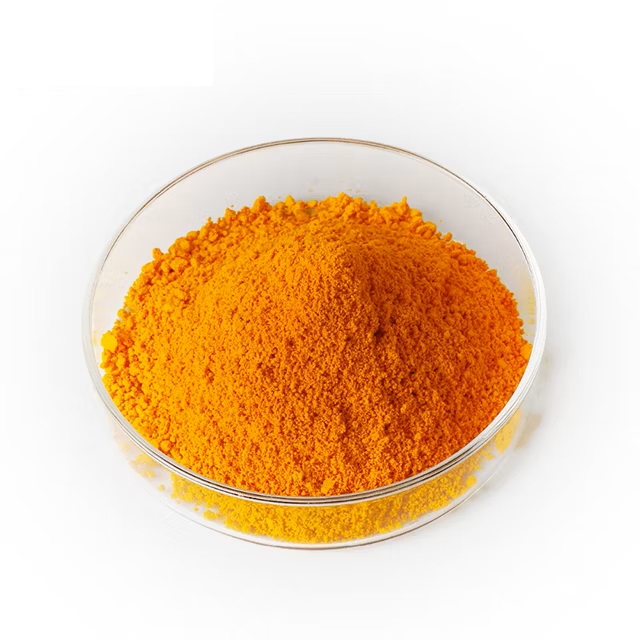
| Appearance | Orange-yellow to yellow crystalline powder |
| Chemical Formula | C₄₀H₅₆O₂ |
| Molecular Weight | 568.87 g/mol |
| Melting Point | 190-195°C |
| Solubility in Water | Insoluble (0.1 mg/L) |
| Solubility in Oils | Soluble |
| Absorption Maximum | 445 nm (in ethanol) |
| Stability | Good under normal food processing conditions |
Storage and Handling
| Requirement | Recommendation |
|---|---|
| Light Protection | Protect from light (use opaque packaging) |
| Temperature | Store in a cool, dry place |
| Oxygen | Use airtight containers; may add antioxidants |
| Container | Glass or plastic (avoid metal) |
| Shelf Life | Typically 24-36 months when stored properly |
| Degradation Signs | Color fading (yellow to brown) indicates degradation |
Natural Alternatives to Lutein (for yellow color)
| Desired Color | Alternative Natural Colorant |
|---|---|
| Bright Yellow | Riboflavin (E101) – water-soluble |
| Orange-Yellow | Beta-carotene (E160a), Curcumin (E100) |
| Lemon Yellow | Turmeric extract (curcumin) |
| Golden Yellow | Saffron, Marigold extract (lutein) |
Summary
| Question | Answer |
|---|---|
| What is E161b? | Lutein, a natural yellow carotenoid pigment from marigold flowers. |
| Is it natural? | Yes, plant-derived (marigold flowers). |
| What color does it produce? | Yellow to orange-yellow. |
| Is it safe? | Yes, no known side effects; ADI not specified. |
| Is it water-soluble? | No, limited water solubility (fat-soluble). |
| What products contain it? | Confectionery, dairy, beverages, bakery, supplements, animal feed. |
| Is it heat stable? | Yes, good heat stability (up to 120°C). |
| What are the health benefits? | Eye health (macular protection), antioxidant. |
| Is it halal/vegan? | Yes (plant-derived from marigold). |
| How is it listed on labels? | E161b, Lutein, Lutein Esters, Xanthophyll. |
Key Takeaway
Lutein (E161b) is a natural yellow food colorant belonging to the carotenoid family. It is extracted from marigold flowers (Tagetes species) and provides a stable yellow to orange-yellow color.
Advantages:
-
Natural (plant-derived)
-
No warning label required
-
Good heat, light, and pH stability
-
Health benefits (eye health, antioxidant)
-
Suitable for all dietary groups (halal, vegan)
Disadvantages:
-
Limited water solubility (requires oil or emulsified forms)
-
Higher cost than synthetic dyes
-
Moderate light stability (better than curcumin but lower than synthetic)
-
Some regulatory restrictions exist in certain countries
Best Used For: Products requiring a natural, stable yellow color with health appeal, such as dairy products (fat-based), baked goods (heat-stable), supplements (dual function as colorant and nutrient), and animal feed (egg yolk color enhancement).