We unleash your business potential by maximize the business innovation.
Send EmailVegetable Carbon Black, Food Black 2, Charcoal Black, Lamp Black, Acetylene Black, Black Food Dye, E153, 7440-44-0
VEGETABLE CARBON (E153 / CHARCOAL BLACK)
Vegetable Carbon / Charcoal Black / Vegetable Black / Food Black 2 / E153 / C.I. 77266
CAS Number: 7440-44-0
EC Number: 231-153-3
1. PRODUCT IDENTIFICATION AND CHEMICAL IDENTITY
| Parameter | Description |
|---|---|
| Product Name | Vegetable Carbon (E153) |
| Other Names | Vegetable Black, Charcoal Black, Food Black 2, Vegetable Charcoal |
| Food Code | E153 (EU), INS 153 (International Numbering System) |
| CAS Number | 7440-44-0 |
| EC Number (EINECS) | 231-153-3 |
| Colour Index | C.I. 77266 (Pigment Black 6) |
| Chemical Formula | C (elemental carbon) |
| Atomic Weight | 12.01 g/mol |
| Chemical Class | Inorganic pigment (elemental carbon) |
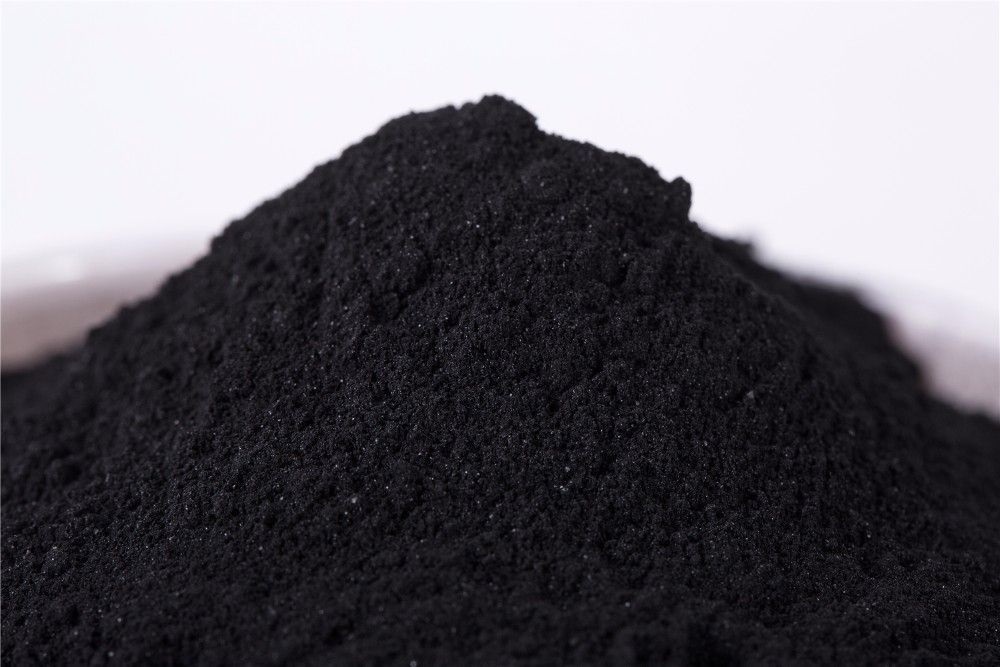
| Appearance | Fine black powder |
| Odor | Odorless |
Vegetable Carbon (E153) is a natural black food colorant produced by the carbonization of vegetable materials such as wood, cellulose residues, peat, coconut shells, and other vegetable husks at high temperature. It consists of finely divided elemental carbon particles purified to food-grade safety standards. Unlike industrial carbon black (CAS 1333-86-4), it is derived from vegetable sources and purified to meet food safety standards.
2. SYNONYMS AND OTHER NAMES
| Type | Name |
|---|---|
| Turkish Names | Bitkisel Siyah Karbon, Bitkisel Karbon, Gıda Siyahı 2, Kömür Siyahı |
| English Names | Vegetable Carbon, Vegetable Black, Charcoal Black, Food Black 2 |
| Food Additive Codes | E153 (EU), INS 153 |
| Colour Index | C.I. 77266 |
| CAS Number | 7440-44-0 |
| EC Number | 231-153-3 |
3. CHEMICAL STRUCTURE
3.1. Molecular Structure
Vegetable Carbon is composed of elemental carbon in an amorphous or turbostratic structure. The carbon atoms are arranged in hexagonal ring layers (similar to graphite) but with a disordered, non-crystalline structure.
Simplified Structural Representation:
        C - C - C - C - C - C
       /   /   /   /   /   /
      C - C - C - C - C - C
       \   \   \   \   \   \
        C - C - C - C - C - C
(Amorphous carbon structure with disordered hexagonal rings)
3.2. Molecular Formula
C (Elemental Carbon)
3.3. Atomic Weight
12.01 g/mol
3.4. Key Structural Features
| Feature | Description |
|---|---|
| Elemental Composition | Carbon (C) with trace amounts of nitrogen, hydrogen, and oxygen |
| Crystal Structure | Amorphous / Turbostratic (disordered graphite-like) |
| Particle Size | Micronized, typically 1-50 µm |
| Surface Area | 500-1500 m²/g (depending on activation) |
| Purity | ≥ 95% carbon (on dry and ash-free basis) |
4. PRODUCTION METHOD
Vegetable Carbon is produced by carbonization of vegetable materials followed by purification processes.
4.1. Production Stages
| Stage | Process | Description |
|---|---|---|
| 1 | Raw Material Preparation | Vegetable materials (wood, cellulose residues, peat, coconut shells) are collected and prepared. |
| 2 | Carbonization | Vegetable materials are heated at high temperature (600-1000°C) in an oxygen-free atmosphere. |
| 3 | Activation (Optional) | Steam or carbon dioxide activation at high temperature may be applied to increase surface area. |
| 4 | Grinding | The carbonized material is ground to a fine powder using roller mills. |
| 5 | Classification | The fine fraction is separated using cyclones. |
| 6 | Purification | Impurities are removed by hydrochloric acid washing, followed by neutralization and drying. |
| 7 | Standardization | The product is standardized for color intensity and particle size distribution. |
4.2. Quality Control Parameters
| Parameter | Specification |
|---|---|
| Carbon Content | ≥ 95% (dry and ash-free basis) |
| Loss on Drying | ≤ 12% (120°C, 4 hours) |
| Total Ash | ≤ 4% (625°C) |
| Arsenic (As) | ≤ 3 mg/kg |
| Lead (Pb) | ≤ 2 mg/kg |
| Mercury (Hg) | ≤ 1 mg/kg |
| Cadmium (Cd) | ≤ 1 mg/kg |
| Polycyclic Aromatic Hydrocarbons (PAH) | Benzo(a)pyrene < 50 µg/kg (by extraction) |
5. PHYSICAL AND CHEMICAL PROPERTIES
| Property | Value / Description |
|---|---|
| Appearance | Fine black powder |
| Odor | Odorless |
| Taste | Tasteless |
| Solubility in Water | Insoluble |
| Solubility in Organic Solvents | Insoluble |
| Density | 1.8 - 2.1 g/cm³ |
| Bulk Density | 0.1 - 0.5 g/cm³ (very light) |
| Melting Point | ~3550°C (sublimes) |
| Boiling Point | 4827°C |
| pH (aqueous suspension) | 6-10 |
| Particle Size | Typically 1-50 µm (micronized) |
| Specific Surface Area | 500-1500 m²/g (activated) |
| Ash Content | ≤ 4% |
| Moisture Content | ≤ 12% (may absorb moisture after production) |
6. SOLUBILITY PROFILE
| Solvent | Solubility | Conditions |
|---|---|---|
| Water | Insoluble | 20°C |
| Ethanol | Insoluble | 25°C |
| Acetone | Insoluble | 25°C |
| Ether | Insoluble | 25°C |
| Acids (HCl, H₂SO₄) | Insoluble | 25°C |
| Alkalis (NaOH) | Insoluble | 25°C |
7. CHEMICAL PROPERTIES AND REACTIVITY
| Property | Description |
|---|---|
| Chemical Character | Inert; chemically non-reactive |
| Oxidation | Forms CO and CO₂ with strong oxidizers at high temperatures |
| Thermal Stability | Stable up to very high temperatures (>3500°C) |
| Adsorption | High adsorption capacity for gases, odors, and certain molecules |
| Combustion | Burns slowly without flame when heated to red heat |
| Incompatible Materials | Strong oxidizers (e.g., nitric acid, chlorates, peroxides) |
8. STABILITY PROPERTIES
| Condition | Stability | Notes |
|---|---|---|
| Heat | Very high | Stable up to 400°C; resistant to baking, pasteurization, sterilization |
| Light | Very high | Does not fade upon exposure to light; excellent lightfastness |
| pH | Very high | Stable in pH range 2-12 |
| Water | Insoluble | Must be used as a dispersion |
| Oxygen | Very high | Resistant to oxidation |
| Reducing Agents | Very high | Resistant to reduction |
| Shelf Life | Very long | 24-60 months under proper storage |
9. APPLICATIONS AND INDUSTRIAL USES
9.1. Food Industry
| Product Category | Examples | Description |
|---|---|---|
| Confectionery | Jellies, dragees, licorice, chewing gum | Intense black coloring |
| Bakery Products | Cookies, biscuits, cakes, black bread | Heat-resistant coloring |
| Ice Cream and Desserts | Black ice cream, frozen desserts, mousses | Deep black color achievement |
| Creams and Decorations | Cake decorations, fondant, buttercream | Intense opaque black color |
| Cheese | Morbier cheese, ash-coated cheeses | Traditional black coating |
| Processed Fish Products | Fish paste, shellfish paste, smoked fish | Coloring |
| Sauces and Condiments | Black sauces, black ketchup | Specialty coloring |
9.2. Pharmaceutical Industry
| Application | Description |
|---|---|
| Tablet Coatings | Black-coated tablets and pills |
| Capsules | Black gelatin capsules (hard and soft) |
| Activated Carbon Products | Digestive health supplements, detox products, toxin adsorbents |
9.3. Cosmetics and Personal Care
| Application | Description |
|---|---|
| Color Cosmetics | Eyeshadow, eyeliner, mascara, nail polish |
| Skin Care | Face masks, soaps |
| Oral Care | Toothpaste (charcoal) |
9.4. Food Contact Materials
| Application | Description |
|---|---|
| Food Packaging | Black-colored packaging materials, films, trays |
| Food Containers | Black plastic containers, cutlery |
10. USAGE DOSAGES
| Application | Recommended Dosage | Notes |
|---|---|---|
| Confectionery | 0.1 – 1.0% | Depending on desired intensity |
| Bakery Products | 0.2 – 2.0% | Heat-resistant during baking |
| Ice Cream and Desserts | 0.1 – 0.5% | Requires good dispersion |
| Creams and Decorations | 0.5 – 3.0% | For intense black color |
| Sauces | 0.1 – 0.5% | Requires suspension |
| Pharmaceuticals | 0.5 – 2.0% | Tablet coatings and capsules |
| Cosmetics | 1.0 – 10.0% | Varies by product type |
Note: According to EU regulations, E153 may be used in certain food categories under the "quantum satis" (sufficient quantity) principle.
11. REGULATORY STATUS
| Region | Status | Notes |
|---|---|---|
| European Union | Approved (E153) | Subject to PAH limits; quantum satis usage |
| Turkey | Approved (E153) | Compliant with EU regulations |
| United States (FDA) | Not approved as a colorant | Industrial carbon black has a different CAS classification |
| Japan | Approved | Approved for specified applications |
| Australia/New Zealand | Approved | As a food additive |
| Canada | Limited approval | Restricted to specific applications |
| Organic Food Production | Permitted (certain categories) | Plant-derived organic products |
12. SAFETY AND TOXICOLOGY
| Parameter | Value |
|---|---|
| ADI (Acceptable Daily Intake) | Not specified (EFSA and JECFA) |
| Safety Assessment | Considered safe at reported usage levels |
| Acute Oral Toxicity (LD50) | > 5000 mg/kg (very low toxicity) |
| Mutagenicity | Negative |
| Carcinogenicity (IARC) | Not classified for vegetable carbon (7440-44-0); industrial carbon black (1333-86-4) is assessed differently |
| Allergenicity | Not allergenic |
| Absorption | Not absorbed from the gastrointestinal tract; passes through the body unchanged |
| Side Effects | No known side effects at concentrations used in foods |
EFSA (European Food Safety Authority) has stated that while available toxicological data are limited, vegetable carbon (E153) is an inert substance and is not absorbed from the gastrointestinal tract, making it safe at reported usage levels.
13. GHS CLASSIFICATION
GHS Classification for Food-Grade Vegetable Carbon (Not Classified as Hazardous):
| Hazard Class | Category | H-Statement |
|---|---|---|
| Skin Irritation | Category 3 | H315 (mild irritation) |
| Eye Irritation | Category 2B | H319 (mild irritation) |
| STOT - SE | Category 3 | H335 (respiratory irritation - dust) |
Signal Word: WARNING
Hazard Statements (H-Codes):
| Code | Statement |
|---|---|
| H315 | Causes skin irritation (mild). |
| H319 | Causes serious eye irritation (mild). |
| H335 | May cause respiratory irritation (dust). |
14. PRECAUTIONARY STATEMENTS (P-CODES)
| Code | Statement |
|---|---|
| P261 | Avoid breathing dust. |
| P264 | Wash hands thoroughly after handling. |
| P271 | Use only outdoors or in a well-ventilated area. |
| P280 | Wear protective gloves/protective clothing/eye protection/face protection. |
| P302+P352 | IF ON SKIN: Wash with plenty of soap and water. |
| P304+P340 | IF INHALED: Remove person to fresh air and keep comfortable for breathing. |
| P305+P351+P338 | IF IN EYES: Rinse cautiously with water for several minutes. Remove contact lenses if present. |
| P332+P313 | If skin irritation occurs: Get medical advice/attention. |
| P337+P313 | If eye irritation persists: Get medical advice/attention. |
| P501 | Dispose of contents/container in accordance with local regulations. |
15. FIRST AID MEASURES
| Route of Exposure | Action to Be Taken |
|---|---|
| Inhalation | Move to fresh air. If respiratory irritation persists, seek medical attention. |
| Skin Contact | Wash with plenty of soap and water. Remove contaminated clothing. |
| Eye Contact | Rinse thoroughly with plenty of water for at least 15 minutes. Remove contact lenses. If irritation persists, seek medical attention. |
| Ingestion | Rinse mouth with water. Drink plenty of water. Do not induce vomiting. If large amount is swallowed, seek medical attention. |
16. FIRE-FIGHTING MEASURES
| Parameter | Information |
|---|---|
| Fire Hazard | Combustible dust; finely dispersed particles may form explosive mixtures in air |
| Extinguishing Media | Water spray, CO₂, dry chemical powder, alcohol-resistant foam |
| Special Hazards | Thermal decomposition produces carbon monoxide (CO) and carbon dioxide (CO₂) |
| Protective Equipment | Self-contained breathing apparatus (SCBA), full protective clothing |
| Special Precautions | Prevent fire-fighting water from entering the environment. |
17. ACCIDENTAL RELEASE MEASURES
| Parameter | Information |
|---|---|
| Personal Protection | Dust mask, protective goggles, gloves, coverall |
| Ventilation | Increase ventilation; use local exhaust in confined spaces. |
| Containment | Cover spilled area to prevent dust dispersion. |
| Cleaning Methods | Collect dry using vacuum or careful sweeping. Use wet methods to suppress dust. |
| Environmental Precautions | Prevent entry into drains, sewers, and water bodies. |
| Waste Disposal | Dispose of in accordance with local regulations. |
18. STORAGE AND SHELF LIFE
| Parameter | Information |
|---|---|
| Storage Conditions | Store in a cool, dry, and well-ventilated area. |
| Container Requirements | Keep tightly closed in original packaging. |
| Materials to Avoid | Strong oxidizers, moisture, heat sources. |
| Shelf Life | 24-60 months (under proper storage conditions). |
| Hygroscopicity | Slightly hygroscopic; may absorb moisture after production. |
| Packaging Options | 1 kg, 5 kg, 10 kg, 25 kg bags, 500-1000 kg big-bags. |
19. TRANSPORT INFORMATION
| Parameter | Information |
|---|---|
| UN Number | Not applicable (not classified as dangerous goods). |
| Hazard Class | Not classified as hazardous. |
| Packing Group | Not applicable. |
| Proper Shipping Name | Carbon (Vegetable Carbon). |
| Marine Pollutant | No. |
| ADR/RID Label | Not applicable. |
20. REGULATORY INFORMATION
| Region | Status |
|---|---|
| EU (REACH) | Registered; E153 approved. |
| Turkey (KKDIK) | Mandatory compliance; registration required. |
| USA (TSCA) | Listed. |
| Canada (DSL) | Listed. |
| Australia (AICS) | Listed. |
| Japan (ENCS) | Listed. |
| China (IECSC) | Listed. |
21. OTHER NAMES AND DATABASE IDENTIFIERS
| Category | Names / Identifiers |
|---|---|
| Product Names | Vegetable Carbon, Vegetable Black, Charcoal Black |
| Food Additive Names | E153, INS 153, Food Black 2 |
| Pigment Names | C.I. Pigment Black 6, C.I. 77266 |
| Database Identifiers | CAS: 7440-44-0; EC: 231-153-3; HS Code: 28030000 |
22. QUICK REFERENCE TABLE
| Property | Value |
|---|---|
| CAS Number | 7440-44-0 |
| EC Number | 231-153-3 |
| E Number | E153 |
| Chemical Formula | C (elemental carbon) |
| Appearance | Fine black powder |
| Odor | Odorless |
| Density | 1.8 - 2.1 g/cm³ |
| Solubility in Water | Insoluble |
| Specific Surface Area | 500-1500 m²/g |
| Main Uses | Food colorant, pharmaceutical excipient, cosmetic pigment |
| Shelf Life | 24-60 months |
| UN Number | Not applicable |
23. SUMMARY AND CRITICAL NOTICES
SUMMARY:
Vegetable Carbon (E153) is a natural black food colorant produced by the carbonization and purification of vegetable fibers (wood, coconut shells, cellulose, peat). It is a black, odorless, tasteless powder. It is insoluble in water and organic solvents. It exhibits excellent stability to heat, light, and pH changes. It is used to provide intense black color in foods such as confectionery, bakery products, ice cream, and specialty cheeses. It is also used in pharmaceutical, cosmetic, and food packaging applications.
EFSA and JECFA have not specified an Acceptable Daily Intake (ADI) for E153, but due to its inert nature and lack of absorption from the gastrointestinal tract, it is considered safe at reported usage levels. Food-grade vegetable carbon must meet strict purity limits for PAHs (benzo(a)pyrene < 50 µg/kg).
CRITICAL NOTICES:
-
CAS Number Warning: The correct CAS number for food additive E153 is 7440-44-0. 1333-86-4 belongs to industrial carbon black and is not suitable for food use. The two products must not be confused.
-
Food-Grade Warning: Only vegetable-source carbon black is permitted for food use. Petroleum-based industrial carbon black is not food-grade.
-
PAH Content: Food-grade vegetable carbon must meet the strict PAH limits set by EFSA and JECFA.
-
US Regulatory Status: E153 is not approved as a food colorant in the United States.
-
Dispersion Requirement: The pigment is insoluble in water; stable dispersions must be prepared.
-
Dust Inhalation: Inhalation of fine dust may cause respiratory irritation; appropriate dust control measures must be taken.
LEGAL DISCLAIMER:
This Technical Data Sheet (TDS) is for informational purposes only. The information provided is based on available data and is believed to be accurate. However, the user is solely responsible for determining the suitability of the product for their specific applications and for complying with all applicable regulations and safety requirements. For complete safety, handling, storage, and regulatory compliance information, always refer to the official Safety Data Sheet (SDS/MSDS) provided by the manufacturer/supplier. The legal status of E153 varies by country; users should verify local regulations before use.