We unleash your business potential by maximize the business innovation.
Send EmailThiamine Mononitrate, Vitamin B1 Mononitrate, Thiamine Nitrate, Aneurine Mononitrate, 532-43-4
THIAMINE MONONITRATE (VITAMIN B1 MONONITRATE)
SECTION 1: PRODUCT IDENTITY AND CHEMICAL IDENTIFICATION
| Parameter | Information |
|---|---|
| Product Name | Thiamine Mononitrate |
| Synonyms (Turkish) | Vitamin B1 Mononitrat, Tiamin Mononitrat, Tiamin Nitrat |
| Synonyms (English) | Thiamine Mononitrate, Vitamin B1 Mononitrate, Thiamine Nitrate, Aneurine Mononitrate |
| Chemical Name (IUPAC) | 3-[(4-Amino-2-methylpyrimidin-5-yl)methyl]-5-(2-hydroxyethyl)-4-methylthiazol-3-ium nitrate |
| CAS Number | 532-43-4 |
| EC Number (EINECS) | 208-537-4 |
| Molecular Formula | C₁₂H₁₇N₅O₄S |
| Molecular Weight | 327.36 g/mol |
| Chemical Class | Vitamin B1 (Thiamine) salt; Nitrate salt |
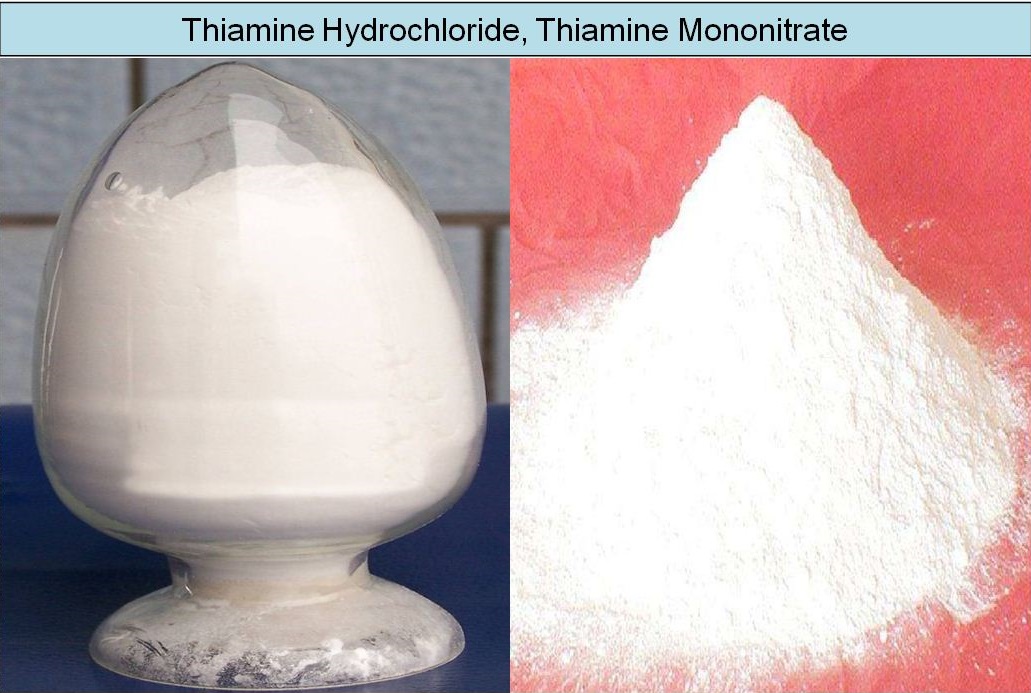
| Physical State (20°C) | Solid (crystalline powder) |
| Color | White to off-white |
| Odor | Slight characteristic odor |
| Taste | Slightly bitter |
SECTION 2: CHEMICAL STRUCTURE
                    NH₂
                     |
                     C
                    / \
                   /   \
                  /     \
                 /       \
    CH₃—C——N——C—N        CH₂—N⁺
         |   |   \     /        |
    CH₃—C   C    C—CH₃         CH₂
         |   |   |             |
         S   C——H             C—OH
             |               / \
             H              /   \
                          CH₃   H

    Thiamine Mononitrate
    C₁₂H₁₇N₅O₄S
    (NO₃⁻ anion salt)
Simplified Structure:
    [Thiamine Cation]⁺ · [NO₃]⁻

    Thiamine Mononitrate
    Vitamin B1 Nitrate Salt
| Parameter | Description |
|---|---|
| Molecular Formula | C₁₂H₁₇N₅O₄S |
| Molecular Weight | 327.36 g/mol |
| Chemical Class | Vitamin B1 (Thiamine) salt; Nitrate salt |
| Active Component | Thiamine (Vitamin B1) |
| Anion | Nitrate (NO₃⁻) |
| SMILES | CC1=C(SC=[N+]1CC2=CN=C(N=C2N)C)CCO.[O-]N+[O-] |
| InChI | InChI=1S/C12H17N4OS.NO3/c1-8-11(3-4-17)18-7-16(8)6-10-5-14-9(2)15-12(10)13;2-1(3)4/h5,7,17H,3-4,6H2,1-2H3,(H2,13,14,15);/q+1;-1 |
| InChI Key | JNMMJZBYHMQIBU-UHFFFAOYSA-N |
| Hydrogen Bond Donors | 2 |
| Hydrogen Bond Acceptors | 7 |
| Rotatable Bond Count | 4 |
| Polar Surface Area (PSA) | 154.9 Ų |
SECTION 3: THIAMINE FORMS COMPARISON
| Property | Thiamine Mononitrate | Thiamine Hydrochloride | Thiamine Phosphate | Benfotiamine |
|---|---|---|---|---|
| CAS Number | 532-43-4 | 67-03-8 | 532-42-3 | 22457-89-2 |
| Molecular Formula | C₁₂H₁₇N₅O₄S | C₁₂H₁₇ClN₄OS | C₁₂H₁₉N₄O₇PS | C₁₉H₂₃N₄O₆PS |
| Molecular Weight | 327.36 g/mol | 300.81 g/mol | 420.40 g/mol | 466.45 g/mol |
| Stability | Highest | High | Moderate | High |
| Water Solubility | Good (2.5 g/100 mL) | Very good (50 g/100 mL) | Good | Low (lipid-soluble) |
| Hygroscopicity | Low | High | Moderate | Low |
| Primary Use | Food supplements, dry formulations | Injections, aqueous solutions | Enzyme cofactor | Lipophilic form, neurological use |
| Dry Formulation Suitability | Most Suitable | Suitable (with moisture control) | Moderate | Most Suitable |
SECTION 4: PHYSICAL AND CHEMICAL PROPERTIES
| Property | Value | Test Method / Note |
|---|---|---|
| Appearance | White to off-white crystalline powder | Visual |
| Odor | Slight characteristic odor | Olfactometric |
| Molecular Weight | 327.36 g/mol | Calculated |
| Melting Point | ~196-200°C (decomposes) | DSC / Capillary |
| Density (20°C) | ~1.5 g/cm³ (estimated) | - |
| Water Solubility (20°C) | Good (~2.5 g/100 mL) | General Method |
| Hot Water Solubility | Better soluble | General Method |
| Ethanol Solubility | Slightly soluble (~0.2 g/100 mL) | General Method |
| Methanol Solubility | Slightly soluble | General Method |
| Acetone Solubility | Practically insoluble | General Method |
| pH (1% Solution) | 5.5 – 7.0 (neutral) | pH Meter |
| Log P (Octanol/Water) | < -1.0 (hydrophilic) | Calculated |
| Hygroscopicity | Low (compared to hydrochloride) | - |
| Vapor Pressure (25°C) | Very low | - |
| Thermal Stability | Stable up to 150°C; decomposes at 200°C | - |
| Flash Point | >150°C | - |
| Crystal System | Monoclinic | XRD |
| Optical Activity | Not optically active | - |
| UV Maximum (λmax) | ~247 nm, ~270 nm (water) | UV-VIS Spectrophotometer |
| Photostability | Light sensitive (photodegradation) | - |
SECTION 5: BIOLOGICAL FUNCTION AND METABOLISM
| Property | Description |
|---|---|
| Active Form | Converted in the body to Thiamine Pyrophosphate (TPP) |
| Coenzyme Role | TPP is a cofactor for critical enzymes in carbohydrate metabolism (pyruvate dehydrogenase, α-ketoglutarate dehydrogenase, transketolase) |
| Energy Metabolism | Plays a role in energy production from carbohydrates; Key role in glycolysis and Krebs cycle |
| Nervous System | Supports nerve conduction and neurotransmitter synthesis; Maintains myelin sheath health |
| Heart Health | Supports cardiac muscle function; Maintains healthy heart rhythm |
| Appetite Regulation | Exhibits appetite-regulating effects; Supports growth and development |
| Eye Health | Supports eye function; Maintains corneal health |
| Tissue Repair | Plays a role in cell division and tissue repair |
| Absorption | Absorbed from the small intestine (jejunum) via active transport |
| Storage | Limited storage in the body (~25-30 mg); Regular intake required |
| Excretion | Excreted in urine (excess amounts) |
SECTION 6: NATURAL SOURCES
| Food | Thiamine Content (mg/100g) |
|---|---|
| Whole Grains | 0.3 – 0.6 |
| Wheat (whole) | 0.5 |
| Brown Rice | 0.3 |
| Oats | 0.5 |
| Meat | 0.1 – 1.0 |
| Pork (lean) | 0.8 – 1.0 |
| Beef | 0.1 – 0.2 |
| Chicken | 0.1 – 0.2 |
| Nuts and Seeds | 0.2 – 0.8 |
| Sunflower Seeds | 0.7 – 0.8 |
| Almonds | 0.2 |
| Peanuts | 0.4 |
| Legumes | 0.1 – 0.5 |
| Lentils | 0.5 |
| Chickpeas | 0.3 |
| Beans | 0.2 |
| Nutritional Yeast | 5.0 – 15.0 |
| Fish | 0.1 – 0.3 |
| Milk and Dairy Products | 0.03 – 0.05 |
SECTION 7: THIAMINE DEFICIENCY
| Condition | Description |
|---|---|
| Beriberi (Wet Type) | Cardiac symptoms: heart failure, edema, tachycardia, shortness of breath |
| Beriberi (Dry Type) | Neurological symptoms: polyneuropathy, muscle weakness, gait disturbance, reflex loss |
| Wernicke-Korsakoff Syndrome | Associated with chronic alcoholism; ophthalmoplegia, ataxia, confusion, memory loss; Medical emergency |
| Infantile Beriberi | In infants; vomiting, convulsions, heart failure; Due to thiamine deficiency in breast milk |
| Subclinical Deficiency | Fatigue, loss of appetite, irritability, constipation, mild muscle weakness |
| Risk Factors | Chronic alcoholism, malnutrition, diabetes, bariatric surgery, elderly, HIV/AIDS, dialysis |
SECTION 8: DAILY INTAKE RECOMMENDATIONS (NIH RDI)
| Population | Recommended Daily Intake |
|---|---|
| Adults (Male) | 1.2 mg |
| Adults (Female) | 1.1 mg |
| Pregnant Women | 1.4 mg |
| Lactating Women | 1.5 mg |
| Children (1-3 years) | 0.5 mg |
| Children (4-8 years) | 0.6 mg |
| Children (9-13 years) | 0.9 mg |
| Adolescents (14-18 years, Male) | 1.2 mg |
| Adolescents (14-18 years, Female) | 1.0 mg |
| Infants (0-6 months) | 0.2 mg |
| Infants (7-12 months) | 0.3 mg |
SECTION 9: APPLICATIONS AND INDUSTRY USAGE
| Industry / Sector | Application | Typical Use |
|---|---|---|
| Food Industry | Food fortification | Enrichment of flour, pasta, rice, breakfast cereals, bread, dairy products, beverages; Typical concentration: 1-10 mg/kg |
| Pharmaceutical Industry | Multivitamin formulations | Tablets, capsules, injectable solutions, oral solutions, syrups; Typical dose: 1-50 mg/tablet |
| Animal Nutrition | Feed additive | Premixes to improve growth and productivity; Poultry, swine, cattle, cat, dog feeds; Typical concentration: 2-15 mg/kg feed |
| Agriculture | Plant nutrition (limited) | Thiamine application for plant growth (research stage) |
| Industrial | Stable crystalline structure | Preferred for long-term storage and ERP-compatible premixes |
SECTION 10: FOOD ADDITIVE USE
| Parameter | Information |
|---|---|
| E Number | None (classified as vitamin) |
| Function | • Vitamin fortification (enrichment) • Nutritional support • Dietary supplement |
| Food Applications | • Flour and flour products • Pasta • Rice • Breakfast cereals • Dairy products (fortified) • Beverages (fortified) • Infant formulas • Diet products |
| Typical Concentration | 1-10 mg/kg (food); 1-50 mg/tablet (supplement) |
| ADI (Acceptable Daily Intake) | Not established (safe vitamin) |
| FDA Status | GRAS (Generally Recognized as Safe); 21 CFR 184.1875 |
| EFSA Status | Approved food ingredient |
| Codex Alimentarius | Approved |
SECTION 11: PHARMACOPOEIA COMPLIANCE
| Pharmacopoeia | Standard | Specifications |
|---|---|---|
| USP (United States Pharmacopeia) | Thiamine Mononitrate | White crystalline powder; 98.0-102.0% (on dried basis); pH 5.5-7.0 (1:100); nitrate test |
| EP (European Pharmacopoeia) | Thiamine Mononitrate | Similar to USP standards; additional purity tests |
| JP (Japanese Pharmacopoeia) | Thiamine Mononitrate | Specific quality requirements for Asian market |
| BP (British Pharmacopoeia) | Thiamine Mononitrate | British Pharmacopoeia standards |
| FCC (Food Chemicals Codex) | Thiamine Mononitrate | Food additive specifications |
| Microbiological Limits | USP <61> | TAMC <10² CFU/g; TYMC <10¹ CFU/g |
| Heavy Metal Limits | USP <231> | Pb <10 ppm, As <2 ppm, Hg <1 ppm |
SECTION 12: QUALITY SPECIFICATIONS (USP/EP)
| Parameter | Specification (USP/EP) | Test Method |
|---|---|---|
| Appearance | White to off-white crystalline powder | Visual |
| Assay (on dried basis) | 98.0 – 102.0% | HPLC / Titrimetric |
| pH (1:100 Solution) | 5.5 – 7.0 | pH Meter |
| Loss on Drying (105°C, 2 h) | ≤1.0% | Gravimetric |
| Residue on Ignition | ≤0.1% | Gravimetric |
| Nitrate Test | Positive | Chemical test |
| Chloride | ≤0.02% | Titrimetric |
| Sulfate | ≤0.05% | Turbidimetric |
| Heavy Metals (Pb) | ≤10 ppm | ICP-MS |
| Arsenic (As) | ≤2 ppm | ICP-MS |
| Lead (Pb) | ≤3 ppm | ICP-MS |
| Cadmium (Cd) | ≤1 ppm | ICP-MS |
| Mercury (Hg) | ≤1 ppm | ICP-MS |
| Related Substances (Single) | ≤0.5% | HPLC |
| Related Substances (Total) | ≤1.0% | HPLC |
| Particle Size | As per customer specification | Laser Diffraction |
| Microbiological Purity | TAMC ≤10² CFU/g; TYMC ≤10¹ CFU/g | USP <61> |
| E. coli | Negative in 1g | USP <62> |
| Salmonella spp. | Negative in 25g | USP <62> |
| S. aureus | Negative in 1g | USP <62> |
| P. aeruginosa | Negative in 1g | USP <62> |
SECTION 13: SAFETY PROFILE AND TOXICOLOGICAL ASSESSMENT
| Parameter | Value / Description |
|---|---|
| GHS Classification | Generally not classified as hazardous substance |
| Signal Word | None (not hazardous) |
| Acute Oral Toxicity (LD50, Rat) | >5000 mg/kg (very low toxicity) |
| Acute Dermal Toxicity (LD50, Rabbit) | >2000 mg/kg (low toxicity) |
| Skin Irritation | May cause mild irritation |
| Eye Irritation | May cause mild irritation |
| Skin Sensitization | Does not cause sensitization |
| Carcinogenicity | Not classified as carcinogenic |
| Mutagenicity | Not mutagenic |
| Reproductive Toxicity | No reproductive toxicity |
| Target Organs | Skin, eyes (dust) |
| Excess Intake | Rare; mild side effects such as stomach upset, nausea may occur |
| Tolerable Upper Limit | Not established (water-soluble vitamin; excess excreted in urine) |
| Drug Interactions | • Furosemide (may increase thiamine excretion) • Diuretics • Digoxin (may decrease thiamine levels) • Antacids (may reduce absorption) |
| Synergistic Vitamins | B-complex vitamins (B2, B3, B6, B12, folic acid) |
SECTION 14: FIRST AID MEASURES
| Route of Exposure | Action |
|---|---|
| Inhalation | If inhaled as powder, move to fresh air. Seek medical attention if respiratory symptoms persist. |
| Skin Contact | Remove contaminated clothing. Wash with plenty of soap and water. Seek medical attention if irritation develops. |
| Eye Contact | Rinse thoroughly with plenty of water for at least 15 minutes. Keep eyelids open. Remove contact lenses if present. Seek medical attention if irritation persists. |
| Ingestion | Rinse mouth with water. Do NOT induce vomiting. Drink 1-2 glasses of water. Seek medical attention. |
| Note | Symptomatic treatment is administered. No specific antidote available. |
SECTION 15: STORAGE AND SHELF LIFE
| Parameter | Information |
|---|---|
| Storage Conditions | Store in a cool (<25°C), dry, well-ventilated area; protect from direct sunlight and moisture. |
| Temperature Limits | 15-25°C (ideal); do not exceed 30°C |
| Humidity | Low humidity environment (not hygroscopic) |
| Light | Protect from UV light and direct sunlight (photodegradation) |
| Air (Oxygen) | Stable against oxidation |
| Incompatible Materials | Strong oxidizing agents, strong acids, strong bases, alkaline conditions (thiamine loss), sulfites |
| Container Requirements | Light-proof, moisture-proof containers: Amber glass, aluminum foil, HDPE |
| Shelf Life | 36-60 months (unopened original packaging, under proper storage conditions) |
| Shelf Life (After Opening) | 12-24 months (under proper storage conditions) |
| Signs of Degradation | Color change (yellowing), caking, odor change, decreased solubility, HPLC impurity increase |
| Stability Warning | Heat treatment and alkaline medium may cause thiamine loss; May degrade under high humidity and light |
SECTION 16: PACKAGING OPTIONS
| Packaging Type | Quantity / Capacity | Material | Application Area |
|---|---|---|---|
| Aluminum Foil Bag | 1 kg, 5 kg, 10 kg, 25 kg | Aluminum / PE (light and moisture proof) | Food, pharmaceutical, feed industry |
| HDPE Drum | 25 kg, 50 kg | HDPE (opaque, moisture barrier) | Industrial supply |
| Amber Glass Bottle | 100 g, 500 g, 1 kg | Amber glass (UV protected) | Pharmaceutical, laboratory, high purity |
| Kraft Bag (PE Lined) | 10 kg, 25 kg | Kraft paper / PE liner | Economical packaging |
| Fiber Drum | 25 kg, 50 kg | Fiber / PE liner | Industrial supply |
| IBC Container | 500 kg, 1000 kg | UV-protected HDPE | Large-scale industrial supply |
SECTION 17: TRANSPORTATION INFORMATION
| Parameter | Information |
|---|---|
| UN Number | Not applicable (not classified as dangerous substance) |
| Hazard Class | Not applicable |
| Packing Group | Not applicable |
| ADR/RID | Not classified as dangerous goods |
| IMDG Code | Not marine pollutant; not classified as dangerous goods |
| IATA (Air) | Not classified as dangerous goods; can be transported by air |
| Transport Temperature | Ambient temperature; protect from heat, moisture, and light |
| Transport Precautions | Light-proof packaging; keep away from strong oxidizing agents |
| Spill Cleanup | Collect mechanically; clean with absorbent material; avoid dust generation |
| Marine Pollutant | No |
SECTION 18: REGULATORY STATUS
| Region / Authority | Status |
|---|---|
| USA (FDA) | GRAS (21 CFR 184.1875); Approved for food supplements and food fortification |
| USA (USP/NF) | Official monograph |
| European Union (EC) | Approved for food fortification (EC 1925/2006); EFSA approved |
| European Pharmacopoeia | Official monograph |
| Turkey | Approved as food supplement, pharmaceutical and feed additive; Subject to KKDIK and Ministry of Health regulations |
| Codex Alimentarius | Approved (CXG 36-1989) |
| WHO Essential Medicines List | Essential medicine (vitamin) |
| ECHA (REACH) | Registered substance |
| TSCA (USA) | Listed |
| California Prop 65 | Not listed |
| Halal | Yes (synthetic, not animal-derived) |
| Kosher | Yes (with certification) |
| Vegan | Yes (synthetic) |
SECTION 19: OTHER NAMES AND SYNONYMS
| Type | Name |
|---|---|
| Chemical Name | 3-[(4-Amino-2-methylpyrimidin-5-yl)methyl]-5-(2-hydroxyethyl)-4-methylthiazol-3-ium nitrate |
| Common Names (Turkish) | Tiamin Mononitrat, Vitamin B1 Mononitrat, Tiamin Nitrat |
| Common Names (English) | Thiamine Mononitrate, Vitamin B1 Mononitrate, Thiamine Nitrate, Aneurine Mononitrate |
| Trade Marks | Vitamin B1 Mononitrate, Thiamine Nitrate (bulk) |
| CAS Number | 532-43-4 |
| EC Number | 208-537-4 |
| PubChem CID | 11250 |
| DrugBank ID | Not applicable (vitamin) |
| FDA UNII | 4N92V2M6NF |
| E Number | None (vitamin) |
| HS Code | 2936.22 |
SECTION 20: GHS CLASSIFICATION AND LABELING
| Parameter | Information |
|---|---|
| GHS Classification | Generally not classified as hazardous substance |
| Signal Word | None (not hazardous) |
| Hazard Pictograms | None (generally) |
| Hazard Statements (H-Codes) | None (generally) or: H315 (Causes skin irritation), H319 (Causes serious eye irritation) |
| Precautionary Statements (P-Codes) | P264, P280, P302+P352, P305+P351+P338, P332+P313, P337+P313, P362+P364 |
| NFPA 704 Classification | Health: 0, Flammability: 1, Reactivity: 0 |
SECTION 21: ENVIRONMENTAL IMPACT AND DISPOSAL
| Parameter | Information |
|---|---|
| Biodegradability | Readily biodegradable (natural vitamin) |
| Aquatic Toxicity (EC50) | >100 mg/L (Daphnia magna) - low toxicity |
| Aquatic Toxicity (LC50) | >100 mg/L (fish) - low toxicity |
| Soil Mobility | High (hydrophilic) |
| Bioaccumulation Potential | Very low (hydrophilic) |
| Persistence | Low; readily biodegradable |
| Disposal Method | Dispose of in accordance with local, regional, and national regulations |
| Incineration | Controlled incineration facilities; energy recovery possible |
| Sewer Discharge | Do not discharge large quantities into sewers or water resources |
| Environmental Precautions | Prevent environmental spread during spills; collect with absorbent material |
| Ecotoxicity Note | Environmentally friendly; low ecotoxic potential |
SECTION 22: FREQUENTLY ASKED QUESTIONS
| Question | Answer |
|---|---|
| Q1: What is Thiamine Mononitrate? | Thiamine Mononitrate is the nitrate salt of Vitamin B1. It is a synthetic vitamin form that plays a critical role in carbohydrate metabolism and nervous system function. |
| Q2: What is the difference between Thiamine Mononitrate and Thiamine Hydrochloride? | The mononitrate form is less hygroscopic and has a more stable crystalline structure compared to the hydrochloride. It is preferred in dry formulations (tablets, capsules, feed premixes). The hydrochloride form is more common in aqueous solutions (injections, syrups). |
| Q3: Is Thiamine Mononitrate safe? | Yes, it is approved as GRAS (Generally Recognized as Safe) by FDA, EFSA and other authorities. As a water-soluble vitamin, excess is excreted in urine and toxicity is very low. |
| Q4: In which products is Thiamine Mononitrate used? | It is used in flour, pasta, rice, breakfast cereals, multivitamin tablets, capsules, animal feeds, premixes, and infant formulas. |
| Q5: What does Thiamine Mononitrate deficiency cause? | It can cause serious health problems such as beriberi (wet and dry types), Wernicke-Korsakoff syndrome, nervous system disorders, muscle weakness, heart failure, loss of appetite, and growth retardation. |
| Q6: Is Thiamine Mononitrate resistant to heat treatment? | Heat treatment and alkaline medium may cause thiamine loss. Dosage should be adjusted considering cooking losses during food fortification. |
| Q7: What is the shelf life of Thiamine Mononitrate? | 36-60 months under proper storage conditions (cool, dry, light-protected). |
| Q8: Is Thiamine Mononitrate vegan? | Yes, it is synthetically produced and does not contain animal-derived ingredients. |
| Q9: How is Thiamine Mononitrate used in animal feed? | It is used in premixes for growth, reproduction, energy metabolism and nervous system support. Typical concentration in poultry, swine, cattle, cat and dog feeds is 2-15 mg/kg feed. |
| Q10: What are the pharmacopoeia standards for Thiamine Mononitrate? | It has official monographs in USP, EP, JP and BP pharmacopoeias. Specifications for purity, assay, pH, heavy metals and microbiological purity are established. |
SECTION 23: QUICK REFERENCE TABLE
| Property | Value |
|---|---|
| CAS Number | 532-43-4 |
| Molecular Formula | C₁₂H₁₇N₅O₄S |
| Molecular Weight | 327.36 g/mol |
| Appearance | White to off-white crystalline powder |
| Melting Point | ~196-200°C (decomposes) |
| Water Solubility | Good (~2.5 g/100 mL) |
| pH (1% Solution) | 5.5 – 7.0 |
| Primary Function | Vitamin B1 (Thiamine) source |
| Recommended Daily Intake | 1.2 mg (adult male); 1.1 mg (adult female) |
| Shelf Life | 36-60 months |
| Storage | Cool (<25°C), dry, light-protected |
| GHS Classification | Generally not hazardous |
| FDA Status | GRAS (21 CFR 184.1875) |
| USP/EP Status | Official monograph |
| Halal / Kosher / Vegan | Yes (synthetic) |
| Main Applications | Food fortification, multivitamins, animal feeds, pharmaceutical formulations |
SECTION 24: CRITICAL WARNINGS AND BEST PRACTICES
CRITICAL WARNINGS:
-
Stability: The mononitrate form is more stable and less hygroscopic than the hydrochloride; it should be preferred in dry formulations (tablets, capsules, premixes).
-
Heat treatment loss: Thiamine loss may occur during cooking and heat treatment (especially in alkaline conditions). Dosage should be adjusted considering losses in fortification.
-
Light sensitivity: Thiamine Mononitrate is light sensitive. Store in light-proof containers.
-
Alkaline conditions: Unstable in alkaline conditions; degradation accelerates at pH >7.
-
Deficiency risk: Thiamine deficiency risk is high in chronic alcoholism, malnutrition, diabetes, bariatric surgery and dialysis patients.
-
Drug interactions: Furosemide, diuretics, digoxin and antacids may affect thiamine levels.
-
Regulations: Comply with regulations of relevant authorities (FDA, EFSA, Turkish Ministry of Health) for food, pharmaceutical and feed use.
BEST PRACTICE RECOMMENDATIONS:
-
Form Selection: Use Thiamine Mononitrate for dry formulations (tablets, capsules, feed premixes). Use Thiamine Hydrochloride for aqueous solutions (injections, syrups).
-
Dosage Calculation: Adjust dosage to compensate for cooking losses (generally 10-30%) in food fortification.
-
Fortification: Ensure homogeneous distribution when enriching flour, rice, pasta and breakfast cereals with thiamine.
-
Premix Preparation: Ensure homogeneous distribution when mixing Thiamine Mononitrate with other vitamins and minerals in feed premixes.
-
Stability Studies: Test product stability during long-term storage; evaluate effects of moisture, temperature and light.
-
Quality Control: Regularly perform assay (HPLC), pH, loss on drying, heavy metals, nitrate test and microbiological purity tests.
-
Storage: Store in cool (<25°C), dry, light-proof containers. Protect from high humidity and light.
-
Personnel Training: Train employees on dust control, PPE use and emergency procedures.
-
Microbiological Control: Test powder form for microbiological contamination (TAMC, TYMC, pathogens).
-
Spill Cleanup: Avoid dust generation; use HEPA-filtered vacuum or wet cleaning. Prevent entry into water and sewers.
LEGAL DISCLAIMER:
The information provided in this document is based on our current knowledge and experience and is presented in good faith. However, as all conditions of use are beyond our control, it does not constitute a binding specification or guarantee. This Technical Data Sheet is for informational purposes only. Users are responsible for testing suitability for their own applications and for complying with all local, regional, and national regulations. For complete safety, storage, use, handling, waste, and regulatory compliance information, please refer to the official Safety Data Sheet (SDS/MSDS) provided by the manufacturer/supplier. Thiamine Mononitrate is a vitamin compound; its use as a dietary supplement or food additive must comply with relevant regulations. For medical use, consult a healthcare professional.