We unleash your business potential by maximize the business innovation.
Send EmailIsoleucine, L-Isoleucine, 2-Amino-3-methylvaleric Acid, BCAA, 73-32-5
L-ISOLEUCINE
L-Isoleucine / Isoleucine / (2S,3S)-2-Amino-3-methylpentanoic acid / BCAA
CAS Number: 73-32-5
EC Number: 200-798-2
1. PRODUCT IDENTIFICATION AND CHEMICAL IDENTITY
| Parameter | Description |
|---|---|
| Chemical Name (IUPAC) | (2S,3S)-2-Amino-3-methylpentanoic acid |
| Other Names | L-Isoleucine, Isoleucine, (S,S)-Isoleucine, 2-Amino-3-methylvaleric acid |
| CAS Number | 73-32-5 |
| EC Number (EINECS) | 200-798-2 |
| Molecular Formula | C₆H₁₃NO₂ |
| Molecular Weight | 131.17 g/mol |
| Chemical Class | Amino acid (branched-chain amino acid - BCAA) |
| Appearance | Crystalline leaflets or white, crystalline powder |
| Odor | Odorless |
| Taste | Bitter taste |
L-Isoleucine is an essential, branched-chain amino acid (BCAA) belonging to the same family as L-leucine and L-valine. It is one of the nine essential amino acids that cannot be synthesized by the human body and must be obtained through diet or supplementation . L-Isoleucine has two chiral centers and exerts its physiological activity solely through its L-isomer . It plays a critical role in muscle metabolism, energy production, immune function, and glucose homeostasis. L-Isoleucine appears as crystalline leaflets or a white, crystalline powder, is odorless, and has a bitter taste . It is soluble in water (approximately 40 g/L at 25°C), slightly soluble in hot alcohol, soluble in diluted mineral acids and alkaline solutions, and insoluble in ether . L-Isoleucine is widely used in sports nutrition, dietary supplements, medical applications, the food industry, and animal feed .
2. PHYSICAL AND CHEMICAL PROPERTIES
| Property | Value |
|---|---|
| Molecular Formula | C₆H₁₃NO₂ |
| Molecular Weight | 131.17 g/mol |
| Appearance | Crystalline leaflets or white, crystalline powder |
| Odor | Odorless |
| Taste | Bitter taste |
| Melting Point | ~279-284°C (decomposes) |
| Sublimation Temperature | 168-170°C |
| Water Solubility (25°C) | ~40 g/L ; 41.2 g/L at 25°C |
| Solubility in Hot Alcohol | Slightly soluble |
| Solubility in Dilute Mineral Acids | Soluble |
| Solubility in Alkaline Solutions | Soluble |
| pH (1:100 aqueous solution) | 5.5-7.0 |
| Specific Optical Rotation ([α]²⁰D) | +38.9 to +41.8° (c=4, 6N HCl) ; +40.61° (c=4.6 in 6.1N HCl) |
| Bulk Density | ~470 kg/m³ |
| Loss on Drying | ≤ 0.3% |
| Residue on Ignition | ≤ 0.3% |
| Heavy Metals (as Pb) | ≤ 0.001% |
| Chloride (Cl) | ≤ 0.02% |
| Sulfate (SO₄) | ≤ 0.01% |
| pKa | 2.36 (pK1); 9.68 (pK2) |
L-Isoleucine is a white, crystalline powder with a bitter taste. It has a melting point of 279-284°C, at which it decomposes. It sublimes between 168-170°C . Its water solubility at 25°C is approximately 40 g/L . It is slightly soluble in hot alcohol but soluble in diluted mineral acids and alkaline solutions . The pH of a 1:100 aqueous solution is 5.5-7.0 . The specific optical rotation is +38.9 to +41.8° (c=4, 6N HCl) . The pKa values are 2.36 and 9.68 .
3. CHEMICAL PROPERTIES AND REACTIONS
L-Isoleucine is a branched-chain amino acid (BCAA) with a hydrophobic, aliphatic side chain. Its chemical behavior is determined by its amino acid functional groups and the branched side chain.
Acid-Base Properties:
L-Isoleucine has both carboxyl (COOH) and amino (NH₂) groups. pKa values: 2.36 (pK1) and 9.68 (pK2) .
Esterification:
L-Isoleucine can be esterified with alcohols to form isoleucine esters, which are used as pharmaceutical intermediates.
Acylation:
The amino group of L-isoleucine can be acylated to form N-acyl derivatives for peptide synthesis and pharmaceutical applications.
Transamination:
L-Isoleucine participates in transamination reactions, transferring its amino group to α-ketoglutarate to form glutamate and α-keto-β-methylvalerate.
Thermal Decomposition:
Above its melting point, L-isoleucine decomposes, producing ammonia, carbon dioxide, and various nitrogen-containing compounds.
4. PRODUCTION METHODS
L-Isoleucine is produced industrially primarily through microbial fermentation using metabolically engineered microorganisms.
| Method | Raw Materials | Process Description |
|---|---|---|
| Fermentation (Microbial) | Glucose, Ammonia, Mineral salts | Microorganisms such as Corynebacterium glutamicum or Escherichia coli are cultivated in fermenters. The organisms produce L-isoleucine, which is secreted into the fermentation broth. This is the most common industrial method . |
| Whole-Cell Biocatalysis | L-Threonine, Glucose | Engineered E. coli whole-cell biocatalysts convert L-threonine to L-isoleucine with high efficiency . |
| Enzymatic Synthesis | α-Keto-β-methylvaleric acid, Ammonia, NADH | α-Keto-β-methylvaleric acid is enzymatically converted to L-isoleucine using specific enzymes. |
Detailed Production Process (Fermentation Method - Most Common):
Current industrial production of L-isoleucine primarily relies on microbial fermentation . Corynebacterium glutamicum and Escherichia coli are the primary host strains used for industrial production .
Key Metabolic Engineering Strategies:
-
Feedback Inhibition Relief: Removing feedback inhibition of key enzymes such as aspartokinase, threonine dehydratase (TD), and acetohydroxy acid synthase (AHAS) is critical .
-
Pathway Optimization: Overexpression of key genes including lysC^A279T, *ilvA^G418A/T1147G*, and *ilvBN^A139T/T140A* enhances the L-isoleucine synthetic pathway .
-
Cofactor Supply Enhancement: Each L-isoleucine molecule requires five NADPH molecules for biosynthesis; enhancing NADPH availability improves production .
-
Efflux System Promotion: Overexpression of brnFE promotes L-isoleucine efflux, increasing production .
Recent Production Achievements:
-
An engineered E. coli strain (ISO-12) achieved 51.5 g/L L-isoleucine in a 5L fermenter .
-
A whole-cell biocatalysis system achieved 98.4% conversion of L-threonine to L-isoleucine, producing 40.1 g/L within 36 hours .
-
A metabolically engineered C. glutamicum strain produced 21.3 g/L L-isoleucine after 48 hours .
5. PHYSIOLOGICAL FUNCTIONS AND HEALTH BENEFITS
L-Isoleucine is an essential branched-chain amino acid that plays numerous critical roles in the body. It regulates glucose homeostasis, muscle protein synthesis, liver metabolism, and immune function .
5.1. Energy Production and Muscle Metabolism
| Benefit | Description |
|---|---|
| Energy Production | Used in muscle tissue for energy production; serves as fuel during exercise. |
| Muscle Protein Synthesis | Stimulates muscle protein synthesis and promotes muscle growth through the mTOR signaling pathway . |
| Exercise Recovery | Accelerates post-exercise recovery and reduces muscle damage . |
| Glucose Homeostasis | Plays a role in blood sugar regulation. |
Branched-chain amino acids, including L-isoleucine, are primarily metabolized in muscle tissue rather than the liver. L-Isoleucine acts as a pivotal regulator of muscle protein synthesis by activating the mammalian target of rapamycin (mTOR) signaling pathway, facilitating post-exercise muscle fiber repair . It is also a key component of parenteral nutrition formulations .
5.2. Immune Function
| Benefit | Description |
|---|---|
| Immune Support | Supports immune system function. |
| Infection Resistance | May enhance resistance to infections. |
L-Isoleucine plays a role in immune function and may enhance resistance to infections.
5.3. Other Health Benefits
| Benefit | Description |
|---|---|
| Liver Metabolism | Supports liver metabolism. |
| Wound Healing | Supports tissue repair and wound healing. |
| Growth and Development | Essential for growth and development in children and adolescents. |
| Anti-Allergic Applications | Amino acid-based surfactants derived from L-isoleucine have applications in anti-allergic skincare products . |
| Type 2 Diabetes Management | 4-Hydroxyisoleucine, an L-isoleucine derivative, offers innovative approaches for managing type 2 diabetes through enhancing insulin sensitivity . |
6. APPLICATIONS AND INDUSTRIAL USES
L-Isoleucine has a wide range of applications in sports nutrition, dietary supplements, medical applications, the food industry, animal feed, and cosmetics .
6.1. Sports Nutrition and Dietary Supplements
| Application | Description |
|---|---|
| BCAA Supplements | Used in BCAA blends with leucine and valine for muscle growth and recovery. |
| Sports Drinks | Found in energy drinks and sports beverages. |
| Protein Powders | Used in protein powders to enhance the amino acid profile. |
| Cell Culture | Used as a supplement in cell culture media for primary hepatocytes and keratinocytes . |
L-Isoleucine is a key component of BCAA blends and sports nutrition products due to its role in muscle protein synthesis and energy metabolism .
6.2. Food Industry
| Application | Description |
|---|---|
| Functional Foods | Used in functional foods to improve nutritional profile. |
| Flavor Enhancer | Serves as a flavor enhancer in food products . |
| Nutrient Supplement | Approved as a nutrient supplement in foods . |
L-Isoleucine is listed as a flavoring agent and nutrient supplement by the FDA .
6.3. Pharmaceutical Applications
| Application | Description |
|---|---|
| Metabolic Disorders | Used in the treatment of metabolic disorders. |
| Muscle Wasting | Used in conditions involving muscle atrophy. |
| Recovery Therapies | Used in recovery therapies. |
| Parenteral Nutrition | Used in amino acid infusion solutions . |
L-Isoleucine is a key component of parenteral nutrition formulations in biopharmaceuticals .
6.4. Animal Nutrition
| Application | Description |
|---|---|
| Feed Supplement | Used in poultry and swine feed to improve feed efficiency and animal growth . |
| Poultry Nutrition | Supports immunity and productivity in poultry. |
| Livestock Nutrition | Used as a feed supplement for cattle, swine, and poultry. |
The FDA has reviewed L-isoleucine fermentation product for use as a source of L-isoleucine in poultry and swine feed .
6.5. Cosmetics and Personal Care
| Application | Description |
|---|---|
| Cosmetic Products | Used in personal care and cosmetic products. |
| Anti-Allergic Skincare | Amino acid-based surfactants derived from L-isoleucine are used in anti-allergic skincare products . |
| Tissue Engineering | L-Isoleucine presents new prospects for tissue engineering scaffold construction . |
7. DOSAGE AND ADMINISTRATION
| Parameter | Information |
|---|---|
| General Supplementation | 500-1,500 mg per day |
| BCAA Supplementation | 2,000-5,000 mg per day (as part of BCAA blend) |
| Sports Nutrition | 1,000-3,000 mg per day (pre- or post-workout) |
| Therapeutic Use | Varies by condition; medical supervision required |
| Forms | Tablets, capsules, powders, liquids |
| Disclaimer | Dosages may vary based on individual needs and health status. Consult a healthcare professional before use. |
8. POTENTIAL SIDE EFFECTS AND WARNINGS
| Side Effect | Description |
|---|---|
| Gastrointestinal Distress | Nausea, diarrhea, abdominal cramps, stomach pain (at high doses) |
| Fatigue | May cause fatigue or drowsiness in some individuals |
| Headache | May cause headache in some individuals |
| Maple Syrup Urine Disease (MSUD) | Contraindicated in patients with MSUD due to inability to metabolize branched-chain amino acids |
| Kidney/Liver Disease | Use with caution in patients with severe kidney or liver disease |
| Pregnancy and Lactation | Generally safe at recommended doses; consult healthcare professional before use |
9. NATURAL FOOD SOURCES OF L-ISOLEUCINE
| Animal Sources | Plant Sources |
|---|---|
| Meat (beef, lamb, pork) | Soybeans |
| Poultry (chicken, turkey) | Lentils |
| Fish (salmon, tuna, cod) | Chickpeas |
| Eggs | Beans |
| Dairy products (milk, cheese, yogurt) | Seeds |
| Nuts | |
| Buckwheat |
10. SAFETY AND TOXICOLOGY
| Parameter | Value |
|---|---|
| Oral LD50 (Rat) | > 5,000 mg/kg (low toxicity) |
| Dermal LD50 (Rabbit) | > 2,000 mg/kg |
| Skin Irritation | Non-irritant |
| Eye Irritation | Mild irritant |
| Skin Sensitization | Not a sensitizer |
| Mutagenicity | Negative |
| Carcinogenicity | Not classified |
| GRAS Status | Generally Recognized as Safe (GRAS) by FDA |
11. FIRST AID MEASURES
| Exposure Route | Action |
|---|---|
| Inhalation | Move person to fresh air. If irritation persists, seek medical attention. |
| Skin Contact | Wash with plenty of soap and water. If irritation persists, seek medical attention. |
| Eye Contact | Rinse immediately with plenty of water for at least 15 minutes. Remove contact lenses if present. If irritation persists, seek medical attention. |
| Ingestion | Rinse mouth with water. Drink plenty of water. Do NOT induce vomiting. Seek medical attention if large amounts are swallowed. |
12. SAFETY INFORMATION (GHS CLASSIFICATION)
L-Isoleucine is not classified as a hazardous substance under GHS.
| Hazard Class | Category |
|---|---|
| Skin Irritation | Category 3 (mild irritation) |
| Eye Irritation | Category 2B (mild irritation) |
Signal Word: WARNING
Hazard Statements (H-Codes):
| Code | Statement |
|---|---|
| H315 | Causes skin irritation (mild) |
| H319 | Causes serious eye irritation (mild) |
| H335 | May cause respiratory irritation (dust) |
13. STORAGE AND HANDLING
| Parameter | Information |
|---|---|
| Storage Conditions | Cool, dry, well-ventilated area; store at 2-30°C |
| Container Requirements | Tightly closed containers (bags, drums, boxes) |
| Materials to Avoid | Strong oxidizing agents, strong acids, strong bases, moisture |
| Shelf Life | 24-36 months under proper storage conditions |
| Hygroscopicity | Slightly hygroscopic |
L-Isoleucine should be stored at 2-30°C in cool, dry, well-ventilated areas . It is slightly hygroscopic and should be protected from moisture. Containers should be kept tightly closed to prevent moisture absorption and contamination.
14. TRANSPORT INFORMATION
| Parameter | Information |
|---|---|
| UN Number | Not applicable (not classified as dangerous good) |
| Hazard Class | Not a dangerous good |
| Packing Group | Not applicable |
| Proper Shipping Name | L-Isoleucine |
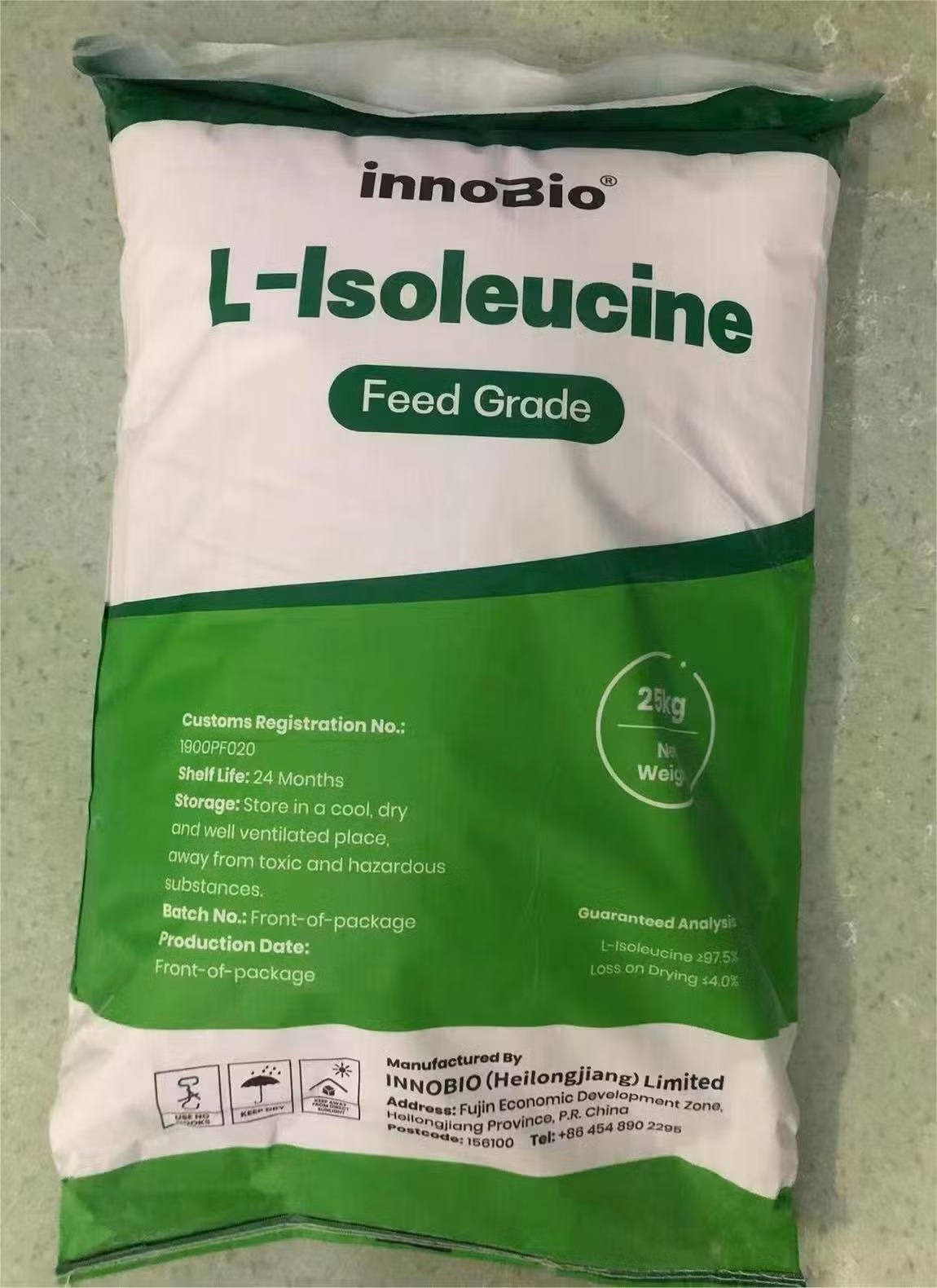
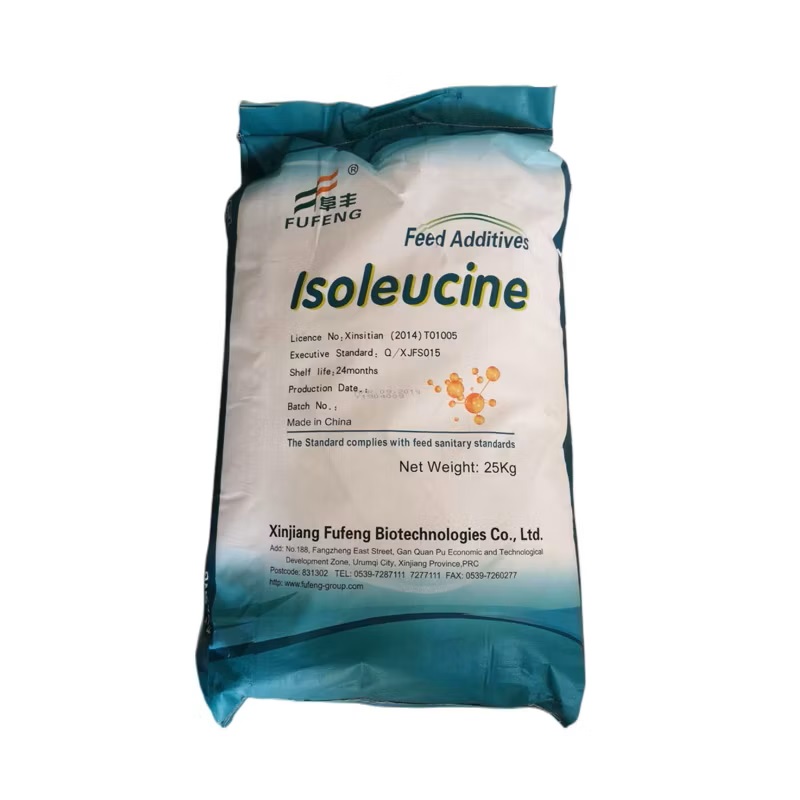
L-Isoleucine is not classified as a dangerous good for transport. It is shipped in 25 kg bags, drums, or FIBCs.
15. REGULATORY INFORMATION
| Region | Status |
|---|---|
| EU | REACH registered; approved as food additive |
| Turkey (KKDİK) | Mandatory compliance; requires registration |
| USA (TSCA) | Listed; FDA approved as food additive and GRAS |
| USP | USP compliant |
| EP | EP compliant |
| JP | JP compliant |
| China (CP) | CP2020 compliant |
Regulatory Status:
| Status | Information |
|---|---|
| FDA Compliance | Approved as food additive (GRAS); approved as nutrient supplement in foods |
| EU Compliance | REACH registered; approved as food additive |
| IARC Classification | Not classified |
| HS Code | 29224920 |
16. OTHER NAMES AND SYNONYMS
| Category | Names / Identifiers |
|---|---|
| Chemical Names | (2S,3S)-2-Amino-3-methylpentanoic acid |
| Synonyms | L-Isoleucine, Isoleucine, (S,S)-Isoleucine, 2-Amino-3-methylvaleric acid, alpha-Amino-beta-methylvaleric acid |
| Abbreviations | Ile, I (single-letter code) |
| USP Name | l-Isoleucine |
17. APPLICATION SUMMARY TABLE
| Industry | Application | Suitability |
|---|---|---|
| Sports Nutrition | BCAA supplements, sports drinks, protein powders | High |
| Dietary Supplements | Amino acid blends, protein powders | High |
| Food Industry | Functional foods, flavor enhancer, fortified foods | Suitable |
| Pharmaceutical | Metabolic disorders, muscle wasting, parenteral nutrition | Suitable |
| Animal Nutrition | Feed supplement | Suitable |
| Cosmetics | Personal care products, anti-allergic skincare | Limited |
18. SUMMARY AND CRITICAL WARNINGS
SUMMARY:
L-Isoleucine (C₆H₁₃NO₂, CAS 73-32-5) is an essential branched-chain amino acid (BCAA) belonging to the same family as L-leucine and L-valine. It appears as crystalline leaflets or a white, crystalline powder, is odorless, and has a bitter taste . The molecular weight is 131.17 g/mol, melting point is 279-284°C (decomposes), and water solubility at 25°C is approximately 40 g/L . It is produced primarily through microbial fermentation using Corynebacterium glutamicum or Escherichia coli . L-Isoleucine plays critical roles in energy production, muscle metabolism, immune function, glucose homeostasis, and liver metabolism . It is widely used in sports nutrition (BCAA supplements, energy drinks, protein powders), dietary supplements, medical applications (metabolic disorders, muscle wasting, parenteral nutrition), the food industry (functional foods, flavor enhancer), and animal feed . It is considered GRAS (Generally Recognized as Safe) by the FDA . It is stored at 2-30°C in cool, dry, well-ventilated areas . Packaging: 25 kg bags, drums, or FIBCs.
Key Properties:
| Property | Value |
|---|---|
| Appearance | Crystalline leaflets or white, crystalline powder |
| Chemical Formula | C₆H₁₃NO₂ |
| Molecular Weight | 131.17 g/mol |
| CAS Number | 73-32-5 |
| Melting Point | ~279-284°C (decomposes) |
| Water Solubility (25°C) | ~40 g/L |
| Specific Optical Rotation | +38.9 to +41.8° (c=4, 6N HCl) |
| Primary Use | Sports nutrition, dietary supplement, pharmaceutical intermediate |
Major Application Areas:
| Industry | Applications |
|---|---|
| Sports Nutrition | BCAA supplements, energy drinks, protein powders |
| Food Industry | Functional foods, flavor enhancer, fortified foods |
| Pharmaceutical | Metabolic disorders, muscle wasting, parenteral nutrition |
| Animal Nutrition | Feed efficiency and animal growth feed supplement |
| Cosmetics | Personal care products, anti-allergic skincare |
Key Safety Points:
-
LOW TOXICITY: GRAS by FDA
-
SLIGHTLY HYGROSCOPIC: Protect from moisture
-
MILD IRRITANT: May cause mild skin and eye irritation
-
STORAGE: Store at 2-30°C in cool, dry, well-ventilated area
-
CONTRAINDICATIONS: Maple syrup urine disease (MSUD)
CRITICAL WARNINGS:
Essential BCAA: L-Isoleucine is one of the three branched-chain amino acids (BCAAs) and cannot be synthesized by the body. BCAAs are unique because they are metabolized primarily in muscle tissue rather than the liver, making them critical for muscle protein synthesis and energy production during exercise .
Energy Metabolism: L-Isoleucine serves as an important energy source in muscle tissue, particularly during prolonged exercise. As a branched-chain amino acid, it is oxidized in skeletal muscle rather than the liver and can be used directly as fuel during exercise .
Muscle Protein Synthesis: Like other BCAAs, L-isoleucine stimulates muscle protein synthesis, supporting muscle growth and repair. Along with leucine, it activates protein synthesis through the mTOR pathway .
Maple Syrup Urine Disease (MSUD): L-Isoleucine is strictly contraindicated in patients with maple syrup urine disease (MSUD), a rare genetic disorder characterized by the inability to metabolize branched-chain amino acids.
Market and Applications: The global L-isoleucine market is growing rapidly due to increasing interest in sports nutrition and the prevalence of chronic health conditions. It is expected to grow from USD 42 million in 2020 to USD 55 million by 2026. Key applications include food (flavor enhancer), pharmaceuticals (parenteral nutrition), and cosmetics (anti-allergic skincare products) .
Important Disclaimer: This Technical Data Sheet (TDS) is for informational purposes only. The information provided is based on available data. For complete safety, handling, storage, and regulatory compliance information, always refer to the official Safety Data Sheet (SDS/MSDS) provided by the manufacturer/supplier. Users are responsible for testing the product in their own processes and applications.