We unleash your business potential by maximize the business innovation.
Send EmailBistert-butyldioxyisopropyl Benzene, BIPB, 25155-25-3
BIS(T-BUTYLPEROXYISOPROPYL)BENZENE (BIPB)
Bis(1-(tert-butylperoxy)-1-methylethyl)-benzene / BIPB / Di(t-butylperoxyisopropyl)benzene
CAS Number: 25155-25-3
EC Number: 246-678-3
1. PRODUCT IDENTIFICATION AND CHEMICAL IDENTITY
| Parameter | Description |
|---|---|
| Chemical Name (IUPAC) | Bis(1-(tert-butylperoxy)-1-methylethyl)-benzene |
| Other Names | BIPB, Di(t-butylperoxyisopropyl)benzene, α,α-Bis-(t-butylperoxy)-1,3-diisopropylbenzene, (Phenylenebis(1-methylethylidene))bis(1,1-dimethylethyl)-peroxide |
| CAS Number | 25155-25-3 |
| EC Number (EINECS) | 246-678-3 |
| Molecular Formula | C₂₀H₃₄O₄ |
| Molecular Weight | 338.49 g/mol |
| Chemical Class | Organic peroxide (crosslinking agent) |
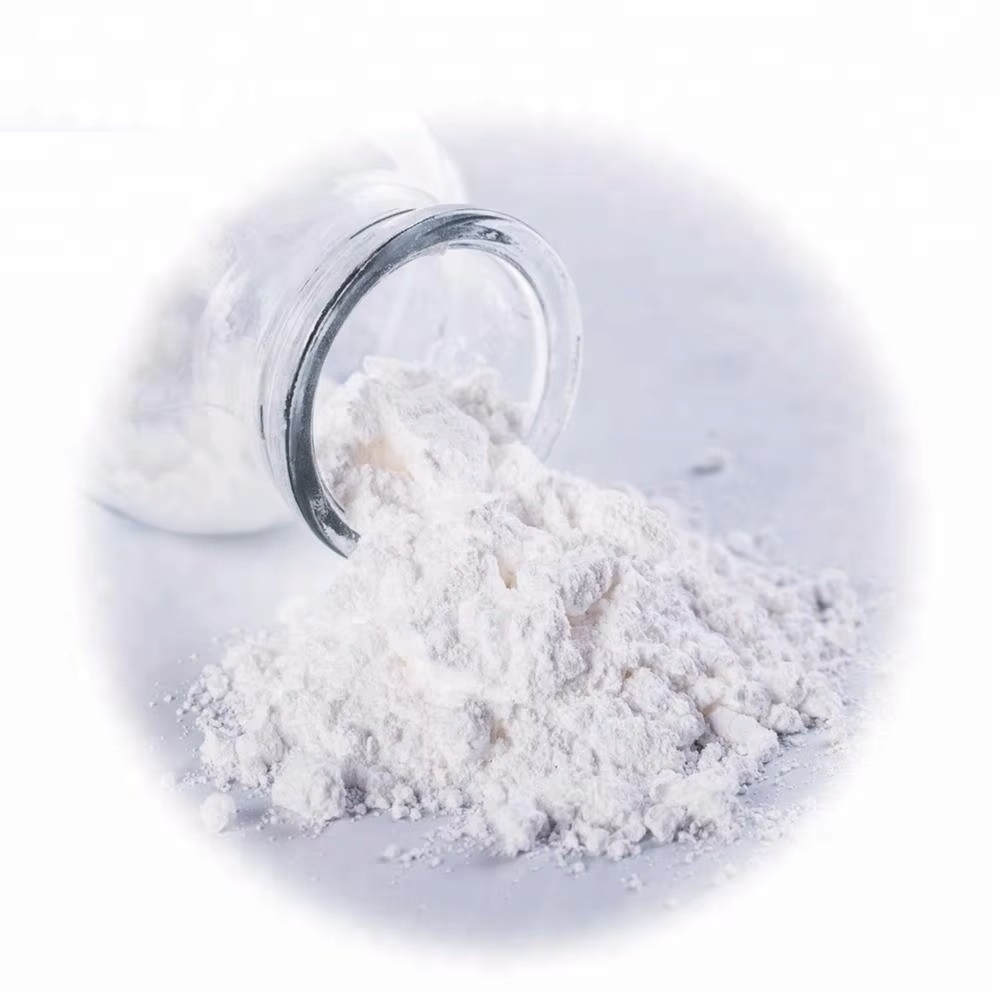
| Appearance | Colorless to light yellow liquid or solid (depending on concentration) |
| Odor | No irritating odor |
Bis(t-butylperoxyisopropyl)benzene (BIPB) is a strong organic peroxide crosslinking agent belonging to the organic peroxide class. It is preferred in the rubber and plastics industries due to its high efficiency, low dosage, and odorless processing advantages. Commercially, it is known under trade names such as Luperox F, Luperox F90P, and Luperox F40KEP. BIPB provides the same crosslinking effect at approximately 2/3 of the dosage compared to classical organic peroxides such as dicumyl peroxide (DCP). It significantly improves thermal and mechanical properties and has broad polymer compatibility (silicone, EVA, EPDM, CPE, HNBR, etc.). Its advantages—high crosslinking efficiency at low dosage, odorless working environment, and broad polymer compatibility—make BIPB a preferred crosslinking agent in the industry.
2. PHYSICAL AND CHEMICAL PROPERTIES
| Property | Value |
|---|---|
| Molecular Formula | C₂₀H₃₄O₄ |
| Molecular Weight | 338.49 g/mol |
| Appearance | Colorless to light yellow liquid or solid (depending on concentration) |
| Odor | No irritating odor |
| Density (20°C) | ~0.92-0.95 g/cm³ (liquid form) |
| Melting Point | ~40-50°C (pure form) |
| Boiling Point | Decomposes (thermal decomposition) |
| Flash Point | >100°C |
| Active Oxygen Content | ~4.7-4.8% |
| Decomposition Temperature (1 hour half-life) | ~145-155°C |
| Decomposition Temperature (10 hour half-life) | ~120-130°C |
| Water Solubility | Practically insoluble |
| Organic Solvent Solubility | Soluble in most organic solvents |
| Reactivity | Strong oxidizing agent |
| Stability | Stable under controlled conditions; must be protected from heat, light, and contaminants |
| Incompatible Materials | Strong acids, bases, reducing agents, heavy metal salts |
The physical properties of BIPB vary depending on the concentration. The 96% pure form is a colorless to light yellow solid (melting point ~40-50°C), while the 40% diluted form is a colorless to light yellow liquid. Density at 20°C is approximately 0.92-0.95 g/cm³. Active oxygen content is approximately 4.7-4.8%. Decomposition temperature (1 hour half-life) is 145-155°C and 10 hour half-life is 120-130°C. It is practically insoluble in water but soluble in most organic solvents. It has strong oxidizing properties. It is stable under controlled conditions but must be protected from heat, light, and contaminants. It is incompatible with strong acids, bases, reducing agents, and heavy metal salts.
3. DECOMPOSITION MECHANISM AND CROSSLINKING
BIPB is an organic peroxide that thermally decomposes to form free radicals. These radicals enable the crosslinking of polymer chains.
Decomposition Reaction:
C₂₀H₃₄O₄ → 2 t-butoxy radicals + 2 acetone + 1 diisopropylbenzene residue
Basic Decomposition Mechanism:
-
O-O Bond Cleavage: BIPB breaks the O-O bond upon heating, forming two t-butoxy radicals.
-
Radical Formation: t-Butoxy radicals fragment to form methyl radicals and acetone.
-
Hydrogen Abstraction: The formed radicals abstract hydrogen atoms from polymer chains, creating polymer radicals.
-
Crosslinking: Polymer radicals combine to form a crosslinked network structure.
Half-Life Data:
| Temperature | 1 Hour Half-Life | 10 Hour Half-Life |
|---|---|---|
| ~145-155°C | 1 hour | - |
| ~120-130°C | - | 10 hours |
| ~100°C | ~10 hours | - |
Decomposition Products:
-
Acetone (volatile)
-
Methyl radicals → methane
-
t-Butyl alcohol
-
Diisopropylbenzene derivatives
4. CONCENTRATION VARIANTS
| Concentration | Form | Description | Applications |
|---|---|---|---|
| 96% BIPB (Pure Form) | Solid (melting point ~40-50°C) | High reactivity, fast vulcanization processes; strong effect at low dosage (~2/3 of other organic peroxides) | High-speed production lines, premium rubber products |
| 40% BIPB (Diluted Form) | Liquid | Suitable for sensitive and controlled reactions; easy dosage adjustment; safe storage and transportation | Applications requiring precise dosing, small-scale production |
96% BIPB (Pure Form):
-
High reactivity, fast vulcanization processes
-
Strong effect at low dosage (approximately 2/3 of other organic peroxides)
-
Suitable for high-speed production lines and premium rubber products
-
Melting point ~40-50°C
40% BIPB (Diluted Form):
-
Suitable for sensitive and controlled reactions
-
Easy dosage adjustment
-
Safe storage and transportation advantages
-
Suitable for small-scale production and applications requiring precise dosing
5. APPLICATIONS AND INDUSTRIAL USES
BIPB is a strong organic peroxide crosslinking agent used in a wide range of industries. It stands out with its high efficiency at low dosage, odorless processing, and broad polymer compatibility.
5.1. Rubber Industry
| Application | Description |
|---|---|
| Silicone Rubber Vulcanization | Used in the vulcanization (crosslinking) of silicone rubbers. Provides high-temperature resistance and flexibility. |
| EPDM Rubber Crosslinking | Used in the crosslinking of EPDM (Ethylene-Propylene-Diene Monomer) rubbers. Automotive seals, hoses, and profile products. |
| CPE (Chlorinated Polyethylene) Vulcanization | Used in the vulcanization of chlorinated polyethylene. Common in wire and cable insulation. |
| HNBR (Hydrogenated Nitrile Rubber) Crosslinking | Used in the crosslinking of HNBR. Applications requiring high temperature and chemical resistance. |
| NBR (Nitrile Rubber) Vulcanization | Used in the vulcanization of nitrile rubbers. Applications requiring oil and solvent resistance. |
| General Rubber Vulcanization | Used in the vulcanization of various elastomers. |
BIPB is widely used in the rubber industry for vulcanization and crosslinking processes. It is preferred in applications such as silicone rubber cables, EPDM hoses, CPE insulation, automotive seals, hoses, and profile products.
5.2. Plastics Industry
| Application | Description |
|---|---|
| EVA Foam Crosslinking | Used in the crosslinking of EVA (Ethylene-Vinyl Acetate) foams. Sports equipment, toys, shoe soles, yoga mats. |
| Polyethylene Crosslinking | Used in the crosslinking of polyethylene (PE). Pipe, cable, film, and foam applications. |
| Polypropylene Modification | Used in the modification of polypropylene (PP). |
| Thermoplastic Vulcanizates (TPV) | Used as a crosslinking agent in TPV production. |
| Masterbatch Production | Used as a crosslinking agent in masterbatch formulations. |
BIPB is used in the plastics industry for EVA foam crosslinking, polyethylene crosslinking, polypropylene modification, and thermoplastic vulcanizate (TPV) production. It is common in sports equipment, toys, insulation foams, pipes, cables, films, and foam applications.
5.3. Electrical and Cable Industry
| Application | Description |
|---|---|
| Cable Insulation | Used in the crosslinking of silicone rubber cables, EPDM cables, and CPE-insulated cables. |
| Flexible Cables | Used in the production of flexible cable sheaths. |
| HVAC Cables | Used in the insulation of cables used in air conditioning and HVAC systems. |
| Rubber-Sheathed Cables | Used in the production of rubber-sheathed cables. |
BIPB is used in the electrical and cable industry for flexible insulation, cable sheaths, and HVAC cables. It is preferred in the crosslinking of silicone rubber cables, EPDM cables, CPE-insulated cables, and rubber-sheathed cables.
5.4. Polymer Industry
| Application | Description |
|---|---|
| Thermal Resistance Improvement | Used to improve the thermal resistance of polymers. |
| Mechanical Resistance Improvement | Used to improve the mechanical resistance (tensile, tear, abrasion) of polymers. |
| Elastomer Crosslinking | Used in the crosslinking of various elastomers. |
| Composite Production | Used as a crosslinking agent in polymer composite production. |
BIPB is used in the polymer industry for thermal and mechanical resistance improvement, elastomer crosslinking, and composite production.
5.5. Other Applications
| Application | Description |
|---|---|
| Chemical Industry | Used as an oxidative agent in special formulations. |
| Paper Industry | Used in special formulations in paper production. |
| Adhesives and Sealants | Used in the crosslinking of adhesives and sealants. |
| Coatings | Used in special coating formulations. |
BIPB is used in the chemical and paper industries as an oxidative agent in special formulations, in the crosslinking of adhesives and sealants, and in special coating formulations.
6. COMPARISON WITH OTHER ORGANIC PEROXIDES
| Property | BIPB | DCP (Dicumyl Peroxide) | TBPB (t-Butyl Peroxybenzoate) | DTBP (Di-t-butyl Peroxide) |
|---|---|---|---|---|
| CAS Number | 25155-25-3 | 80-43-3 | 614-45-9 | 110-05-4 |
| Active Oxygen | ~4.8% | ~6.0% | ~8.2% | ~10.9% |
| 1 Hour Half-Life | 145-155°C | 135-145°C | 125-135°C | 175-185°C |
| 10 Hour Half-Life | 120-130°C | 115-125°C | 105-115°C | 150-160°C |
| Dosage (Relative) | 1.0 | 1.5 | - | - |
| Odor | None | Slight | Slight | Moderate |
| Volatile Byproducts | Acetone | Acetophenone, Methane | Benzoic acid, t-BuOH | t-BuOH, Acetone |
| Polymer Compatibility | Broad | Moderate | Moderate | Limited |
BIPB provides the same effect at a lower dosage compared to Dicumyl Peroxide (DCP) (approximately 2/3 dosage). Its advantages also include odorless processing, broad polymer compatibility, and fewer volatile byproducts.
7. ADVANTAGES
| Advantage | Description |
|---|---|
| High Efficiency at Low Dosage | Provides the same crosslinking effect at approximately 2/3 of DCP dosage. |
| Odorless Processing and Product | No irritating odor in the working environment; final product is odorless. |
| Broad Polymer Compatibility | Compatible with silicone, EVA, EPDM, CPE, HNBR, TP-2, and many other polymers. |
| Improved Thermal and Mechanical Properties | Significant improvement in thermal and mechanical properties after crosslinking. |
| Fewer Byproducts | Lower dosage results in fewer byproducts. |
| Safe Storage and Transportation | Diluted form (40%) provides safer storage and transportation advantages. |
| Fast Vulcanization | High reactivity enables fast vulcanization processes. |
8. TYPICAL DOSAGES
| Application | Dosage (phr) |
|---|---|
| Silicone Rubber | 1.0 - 2.0 phr |
| EPDM Rubber | 2.0 - 3.0 phr |
| EVA Foam | 1.5 - 2.0 phr |
| Polyethylene (PE) | 1.5 - 3.0 phr |
| Cable Insulation | 1.5 - 2.5 phr |
| HNBR | 2.0 - 3.0 phr |
| NBR | 2.0 - 3.0 phr |
| CPE | 2.0 - 3.0 phr |
Note: phr = parts per hundred rubber. These dosages are typical values and should be optimized for specific applications.
9. SAFETY AND HEALTH INFORMATION
BIPB requires careful handling as a strong oxidizing agent and organic peroxide.
9.1. Hazard Classification (GHS)
| Hazard Class | Category |
|---|---|
| Organic Peroxide | Type D (UN 3106) |
| Acute Toxicity - Oral | Category 4 (H302) |
| Skin Irritation | Category 2 (H315) |
| Eye Irritation | Category 2 (H319) |
| Respiratory Sensitization | Category 1 (H334) |
| Skin Sensitization | Category 1 (H317) |
| Specific Target Organ Toxicity - Single Exposure | Category 3 (H335) |
| Aquatic Chronic Toxicity | Category 2 (H411) |
Signal Word: DANGER
9.2. Toxicological Data
| Parameter | Value |
|---|---|
| Oral LD50 (Rat) | ~1,000-2,000 mg/kg |
| Dermal LD50 (Rabbit) | > 2,000 mg/kg |
| Skin Irritation | Irritant |
| Eye Irritation | Irritant |
| Skin Sensitization | May be sensitizing |
10. HAZARD STATEMENTS (H-CODES) AND PRECAUTIONARY STATEMENTS (P-CODES)
| Code | Statement |
|---|---|
| H242 | Heating may cause a fire |
| H302 | Harmful if swallowed |
| H315 | Causes skin irritation |
| H317 | May cause an allergic skin reaction |
| H319 | Causes serious eye irritation |
| H334 | May cause allergy or asthma symptoms or breathing difficulties if inhaled |
| H335 | May cause respiratory irritation |
| H411 | Toxic to aquatic life with long-lasting effects |
Precautionary Statements (P-Codes):
| Code | Statement |
|---|---|
| P210 | Keep away from heat, hot surfaces, sparks, open flames and other ignition sources. No smoking |
| P220 | Keep away from clothing and other combustible materials |
| P234 | Keep only in original container |
| P235 | Keep cool |
| P240 | Ground and bond container and receiving equipment |
| P280 | Wear protective gloves, protective clothing, eye/face protection |
| P301+P310 | IF SWALLOWED: Immediately call a POISON CENTER or doctor |
| P302+P352 | IF ON SKIN: Wash with plenty of soap and water |
| P305+P351+P338 | IF IN EYES: Rinse cautiously with water for several minutes. Remove contact lenses if present and easy to do. Continue rinsing |
| P370+P378 | In case of fire: Use appropriate extinguishing media |
| P403+P235 | Store in a well-ventilated place. Keep cool |
| P405 | Store locked up |
| P501 | Dispose of contents/container in accordance with local/regional/national/international regulations |
11. FIREFIGHTING MEASURES
| Parameter | Information |
|---|---|
| Fire Hazard | Organic peroxide; combustible; may cause fire upon heating |
| Extinguishing Media | Water spray, CO₂, dry chemical powder, alcohol-resistant foam |
| Special Hazards | Thermal decomposition produces toxic and irritating fumes |
| Protective Equipment | Self-contained breathing apparatus (SCBA), full protective clothing |
| Explosion Risk | Risk of explosion when heated in confined spaces |
12. ACCIDENTAL RELEASE MEASURES
| Parameter | Information |
|---|---|
| Personal Protection | Wear appropriate PPE (chemical-resistant gloves, goggles, protective clothing) |
| Ventilation | Increase ventilation |
| Ignition Sources | Eliminate all ignition sources |
| Containment | Contain powder/liquid to prevent spread |
| Absorption Materials | Inert absorbent materials (sand, vermiculite) |
| Waste Disposal | Dispose of according to local, state, and federal regulations |
13. STORAGE AND HANDLING
| Parameter | Information |
|---|---|
| Storage Conditions | Cool, dry, well-ventilated area; protect from direct sunlight; store below 30°C |
| Container Requirements | In original packaging, tightly closed |
| Materials to Avoid | Strong acids, bases, reducing agents, heavy metal salts, combustible materials |
| Shelf Life | 12-24 months (under proper storage) |
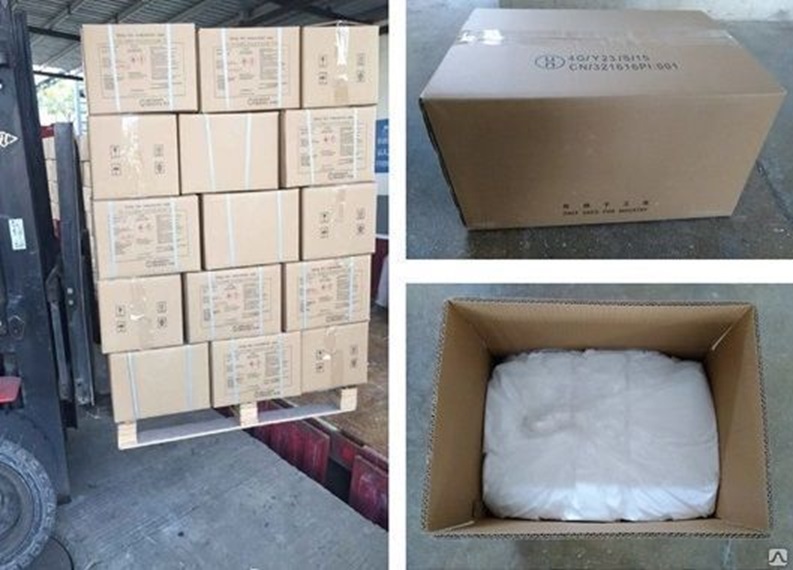
| Packaging | 20 kg cardboard boxes (lined) |
BIPB should be stored in cool, dry, well-ventilated areas, protected from direct sunlight and heat sources. Storage temperature must be below 30°C. Contact with strong acids, bases, reducing agents, and heavy metal salts must be avoided. It must be kept in its original packaging, tightly closed. Shelf life under proper storage conditions is 12-24 months. Packaging: 20 kg cardboard boxes (lined).
Handling Notes:
-
Keep away from heat, sparks, and open flames
-
Avoid contact with eyes, skin, and clothing
-
Avoid breathing dust/vapor
-
Use in well-ventilated areas
-
Use only with appropriate personal protective equipment
-
Keep away from combustible materials
-
Monitor temperature to prevent polymerization or decomposition
14. TRANSPORT INFORMATION
| Parameter | Information |
|---|---|
| UN Number | 3106 |
| Hazard Class | 5.2 (Organic Peroxide) |
| Packing Group | II |
| Proper Shipping Name | Organic Peroxide Type D, Solid (Bis(t-butylperoxyisopropyl)benzene) |
| ADR/RID Class | 5.2 |
| IATA-DGR | Class 5.2 |
| IMDG Code | Class 5.2 |
BIPB is classified as a dangerous good with UN number 3106. Hazard class is 5.2 (Organic Peroxide) and Packing Group II. During transport, it should be kept away from heat, sparks, and other ignition sources. The diluted form (40%) provides safer transport advantages.
15. OTHER NAMES AND TRADE NAMES
| Category | Names |
|---|---|
| Chemical Names | Bis(1-(tert-butylperoxy)-1-methylethyl)-benzene, Di(t-butylperoxyisopropyl)benzene, α,α-Bis-(t-butylperoxy)-1,3-diisopropylbenzene |
| Abbreviations | BIPB |
| Trade Names | Luperox F, Luperox F90P, Luperox F40KEP, Luperox F10KEP |
| Synonyms | (Phenylenebis(1-methylethylidene))bis(1,1-dimethylethyl)-peroxide, Bis(t-butyldioxyisopropyl)benzene, (Phenylenediisopropylidene)bis(t-butyl-peroxide), 1,3-bis[3-(t-butylperoxy)propyl]benzene, 1,2-bis(2-(t-butylperoxy)propan-2-yl)benzene, 1,4-bis[2-(t-butylperoxy)propan-2-yl]benzene |
16. INDUSTRY SUITABILITY AND USAGE RATES
| Industry | Application Area | Example Products | Dosage (phr) |
|---|---|---|---|
| Rubber Industry | Vulcanization, elastomer crosslinking | Silicone rubber cables, EPDM hoses, CPE insulation | 2.0-3.0 phr |
| Plastics Industry | EVA foam, polyethylene crosslinking | Toys, sports equipment, insulation foams | 1.5-2.0 phr |
| Electrical & Cable | Flexible insulation, cable sheaths | HVAC cables, rubber-sheathed cables | 1.5-2.5 phr |
| Polymer Industry | Thermal and mechanical resistance improvement | Various elastomer and polymer products | 1.5-3.0 phr |
| Chemical & Paper | Oxidative agent in special formulations | Industrial process additives | - |
17. SHELF LIFE AND STABILITY
| Parameter | Information |
|---|---|
| Shelf Life (40% Diluted) | 12 months (at 25°C) |
| Shelf Life (96% Pure) | 6-12 months (at 25°C) |
| Storage Temperature | < 30°C (preferably 15-25°C) |
| Stability | Stable under controlled conditions; must be protected from heat, light, and contaminants |
| Peroxide Content | Must be checked regularly; no more than 10% loss |
18. DECOMPOSITION PRODUCTS AND EFFECTS
| Decomposition Product | Effect |
|---|---|
| Acetone | Volatile, irritating; requires good ventilation |
| Methane | Volatile, flammable; explosion risk |
| t-Butyl Alcohol | Irritating; avoid skin and eye contact |
| Diisopropylbenzene derivatives | Low toxicity |
19. EFFECT OF BIPB ON RUBBER PERFORMANCE
| Property | Effect with BIPB |
|---|---|
| Crosslinking Density | High |
| Tensile Strength | Increases |
| Tear Resistance | Increases |
| Thermal Resistance | Increases |
| Flexibility | Maintained or increased |
| Odor | None |
| Byproduct | Low |
20. SUMMARY AND CRITICAL WARNINGS
SUMMARY:
Bis(t-butylperoxyisopropyl)benzene (BIPB, CAS 25155-25-3) is a strong organic peroxide crosslinking agent belonging to the organic peroxide class. Its chemical formula is C₂₀H₃₄O₄ and molecular weight is 338.49 g/mol. It appears as a colorless to light yellow liquid or solid (depending on concentration). Active oxygen content is approximately 4.7-4.8%. Decomposition temperature (1 hour half-life) is 145-155°C and 10 hour half-life is 120-130°C. It is commercially available as 96% pure form (solid) and 40% diluted form (liquid). Its most important applications include vulcanization and crosslinking in the rubber and plastics industries, EVA foam, polyethylene crosslinking, cable insulation, silicone rubber, EPDM, HNBR, NBR, and CPE vulcanization. Compared to dicumyl peroxide (DCP), it provides the same effect at approximately 2/3 dosage. It is odorless, has broad polymer compatibility, and provides significant improvement in thermal and mechanical properties. It is classified as UN 3106 (Class 5.2 - Organic Peroxide, Packing Group II). It is stored below 30°C in cool, dry, well-ventilated areas, protected from direct sunlight and heat sources. Packaging: 20 kg cardboard boxes.
Key Properties:
| Property | Value |
|---|---|
| Chemical Formula | C₂₀H₃₄O₄ |
| Molecular Weight | 338.49 g/mol |
| CAS Number | 25155-25-3 |
| Appearance | Colorless to light yellow liquid or solid |
| Active Oxygen Content | ~4.7-4.8% |
| 1 Hour Half-Life | 145-155°C |
| 10 Hour Half-Life | 120-130°C |
| UN Number | 3106 |
| Hazard Class | 5.2 (Organic Peroxide) |
| Primary Use | Crosslinking agent (rubber, plastics) |
Major Application Areas:
| Industry | Applications |
|---|---|
| Rubber | Silicone, EPDM, HNBR, NBR, CPE vulcanization |
| Plastics | EVA foam, polyethylene crosslinking |
| Electrical & Cable | Cable insulation, flexible cables |
| Polymer | Thermal and mechanical resistance improvement |
Key Safety Points:
-
ORGANIC PEROXIDE: May cause fire upon heating; explosion risk
-
STRONG OXIDIZER: Avoid contact with combustible materials
-
IRRITANT: Causes skin, eye, and respiratory irritation
-
SENSITIZER: May cause allergy or asthma symptoms if inhaled
-
STORAGE: Store below 30°C in cool, dry, well-ventilated area
-
PPE REQUIRED: Protective gloves, goggles, protective clothing
-
TRANSPORT: UN 3106, Class 5.2, Packing Group II
CRITICAL WARNINGS:
Organic Peroxide Hazard: BIPB is a strong oxidizing agent and organic peroxide. It can undergo rapid and violent decomposition when heated, causing fire and explosion. It must be kept away from heat, sparks, open flames, friction, and contaminants (acids, bases, heavy metal salts, reducing agents).
Temperature Control: Storage and handling temperature of BIPB must be below 30°C. Excessive heating can cause rapid decomposition and spontaneous fire or explosion. Temperature monitoring systems must be used.
Dosage Optimization: BIPB provides the same crosslinking effect at approximately 2/3 of the dosage compared to Dicumyl Peroxide (DCP). Typical dosages: 2-3 phr in rubber compounds, 1.5-2 phr in EVA foams, 1.5-2.5 phr in cable insulation. Dosage should be optimized based on specific polymer and application requirements.
Odorless Advantage: Unlike other organic peroxides such as dicumyl peroxide (DCP), BIPB does not produce odorous byproducts (such as acetophenone) during decomposition. This ensures an odorless final product and eliminates irritating odors in the working environment.
Polymer Compatibility: BIPB is compatible with silicone, EVA, EPDM, CPE, HNBR, TP-2, and many other polymers. This broad compatibility makes it an ideal crosslinking agent for various rubber and plastic applications.
Safe Storage and Transportation: The 40% diluted form provides safer storage and transportation advantages compared to the 96% pure form. The diluted form has lower reactivity and less risk. Storage areas must be equipped with firefighting equipment.
Emergency: In case of spill, remove all ignition sources, contain with an inert absorbent material, and dispose properly. In case of fire, use water fog from a distance, CO₂, or dry chemical powder.
Important Disclaimer: This Technical Data Sheet (TDS) is for informational purposes only. The information provided is based on available data and is believed to be accurate. However, the user is solely responsible for determining the suitability of the product for their specific application and for complying with all applicable regulations and safety requirements. For complete safety, handling, storage, and regulatory compliance information, always refer to the official Safety Data Sheet (SDS/MSDS) provided by the manufacturer/supplier. Users are responsible for testing the product in their own processes and applications. All local, national, and international regulations must be followed when working with BIPB.