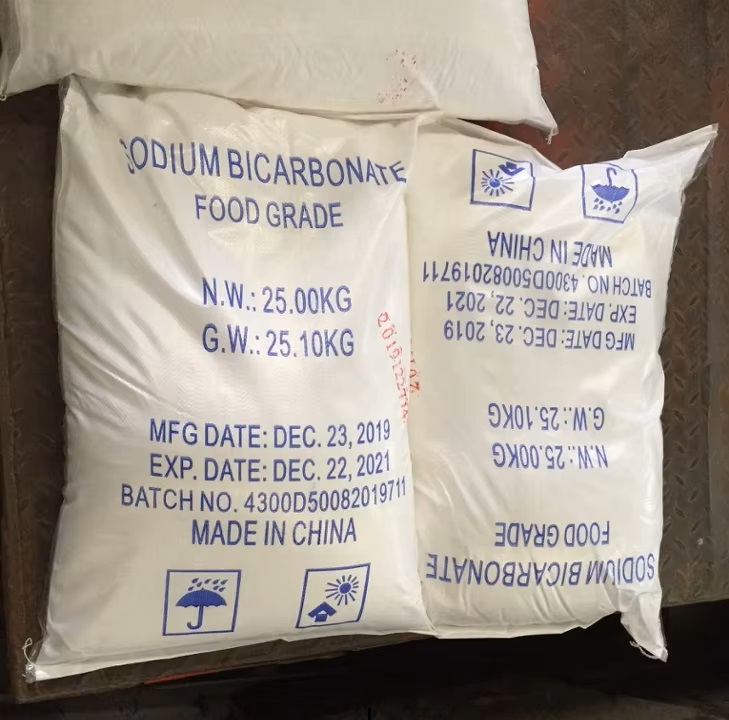
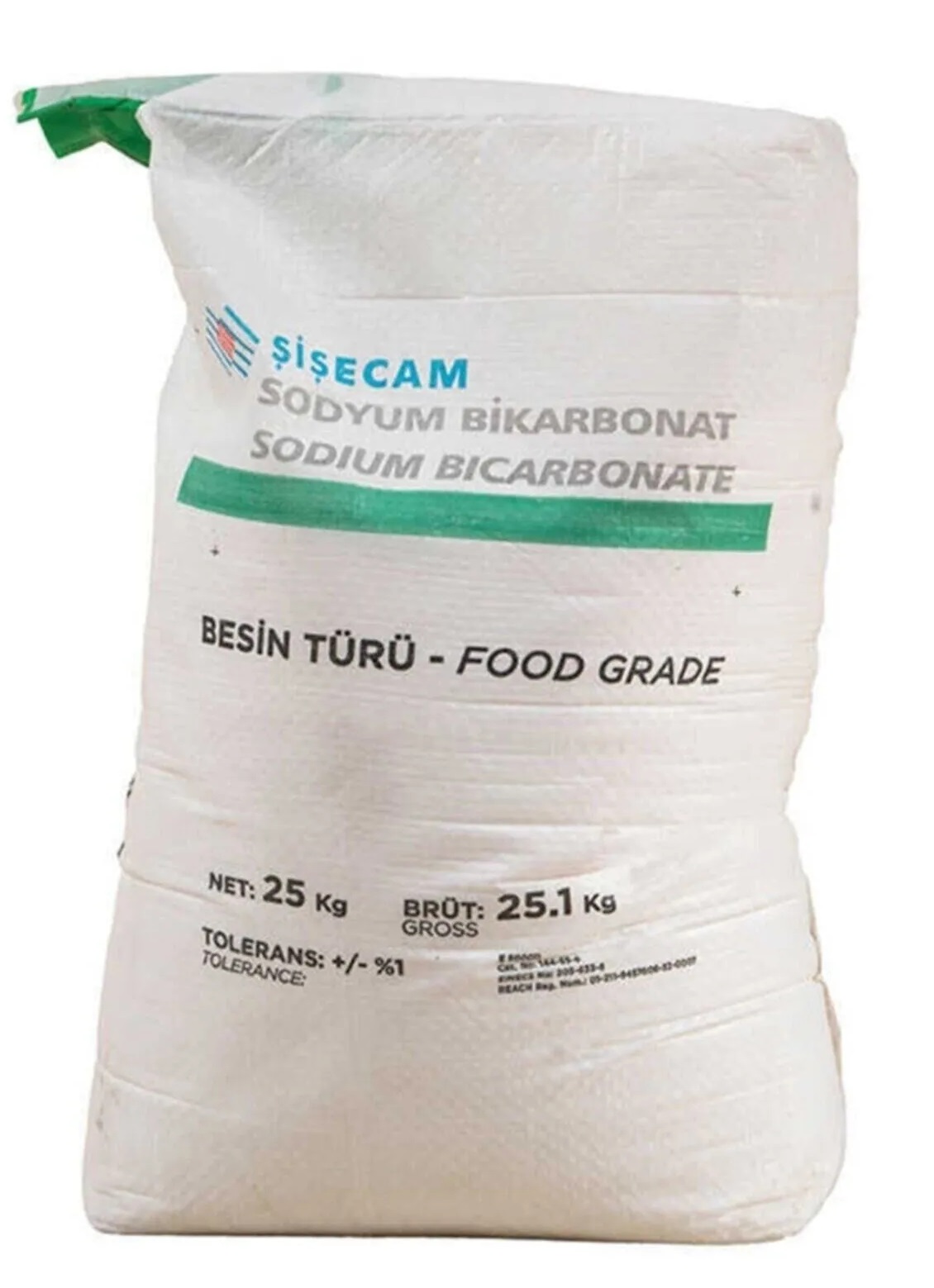
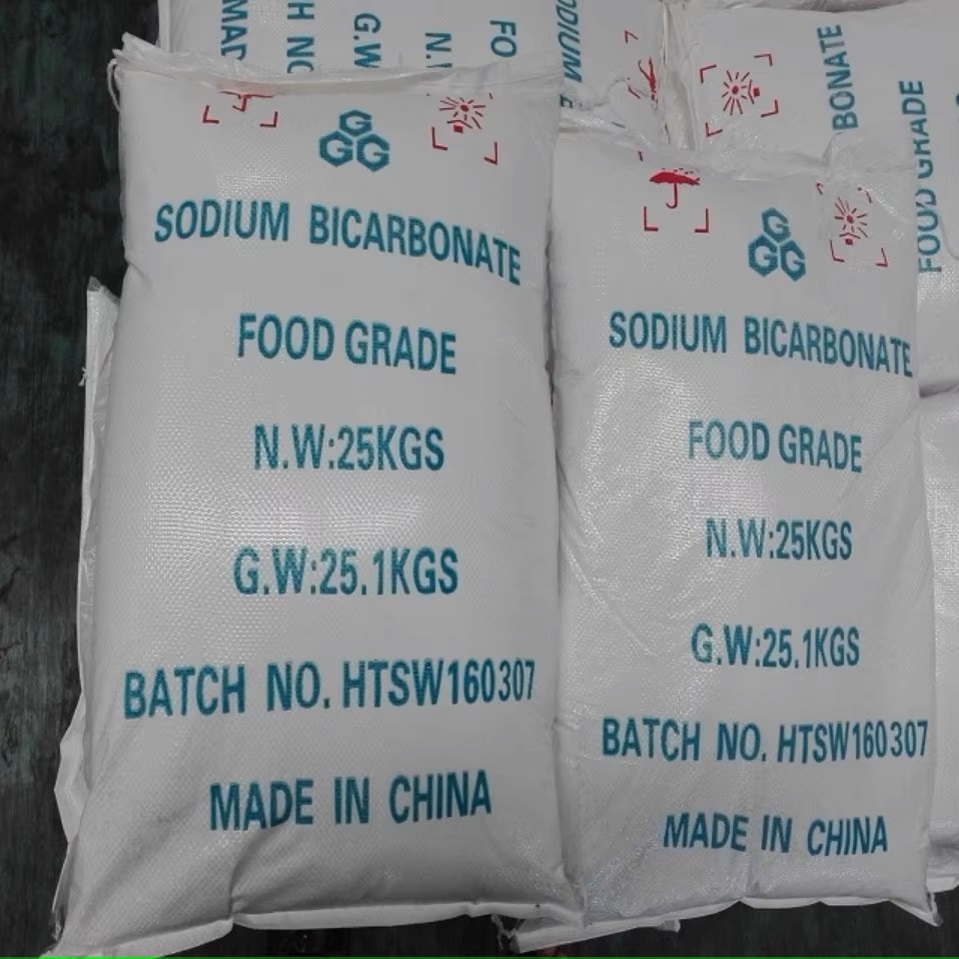
We unleash your business potential by maximize the business innovation.
Send EmailSodium Bicarbonate, Sodium Hydrogen Carbonate, Monosodium Carbonate, Baking Soda, Bread Soda, Cooking Soda, E500, 144-55-8
SODIUM BICARBONATE (NaHCO₃, E500)
1. Chemical Identity and Material Classification
-
Chemical Name: Sodium Bicarbonate, Sodium Hydrogen Carbonate, Monosodium Carbonate
-
Synonyms: Baking Soda, Bread Soda, Cooking Soda, Bicarbonate of Soda, Sodium Acid Carbonate, Monosodium Hydrogen Carbonate
-
CAS Number: 144-55-8
-
EC Number (EINECS): 205-633-8
-
Molecular Formula: NaHCO₃
-
Molecular Weight: 84.01 g/mol
-
E Number: E500 (food additive)
-
Chemical Class: Inorganic salt (weakly alkaline)
-
HS Code: 2836.30
-
UN Number: Not regulated (non-hazardous for transport)
2. Physical Properties
2.1 General Physical Properties
| Property | Value |
|---|---|
| Appearance | White, odorless, crystalline powder or fine granules |
| Physical state (20°C) | Solid (crystalline) |
| Odor | Odorless |
| Taste | Slightly alkaline, saline (baking soda taste) |
| Density (20°C) | 2.20–2.21 g/cm³ |
| Bulk density (typical) | 0.8–1.1 g/cm³ (powder); 0.7–0.9 g/cm³ (granular) |
| Melting point | 50°C (begins to decompose – does not melt) |
| Decomposition temperature | 50–270°C → Na₂CO₃ + H₂O + CO₂ |
| Boiling point | Decomposes before boiling |
| Flash point | Non-flammable |
| Vapor pressure | Negligible |
| Refractive index (nD20) | 1.500 |
| Specific gravity | 2.20 |
2.2 Solubility in Water
| Temperature (°C) | Solubility (g/100 mL water) |
|---|---|
| 0°C | 7.0 |
| 10°C | 8.1 |
| 20°C | 9.6 |
| 25°C | 10.0 |
| 30°C | 11.1 |
| 40°C | 12.7 |
| 50°C | 14.8 |
| 60°C | 16.4 |
| 80°C | 20.1 |
| 100°C | 23.6 |
2.3 Solubility in Other Solvents
| Solvent | Solubility |
|---|---|
| Ethanol | Insoluble |
| Methanol | Very slightly soluble |
| Acetone | Insoluble |
| Water | Soluble (as above) |
2.4 Aqueous Solution Properties
| Parameter | Value |
|---|---|
| pH (1% solution, 20°C) | 8.0–8.5 (weakly alkaline) |
| pH (5% solution, 20°C) | 8.3–8.5 |
| pH (saturated solution, 20°C) | ~8.3 |
| Heat of solution | Endothermic (cools water) |
| Buffering capacity | Excellent at pH 8.0–8.5 |
3. Chemical Properties
3.1 Molecular Structure
Structure: Na⁺ HCO₃⁻
-
Ionic crystal (sodium cation, bicarbonate anion)
-
Bicarbonate ion (HCO₃⁻) is weakly acidic/basic (amphoteric)
-
Decomposes upon heating to sodium carbonate, water, and carbon dioxide
3.2 Thermal Decomposition
| Temperature | Reaction | Products |
|---|---|---|
| 50–100°C | Begins slow decomposition | Na₂CO₃ + H₂O + CO₂ |
| 100–150°C | Accelerated decomposition | Na₂CO₃ + H₂O + CO₂ |
| 150–270°C | Rapid decomposition | Na₂CO₃ + H₂O + CO₂ |
| >270°C | Complete decomposition | Na₂CO₃ (sodium carbonate) |
Net reaction: 2NaHCO₃ → Na₂CO₃ + H₂O + CO₂↑
3.3 Chemical Reactivity
| Reaction | Description |
|---|---|
| With acids | NaHCO₃ + H⁺ → Na⁺ + H₂O + CO₂↑ (effervescence – carbon dioxide gas) |
| With bases (strong alkalis) | HCO₃⁻ + OH⁻ → CO₃²⁻ + H₂O (forms carbonate) |
| With metal salts | May form metal carbonates or basic carbonates |
| With heat | Decomposes to sodium carbonate (as above) |
3.4 Acid-Base Behavior
HCO₃⁻ ⇌ H⁺ + CO₃²⁻ (pKa₂ ≈ 10.3)
HCO₃⁻ + H⁺ ⇌ H₂CO₃ ⇌ H₂O + CO₂↑ (pKa₁ ≈ 6.3)
-
Bicarbonate ion acts as a buffer at pH 8.0–8.5
-
Neutralizes both acids (via CO₂ evolution) and bases (by conversion to carbonate)
3.5 Stability
| Parameter | Behavior |
|---|---|
| Stability in dry air | Stable indefinitely |
| Stability in moist air | Slowly decomposes to sodium carbonate (Na₂CO₃) |
| Hydroscopicity | Low (non-hygroscopic) |
| Light sensitivity | Stable |
| Thermal stability | Decomposes above 50°C |
3.6 Incompatibilities
| Substance | Hazard |
|---|---|
| Strong acids (H₂SO₄, HCl, HNO₃) | Violent reaction, CO₂ evolution (effervescence) |
| Strong bases | Reaction to form carbonate |
| Aluminum (finely divided) | Reaction in presence of moisture |
| Copper salts | May form basic copper carbonate |
4. Quality Specifications
4.1 Food Grade (FCC / E500)
| Parameter | Specification | Test Method |
|---|---|---|
| Assay (NaHCO₃, dried basis) | 99.0–100.5% | Titration |
| Loss on drying (105°C) | ≤ 0.25% | Gravimetric |
| Chlorides (Cl) | ≤ 0.05% | Turbidimetric |
| Sulfates (SO₄) | ≤ 0.05% | Turbidimetric |
| Heavy metals (as Pb) | ≤ 10 ppm | Colorimetric |
| Arsenic (As) | ≤ 3 ppm | Atomic absorption |
| Iron (Fe) | ≤ 20 ppm | Colorimetric |
| Calcium (Ca) | ≤ 100 ppm | Atomic absorption |
| Insoluble matter | ≤ 0.05% | Gravimetric |
| pH (1% solution) | 8.0–8.5 | pH meter |
| Appearance | White crystalline powder | Visual |
4.2 Pharmaceutical Grade (USP / Ph. Eur.)
| Parameter | Specification |
|---|---|
| Assay (NaHCO₃, dried basis) | 99.0–100.5% |
| Loss on drying (105°C) | ≤ 0.25% |
| Chlorides (Cl) | ≤ 0.05% |
| Sulfates (SO₄) | ≤ 0.05% |
| Heavy metals (as Pb) | ≤ 10 ppm |
| Lead (Pb) | ≤ 2 mg/kg |
| Arsenic (As) | ≤ 3 mg/kg |
| Carbonate (as Na₂CO₃) | ≤ 0.5% |
| Insoluble matter | ≤ 0.05% |
| pH (1% solution) | 8.0–8.5 |
4.3 Technical / Industrial Grade
| Parameter | Specification |
|---|---|
| NaHCO₃ content | ≥ 99.0% |
| Na₂CO₃ content | ≤ 0.5% |
| Chlorides (Cl) | ≤ 0.1% |
| Iron (Fe) | ≤ 50 ppm |
| Insoluble matter | ≤ 0.1% |
| Moisture | ≤ 0.2% |
| Particle size | As specified (fine powder to coarse granules) |
5. Production Methods
5.1 Solvay Process (Industrial Standard)
Reaction sequence:
-
NaCl + NH₃ + CO₂ + H₂O → NaHCO₃↓ + NH₄Cl
-
2NaHCO₃ → Na₂CO₃ + H₂O + CO₂↑ (calcination – when soda ash is desired)
Process:
-
Brine (NaCl solution) saturated with ammonia
-
Carbon dioxide passed through ammoniated brine
-
Sodium bicarbonate precipitates (less soluble than sodium carbonate)
-
Filtered, washed, dried
Purity: 99.0–99.8%
5.2 Carbonation of Sodium Carbonate
Reaction: Na₂CO₃ + H₂O + CO₂ → 2NaHCO₃
Process:
-
Sodium carbonate solution is carbonated with CO₂ under pressure
-
Crystallization yields sodium bicarbonate
Purity: Very high (food/pharmaceutical grade)
5.3 Natural Sources (Trona Mining)
Source: Natural trona ore (Na₂CO₃·NaHCO₃·2H₂O)
Process: Ore mining → crushing → dissolution → carbonation → crystallization
6. Mechanism of Action
6.1 Acid Neutralization (Antacid)
Reaction in stomach: NaHCO₃ + HCl → NaCl + H₂O + CO₂↑
-
Rapid neutralization of gastric acid
-
Provides quick relief from heartburn and indigestion
-
CO₂ release may cause belching
6.2 Leavening Agent (Baking)
Reaction with acid (e.g., cream of tartar, lactic acid, buttermilk):
NaHCO₃ + H⁺ (from acid) → Na⁺ + H₂O + CO₂↑
-
Carbon dioxide gas produces bubbles in dough/batter
-
Causes baked goods to rise (bread, cakes, cookies)
6.3 pH Buffering
-
Maintains pH 8.0–8.5 in aqueous solutions
-
Used as a buffer in biological systems (blood, cell culture)
-
Resists pH change upon addition of acid or base
6.4 Flue Gas Desulfurization (SO₂ Removal)
Reaction: 2NaHCO₃ + SO₂ + ½O₂ → Na₂SO₄ + H₂O + 2CO₂↑
-
Dry sorbent injection for SO₂ removal from flue gases
-
Effective at temperatures >300°C (572°F)
7. Industrial Applications
7.1 Food Industry (E500) – Largest Application
| Application | Function | Typical Concentration |
|---|---|---|
| Leavening agent (baking powder) | CO₂ release for dough rising | 10–30% of baking powder |
| Antacid (effervescent tablets) | Neutralizes stomach acid | 300–500 mg/tablet |
| pH regulator in soft drinks | Controls acidity | 0.05–0.5% |
| Meat and poultry processing | Tenderizer, pH adjuster | 0.1–1% |
| Dairy products | pH adjuster | 0.05–0.5% |
| Cocoa processing | Alkalization | 0.5–2% |
| Wine and juice | Acid reduction | 0.1–0.5 g/L |
Food additive status: E500 – GRAS (FDA), permitted worldwide
7.2 Pharmaceutical Applications
| Application | Function | Typical Dosage |
|---|---|---|
| Antacid (heartburn, indigestion) | Neutralizes gastric acid | 300–1,000 mg |
| Effervescent tablets | CO₂ source (with acid) | 500–2,000 mg |
| Electrolyte replacement | IV solution (metabolic acidosis) | Variable |
| Dialysis solutions | Bicarbonate source | Variable |
| Oral rehydration salts | Electrolyte source | Variable |
| Urinary alkalinizer | Raises urine pH (cystitis, UTIs) | 1–5 g/day |
7.3 Baking Powder (Combination with Acid)
| Acid Component | Typical Ratio (NaHCO₃:Acid) |
|---|---|
| Cream of tartar (potassium bitartrate) | 1:1 |
| Monocalcium phosphate (MCP) | 2:1 |
| Sodium acid pyrophosphate (SAPP) | 1:1 |
| Sodium aluminum sulfate (SAS) | 1:1 |
7.4 Water Treatment
| Application | Function | Typical Dosage |
|---|---|---|
| pH adjustment | Raises pH of acidic water | 10–200 mg/L |
| Alkalinity adjustment | Increases total alkalinity | 10–100 mg/L |
| Swimming pools | Raises pH (counteracts acidic chlorine) | 10–50 mg/L |
| Boiler water treatment | pH control | 10–100 mg/L |
7.5 Flue Gas Desulfurization (FGD)
| Parameter | Value |
|---|---|
| Application | Dry sorbent injection for SO₂ removal |
| Operating temperature | 300–400°C (572–752°F) |
| SO₂ removal efficiency | 70–95% |
| By-product | Sodium sulfate (Na₂SO₄) |
| Typical dosage | 1–5 kg per kg SO₂ removed |
7.6 Chemical Industry
| Application | Product |
|---|---|
| Sodium carbonate production | Via calcination (Na₂CO₃) |
| Sodium salts production | Sodium silicate, sodium phosphates, sodium sulfite, etc. |
| pH buffer | Laboratory and industrial processes |
| CO₂ source | Chemical reactions, neutralizations |
| Textile processing | Dyeing auxiliary |
| Leather industry | Dehairing, pH control |
7.7 Cleaning and Household Products
| Application | Function |
|---|---|
| Abrasive cleaner | Mild abrasive for surface cleaning |
| Odor absorber (refrigerators, carpets) | Adsorbs odors |
| Drain cleaner | With acid (vinegar) – CO₂ helps unclog drains |
| Laundry additive | Softens water, removes odors |
| Dishwashing detergent component | pH regulator |
7.8 Cosmetics and Personal Care
| Application | Function | Typical Concentration |
|---|---|---|
| Toothpaste | Abrasive, pH regulator | 10–30% |
| Deodorant | Odor absorber | 5–20% |
| Bath products (bath bombs) | CO₂ source (with citric acid) | 20–50% |
| Skin care (exfoliants) | Mild abrasive | 1–10% |
| Antiperspirants | pH adjuster | 1–5% |
7.9 Agriculture and Animal Feed
| Application | Function | Typical Dosage |
|---|---|---|
| Ruminant feed buffer | Stabilizes rumen pH (prevents acidosis) | 0.5–2% of dry matter |
| Soil pH amendment | Raises pH of acidic soils | 1–5 tons/hectare |
| Fungicide | Controls powdery mildew (foliar spray) | 0.5–2% solution |
7.10 Fire Extinguishers
| Parameter | Value |
|---|---|
| Application | Dry chemical fire extinguishers (BC powder) |
| Mechanism | Decomposes to CO₂ (smothers fire) + Na₂CO₃ |
| Fire classes | Class B (flammable liquids), Class C (electrical) |
8. Toxicology and Safety
8.1 Acute Toxicity
| Parameter | Value | Classification |
|---|---|---|
| Oral LD₅₀ (rat) | 4,220–5,000 mg/kg (low toxicity) | Not classified |
| Dermal LD₅₀ (rabbit) | >2,000 mg/kg | Not classified |
| Inhalation LC₅₀ | Not determined (dust may irritate) | Not classified |
| Skin irritation | Non-irritant | Not classified |
| Eye irritation | Mild irritant (dust) | Not classified |
| Skin sensitization | Non-sensitizer | Not classified |
8.2 Chronic Toxicity
| Endpoint | Classification |
|---|---|
| Carcinogenicity | Not classified (non-carcinogenic) |
| Mutagenicity | Negative |
| Reproductive toxicity | Not classified |
| Target organ toxicity | Not classified (low toxicity) |
8.3 Special Hazards
| Hazard | Description |
|---|---|
| Decomposition | Above 50°C releases CO₂ (asphyxiant in confined spaces) |
| Dust explosion | High concentrations may form explosive mixture in air |
| Alkalinity | Concentrated solutions may cause mild irritation |
8.4 GHS Classification (Typical)
| Classification | Category |
|---|---|
| Signal word | None (not classified as hazardous) |
| Hazard statements | None (under normal conditions) |
| Precautionary statements | P264, P280 (for dust – eye protection) |
8.5 NFPA Rating
| Health | Flammability | Reactivity |
|---|---|---|
| 0 | 0 | 0 |
9. Safety Precautions and Personal Protective Equipment (PPE)
-
Hazards:
-
Very low acute toxicity
-
Dust may cause mild eye and respiratory tract irritation
-
Non-flammable
-
Decomposes above 50°C (releases CO₂)
-
Non-hygroscopic (does not absorb moisture)
-
-
PPE (recommended – industrial handling):
-
Safety glasses (EN 166) – optional (low hazard)
-
Dust mask (FFP1/FFP2) – for dusty operations
-
Protective gloves (optional)
-
Protective clothing (dust protection)
-
-
Engineering controls:
-
Local exhaust ventilation (LEV) for dust control
-
Eyewash stations
-
-
Storage conditions:
-
Store in tightly closed original container (HDPE, PP, paper bags with liner)
-
Keep in cool, dry, well-ventilated area
-
Protect from moisture (slow decomposition to Na₂CO₃)
-
Store away from strong acids (CO₂ evolution)
-
-
First aid:
-
Inhalation: Move to fresh air
-
Eye contact: Rinse with water for 15 minutes; remove contact lenses; seek medical attention if irritation persists
-
Skin contact: Wash with soap and water
-
Ingestion: Rinse mouth; drink water (low toxicity)
-
10. Environmental Fate
| Parameter | Value |
|---|---|
| Biodegradability | Not applicable (inorganic) |
| Aquatic toxicity (fish, LC₅₀, 96 hours) | >1,000 mg/L (very low toxicity) |
| Daphnia magna (EC₅₀, 48 hours) | >1,000 mg/L |
| Algal toxicity (EC₅₀, 72 hours) | >500 mg/L |
| Eutrophication potential | Low (sodium bicarbonate does not contribute to eutrophication) |
| Bioaccumulation | Not applicable |
| Mobility in soil | High (high water solubility) |
| WGK Germany | 1 (low hazard to water) |
| Disposal method | Dissolve in water, flush to wastewater treatment (check local regulations) |
11. Storage and Shelf Life
11.1 Storage Conditions
| Parameter | Requirement |
|---|---|
| Storage temperature | 5–30°C (room temperature) |
| Container | Keep tightly closed (HDPE, PP, paper bags with liner) |
| Protect from | Moisture (slow decomposition to Na₂CO₃), strong acids |
| Environment | Cool, dry, well-ventilated area |
11.2 Shelf Life
| Parameter | Value |
|---|---|
| Shelf life (sealed, dry) | 36–48 months |
| Degradation indicators | Caking (moisture absorption), loss of potency (decomposition to Na₂CO₃) |
11.3 Decomposition Products
-
Na₂CO₃ (sodium carbonate – less active)
-
CO₂ (carbon dioxide)
-
H₂O (water)
12. Transport Information
| Regulation | Classification |
|---|---|
| UN Number | Not regulated (non-hazardous) |
| ADR/RID | Not classified as dangerous goods |
| IMDG | Not regulated |
| IATA | Not regulated |
| Proper shipping name | Sodium bicarbonate (non-hazardous) |
13. Synonyms and Common Names
-
English: Sodium Bicarbonate, Baking Soda, Bread Soda, Cooking Soda, Bicarbonate of Soda, Sodium Hydrogen Carbonate, Monosodium Carbonate, Sodium Acid Carbonate
-
Trade names: Baking soda (household), Arm & Hammer, Soda Bicarb
-
French: Bicarbonate de sodium
-
German: Natriumhydrogencarbonat, Natron
-
Spanish: Bicarbonato de sodio
-
Turkish: Sodyum Bikarbonat, Kabartma Tozu (partial)
14. Regulatory Status
| Regulation | Status |
|---|---|
| REACH (EU) | Registered |
| TSCA (US) | Listed |
| FDA | GRAS – food additive (E500) – 21 CFR § 184.1736 |
| EFSA | Permitted as food additive (E500) |
| USP / Ph. Eur. | Monographed for pharmaceutical use |
| EPA | Not restricted |
15. Why Choose Sodium Bicarbonate?
| Advantage | Description |
|---|---|
| Low cost | One of the most economical alkalis |
| GRAS status | Safe for food, pharmaceutical, and cosmetic use |
| Versatile | Used across food, pharma, water treatment, cleaning, agriculture |
| Effective leavening agent | Essential in baking powders and baked goods |
| Excellent buffer | Maintains pH 8.0–8.5 in aqueous solutions |
| Rapid acid neutralization | Fast-acting antacid |
| Mild abrasive | Effective cleaner without scratching surfaces |
| Decomposes to CO₂ | Use in fire extinguishers, bath bombs, flue gas desulfurization |
| Non-toxic | Very low acute toxicity (LD₅₀ >4,000 mg/kg) |
| Long shelf life | 36–48 months when stored properly |
Limitations:
-
Decomposes above 50°C – Loss of potency at high temperatures
-
Slow decomposition in moist air – Converts to sodium carbonate
-
Low solubility (10 g/100 mL) – Limited to 10% solutions at 25°C
-
Produces CO₂ when heated – Asphyxiation risk in confined spaces
-
Not suitable for high-temperature processes – Decomposes before melting
16. Comparison with Other Alkaline Agents
| Property | Sodium Bicarbonate (NaHCO₃) | Sodium Carbonate (Na₂CO₃) | Calcium Carbonate (CaCO₃) | Potassium Bicarbonate (KHCO₃) |
|---|---|---|---|---|
| pH (1% solution) | 8.3 | 11.4 | 9.5 (suspension) | 8.3 |
| Solubility (g/100 mL) | 10 (25°C) | 21.5 (20°C) | 0.001 (insoluble) | 33 (20°C) |
| CO₂ release (with acid) | Yes (vigorous) | Yes (very vigorous) | Yes (slow) | Yes (vigorous) |
| Thermal decomposition | >50°C → Na₂CO₃ | >100°C (stable) | >825°C → CaO + CO₂ | >100°C → K₂CO₃ |
| Toxicity | Very low | Low | Very low | Low |
| Cost | Low | Lower | Very low | Moderate |
| Primary use | Leavening, antacid, buffer | Detergents, glass | Fillers, construction | Leavening (low-sodium) |
17. Baking Powder vs. Baking Soda
| Parameter | Baking Soda (NaHCO₃) | Baking Powder |
|---|---|---|
| Composition | 100% sodium bicarbonate | NaHCO₃ + acid + starch |
| Acid component | None | Cream of tartar, MCP, SAPP, SAS |
| Activation | Requires acid (buttermilk, yogurt, vinegar, lemon juice) | Activation by water + heat |
| Double-acting | No | Yes (some types) |
| Shelf life | Indefinite (dry) | 6–12 months |
| Typical use | Recipes with acidic ingredients | General baking (no added acid needed) |
18. Frequently Asked Questions (FAQs)
Q1: Is sodium bicarbonate safe to eat?
A1: Yes, food-grade sodium bicarbonate (E500) is GRAS (Generally Recognized as Safe) by FDA and EFSA. It is used as a leavening agent in baked goods, an antacid, and a food additive.
Q2: Is baking soda the same as sodium bicarbonate?
A2: Yes, baking soda is the common name for sodium bicarbonate (NaHCO₃). Baking powder contains sodium bicarbonate plus an acid component and starch.
Q3: How does sodium bicarbonate work as an antacid?
A3: It neutralizes stomach acid (HCl) through the reaction: NaHCO₃ + HCl → NaCl + H₂O + CO₂. This provides rapid relief from heartburn and indigestion.
Q4: Why does sodium bicarbonate decompose when heated?
A4: Above 50°C, sodium bicarbonate decomposes: 2NaHCO₃ → Na₂CO₃ + H₂O + CO₂. This reaction is used in baking (CO₂ leavening) and fire extinguishers (CO₂ smothers fire).
Q5: Can sodium bicarbonate be used to clean drains?
A5: Yes, when combined with vinegar (acetic acid), the reaction produces CO₂ gas which helps dislodge clogs: NaHCO₃ + CH₃COOH → CH₃COONa + H₂O + CO₂.
Q6: Is sodium bicarbonate bad for the environment?
A6: No. Sodium bicarbonate is non-toxic, does not bioaccumulate, and is fully water-soluble. It is considered environmentally friendly.
19. Storage Recommendations
| Condition | Recommendation |
|---|---|
| Containers | HDPE, polypropylene, paper bags with liner |
| Temperature | 5–30°C (room temperature) |
| Humidity | <60% RH (prevents caking and decomposition) |
| Shelf life | 36–48 months (sealed container) |
| After opening | Use within 12–24 months; reseal tightly |
| Incompatibles | Strong acids, moisture |
20. Summary Table – Key Specifications at a Glance
| Parameter | Value |
|---|---|
| Product Name | Sodium Bicarbonate (E500) |
| CAS Number | 144-55-8 |
| EC Number | 205-633-8 |
| Molecular Formula | NaHCO₃ |
| Molecular Weight | 84.01 g/mol |
| Appearance | White crystalline powder |
| Density | 2.20 g/cm³ |
| Bulk Density | 0.8–1.1 g/cm³ |
| Decomposition Temp | >50°C |
| pH (1% solution) | 8.0–8.5 |
| Water Solubility (25°C) | 10 g/100 mL |
| Assay (food grade) | 99.0–100.5% |
| E Number | E500 |
| Primary Applications | Leavening agent (baking), antacid, pH buffer, water treatment, flue gas desulfurization, cleaning |
| GHS Signal Word | None (non-hazardous) |
| Hazard Statements | None |
| Oral LD₅₀ (rat) | 4,220–5,000 mg/kg |
| Biodegradability | Not applicable (inorganic) |
| Shelf Life | 36–48 months |
This TDS is prepared in compliance with ISO 11014-1 format and is intended for food technologists, pharmaceutical scientists, bakers, water treatment specialists, cleaning product formulators, and procurement professionals. Certificates of Analysis (CoA), Safety Data Sheets (SDS), and sample validation reports are available upon request.