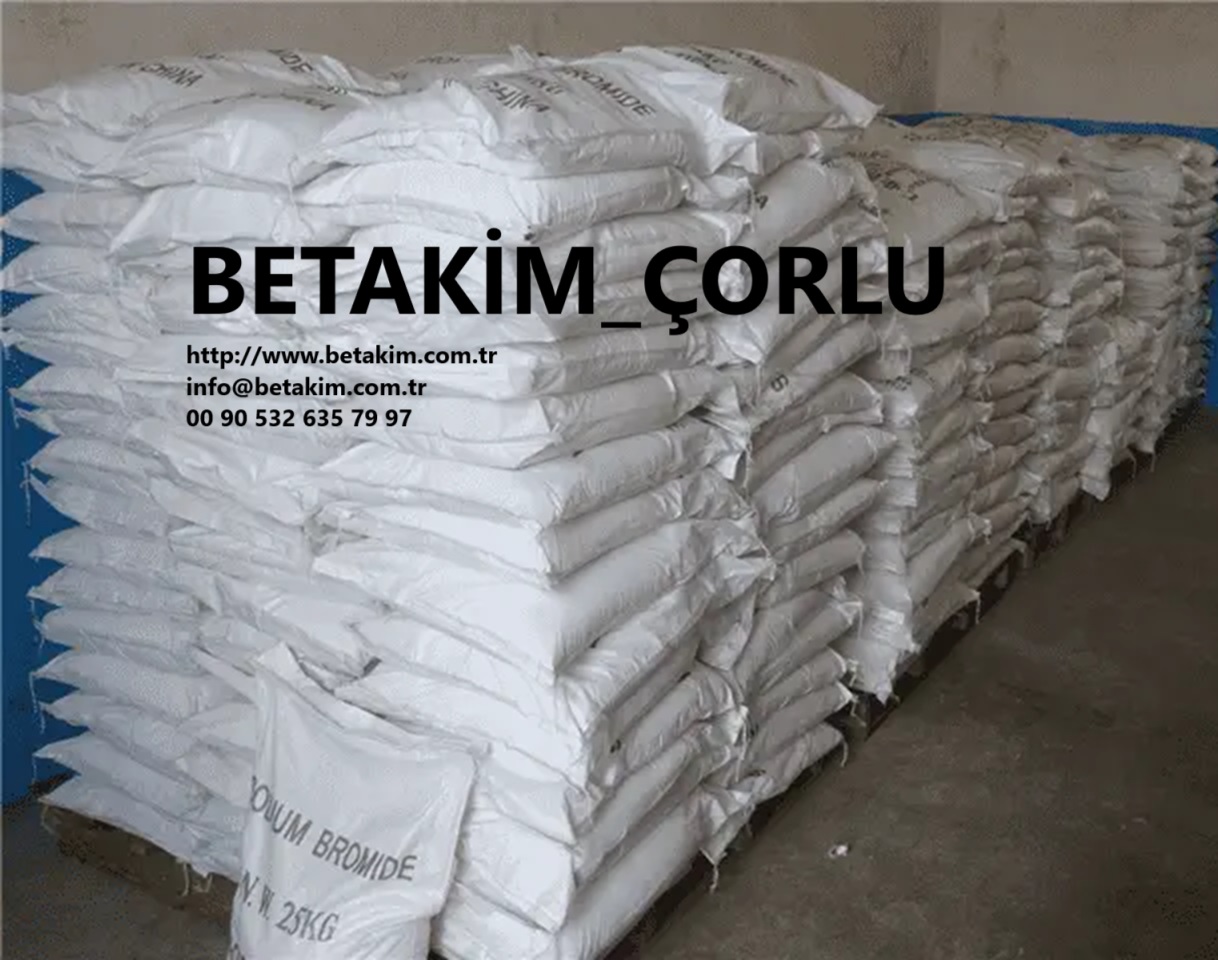
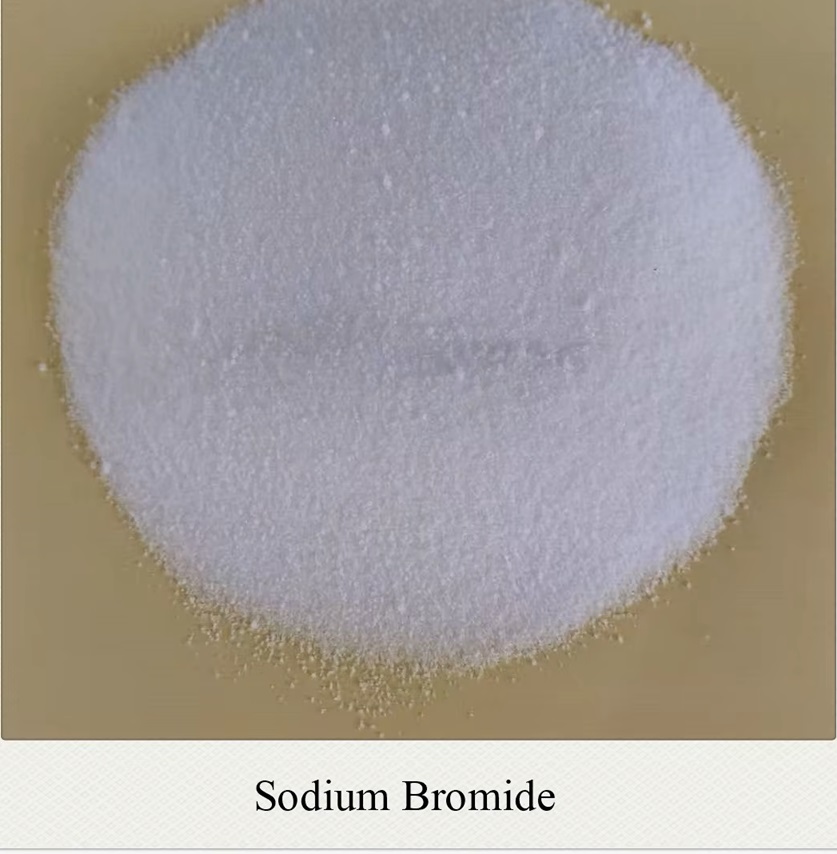
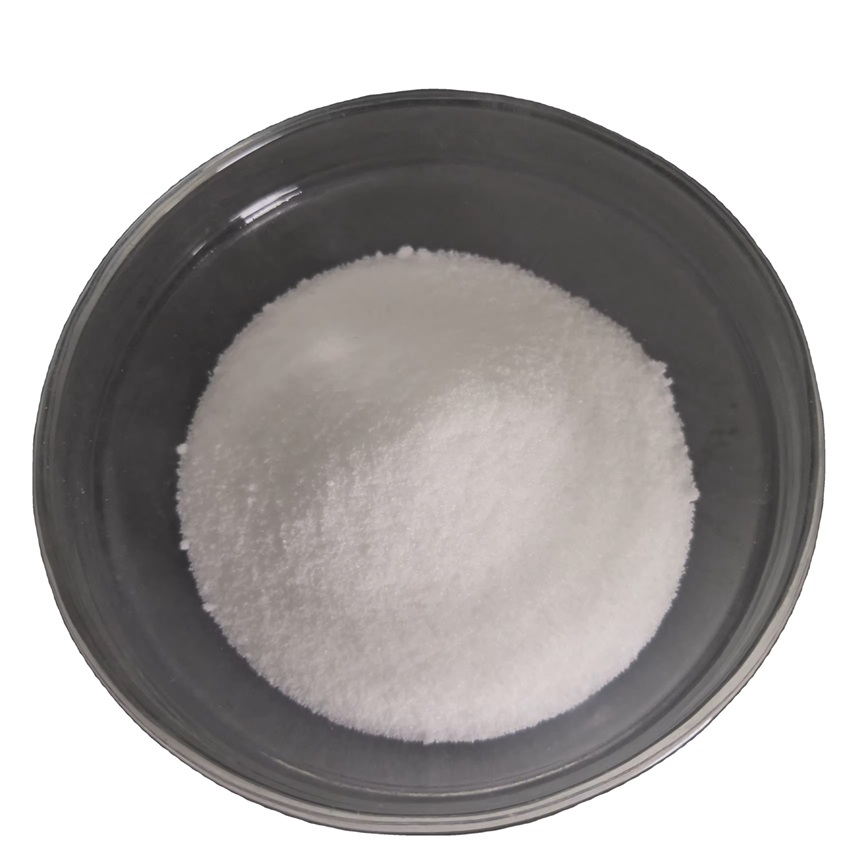
Sodium Bromide, Brom Natrium, Trisodium Tribromide, 7647-15-6
SODIUM BROMIDE - SODYUM BROMÜR
NaBr - Bromide Salt of Sodium
CAS: 7647-15-6
| Product Name |
Sodium Bromide |
| CAS Number |
7647-15-6 |
| EC Number |
231-599-9 |
| Chemical Formula |
NaBr |
| Molecular Weight |
102.89 g/mol |
| Synonyms |
Sodium Bromide, Bromide Salt of Sodium, Hydrobromic Acid Sodium Salt, Trisodium Tribromide, Bromnatrium, Bromure de Sodium, NSC 77384 |
ITEM 1: PRODUCT IDENTITY AND NOMENCLATURE
| Parameter |
Description |
| Chemical Name |
Sodium Bromide |
| Chemical Formula |
NaBr |
| Molecular Weight |
102.89 g/mol |
| CAS Number |
7647-15-6 |
| EC Number |
231-599-9 |
| Synonyms |
Sodium Bromide, Bromide Salt of Sodium, Hydrobromic Acid Sodium Salt, Trisodium Tribromide, Bromnatrium, Bromure de Sodium, NSC 77384, HSDB 5039 |
| HS Code |
2827.51.00.00.00 |
| REACH Status |
Registered and compliant |
Description: Sodium Bromide (NaBr) is an inorganic sodium salt of hydrobromic acid. It is a white crystalline powder with a cubic crystal structure. Sodium bromide is highly soluble in water and has a characteristic saline taste. It is widely used in pharmaceuticals, chemical synthesis, photography, water treatment, and detergent formulations due to its bromide ion content.
ITEM 2: CHEMICAL STRUCTURE AND MOLECULAR PROPERTIES
| Parameter |
Description |
| Chemical Family |
Inorganic Salts (Halides) |
| Crystal Structure |
Cubic |
| Ionic Composition |
Na⁺ (Sodium) and Br⁻ (Bromide) |
| Bond Type |
Ionic |
| Molecular Structure |
Simple ionic lattice |
| SMILES |
[Na+].[Br-] |
| InChI Key |
JHJLBTNAGRQEKS-UHFFFAOYSA-M |
Description: Sodium bromide is an ionic compound consisting of sodium cations (Na⁺) and bromide anions (Br⁻) arranged in a cubic crystal lattice. The ionic bond between sodium and bromide is strong, resulting in a stable, non-volatile crystalline solid.
ITEM 3: PHYSICAL APPEARANCE AND FORM
| Parameter |
Specification |
Test Method |
| Appearance |
White crystalline powder |
Visual Inspection |
| Physical Form |
Solid (crystalline) |
Visual Inspection |
| Color |
White |
Visual Inspection |
| Odor |
Odorless |
Organoleptic |
| Taste |
Saline, bitter |
Organoleptic |
| Crystal Shape |
Cubic |
Microscopic |
Description: Sodium bromide is supplied as a white, odorless, crystalline powder with a cubic crystal structure. The powder is free-flowing and dissolves readily in water. It has a characteristic saline and slightly bitter taste. The product contains no visible impurities or foreign matter.
ITEM 4: THERMAL PROPERTIES
| Property |
Specification / Value |
Test Method |
| Melting Point |
747 °C |
DSC |
| Boiling Point |
1390 °C |
– |
| Thermal Stability |
Stable up to melting point |
– |
| Heat of Fusion |
– |
– |
| Decomposition |
Does not decompose (stable) |
– |
Description: Sodium bromide has a high melting point of 747°C and a boiling point of 1390°C. It is thermally stable and does not decompose under normal processing conditions. Its high thermal stability makes it suitable for high-temperature industrial applications.
ITEM 5: PHYSICAL PROPERTIES
| Property |
Specification |
Typical Value |
Test Method |
| Density (20°C) |
3.20 – 3.21 g/cm³ |
3.205 g/cm³ |
ASTM D792 |
| Bulk Density (Powder) |
1.2 – 1.4 g/cm³ |
1.30 g/cm³ |
ASTM D1895 |
| Solubility in Water (25°C) |
High |
71.35 g/100 mL |
– |
| Solubility in Water (100°C) |
Very high |
~118 g/100 mL |
– |
| Solubility in Alcohol |
Partially soluble |
– |
– |
| pH (5% Aqueous Solution) |
5.5 – 7.0 |
6.5 |
pH Meter |
| Refractive Index (nD) |
~1.641 |
– |
– |
| Heat of Solution |
– |
– |
– |
Description: Sodium bromide is highly soluble in water, with solubility increasing significantly with temperature. It is partially soluble in alcohol and other organic solvents. The aqueous solution is neutral to slightly acidic (pH 5.5-7.0). Its high water solubility makes it an ideal source of bromide ions in aqueous formulations.
ITEM 6: PURITY AND ANALYTICAL SPECIFICATIONS
| Parameter |
Specification |
Typical Value |
Test Method |
| Purity (Assay) |
≥ 99.0% |
99.5% |
Titration |
| Purity (ACS Reagent Grade) |
≥ 99.0% |
99.5% |
Titration |
| Water Content (Moisture) |
≤ 0.5% |
0.1% |
Karl Fischer |
| pH (5% Solution) |
5.5 – 7.0 |
6.5 |
pH Meter |
| Chloride (Cl) |
≤ 0.2% |
0.05% |
Turbidimetry |
| Bromate (BrO₃) |
≤ 10 ppm |
<5 ppm |
– |
| Heavy Metals (Pb) |
≤ 5 ppm |
<2 ppm |
ICP-MS |
| Iron (Fe) |
≤ 5 ppm |
<1 ppm |
ICP-MS |
| Sulfate (SO₄) |
≤ 0.1% |
0.02% |
– |
| Loss on Drying (105°C) |
≤ 0.5% |
0.1% |
USP <731> |
| Barium (Ba) |
Passes test |
Passes |
– |
| Insoluble Matter |
≤ 0.05% |
0.01% |
– |
Description: Sodium bromide is supplied in high purity (≥99.0%) meeting ACS Reagent Grade specifications. Low chloride and bromate content is critical for pharmaceutical and photographic applications. Heavy metals are strictly controlled to ensure safety. Low loss on drying indicates good quality and stability.
ITEM 7: PHARMACEUTICAL APPLICATIONS
| Application |
Function / Description |
| Antiepileptic Drugs |
Nerve seizure control in epilepsy treatment |
| Sedatives |
Mild sedative properties (historical use) |
| Topical Formulations |
Active ingredient, preservative |
| Ophthalmic Preparations |
Preservative, pH adjuster |
| Oral Medications |
Excipient, bromide ion source |
| Veterinary Medicine |
Antiepileptic in veterinary formulations |
| Analytical Reagent |
Laboratory reference standard |
Description: In the pharmaceutical industry, sodium bromide is used in antiepileptic medications for nerve seizure control. It has also been used historically as a mild sedative. Sodium bromide serves as a source of bromide ions in various medicinal formulations. It is also used in veterinary medicine for seizure control in animals.
ITEM 8: CHEMICAL INDUSTRY APPLICATIONS
| Application |
Function / Description |
| Chemical Synthesis |
Reagent and intermediate |
| Bromination Reactions |
Source of bromide ions |
| Catalyst Preparation |
Catalyst precursor |
| Grignard Reagents |
Used in organic synthesis |
| Organobromine Compounds |
Raw material for brominated compounds |
| Reactor Chemistry |
Intermediate in various processes |
| Analytical Reagent |
Standard for bromide determination |
| Laboratory Use |
Titration reagent, buffer preparation |
Description: In the chemical industry, sodium bromide is used as a reagent and intermediate in various organic synthesis reactions. It serves as a source of bromide ions for bromination reactions and as a precursor for catalyst preparation. It is also used in the production of Grignard reagents and organobromine compounds.
ITEM 9: PHOTOGRAPHY APPLICATIONS
| Application |
Function / Description |
| Photographic Emulsions |
Light-sensitive emulsion component |
| Silver Bromide Formation |
Reacts with silver nitrate to form AgBr |
| Black & White Photography |
Essential component for silver halide photography |
| Film Development |
Photographic processing chemical |
| Printing Processes |
Photographic printing chemical |
| X-Ray Films |
Light-sensitive emulsion component |
Description: Sodium bromide is an essential component in photographic emulsions. It reacts with silver nitrate to form silver bromide (AgBr), the light-sensitive compound used in traditional black-and-white photography, films, and X-ray films. The bromide ion is crucial for the formation of silver halide crystals in photographic emulsions.
ITEM 10: WATER TREATMENT APPLICATIONS
| Application |
Function / Description |
| Disinfection |
Drinking water and swimming pool treatment |
| Algae Control |
Swimming pool water treatment |
| Bromine Generation |
Source for elemental bromine generation |
| Cooling Towers |
Biocide precursor |
| Industrial Water Treatment |
Process water treatment |
| Wastewater Treatment |
Industrial wastewater chemical |
| Ozone Neutralization |
Ozone scavenger in water systems |
Description: In water treatment, sodium bromide is used as a precursor for bromine generation for disinfection purposes. It is used in drinking water treatment, swimming pools, and industrial water systems as a biocide precursor. Sodium bromide also serves as an ozone neutralizer in water treatment applications.
ITEM 11: DETERGENT AND CLEANING APPLICATIONS
| Application |
Function / Description |
| Detergent Formulations |
Additive, stabilizer |
| Industrial Cleaners |
Process chemical, stabilizer |
| Metal Cleaning |
Scale and corrosion prevention |
| Textile Processing |
Bleaching and oxidation control |
| Paper Industry |
Pulp and paper chemical |
| Oil & Gas |
Drilling fluid additive |
Description: Sodium bromide is used in detergent and cleaning formulations as an additive and stabilizer. In metal cleaning, it helps prevent scale and corrosion. In textile processing, it is used for bleaching control. The paper industry uses sodium bromide in pulp and paper processing.
ITEM 12: OIL AND GAS INDUSTRY APPLICATIONS
| Application |
Function / Description |
| Drilling Fluids |
Weighting agent, density control |
| Completion Fluids |
Clear brine fluids |
| Workover Fluids |
Formation control |
| Well Stimulation |
Acidizing and fracturing fluids |
| Corrosion Inhibition |
Brine-based corrosion control |
| Cementing |
Cement additive |
Description: In the oil and gas industry, sodium bromide is used in drilling fluids as a weighting agent for density control. It is a key component in clear brine completion and workover fluids, where it provides the necessary density without the risk of formation damage. It is also used in well stimulation and acidizing operations.
ITEM 13: SECTOR COMPATIBILITY MATRIX
| Industry |
Suitability |
Application |
Notes |
| Pharmaceuticals |
High |
Antiepileptics, sedatives, topical formulations |
Widely used |
| Chemical Industry |
High |
Synthesis, reagents, intermediates |
Core application |
| Photography |
High |
Emulsions, silver bromide formation |
Traditional photography |
| Water Treatment |
High |
Disinfection, algae control, ozone neutralization |
Growing use |
| Detergents & Cleaners |
Medium |
Additives, stabilizers |
Limited use |
| Oil & Gas |
High |
Drilling fluids, completion fluids |
Specialized application |
| Textile |
Low |
Bleaching, oxidation control |
Limited use |
| Paper |
Low |
Pulp processing |
Limited use |
ITEM 14: ALTERNATIVES COMPARISON TABLE
| Alternative Compound |
Chemical Formula |
Application |
Notes |
| Potassium Bromide |
KBr |
Photography, pharmaceuticals |
Lower solubility; used in neurological applications |
| Sodium Chloride |
NaCl |
General industry, water treatment |
Not a replacement for bromide in most applications |
| Sodium Iodide |
NaI |
Medical imaging, chemical synthesis |
Used in some reactions as bromide substitute |
| Lithium Bromide |
LiBr |
Absorption cooling systems |
Preferred in industrial cooling systems |
| Ammonium Bromide |
NH₄Br |
Photography, chemical synthesis |
Provides bromide ion; volatile and hygroscopic |
| Hydrobromic Acid |
HBr |
Chemical synthesis |
Acid form; more reactive |
ITEM 15: SAFETY AND TOXICOLOGICAL PROFILE
| Parameter |
Description |
| Acute Oral Toxicity (LD50) |
~3000 – 3500 mg/kg (rat) |
| Acute Dermal Toxicity |
Low |
| Skin Irritation |
May cause mild irritation |
| Eye Irritation |
May cause irritation |
| Skin Sensitization |
Not expected to be sensitizing |
| Inhalation |
Dust may cause respiratory irritation |
| Chronic Toxicity |
High doses may be toxic |
| Carcinogenicity |
Not classified |
| Mutagenicity |
Not classified |
| Reproductive Toxicity |
Not classified |
| Allergic Reactions |
Possible in sensitive individuals |
Description: Sodium bromide has moderate acute oral toxicity (LD50 ~3000-3500 mg/kg). High doses may be toxic and can cause bromism (bromide intoxication) symptoms including neurological effects. Inhalation of dust may cause respiratory irritation. Allergic reactions are possible in sensitive individuals. Personal protective measures should be taken during handling.
ITEM 16: HANDLING AND PERSONAL PROTECTIVE EQUIPMENT (PPE)
| Parameter |
Recommendation |
| Dust Control |
Minimize dust formation |
| Ventilation |
Adequate general ventilation or local exhaust |
| Gloves |
Nitrile or neoprene gloves |
| Eye Protection |
Safety goggles |
| Respiratory Protection |
Dust mask (N95) for powder handling |
| Skin Contact |
Wash with soap and water |
| Eye Contact |
Rinse with plenty of water for 15 minutes; seek medical attention |
| Inhalation |
Move to fresh air; seek medical attention if irritation persists |
| Ingestion |
Rinse mouth; seek medical attention |
Description: Standard industrial hygiene practices should be followed when handling sodium bromide. Dust formation should be minimized to avoid respiratory irritation. In case of eye contact, rinse with plenty of water and seek medical attention. Protective gloves and goggles should be worn during handling.
ITEM 17: STORAGE AND SHELF LIFE
| Parameter |
Description |
| Storage Temperature |
15 – 30°C |
| Storage Conditions |
Cool, dry, well-ventilated area |
| Moisture |
Keep away from moisture; store in tightly closed containers |
| Light |
Protect from direct sunlight |
| Materials to Avoid |
Strong oxidizing agents, acids |
| Shelf Life |
36 months (unopened, recommended conditions) |
| Signs of Degradation |
Caking, discoloration, moisture absorption |
| Packaging |
HDPE bags, drums, or containers |
Description: Sodium bromide is hygroscopic and should be stored in a cool, dry place in tightly closed containers to prevent moisture absorption. It should be protected from direct sunlight and strong oxidizing agents. The shelf life is typically 36 months when stored under recommended conditions. Signs of degradation include caking, discoloration, or moisture absorption.
ITEM 18: SPILL CLEANUP AND DISPOSAL
| Parameter |
Description |
| Dry Spills |
Sweep or vacuum (closed system) |
| Wet Spills |
Collect with absorbent material |
| Do Not |
Discharge to sewers or water sources |
| Waste Disposal |
Dispose according to local, state, and federal regulations |
| Environmental Classification |
Not classified as hazardous waste |
| Biodegradability |
Not applicable (inorganic) |
Description: For sodium bromide spills, collect and contain the material. Do not discharge to sewers or water sources. Dispose of waste in accordance with local regulations. The product is not classified as hazardous waste and is environmentally compatible when handled properly.
ITEM 19: REGULATORY AND CERTIFICATION STATUS
| Certificate / Standard |
Status |
| REACH (EC 1907/2006) |
Registered and compliant |
| TSCA (USA) |
Listed |
| EINECS (EU) |
231-599-9 |
| FDA 21 CFR |
Approved for pharmaceutical use |
| ACS Reagent Grade |
Available |
| ISO 9001:2015 |
Certified manufacturing |
| ISO 14001:2015 |
Environmental Management System |
| Halal |
Available upon request |
| Kosher |
Available upon request |
ITEM 20: SYNONYMS AND ALIASES
| Name |
Description |
| Sodium Bromide |
Most common name |
| NaBr |
Chemical abbreviation |
| Bromide Salt of Sodium |
Descriptive name |
| Hydrobromic Acid Sodium Salt |
Systematic name |
| Trisodium Tribromide |
Alternative name |
| Bromnatrium |
German name |
| Bromure de Sodium |
French name |
| NSC 77384 |
National Service Center number |
| HSDB 5039 |
Hazardous Substances Data Bank number |
QUALITY AND CERTIFICATION SUMMARY
| Certificate / Standard |
Status |
| ISO 9001:2015 |
Certified manufacturing sites |
| ISO 14001:2015 |
Environmental Management System |
| REACH (EC 1907/2006) |
Registered and compliant |
| FDA 21 CFR |
Approved for pharmaceutical use |
| ACS Reagent Grade |
Available |
| Halal / Kosher |
Available upon request |
Disclaimer: This Technical Data Sheet provides typical values for reference purposes only. All values are based on standard laboratory measurements and do not constitute a binding specification. For binding properties, please request the Certificate of Analysis (COA) for each specific batch. The user is solely responsible for determining product suitability for their intended application and for compliance with all applicable regulations. Safety Data Sheet (SDS) must be requested from the supplier before use.