We unleash your business potential by maximize the business innovation.
Send EmailStyrene Monomer, Vinyl Benzene, Ethenylbenzene, Phenylethylene, Styrol, Monostyrene Stabilized, 100-42-5
STYRENE MONOMER (SM)
Styrene / Vinyl Benzene / Ethenylbenzene / Phenylethylene / Styrol
CAS Number: 100-42-5
EC Number: 202-851-5
SECTION 1: PRODUCT IDENTIFICATION AND CHEMICAL IDENTITY
| Parameter | Information |
|---|---|
| Product Name | Styrene Monomer (SM) |
| Chemical Name (IUPAC) | Ethenylbenzene |
| Other Names | Vinyl Benzene, Phenylethylene, Styrol, Vinylbenzene, Cinnamene |
| CAS Number | 100-42-5 |
| EC Number (EINECS) | 202-851-5 |
| Molecular Formula | C₈H₈ |
| Molecular Weight | 104.15 g/mol |
| Chemical Class | Aromatic hydrocarbon (vinyl derivative) |
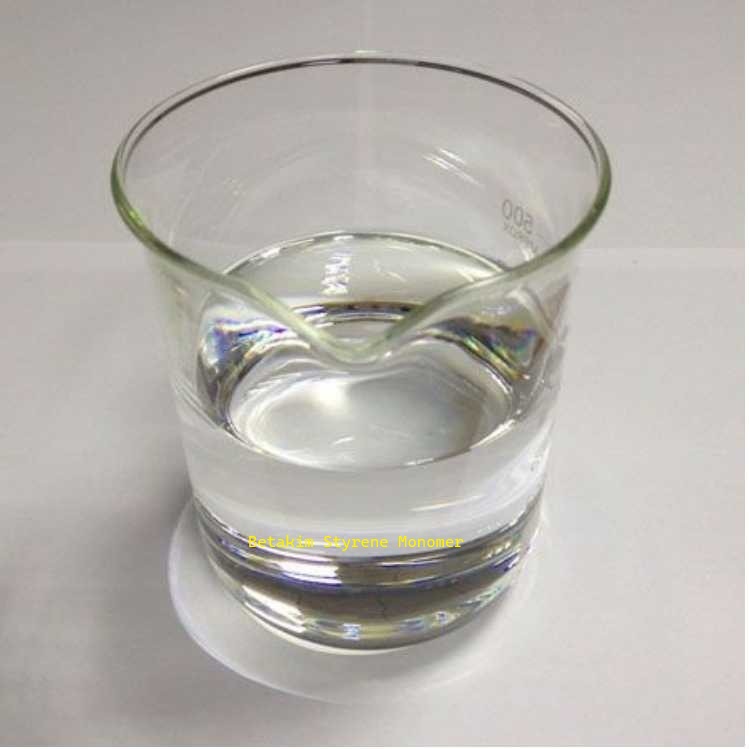
| Appearance | Colorless to slightly yellowish transparent liquid |
| Odor | Characteristic, sweetish, sharp chemical odor |
| Physical State (20°C) | Liquid |
Styrene is a colorless to slightly yellowish, flammable liquid with a characteristic sweetish odor. It is a reactive monomer that polymerizes easily and is one of the most widely used thermoplastic raw materials in the world. It is primarily used in the production of polystyrene (PS), ABS, SBR rubber, and unsaturated polyester resins (UPR).
SECTION 2: SYNONYMS AND OTHER NAMES
| Type | Name |
|---|---|
| Common Names | Styrene, Styrene Monomer, SM |
| Chemical Names | Vinyl Benzene, Ethenylbenzene, Phenylethylene, Styrol, Cinnamene |
| CAS Number | 100-42-5 |
| EC Number | 202-851-5 |
| HS Code | 2902.50 |
| UN Number | 2055 |
SECTION 3: CHEMICAL STRUCTURE
3.1. Molecular Structure
Styrene consists of a benzene ring substituted with a vinyl group (-CH=CH₂). The vinyl group provides the reactive double bond that allows polymerization.
Structural Formula:
        CH=CH₂
         |
         C
        / \
       /   \
      /     \
     /       \
    C         C
    |         |
    C - H     C - H
    |         |
    C         C
     \       /
      \     /
       \   /
        \ /
         C
Simplified Representation:
        CH=CH₂
         |
    C₆H₅ - H
3.2. Molecular Formula
C₈H₈
3.3. Molecular Weight
104.15 g/mol
3.4. Key Structural Features
| Feature | Description |
|---|---|
| Core Structure | Benzene ring (C₆H₅) |
| Functional Group | Vinyl group (-CH=CH₂) |
| Reactive Site | Carbon-carbon double bond (polymerization site) |
| Aromatic Ring | 6-membered ring with delocalized electrons |
SECTION 4: PHYSICAL AND CHEMICAL PROPERTIES
| Property | Value |
|---|---|
| Appearance | Colorless to slightly yellowish transparent liquid |
| Odor | Characteristic, sweetish, sharp chemical odor |
| Molecular Formula | C₈H₈ |
| Molecular Weight | 104.15 g/mol |
| Density (20°C) | 0.909 g/cm³ |
| Melting Point | -30.6 °C |
| Boiling Point | 145 °C |
| Flash Point | 31 °C (closed cup) |
| Autoignition Temperature | 490 °C |
| Vapor Density (Air=1) | 3.6 (heavier than air) |
| Vapor Pressure (20°C) | 6.7 mmHg |
| Water Solubility | Limited (~0.03% at 20°C) |
| Solubility in Alcohol | High |
| Solubility in Ether | High |
| Solubility in Acetone | High |
| Solubility in Carbon Disulfide | High |
| Refractive Index (20°C) | 1.546 |
| Viscosity (20°C) | 0.76 cP |
| Surface Tension | 32.4 mN/m |
| Odor Threshold | 0.1 ppm |
| Explosive Limits (in air) | 1.1 – 6.1% by volume |
SECTION 5: POLYMER AND MATERIAL PROPERTIES (Post-Application)
When styrene monomer is polymerized, it imparts the following characteristic properties:
| Property | Description |
|---|---|
| Optical Properties | Very high transparency and glossy surface quality |
| Mechanical Properties | High surface hardness; strong scratch resistance |
| Chemical Resistance | High resistance to acids and bases |
| Processability | Easily processable by various technologies (injection, extrusion, blow molding) |
| UV Resistance | Standard grades not suitable for outdoor use; UV-stabilized special grades available |
| Volatility | Low volatility; however, vapor is heavier than air and accumulates at floor level in confined spaces |
SECTION 6: APPLICATIONS AND INDUSTRIAL USES
6.1. Plastics and Polymers
| Application | Description |
|---|---|
| Polystyrene (PS) | General-purpose polystyrene (GPPS), High-impact polystyrene (HIPS) |
| ABS (Acrylonitrile Butadiene Styrene) | Automotive parts, consumer electronics, appliances |
| SBR Rubber (Styrene-Butadiene Rubber) | Tires, conveyor belts, footwear |
| Unsaturated Polyester Resins (UPR) | Fiberglass-reinforced plastics (FRP), boat hulls, automotive parts |
| Expanded Polystyrene (EPS) | Insulation, packaging, construction (Styrofoam) |
6.2. Automotive Industry
| Application | Description |
|---|---|
| Automotive Parts | Dashboards, interior trim, bumpers |
| Protective Helmets | Safety helmets |
| Battery Cases | Battery boxes |
| Headlight Housings | Reflector housings |
6.3. White Goods (Appliances)
| Application | Description |
|---|---|
| Refrigerator Parts | Interior plastic parts, shelf dividers |
| Light Covers | Diffusers, lamp covers |
| Appliance Housings | External housings for appliances |
6.4. Consumer Products
| Application | Description |
|---|---|
| Toys | Toy parts, figures |
| Kitchenware | Disposable cutlery, cups, plates |
| Cosmetic Packaging | Jars, bottles, caps |
| CD and DVD Cases | Optical media packaging |
6.5. Construction and Infrastructure
| Application | Description |
|---|---|
| Pipes | Pipes and fittings |
| Protective Coatings | Marine coatings, corrosion protection |
| Insulation | EPS insulation boards |
| Composites | FRP panels, roofing, shower cabins |
6.6. Composite Industry (Fiber-Reinforced Plastics)
| Application | Description |
|---|---|
| Filament Winding | Large objects winding (with polyester resin) |
| Hand Lay-up | Boat hulls, tanks, pipes |
| Spray-up | Chopper gun applications |
| Resin Transfer Molding (RTM) | High-volume composite parts |
SECTION 7: PRODUCTION METHOD
Styrene is produced via petrochemical processes. The most common industrial method is the dehydrogenation of ethylbenzene.
| Stage | Process | Description |
|---|---|---|
| 1 | Ethylbenzene Production | Benzene is alkylated with ethylene to produce ethylbenzene. |
| 2 | Dehydrogenation | Ethylbenzene is dehydrogenated at high temperature (600-650°C) in the presence of steam and a catalyst (iron oxide with potassium promoters) to produce styrene. |
| 3 | Purification | Styrene is purified by distillation. |
| 4 | Stabilization | Inhibitor (typically TBC - tert-Butylcatechol) is added to prevent spontaneous polymerization during storage and transport. |
Reaction Equation:
C₆H₅CH₂CH₃ (Ethylbenzene) → C₆H₅CH=CH₂ (Styrene) + H₂
SECTION 8: INHIBITOR AND STABILITY
| Parameter | Information |
|---|---|
| Inhibitor | TBC (tert-Butylcatechol) |
| Typical Concentration | 10 – 15 ppm |
| Function | Prevents spontaneous polymerization |
| Mechanism | TBC acts as a free radical scavenger, requiring oxygen to function |
| Storage Temperature | Below 25°C |
| Shelf Life | 6-12 months (under proper storage with inhibitor) |
| Warning | If the container is left open or oxygen is depleted, TBC becomes ineffective and the styrene will polymerize (gel) |
SECTION 9: SECTORAL APPLICATION PATTERNS
9.1. Composite Industry (FRP – Fiber-Reinforced Polyester)
In this sector, styrene serves as a reactive diluent (solvent) . It thins the unsaturated polyester resin and becomes part of the polymer structure during curing.
Application Methods: Hand Lay-up, Filament Winding, Spray-up (Chopper Gun), Resin Transfer Molding (RTM).
Example Recipe (Hand Lay-up - 100 kg Resin Mixture):
| Component | Quantity | Notes |
|---|---|---|
| Unsaturated Polyester Resin | 98 – 99 kg | Already contains 30-40% styrene monomer |
| Accelerator (Cobalt Octoate 6%) | 200 – 300 ml | Depending on ambient temperature |
| Hardener (MEKP - Methyl Ethyl Ketone Peroxide) | 1.5 – 2.0 kg | Added last; never mixed directly with accelerator |
| Additional Styrene Monomer | 2 – 5% | Added if viscosity is too high or for first coat (after gelcoat); excessive addition reduces mechanical strength and causes surface cracking |
9.2. Expanded Polystyrene (EPS - Styrofoam) Production
Styrene monomer is polymerized into beads, then impregnated with pentane gas. During application, steam heat expands the beads.
Note: This process occurs at the polymer (PS) stage, not the monomer stage.
9.3. SBR Rubber (Tire Industry)
Styrene is copolymerized with butadiene to produce synthetic rubber.
Recipe Note (Cold Emulsion Polymerization): Styrene (~23.5%) + Butadiene (~76.5%). This ratio determines tire traction and wear resistance.
SECTION 10: FORMULATION CONSIDERATIONS
| Parameter | Recommendation |
|---|---|
| Additional Styrene in Resin | Maximum 5% of resin weight |
| Excessive Styrene Effects | Reduces mechanical strength; causes surface micro-cracks (blooming) |
| Viscosity Control | Use thixotropic agents (Aerosil) or pre-heat resin to 30°C instead of adding extra styrene |
| Surface Tack (Air Inhibition) | Add 0.5% styrene-paraffin solution to the final coat; paraffin migrates to the surface, traps styrene, and allows proper curing |
| Delamination | Shorten layer waiting time; avoid working in windy conditions |
SECTION 11: CRITICAL PROCESSING DEFECTS AND SOLUTIONS
| Defect | Probable Styrene-Related Cause | Solution |
|---|---|---|
| Tacky Surface | Paraffin wax deficiency or oxygen inhibition | Add 0.5% styrene-paraffin solution to the final coat |
| Blooming / Micro-Cracks | Excessive additional styrene (>5%) | Use thixotropic agents instead; pre-heat resin |
| Delamination | Bonding layer styrene evaporated too quickly | Shorten waiting time between layers; avoid windy conditions |
| Gelation in Tank | Oxygen depletion; inhibitor ineffective | Store under nitrogen blanket; avoid prolonged storage |
| Fish Eyes / Pin Holes | Moisture contamination or improper mixing | Ensure dry conditions; mix thoroughly |
SECTION 12: SAFETY AND HEALTH HAZARDS
12.1. Health Effects
| Route of Exposure | Effect |
|---|---|
| Inhalation | Headache, dizziness, central nervous system depression, respiratory irritation |
| Skin Contact | Irritation, dryness, cracking, dermatitis |
| Eye Contact | Severe irritation, redness, pain |
| Ingestion | Gastrointestinal irritation, nausea, vomiting |
| Chronic Exposure | May affect liver and kidney function; suspected carcinogen (IARC Group 2B) |
12.2. Occupational Exposure Limits
| Parameter | Value |
|---|---|
| Odor Threshold | 0.1 ppm |
| TWA (Time-Weighted Average) | 20 ppm |
| STEL (Short-Term Exposure Limit) | 40 ppm |
| IDLH (Immediately Dangerous to Life or Health) | 700 ppm |
Warning: If the sweetish odor becomes noticeably unpleasant, the exposure limit has been exceeded.
SECTION 13: GHS CLASSIFICATION
| Hazard Class | Category | H-Statement |
|---|---|---|
| Flammable Liquid | Category 3 | H226 |
| Acute Toxicity (Inhalation) | Category 4 | H332 |
| Skin Irritation | Category 2 | H315 |
| Eye Irritation | Category 2 | H319 |
| Specific Target Organ Toxicity - SE | Category 3 | H335 |
| Carcinogenicity | Category 2 | H351 |
| Chronic Aquatic Toxicity | Category 3 | H412 |
Signal Word: WARNING
Hazard Pictograms: GHS02 (Flame), GHS07 (Exclamation Mark), GHS08 (Health)
Hazard Statements (H-Codes):
| Code | Statement |
|---|---|
| H226 | Flammable liquid and vapor. |
| H315 | Causes skin irritation. |
| H319 | Causes serious eye irritation. |
| H332 | Harmful if inhaled. |
| H335 | May cause respiratory irritation. |
| H351 | Suspected of causing cancer. |
| H412 | Harmful to aquatic life with long-lasting effects. |
SECTION 14: PRECAUTIONARY STATEMENTS (P-CODES)
| Code | Statement |
|---|---|
| P210 | Keep away from heat/sparks/open flames/hot surfaces. No smoking. |
| P233 | Keep container tightly closed. |
| P240 | Ground/bond container and receiving equipment. |
| P241 | Use explosion-proof electrical/ventilating/lighting equipment. |
| P261 | Avoid breathing dust/fume/gas/mist/vapors/spray. |
| P271 | Use only outdoors or in a well-ventilated area. |
| P280 | Wear protective gloves/protective clothing/eye protection/face protection. |
| P302+P352 | IF ON SKIN: Wash with plenty of soap and water. |
| P304+P340 | IF INHALED: Remove person to fresh air and keep comfortable for breathing. |
| P305+P351+P338 | IF IN EYES: Rinse cautiously with water for several minutes. Remove contact lenses if present. |
| P308+P313 | IF exposed or concerned: Get medical advice/attention. |
| P403+P235 | Store in a well-ventilated place. Keep cool. |
| P501 | Dispose of contents/container in accordance with local regulations. |
SECTION 15: FIRST AID MEASURES
| Route of Exposure | Action to Be Taken |
|---|---|
| Inhalation | Move to fresh air. If breathing difficulty occurs, administer oxygen. Seek medical attention. |
| Skin Contact | Wash with plenty of soap and water. Remove contaminated clothing. If irritation persists, consult a physician. |
| Eye Contact | Rinse thoroughly with plenty of water for at least 15 minutes. Keep eyelids open. Remove contact lenses. Seek immediate medical attention. |
| Ingestion | Do not induce vomiting. Rinse mouth. Drink water. Seek immediate medical attention. |
SECTION 16: FIRE-FIGHTING MEASURES
| Parameter | Information |
|---|---|
| Fire Hazard | Flammable liquid (Flash point 31°C). |
| Vapor Behavior | Vapors are heavier than air and may accumulate at floor level. |
| Explosion Hazard | Vapors may form explosive mixtures with air (1.1-6.1%). |
| Suitable Extinguishing Media | Foam, CO₂, dry chemical powder. |
| Unsuitable Extinguishing Media | Water jet (may spread the fire). |
| Special Protective Equipment | Self-contained breathing apparatus (SCBA), full protective clothing. |
| Special Precautions | Cool containers with water spray. |
SECTION 17: ACCIDENTAL RELEASE MEASURES
| Parameter | Information |
|---|---|
| Personal Protection | Protective goggles, chemical-resistant gloves, vapor respirator, coverall. |
| Ventilation | Increase ventilation; use local exhaust in confined spaces. |
| Containment | Absorb with inert material (sand, vermiculite). |
| Cleaning Methods | Collect with absorbent material. Avoid washing with water (spread). |
| Environmental Precautions | Prevent entry into drains, sewers, and water bodies. |
| Waste Disposal | Dispose of in accordance with local regulations. |
SECTION 18: STORAGE AND SHELF LIFE
| Parameter | Information |
|---|---|
| Storage Conditions | Store in a cool, well-ventilated area, away from heat sources and direct sunlight. |
| Temperature | Below 25°C (ideally 15-20°C). |
| Container Requirements | Tightly closed; nitrogen blanket recommended. |
| Inhibitor | TBC (tert-Butylcatechol) at 10-15 ppm. |
| Materials to Avoid | Strong oxidizers, peroxides, acids, heat, oxygen depletion. |
| Shelf Life | 6-12 months (under proper storage with inhibitor). |
| Stability Note | Polymerization may occur if inhibitor is depleted; oxygen is required for inhibitor function. |
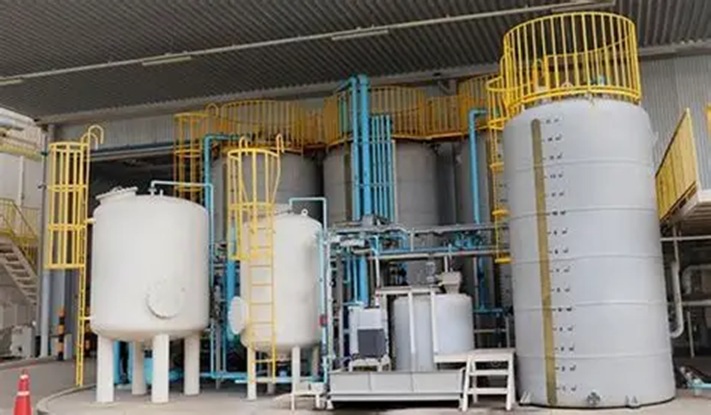
| Packaging Options | 200 L drums, 1000 L IBC tanks, bulk tankers (stainless steel or lined carbon steel). |
SECTION 19: PACKAGING OPTIONS
| Packaging Type | Quantity | Material |
|---|---|---|
| Steel Drum | 200 L | Stainless steel / Carbon steel (lined) |
| IBC Tank | 1000 L | Stainless steel |
| Bulk Tanker | 20 – 30 tons | Stainless steel (with nitrogen blanket) |
| Small Containers | 1 L, 5 L | Aluminum / HDPE (for laboratory use) |
SECTION 20: TRANSPORT INFORMATION
| Parameter | Information |
|---|---|
| UN Number | 2055 |
| Hazard Class | 3 (Flammable Liquid) |
| Packing Group | III |
| Proper Shipping Name | STYRENE MONOMER, STABILIZED |
| Marine Pollutant | No |
| ADR/RID Label | 3 |
| EMS | F-E, S-D |
SECTION 21: ENVIRONMENTAL INFORMATION
| Parameter | Information |
|---|---|
| Aquatic Toxicity | Harmful to aquatic life with long-lasting effects (H412) |
| Biodegradability | Readily biodegradable |
| Bioaccumulation | Moderate potential (Log P ~2.95) |
| Mobility in Soil | Moderate to high |
| Vapor Behavior | Heavier than air; accumulates at ground level |
| Waste Disposal | Incineration or disposal as hazardous waste in accordance with local regulations |
SECTION 22: REGULATORY INFORMATION
| Region / Authority | Status |
|---|---|
| European Union (REACH) | Registered; classified as flammable and suspected carcinogen. |
| USA (TSCA) | Listed. |
| Turkey (KKDIK) | Registered under chemical registration regulations. |
| IARC | Group 2B (possibly carcinogenic to humans). |
| OSHA | Regulated as a hazardous substance. |
SECTION 23: ALTERNATIVE PRODUCTS AND COMPARISONS
| Property / Product | STYRENE | MMA (Methyl Methacrylate) | Vinyl Toluene | t-Butyl Styrene |
|---|---|---|---|---|
| Odor Level | Sharp, irritating | Fruity, less irritating | Mild, solvent-like | Very low |
| Vapor Pressure | Low (slow evaporation) | High (rapid evaporation) | Low | Very low |
| Cost | Base (cheapest) | ~50-80% more expensive | ~30% more expensive | Very expensive |
| Reactivity | Medium | Very fast | Slower than styrene | Medium |
| Polymer Properties | Hard, brittle (PS) | Transparent, scratch-resistant (Plexiglas) | Flexible, electrical resistance | High heat resistance |
| Primary Use | General-purpose polyester | Odorless applications (acrylic) | Electrical insulation varnishes | High-temperature resins |
Why is styrene still used? The cost-performance ratio is unmatched. Using MMA would double the cost of manufacturing a boat or truck body.
When to switch to alternatives? In closed-space applications (sewer pipe lining), cosmetic packaging, medical devices, or where human contact is intense and odor tolerance is low, switching to vinyl toluene or DCPD-based resins is necessary.
SECTION 24: OTHER NAMES AND SYNONYMS
| Name | Context |
|---|---|
| Styrene Monomer | Industrial trade name |
| SM | Common abbreviation |
| Vinyl Benzene | IUPAC systematic name |
| Ethenylbenzene | Chemical systematic name |
| Phenylethylene | Chemical systematic name |
| Styrol | German/European name |
| Cinnamene | Historical name |
| Vinylbenzol | German name |
SECTION 25: QUICK REFERENCE TABLE
| Property | Value |
|---|---|
| CAS Number | 100-42-5 |
| EC Number | 202-851-5 |
| UN Number | 2055 |
| Molecular Formula | C₈H₈ |
| Molecular Weight | 104.15 g/mol |
| Appearance | Colorless to slightly yellowish liquid |
| Odor | Sweetish, sharp |
| Density (20°C) | 0.909 g/cm³ |
| Melting Point | -30.6 °C |
| Boiling Point | 145 °C |
| Flash Point | 31 °C |
| Vapor Density (Air=1) | 3.6 (heavier than air) |
| Water Solubility | Limited (~0.03%) |
| Primary Uses | Polystyrene (PS), ABS, SBR rubber, UPR, EPS |
| Shelf Life | 6-12 months (with inhibitor) |
| Inhibitor | TBC (10-15 ppm) |
SECTION 26: CRITICAL NOTICES AND BEST PRACTICES
CRITICAL NOTICES:
-
Polymerization Risk: Styrene spontaneously polymerizes, especially at elevated temperatures. The inhibitor (TBC) requires oxygen to function. Store with a nitrogen blanket in tightly closed containers. Avoid oxygen depletion.
-
Vapor Accumulation: Styrene vapor is 3.6 times heavier than air and accumulates at ground level, forming an invisible gas layer. Exhaust fans should be positioned at floor level, not ceiling level, in composite workshops.
-
Flammability: Styrene is flammable (flash point 31°C). Vapors can form explosive mixtures with air. Keep away from heat, sparks, and open flames. Ground all equipment.
-
Carcinogenicity: IARC classifies styrene as Group 2B (possibly carcinogenic to humans). Use adequate ventilation and personal protective equipment.
-
MEKP Reaction: Never pour peroxide hardener (MEKP) directly onto cobalt accelerator. This causes immediate fire or explosion. Always mix accelerator thoroughly into the resin first, then add peroxide.
-
Kokulu ve Sağlık: The odor threshold is 0.1 ppm. If the sweetish odor becomes noticeably unpleasant, the exposure limit (20 ppm TWA) has been exceeded. Activated carbon filter masks are essential.
-
Excessive Styrene: Adding more than 5% additional styrene to resin reduces mechanical strength and causes surface micro-cracks (blooming).
-
Surface Tack: If the surface remains tacky, add 0.5% styrene-paraffin solution to the final coat. The paraffin migrates to the surface, trapping styrene and allowing proper curing.
BEST PRACTICE RECOMMENDATIONS:
-
Storage: Store in a cool (<25°C), well-ventilated area. Keep containers tightly closed with nitrogen blanket. Use appropriate inhibitor (TBC). Monitor temperature and inhibitor levels.
-
Handling: Use explosion-proof equipment. Ground all containers. Use respiratory protection (activated carbon filter). Use chemical-resistant gloves, goggles, and protective clothing.
-
Ventilation: Install exhaust fans at floor level (vapor is heavier than air). Provide adequate general ventilation.
-
Formulation: Do not exceed 5% additional styrene in resin. Use thixotropic agents or pre-heating to control viscosity.
-
Curing: Follow correct sequence: resin + accelerator (mix) → hardener (mix) → apply. Never mix hardener directly with accelerator.
-
Waste Management: Dispose of styrene and contaminated materials as hazardous waste. Do not pour down drains.
LEGAL DISCLAIMER:
This Technical Data Sheet (TDS) is for informational purposes only and is prepared based on available technical data. The user is solely responsible for determining the suitability of the product for their specific application and for complying with all local, national, and international regulations. For complete safety, storage, handling, transport, waste, and regulatory compliance information, the official Safety Data Sheet (SDS/MSDS) provided by the manufacturer/supplier must be consulted. Styrene is a flammable and potentially hazardous substance and should be handled with extreme caution. This document does not substitute professional or medical advice.