We unleash your business potential by maximize the business innovation.
Send EmailMagnesium Sulphate, Magnesium Sulfate Heptahydrate, Epsom Salt, Bitter Salt, 10034-99-8
Magnesium Sulfate Heptahydrate
1. Product Identity
| Property | Details |
|---|---|
| Product Name | Magnesium Sulfate Heptahydrate |
| CAS Number | 10034-99-8 |
| EINECS Number | 600-073-4 |
| Molecular Formula | MgSO₄·7H₂O |
| Molecular Weight | 246.47 g/mol |
| MDL Number | MFCD00149785 |
| RTECS | OM4508000 |
| HS Code | 28332100 |
| TSCA Status | Yes (Listed) |
| Merck Index | 14,5691 |
| WGK Germany | 1 |
2. Synonyms and Identifiers
Magnesium sulfate heptahydrate is known by various names across different industries and applications:
-
Common Names: MgSO₄·7H₂O, Epsom salt, Bitter salt, Sulfuric acid magnesium salt heptahydrate
-
Chemical Synonyms: Magnesium sulphate heptahydrate, Magnesium(II), sulfate, heptahydrate
-
Grade-Specific Names:
-
MAGNESIUM SULFATE, HEPTAHYDRATE, REAGENT (ACS)
-
MAGNESIUM SULFATE, HEPTAHYDRATE, BIO-REFINED
-
MAG-BIND EQUIPURE LIBR
-
-
Commercial Names: Crystalline magnesium sulfate, Magnesium sulfate 7H₂O XTL
-
InChI: InChI=1/Mg.H2O4S.7H2O/c;1-5(2,3)4;;;;;;;/h;(H2,1,2,3,4);7*1H2/q+2;;;;;;;;/p-2
-
InChI Key: WRUGWIBCXHJTDG-UHFFFAOYSA-L
3. Physicochemical Properties
| Property | Value |
|---|---|
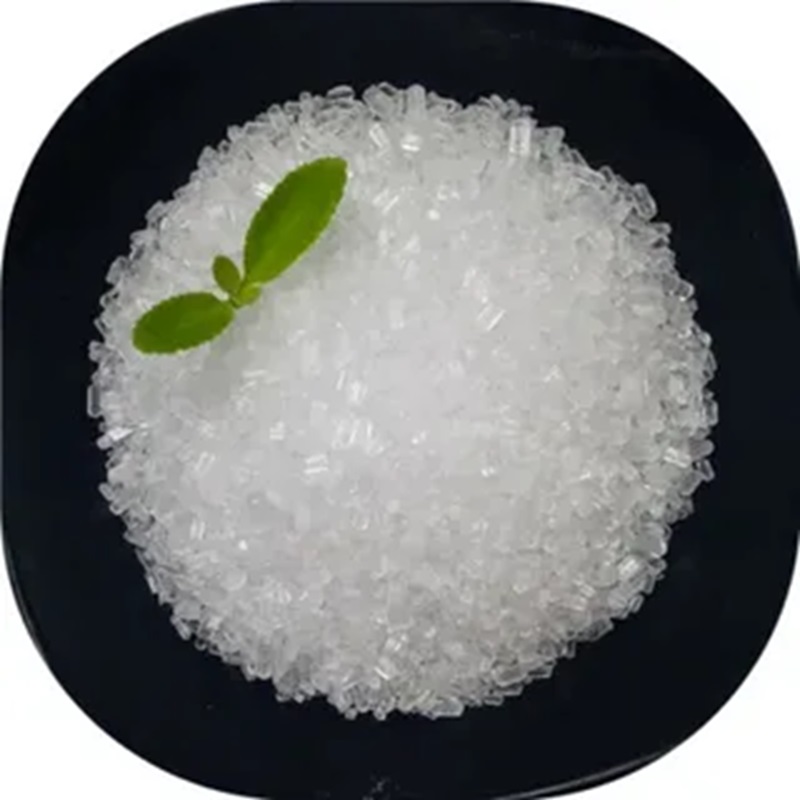
| Appearance | Colorless needle-like or oblique columnar crystals / White crystalline powder |
| Odor | Odorless |
| Taste | Salty and bitter |
| Density | 1.68 g/cm³ (ranging from 1.595 to 2.66 reported) |
| Melting Point | 1124°C (anhydrous); starts losing water of crystallization at 47°C |
| Boiling Point | 330°C at 760 mmHg |
| Vapor Pressure | < 0.1 mm Hg at 20°C |
| Vapor Density | < 0.01 (vs air) |
| pH | 5.0 - 8.0 (25°C, 50 mg/mL in H₂O) |
| Maximum Wavelength (λmax) | λ: 260 nm Amax: 0.010; λ: 280 nm Amax: 0.010 |
| Specific Gravity | 1.68 |
| Stability | Stable. Non-flammable. May slowly deteriorate in contact with air. |
| Storage Condition | Store at +5°C to +30°C. |
4. Solubility Information
| Solvent | Solubility | Conditions |
|---|---|---|
| Water | Easily soluble | 20°C: 71 g/100 mL; 40°C: 91 g/100 mL |
| Ethanol | Slightly soluble | |
| Glycerin | Slightly soluble |
5. Thermal Behavior and Stability
Magnesium sulfate heptahydrate loses its water of crystallization progressively when heated:
-
Below 47°C: Stable
-
At 47°C: Begins to lose 1 molecule of crystal water
-
At 70-80°C: Loses 4 molecules of crystal water
-
At 100°C: Loses 5 molecules of crystal water
-
At 120°C: Loses 6 molecules of crystal water
-
Around 250°C: Transforms into anhydrous magnesium sulfate (MgSO₄).
-
In Air: It effloresces in dry air, losing water and turning into a powder. It rapidly absorbs moisture in humid air (hygroscopic).
6. Production Methods
Magnesium sulfate heptahydrate can be produced through several methods:
1. Sulfuric Acid Method (with Magnesite/Magnesium Oxide):
-
Magnesium oxide (MgO content ≥ 85%) or magnesite (magnesium carbonate) is placed in a neutralization reactor.
-
Water and sulfuric acid (H₂SO₄) are added slowly under controlled conditions.
-
Reaction: MgO + H₂SO₄ + 6H₂O → MgSO₄·7H₂O
-
The pH is adjusted to 5, stirred, and filtered at 80°C.
-
The filtrate is sent to a crystallizer, pH adjusted to 4, seed crystals are added, and it is cooled to 30°C for crystallization.
-
Crystals are separated by centrifugation and dried at 50-55°C.
2. Bitter Halogen Method (from Seawater):
-
Bitter halogen (bittern) obtained as a byproduct of seawater salt production is used.
-
The bittern is dissolved in a MgCl₂ solution; impurities like NaCl are separated.
-
The solution is cooled to precipitate crude MgSO₄·7H₂O, which is then purified by recrystallization.
3. Chemical Purification:
-
Industrial-grade magnesium sulfate is dissolved in purified water.
-
The pH is adjusted with sulfuric acid.
-
Decolorization is performed using activated carbon.
-
High-purity (pharmaceutical grade) product is obtained through filtration, crystallization, and drying.
7. Specifications and Quality Grades
Magnesium sulfate heptahydrate is produced in various grades to meet different industrial requirements:
| Parameter | Industrial Grade | Pharmaceutical Grade | Food Grade | Feed Grade |
|---|---|---|---|---|
| Assay (MgSO₄·7H₂O) | ≥ 99.5% | ≥ 99.5% | ≥ 99.5% | ≥ 99.5% |
| Appearance | Colorless small crystals | Colorless small crystals | Colorless small crystals | Colorless small crystals |
| pH (5% solution) | 5-8 | 5-8 | 5-8 | 5-8 |
| Iron (Fe) | ≤ 0.0015% | ≤ 0.0015% | ≤ 0.0015% | ≤ 0.0015% |
| Chlorine (Cl) | ≤ 0.02% | ≤ 0.01% | ≤ 0.01% | ≤ 0.015% |
| Heavy Metals (Pb) | ≤ 0.001% | ≤ 0.001% | ≤ 0.001% | ≤ 0.001% |
| Arsenic (As) | ≤ 0.0002% | ≤ 0.0002% | ≤ 0.0002% | ≤ 0.0002% |
| Water Insolubles | ≤ 0.01% | ≤ 0.01% | ≤ 0.01% | ≤ 0.01% |
| Loss on Ignition | 48-52% | 48-52% | 48-52% | 48-52% |
8. Applications and Uses
Magnesium sulfate heptahydrate has an extremely wide range of applications:
1. Agriculture and Fertilizer:
-
Magnesium Fertilizer: Magnesium is the core element of chlorophyll and essential for photosynthesis. It acts as an activator for enzymes involved in carbohydrate metabolism, nucleic acid synthesis, and phosphate conversion in plants.
-
Sulfur Source: Sulfur is a major component of proteins and enzymes in plants, promoting root growth.
-
Yield Increase: Fertilizers containing magnesium can increase crop yields by 15-50% compared to those without magnesium (based on trials with rubber trees, fruit trees, tobacco, legumes, potatoes, and cereals).
2. Animal Feed (Feed Additive):
-
Used as a magnesium supplement in feed processing.
-
Magnesium is essential for bone formation and muscle contraction in livestock and poultry.
-
It is an activator of various enzymes and plays a critical role in material metabolism and neural function.
-
Magnesium deficiency can lead to growth retardation, neurological disorders, and even death.
3. Medical and Pharmaceutical:
-
Laxative: Used orally as a laxative (Epsom salt).
-
Anti-inflammatory: Applied externally as a compress (saturated solution in warm water) to reduce inflammation, swelling, bruises, and pain.
-
Antidote: Used as an antidote for barium salt poisoning.
-
Other Effects: Has central nervous system depressant, anticonvulsant, and antispasmodic effects.
-
Warning: Overdose (blood magnesium levels exceeding 20 mg/100g) can lead to deep anesthesia, drowsiness, coma, slowed heart rate, and low blood pressure. Acute poisoning is treated with calcium preparations.
4. Food Industry (Food Additive):
-
Nutritional Supplement: As a source of magnesium.
-
Firming Agent: For texture in canned vegetables.
-
Flavor Enhancer: Improves flavor in some beverages.
-
Processing Aid: Used in brewing (especially "Burton-type" beers) as a magnesium supplement during fermentation to improve yeast performance.
-
Usage Limits (based on regulations):
-
Dairy products: 3-7 g/kg
-
Drinking liquids and milk beverages: 1.4-2.8 g/kg
-
Mineral waters: 0.05 g/kg
-
5. Industrial Applications:
-
Leather Industry: Used as a filler in tanning to enhance heat resistance.
-
Textile and Dyeing: Acts as an alkali-resistant agent for dyeing fine cotton cloth and silk; used as a weighting agent.
-
Paper Industry: Used in paper sizing.
-
Chemical Industry: Raw material for producing other magnesium salts (magnesium stearate, magnesium phosphate, magnesium oxide) and sulfates (potassium sulfate, sodium sulfate).
-
Construction and Cement: Used as a coagulant aid for cement.
-
Flame Retardants: Used as a flame retardant in plastics like acrylate resins, epoxy resins, polyesters, and polyurethane.
-
Other: Used in manufacturing porcelain, matches, explosives, pigments, glass; as a conductive salt in electroplating; in industrial wastewater treatment.
6. Microbiology and Biotechnology:
-
Component in microbial fermentation media.
-
Additive in brewing (nutrient source for fermentation).
9. Toxicology and Safety
| Parameter | Details |
|---|---|
| Hazard Symbols | Xi - Irritant |
| Risk Codes | 36/37/38 - Irritating to eyes, respiratory system, and skin. |
| Safety Descriptions | S24/25 - Avoid contact with skin and eyes. S36 - Wear suitable protective clothing. S26 - In case of contact with eyes, rinse immediately with plenty of water and seek medical advice. |
| Toxic Effects | Generally non-toxic. Acts as a bulk laxative when taken orally. In large doses, it depresses the central nervous system, potentially leading to deep anesthesia and coma. High doses may cause skin diseases. |
| Acute Poisoning | Treated with artificial respiration and slow intravenous injection of calcium preparations. |
| In Case of Food Poisoning | Administer milk or egg whites orally; perform gastric lavage. |
10. Upstream and Downstream Products
Raw Materials (Upstream):
-
Sulfuric acid (H₂SO₄)
-
Magnesium oxide (MgO) - from magnesite or bitter earth
-
Magnesite (Magnesium carbonate)
Derived Products (Downstream):
-
Magnesium Hydroxide
-
Ammonium magnesium sulfate
-
Magnesium trisilicate
-
Bacillus thuringiensis (used in biopesticide production)
-
Magnesium naphthenate
-
Gentamicin solution (used in antibiotic production)
11. Storage and Handling
-
Storage: Store in a cool, well-ventilated place. Warehouse temperature should not exceed 48°C. Protect from moisture (efflorescence and water loss can occur in air). Keep away from acids and strong oxidizing agents.
-
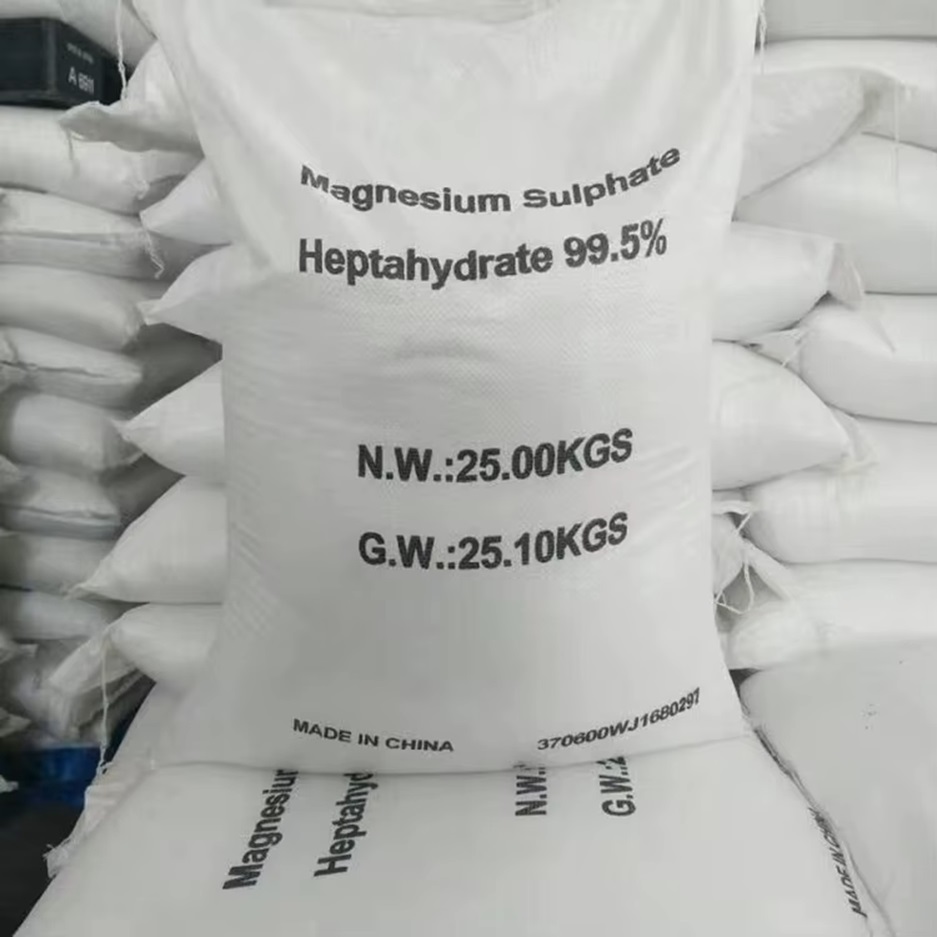
Packaging: Lined with polyethylene plastic bag, outer plastic woven bag. Net weights are typically 25 kg, 40 kg, or 50 kg.
-
Transport: Protect from rain and sun exposure during transport. Handle with care during loading and unloading to prevent package damage.
12. Reference Information
-
Last Update: 2022-01-01 08:50:43 (based on source data)
-
References: Merck 14,5691; RTECS OM4508000; HS Code 28332100
Magnesium Sulfate Heptahydrate
-
Epsom salt (most common traditional name)
-
Bitter salt
-
Magnesium sulfate 7H₂O
-
MgSO₄·7H₂O
-
Crystalline magnesium sulfate
-
Magnesium sulphate heptahydrate
-
Magnesium(II) sulfate heptahydrate
-
Sulfuric acid magnesium salt heptahydrate
-
Magnesium sulfate hydrate (1:1:7)
-
Heptahydrate magnesium sulfate
Grade-Specific and Trade Names:
-
MAGNESIUM SULFATE, HEPTAHYDRATE, REAGENT (ACS)
-
MAGNESIUM SULFATE, HEPTAHYDRATE, BIO-REFINED
-
MAG-BIND EQUIPURE LIBR
-
Magnesium sulfate 7H₂O XTL (Crystal)
-
Magnesium sulfate heptahydrate (USP/Pharm Grade)
-
Magnesium sulfate heptahydrate (Food Grade)
-
Magnesium sulfate heptahydrate (Feed Grade)
-
Magnesium sulfate heptahydrate (Technical Grade)
Chemical Abbreviations and Codes:
-
EINECS: 600-073-4
-
RTECS: OM4508000
-
HS Code: 28332100
-
MDL: MFCD00149785
-
Merck Index: 14,5691