We unleash your business potential by maximize the business innovation.
Send EmailEthylene Vinyl Acetate Copolymer, Ethylene Vinyl Acetate Resin, Latex, Ethylene Vinyl Acetate, EVA, VAE, 24937-78-8
ETHYLENE VINYL ACETATE COPOLYMER (EVA)
1. Chemical Identity and Material Classification
-
Chemical Name: Ethylene Vinyl Acetate Copolymer, Poly(ethylene-co-vinyl acetate)
-
Synonyms: EVA, VAE, Ethylene-vinyl acetate latex, Ethylene-vinyl acetate resin, Acetic acid ethenyl ester polymer with ethene
-
CAS Number: 24937-78-8
-
EC Number (EINECS): 607-457-0
-
Molecular Formula: (C₂H₄)ₓ(C₄H₆O₂)ᵧ or C₁₈H₃₀O₆X₂ (representative)
-
Molecular Weight: Variable (typically 10,000–500,000 g/mol depending on grade)
-
Chemical Class: Thermoplastic copolymer (random copolymer)
-
MDL Number: MFCD00133996
-
HS Code: 3905290000
-
RTECS: 000000041485
2. Physical Properties
2.1 General Physical Properties (Typical)
| Property | Value |
|---|---|
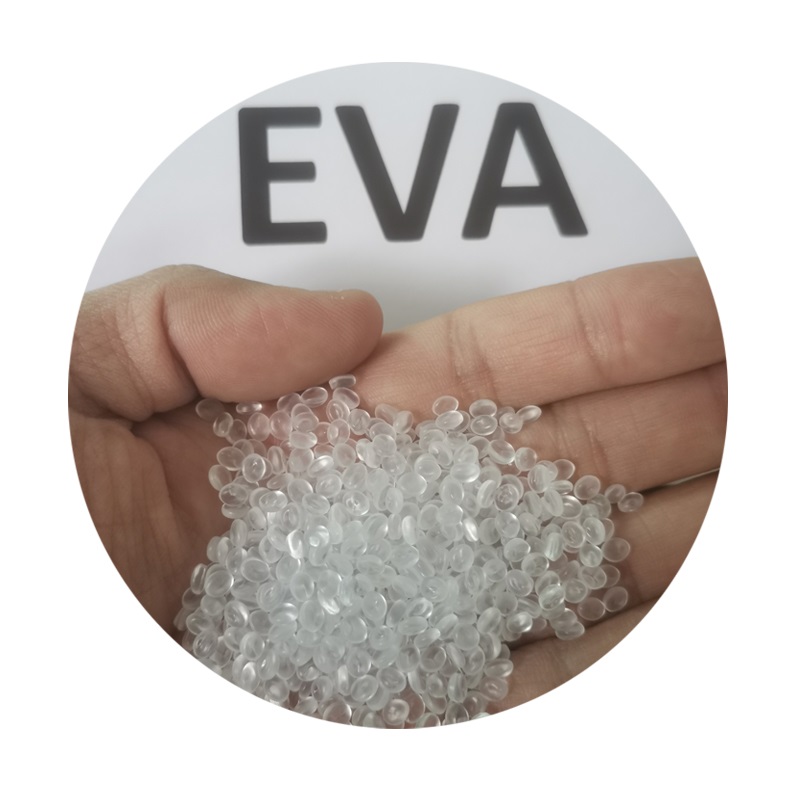
| Appearance | White to off-white powder, pellets, granules, or latex |
| Physical state (25°C) | Solid (thermoplastic) |
| Odor | Characteristic, mild |
| Density (25°C) | 0.93–0.95 g/cm³ (0.948 g/mL typical) |
| Melting point | 75°C (167°F) (varies with VA content: 40–100°C) |
| Boiling point | <200°C (decomposes) |
| Flash point | 260°C (500°F) – combustible |
| Autoignition temperature | 260°C (500°F) |
| Vapor pressure (25°C) | 0.714 mmHg |
| Refractive index | ~1.48–1.50 |
| Water absorption (24 hours) | 0.05–0.1% (very low) |
2.2 Solubility
| Solvent | Solubility |
|---|---|
| Toluene | Soluble |
| Tetrahydrofuran (THF) | Soluble |
| Methyl ethyl ketone (MEK) | Soluble |
| Chlorinated solvents | Soluble |
| Water | Insoluble |
| Aliphatic hydrocarbons | Insoluble |
3. Effect of Vinyl Acetate (VA) Content
| VA Content | Crystallinity | Characteristics | Applications |
|---|---|---|---|
| 0–5% | High | Similar to LDPE, rigid | Heavy-duty packaging, pipes |
| 5–10% | Medium–High | Flexible, good impact strength | Blown film, packaging, stretch film |
| 10–15% | Medium | Transparent, good heat sealability | Agricultural film, shrink film, food packaging |
| 15–20% | Low | Very flexible, tough | Hot melt adhesives, cable insulation, foams |
| 20–30% | Very low | Elastic, rubber-like | Adhesives, sealants, coatings, polymer modification |
| 30–40% | Amorphous | Highly elastic, good compatibility | Adhesives, carpet backing, polymer blends |
| 40–90% | Amorphous | Rubber-like (EVA rubber) | Rubber products, cables, automotive components |
| >90% | Amorphous | Polyvinyl acetate emulsion | Adhesives, coatings, paints |
4. Relationship between VA Content and Key Properties
| VA Content (wt%) | Melting Point (°C) | Density (g/cm³) | Hardness (Shore A) | Flexibility | Adhesion |
|---|---|---|---|---|---|
| 5% | ~100 | 0.93 | High | Low | Low |
| 10% | ~90 | 0.94 | Medium-High | Medium | Low |
| 15% | ~80 | 0.945 | Medium | High | Medium |
| 20% | ~75 | 0.948 | Medium | Very High | High |
| 25% | ~70 | 0.95 | Low | Very High | Very High |
| 30% | ~65 | 0.955 | Low | Excellent | Excellent |
5. Property Relationships
| Property | Effect of Increasing VA Content | Effect of Increasing MFR (Melt Flow Rate) |
|---|---|---|
| Elasticity | Increases | — |
| Flexibility | Increases | Increases |
| Compatibility | Increases | — |
| Transparency | Increases | Increases |
| Crystallinity | Decreases | — |
| Rigidity | Decreases | Decreases |
| Wear resistance | Decreases | Decreases |
| Electrical insulation | Decreases | — |
| Softening point | Decreases | Decreases |
| Workability | — | Increases |
| Surface gloss | — | Increases |
| Mechanical strength | — | Decreases |
| Molecular weight | — | Decreases |
| Impact properties | — | Decreases (with MFR increase) |
| Stress crack resistance | — | Decreases (with MFR increase) |
6. Production Methods
6.1 High-Pressure Method (Autoclave or Tubular Reactor) – Most Common
Reaction: Ethylene + Vinyl Acetate → EVA Copolymer
Conditions:
-
Temperature: 200–220°C
-
Pressure: 14.7–15.68 MPa (147–156.8 bar)
-
Initiator: Peroxides (similar to LDPE production)
-
Process: Bulk copolymerization
Features:
-
Suitable for VA content: 10–50%
-
Molecular weight range: 50,000–500,000
-
Similar to LDPE production with additional VA supply and recovery system
6.2 Solution Method (Medium Pressure)
Conditions:
-
Pressure: 5–7 MPa (50–70 bar)
-
Temperature: 30–150°C
-
Solvent: tert-butyl alcohol, aliphatic hydrocarbons, or benzene
-
Initiator: Peroxides or azo compounds
Features:
-
Suitable for medium VA content (typically >35%)
6.3 Emulsion Method (High VA Content)
Conditions:
-
Pressure: 1–10 MPa
-
Temperature: <95°C
-
Emulsifier: Added to water medium
-
Initiator: K₂S₂O₈ or (NH₄)₂S₂O₈
Features:
-
VA content: 70–90%
-
Produces EVA latex/emulsion
7. Industrial Applications
7.1 Films (Largest Application)
| VA Content | Application | Benefits |
|---|---|---|
| 6–15% | Heavy-duty packaging, single-layer transparent film | Moderate toughness, high transparency, good heat sealability, improved gloss, reduced haze |
| 5–7.5% | Ice bag film | Prevents low-temperature embrittlement; remains flexible in cold environments |
| 10–20% | Agricultural film, shrink packaging film, stretched film | High transparency, good impact toughness, good thermal stability, low air permeability |
| 9–15% | Fresh meat, poultry packaging (co-extruded with PVDC) | Heat sealing strength, heat shrinkage, protective layer |
| 15–18% | Co-extruded film hot-melt layer | Hot-melt adhesion, compatibility with homopolymers |
| — | Medical films, cheese wrapping paper, box-in-bag (metalized polyester laminate) | Low toxicity, good adhesion, barrier properties |
7.2 Hot Melt Adhesives (Critical Application)
| Parameter | Value |
|---|---|
| Typical VA content | 18–33% |
| Key properties | Good mechanical properties, high viscosity, controlled particle size, good creep resistance, fast curing speed, special adhesion to difficult substrates |
7.3 Foam Plastics
| Parameter | Value |
|---|---|
| Typical VA content | 12–16% |
| Properties | High-magnification, independent bubble-type foam; thermal insulation, shock absorption, small compression deformation, good elasticity, good weather resistance |
| Applications | Ship lifesaving devices, railway cars, building insulation, footwear (microporous soles combined with LDPE, NR, BR, EPDM, CPE) |
7.4 Wire and Cable Insulation
| Parameter | Value |
|---|---|
| Typical VA content | 12–20% |
| Key features | High filler loading capacity; can incorporate carbon black (superconductor, electrostatic dispersion), flame retardants |
| Processing | Steam or chemical vulcanization, radiation treatment |
| Products | Insulation protection foam, sheaths |
7.5 Molded and Extruded Articles
| Application | VA Content | Products |
|---|---|---|
| Injection molding | 9–18% | Flexible, tough parts |
| Extrusion | 9–18% | Highly transparent hoses, rigid tubes (medical transfusion, beverage delivery, construction mortar), dust collection and water supply hoses |
7.6 Polymer Modification (Blends)
| Base Polymer | EVA Function | Benefits |
|---|---|---|
| LDPE | Flexibility enhancer | Improves flexibility, toughness, stress crack resistance |
| HDPE | Impact modifier | Improves impact properties, environmental stress crack resistance, compatibility with other polymers (LDPE, PP) |
| PP | Compatibility agent | Improves compatibility between PP and other polymers |
| PVC | Flexibility enhancer | Improves flexibility, processability |
| Fuel oils | Cold flow improver | Lowers freezing point (with low degree of polymerization EVA) |
7.7 Color Masterbatch Carrier
| Parameter | Value |
|---|---|
| Dye loading capacity | Up to 50–80% |
| Relationship | Absorption capacity proportional to VA content |
| Applications | Color masterbatches, UV stabilizer concentrates |
7.8 Other Applications
| Application | Description |
|---|---|
| Foundry production | Veneer material for casting mold inner surface; complete sand curing without adhesive; smooth casting surface |
| Powder metallurgy | Alloy powder + EVA adhesive mixed under vacuum; improves interface affinity; pinhole-free products |
| Fire-retardant low-smoke resins | Base material for flame-retardant formulations |
| Conductive materials | Base resin for heating bodies, conductive films, elastic electrodes, computer connectors |
| Solar cell encapsulation | Encapsulation of photovoltaic cells (high transparency, UV resistance) |
| Footwear | Microporous shoe soles (10–20% VA, alone or with LDPE, NR, BR, EPDM, CPE) |
| Carpet backing | Adhesive layer for carpets |
| Sealants | Hot melt sealants |
| Coatings | Emulsion coatings for interior/exterior walls |
8. Processing Methods
| Method | Temperature Range | Special Considerations |
|---|---|---|
| Injection molding | 170–200°C | Decomposition at 229–230°C; easy coloring; vulcanization not required |
| Vacuum molding | Low cavity temperature | Poor thermal conductivity; long molding cycle; low-temperature cooling method |
| Blow molding | Low (due to low melting point) | Small traction force; consider slip agent addition |
| Foam molding | Adjustable | Adjust foaming agent amount; product: elastic, lightweight, tough, low shrinkage |
| Extrusion | Variable | Used for film, sheet, pipe, cable |
9. EVA Grades by VA Content
| VA Content (%) | Commercial Name | Primary Applications |
|---|---|---|
| 5–10% | EVA Plastic | Polyethylene modification, wires and cables, molded products, films |
| 12–16% | EVA Plastic (Foam grade) | Foam plastics (insulation, shock absorption, packaging) |
| 15–20% | EVA Plastic (Hot melt grade) | Hot melt adhesives, cable insulation, foams |
| 20–30% | EVA Plastic (Elastomer grade) | Adhesives, sealants, polymer blends |
| 30–40% | EVA Plastic (High VA) | Adhesives, coatings, carpet backing |
| 40–90% | EVA Rubber | Rubber products, cables, automotive components |
| >90% | Polyvinyl acetate emulsion | Adhesives, coatings, paints |
10. EVA Blends with Polyethylene
| Blend Component | Effect on Properties |
|---|---|
| EVA (low VA: 6.6%) | No effect on crystallinity; blend density increases with EVA content (faster at 25%) |
| EVA (high VA) | Significant modification effect; crystallinity and density sharply change; elongation increases rapidly |
| EVA in HDPE | Improves impact properties and environmental stress crack resistance; long chain branches strengthen amorphous region between platelets |
11. Toxicology and Safety
11.1 Acute Toxicity
| Parameter | Value |
|---|---|
| Oral LD₅₀ (rat) | >5,000 mg/kg (low toxicity) |
| Skin irritation | Generally non-irritating |
| Eye irritation | Generally non-irritating |
| Inhalation | Low hazard (solid form) |
11.2 Carcinogenicity
| Classification | Status |
|---|---|
| GHS | Category 40 – Limited evidence of carcinogenic effect (Risk Code 40) |
| IARC | Not classified |
| NTP | Not listed |
11.3 Thermal Decomposition Products
| Temperature | Products |
|---|---|
| >229–230°C | Thermal decomposition begins |
| Decomposition | Acetic acid, carbon monoxide, carbon dioxide, hydrocarbons |
11.4 GHS Classification
| Classification | Category |
|---|---|
| Signal word | Warning (for some grades) |
| Hazard statements | H351 – Suspected of causing cancer (depending on grade/additives) |
| Precautionary statements | P201, P202, P280, P308+P313, P405, P501 |
12. Safety Precautions and Personal Protective Equipment (PPE)
-
Hazards:
-
Combustible – keep away from ignition sources
-
May produce toxic fumes (acetic acid, CO) when heated to decomposition (>230°C)
-
Fine dust may form explosive mixtures with air
-
-
PPE (recommended for powder handling):
-
Dust mask (FFP2/N95)
-
Safety glasses (EN 166)
-
Protective gloves (nitrile)
-
Protective clothing
-
-
Fire fighting:
-
Use water spray, foam, dry chemical, or CO₂
-
Avoid breathing fumes
-
-
First aid:
-
Inhalation: Move to fresh air
-
Skin contact: Wash with soap and water
-
Eye contact: Rinse with water for 15 minutes
-
Ingestion: Rinse mouth; drink water (low toxicity)
-
13. Environmental Fate
| Parameter | Value |
|---|---|
| Biodegradability | Not readily biodegradable (polymer) |
| Aquatic toxicity | Low (insoluble, floats) |
| Bioaccumulation | Low potential |
| Recyclability | Yes (thermoplastic – can be reprocessed) |
| WGK Germany | 1 (low hazard to water) |
14. Storage and Shelf Life
14.1 Storage Conditions
| Parameter | Requirement |
|---|---|
| Temperature | Room temperature (cool, dry, well-ventilated) |
| Humidity | Low (prevents moisture absorption – minimal for EVA) |
| Container | Original sealed bags (polyethylene film inner, polypropylene woven outer) |
| Protect from | Direct sunlight, heat sources, strong oxidizing agents, strong bases |
| Shelf life | 12–24 months (if stored properly) |
14.2 Handling Precautions
-
Keep away from sparks and open flames
-
Use anti-static equipment for powder handling
-
Avoid dust accumulation
15. Transport Information
| Regulation | Classification |
|---|---|
| UN Number | Not regulated (solid plastic) |
| ADR/RID | Not classified as dangerous goods |
| IMDG | Not regulated |
| IATA | Not regulated |
| Proper shipping name | Ethylene vinyl acetate copolymer (non-hazardous) |
16. Synonyms and Common Names
-
English: Ethylene vinyl acetate copolymer, EVA, Ethylene-vinyl acetate resin, Ethylene-vinyl acetate latex, Poly(ethylene-co-vinyl acetate), VAE
-
Trade names: Elvax (DuPont), Evatane (Arkema), Escorene (ExxonMobil), Ateva (Celanese), Greenflex (Eni), Levapren (Lanxess), Ultrathene (LyondellBasell)
-
French: Copolymère éthylène-acétate de vinyle
-
German: Ethylen-Vinylacetat-Copolymer
-
Spanish: Copolímero de etileno-acetato de vinilo
-
Turkish: Etilen Vinil Asetat Kopolimeri, EVA
17. Regulatory Status
| Regulation | Status |
|---|---|
| REACH (EU) | Registered |
| TSCA (US) | Listed |
| FDA | Compliant for food contact applications (depending on grade and VA content) |
| RoHS | Compliant (no restricted substances) |
| EU Food Contact | Approved for food packaging (Regulation (EU) No 10/2011) |
18. Why Choose EVA?
| Advantage | Description |
|---|---|
| Excellent flexibility | Can be formulated from rigid to highly elastic by varying VA content |
| Good impact resistance | Excellent low-temperature toughness |
| High transparency | Especially with medium VA content (10–20%) |
| Good adhesion | Excellent adhesion to many substrates (films, paper, metal, wood) |
| Low melting point | Easy processing (75–100°C), suitable for hot melt adhesives |
| Compatibility | Miscible with many polymers (PE, PP, waxes, resins) |
| High filler loading capacity | Can incorporate up to 50–80% additives (color masterbatches, flame retardants) |
| Good electrical properties | Suitable for wire and cable insulation |
| Low density | 0.93–0.95 g/cm³ (lightweight) |
| Weather resistance | Good outdoor durability |
| Non-toxic | Safe for medical, food contact, and pharmaceutical applications |
| Recyclable | Thermoplastic – can be reprocessed |
| Versatile | Wide range of applications across many industries |
Limitations:
-
Limited thermal stability – Decomposes above 230°C (releases acetic acid)
-
Low continuous use temperature – Typically below 60–80°C
-
Poor chemical resistance – Swells in organic solvents
-
Moderate mechanical strength – Lower than polyethylene at same density
-
Combustible – Flash point 260°C
19. Key Application Summary by VA Content
| VA Content (%) | Key Applications |
|---|---|
| 0–5% | Heavy-duty packaging, pipes |
| 5–10% | Blown film, packaging, stretch film |
| 10–15% | Agricultural film, shrink packaging, ice bags |
| 15–20% | Hot melt adhesives, cable insulation, foams, footwear |
| 20–30% | Adhesives, sealants, polymer modification |
| 30–40% | Adhesives, carpet backing, coatings |
| 40–90% | Rubber products, cables, automotive components |
| >90% | Adhesives, coatings, paints (PVAc emulsion) |
20. Summary Table – Key Specifications at a Glance
| Parameter | Value |
|---|---|
| Product Name | Ethylene Vinyl Acetate Copolymer (EVA) |
| CAS Number | 24937-78-8 |
| Appearance | White to off-white powder, pellets, or latex |
| Density | 0.93–0.95 g/cm³ |
| Melting Point | 40–100°C (depends on VA content; typical 75°C) |
| Flash Point | 260°C |
| Autoignition Temp | 260°C |
| VA Content Range | 5–90% (depending on grade) |
| Molecular Weight | 10,000–500,000 g/mol |
| Water Absorption | 0.05–0.1% (24 hours) |
| Solubility | Soluble in toluene, THF, MEK; insoluble in water |
| Primary Applications | Films, hot melt adhesives, foams, wire and cable insulation, polymer modification, footwear, solar cell encapsulation |
| Processing Methods | Injection molding, extrusion, blow molding, foam molding, vacuum molding |
| Biodegradability | Not readily biodegradable |
| Recyclability | Yes |
| GHS Signal Word | Warning (some grades) |
| Hazard Statements | H351 (suspected of causing cancer – depending on grade) |
This TDS is prepared in compliance with ISO 11014-1 format and is intended for polymer engineers, adhesive formulators, film processors, injection molders, foam manufacturers, cable compounders, and procurement professionals. Certificates of Analysis (CoA), Safety Data Sheets (SDS), and sample validation reports are available upon request.
.jpg)
