We unleash your business potential by maximize the business innovation.
Send EmailDenatonium Benzoate, Lidocaine Benzyl Benzoate, Bitrex, 3734-33-6
Denatonium Benzoate (Bitrex)
The details you provided are comprehensive and accurate. Below is a summary enriched with additional technical and practical information based on the data you shared.
1. Basic Chemical and Physical Properties
-
Product Name: Denatonium Benzoate
-
Brand Name: Bitrex (the most common trademark)
-
CAS No: 3734-33-6
-
Molecular Formula: C₂₈H₃₄N₂O₃
-
Molecular Weight: 446.58 g/mol
-
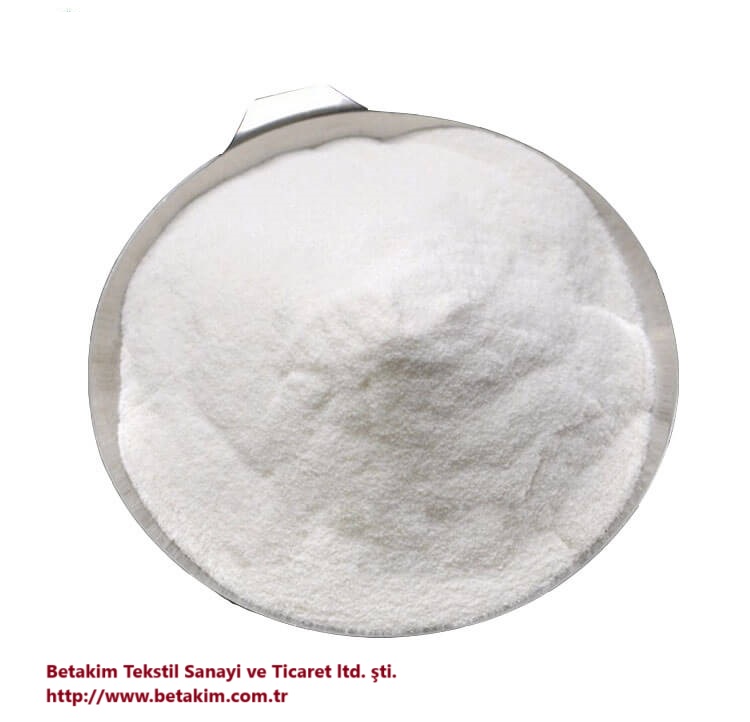
Appearance: White, crystalline powder
-
Purity: Typically ≥ 99.5%
-
Solubility: Soluble in water and ethanol.
2. The "Bitterest Substance" Title (Sensory Properties)
-
Bitterness Intensity: Your information is very accurate. When using quinine as a baseline (bitterness index of 1), Denatonium Benzoate is approximately 1000 times more bitter.
-
Detection Threshold: The human tongue can detect this substance at incredibly low concentrations. A distinct bitter taste is usually perceived at concentrations of 10 ppm (parts per million) or even lower. This ratio is equivalent to less than a pinch of salt in 10 liters of water.
3. Primary Applications and Function
Its main function is to act as a deterrent (denaturant) to prevent the accidental or intentional ingestion of toxic or non-edible substances.
-
Industrial and Household Chemicals:
-
Antifreeze: Added to ethylene glycol, which has a sweet taste that can be attractive to children and animals.
-
Methanol and Industrial Alcohol: Used as a denaturing agent to distinguish it from potable alcohol.
-
Cleaning Products: Paints, thinners, toilet cleaners, liquid soaps, and shampoos.
-
-
Personal Care and Health:
-
Nail Biting Deterrents (Nail Polish): Added to nail polishes to help break the habit of nail-biting in children.
-
Respiratory Masks: Found on the inside of some masks (especially N95 types) as a "bitter taste test" substance to check for proper fit. If the mask fits correctly, the user does not taste the bitterness; if they do, the mask is leaking.
-
-
Animal Repellents:
-
Used in sprays or granules to prevent animals from chewing on plants or accessing forbidden areas. Livestock and pets find this bitter taste unpleasant.
-
-
Agriculture:
-
It is a much more effective and economical alternative to traditional bittering agents like saponin, lignin, and quinine. It is used in seed coatings to prevent birds or rodents from eating planted seeds.
-
4. Analytical and Detection Methods
As noted in your information, various laboratory methods are used to detect the presence and concentration of Denatonium Benzoate:
-
High-Performance Liquid Chromatography (HPLC): The HPLC-UV (Ultraviolet detector) system is a standard method widely used for the precise determination of Denatonium Benzoate in complex liquid mixtures, such as alcoholic beverages (whiskey, vodka, liqueurs, etc.). This method plays a critical role in inspecting whether a product is suitable for consumption (i.e., whether it has been denatured).
-
Mass Spectrometry (LC-MS/MS): A more sensitive method used for detection at much lower concentrations.
Denatonium Benzoate: Liquid vs. Solid Form Comparison
Yes, Denatonium Benzoate is available in both solid (powder/crystal) and liquid forms. You can choose between these two forms based on your specific needs and production process. The table below details the key differences and applications between them.
| Feature | Liquid Denatonium Benzoate | Solid (Powder/Crystal) Denatonium Benzoate |
|---|---|---|
| Physical Form | A concentrated solution (typically prepared in solvents such as ethylene glycol, propylene glycol, methanol, or ethanol) . | White, crystalline powder or granules . |
| Potency | Very High | Extremely High |
| Primary Use | Industrial and household liquids that need to be easily mixed into liquid or semi-liquid products . | Solid or powder formulations, as well as manual use in small-batch production . |
| Advantages | - Easy Integration: Very easy to mix directly and homogeneously into liquid products (paints, solvents, antifreeze, liquid detergents) . - Fast Dispersion: Provides instant and uniform bitterness within the product . - Suitable for Automation: Ideal for precise dosing in large-scale, automated production lines. |
- High Stability: Very stable in dry environments and has a long shelf life (5+ years under proper conditions) . - Versatility: Can be added directly to solid products or dissolved in solvents to create a liquid solution as needed . - Storage: Takes up less volume than liquid and usually does not require special temperature conditions. |
| Limitations | - Requires Dilution: Often needs to be diluted before use . - Dosage Sensitivity: Careful measurement is required to avoid over-concentration . - Solvent Compatibility: The solvent it contains must be chemically compatible with the main product it is being added to. |
- Mixing Difficulty: The powder form may require good mixing (mechanical stirrer) to dissolve completely in liquids. Insufficient mixing can lead to non-uniform bitterness . - Dusting Risk: Dusting can occur during handling; therefore, it is recommended to use personal protective equipment such as masks and gloves. |
| Most Suitable Applications | Paints, solvents, cleaning agents, antifreeze, liquid detergents, screen wash, hand sanitizers . | Powder detergents, granular chemicals, pesticides, rodenticides, small-batch production, R&D work . |
Practical Information and Important Notes
-
Effectiveness and Concentration: Both forms are exceptionally bitter. For most people, bitterness becomes unbearable at very low concentrations, such as 10 ppm (parts per million) . Liquid forms are ready to use as they are pre-dissolved at a specific concentration (e.g., a 25% solution).
-
Dosage and Cost: Because both forms are effective at very low concentrations, their cost contribution to the final product is quite low . However, the logistics cost for the liquid form (due to transporting the solvent) may be slightly higher than for the solid form.
-
Brand Names and Varieties: Products are commonly known by trade names such as Bitrex or Denatrol. Under the brand name Denatrol®, many liquid formulations are available in different solvents (ethylene glycol, propylene glycol, methanol, ethanol) and at different concentrations (20%, 25%, 35%, 40%) .
-
Selection Criteria:
-
If you are manufacturing a liquid product (such as antifreeze, screen wash, or shampoo) and your production line is set up for liquid dosing, the liquid form offers a much more practical and faster solution.
-
If you are manufacturing a solid product (such as powder detergent or animal repellent granules), or if your production is in small batches and manual, the solid form is a more stable and longer-lasting option. You can also use the solid form by dissolving it in any solvent you prefer .
-
Which One is More Advantageous?
The answer to this question depends on your production process, equipment, and the form of your final product. Therefore, it wouldn't be accurate to give a definitive "this is more advantageous" statement. However, based on general industrial practices and evaluating the two forms in terms of ease of use, cost, and risk, I can provide a clear guide to help you decide.
Here is a clear comparison to help you make your decision:
1. When is the Liquid Form More Advantageous?
If the following conditions apply to you, the liquid form is significantly more advantageous:
-
If Your Product is Liquid: If you manufacture antifreeze, screen wash, shampoo, liquid soap, paint, or liquid detergents, the liquid form can be added directly to the mixture. It is much easier to achieve a homogeneous distribution.
-
If You Use Automation: In large-scale, automated production lines, pumping and dosing liquid chemicals is much easier. It is ideal for precise measurements.
-
Labor and Cleanliness: The powder form can dust during handling, causing temporary discomfort to workers (e.g., bitterness in the mouth if dust is inhaled) or can spill and make everything bitter. The liquid form greatly reduces this risk.
Summary Advantages of the Liquid Form:
-
Ease of Use: Requires no mixing; it is poured directly in.
-
Homogeneous Distribution: No risk of clumping or non-dissolution in the product.
-
No Dust Risk: More comfortable in terms of occupational safety and hygiene.
Disadvantages of the Liquid Form:
-
Logistics Cost: Because it contains a solvent (e.g., water, glycol), its transportation is more expensive than the solid form (you are shipping useless weight).
-
Shelf Life: Depending on the solvent, the shelf life may be shorter than the solid form, or it may carry a risk of freezing or degradation.
2. When is the Solid (Powder) Form More Advantageous?
If the following conditions apply to you, the solid form is more advantageous:
-
If Your Product is Solid: If you manufacture powder detergents, animal repellent granules, cat litter, or solid chemical mixtures, the solid form can be added directly to the dry mix.
-
If You Want Flexibility: If you work with different solvents or produce both water-based and alcohol-based products from the same raw material, the solid form gives you freedom. You take the powder and prepare your solution at any concentration in any solvent you need (ethanol, glycol, water, etc.).
-
For Long-Term Storage: The solid form can be stored for years without degradation in a dry environment. Unlike the liquid form, it has no issues such as freezing or solvent loss (evaporation).
-
Low Volume & Shipping: Because it is much more concentrated, you buy a much smaller volume of solid material to bitter the same amount of product. This is a major advantage in international shipping.
Summary Advantages of the Solid Form:
-
Economic Shipping: You only ship the active ingredient; you don't pay for a solvent.
-
Long Shelf Life: Its stability is very high; it does not degrade.
-
Versatility: You can prepare your own solution in any solvent you desire.
Disadvantages of the Solid Form:
-
Requires Mixing: When added to a liquid, mechanical mixing is necessary to ensure it is fully dissolved.
-
Dusting Risk: Using a mask during handling might be necessary.
Conclusion: Which is MORE Advantageous?
From a general perspective:
-
For large-scale, automated liquid producers: The liquid form is more advantageous. (Reason: Fast, clean, and error-proof integration).
-
For small-scale producers, solid product manufacturers, or companies working with different solvents: The solid form is more advantageous. (Reason: Flexibility, low shipping costs, and long shelf life).
If you are going to produce only one product (e.g., only antifreeze): A liquid form prepared specifically for you is the easiest way.
If you are trading or selling to different industries: Stocking the solid form is more logical, as each customer might want to use it in their own solvent.
Trade Names & Brands
-
Bitrex (the most common trademark)
-
Aversion
-
Bitrix
-
Denatrol
-
Anispray
-
Gori
-
BitterANT-b
-
Bitter+Plus
-
BITTERANT-s (for the saccharinate salt)
Scientific & Chemical Synonyms
-
Lidocaine benzyl benzoate
-
Lignocaine benzyl benzoate
-
Benzyldiethyl((2,6-xylylcarbamoyl)methyl)ammonium benzoate
-
N-Benzyl-2-[(2,6-dimethylphenyl)amino]-N,N-diethyl-2-oxoethanaminium benzoate (IUPAC name)
-
N-[2-[(2,6-Dimethylphenyl)amino]-2-oxoethyl]-N,N-diethylbenzenemethanaminium benzoate
-
Ammonium, benzyldiethyl((2,6-xylylcarbamoyl)methyl)-, benzoate
Code Numbers & Database Identifiers
-
CAS Number: 3734-33-6 (primary universal identifier)
-
EC Number: 223-095-2 (European Community number)
-
PubChem CID: 19518
-
UNII: M5BA6GAF1O
-
ChemSpider ID: 18392
-
MDL Number: MFCD00031578
-
THS-839
-
WIN 16568
-
NSC 157658