We unleash your business potential by maximize the business innovation.
Send EmailDextrose Monohydrate, D-Glucose Monohydrate, Dextrose Hydrate, Blood Sugar, Glucose Monohydrate, Grape Sugar, E120, 77938-63-7
Dextrose Monohydrate
CAS Number: 77938-63-7
Molecular Formula: C₆H₁₄O₇·H₂O (Commonly written as C₆H₁₂O₆·H₂O)
Molecular Weight: 198.17 g/mol
Chemical Name: D-Glucose Monohydrate
General Information and Description
Dextrose Monohydrate is a simple sugar (carbohydrate) obtained from corn or other starch sources. It is the purified and crystallized form of D-glucose containing one molecule of water of crystallization. Also known as grape sugar, dextrose occurs naturally in the sap of plants, grapes, and other fruit juices. It is also a natural component of human blood.
In its pure form, it has a Dextrose Equivalent (DE) of 100, indicating that it is 100% pure dextrose with no admixture of other substances.
Other Names (Synonyms)
-
D-Glucose Monohydrate
-
Dextrose Hydrate
-
Blood Sugar
-
Dextrosum (Glucosum) Monohydricum
-
Grape Sugar
-
Glucose Monohydrate
Production Method
Dextrose Monohydrate is produced by the enzymatic or acidic hydrolysis of starch (usually corn starch). The production process generally includes the following stages:
-
Hydrolysis: Starch is broken down into smaller sugar units (dextrose) using enzymes or acids.
-
Purification: The resulting syrup is purified through processes such as filtration and carbon treatment.
-
Evaporation: The purified solution is concentrated by evaporation.
-
Crystallization: The concentrated solution is cooled under controlled conditions to allow the formation of dextrose monohydrate crystals.
-
Separation and Drying: The crystals are separated by centrifugation and dried to obtain the final product.
Physical and Chemical Properties
-
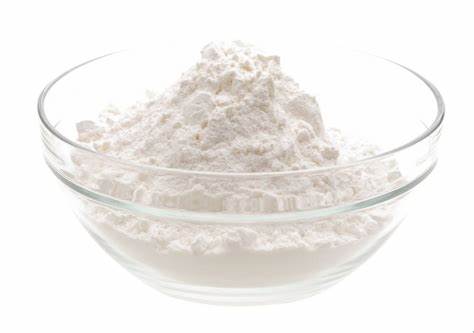
Appearance: White, crystalline powder.
-
Odor: Odorless.
-
Melting Point: 83 °C
-
Density: 1.54 g/cm³
-
Solubility: Freely soluble in water.
-
Sweetness: Has a moderate sweetness level compared to sucrose (table sugar).
Advantages and Characteristics
-
Direct Absorption: Requires no digestion; it is absorbed directly by the body and used as a quick energy source. Unlike sucrose, it does not require inversion (breakdown).
-
Yeast Nutrient: It is a directly usable nutrient source for yeast in bakery products. Since yeast needs to convert sugar into dextrose before utilizing it, using dextrose directly speeds up the fermentation process and allows for the use of less yeast. This preserves dough quality and prevents bread loaves from becoming pale or losing freshness.
-
Aroma Preservation: Its moderate sweetness does not mask or eliminate the specific aroma of the food.
-
Preservative Effect: Exhibits a preservative effect as strong as sucrose.
-
Carbon Dioxide Source: As a fermentable carbohydrate, it is an economical source for carbon dioxide production in fermentation processes.
Applications and Uses
Dextrose Monohydrate is used across a very wide range of industries:
1. Food Industry:
-
Sweetener and Nutritional Supplement: Used in confectionery, cakes, biscuits, cookies, beverages, jams, jellies, and honey products.
-
Bakery Products: Serves as a nutrient source for yeast, accelerating the fermentation process and improving dough quality.
-
Convenience Foods: Used in instant soups, sauces, and other processed foods.
-
Dairy Products: Acts as a texturizer and sweetener in ice cream, yogurt, and other dairy items.
2. Pharmaceutical Industry:
-
Hypoglycemia Treatment: Used in oral or intravenous formulations to rapidly increase blood sugar levels.
-
Energy Source: A component of intravenous fluids (serums) to provide energy to patients.
-
Drug Formulations: Used as a filler or carrier in the preparation of tablets and capsules.
-
Diabetic Products: Serves as a controlled energy source in special formulations.
3. Cosmetics and Personal Care:
-
Skin Care Products: Used in creams, lotions, and cleansers for its moisturizing properties.
-
Hair Care Products: Found in shampoos and conditioners.
-
Makeup Products: Used in various cosmetic formulations such as foundation and eye makeup products.
4. Agriculture and Animal Feed:
-
Animal Feed: Used as an energy source in feed additives for poultry (chickens, turkeys) and other farm animals.
-
Beekeeping: Serves as a sugar source for feeding bees.
5. Fermentation Industry:
-
Used as a substrate (nutrient source) for microorganisms in the production of alcohol, organic acids (citric acid, lactic acid), and other fermented products.
6. Other Applications:
-
Vitamin C (Ascorbic Acid) Production: Acts as a starting material or intermediate in chemical synthesis.
-
Carrier Substances: Serves as a carrier for various vitamins, minerals, and other active ingredients.
Safety and Storage
-
Safety: Generally recognized as safe (GRAS). It has no toxic effects at normal food consumption levels.
-
Storage:
-
Store in a cool, dry, and well-ventilated area.
-
Sensitive to moisture; should be kept in airtight containers.
-
Keep away from strong oxidizing agents.
-
Recommended storage conditions: temperatures below 25°C and relative humidity below 65%.
-