We unleash your business potential by maximize the business innovation.
Send EmailCarbon Black, Acetylene Black, N110, N220, N330, N550, N660, N772, 1333-86-4
CARBON BLACK
1. PRODUCT DEFINITION AND CHEMICAL IDENTITY
| Parameter | Description |
|---|---|
| Chemical Name | Carbon Black |
| CAS Number | 1333-86-4 |
| EINECS | 215-609-9 |
| Chemical Class | Paracrystalline (amorphous) elemental carbon |
| Pigment Classification | C.I. Pigment Black 7 (77266) |
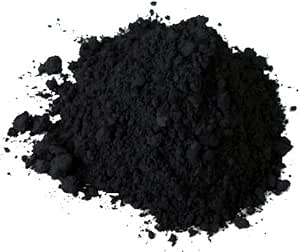
| Appearance | Fine, black powder or dust-free granules (pellets) |
| Odour | Odourless |
Note: Carbon black is a paracrystalline form of carbon with a high surface-area-to-volume ratio, produced by the controlled incomplete combustion or thermal decomposition (pyrolysis) of gaseous or liquid hydrocarbons. It is primarily used as a reinforcing filler in rubber products (dominated by automotive tires) and as a pigment, UV protector, and conductivity provider in non-rubber applications (plastics, paints, inks, coatings). It is classified under the ASTM D1765 standard into the N100-N900 series, where 'N' denotes a normal curing rate and the number relates to particle size and structure. Approximately 90% of global production is consumed by the rubber industry.
2. PHYSICAL AND CHEMICAL PROPERTIES
| Property | Value / Description |
|---|---|
| Physical form | Fine, black powder or dust-free granules/pellets |
| Chemical composition | 95-99% elemental carbon; trace amounts of surface functional groups containing oxygen, hydrogen, and sulfur |
| True density | 1.7 – 1.9 g/cm³ |
| Particle size | 10 – 500 nm (typically 10-100 nm for furnace blacks) |
| Surface area (BET-N₂) | 5 – 150 m²/g (varies by grade) |
| DBP (Dibutyl Phthalate) Absorption | 30 – 130 mL/100g (a measure of structure; a higher value indicates a more complex aggregate structure) |
| Iodine Number (I₂ No) | 10 – 145 mg/g (a relative indicator of particle size) |
| Melting point | ~3550 °C (sublimes) |
| Autoignition temperature | >140 °C (for a dust cloud; varies with oxidation) |
| Solubility in water | Insoluble |
| Stability | Chemically inert; stable under normal conditions. A dust cloud can form an explosive atmosphere. |
3. FUNCTIONAL PROPERTIES AND MODE OF ACTION
-
Reinforcing Filler in Rubber (Primary Function): Carbon black forms strong physical and chemical interactions with rubber polymer chains (particularly through high-energy surface sites), dramatically increasing the tensile strength, tear resistance, and abrasion resistance of the vulcanizate. The reinforcing effect increases as the particle size decreases (surface area increases).
-
Pigment and UV Protector (Non-Rubber): Provides high jetness and tinting strength. It absorbs ultraviolet (UV) radiation, protecting polymers from photodegradation; this property is exploited in plastic pipes, cable insulation, and outdoor applications.
-
Conductivity Provider: Certain grades (e.g., high-structure, conductive types) form a conductive network within the polymer matrix, imparting antistatic or electrically conductive properties. Used in electronic packaging, fuel hoses, and conductive coatings.
-
Processability and Rheology Modifier: The aggregate structure of carbon black (measured by DBP absorption) directly influences the viscosity and extrusion characteristics of the rubber compound. High-structure blacks provide higher viscosity and better extrusion quality.
4. ASTM N-SERIES CLASSIFICATION AND APPLICATION TABLE
| Grade | Surface Area | Structure | Key Characteristics | Typical Applications |
|---|---|---|---|---|
| N110 | Very High | Low | Maximum reinforcement, very high abrasion resistance | Off-road tire treads, high-performance rubber |
| N120 | Very High | Low | High jetness, excellent UV resistance | Inks, coatings, plastic pigmentation |
| N220 | High | Medium | Balanced reinforcement, good tensile strength, medium processability | Truck/passenger tire treads, mechanical rubber goods |
| N234 | Very High | High | Top-tier abrasion resistance, low hysteresis | High-speed vehicle tires, premium rubber |
| N326 | Medium | Medium | Balanced reinforcement and durability | Tires, hoses, conveyor belts |
| N330 | Medium | Medium | Balanced abrasion resistance and flexibility, good dispersion | General tire treads, conveyor belts, molded rubber goods |
| N339 | Medium | High | High abrasion resistance and conductivity | Automotive tires, industrial rubber |
| N351 | Low-Medium | High | High hardness, low hysteresis | Gaskets, hoses, sealing elements |
| N550 | Low | High | Good dispersion, medium reinforcement | Inner liners, hoses, cable insulation |
| N650 | Low | High | Balance of durability and reinforcement | Industrial rubber, gaskets, seals |
| N660 | Very Low | High | Easy processability, high elasticity | Profiles, pipes, shoe soles, insulation |
| N772 | Very Low | Low | High flexibility, good dynamic performance | Gaskets, belts, extruded rubber profiles |
| N990 | Ultra-Low (~9.5 m²/g) | Very Low | Very high electrical resistivity, low reinforcement | Low-voltage cable insulation (Thermal Black) |
| LH30 | (Specialty) | (Specialty) | Low rolling resistance | Ultra-high-performance premium tire treads |
5. ALTERNATIVE NAMES AND SYNONYMS
| Category | Names |
|---|---|
| Common Names | Carbon Black, Furnace Black, Lamp Black, Acetylene Black, Thermal Black |
| Pigment Names | C.I. Pigment Black 7, C.I. Pigment Black 6, C.I. 77266 |
| Advanced Material | Carbon Nanotubes (CNT) – technically a different carbon allotrope, often grouped in the same category as carbon black |
6. PRODUCTION METHODS
| Method | Feedstock | Process Description | Typical Grades / Application |
|---|---|---|---|
| Furnace Black | Heavy petroleum oils, coal tar, ethylene tar | The most common method. The feedstock is converted to carbon black by partial combustion in a reactor at high temperature, followed by a water quench. Particle size and structure are controlled by temperature, air/oil ratio, and reactor design. | N100 – N700 series (over 95% of global production) |
| Thermal Black | Natural gas | Gas is thermally decomposed in alternating refractory furnaces. This produces the largest particle size grade. | N800 – N900 series (Low reinforcement, high filler loading) |
| Acetylene Black | Acetylene gas (C₂H₂) | Produced by the exothermic decomposition of acetylene. Exhibits high structure and high conductivity. | Conductivity and battery applications |
| Channel Black | Natural gas | Collected by impinging gas flames onto cold channel irons. The surface is highly oxidized. | Historical significance; limited production today (inks, paints) |
7. EFFECT OF CARBON BLACK PROPERTIES ON RUBBER PERFORMANCE
| Increasing Property | Tensile Strength | Abrasion Resistance | Tear Resistance | Rebound (Resilience) | Conductivity | Viscosity | Dispersibility |
|---|---|---|---|---|---|---|---|
| Surface Area (Smaller Particle Size) | Increases | Increases | Increases | Variable | Decreases | Increases | More Difficult |
| Structure (Higher DBP) | Slight Increase | Variable | Increases | Decreases | Increases | Increases | Easier |
| Surface Activity | Increases | Increases | Increases | Increases | — | Increases | Variable |
8. SAFETY, STORAGE, AND TRANSPORT
-
GHS Classification: Not classified as a hazardous substance. However, the fine powder form can form an explosive dust cloud when suspended in air and can cause mechanical irritation to the respiratory tract.
-
IARC Classification: Carbon black is classified by IARC as Group 2B (possibly carcinogenic to humans). This classification is solely based on the inhalation of high doses of dust over prolonged periods. The pellet (granule) form largely eliminates this risk.
-
Storage:
-
Store in a cool, dry, and well-ventilated area, away from heat and ignition sources.
-
For the powder form, special electrical equipment and grounding are required to prevent the formation of an explosive dust-air mixture.
-
Store separately from oxidizing agents (chlorates, nitrates, peroxides).
-
The pellet form is preferred for storage and transport as it provides safer handling and generates less dust.
-
-
Personal Protective Equipment (PPE): When handling the powder, use a P2 or P3 particulate filter dust mask, safety goggles, and gloves. Ensure adequate ventilation in the work area.
-
Packaging: Typically shipped in 20-25 kg kraft paper bags, 500-1000 kg big bags, or bulk silo tankers.
9. FREQUENTLY ASKED QUESTIONS
Q1: What is the difference between carbon black and activated carbon?
Carbon black is a paracrystalline form of carbon with low internal porosity, used primarily as a reinforcing filler and pigment. Activated carbon is manufactured specifically to have a very high internal porosity and surface area (500-1500 m²/g) and is used mainly for adsorption (gas and liquid purification) applications.
Q2: Why are tires black?
Tires are naturally an off-white/grey colour without carbon black. Carbon black is added to tire rubber primarily to dramatically increase its resistance to UV radiation and abrasion. The black colour is a by-product of these critical performance properties.
Q3: What do the numbers mean in the "N" series carbon blacks?
In the ASTM D1765 classification, the letter 'N' stands for 'Normal' curing rate. The numbering system roughly correlates to particle size and structure. The N100 series has the smallest particle size (highest reinforcement), while the N900 series has the largest (lowest reinforcement). These numbers allow a user to select the correct grade for an application.
Q4: Is carbon black conductive?
Yes, carbon black is electrically conductive. The level of conductivity depends on its grade. High-structure (high DBP), high-surface-area grades, and specialty grades like acetylene black perform best in antistatic and conductive applications.
Q5: Is carbon black dust hazardous?
Inhalation of the dust can cause mechanical irritation of the respiratory tract, and prolonged, high-level exposure poses a health risk (IARC Group 2B). Additionally, a fine dust cloud suspended in air is explosive. To eliminate these risks, the vast majority of industrial applications use the dust-free pellet (granule) form.
10. QUICK REFERENCE TABLE
| Property | Value |
|---|---|
| CAS | 1333-86-4 |
| Chemical Structure | Paracrystalline (amorphous) elemental carbon |
| Appearance | Black powder or dust-free granules (pellets) |
| Particle Size | 10 – 500 nm |
| Most Common Grade | N330 (general-purpose tire tread) |
| Highest Reinforcement | N110, N234 (high-performance/high-speed tires) |
| Main Application | Rubber reinforcement (~90% of the global market) |