We unleash your business potential by maximize the business innovation.
Send EmailBeeswax, Bee Wax, Cera Alba White, Cera Flava Yellow, Refined Beeswax, Bleached Beeswax, Natural Beeswax, E901, 8012-89-3, 8006-40-4
BEESWAX (NATURAL BEE WAX PELLET)
Beeswax / Bee Wax / Cera Alba (White) / Cera Flava (Yellow) / E901
CAS Numbers: 8012-89-3 (Refined, White/Yellow Pellet); 8006-40-4 (Crude)
EC Number: 232-383-7
E Number: E901
INCI: Cera Alba (White), Cera Flava (Yellow)
Source: Apis mellifera (Honey Bee)
SECTION 1: PRODUCT IDENTIFICATION AND CHEMICAL IDENTITY
| Parameter | Information |
|---|---|
| Product Name | Beeswax (Natural Bee Wax Pellet) |
| Other Names | Bee Wax, Cera Alba (White Beeswax), Cera Flava (Yellow Beeswax), E901 |
| CAS Number (Refined) | 8012-89-3 |
| CAS Number (Crude) | 8006-40-4 |
| EC Number (EINECS) | 232-383-7 |
| E Number (Food) | E901 |
| INCI Name | Cera Alba (White), Cera Flava (Yellow) |
| Source | Apis mellifera (Honey Bee) |
| Chemical Class | Natural wax (complex mixture of esters, hydrocarbons, fatty acids, and alcohols) |
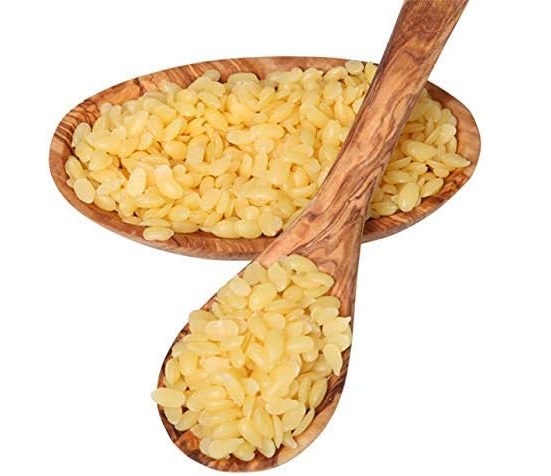
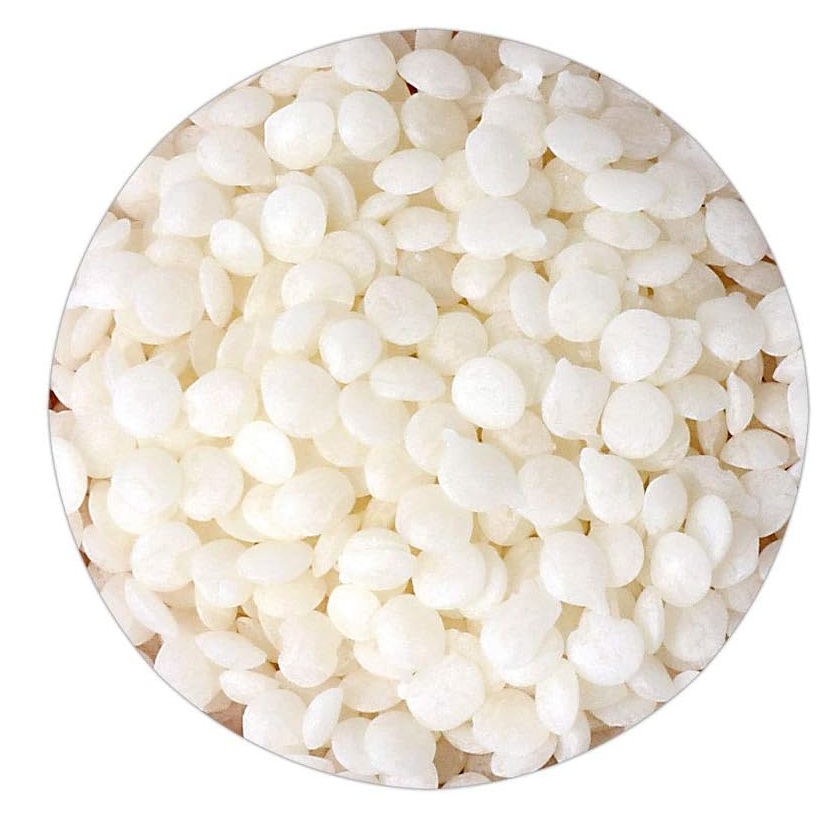
| Appearance | White to yellow pellets or brownish crude form |
| Odor | Slight, sweet, honey-like (more pronounced in crude form) |
| Physical State (20°C) | Solid |
Beeswax is a natural wax produced by honey bees of the genus Apis. It is a complex mixture of long-chain esters, hydrocarbons, free fatty acids, and fatty alcohols. It is widely used in cosmetics, pharmaceuticals, food (as E901), candles, and polishes due to its excellent film-forming, emulsifying, and structuring properties.
SECTION 2: SYNONYMS AND OTHER NAMES
| Type | Name |
|---|---|
| Common Names | Beeswax, Bee Wax, White Wax, Yellow Wax |
| INCI Names | Cera Alba (White), Cera Flava (Yellow) |
| Food Additive Code | E901 |
| CAS (Refined) | 8012-89-3 |
| CAS (Crude) | 8006-40-4 |
| EC Number | 232-383-7 |
| HS Code | 1521.90 |
SECTION 3: CHEMICAL STRUCTURE
3.1. General Composition
Beeswax is a complex mixture of over 300 different compounds. The main components are:
| Component Group | Typical Ratio (%) |
|---|---|
| Hydrocarbons (especially C21-C33 alkanes) | ~14% |
| Monoesters (e.g., ceryl palmitate, myricyl palmitate) | ~35% |
| Diesters and Hydroxyesters | ~14% |
| Free Fatty Acids (e.g., palmitic acid, cerotic acid) | ~12% |
| Fatty Alcohols (ceryl, myricyl alcohols) | ~10% |
| Other (minerals, water, polyphenols) | ~15% |
3.2. Key Structural Features
| Feature | Description |
|---|---|
| Primary Components | Esters, hydrocarbons, free fatty acids, fatty alcohols |
| Typical Ester | Myricyl palmitate (C₄₆H₉₂O₂) |
| Typical Hydrocarbon | Heptacosane (C₂₇H₅₆) |
| Typical Fatty Acid | Palmitic acid (C₁₆H₃₂O₂) |
| Typical Fatty Alcohol | Ceryl alcohol (C₂₆H₅₄O) |
| Molecular Weight Range | 300 – 1,200 g/mol |
Simplified Structural Representation (Myricyl Palmitate - Main Ester):
CH₃-(CH₂)₁₄-COO-(CH₂)₂₉-CH₃
SECTION 4: PHYSICAL AND CHEMICAL PROPERTIES
| Property | Value Range | Description |
|---|---|---|
| Appearance | White/yellow pellets or brownish crude form | Refined white or yellow; crude form is pigmented |
| Odor | Slight, sweet, honey-like | More pronounced in crude form |
| Density (25°C) | 0.95 – 0.96 g/cm³ | Lighter than water |
| Melting Point | 61 – 65°C (142 – 149°F) | Narrow melting range – high thermal stability |
| Water Solubility | Insoluble | - |
| Solubility in Organic Solvents | Soluble in oils, chloroform, benzene, hot ethanol, acetone | - |
| Saponification Value | 87 – 104 mg KOH/g | Indicator of ester and free acid content |
| Iodine Value | 8 – 12 | Degree of unsaturation (low) |
| Acid Value | 17 – 24 mg KOH/g | Free fatty acid content |
| Saponification Value (European type) | 3 – 5 | - |
| Saponification Value (Oriental type) | 8 – 9 | - |
| Refractive Index (75°C) | 1.441 – 1.445 | - |
| Flash Point | >250°C (>482°F) | Not flammable (burns as a wax) |
| Melting Point (Crude) | 62 – 65°C | - |
| Melting Point (Refined White) | 61 – 64°C | - |
SECTION 5: COMPARISON WITH ALTERNATIVE WAXES
| Property | Beeswax | Candelilla Wax | Carnauba Wax | Soy Wax | Paraffin Wax |
|---|---|---|---|---|---|
| Source | Animal (bees) | Vegetable | Vegetable | Vegetable | Synthetic (petroleum) |
| Melting Point | 61-65°C | 67-79°C | 81-86°C | 49-56°C | 46-68°C |
| Hardness | Medium (flexible) | High (hard, brittle) | Very high (very hard) | Low (soft) | Low-medium |
| Gloss | High | Medium-high | Very high | Medium | Low |
| Emulsifiability | Medium (good) | Good | Poor | Good | Very poor |
| Vegan Suitability | No | Yes | Yes | Yes | Yes (vegan) |
| Food Approval (EU) | E901 | E902 | E903 | Not approved | E905 |
| Biodegradability | High | High | High | High | Low |
| Odor | Sweet, honey-like | Slight vegetable | Slight | Neutral | Neutral |
| Cost | High | Very high | Very high | Medium | Low |
SECTION 6: ADVANTAGES AND DISADVANTAGES
Advantages of Beeswax:
-
Natural and renewable source
-
Excellent structuring and stabilizing properties
-
Hypoallergenic – skin-friendly
-
Natural antibacterial properties (propolis residues)
-
Sharp melting point (61-65°C) – very fast transition to liquid
-
Good emulsifying properties
-
Compatible with other waxes
Disadvantages of Beeswax:
-
Animal-derived – not suitable for vegan products
-
High cost (compared to vegetable waxes and synthetics)
-
High risk of adulteration – often mixed with paraffin or stearic acid
-
Alias risk – CAS number must be fixed in ERP systems to avoid confusion
-
Can develop mold if stored in humid conditions
-
May cause allergic reactions in propolis-sensitive individuals
SECTION 7: REFINING PROCESS AND GRADES
| Grade | Characteristics | Purity | Color | Applications |
|---|---|---|---|---|
| Crude Beeswax | Pigmented, strong aroma, particulate | 90-95% | Dark yellow / brown | Candles, industrial (not suitable for cosmetics) |
| Yellow Beeswax (Cera Flava) | Physical refining (filtration, washing) | 97-99% | Yellow | Cosmetics, pharmaceuticals, food |
| White Beeswax (Cera Alba) | Chemical bleaching (chromic acid or hydrogen peroxide) | 99%+ | White / cream | High-quality cosmetics, pharmaceuticals, food |
| Beeswax Pellet (Micronized) | Ground, granulated | 99%+ | White | Easy dosing, rapid melting |
Bleaching Methods:
-
Traditional: Chromic acid (H₂CrO₄) bleaching
-
Modern: Hydrogen peroxide (H₂O₂) bleaching (more environmentally friendly)
SECTION 8: APPLICATIONS AND INDUSTRIAL USES
8.1. Cosmetics and Personal Care
| Application | Function | Typical Usage |
|---|---|---|
| Lip Balms | Structuring agent, hardness, film former | 20-40% |
| Creams and Lotions | Emulsifier (auxiliary), thickener | 3-8% |
| Mascara | Thickener, film former | 5-15% |
| Lipstick | Structuring agent, gloss | 10-15% |
| Hair Care Products | Conditioning agent, thickener | 1-5% |
| Deodorants | Structuring agent (solid sticks) | 5-15% |
8.2. Pharmaceutical Industry
| Application | Function | Typical Usage |
|---|---|---|
| Ointments | Consistency agent, skin barrier | 5-25% |
| Emulsions | Emulsifier (auxiliary), thickener | 5-20% |
| Tablet Coatings | Coating agent | 1-5% |
| Wound Dressings | Barrier layer | 5-15% |
8.3. Food Industry (E901)
| Application | Function | Typical Usage |
|---|---|---|
| Fruit Coating | Moisture barrier, gloss | 0.5-2.0% (emulsion) |
| Confectionery | Gloss, anti-sticking | Trace amounts |
| Chewing Gum | Viscosity regulator, plasticizer | 1-5% |
| Cheese Coating | Protection, moisture barrier | Trace amounts |
| Biscuit and Coffee Bean Coating | Protection, gloss | Trace amounts |
8.4. Candle Making
| Application | Function | Typical Usage |
|---|---|---|
| Traditional Candles | Wax base | 30-100% |
| Decorative Candles | Hardness, gloss | 30-100% |
| Religious Candles | Wax base | 30-100% |
8.5. Polishes and Coatings
| Application | Function | Typical Usage |
|---|---|---|
| Furniture Polish | Gloss, protection | 20-30% |
| Shoe Polish | Gloss, water repellency | 10-25% |
| Leather Conditioner | Softening, protection | 5-15% |
| Wood Finish | Protection, gloss | 5-20% |
8.6. Other Applications
| Application | Function |
|---|---|
| Packaging | Natural barrier coatings |
| Plastics / PVC | Not suitable |
| Detergents | Rare (some natural soaps) |
SECTION 9: FORMULATION EXAMPLES
9.1. Lip Balm (Moisturizing, Protective)
| Component | Function | Concentration (% w/w) |
|---|---|---|
| Beeswax (White or Yellow) | Structuring agent, hardness, film former | 20-40% |
| Shea Butter / Coconut Oil | Moisturizer, emollient | 20-30% |
| Jojoba Oil / Almond Oil | Emollient, absorption aid | 10-20% |
| Lanolin (optional) | Humectant, emollient | 5-10% |
| Candelilla Wax (optional, vegan alternative) | Hardness enhancer | 0-10% |
| Vitamin E (Tocopherol) | Antioxidant, preservative | 0.5-1.0% |
| Flavor / Essential Oil | Odor, taste | 0.5-2.0% |
Process: Melt all ingredients at 65-70°C, mix, pour into molds.
9.2. Natural Skin Cream (Emulsion, Oil-in-Water)
| Component | Function | Concentration (% w/w) |
|---|---|---|
| Beeswax | Emulsifier (auxiliary), thickener | 3-8% |
| Almond Oil / Olive Oil | Emollient | 10-20% |
| Vegetable Emulsifier (e.g., Glyceryl Stearate) | Primary emulsifier | 2-5% |
| Water | Liquid phase | 60-80% |
| Glycerin | Humectant | 3-5% |
| Preservative | Microbial stability | 0.5-1.0% |
| Essential Oil | Odor | 0.5-1.0% |
Process: Heat oil phase (beeswax + oils + emulsifier) to 70°C. Heat water phase to 70°C. Slowly add water phase to oil phase with high-shear mixing. Continue mixing while cooling.
9.3. Fruit Coating (Apples, Pears, Citrus)
| Component | Function | Concentration (% w/w) |
|---|---|---|
| Beeswax (E901, Food Grade) | Moisture barrier, gloss | 0.5-2.0% |
| Water | Carrier | 70-95% |
| Emulsifier (e.g., Lecithin, Polysorbate 60) | Dispersing aid | 0.5-1.0% |
| Sugar / Glucose Syrup (optional) | Gloss, taste | 1-5% |
| Preservative (Citric Acid or Potassium Sorbate) | Microbial stability | 0.1-0.3% |
Process: Prepare emulsion at room temperature (or emulsify melted wax into hot water). Spray or dip fruits, dry.
9.4. Chewing Gum Base
| Component | Function | Concentration (% w/w) |
|---|---|---|
| Beeswax | Viscosity regulator, plasticizer | 1-5% |
| Gum Base (Polyvinyl Acetate, etc.) | Structure, elasticity | 20-30% |
| Sugar / Glucose Syrup | Sweetness, texture | 60-70% |
| Flavor | Taste | 1-2% |
| Glycerin | Humectant | 0.5-1.0% |
9.5. Furniture Polish (Natural)
| Component | Function | Concentration (% w/w) |
|---|---|---|
| Beeswax | Gloss, protection | 20-30% |
| Carnauba Wax | Hardness, high gloss | 5-15% |
| Turpentine / Orange Oil | Solvent, spreading aid | 40-60% |
| Olive Oil / Coconut Oil | Emollient, spreading | 5-15% |
Process: Melt waxes at 70°C, add oils, mix while cooling. Achieve paste consistency at room temperature.
SECTION 10: PROCESSING GUIDELINES
| Application | Method | Temperature | Notes |
|---|---|---|---|
| Cosmetics / Pharmaceuticals | Melting + mixing | 65-75°C | Melt directly, mix, pour into molds |
| Food Coating | Emulsion (spray/dip) | Room temperature or 50-60°C | Emulsify in water or apply melted |
| Candle Making | Melting + pouring | 70-80°C | Additives for odor and color |
| Polish (Solid) | Melting + cooling | 70-80°C | Solvent may be added (paste consistency) |
| Emulsion Preparation | Melted + water + surfactant | 70-75°C (both phases) | High-shear mixing (rotor-stator) |
Important Processing Notes:
-
Melting point is very sharp – solid below 61°C, fully fluid above 65°C
-
Do not place directly over high heat (can ignite) – use water bath or indirect heating
-
Shrinkage is high upon cooling – leave allowance for mold shrinkage
-
Mixes well with other waxes (carnauba, paraffin)
SECTION 11: REGULATORY STATUS AND FOOD CONTACT
| Regulation | Scope | Status |
|---|---|---|
| EU (EFSA) | Food additive E901 | Approved, specifications established |
| FDA 21 CFR 184.1848 | Direct food additive (GRAS) | Approved (fruit coating, confectionery) |
| FDA 21 CFR 175.105 | Adhesives (indirect food contact) | Approved |
| FDA 21 CFR 175.300 | Coatings (indirect food contact) | Approved |
| EU Cosmetics Regulation | Cosmetic ingredient (INCI Cera Alba/Flava) | Approved, no restrictions |
| Pharmacopoeia (USP, Ph. Eur., JP) | Pharmaceutical grade | Monographs available |
| REACH (EU) | Chemical registration | Registered, no restrictions |
| Halal / Kosher | Religious certification | Possible (generally considered Halal/Kosher) |
| Vegan | Animal source | NOT suitable |
Food Coating Labeling Requirement:
-
Waxed fruits must be labeled as "waxed"
-
Must be listed as E901 in the ingredient list
SECTION 12: TOXICOLOGICAL PROFILE
| Parameter | Value |
|---|---|
| Acute Oral Toxicity (LD50, Rat) | > 5,000 mg/kg (low toxicity) |
| Acute Dermal Toxicity | Low |
| Skin Irritation | Not classified (hypoallergenic) |
| Eye Irritation | Mechanical irritant (dust or particulate form) |
| Inhalation (Molten Vapor) | No risk under normal use |
| Allergic Reactions | Rare (sensitivity in propolis-allergic individuals) |
| Ingestion (Large Amount) | Not digested; risk of intestinal blockage (very low) |
| Carcinogenicity | Not classified |
| Mutagenicity | Negative |
SECTION 13: GHS CLASSIFICATION
GHS Classification (Not Classified as Hazardous for Food/Pharma Grade):
| Hazard Class | Category | H-Statement |
|---|---|---|
| Not classified as hazardous | - | - |
Signal Word: None (not classified as hazardous)
Hazard Pictograms: None
Hazard Statements (H-Codes): None
SECTION 14: PRECAUTIONARY STATEMENTS (P-CODES)
| Code | Statement |
|---|---|
| P264 | Wash hands thoroughly after handling. |
| P280 | Wear protective gloves/protective clothing/eye protection/face protection. |
| P302+P352 | IF ON SKIN: Wash with plenty of soap and water. |
| P501 | Dispose of contents/container in accordance with local regulations. |
SECTION 15: FIRST AID MEASURES
| Route of Exposure | Action to Be Taken |
|---|---|
| Skin Contact (Molten) | Cool immediately under cold water. DO NOT peel off adhered wax (skin may tear) – wait until it softens. |
| Eye Contact | Rinse thoroughly with plenty of water for at least 15 minutes. Remove contact lenses. Seek medical attention. |
| Ingestion | Seek medical attention (generally no intervention required). |
| General Note | If symptoms persist, always consult a healthcare facility. |
SECTION 16: FIRE-FIGHTING MEASURES
| Parameter | Information |
|---|---|
| Fire Hazard | Flammable solid (burns as a wax). |
| Suitable Extinguishing Media | Water spray, CO₂, dry chemical powder, foam. |
| Special Hazards | Thermal decomposition produces carbon monoxide and carbon dioxide. |
| Protective Equipment | Self-contained breathing apparatus (SCBA), full protective clothing. |
SECTION 17: ACCIDENTAL RELEASE MEASURES
| Parameter | Information |
|---|---|
| Personal Protection | Protective goggles, gloves, coverall. |
| Ventilation | Increase ventilation; use local exhaust in confined spaces. |
| Containment | Collect dry using vacuum or careful sweeping. |
| Cleaning Methods | Collect dry. Avoid washing with water (solid). |
| Environmental Precautions | Prevent entry into drains, sewers, and water bodies. |
| Waste Disposal | Dispose of in accordance with local regulations. |
SECTION 18: STORAGE AND SHELF LIFE
| Parameter | Information |
|---|---|
| Storage Conditions | Store in a cool (10-25°C), dry place, protected from direct sunlight. |
| Humidity | Below 60% RH (dry) – mold risk if moisture is absorbed. |
| Container Requirements | Airtight containers (cardboard, plastic, metal). |
| Compatible Materials | Polyethylene, polypropylene, stainless steel, glass. |
| Shelf Life | 3-5 years (under proper storage). |
| Stability Issues | Light and prolonged temperature exposure may cause color fading; decomposition begins >70°C. |
| Mold Risk | High (in humid environments) – storage must be dry. |
SECTION 19: PACKAGING OPTIONS
| Packaging Type | Quantity | Material |
|---|---|---|
| Plastic Pail | 10-25 kg | HDPE |
| Fiber Drum | 25 kg | Cardboard / Plastic |
| Big-Bag | 500 – 1000 kg | Polypropylene |
| Small Containers | 1 kg, 5 kg | Plastic / Kraft paper |
SECTION 20: TRANSPORT INFORMATION
| Parameter | Information |
|---|---|
| UN Number | Not applicable (not classified as dangerous goods) |
| Hazard Class | Not classified as hazardous for transport |
| Packing Group | Not applicable |
| ADR/RID | Not regulated |
| IMDG Code | Not regulated |
| IATA (Air) | Not regulated |
| Marine Pollutant | No |
| Transport Temperature | Ambient temperature; protect from heat and moisture. |
SECTION 21: REGULATORY INFORMATION
| Region / Authority | Status |
|---|---|
| European Union (REACH) | Registered; approved as food additive E901. |
| USA (FDA) | GRAS (21 CFR 184.1848). |
| Turkey | Approved as food additive; regulated by Turkish Food Codex. |
| EFSA | Approved as food additive E901. |
| USP / Ph. Eur. | Monographed for pharmaceutical use. |
| Halal / Kosher | Can be certified upon request. |
| Vegan | NOT suitable (animal-derived). |
SECTION 22: ENVIRONMENTAL INFORMATION
| Parameter | Information |
|---|---|
| Aquatic Toxicity | Low toxicity to aquatic organisms. |
| Biodegradability | Readily biodegradable. |
| Bioaccumulation | Low potential. |
| Waste Disposal | Dispose of in accordance with local regulations. Incineration is recommended for contaminated materials. |
SECTION 23: FREQUENTLY ASKED QUESTIONS (FAQ)
Q1: Is beeswax vegan?
A: No. Beeswax is an animal-derived product from honey bees (Apis mellifera). It cannot be used in vegan products. Alternatives: Candelilla wax, carnauba wax, soy wax.
Q2: Is beeswax safe as a food coating?
A: Yes. It is approved by the EU (E901) and FDA (GRAS). It is used on fruits, confectionery, cheeses, and chewing gum. However, waxed fruits must be labeled as "waxed."
Q3: What is the difference between white and yellow beeswax?
A: Yellow beeswax (Cera Flava) is physically refined (filtering, washing) and retains its natural yellow color and honey-like odor. White beeswax (Cera Alba) is chemically bleached (chromic acid or hydrogen peroxide) and is more pure, odorless, and colorless. White beeswax is preferred in high-quality cosmetics and pharmaceuticals.
Q4: Does beeswax cause acne?
A: Generally no. Beeswax is not comedogenic (pore-clogging) (comedogenic rating 0-2). However, in some formulations with other oils, it may contribute to pore blockage. Patch testing is recommended for sensitive skin.
Q5: How much honey do bees consume to produce 1 kg of beeswax?
A: Approximately 10 kg of honey. Bees metabolize honey sugars in their bodies to secrete wax from their wax glands. This is why beeswax is about 10 times more valuable than honey.
Q6: Does beeswax burn when melted? What is the safe melting method?
A: It can ignite if placed directly over high heat. Safe melting methods:
-
Water bath (double boiler): Place beeswax in a metal container, set over hot water.
-
Wax melter: Electric or double-walled melter.
-
Slow cooker: Low setting. Never leave directly on the stove. Melting point is 65°C – it does not ignite at this temperature, but above 200°C it may vaporize and ignite.
Q7: How can I prevent beeswax from molding during storage?
A: Store in a dry environment (below 60% RH), use airtight containers, keep away from direct sunlight and heat sources. Shelf life is 3-5 years – discard if color fades or moldy odor appears.
Q8: Can beeswax be mixed with paraffin wax?
A: Yes. Paraffin makes beeswax softer and cheaper. However, this is considered adulteration and is usually not declared on the label. If you want pure beeswax, request melting point (DSC) and GC analysis from your supplier.
Q9: Why is beeswax used in lip balm?
A: It provides structure (keeps lip balm solid), acts as a protective barrier against wind and cold, is not occlusive (does not trap moisture), and has natural antibacterial properties (due to propolis residues).
Q10: What are the non-food uses of beeswax?
A: Candle making (traditional, decorative, religious), leather care (shoe polish, leather cream), wood care (furniture polish, wood protector), dentistry (dental impression waxes), art (wax sculptures, encaustic painting), fishing line (water-repellent coating), thread and sewing (thread waxing).
SECTION 24: QUICK REFERENCE TABLE
| Property | Value |
|---|---|
| CAS Number (Refined) | 8012-89-3 |
| CAS Number (Crude) | 8006-40-4 |
| EC Number | 232-383-7 |
| E Number | E901 |
| Appearance | White to yellow pellets or brownish crude |
| Odor | Slight, sweet, honey-like |
| Density (25°C) | 0.95 – 0.96 g/cm³ |
| Melting Point | 61 – 65°C |
| Saponification Value | 87 – 104 mg KOH/g |
| Acid Value | 17 – 24 mg KOH/g |
| Iodine Value | 8 – 12 |
| Primary Uses | Cosmetics, pharmaceuticals, food (E901), candles, polishes |
| Shelf Life | 3-5 years |
| UN Number | Not applicable |
| GHS Signal Word | None (not classified as hazardous) |
SECTION 25: CRITICAL NOTICES AND BEST PRACTICES
CRITICAL NOTICES:
-
Vegan Not Suitable: Beeswax is an animal-derived product from honey bees. It is not suitable for vegan products.
-
Adulteration Risk: Pure beeswax is often adulterated with paraffin, stearic acid, or other waxes. Request GC or FTIR analysis reports from suppliers to verify purity.
-
Melting Point Sharpness: Beeswax has a very sharp melting point (61-65°C). Solid below 61°C, fully fluid above 65°C. This is a key quality indicator.
-
Mold Risk: Beeswax can develop mold if stored in humid conditions. Store in a dry environment (below 60% RH) with airtight containers.
-
Heat Sensitivity: Do not heat above 70°C unnecessarily. Prolonged heating above 70°C may cause color fading and degradation.
-
Direct Flame: Do not melt beeswax directly over an open flame – it can ignite. Use a water bath, wax melter, or slow cooker.
-
Allergic Reactions: Rare, but possible in individuals sensitive to propolis (bee products). Patch testing is recommended for topical applications.
-
Shrinkage: Beeswax shrinks significantly upon cooling (3-5%). Allow for mold shrinkage in candle and casting applications.
BEST PRACTICE RECOMMENDATIONS:
-
Storage: Store in a cool (10-25°C), dry place (below 60% RH), in airtight containers. Protect from direct sunlight and heat sources.
-
Melting: Use a water bath (double boiler), wax melter, or slow cooker. Do not exceed 70°C unnecessarily. Never melt directly over an open flame.
-
Filtering: If using crude beeswax, filter through cheesecloth or a fine mesh filter to remove debris and impurities.
-
Compatibility: Beeswax mixes well with other waxes (carnauba, paraffin, candelilla). Adjust ratio based on desired hardness and melting point.
-
Quality Control: Test for melting point (DSC), saponification value, acid value, and iodine value to verify purity. Request GC or FTIR analysis from suppliers.
-
Labeling: For food applications, label as E901. For cosmetics, use INCI names Cera Alba (white) or Cera Flava (yellow).
-
Waste Management: Dispose of waste in accordance with local regulations. Incineration is recommended for contaminated materials.
LEGAL DISCLAIMER:
This Technical Data Sheet (TDS) is for informational purposes only and is prepared based on available technical data. The user is solely responsible for determining the suitability of the product for their specific application and for complying with all local, national, and international regulations. For complete safety, storage, handling, transport, waste, and regulatory compliance information, the official Safety Data Sheet (SDS/MSDS) provided by the manufacturer/supplier must be consulted. This document does not substitute professional advice. Beeswax is a natural product and its properties may vary slightly depending on source and refining process.