We unleash your business potential by maximize the business innovation.
Send EmailButyl Acrylate, Butyl Acrylate Monomer, n-Butyl Acrylate, n-Butyl Propenoate, BA, 141-32-2
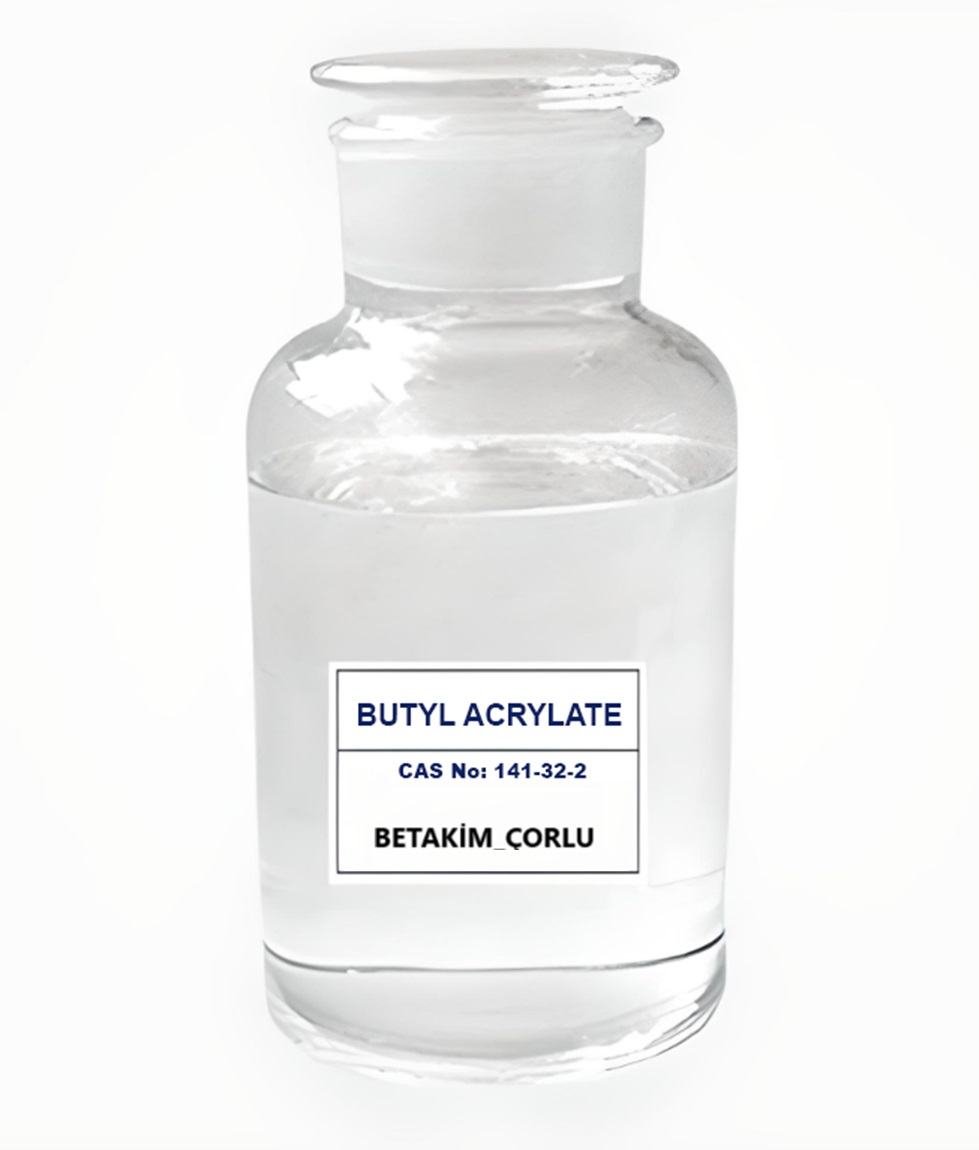
BUTYL ACRYLATE (BA)
Butyl Acrylate / n-Butyl Acrylate / Butyl Acrylate Monomer / n-Butyl Propenoate / BA
CAS Number: 141-32-2
EC Number: 205-480-7
UN Number: 2348
SECTION 1: PRODUCT IDENTIFICATION AND CHEMICAL IDENTITY
| Parameter | Information |
|---|---|
| Product Name | Butyl Acrylate |
| Chemical Name (IUPAC) | Butyl Prop-2-enoate |
| Other Names | n-Butyl Acrylate, Butyl Acrylate Monomer, n-Butyl Propenoate, Acrylic Acid Butyl Ester, BA Monomer |
| CAS Number | 141-32-2 |
| EC Number (EINECS) | 205-480-7 |
| UN Number | 2348 |
| Molecular Formula | C₇H₁₂O₂ |
| Molecular Weight | 128.17 g/mol |
| Chemical Class | Acrylate Monomer |
| Appearance | Clear, colorless liquid |
| Odor | Sharp, pungent, ester-like |
| Physical State (20°C) | Liquid |
Butyl Acrylate is a monofunctional acrylate monomer belonging to the acrylate ester family. It is produced by the esterification of acrylic acid with n-butanol. This clear, colorless liquid with a characteristic sharp, pungent ester odor serves as a versatile comonomer in the production of various polymers and copolymers. Its unique molecular structure contains a reactive vinyl group and a flexible butyl side chain, which impart excellent properties such as low glass transition temperature (Tg), flexibility, weatherability, and water resistance to final polymer products. The monomer is stabilized with an inhibitor to prevent premature polymerization during storage and transport.
SECTION 2: SYNONYMS AND OTHER NAMES
| Type | Name |
|---|---|
| Common Names | Butyl Acrylate, n-Butyl Acrylate, BA |
| Chemical Names | n-Butyl Propenoate, Acrylic Acid Butyl Ester, Butyl Prop-2-enoate, 2-Propenoic Acid Butyl Ester |
| CAS Number | 141-32-2 |
| EC Number | 205-480-7 |
| UN Number | 2348 |
| HS Code | 2916.12 |
SECTION 3: CHEMICAL STRUCTURE
3.1. Molecular Structure
Butyl Acrylate consists of a reactive vinyl group (-CH=CH₂) esterified with a butyl group (-C₄H₉). The molecule contains a carbon-carbon double bond that enables polymerization.
Structural Formula:
        O
        ||
   CH₂ = CH - C - O - CH₂ - CH₂ - CH₂ - CH₃
Simplified Representation:
CH₂=CH-COO-C₄H₉
3.2. Molecular Formula
C₇H₁₂O₂
3.3. Molecular Weight
128.17 g/mol
3.4. Key Structural Features
| Feature | Description |
|---|---|
| Functional Groups | Vinyl group (-CH=CH₂), Ester group (-COO-) |
| Reactive Site | Carbon-carbon double bond (polymerization site) |
| Butyl Side Chain | Flexible C₄H₉ group (internal plasticizer) |
| Polarity | Moderate polarity |
| Hydrophobicity | Butyl group provides excellent water repellency |
| Reactivity | High reactivity in free radical polymerization |
SECTION 4: SPECIFICATIONS (SALES SPECIFICATION)
| Parameter | Unit | Specification | Test Method |
|---|---|---|---|
| Purity | % (GC) | min. 99.5 | GC-FID |
| Acid Content (as Acrylic Acid) | % | max. 0.01 | Titration |
| Water Content | % | max. 0.05 | Karl Fischer |
| Color | APHA / Pt-Co | max. 10 | ASTM D1209 |
| Inhibitor (MEHQ) | ppm | 15 ± 5 | HPLC |
| Appearance | - | Clear, Colorless Liquid | Visual |
The sales specification for Butyl Acrylate defines the essential quality parameters for commercial acceptance. Purity, determined by gas chromatography with flame ionization detection (GC-FID), is the most critical parameter with a minimum requirement of 99.5%. Acid content, expressed as acrylic acid, must not exceed 0.01%, ensuring minimal corrosive impurities and optimal polymerization performance. Water content is tightly controlled at a maximum of 0.05% using the Karl Fischer method, as moisture can adversely affect polymerization reactions and product stability. Color, measured in APHA units, must not exceed 10, indicating a high-purity, water-white product. Inhibitor content (MEHQ - hydroquinone monomethyl ether) is maintained at 15 ± 5 ppm to provide adequate storage stability while allowing efficient polymerization initiation. The product should appear as a clear, colorless liquid with no visible suspended matter or turbidity.
SECTION 5: PHYSICAL AND CHEMICAL PROPERTIES
| Property | Value | Description |
|---|---|---|
| Physical State | Liquid | At room temperature |
| Odor | Sharp / Pungent | Characteristic ester odor |
| Density (20°C) | 0.898 g/cm³ | Lighter than water |
| Boiling Point | 145 – 148 °C | At 1013 hPa |
| Melting / Freezing Point | -64 °C | Remains liquid at very low temperatures |
| Flash Point | 29 °C | Flammable Liquid (Closed Cup) |
| Vapor Pressure (20°C) | 4 – 5.4 mbar / hPa | Volatile |
| Viscosity (20°C) | 0.92 mPa·s | Low viscosity |
| Water Solubility (20°C) | ~0.1% | Slightly soluble in water; miscible with organic solvents |
| Refractive Index (20°C) | ~1.419 | Optical property |
| Specific Heat Capacity | ~1.9 kJ/(kg·K) | Thermal property |
| Heat of Vaporization | ~35 kJ/mol | At boiling point |
| Explosive Limits (Lower/Upper) | ~1.4% / ~9.9% | In air by volume |
| Autoignition Temperature | ~280°C | - |
SECTION 6: SOLUBILITY PROFILE
| Solvent | Solubility | Conditions |
|---|---|---|
| Water | Slightly soluble (~0.1% w/w) | 20°C |
| Alcohols | Miscible | All proportions |
| Ketones | Miscible | All proportions |
| Aromatic Hydrocarbons | Miscible | All proportions |
| Esters | Miscible | All proportions |
| Chlorinated Hydrocarbons | Miscible | All proportions |
| Ethers | Miscible | All proportions |
SECTION 7: COPOLYMERIZATION PROPERTIES
Butyl Acrylate readily copolymerizes with a wide range of monomers including methacrylates, styrene, vinyl acetate, acrylonitrile, and maleic anhydride, making it one of the most versatile comonomers in polymer chemistry. The high reactivity of the acrylate double bond allows efficient polymerization through free radical, emulsion, and solution polymerization techniques.
Reactive Double Bond:
CH₂=CH-COO-C₄H₉
Compatible Comonomers:
-
Methacrylates (Methyl Methacrylate, Ethyl Methacrylate, Butyl Methacrylate)
-
Styrene and Styrene Derivatives
-
Vinyl Acetate
-
Acrylonitrile
-
Maleic Anhydride
-
Hydroxyethyl Acrylate and other functional acrylates
-
Acrylic Acid and other acid monomers
Properties Imparted to Polymers:
| Property | Contribution |
|---|---|
| Hydrophobicity and Water Resistance | Butyl group provides excellent water repellency |
| Tack and Adhesion | Low Tg contributes to pressure-sensitive adhesion |
| Low Temperature Flexibility | Glass transition temperature down to -55°C |
| UV Resistance | Excellent outdoor durability and weatherability |
| Flexibility and Impact Resistance | Internal plasticization effect reduces brittleness |
| Solubility Compatibility | Enhances solubility in organic solvents and plasticizers |
| Polymer Toughness | Provides balanced mechanical properties |
Typical Reactivity Ratios (r values):
| Comonomer Pair | r₁ (BA) | r₂ (Comonomer) |
|---|---|---|
| BA / Methyl Methacrylate | ~0.4 | ~1.8 |
| BA / Styrene | ~0.2 | ~0.8 |
| BA / Vinyl Acetate | ~5.0 | ~0.02 |
| BA / Acrylonitrile | ~0.8 | ~0.5 |
Polymerization Methods:
| Method | Description |
|---|---|
| Emulsion Polymerization | Most common method for water-based applications |
| Solution Polymerization | Used for solvent-based coatings and adhesives |
| Bulk Polymerization | For solid polymer production |
| Suspension Polymerization | For bead or pellet products |
SECTION 8: APPLICATIONS AND INDUSTRIAL USES
Butyl Acrylate is a critical comonomer that provides flexibility, adhesion, and low-temperature performance to polymer chains due to its low Tg (poly-BA Tg ~ -55°C). The long butyl side chain acts as an internal plasticizer, imparting excellent performance properties to final products.
8.1. Paints and Coatings
| Application | Function / End Product |
|---|---|
| Water-Based Architectural Paints | Provides film flexibility, weatherability, and adhesion |
| Industrial Varnishes | Enhances durability and gloss retention |
| Wood Coatings | Imparts flexibility and scratch resistance |
| Metal Coatings | Provides corrosion resistance and adhesion to metal substrates |
| Automotive Refinish Coatings | Improves weatherability and stone chip resistance |
8.2. Adhesives
| Application | Function / End Product |
|---|---|
| Pressure-Sensitive Adhesives (PSA) | Acrylic dispersion-based tape and label adhesives |
| Packaging Adhesives | Carton sealing, case sealing, and flexible packaging |
| Construction Adhesives | Flooring, tile, and panel adhesives |
| Structural Adhesives | High-performance bonding applications |
| Removable Adhesives | Temporary bonding applications |
8.3. Textile and Leather
| Application | Function / End Product |
|---|---|
| Leather Finishing Coatings | Provides flexibility, adhesion, and water resistance |
| Textile Finishes | Imparts softness, drapability, and durability to fabrics |
| Carpet Backing Adhesives | Bonds carpet fibers to backing material |
| Nonwoven Binders | Provides strength and integrity to nonwoven fabrics |
| Textile Printing Inks | Improves adhesion, flexibility, and wash fastness |
8.4. Paper and Pulp Industry
| Application | Function / End Product |
|---|---|
| Paper Coating Binders | Improves printability, gloss, and strength |
| Impregnating Resins | Enhances strength, water resistance, and durability |
| Paper Sizing Agents | Provides water resistance and improved surface properties |
| Adhesives for Paper Products | Bonds layers in carton and laminated products |
8.5. Plastics, Putties, and Sealants
| Application | Function / End Product |
|---|---|
| Acrylic Sheet Modification | Improves impact resistance and flexibility |
| Plastic Additives | Enhances processability and properties |
| Acrylic Putties | Provides flexibility, adhesion, and weatherability |
| Sealants | Fills joints and seals against air and water infiltration |
| Plastisol Formulations | Improves flexibility and adhesion to various substrates |
8.6. Other Applications
| Application | Function / End Product |
|---|---|
| Printing Inks | Improves adhesion, flexibility, and gloss retention |
| Floor Polishes | Provides durability, gloss, and scuff resistance |
| Synthetic Leather | Flexible coating materials for synthetic leather |
| Medical Adhesives | Skin-contact adhesives for dressings and devices |
| Dental Materials | Flexible dental adhesives and sealants |
SECTION 9: SAFETY AND HEALTH INFORMATION (GHS CLASSIFICATION)
| Hazard Class | Category |
|---|---|
| Flammable Liquid | Category 3 (H226) |
| Skin Irritation | Category 2 (H315) |
| Skin Sensitization | Category 1 (H317) |
| Specific Target Organ Toxicity - SE (Respiratory) | Category 3 (H335) |
| Acute Toxicity (Inhalation) | Category 4 (H332) |
Signal Word: DANGER
Hazard Statements (H-Codes):
| Code | Statement |
|---|---|
| H226 | Flammable liquid and vapor. |
| H315 | Causes skin irritation. |
| H317 | May cause an allergic skin reaction. |
| H332 | Harmful if inhaled. |
| H335 | May cause respiratory irritation. |
Precautionary Statements (P-Codes):
| Code | Statement |
|---|---|
| P210 | Keep away from heat/sparks/open flames/hot surfaces. No smoking. |
| P233 | Keep container tightly closed. |
| P240 | Ground/bond container and receiving equipment. |
| P241 | Use explosion-proof electrical/ventilating/lighting equipment. |
| P261 | Avoid breathing dust/fume/gas/mist/vapors/spray. |
| P280 | Wear protective gloves/protective clothing/eye protection/face protection. |
| P302+P352 | IF ON SKIN: Wash with plenty of soap and water. |
| P304+P340 | IF INHALED: Remove person to fresh air and keep comfortable for breathing. |
| P333+P313 | If skin irritation or rash occurs: Get medical advice/attention. |
| P403+P235 | Store in a well-ventilated place. Keep cool. |
SECTION 10: HEALTH EFFECTS
| Exposure | Effect |
|---|---|
| Acute (Inhalation) | Respiratory irritation, cough, shortness of breath, headache, dizziness |
| Acute (Skin Contact) | Irritation, redness, dryness, potential sensitization |
| Acute (Eye Contact) | Irritation, redness, watering |
| Acute (Ingestion) | Gastrointestinal irritation, nausea, vomiting, abdominal pain |
| Chronic (Skin) | Allergic contact dermatitis (sensitization) |
| Chronic (Respiratory) | Possible asthma-like respiratory sensitization in sensitive individuals |
SECTION 11: FIRST AID MEASURES
| Route of Exposure | Action to Be Taken |
|---|---|
| Inhalation | Move to fresh air. If breathing difficulty occurs, administer oxygen. If breathing has stopped, perform artificial respiration. Seek immediate medical attention. |
| Skin Contact | Remove contaminated clothing. Wash affected area with plenty of soap and water for at least 15 minutes. If irritation or rash occurs, seek medical attention. |
| Eye Contact | Rinse immediately with plenty of water for at least 15 minutes. Remove contact lenses if present. Keep eyelids open. Seek immediate medical attention. |
| Ingestion | Rinse mouth. Do not induce vomiting. Never give anything by mouth to an unconscious person. Seek immediate medical attention. |
SECTION 12: TOXICOLOGICAL PROFILE
| Parameter | Value |
|---|---|
| Acute Oral Toxicity (LD50, Rat) | ~1,000 mg/kg |
| Acute Dermal Toxicity (LD50, Rabbit) | >2,000 mg/kg |
| Acute Inhalation (LC50, Rat, 4 hours) | >5 mg/L |
| Skin Irritation | Irritant (Category 2) |
| Eye Irritation | Irritant (Category 2) |
| Skin Sensitization | Sensitizer (Category 1) |
| Respiratory Sensitization | Suspected sensitizer (Category 1) |
| Mutagenicity | Negative (Ames test, in vivo studies) |
| Carcinogenicity | Not classified (IARC: Not listed) |
| Reproductive Toxicity | Not classified |
SECTION 13: OCCUPATIONAL EXPOSURE LIMITS
| Organization | Standard | Limit |
|---|---|---|
| ACGIH | TLV-TWA | 2 ppm (10 mg/m³) |
| OSHA | PEL-TWA | 10 ppm (35 mg/m³) |
| NIOSH | REL-TWA | 10 ppm (35 mg/m³) |
| DFG (Germany) | MAK | 2 ppm (10 mg/m³) |
SECTION 14: STABILITY AND INHIBITOR
Butyl Acrylate is prone to spontaneous polymerization which can occur due to heat, light, oxygen depletion, and certain contaminants. The commercial product is stabilized with 15 ± 5 ppm MEHQ (Hydroquinone Monomethyl Ether) as a polymerization inhibitor. The inhibitor requires the presence of oxygen to remain effective; therefore, the product should be stored in tanks with adequate air headspace and SHOULD NOT BE BLANKETED WITH NITROGEN. Oxygen depletion in the vapor space can deactivate the inhibitor, leading to uncontrolled polymerization which can be highly exothermic and hazardous. Inhibitor levels should be periodically monitored during long-term storage, and additional inhibitor may be added if levels drop below specification.
Polymerization Risk Factors:
| Factor | Effect |
|---|---|
| Heat | Increases polymerization rate; keep below 30°C |
| Light | UV radiation can initiate polymerization; store in dark or opaque containers |
| Oxygen Depletion | Inhibitor requires oxygen; maintain air headspace |
| Contaminants | Metal ions (iron, copper), strong acids, and bases can initiate polymerization |
| Peroxide Formation | Peroxides can form and act as initiators; test for peroxides before use |
| Mechanical Stress | Shear and friction can generate heat and initiate polymerization |
SECTION 15: STORAGE CONDITIONS
| Parameter | Requirement |
|---|---|
| Temperature | Below 30°C (preferably 15-25°C) |
| Container Materials | Stainless steel (316), aluminum, or phenolic-lined tanks recommended |
| Materials to Avoid | Copper and alloys (brass, bronze) act as polymerization catalysts |
| Ventilation | Provide adequate vapor headspace (air headspace) in storage tanks |
| Oxygen | DO NOT BLANKET WITH NITROGEN (inhibitor requires oxygen) |
| Shelf Life | 6-12 months from date of manufacture under proper storage conditions |
SECTION 16: FIRE-FIGHTING MEASURES
| Parameter | Information |
|---|---|
| Fire Hazard | Flammable liquid; vapor-air mixtures may be explosive |
| Flash Point | 29°C (Closed Cup) |
| Autoignition Temperature | ~280°C |
| Explosive Limits (L/U) | ~1.4% / ~9.9% (in air by volume) |
| Suitable Extinguishing Media | Alcohol-resistant foam, CO₂, dry chemical powder, water spray |
| Unsuitable Extinguishing Media | Direct water jet (may spread the fire) |
| Special Hazards | Toxic and irritating combustion products (CO, CO₂, acrolein, acrylic acid) |
| Protective Equipment | Self-contained breathing apparatus (SCBA), full protective clothing |
SECTION 17: ACCIDENTAL RELEASE MEASURES
| Parameter | Information |
|---|---|
| Personal Protection | Wear appropriate PPE (chemical-resistant gloves, protective goggles, protective clothing, respiratory protection) |
| Ventilation | Increase ventilation; evacuate area if necessary |
| Containment | Stop source if safe to do so; dike or absorb to prevent spread |
| Absorbent Materials | Inert absorbent materials (sand, vermiculite, commercial absorbents) |
| Large Spills | Call emergency services; use foam to suppress vapors |
| Waste Disposal | Dispose of according to local, state, and federal regulations; incineration at permitted facility recommended |
SECTION 18: TRANSPORT INFORMATION
| Parameter | Information |
|---|---|
| UN Number | 2348 |
| Hazard Class | 3 (Flammable Liquid) |
| Packing Group | III |
| Proper Shipping Name | BUTYL ACRYLATES, STABILIZED |
| Marine Pollutant | No |
| ADR/RID Class | 3 (Flammable Liquid) |
| IATA-DGR | Class 3, Packing Group III |
| IMDG Code | Class 3, Packing Group III |
SECTION 19: REGULATORY INFORMATION
| Region | Status |
|---|---|
| EU (REACH) | Registered |
| Turkey (KKDIK) | Mandatory compliance; registration required |
| USA (TSCA) | Listed |
| Canada (DSL) | Listed |
| Australia (AICS) | Listed |
| Japan (ENCS) | Listed |
| Korea (KECL) | Listed |
| China (IECSC) | Listed |
SECTION 20: ENVIRONMENTAL INFORMATION
| Parameter | Information |
|---|---|
| Aquatic Toxicity | Moderately toxic to aquatic organisms |
| Biodegradability | Readily biodegradable (OECD 301) |
| Bioaccumulation | Low potential (log Kow ~2.36) |
| Ecotoxicity (Fish) | LC50 (96 h): 4-10 mg/L (various species) |
| Ecotoxicity (Daphnia) | EC50 (48 h): ~5-15 mg/L |
| Environmental Fate | Volatilizes from water and soil surfaces; degrades in atmosphere via photochemical reactions |
| Waste Disposal | Incineration at permitted facility recommended |
SECTION 21: OTHER NAMES AND DATABASE IDENTIFIERS
| Name | Identifier |
|---|---|
| n-Butyl Acrylate | Common name |
| Butyl Acrylate Monomer | Trade name |
| BA | Abbreviation |
| Acrylic Acid Butyl Ester | Chemical name |
| n-Butyl Propenoate | Chemical name |
| CAS | 141-32-2 |
| EC (EINECS) | 205-480-7 |
| MDL | MFCD00009447 |
| PubChem CID | 8846 |
| RTECS | UQ3150000 |
| UN | 2348 |
| HS Code | 29161200 |
SECTION 22: QUICK REFERENCE TABLE
| Property | Value |
|---|---|
| CAS Number | 141-32-2 |
| EC Number | 205-480-7 |
| UN Number | 2348 |
| Molecular Formula | C₇H₁₂O₂ |
| Molecular Weight | 128.17 g/mol |
| Appearance | Clear, colorless liquid |
| Odor | Sharp, pungent |
| Density (20°C) | 0.898 g/cm³ |
| Boiling Point | 145 – 148°C |
| Flash Point | 29°C |
| Viscosity (20°C) | 0.92 mPa·s |
| Water Solubility | ~0.1% (slightly soluble) |
| Homopolymer Tg | ~ -55°C |
| Primary Uses | Coatings, Adhesives, Textiles |
| Shelf Life | 6-12 months |
| Inhibitor | MEHQ (15 ± 5 ppm) |
SECTION 23: CRITICAL NOTICES AND BEST PRACTICES
CRITICAL NOTICES:
-
Spontaneous Polymerization Risk: Butyl Acrylate readily polymerizes and can undergo spontaneous, exothermic polymerization if exposed to high temperatures (above 30°C), certain contaminants (metals, acids, bases, peroxides), or if the inhibitor becomes depleted. The MEHQ inhibitor requires oxygen to function; therefore, DO NOT BLANKET WITH NITROGEN. Maintain adequate air headspace in storage tanks and ensure proper ventilation.
-
Skin Sensitization: Butyl Acrylate is classified as a skin sensitizer (Category 1). Repeated or prolonged skin contact can cause allergic contact dermatitis, which may be irreversible in sensitized individuals. Use appropriate protective gloves (nitrile, neoprene) and avoid skin contact. If skin contact occurs, immediately wash with soap and water and remove contaminated clothing.
-
Flammability: With a flash point of 29°C, Butyl Acrylate is a flammable liquid. Vapors are heavier than air and can travel to ignition sources, causing flashback. Use explosion-proof electrical equipment, ensure proper grounding and bonding, and keep away from open flames, sparks, and heat sources. Store in a well-ventilated area away from oxidizers and ignition sources.
-
Inhibitor Management: Regularly monitor MEHQ levels during long-term storage. If inhibitor levels drop below 10 ppm, additional inhibitor may be required to maintain stability. Consult inhibitor suppliers for proper concentration guidelines.
-
Shelf Life: Under proper storage conditions (below 30°C, adequate air headspace, protected from light and contamination), the shelf life is 6-12 months from the date of manufacture. Store with adequate air headspace (minimum 10-15% headspace) to ensure sufficient oxygen supply for the inhibitor.
-
Emergency Response: In case of spills, eliminate all ignition sources, increase ventilation, and contain the spill using inert absorbent materials. For fires, use alcohol-resistant foam, CO₂, dry chemical, or water spray. Wear self-contained breathing apparatus and full protective clothing. Evacuate unnecessary personnel from the area.
LEGAL DISCLAIMER:
This Technical Data Sheet (TDS) is for informational purposes only. The information provided is based on available data and is believed to be accurate. However, the user is solely responsible for determining the suitability of the product for their specific applications and for complying with all applicable regulations and safety requirements. For complete safety, handling, storage, and regulatory compliance information, always refer to the official Safety Data Sheet (SDS/MSDS) provided by the manufacturer/supplier. Users are obligated to test the product in their own processes and applications. All local, national, and international regulations must be followed when working with Butyl Acrylate. This document does not substitute professional or medical advice.