We unleash your business potential by maximize the business innovation.
Send EmailToluene Diisocyanate, Tolylene Diisocyanate, Methylphenylene Diisocyanate, TDI Isocyanate, TDI 80/20, TDI 80, 26471-62-5
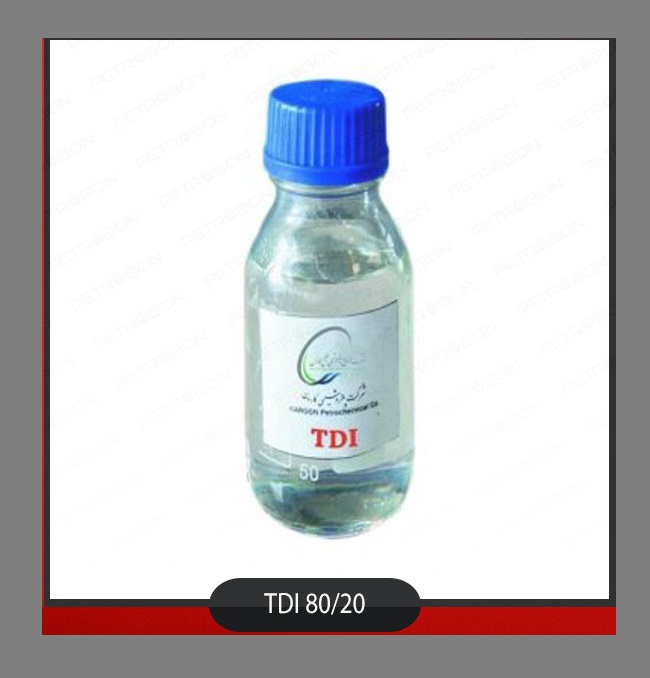
TOLUENE DIISOCYANATE (TDI 80/20)
PRODUCT IDENTIFICATION INFORMATION
| Parameter | Information |
|---|---|
| Product Name | Toluene Diisocyanate |
| Trade Name / Grade | TDI 80/20 |
| CAS Number | 26471-62-5 |
| EC Number (EINECS) | 247-722-4 |
| Molecular Formula | C₉H₆N₂O₂ |
| Molecular Weight | 174.2 g/mol |
| Isomeric Composition | 2,4-TDI: 80% ± 2% (by weight); 2,6-TDI: 20% ± 2% (by weight) |
CHEMICAL STRUCTURE
    TDI 80/20 Isomer Mixture

    2,4-TDI (80%)              2,6-TDI (20%)

       NCO                        NCO
        |                          |
    CH₃—C₆H₃—NCO              CH₃—C₆H₃—NCO
        |                          |
       NCO                        NCO

    Toluene Diisocyanate (TDI)
    Isomer Mixture
Molecular Formula: C₉H₆N₂O₂
SMILES: O=C=NC1=CC(C)=C(N=C=O)C=C1 (2,4-TDI)
InChI: InChI=1S/C9H6N2O2/c1-7-2-3-8(10-5-12)4-9(7)11-6-13/h2-4H,1H3
Synonyms: Tolylene Diisocyanate, Methylphenylene Diisocyanate, TDI Isocyanate, TDI 80, 2,4-Diisocyanato-1-methylbenzene
SECTION 1: CHEMICAL IDENTITY AND DEFINITION
| Parameter | Information |
|---|---|
| Product Name | Toluene Diisocyanate |
| Chemical Name (IUPAC) | 1,3-Diisocyanato-2-methylbenzene (2,6-TDI) / 1,3-Diisocyanato-4-methylbenzene (2,4-TDI) |
| Synonyms (English) | Toluene Diisocyanate, Tolylene Diisocyanate, Methylphenylene Diisocyanate, TDI Isocyanate, TDI 80/20, TDI 80 |
| Synonyms (Turkish) | Toluen Diizosiyanat, Tolilen Diizosiyanat, Metilfenilen Diizosiyanat, TDI İzosiyanat, TDI 80/20, TDI 80 |
| CAS Number | 26471-62-5 |
| EC Number (EINECS) | 247-722-4 |
| Molecular Formula | C₉H₆N₂O₂ |
| Molecular Weight | 174.2 g/mol |
| Isomeric Composition | 2,4-TDI: 80% ± 2%; 2,6-TDI: 20% ± 2% |
| Chemical Class | Organic compound; isocyanate; aromatic diisocyanate |
| Physical State (20°C) | Liquid (near freezing point) |
| Odor | Sharp, pungent, irritating, characteristic |
| Color | Colorless to pale yellow clear liquid |
| pH | Not applicable |
SECTION 2: PHYSICAL AND CHEMICAL PROPERTIES
| Property | Value | Test Method / Note |
|---|---|---|
| Appearance | Colorless to pale yellow clear liquid | Visual |
| Odor | Sharp, pungent, irritating, characteristic | Olfactometric |
| Molecular Weight | 174.2 g/mol | Calculated |
| Density (25°C) | ~1.22 g/cm³ | ASTM D4052 |
| Melting / Freezing Point | 19.5 - 20.5°C | DSC |
| Boiling Point | 247°C | - |
| Flash Point | 137°C (Closed Cup) | ASTM D93 |
| Autoignition Temperature | ~600°C | - |
| Vapor Pressure (20°C) | ~0.01 mmHg | - |
| Vapor Density | Heavier than air (Air = 1) | - |
| Viscosity (25°C) | ~3 mPa·s | ASTM D445 |
| Refractive Index (20°C) | ~1.568 | - |
| Solubility in Water | Reacts (forms CO₂) | General Method |
| Solubility in Organic Solvents | Soluble in acetone, benzene, ethyl acetate, chlorobenzene, and most organic solvents | General Method |
| N-Content | ~16.1% | - |
| Isocyanate Group Content | ~48.2% (as NCO) | Titrimetric |
| Hydrolyzable Chloride | ≤ 0.005% | Titrimetric |
| Total Chloride | ≤ 0.03% | Titrimetric |
| Acidity (as HCl) | ≤ 0.005% | Titrimetric |
| Isomer Ratio (2,4:2,6) | 80:20 ± 2% | GC |
SECTION 3: CHEMICAL PROPERTIES AND REACTIVITY
| Parameter | Information |
|---|---|
| Chemical Character | Aromatic diisocyanate; highly reactive; reacts with water, alcohols, amines, and active hydrogen-containing compounds |
| Stability | Stable under normal conditions; May polymerize in presence of moisture; Isocyanate groups react with active hydrogen-containing compounds to form urea, urethane, or biuret bonds |
| Reactivity (Water) | Violent reaction. Contact with water generates CO₂ gas in an exothermic reaction. Risk of pressure build-up and explosion in closed containers. |
| Conditions to Avoid | Water, Moisture, Alkalies, Strong Bases, Alcohols, Amines, High Temperature |
| Incompatible Materials | Water, moisture, alkalies, strong bases, alcohols, amines, acids, oxidizing agents, metals (copper, iron, zinc, aluminum) |
| Polymerization | May polymerize upon contact with moisture; Polymerization accelerates upon heating |
| Hazardous Polymerization | Occurs in presence of water or moisture; Pressure increase with carbon dioxide gas formation |
| Decomposition Products (Heating) | Toluene diamine, Carbon dioxide (CO₂), Hydrogen cyanide (HCN), Nitrogen oxides (NOx), Isocyanic acid |
| Hazardous Reactions | Reacts violently with water forming CO₂; Explosion risk in closed containers; Exothermic reaction with alcohols and amines |
| Urethane Formation | R-NCO + R'-OH → R-NH-COO-R' (reaction with alcohol) |
| Urea Formation | R-NCO + R'-NH₂ → R-NH-CO-NH-R' (reaction with amine) |
| Carbonate Formation | R-NCO + H₂O → R-NH₂ + CO₂ (reaction with water) |
| Trimerization | Forms isocyanurate rings in presence of catalysts |
SECTION 4: COMPARISON OF COMMON ISOCYANATE COMPOUNDS
| Property | TDI 80/20 (C₉H₆N₂O₂) | MDI (C₁₅H₁₀N₂O₂) | HDI (C₈H₁₂N₂O₂) | IPDI (C₁₂H₁₈N₂O₂) |
|---|---|---|---|---|
| CAS Number | 26471-62-5 | 26447-40-5 | 822-06-0 | 4098-71-9 |
| Molecular Weight | 174.2 | 250.3 | 168.2 | 222.3 |
| Appearance | Colorless-yellow liquid | White-yellow crystal/liquid | Colorless liquid | Colorless liquid |
| Vapor Pressure (25°C) | ~0.01 mmHg | ~0.0001 mmHg | ~0.05 mmHg | ~0.004 mmHg |
| NCO Content | ~48.2% | ~33.6% | ~50.0% | ~37.8% |
| Primary Use | Flexible foams | Rigid foams, elastomers | Coatings, adhesives | Coatings, automotive |
| UV Resistance | Low (yellowing) | Low (yellowing) | High (non-yellowing) | High (non-yellowing) |
| Grade / Type | TDI 80/20, TDI 65/35 | Polymeric, Monomeric | HDI, HDI Trimer | IPDI |
SECTION 5: PRODUCTION METHODS
Method 1: Phosgenation Method (Main Industrial Method)
-
Reaction: Toluene diamine (TDA) + Phosgene (COCl₂) → TDI + 4HCl
-
Description: Toluene diamine is reacted with phosgene; Toluene diisocyanate and hydrogen chloride are formed; This method accounts for over 90% of worldwide TDI production
-
Process Steps:
-
TDA dissolution in inert solvent
-
Low-temperature phosgenation reaction (carbamoyl chloride formation)
-
High-temperature reaction (TDI formation)
-
Purification by distillation
-
Isomer separation and 80/20 mixture preparation
-
Method 2: Carbonylation Method (Emerging Technology)
-
Reaction: Dinitrotoluene + CO → TDI (in presence of catalyst)
-
Description: Direct carbonylation of dinitrotoluene with carbon monoxide; Phosgene-free process; More environmentally friendly; Not yet widely adopted
Method 3: Dimethyl Carbonate Method (Phosgene-Free Process)
-
Reaction: TDA + Dimethyl carbonate → TDI + Methanol
-
Description: Toluene diamine is reacted with dimethyl carbonate; Phosgene-free alternative; Under development
SECTION 6: FUNCTIONAL PROPERTIES AND MECHANISM OF ACTION
| Property | Description |
|---|---|
| Polymerization / Urethane Formation | Isocyanate groups (-NCO) react with alcohols (polyols) to form urethane bonds (-NH-CO-O-); Fundamental mechanism of polyurethane polymerization; Enables formation of flexible and rigid foams |
| Water Reaction (Blowing) | Reacts with water to form CO₂ gas; CO₂ gas provides cell formation in polyurethane foams; Also forms urea bonds and reinforces network structure |
| Crosslinking | Crosslinking reactions with polyfunctional compounds; Forms three-dimensional network structure; Increases mechanical strength and thermal stability |
| Adhesion Properties | Forms chemical bonds with active hydrogen on surfaces; Provides superior adhesion; Used in coatings, adhesives, and sealants |
| Elastomeric Properties | Forms flexible segments with long-chain polyols; Provides high elasticity and impact resistance; Automotive, footwear, and furniture applications |
| Thermal Stability | Urethane and isocyanurate bonds provide high thermal stability; Used in high-temperature applications |
| UV Resistance (Limited) | Aromatic structure causes yellowing upon UV exposure; Preferred in indoor applications; Aliphatic isocyanates (HDI, IPDI) used for outdoor applications |
SECTION 7: MAIN APPLICATION AREAS
| Industry / Application | Function | Typical Use |
|---|---|---|
| Furniture & Bedding | Flexible foam production | Flexible slabstock and molded polyurethane foams; Provides softness and high load-bearing capacity; Mattresses, upholstery, cushions |
| Automotive Industry | Coating, foam, elastomer | Steering wheel coatings; Seat cushioning; Acoustic foams; Bumper elastomers; Dashboard coatings |
| Construction & Insulation | Rigid foam, adhesive | Spray and pour-in-place rigid foams; Structural adhesives; Floor coatings; Thermal insulation panels |
| Coatings & Adhesives | High-performance coatings | Polyurethane varnishes; Moisture-cure sealants; Industrial adhesives; Wood coatings |
| Footwear Industry | Polyurethane sole | Durable and lightweight polyurethane sole systems; Sports shoes; Safety footwear |
| Textile Coatings | Coating material | Waterproof textile coatings; Synthetic leather production |
| Packaging Industry | Flexible foam | Protective packaging materials; Packaging foams |
| Sports Equipment | Flexible and rigid components | Sports equipment; Protective gear; Mats |
SECTION 8: QUALITY SPECIFICATIONS (TDI 80/20)
| Parameter | Specification | Test Method |
|---|---|---|
| Appearance | Colorless to pale yellow clear liquid | Visual |
| Assay (TDI) | ≥ 99.5% | Titrimetric / GC |
| 2,4-Isomer Ratio | 79.5 - 80.5% | GC |
| 2,6-Isomer Ratio | 19.5 - 20.5% | GC |
| NCO Content | 48.0 - 48.4% | Titrimetric |
| Acidity (as HCl) | ≤ 0.005% | Titrimetric |
| Hydrolyzable Chloride | ≤ 0.005% | Titrimetric |
| Total Chloride | ≤ 0.03% | Titrimetric |
| Water Content | ≤ 0.03% | Karl Fischer |
| Color (APHA) | ≤ 50 | Colorimetry |
| Density (25°C) | 1.215 - 1.225 g/cm³ | ASTM D4052 |
| Viscosity (25°C) | 2.5 - 3.5 mPa·s | ASTM D445 |
| Flash Point | ≥ 130°C (Closed Cup) | ASTM D93 |
| Non-Volatile Matter | ≤ 0.1% | Gravimetric |
| Particles / Sediment | None | Filtration |
| Packaging | 250 kg drum / IBC / Tanker | - |
| Shelf Life | 6 months (in original packaging, under inert atmosphere) | - |
SECTION 9: TOXICOLOGICAL PROFILE
| Parameter | Value |
|---|---|
| Acute Oral Toxicity (LD50, Rat) | ~ 5,800 mg/kg (low toxicity) |
| Acute Dermal Toxicity (LD50, Rabbit) | > 5,000 mg/kg (low toxicity) |
| Acute Inhalation Toxicity (LC50, Rat, 4h) | ~ 0.3 mg/L (high toxicity; by inhalation) |
| Skin Irritation | Irritating; May cause redness and burns |
| Eye Irritation | Risk of serious eye damage (H318) |
| Respiratory Irritation | High acute toxicity; Severe irritation of respiratory tract, chest tightness; Repeated exposure may lead to sensitization and occupational asthma (RADS) |
| Skin Sensitization | Risk of sensitization (allergy) (H317) |
| Respiratory Sensitization | May cause allergy or asthma symptoms or breathing difficulties if inhaled (H334) |
| Carcinogenicity | IARC Group 2B (Possibly carcinogenic to humans); ACGIH A3 (Animal carcinogen) |
| Mutagenicity | Not classified as mutagenic |
| Reproductive Toxicity | Toxicity observed in animal studies |
| Target Organs | Respiratory system, lungs, skin, eyes |
| Occupational Exposure Limit (8h TWA) | 0.005 ppm (0.036 mg/m³) (OSHA PEL); 0.001 ppm (0.007 mg/m³) (ACGIH TLV) |
| Short-Term Exposure Limit (STEL) | 0.02 ppm (0.14 mg/m³) (OSHA); 0.005 ppm (0.036 mg/m³) (ACGIH) |
| Skin Exposure Limit | 0.001 ppm (recommended) |
| Special Toxicity Note | TDI is a strong respiratory sensitizer; Once sensitized, even very low level exposure can trigger severe asthma attacks; Symptoms may be delayed; Occupational asthma (RADS - Reactive Airway Dysfunction Syndrome) may develop |
SECTION 10: GHS CLASSIFICATION AND LABELING
GHS Classification (Compliant with CLP and UN GHS):
| Hazard Class | Category | H-Statement |
|---|---|---|
| Respiratory Sensitization | Category 1 | H334 |
| Skin Sensitization | Category 1 | H317 |
| Acute Toxicity (Inhalation) | Category 2 | H330 |
| Acute Toxicity (Dermal) | Category 4 | H312 |
| Acute Toxicity (Oral) | Category 4 | H302 |
| Skin Irritation | Category 2 | H315 |
| Eye Damage | Category 1 | H318 |
| STOT - RE (Repeated Exposure) | Category 2 | H373 |
| Carcinogenicity | Category 2 | H351 |
| Chronic Aquatic Toxicity | Category 3 | H412 |
Signal Word: DANGER
Hazard Pictograms: GHS06 (Skull and Crossbones), GHS08 (Health Hazard), GHS05 (Corrosion), GHS09 (Environment)
Hazard Statements (H-Codes):
| Code | Statement |
|---|---|
| H302 | Harmful if swallowed |
| H312 | Harmful in contact with skin |
| H315 | Causes skin irritation |
| H317 | May cause an allergic skin reaction |
| H318 | Causes serious eye damage |
| H330 | Fatal if inhaled |
| H334 | May cause allergy or asthma symptoms or breathing difficulties if inhaled |
| H351 | Suspected of causing cancer |
| H373 | May cause damage to organs through prolonged or repeated exposure |
| H412 | Harmful to aquatic life with long lasting effects |
NFPA 704 Hazard Classification:
| Health | Flammability | Reactivity | Special |
|---|---|---|---|
| 3 | 1 | 1 | - |
| (Severe health hazard) | (Flammable) | (Mildly reactive) | (None) |
SECTION 11: PRECAUTIONARY STATEMENTS (P-CODES)
| Code | Statement |
|---|---|
| P201 | Obtain special instructions before use |
| P202 | Do not handle until all safety precautions have been read and understood |
| P260 | Do not breathe dust/fume/gas/mist/vapors/spray |
| P261 | Avoid breathing dust/fume/gas/mist/vapors/spray |
| P264 | Wash hands thoroughly after handling |
| P270 | Do not eat, drink or smoke when using this product |
| P271 | Use only outdoors or in a well-ventilated area |
| P280 | Wear protective gloves/protective clothing/eye protection/face protection/respiratory protection |
| P284 | Wear respiratory protection (organic vapor/P1 filter) |
| P301+P310 | IF SWALLOWED: Immediately call a POISON CENTER/doctor |
| P302+P352 | IF ON SKIN: Wash with plenty of soap and water |
| P304+P340 | IF INHALED: Remove person to fresh air and keep comfortable for breathing |
| P305+P351+P338 | IF IN EYES: Rinse cautiously with water for several minutes. Remove contact lenses if present and continue rinsing |
| P308+P313 | IF exposed or concerned: Get medical advice/attention |
| P310 | Immediately call a POISON CENTER/doctor |
| P333+P313 | If skin irritation or rash occurs: Get medical advice/attention |
| P342+P311 | IF experiencing respiratory symptoms: Call a POISON CENTER/doctor |
| P362+P364 | Take off contaminated clothing and wash it before reuse |
| P403+P233 | Store in a well-ventilated place. Keep container tightly closed |
| P405 | Store locked up |
| P501 | Dispose of contents/container in accordance with local/regional/national/international regulations |
SECTION 12: FIRST AID MEASURES
| Exposure Route | Action to Take |
|---|---|
| Inhalation | Move to fresh air immediately. Rest in a position comfortable for breathing. If breathing is difficult, give oxygen. If experiencing respiratory symptoms, call a POISON CENTER/doctor immediately. Symptoms may be delayed; medical observation is essential. |
| Skin Contact | Remove contaminated clothing immediately. Rinse skin with plenty of water for at least 15-20 minutes. Wash with soap and water. If skin irritation or rash occurs, get medical advice/attention. Wash contaminated clothing before reuse. |
| Eye Contact | Rinse immediately with plenty of water for at least 15 minutes. Keep eyelids open. Remove contact lenses if present. Continue rinsing. Get immediate medical attention. |
| Ingestion | Rinse mouth with water. Do NOT induce vomiting. Give one or two glasses of water to drink. Immediately call a POISON CENTER/doctor. Never give anything by mouth to an unconscious person. |
SECTION 13: FIREFIGHTING MEASURES
| Parameter | Information |
|---|---|
| Fire Hazard | Combustible liquid (Class IIIB). When heated or exposed to flame, may form explosive vapor-air mixtures. |
| Hazards During Fire | Thermal decomposition produces toxic fumes (hydrogen cyanide, nitrogen oxides, isocyanic acid); Contact with water may generate CO₂ and pressure build-up |
| Suitable Extinguishers | Dry chemical powder, CO₂, alcohol-resistant foam, water fog (for cooling) |
| Unsuitable Extinguishers | Water jet (may spread hazardous material; violent reaction) |
| Special Protective Equipment | Self-contained breathing apparatus (SCBA), full protective clothing |
| Special Precautions | Do not use water; Use dry chemical powder or CO₂; Cool exposed containers from a safe distance with water fog; Prevent water runoff from entering sewers and waterways |
SECTION 14: STORAGE AND SHELF LIFE
| Parameter | Information |
|---|---|
| Storage Conditions | Recommended: 20°C - 35°C; Do not allow to fall below 18°C (to prevent crystallization); Dry, well-ventilated area |
| Container Requirements | Stainless steel or carbon steel containers (inerted with dry nitrogen gas); PE (polyethylene) or PP (polypropylene) drums MUST NOT BE USED (causes degradation and leakage) |
| Atmosphere | Dry air or nitrogen (N₂) blanket (to prevent polymerization on the surface) |
| Materials to Protect From | Water, moisture, alkalies, strong bases, alcohols, amines, acids, metals (copper, iron, zinc, aluminum) |
| Shelf Life | 6 months (in unopened original packaging, under inert atmosphere, under proper storage conditions) |
| Stability Note | Polymerizes in contact with moisture and forms CO₂; Must be stored under dry inert atmosphere |
| Special Storage Requirements | Frozen product must be thawed carefully and homogenized; Keep away from ignition sources and heat |
SECTION 15: PACKAGING OPTIONS
| Packaging Type | Quantity | Material |
|---|---|---|
| Steel Drum | 250 kg | Stainless steel or carbon steel (N₂ inerted) |
| IBC Container | 1,000 - 1,200 kg | Stainless steel or carbon steel (N₂ inerted) |
| Tanker (Transport) | 15,000 - 25,000 kg | Stainless steel or carbon steel (N₂ inerted) |
| NOTE: | PE (polyethylene) or PP (polypropylene) drums MUST NOT BE USED | - |
SECTION 16: TRANSPORT INFORMATION
| Parameter | Information |
|---|---|
| UN Number | UN 2078 (Toluene Diisocyanate) |
| Hazard Class | 6.1 (Toxic Substance) |
| Packing Group | II |
| ADR/RID | UN 2078, Toluene diisocyanate, 6.1, PG II |
| IMDG Code | UN 2078, Toluene diisocyanate, 6.1, PG II, Marine Pollutant: Yes |
| IATA (Air) | UN 2078, Toluene diisocyanate, 6.1, PG II |
| Marine Pollutant | Yes |
| Transport Temperature | 20°C - 35°C; Do not allow to fall below 18°C |
| Special Transport Requirements | Transport in N₂ inerted containers; Protect from moisture; Provide containment for leaks |
SECTION 17: REGULATORY STATUS
| Region / Authority | Status |
|---|---|
| European Union | REACH registered; Carcinogen Category 2; Respiratory sensitizer Category 1; Substance of Very High Concern (SVHC) |
| USA (TSCA) | Listed |
| USA (EPA) | Regulated as Hazardous Air Pollutant (HAP) |
| Turkey | Industrial chemical; Subject to KKDIK regulation; Classified as carcinogen and sensitizer |
| IARC | Group 2B (Possibly carcinogenic to humans) |
| NTP | Not listed |
| OSHA | Regulated (toxic and sensitizing substance) |
| California (Prop 65) | Listed as carcinogen |
| EU Restrictions | Restricted under REACH Annex XVII (isocyanates) |
| ECHA | Respiratory sensitizer; Carcinogen Category 2 |
| TDI Use Restrictions | Industrial use; Restricted for consumer use |
| Occupational Exposure Limits | OSHA PEL: 0.005 ppm; ACGIH TLV: 0.001 ppm |
SECTION 18: OTHER NAMES AND SYNONYMS
| Type | Name |
|---|---|
| Turkish Names | Toluen Diizosiyanat, Tolilen Diizosiyanat, Metilfenilen Diizosiyanat, TDI İzosiyanat, TDI 80/20, TDI 80 |
| English Names | Toluene Diisocyanate, Tolylene Diisocyanate, Methylphenylene Diisocyanate, TDI Isocyanate, TDI 80/20, TDI 80 |
| Trade Names | TDI 80/20, TDI 80, Desmodur T80, Suprasec T80, Mondur TDI |
| Chemical Names | Toluene Diisocyanate; Tolylene Diisocyanate; 1,3-Diisocyanato-2-methylbenzene; 1,3-Diisocyanato-4-methylbenzene |
| CAS Number | 26471-62-5 |
| EC Number | 247-722-4 |
| Molecular Formula | C₉H₆N₂O₂ |
| Isomer Ratio | 2,4-TDI: 80%; 2,6-TDI: 20% |
SECTION 19: SUMMARY TABLE
| Parameter | Value |
|---|---|
| Product | Toluene Diisocyanate (TDI 80/20) |
| CAS Number | 26471-62-5 |
| Molecular Formula | C₉H₆N₂O₂ |
| Molecular Weight | 174.2 g/mol |
| Isomeric Composition | 2,4-TDI: 80%; 2,6-TDI: 20% |
| Appearance | Colorless to pale yellow clear liquid |
| Density (25°C) | ~1.22 g/cm³ |
| Melting Point | 19.5 - 20.5°C |
| Boiling Point | 247°C |
| Flash Point | 137°C |
| NCO Content | ~48.2% |
| Primary Function | Polyurethane raw material, crosslinker |
| Main Applications | Flexible foams, coatings, adhesives, automotive, furniture |
| Shelf Life | 6 months (under inert atmosphere) |
| GHS Signal Word | DANGER |
| UN Number | UN 2078 |
| Carcinogenicity | IARC Group 2B - Possibly carcinogenic |
| Special Feature | Water-reactive (forms CO₂); Respiratory sensitizer |
SECTION 20: CRITICAL WARNINGS AND BEST PRACTICES
CRITICAL WARNINGS:
-
Fatal if inhaled (H330). High acute toxicity. Do not breathe vapors.
-
May cause allergy or asthma symptoms or breathing difficulties if inhaled (H334). Strong respiratory sensitizer. Respiratory protection is MANDATORY.
-
Suspected of causing cancer (H351). Minimize exposure.
-
May cause an allergic skin reaction (H317). Skin sensitizer. Avoid skin contact.
-
Causes serious eye damage (H318). Use eye protection.
-
Reacts violently with water. Forms CO₂ gas and causes pressure build-up/explosion risk in closed containers. DO NOT USE WATER.
-
Combustible liquid (Class IIIB). Keep away from heat and flame sources.
-
Polymerizes in contact with moisture. Store in nitrogen-inerted containers.
-
Incompatibilities: PE and PP plastic containers MUST NOT BE USED (causes degradation and leakage). Keep away from water, moisture, alkalies, bases, alcohols, amines, acids, and metals.
-
Sensitization Risk: Once sensitized, even very low level exposure can trigger severe asthma attacks. Asthma symptoms may be delayed (RADS - Reactive Airway Dysfunction Syndrome).
-
Hygiene Requirement: Contaminated clothing should not be allowed out of the workplace.
-
Storage Temperature: Do not allow to fall below 18°C (crystallization). Recommended: 20°C - 35°C.
BEST PRACTICE RECOMMENDATIONS:
-
Furniture and Bedding Industry: Use in flexible slabstock and molded polyurethane foam production; Provides softness and high load-bearing capacity; Achieve optimum foam properties with appropriate catalyst, stabilizer, and flame retardant selection.
-
Automotive Industry: Use in steering wheel coatings, seat cushioning, acoustic foams, and bumper elastomers; Use automotive-grade TDI quality; Control VOC emissions.
-
Coatings and Adhesives: Use in high-performance polyurethane varnishes, moisture-cure sealants, and industrial adhesives; Monitor isocyanate content; Ensure adequate ventilation during use.
-
Handling: Use ONLY in closed systems and with adequate ventilation; Fume hood or local exhaust ventilation is MANDATORY; Avoid dust formation.
-
Personal Protective Equipment: Butyl or Viton gloves, full-face respirator (organic vapor/P1 filter), chemical protective suit, safety shower and eyewash station MUST be available.
-
Respiratory Protection: NIOSH-approved full-face mask/P1 filter for organic vapors; Supplied-air respirator (SCBA) if ventilation is inadequate.
-
Hygiene: Do not eat, drink, or smoke when using; Wash hands thoroughly after handling; Do not take contaminated working clothes home; Shower at the end of the work shift.
-
Storage: Store in stainless steel or carbon steel containers, inerted with dry nitrogen (N₂) gas; Store at 20°C-35°C; Do not allow to fall below 18°C; PE or PP plastic containers MUST NOT BE USED.
-
Spill Response: Do not breathe vapors; Wear full PPE; Absorb spill with inert material (sand, vermiculite); DO NOT USE WATER; Place in closed containers; Do not allow to enter drains or waterways.
-
Disposal: Dispose of in accordance with local, regional, and national regulations; Do not discharge into sewers or water sources; TDI is regulated as hazardous waste.
-
Emergency: In case of exposure, immediately call a POISON CENTER/doctor; Respiratory symptoms may be delayed; Medical observation is essential.
SPECIAL NOTE ON WATER REACTIVITY:
TDI reacts violently with water:
-
Reaction: R-NCO + H₂O → R-NH₂ + CO₂
-
CO₂ Formation: Carbon dioxide gas is formed and causes pressure build-up in closed containers
-
Explosion Risk: Excessive pressure in closed containers can cause explosion
-
Precaution: DO NOT USE WATER; All equipment and containers must be dry; Nitrogen inerting is MANDATORY
Key Safety Rules:
-
NEVER use water on TDI fires
-
All containers must be dry
-
Store in nitrogen (N₂) inerted containers
-
Do not open in humid environments
SPECIAL NOTE ON SENSITIZATION RISK:
TDI is a strong respiratory sensitizer:
-
Sensitization Development: Respiratory sensitization develops with repeated exposure
-
Asthma Attacks: Once sensitized, even very low level exposure can trigger severe asthma attacks
-
Delayed Symptoms: Asthma symptoms may occur hours after exposure (delayed asthma)
-
RADS: Reactive Airway Dysfunction Syndrome may develop
-
Precaution: Minimize exposure; Respiratory protection is MANDATORY; Provide regular medical surveillance
LEGAL DISCLAIMER:
The information provided in this document is based on our current knowledge and experience and is presented in good faith. However, as all conditions of use are beyond our control, this document does not constitute a binding specification or warranty. This Technical Data Sheet is for informational purposes only. Users are responsible for testing suitability for their own applications. For complete safety, storage, handling, transportation, waste, and regulatory compliance information, please refer to the official Safety Data Sheet (SDS/MSDS) provided by the manufacturer/supplier.