We unleash your business potential by maximize the business innovation.
Send EmailAdipic Acid, Hexanedioic Acid, E355, 124-04-9
ADIPIC ACID
PRODUCT IDENTIFICATION INFORMATION
| Parameter | Information |
|---|---|
| Product Name | Adipic Acid |
| Chemical Name | Hexanedioic Acid |
| Synonyms (Turkish) | Adipik Asit, Heksandioik Asit, Adipinik Asit, 1,4-Bütandikarboksilik Asit |
| Synonyms (English) | Adipic Acid, Hexanedioic Acid, Adipinic Acid, 1,4-Butanedicarboxylic Acid, 1,6-Hexanedioic Acid, Hexane-1,6-dicarboxylate |
| E Number | E355 |
| CAS Number | 124-04-9 |
| EC Number | 204-673-3 |
| Molecular Formula | C₆H₁₀O₄ |
| Molecular Weight | 146.14 g/mol |
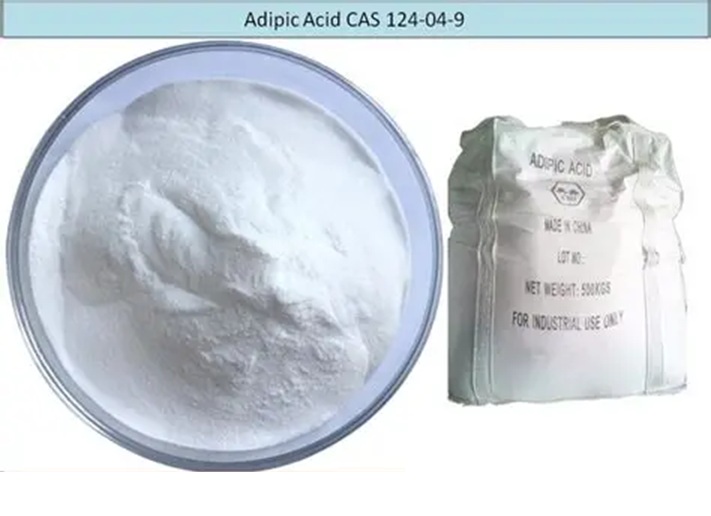
| Appearance | White crystalline solid, odorless crystals |
| Odor | Odorless |
| Taste | Tart (slightly sour) |
CHEMICAL STRUCTURE
Adipic Acid Structure:
        O               O
        ||              ||
    HO—C—(CH₂)₄—C—OH
Structure Description:
-
Dicarboxylic acid with six carbon atoms.
-
The most important dicarboxylic acid by production volume.
-
White crystalline solid.
-
Slightly tart (sour) taste.
-
Rarely found in nature.
-
Typically found exogenously in urine and blood.
SECTION 1: CHEMICAL IDENTITY AND DESCRIPTION
| Parameter | Information |
|---|---|
| Product Name | Adipic Acid |
| Chemical Name | Hexanedioic Acid |
| Synonyms (Turkish) | Adipik Asit, Heksandioik Asit, Adipinik Asit, 1,4-Bütandikarboksilik Asit |
| Synonyms (English) | Adipic Acid, Hexanedioic Acid, Adipinic Acid, 1,4-Butanedicarboxylic Acid, 1,6-Hexanedioic Acid, Hexane-1,6-dicarboxylate |
| E Number | E355 |
| CAS Number | 124-04-9 |
| EC Number | 204-673-3 |
| Molecular Formula | C₆H₁₀O₄ |
| Molecular Weight | 146.14 g/mol |
| Chemical Class | Dicarboxylic acid; Organic acid; Food additive |
| Source | Synthetic (oxidation of cyclohexane/cyclohexanol) |
| Physical State (20°C) | Solid (crystalline) |
| Odor | Odorless |
| Color | White |
| Taste | Tart (slightly sour) |
SECTION 2: PHYSICAL AND CHEMICAL PROPERTIES
| Property | Value | Test Method / Note |
|---|---|---|
| Appearance | White crystalline solid, odorless crystals | Visual |
| Odor | Odorless | Olfactometric |
| Taste | Tart (slightly sour) | – |
| Molecular Weight | 146.14 g/mol | Calculated |
| Density | 1.36 g/cm³ | ASTM D4052 |
| Melting Point | 151.5 – 154°C | DSC |
| Boiling Point | 337.5°C (at 760 mmHg) | – |
| Flash Point | 196°C | – |
| Solubility in Water | Slightly soluble (1.44 g/100 mL at 15°C) | General Method |
| Solubility in Ethanol | Freely soluble | General Method |
| Solubility in Acetic Acid | Insoluble | General Method |
| Solubility in Ligroin | Insoluble | General Method |
| Solubility in Petroleum Benzine | Slightly soluble | General Method |
| pH (Saturated Solution) | ~2.8 (acidic) | pH Meter |
| Stability | Stable under recommended storage conditions | – |
| Acidity (pKa1) | 4.43 (first dissociation) | – |
| Acidity (pKa2) | 5.41 (second dissociation) | – |
| Heat of Combustion | -2794 kJ/mol | – |
| Vapor Pressure | Negligible | – |
| Heavy Metals (as Pb) | ≤ 10 ppm | AAS / ICP |
| Arsenic (As) | ≤ 2 ppm | AAS / ICP |
| Lead (Pb) | ≤ 2 ppm | AAS / ICP |
| Loss on Drying | ≤ 0.5% | Gravimetric |
| Assay | ≥ 99.0% (various grades) | Titrimetric |
SECTION 3: ADIPIC ACID vs OTHER DICARBOXYLIC ACIDS
| Property | Adipic Acid (C6) | Succinic Acid (C4) | Glutaric Acid (C5) | Sebacic Acid (C10) |
|---|---|---|---|---|
| CAS Number | 124-04-9 | 110-15-6 | 110-94-1 | 111-20-6 |
| Molecular Weight | 146.14 g/mol | 118.09 g/mol | 132.12 g/mol | 202.25 g/mol |
| Melting Point | 151.5-154°C | 185-187°C | 95-98°C | 131-134°C |
| Solubility in Water | Slightly soluble | Soluble | Soluble | Slightly soluble |
| Taste | Tart | Sour | Sour | Slightly sour |
| Primary Use | Nylon 6,6 production | Food additive, resins | Organic synthesis, resins | Polyester, lubricants |
| E Number | E355 | E363 | – | – |
| Renewable Source | Research stage | Yes (fermentation) | Research stage | Castor oil (natural) |
SECTION 4: MECHANISM OF ACTION
| Property | Description |
|---|---|
| Acidity Regulation (Food) | Provides tart/sour taste; Adjusts pH in food products; Acts as a buffering agent; Neutralizes excess alkalinity. |
| Polymerization (Nylon 6,6) | Reacts with hexamethylenediamine to form nylon 6,6; Monomer for polyamide production; Forms strong, durable polymers; Used in fibers and engineering plastics. |
| Esterification | Reacts with alcohols to form polyesters; Used in polyester resin production; Dehydration reaction with diols; Forms high-performance polymers. |
| Corrosion Inhibition | Forms protective films on metal surfaces; Prevents scale formation (anti-scaling); Used in industrial water treatment; Reduces corrosion in cooling systems. |
| Flue Gas Desulfurization | Absorbs sulfur dioxide (SO₂) from flue gases; Enhances desulfurization efficiency; Used in thermal power plants; Reduces sulfur emissions. |
| pH Buffering | Resists pH changes in solutions; Maintains stable acidity; Used in various industrial and food applications. |
SECTION 5: PRODUCTION PROCESS
Industrial Production Method:
Process Flow:
Cyclohexane / Cyclohexanol / Cyclohexanone → Air / Nitric Acid Oxidation → Adipic Acid → Crystallization → Purification → Drying → Final Product
Step-by-Step Description:
-
Raw Material: Cyclohexane is the primary raw material (cyclohexanol and cyclohexanone can also be used).
-
Oxidation: Cyclohexane is oxidized with air or nitric acid (HNO₃) to form adipic acid.
-
Crystallization: Crude adipic acid is crystallized from the reaction mixture.
-
Purification: Crystals are purified to remove impurities and by-products (e.g., glutaric acid, succinic acid).
-
Drying: Purified product is dried to achieve the desired moisture content.
-
Final Product: White crystalline powder is obtained.
Note: Nearly all global production is based on cyclohexane. However, due to rising petroleum prices and demand for green products, bio-based production research is accelerating. Fermentation-based methods using sugar-based raw materials, aromatic compounds, and fatty acid sources are being investigated.
SECTION 6: FUNCTIONAL PROPERTIES
| Property | Description |
|---|---|
| Acidulant / pH Regulator | Provides tart/sour taste; Adjusts acidity in food products; Used in jellies, jams, and dietary products; Acts as a buffering agent. |
| Monomer (Polymerization) | Key monomer for nylon 6,6 production; Reacts with hexamethylenediamine; Also used in polyester and polyurethane production. |
| Corrosion Inhibitor | Prevents scale formation and corrosion; Used in industrial water treatment; Protects cooling systems and pipelines. |
| Flue Gas Desulfurization | Enhances SO₂ absorption in flue gas; Used in thermal power plants; Reduces sulfur emissions; Improves environmental compliance. |
| Plasticizer | Used in certain polymer formulations; Improves flexibility and durability; Used in cable and wire coatings. |
| Adhesive Component | Used in adhesive and sealant formulations; Provides bonding strength; Used in various industrial applications. |
SECTION 7: MAIN APPLICATION AREAS
| Industry / Application | Function | Typical Use |
|---|---|---|
| Polymer Industry (Nylon) | Monomer, polymerization | Nylon 6,6 production; Engineering plastics; Fibers and textiles; Automotive parts; Electronic components. |
| Polymer Industry (Polyester) | Monomer, esterification | Polyester resin production; Polyurethane production; High-performance polymers; Coatings and adhesives. |
| Food Industry (E355) | Acidulant, pH regulator, buffering agent | Jellies, jams, fruit preserves; Dietary products; Effervescent tablet production (with carbonates); Gelatin gelling aid; Dosage: 0.5-2.0%. |
| Industrial Applications | Corrosion inhibitor, scale inhibitor | Boiler water treatment; Cooling water systems; Pipeline protection; Scale prevention; Flue gas desulfurization. |
| Paint Stripping | Paint remover component | Formulations with ammonium nitrate; Monochloroacetic acid as solvent; Removes paint from iron and non-ferrous metals; Also removes lime and rust. |
| Adhesives & Sealants | Component, binder | Adhesive formulations; Sealant production; Bonding applications; Construction and industrial uses. |
| Lubricants | Component | Lubricant formulations; Industrial oils; Grease production. |
| Pharmaceutical | Flavoring agent, acidity regulator | Calcium carbonate antacids (tartness provider); Effervescent tablet formulations; pH adjustment. |
| Cable & Wire Industry | Anti-aging agent | Polyester resins for cable coating; Prevents aging of copper/aluminum wires; Hydrocarbon resistance; Enhances cable durability. |
SECTION 8: SAMPLE FORMULATIONS
Food Grade pH Regulator (Jelly/ Jam):
| Component | Amount |
|---|---|
| Adipic Acid (E355) | 0.5 – 2.0% |
| Pectin | As required |
| Sugar | To 100% |
| Water | As required |
Instructions: Dissolve adipic acid in water; Add with other ingredients; Heat to dissolve; Adjust pH to desired level; Fill into containers and seal.
Effervescent Tablet Formulation:
| Component | Amount |
|---|---|
| Adipic Acid | 10 – 20% |
| Sodium Bicarbonate | 20 – 30% |
| Active Ingredient | As required |
| Fillers | To 100% |
| Binders, Lubricants | As required |
Instructions: Blend all ingredients; Compress into tablets; Package in moisture-proof containers.
SECTION 9: QUALITY SPECIFICATIONS
| Parameter | Food Grade (E355) | Technical Grade | Pharmaceutical Grade | Test Method |
|---|---|---|---|---|
| Appearance | White crystalline powder | White crystalline powder | White crystalline powder | Visual |
| Assay | ≥ 99.5% | ≥ 99.0% | ≥ 99.5% | Titrimetric |
| Melting Point | 151.5 – 154°C | 151.5 – 154°C | 151.5 – 154°C | DSC |
| Loss on Drying | ≤ 0.5% | ≤ 0.5% | ≤ 0.3% | Gravimetric |
| Residue on Ignition | ≤ 0.05% | ≤ 0.1% | ≤ 0.02% | Gravimetric |
| Heavy Metals (as Pb) | ≤ 10 ppm | – | ≤ 5 ppm | AAS / ICP |
| Arsenic (As) | ≤ 2 ppm | – | ≤ 1 ppm | AAS / ICP |
| Lead (Pb) | ≤ 2 ppm | – | ≤ 1 ppm | AAS / ICP |
| Water (Karl Fischer) | ≤ 0.5% | ≤ 0.5% | ≤ 0.3% | Karl Fischer |
| Color (APHA) | ≤ 10 | ≤ 20 | ≤ 10 | Colorimetric |
SECTION 10: TOXICOLOGICAL PROFILE
| Parameter | Value |
|---|---|
| Acute Oral Toxicity (LD50, Rat) | ~ 5,000 – 6,000 mg/kg (low toxicity) |
| Acute Dermal Toxicity | Low toxicity; Non-irritating |
| Skin Irritation | Mildly irritating |
| Eye Irritation | May cause irritation |
| Inhalation Toxicity | May cause respiratory irritation (dust) |
| Chronic Toxicity | Low toxicity; No significant adverse effects at normal use levels |
| Carcinogenicity | Not classified as carcinogenic |
| Mutagenicity | Not mutagenic |
| Reproductive Toxicity | No reproductive toxicity at normal levels |
| Allergenicity | Low allergenicity |
| Acceptable Daily Intake (ADI) | 0 – 5 mg/kg body weight (as acidulant) |
| Special Toxicity Note | Generally recognized as safe (GRAS) for food use; Low toxicity; Non-toxic at normal use levels; May cause mild gastrointestinal irritation in high doses; Skin and eye contact may cause irritation; Dust inhalation may cause respiratory discomfort. |
SECTION 11: GHS CLASSIFICATION AND LABELING
GHS Classification (in accordance with CLP and UN GHS):
| Hazard Class | Category | H-Statement |
|---|---|---|
| Skin Irritation | Category 2 | H315 |
| Eye Irritation | Category 2 | H319 |
| Specific Target Organ Toxicity (Single) | Category 3 | H335 |
Signal Word: WARNING
Hazard Pictograms: GHS07 (Exclamation Mark)
Hazard Statements (H-Codes):
| Code | Statement |
|---|---|
| H315 | Causes skin irritation |
| H319 | Causes serious eye irritation |
| H335 | May cause respiratory irritation |
NFPA 704 Hazard Classification:
| Health | Flammability | Reactivity | Special |
|---|---|---|---|
| 1 | 0 | 0 | - |
| (Slight health hazard) | (Non-flammable) | (Stable) | (None) |
SECTION 12: PRECAUTIONARY STATEMENTS (P-CODES)
| Code | Statement |
|---|---|
| P264 | Wash hands thoroughly after handling |
| P280 | Wear protective gloves/protective clothing/eye protection/face protection |
| P302+P352 | IF ON SKIN: Wash with plenty of soap and water |
| P304+P340 | IF INHALED: Remove person to fresh air and keep comfortable for breathing |
| P305+P351+P338 | IF IN EYES: Rinse cautiously with water for several minutes. Remove contact lenses if present and continue rinsing |
| P312 | Call a POISON CENTER/doctor if you feel unwell |
| P332+P313 | If skin irritation occurs: Get medical advice/attention |
| P337+P313 | If eye irritation persists: Get medical advice/attention |
| P362+P364 | Take off contaminated clothing and wash it before reuse |
| P403+P233 | Store in a well-ventilated place. Keep container tightly closed |
| P501 | Dispose of contents/container in accordance with local/regional/national/international regulations |
SECTION 13: FIRST AID MEASURES
| Exposure Route | Action to Take |
|---|---|
| Inhalation | Remove to fresh air immediately. If respiratory irritation develops, seek medical attention. |
| Skin Contact | Wash with plenty of soap and water. Remove contaminated clothing. If irritation persists, get medical attention. |
| Eye Contact | Rinse immediately with plenty of water for at least 15 minutes. Keep eyelids open. Remove contact lenses if present. If irritation persists, seek medical attention. |
| Ingestion | Rinse mouth. Drink plenty of water. Seek medical attention if large quantities are ingested or if feeling unwell. |
SECTION 14: FIREFIGHTING MEASURES
| Parameter | Information |
|---|---|
| Fire Hazard | Non-flammable organic material. May burn with thick smoke at high temperatures. |
| Hazards Arising from Fire | Thermal decomposition produces carbon monoxide, carbon dioxide, and irritating fumes. |
| Suitable Extinguishing Media | Water spray, CO₂, dry chemical powder, foam. |
| Unsuitable Extinguishing Media | Water jet (may spread dust) |
| Special Protective Equipment | Self-contained breathing apparatus (SCBA), full protective clothing. |
| Special Precautions | Prevent dust from entering sewers and waterways. Avoid dust cloud formation. |
SECTION 15: STORAGE AND SHELF LIFE
| Parameter | Information |
|---|---|
| Storage Conditions | Store in a cool, dry, well-ventilated area; PROTECT FROM LIGHT, HEAT, and MOISTURE; Keep away from direct sunlight. |
| Container Requirements | Tightly closed, moisture-proof containers (PE-lined bags, HDPE containers). |
| Materials to Protect From | Light, heat, moisture, strong oxidizing agents, strong bases |
| Shelf Life | 24 – 48 months (in unopened original packaging, under proper storage conditions). |
| Stability Note | Stable under recommended storage conditions; May absorb moisture if exposed to high humidity; Protect from heat. |
| Special Storage Requirements | Store in a dark, cool, dry place; Avoid exposure to air and moisture; Opened containers must be resealed immediately. |
SECTION 16: PACKAGING OPTIONS
| Packaging Type | Quantity | Material |
|---|---|---|
| PE-Lined Paper Bag | 10 kg, 20 kg, 25 kg | PE-lined kraft paper bag (moisture-proof) |
| Plastic Bag | 5 kg, 10 kg, 25 kg | PE bag (inner-lined, sealed, moisture-proof) |
| Fiber Drum | 20 kg, 25 kg | PE-lined fiberboard drum |
| Plastic Drum | 25 kg, 50 kg | HDPE / Polypropylene (moisture-proof) |
| FIBC / Big Bag | 500 kg, 1000 kg | PE-lined, moisture-resistant PP woven bag |
SECTION 17: TRANSPORT INFORMATION
| Parameter | Information |
|---|---|
| UN Number | Not regulated (non-hazardous) |
| Hazard Class | Not applicable |
| Packing Group | Not applicable |
| ADR/RID | Not regulated |
| IMDG Code | Not regulated (non-hazardous) |
| IATA (Air) | Not regulated (non-hazardous) |
| Marine Pollutant | No |
| Transport Temperature | Ambient temperature; Protect from moisture and heat. |
SECTION 18: REGULATORY STATUS
| Region / Authority | Status |
|---|---|
| European Union | Food additive E355 approved by EFSA; ADI: 0-5 mg/kg; Approved for food use. |
| USA (TSCA) | Listed (TSCA Inventory) |
| USA (FDA) | GRAS (Generally Recognized as Safe) ; 21 CFR 184.1009; Approved for food use. |
| Turkey | Food additive E355; Ministry of Agriculture approval required; Approved for use. |
| JECFA | Approved; ADI: 0-5 mg/kg body weight; Specifications included. |
| EFSA | Approved; ADI: 0-5 mg/kg body weight. |
| IARC | Not classified (non-carcinogenic) |
| NTP | Not listed |
| OSHA | Regulated as nuisance dust/irritant |
| California (Prop 65) | Not listed |
| Halal | Yes (with certification, from synthetic/petrochemical sources) |
| Kosher | Yes (with certification) |
| Vegan | Yes (synthetic, non-animal source) |
SECTION 19: OTHER NAMES AND SYNONYMS
| Type | Name |
|---|---|
| Turkish Names | Adipik Asit, Heksandioik Asit, Adipinik Asit, 1,4-Bütandikarboksilik Asit |
| English Names | Adipic Acid, Hexanedioic Acid, Adipinic Acid, 1,4-Butanedicarboxylic Acid, 1,6-Hexanedioic Acid |
| E Number | E355 |
| CAS Number | 124-04-9 |
| EC Number | 204-673-3 |
| HS Code | 2917.12 |
SECTION 20: SUMMARY TABLE
| Parameter | Value |
|---|---|
| Product | Adipic Acid (E355) |
| CAS Number | 124-04-9 |
| E Number | E355 |
| Molecular Formula | C₆H₁₀O₄ |
| Molecular Weight | 146.14 g/mol |
| Appearance | White crystalline powder |
| Melting Point | 151.5 – 154°C |
| Solubility | Slightly soluble in water; Soluble in ethanol |
| Primary Functions | Acidulant, pH regulator, monomer, corrosion inhibitor |
| Main Application Areas | Food (E355), polymer (nylon 6,6), industrial (corrosion inhibition), pharmaceuticals |
| Shelf Life | 24 – 48 months |
| GHS Signal Word | WARNING |
| UN Number | Not regulated |
| Special Properties | Dicarboxylic acid; Tart/sour taste; GRAS status; FDA approved; Vegan; Halal; Key monomer for nylon 6,6; Stable and non-toxic. |
SECTION 21: CRITICAL WARNINGS AND BEST PRACTICES
CRITICAL WARNINGS:
-
GRAS Status: FDA GRAS (21 CFR 184.1009); EFSA approved (E355); Safe for food, pharmaceutical, and industrial use.
-
Low Toxicity: LD50 > 5,000 mg/kg; Non-toxic at normal use levels.
-
Mild Irritant: Causes skin and eye irritation (H315, H319); May cause respiratory irritation (H335).
-
Hygroscopic: Absorbs moisture from air; Store in tightly closed containers.
-
Non-Flammable: Stable and non-combustible.
-
Tart Taste: Used as acidulant in food and beverages.
-
Essential for Nylon: Key monomer for nylon 6,6 production; One of the most important dicarboxylic acids industrially.
-
Vegan: Synthetic/petrochemical source; Suitable for vegan applications.
-
Bio-Based Research: Renewable production research is accelerating (fermentation-based methods).
BEST PRACTICE RECOMMENDATIONS:
-
Food Industry: Use as acidulant and pH regulator; Jellies, jams, dietary products, effervescent tablets; Dosage: 0.5-2.0%; Dissolve in water before use; Adjust pH to desired level.
-
Polymer Industry: Use as monomer for nylon 6,6 and polyester production; React with hexamethylenediamine; Use in polymerization reactions; Maintain high purity for polymer-grade applications.
-
Industrial Applications: Use as corrosion and scale inhibitor; Boiler water and cooling water treatment; Dosage: 10-100 ppm; Monitor pH and concentration.
-
Flue Gas Desulfurization: Use in thermal power plants; Enhances SO₂ absorption; Improves environmental compliance.
-
Handling: Use in well-ventilated areas; Avoid dust formation; Use dust masks (N95/FFP2) when handling powder; Use gloves and safety goggles; Avoid contact with eyes and skin.
-
Personal Protective Equipment: Dust mask (N95/FFP2) if dust is generated, safety goggles, chemical-resistant gloves, protective clothing.
-
Hygiene: Wash hands thoroughly after handling; Do not eat, drink, or smoke while using; Remove contaminated clothing and wash before reuse.
-
Storage: Store in tightly closed, moisture-proof containers; Store in cool, dry, well-ventilated area; Protect from moisture and heat; Opened containers must be resealed immediately; Shelf life: 24-48 months under proper conditions.
-
Spill Management: Sweep or vacuum (HEPA) and place in suitable sealed container; Avoid dust formation; Do not allow entry into drains or waterways.
-
Disposal: Dispose of in accordance with local, regional, and national regulations; Non-hazardous waste; Can be incinerated in compliance with regulations.
DETECTION METHODS:
| Method | Description | Advantages | Disadvantages |
|---|---|---|---|
| Titrimetric | Acid-base titration with NaOH | Simple, accurate, standard method | Requires indicator |
| HPLC | Quantitative analysis | High sensitivity, accurate | High cost, requires expertise |
| GC | After derivatization | High sensitivity | Complex sample preparation |
| FTIR | Functional group identification | Fast, non-destructive | Requires reference spectra |
| Melting Point | Purity indication | Simple, rapid | Not specific |
ADIPIC ACID vs ALTERNATIVES COMPARISON:
| Product | Chemical Name / E Code | Application | Strength | Weakness | Status |
|---|---|---|---|---|---|
| Adipic Acid (E355) | Hexanedioic Acid | Food, polymer, industrial | Versatile, key nylon monomer, GRAS, tart taste | Fossil-fuel derived (currently) | Widely approved |
| Citric Acid (E330) | 2-Hydroxypropane-1,2,3-tricarboxylic acid | Food, beverages | Common, safe, natural | Not a polymer monomer | Widely approved |
| Succinic Acid (E363) | Butanedioic Acid | Food, resins | Renewable potential, food additive | Lower demand | Approved |
| Sebacic Acid | Decanedioic Acid | Polymer, lubricants | Renewable (castor oil) | Higher cost | Limited |
| Tartaric Acid (E334) | 2,3-Dihydroxybutanedioic acid | Food, beverages | Natural, safe | Not a polymer monomer | Widely approved |
LEGAL DISCLAIMER:
The information provided in this document is based on our current knowledge and experience and is presented in good faith. However, as all conditions of use are beyond our control, it does not constitute a binding specification or warranty. This Technical Data Sheet is for informational purposes only. Users are responsible for testing the suitability for their own applications and for complying with all local, regional, and national regulations. For complete safety, storage, use, handling, waste, and regulatory compliance information, please refer to the official Safety Data Sheet (SDS/MSDS) provided by the manufacturer/supplier.