We unleash your business potential by maximize the business innovation.
Send EmailHydrazine Hydrate, Hydrazine Monohydrate, Hydrazinium Hydroxide, Hydrazine Hydroxide, 10217-52-4, 7803-57-8
HYDRAZINE HYDRATE
PRODUCT IDENTIFICATION INFORMATION
| Parameter | Information |
|---|---|
| Product Name | Hydrazine Hydrate |
| Chemical Name | Hydrazine Monohydrate |
| Synonyms (Turkish) | Hidrazin Hidrat, Hidrazin Monohidrat, Hidrazinyum Hidroksit, Hidrazin Hidroksit |
| Synonyms (English) | Hydrazine Hydrate, Hydrazine Monohydrate, Hydrazinium Hydroxide, Hydrazine Hydroxide, Diamine Hydrate |
| CAS Number | 10217-52-4 / 7803-57-8 |
| EC Number | 206-114-9 |
| Molecular Formula | N₂H₄·H₂O (H₆N₂O) |
| Molecular Weight | 50.06 g/mol |
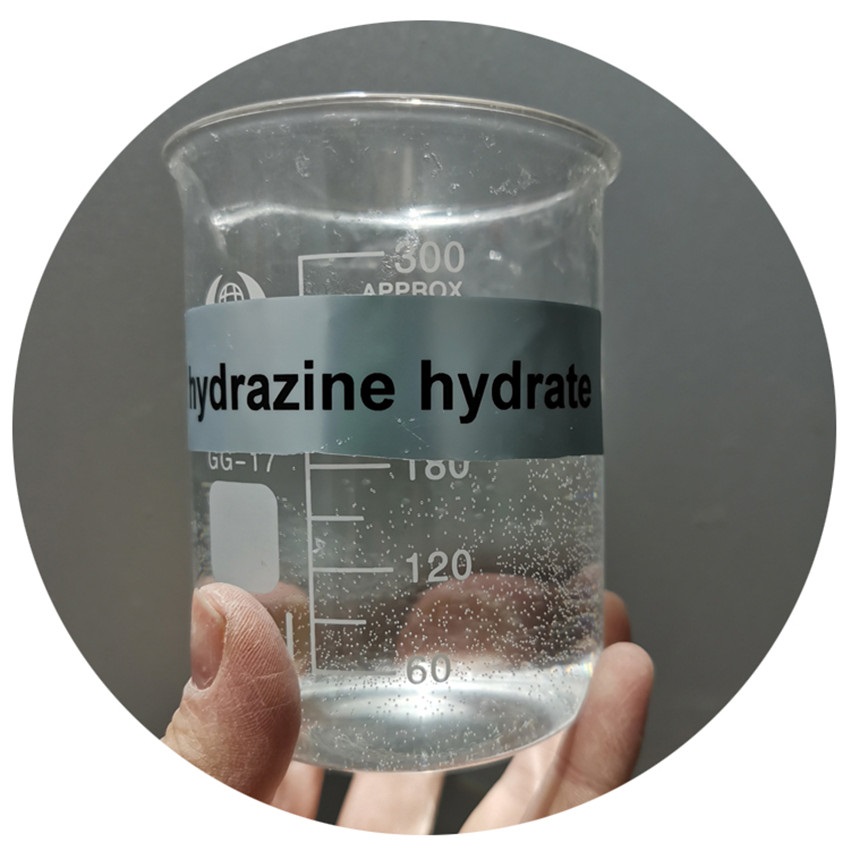
| Appearance | Clear, colorless liquid |
| Odor | Mild, ammonia-like characteristic odor |
CHEMICAL STRUCTURE
Hydrazine Hydrate Structure:
        H
         \
    H — N — N — H   ·   H₂O
         /
        H
Structure Description:
-
Hydrated form of hydrazine (N₂H₄).
-
One water molecule associated with each hydrazine molecule.
-
Strong reducing agent.
-
Colorless, hygroscopic liquid.
-
Miscible with water and alcohol.
SECTION 1: CHEMICAL IDENTITY AND DESCRIPTION
| Parameter | Information |
|---|---|
| Product Name | Hydrazine Hydrate |
| Chemical Name | Hydrazine Monohydrate |
| Synonyms (Turkish) | Hidrazin Hidrat, Hidrazin Monohidrat, Hidrazinyum Hidroksit, Hidrazin Hidroksit |
| Synonyms (English) | Hydrazine Hydrate, Hydrazine Monohydrate, Hydrazinium Hydroxide, Hydrazine Hydroxide, Diamine Hydrate |
| CAS Number | 10217-52-4 / 7803-57-8 |
| EC Number | 206-114-9 |
| Molecular Formula | N₂H₄·H₂O (H₆N₂O) |
| Molecular Weight | 50.06 g/mol |
| Chemical Class | Hydrazine derivative; Strong reducing agent; Organic intermediate |
| Source | Synthetic (Ketazine process; Hydrogen peroxide process) |
| Physical State (20°C) | Liquid |
| Odor | Mild, ammonia-like characteristic odor |
| Color | Clear, colorless |
| Taste | Not applicable (do not taste) |
SECTION 2: PHYSICAL AND CHEMICAL PROPERTIES
| Property | Value | Test Method / Note |
|---|---|---|
| Appearance | Clear, colorless liquid | Visual |
| Odor | Mild, ammonia-like characteristic odor | Olfactometric |
| Molecular Weight | 50.06 g/mol | Calculated |
| Density (25°C) | ~1.03 g/cm³ (depends on concentration) | ASTM D4052 |
| Melting Point | -51.7°C to -57°C | DSC |
| Boiling Point | 117.2°C to 120-121°C (depends on concentration) | – |
| Flash Point | 96°C (closed cup) | – |
| Vapor Pressure (25°C) | ~5 mmHg | – |
| Vapor Density (Air=1) | >1 (heavier than air) | – |
| Refractive Index (n20/D) | 1.428 – 1.431 | – |
| Solubility in Water | Miscible (in all proportions) | General Method |
| Solubility in Alcohol | Miscible | General Method |
| pH (1% Solution) | ~10.0 – 11.0 (alkaline) | pH Meter |
| Stability | Stable under normal conditions; Hygroscopic | – |
| Reducing Properties | Strong reducing agent | – |
| Hygroscopicity | High (absorbs moisture from air) | – |
| Hydrazine Content | 40 – 55% (most common) / 60 – 85% | Titrimetric |
| Heavy Metals (as Pb) | ≤ 10 ppm | AAS / ICP |
| Iron (Fe) | ≤ 5 ppm | AAS / ICP |
| Chloride (Cl) | ≤ 0.001% | Titrimetric |
| Residue on Evaporation | ≤ 0.005% | Gravimetric |
| Assay (Hydrazine Hydrate) | ≥ 98.0% (on anhydrous basis) | Titrimetric |
SECTION 3: HYDRAZINE HYDRATE vs OTHER REDUCING AGENTS
| Property | Hydrazine Hydrate N₂H₄·H₂O | Sodium Borohydride NaBH₄ | Sodium Sulfite Na₂SO₃ | DEHA C₄H₁₁NO₂ |
|---|---|---|---|---|
| CAS Number | 10217-52-4 | 16940-66-2 | 7757-83-7 | 3710-84-7 |
| Type | Hydrazine derivative | Metal hydride | Sulfite | Organic amine |
| Reducing Strength | Very strong | Strong | Mild | Mild |
| Oxygen Scavenging | Excellent | Excellent | Good | Good |
| Carcinogenicity | Yes (carcinogenic) | No | No | No |
| Handling | Complex (toxic, flammable) | Complex (water-reactive) | Simple | Simple |
| Cost | Moderate | High | Low | Moderate |
| Main Application | Oxygen scavenger, chemical synthesis | Organic synthesis | Water treatment | Water treatment |
SECTION 4: MECHANISM OF ACTION
| Property | Description |
|---|---|
| Oxygen Scavenging (Corrosion Inhibition) | Reacts with dissolved oxygen in boiler water: N₂H₄ + O₂ → N₂ + 2H₂O; Eliminates oxygen from water; Prevents oxygen-induced corrosion (pitting); Forms protective magnetite layer (Fe₃O₄) on metal surfaces. |
| Reducing Agent | Powerful reducing agent; Donates electrons to other species; Reduces metal ions to elemental metals (Ag, Hg, etc.); Reduces organic compounds in synthesis reactions. |
| Chemical Intermediate | Key intermediate for synthesis of: Blowing agents (azodicarbonamide - ADC); Pharmaceuticals (API synthesis); Agrochemicals (herbicides, fungicides); Polymers and plastic additives. |
| Hydrazine Derivatives | Reacts with acids to form hydrazinium salts (N₂H₅⁺); Reacts with carbonyls to form hydrazones; Forms hydrazides and other derivatives. |
| Decomposition | Decomposes to ammonia, nitrogen, and hydrogen gas; Catalyzed by metals and metal oxides; Exothermic decomposition. |
SECTION 5: PRODUCTION PROCESS
Industrial Production Methods:
Method 1: Ketazine Process (Improved)
Process Flow:
Ammonia + Methyl Ethyl Ketone (MEK) + Oxidizing Agent (Sodium Hypochlorite / Hydrogen Peroxide) → Ketazine → Phase Separation → Hydrolysis → Hydrazine Hydrate + MEK (recovered)
Description: Ammonia is reacted with methyl ethyl ketone (MEK) and an oxidizing agent (sodium hypochlorite or hydrogen peroxide) to form a ketazine intermediate. The ketazine phase is separated and then hydrolyzed to produce hydrazine hydrate. The MEK is recovered and recycled. Modern processes use solid acetamide/ammonium acetate activators with catalyst-free hydrolysis for improved energy efficiency.
Method 2: Hydrogen Peroxide (PCUK) Process
Reaction Medium: Methyl Ethyl Ketone (MEK) serves as reaction medium.
Catalyst: Rare earth elements, silica gel, and phosphate compounds are used as catalysts to improve yield.
Process: Methyl ethyl ketazine (water-insoluble) is synthesized. The intermediate is separated and hydrolyzed to hydrazine hydrate. This method has advantages of no chlorinated by-products and lower energy consumption.
SECTION 6: FUNCTIONAL PROPERTIES
| Property | Description |
|---|---|
| Oxygen Scavenger | Removes dissolved oxygen from water systems; Prevents corrosion in boilers and heating systems; Forms protective magnetite layer; Inhibits pitting corrosion. |
| Reducing Agent | Powerful reducing agent for chemical syntheses; Reduces metal ions to metals; Reduces organic functional groups (carbonyls, nitro groups); Used in pharmaceutical and agrochemical synthesis. |
| Chemical Intermediate | Precursor for blowing agents (ADC); Pharmaceutical API synthesis; Agrochemical production; Polymer and plastic additives; Rocket fuel component. |
| Blowing Agent Production | Key raw material for azodicarbonamide (ADC); ADC is used to create cellular structure in plastics, rubber, and shoe soles. |
| pH Adjustment | Alkaline nature (pH ~10-11); Used for pH adjustment in some processes. |
SECTION 7: MAIN APPLICATION AREAS
| Industry / Application | Function | Typical Use |
|---|---|---|
| Water Treatment | Oxygen scavenger, corrosion inhibitor | Steam boiler systems; High-pressure heating systems; Removes dissolved oxygen; Prevents pitting corrosion; Forms protective magnetite layer. |
| Chemical Industry | Reducing agent, intermediate | Blowing agent production (azodicarbonamide - ADC); Polymer and plastic additives; Hydrazine derivatives synthesis; Organic synthesis. |
| Pharmaceutical Industry | API synthesis intermediate | Active pharmaceutical ingredient (API) synthesis; Anti-cancer drugs; Anti-tuberculosis drugs; Hydrazide derivatives. |
| Agrochemicals (Agriculture) | Pesticide intermediate | Herbicide production; Fungicide synthesis (triazole fungicides); Plant growth regulators; Crop protection chemicals. |
| Aerospace & Defense | Rocket fuel, propellant | Monopropellant (rocket fuel); High-energy fuel component; Spacecraft propulsion; Missile propulsion systems. |
| Polymer Industry | Blowing agent intermediate | Azodicarbonamide (ADC) production; Cellular plastics; Rubber foams; Sports shoe soles; Insulation materials. |
SECTION 8: SAMPLE FORMULATIONS
Oxygen Scavenger Solution (Boiler Water Treatment):
| Component | Amount |
|---|---|
| Hydrazine Hydrate (40-55%) | 10 – 20% |
| Deionized Water | To 100% |
| pH Adjuster (Ammonia) | As required |
Instructions: Dilute hydrazine hydrate with deionized water; Adjust pH to ~9.5-10.5; Inject into boiler feedwater system; Maintain residual hydrazine levels as recommended.
Blowing Agent Intermediate (Azodicarbonamide Production):
| Component | Amount |
|---|---|
| Hydrazine Hydrate | 1 mole |
| Urea (or other carbonyl compound) | 1 mole |
| Catalyst | As required |
| Solvent | As required |
Instructions: React hydrazine hydrate with urea or other suitable compound under controlled conditions; Purify and process to obtain azodicarbonamide.
SECTION 9: QUALITY SPECIFICATIONS
| Parameter | Technical Grade | High Purity Grade | Test Method |
|---|---|---|---|
| Appearance | Clear, colorless liquid | Clear, colorless liquid | Visual |
| Hydrazine Content | 40 – 55% (or 60-85%) | 40 – 55% | Titrimetric |
| Assay (Hydrazine Hydrate) | ≥ 98.0% | ≥ 99.0% | Titrimetric |
| pH (1:10 Dilution) | 10.0 – 11.0 | 10.0 – 11.0 | pH Meter |
| Density (25°C) | 1.03 – 1.06 g/cm³ | 1.03 – 1.06 g/cm³ | ASTM D4052 |
| Color (APHA) | ≤ 10 | ≤ 5 | Colorimetric |
| Residue on Evaporation | ≤ 0.005% | ≤ 0.002% | Gravimetric |
| Chloride (Cl) | ≤ 0.001% | ≤ 0.0005% | Titrimetric |
| Heavy Metals (as Pb) | ≤ 10 ppm | ≤ 5 ppm | AAS / ICP |
| Iron (Fe) | ≤ 5 ppm | ≤ 2 ppm | AAS / ICP |
| Sulfate (SO₄) | ≤ 0.001% | ≤ 0.0005% | Gravimetric |
SECTION 10: TOXICOLOGICAL PROFILE
| Parameter | Value |
|---|---|
| Acute Oral Toxicity (LD50, Rat) | ~ 60 – 100 mg/kg (highly toxic) |
| Acute Dermal Toxicity | Toxic; May be fatal through skin absorption |
| Skin Irritation | Corrosive; Causes severe burns (H314) |
| Eye Irritation | Severe; Causes serious eye damage (H318) |
| Inhalation Toxicity | Toxic (H331); May cause respiratory irritation and damage |
| Chronic Toxicity | Toxic to multiple organ systems |
| Carcinogenicity | Classified as carcinogenic (H350); May cause cancer |
| Mutagenicity | May cause genetic defects (H340) |
| Reproductive Toxicity | May damage fertility or unborn child (H360) |
| Allergenicity | May cause allergic skin reaction (H317) |
| Environmental Toxicity | Very toxic to aquatic life (H410); Long-lasting effects |
| Special Toxicity Note | Highly toxic and carcinogenic; Potential occupational carcinogen; Handle with extreme caution; Use strict engineering controls; Regular medical monitoring recommended for exposed workers. |
SECTION 11: GHS CLASSIFICATION AND LABELING
GHS Classification (in accordance with CLP and UN GHS):
| Hazard Class | Category | H-Statement |
|---|---|---|
| Acute Toxicity (Oral) | Category 3 | H301 |
| Acute Toxicity (Dermal) | Category 3 | H311 |
| Acute Toxicity (Inhalation) | Category 3 | H331 |
| Skin Corrosion/Irritation | Category 1B | H314 |
| Serious Eye Damage | Category 1 | H318 |
| Skin Sensitization | Category 1 | H317 |
| Carcinogenicity | Category 1B | H350 |
| Mutagenicity | Category 2 | H341 |
| Reproductive Toxicity | Category 2 | H361 |
| Acute Aquatic Toxicity | Category 1 | H400 |
| Chronic Aquatic Toxicity | Category 1 | H410 |
| Flammable Liquids | Category 3 | H226 |
Signal Word: DANGER
Hazard Pictograms: GHS02 (Flame), GHS05 (Corrosive), GHS06 (Skull and Crossbones), GHS08 (Health Hazard), GHS09 (Environment)
Hazard Statements (H-Codes):
| Code | Statement |
|---|---|
| H226 | Flammable liquid and vapor |
| H301 | Toxic if swallowed |
| H311 | Toxic in contact with skin |
| H314 | Causes severe skin burns and eye damage |
| H317 | May cause an allergic skin reaction |
| H318 | Causes serious eye damage |
| H331 | Toxic if inhaled |
| H341 | Suspected of causing genetic defects |
| H350 | May cause cancer |
| H361 | Suspected of damaging fertility or the unborn child |
| H400 | Very toxic to aquatic life |
| H410 | Very toxic to aquatic life with long lasting effects |
NFPA 704 Hazard Classification:
| Health | Flammability | Reactivity | Special |
|---|---|---|---|
| 4 | 2 | 1 | - |
| (Severe health hazard - toxic/carcinogenic/corrosive) | (Moderate fire hazard) | (Mild reactivity) | (None) |
SECTION 12: PRECAUTIONARY STATEMENTS (P-CODES)
| Code | Statement |
|---|---|
| P201 | Obtain special instructions before use |
| P202 | Do not handle until all safety precautions have been read and understood |
| P210 | Keep away from heat/sparks/open flames/hot surfaces — No smoking |
| P233 | Keep container tightly closed |
| P260 | Do not breathe dust/fume/gas/mist/vapors/spray |
| P264 | Wash hands thoroughly after handling |
| P270 | Do not eat, drink, or smoke when using this product |
| P273 | Avoid release to the environment |
| P280 | Wear protective gloves/protective clothing/eye protection/face protection |
| P301+P310 | IF SWALLOWED: Immediately call a POISON CENTER/doctor |
| P303+P361+P353 | IF ON SKIN (or hair): Take off immediately all contaminated clothing. Rinse skin with water/shower |
| P304+P340 | IF INHALED: Remove person to fresh air and keep comfortable for breathing |
| P305+P351+P338 | IF IN EYES: Rinse cautiously with water for several minutes. Remove contact lenses if present and continue rinsing |
| P310 | Immediately call a POISON CENTER/doctor |
| P363 | Wash contaminated clothing before reuse |
| P403+P233 | Store in a well-ventilated place. Keep container tightly closed |
| P405 | Store locked up |
| P501 | Dispose of contents/container in accordance with local/regional/national/international regulations |
SECTION 13: FIRST AID MEASURES
| Exposure Route | Action to Take |
|---|---|
| Inhalation | Remove to fresh air immediately. If breathing is difficult, give oxygen. If respiratory irritation develops, seek immediate medical attention. |
| Skin Contact | IMMEDIATELY REMOVE CONTAMINATED CLOTHING. Rinse with plenty of water for at least 15 minutes. Get immediate medical attention. |
| Eye Contact | IMMEDIATELY rinse with plenty of water for at least 15 minutes. Keep eyelids open. Remove contact lenses if present. Get immediate medical attention. |
| Ingestion | DO NOT INDUCE VOMITING. Rinse mouth. Drink plenty of water (only if conscious). Get immediate medical attention. |
| Note | Hydrazine hydrate is highly toxic, corrosive, and carcinogenic; immediate medical attention is required for any significant exposure. |
SECTION 14: FIREFIGHTING MEASURES
| Parameter | Information |
|---|---|
| Fire Hazard | Flammable liquid. Vapors may form explosive mixtures with air. |
| Hazards Arising from Fire | Thermal decomposition produces toxic and corrosive fumes (nitrogen oxides, ammonia, hydrogen cyanide). |
| Suitable Extinguishing Media | Water spray, CO₂, dry chemical powder, foam (alcohol-resistant). |
| Unsuitable Extinguishing Media | Water jet (may spread burning liquid) |
| Special Protective Equipment | Self-contained breathing apparatus (SCBA), full protective clothing, firefighting goggles. |
| Special Precautions | Evacuate area; Prevent fire-fighting water from entering waterways; Cool fire-exposed containers with water spray; Stop leak if safe. |
SECTION 15: STORAGE AND SHELF LIFE
| Parameter | Information |
|---|---|
| Storage Conditions | Store in a cool, dry, well-ventilated area; PROTECT FROM LIGHT, HEAT, and MOISTURE; Keep away from direct sunlight and high temperatures. |
| Container Requirements | Tightly closed, inert containers (stainless steel, HDPE, PTFE-lined drums); Avoid contact with copper, brass, bronze, and other metals. |
| Materials to Protect From | Light, heat, moisture, oxidizing agents, acids, metals, combustible materials |
| Shelf Life | 12 – 24 months (under proper storage conditions). |
| Stability Note | Stable under recommended storage conditions; May decompose over time, especially if contaminated; Protect from air and moisture; Decomposition can be catalyzed by metals. |
| Special Storage Requirements | Requires strict security and access controls due to high toxicity and carcinogenicity; Store in a locked area; Use inert gas blanketing recommended; Regular inventory and inspection required; Secondary containment required. |
SECTION 16: PACKAGING OPTIONS
| Packaging Type | Quantity | Material |
|---|---|---|
| HDPE Drum | 25 kg, 50 kg, 100 kg, 200 kg | HDPE (chemical-resistant, sealed) |
| Steel Drum (lined) | 50 kg, 100 kg, 200 kg | Lined steel drum (stainless or PTFE-lined) |
| IBC Container | 500 L, 1000 L | HDPE or stainless steel IBC |
| Glass Bottle | 1 L, 5 L, 10 L | Amber glass bottle (light protection) |
SECTION 17: TRANSPORT INFORMATION
| Parameter | Information |
|---|---|
| UN Number | UN 2030 (Hydrazine Aqueous Solution) |
| Hazard Class | Class 6.1 - Toxic Substances / Class 8 - Corrosive / Class 3 - Flammable |
| Packing Group | I or II (depending on concentration) |
| ADR/RID | Class 6.1; UN 2030; Packing Group I/II |
| IMDG Code | Class 6.1; UN 2030; Marine pollutant: Yes |
| IATA (Air) | Class 6.1; UN 2030; Packing Group I/II |
| Transport Label | Toxic, Corrosive, Flammable, Environment |
| Marine Pollutant | Yes |
| Special Transport Requirements | Highly restricted; Requires specialized transport; Emergency response plan required; Driver must have hazardous materials endorsement; Segregation from acids, oxidizing agents, and combustibles. |
SECTION 18: REGULATORY STATUS
| Region / Authority | Status |
|---|---|
| European Union | REACH registered; Highly restricted substance; Listed on Authorisation List (Annex XIV); Subject to strict controls and authorisation for use. |
| USA (TSCA) | Listed (TSCA Inventory); Subject to strict controls. |
| USA (EPA) | Regulated under Toxic Substances Control Act; Significant New Use Rules (SNUR) apply. |
| USA (OSHA) | Highly hazardous chemical; PEL: 1 ppm (0.1 mg/m³) (TWA); STEL: None established; Regulated as carcinogen. |
| Turkey | Regulated as hazardous chemical; Subject to KKDIK regulation; Strict controls apply; Ministry of Environment and Ministry of Health controls; Highly restricted substance; Authorisation required for use. |
| IARC | Group 2A - Probably carcinogenic to humans |
| NTP | Listed - Reasonably anticipated to be a human carcinogen |
| ACGIH | A3 - Animal carcinogen |
| OSHA | Carcinogen listing |
| California (Prop 65) | Listed - Carcinogen |
SECTION 19: OTHER NAMES AND SYNONYMS
| Type | Name |
|---|---|
| Turkish Names | Hidrazin Hidrat, Hidrazin Monohidrat, Hidrazinyum Hidroksit, Hidrazin Hidroksit |
| English Names | Hydrazine Hydrate, Hydrazine Monohydrate, Hydrazinium Hydroxide, Hydrazine Hydroxide, Diamine Hydrate |
| CAS Number | 10217-52-4 / 7803-57-8 |
| EC Number | 206-114-9 |
| HS Code | 2825.10 |
SECTION 20: SUMMARY TABLE
| Parameter | Value |
|---|---|
| Product | Hydrazine Hydrate |
| CAS Number | 10217-52-4 / 7803-57-8 |
| Molecular Formula | N₂H₄·H₂O (H₆N₂O) |
| Molecular Weight | 50.06 g/mol |
| Appearance | Clear, colorless liquid |
| Density (25°C) | ~1.03 g/cm³ |
| Boiling Point | ~117-120°C |
| Flash Point | 96°C |
| Solubility | Miscible with water and alcohol |
| Primary Functions | Reducing agent, oxygen scavenger, chemical intermediate |
| Main Application Areas | Water treatment, chemical industry, pharmaceuticals, agrochemicals, aerospace, polymer industry |
| Shelf Life | 12 – 24 months |
| GHS Signal Word | DANGER |
| UN Number | 2030 |
| Hazard Class | 6.1 / 8 / 3 |
| Packing Group | I or II |
| Special Properties | Strong reducing agent; Corrosive; Toxic; Carcinogenic; Highly restricted; Flammable; Marine pollutant. |
SECTION 21: CRITICAL WARNINGS AND BEST PRACTICES
CRITICAL WARNINGS:
-
HIGHLY TOXIC (H301, H311, H331): Toxic if swallowed, in contact with skin, or inhaled. CAN BE FATAL.
-
CARCINOGENIC (H350): May cause cancer. IARC Group 2A; NTP listed.
-
CORROSIVE (H314, H318): Causes severe skin burns and eye damage.
-
FLAMMABLE LIQUID (H226): Flammable liquid and vapor.
-
TOXIC TO AQUATIC LIFE (H400, H410): Very toxic to aquatic life with long lasting effects.
-
MUTAGENIC/REPRODUCTIVE TOXICITY: Suspected of causing genetic defects and damaging fertility/unborn child.
-
REACTS WITH ACIDS: Forms hydrazinium salts; can be violent.
-
REACTS WITH OXIDIZING AGENTS: May cause fire or explosion.
-
SENSITIVE TO METALS: Decomposes in contact with copper, brass, bronze, and some other metals.
-
HIGHLY RESTRICTED SUBSTANCE: Subject to authorisation and strict controls in many countries.
BEST PRACTICE RECOMMENDATIONS:
-
Water Treatment (Oxygen Scavenger): Use as corrosion inhibitor in boiler systems; Dosage: Based on dissolved oxygen levels; Maintain residual hydrazine levels; Use with pH control; Monitor corrosion rates.
-
Chemical Industry: Use as reducing agent and intermediate; Handle with strict containment; Use closed systems; Avoid exposure to air; Use appropriate catalysts for reactions.
-
Pharmaceutical & Agrochemical: Use in API and pesticide synthesis; Strict quality control; High-purity grade required; Use for synthesis of hydrazide derivatives.
-
Handling: USE IN SPECIALIZED, WELL-VENTILATED FACILITIES WITH ENGINEERING CONTROLS. Use closed systems; Avoid dust/vapor formation; Use explosion-proof equipment; Grounding and bonding required; Avoid static discharge.
-
Personal Protective Equipment: MANDATORY: Full-face chemical-resistant respirator (or SCBA in high concentrations), chemical-resistant gloves (butyl, neoprene, Viton), chemical splash goggles, full face shield, chemical-resistant suit (Tyvek, PVC), chemical-resistant boots.
-
Hygiene: Wash hands thoroughly after handling; Do not eat, drink, or smoke while using; Remove contaminated clothing and wash before reuse; Use designated decontamination area; Shower after handling.
-
Storage: Store in tightly closed, inert containers; Store in cool, dry, well-ventilated area; Protect from light and heat; Keep away from oxidizing agents and acids; Store in locked area with restricted access; Secondary containment required; Regular inventory and inspection required; Shelf life: 12-24 months under proper conditions.
-
Spill Management: Evacuate area immediately; Wear full protective equipment; Eliminate ignition sources; Absorb with inert material (sand, vermiculite); Collect in suitable sealed container; Do not allow entry into drains or waterways; Report large spills to authorities; Neutralize with acid (carefully) if needed.
-
Disposal: Dispose of in accordance with local, regional, and national regulations; Hazardous waste (toxic, carcinogenic, corrosive, flammable); Use authorized disposal facilities; Incineration with energy recovery possible (with strict controls).
DETECTION METHODS:
| Method | Description | Advantages | Disadvantages |
|---|---|---|---|
| Titrimetric | Iodometric titration with potassium iodate | Simple, accurate, standard method | Requires careful technique |
| UV-Vis Spectrophotometry | Colorimetric determination with p-DMAB | Rapid, moderate cost | Requires calibration |
| GC | Gas chromatography | High sensitivity | Requires derivatization |
| HPLC | High-performance liquid chromatography | High sensitivity, specific | High cost, requires expertise |
| Electrochemical Sensors | Amperometric or potentiometric sensors | Rapid, continuous monitoring | Calibration required |
HYDRAZINE HYDRATE vs ALTERNATIVES COMPARISON:
| Product | Chemical Name / E Code | Application | Strength | Weakness | Status |
|---|---|---|---|---|---|
| Hydrazine Hydrate | N₂H₄·H₂O | Oxygen scavenger, synthesis | Strong reducing, effective | Toxic, carcinogenic, restricted | Highly regulated |
| Sodium Sulfite | Na₂SO₃ | Oxygen scavenger | Safe, cheap, easy to handle | Less effective, increases TDS | Widely used |
| DEHA | Diethylhydroxylamine | Oxygen scavenger | Safer, non-carcinogenic | Lower efficiency, higher cost | Widely used |
| Carbohydrazide | (NH₂NH)₂CO | Oxygen scavenger | Safer alternative, non-carcinogenic | Higher cost | Increasingly used |
| Sodium Borohydride | NaBH₄ | Reducing agent | Strong reducing | Water-reactive, high cost | Widely used |
| Sodium Dithionite | Na₂S₂O₄ | Reducing agent | Good reducing | Unstable, hazardous | Widely used |
LEGAL DISCLAIMER:
The information provided in this document is based on our current knowledge and experience and is presented in good faith. However, as all conditions of use are beyond our control, it does not constitute a binding specification or warranty. This Technical Data Sheet is for informational purposes only. Users are responsible for testing the suitability for their own applications and for complying with all local, regional, and national regulations. For complete safety, storage, use, handling, waste, and regulatory compliance information, please refer to the official Safety Data Sheet (SDS/MSDS) provided by the manufacturer/supplier. Hydrazine hydrate is a highly toxic, carcinogenic, corrosive, and flammable substance; strict safety, handling, and security protocols must be followed at all times. This substance is subject to authorisation and strict controls in many jurisdictions.