We unleash your business potential by maximize the business innovation.
Send EmailPotassium Dichromate, Potassium Bichromate, Red Potassium Chromate, 7778-50-9
POTASSIUM DICHROMATE (K₂Cr₂O₇)
Potassium Bichromate / Red Potassium Chromate
CAS Number: 7778-50-9
EC Number: 231-906-6
1. IDENTIFICATION
| Property | Information |
|---|---|
| Chemical Name | Potassium Dichromate |
| Synonyms | Potassium bichromate, Red potassium chromate, Dipotassium dichromate, Chromic acid dipotassium salt, Dichromic acid dipotassium salt |
| Chemical Formula | K₂Cr₂O₇ |
| Molecular Weight | 294.18 g/mol |
| CAS Number | 7778-50-9 |
| EC Number (EINECS) | 231-906-6 |
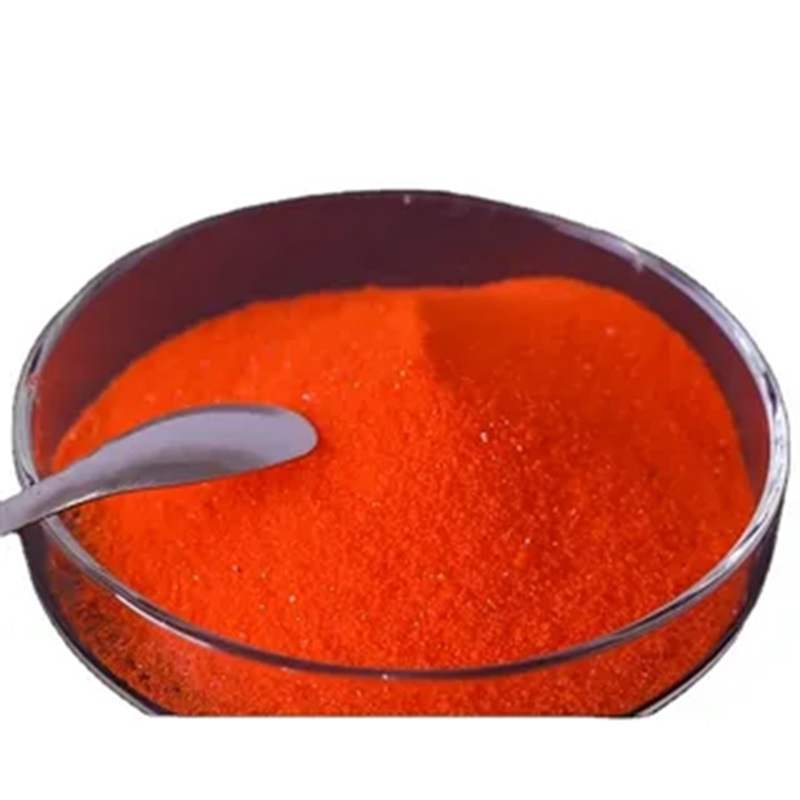
| Appearance | Orange-red to red crystalline solid |
| Odor | Odorless |
2. PHYSICAL PROPERTIES
| Property | Value |
|---|---|
| Physical State (20°C) | Solid (crystalline) |
| Appearance | Orange-red, shiny monoclinic or triclinic crystals |
| Odor | Odorless |
| Molecular Weight | 294.18 g/mol |
| Density (20°C) | 2.676 g/cm³ |
| Melting Point | 398 °C (748 °F) |
| Boiling Point | Decomposes above 500°C |
| Solubility in Water (20°C) | 125 g/L (12.5 g/100 mL) |
| Solubility in Cold Water (0°C) | 4.7 g/100 mL |
| Solubility in Hot Water (100°C) | 50.2 g/100 mL |
| Solubility in Ethanol | Insoluble |
| pH (0.1 M solution, 25°C) | 3.5 – 5.0 (acidic) |
| Specific Gravity | 2.676 |
| Vapor Pressure | Negligible |
| Hygroscopicity | Not hygroscopic (does not absorb moisture) |
Water Solubility at Different Temperatures:
| Temperature (°C) | Solubility (g/100 mL) |
|---|---|
| 0 | 4.7 |
| 10 | 7.0 |
| 20 | 12.3 |
| 30 | 18.1 |
| 40 | 26.3 |
| 60 | 45.6 |
| 80 | 73.0 |
| 100 | 50.2 (decomposes) |
3. CHEMICAL PROPERTIES
| Property | Information |
|---|---|
| Chemical Formula | K₂Cr₂O₇ |
| Molecular Weight | 294.18 g/mol |
| Chromium (Cr) Content | ~35.4% (as Cr(VI)) |
| Potassium (K) Content | ~26.6% |
| Oxygen (O) Content | ~38.0% |
| Oxidation State | Cr(VI) (hexavalent chromium) – highly toxic and carcinogenic |
| pH (0.1 M solution) | 3.5 – 5.0 (acidic) |
| Stability | Stable under normal conditions |
| Oxidizing Properties | Very strong oxidizer |
| Reaction with Reductants | Violent reactions, may cause fire or explosion |
| Reaction with Combustibles | Forms explosive mixtures |
| Incompatible Materials | Organic materials, reducing agents, combustible materials, sulfur, phosphorus, powdered metals, acids |
Equilibrium in Solution (Dichromate – Chromate):
Cr₂O₇²⁻ (orange) + H₂O ⇌ 2 CrO₄²⁻ (yellow) + 2 H⁺
-
Acidic solution: Cr₂O₇²⁻ (orange, dichromate dominant)
-
Alkaline solution: CrO₄²⁻ (yellow, chromate dominant)
Reaction with Reducing Agents (Redox Titration):
Cr₂O₇²⁻ + 14 H⁺ + 6 e⁻ → 2 Cr³⁺ + 7 H₂O
Thermal Decomposition (Above 500°C):
2 K₂Cr₂O₇ + Heat → 2 K₂CrO₄ + Cr₂O₃ + 3/2 O₂↑
4. TYPES & GRADES
| Grade | Purity | Form | Applications |
|---|---|---|---|
| Technical Grade | ≥ 99.0% | Crystalline | Industrial applications (pigments, tanning) |
| Reagent Grade | ≥ 99.5% | Crystalline | Laboratory, analytical chemistry |
| Analytical Grade (AR) | ≥ 99.8% | Crystalline | Primary standard for redox titrations |
| High Purity Grade | ≥ 99.9% | Crystalline | Specialty applications, research |
5. PRODUCTION PROCESS
| Stage | Description |
|---|---|
| 1. Raw Material | Sodium dichromate (Na₂Cr₂O₇) and potassium chloride (KCl) |
| 2. Double Decomposition | Na₂Cr₂O₇ + 2 KCl → K₂Cr₂O₇ + 2 NaCl |
| 3. Heating | Reaction mixture is heated to 105-110°C |
| 4. Concentration | Solution is concentrated (37-38°Bé) |
| 5. pH Adjustment | pH adjusted to 5-6 with sodium hydroxide (NaOH) |
| 6. Filtration | Impurities are removed by flocculation (aluminum sulfate) |
| 7. Crystallization | Potassium dichromate crystallizes on cooling |
| 8. Centrifugation | Crystals are separated |
| 9. Washing & Drying | Crystals are washed and dried |
| 10. Packaging | Product is packaged |
Reaction Equation:
Na₂Cr₂O₇ + 2 KCl → K₂Cr₂O₇ + 2 NaCl
6. APPLICATIONS
6.1. Analytical Chemistry (Primary Use – Redox Titrations)
| Application | Function |
|---|---|
| Primary Standard | Used as a primary standard for redox titrations (does not absorb moisture) |
| Iron Determination | Quantitative determination of ferrous iron (Fe²⁺) |
| Chlorine Determination | Trace analysis of chlorine |
| Sodium Thiosulfate Standardization | Calibration of Na₂S₂O₃ standard solutions |
| Oxidizing Agent | General oxidizing agent in analytical chemistry |
6.2. Chromium Compound Production
| Application | Function |
|---|---|
| Chromium Alum Production | KCr(SO₄)₂·12H₂O – used in tanning and photography |
| Chromium Oxide Green (Cr₂O₃) | Pigment for ceramics, glass, paints |
| Potassium Chromate (K₂CrO₄) | Via neutralization |
| Copper Chromite | Catalyst for hydrogenation reactions |
6.3. Pigments & Dyes
| Application | Function |
|---|---|
| Chrome Yellow | PbCrO₄ – yellow pigment for paints, plastics, inks |
| Chrome Orange | Orange pigment |
| Chrome Green | Mixed pigment |
| Textile Dyeing | Mordant for fabric dyes |
6.4. Leather Tanning
| Application | Function |
|---|---|
| Chrome Tanning | Converted to basic chromium sulfate for leather tanning |
| Hide Processing | Provides softness and durability to leather |
6.5. Glass & Ceramics Industry
| Application | Function |
|---|---|
| Glass Coloring | Green colorant for glass (with other components) |
| Ceramic Glazes | Green pigment for ceramic glazes and enamels |
| Enamel Production | Colorant for enamel powders (mixed with quartz sand) |
6.6. Electroplating & Metal Finishing
| Application | Function |
|---|---|
| Chromium Plating | Used in chromium electroplating baths (with CrO₃) |
| Metal Passivation | Forms protective oxide layer on metals |
| Anodizing | Sealing of anodized aluminum surfaces |
6.7. Match Manufacturing
| Application | Function |
|---|---|
| Match Head Composition | Oxidizing agent in match heads |
| Moisture Control | Provides oxidation and moisture control |
6.8. Wood Preservation
| Application | Function |
|---|---|
| Wood Treatment | Protects against decay, fungal growth, and insect damage |
| CCA Alternative | Component in some wood preservative formulations |
6.9. Laboratory Cleaning (Chromic Acid Wash)
| Application | Function |
|---|---|
| Chromic Acid Cleaning Solution | K₂Cr₂O₇ + concentrated H₂SO₄ – removes organic residues |
| Glassware Decontamination | Oxidizes organic contaminants |
Note: Due to toxicity and environmental concerns, use of chromic acid wash is being phased out.
6.10. Other Applications
| Application | Function |
|---|---|
| Pyrotechnics | Oxidizing agent in fireworks |
| Photography | Component in photographic processes |
| Printing Inks | Component in some ink formulations |
| Pharmaceuticals | Raw material for certain drugs |
| Explosives | Oxidizing agent |
| Perfume Manufacturing | Oxidizing agent in synthetic fragrance preparation |
| Welding Electrodes | Component in welding electrode coatings |
7. CHROMIC ACID WASH (CLEANING SOLUTION)
| Parameter | Information |
|---|---|
| Composition | Saturated K₂Cr₂O₇ solution + concentrated H₂SO₄ |
| Appearance | Dark red solution (turns green when spent) |
| Function | Oxidizes organic residues – leaves glassware clean |
| Safety | Extremely corrosive, toxic, carcinogenic |
| Alternatives | Detergents, NOCHROMIX, alkaline cleaners |
8. QUALITY SPECIFICATIONS (REAGENT GRADE)
| Parameter | Specification |
|---|---|
| Purity (K₂Cr₂O₇) | ≥ 99.5% (AR grade: ≥ 99.8%) |
| Cr(VI) Content | ~35.4% |
| Chlorides (Cl) | ≤ 0.001% |
| Sulfates (SO₄) | ≤ 0.01% |
| Iron (Fe) | ≤ 0.002% |
| Lead (Pb) | ≤ 0.001% |
| Water Insolubles | ≤ 0.005% |
| Loss on Drying | ≤ 0.05% |
9. STORAGE & HANDLING
| Parameter | Information |
|---|---|
| Storage Conditions | Cool, dry, well-ventilated area |
| Container Requirements | Tightly closed, corrosion-resistant containers (HDPE, glass, stainless steel) |
| Protect From | Organic materials, reducing agents, combustible materials, moisture |
| Shelf Life | 24-36 months (when stored properly in unopened packaging) |
| Hygroscopicity | Not hygroscopic (does not absorb moisture) |
| Incompatible Materials | Organic materials, reducing agents, combustible materials, sulfur, phosphorus, powdered metals, strong acids |
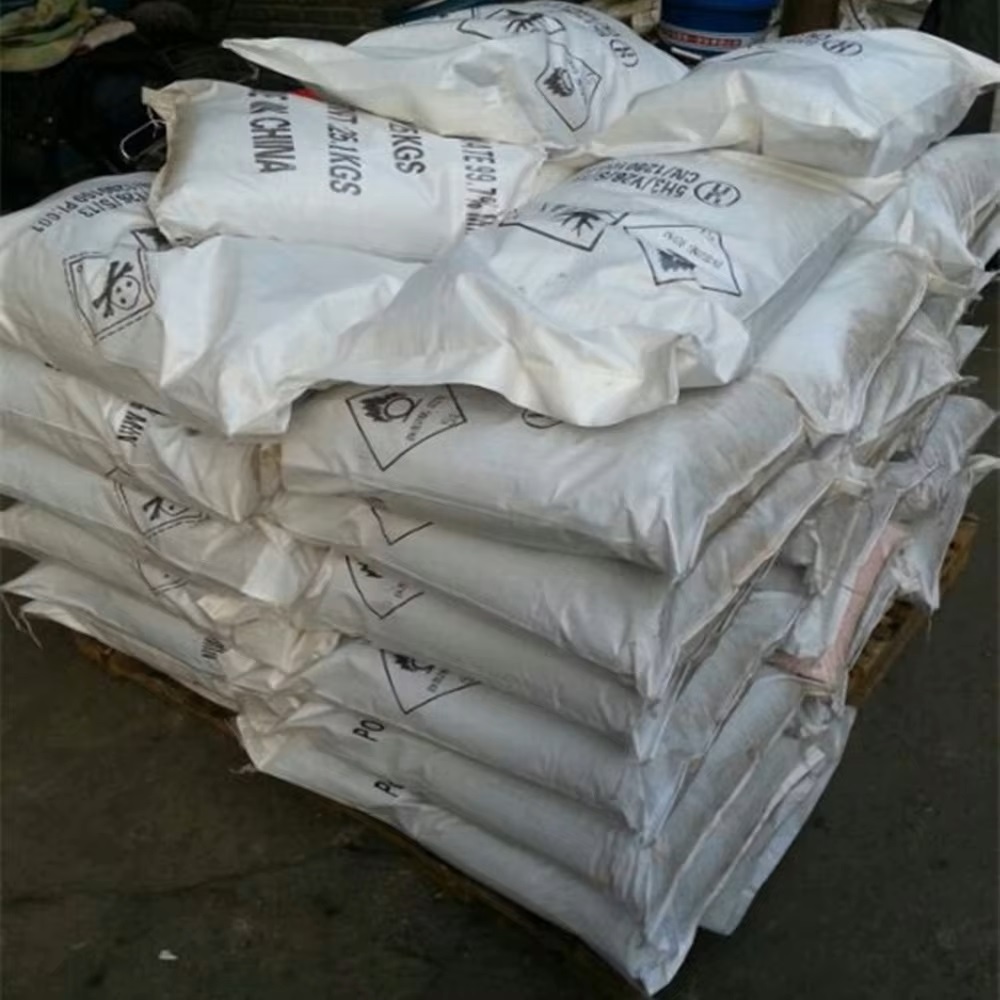
| Packaging Options | 25 kg drums (HDPE), 50 kg drums, 500 kg/1000 kg FIBC (big bags) |
10. SAFETY & HEALTH INFORMATION (GHS CLASSIFICATION)
| Hazard Class | Category |
|---|---|
| Oxidizing Solids | Category 2 (H272) |
| Acute Toxicity (Oral) | Category 3 (H301) |
| Acute Toxicity (Inhalation) | Category 2 (H330) |
| Acute Toxicity (Dermal) | Category 3 (H311) |
| Skin Corrosion/Irritation | Category 1B (H314) |
| Serious Eye Damage | Category 1 (H318) |
| Respiratory Sensitization | Category 1 (H334) |
| Skin Sensitization | Category 1 (H317) |
| Germ Cell Mutagenicity | Category 1B (H340) |
| Carcinogenicity | Category 1A (H350) |
| Reproductive Toxicity | Category 1B (H360FD) |
| Specific Target Organ Toxicity (Repeated exposure) | Category 1 (H372) |
| Acute Aquatic Toxicity | Category 1 (H400) |
| Chronic Aquatic Toxicity | Category 1 (H410) |
11. HAZARD STATEMENTS (H-CODES)
| Code | Statement |
|---|---|
| H272 | May intensify fire; oxidizer |
| H301 | Toxic if swallowed |
| H311 | Toxic in contact with skin |
| H314 | Causes severe skin burns and eye damage |
| H317 | May cause an allergic skin reaction |
| H318 | Causes serious eye damage |
| H330 | Fatal if inhaled |
| H334 | May cause allergy or asthma symptoms if inhaled |
| H340 | May cause genetic defects |
| H350 | May cause cancer |
| H360FD | May damage fertility. May damage the unborn child. |
| H372 | Causes damage to organs through prolonged or repeated exposure |
| H400 | Very toxic to aquatic life |
| H410 | Very toxic to aquatic life with long-lasting effects |
12. PRECAUTIONARY STATEMENTS (P-CODES)
| Code | Statement |
|---|---|
| P201 | Obtain special instructions before use |
| P202 | Do not handle until all safety precautions have been read and understood |
| P210 | Keep away from heat, sparks, open flames |
| P220 | Keep away from combustible materials |
| P260 | Do not breathe dust |
| P280 | Wear protective gloves, protective clothing, eye protection, face protection |
| P301+P310 | IF SWALLOWED: Immediately call a POISON CENTER |
| P302+P352 | IF ON SKIN: Wash with plenty of water |
| P304+P340 | IF INHALED: Remove person to fresh air |
| P305+P351+P338 | IF IN EYES: Rinse cautiously with water for several minutes |
| P308+P313 | IF exposed or concerned: Get medical advice |
| P501 | Dispose of contents/container in accordance with local regulations |
13. TOXICOLOGICAL INFORMATION
| Parameter | Value |
|---|---|
| Oral LD50 (rabbit) | 90.5 mg/kg (highly toxic) |
| Dermal LD50 (rat) | 1,170 mg/kg |
| Oral LD50 (mouse) | 190 mg/kg |
| Inhalation | Very toxic – may be fatal |
| Carcinogenicity | IARC Group 1 (Carcinogenic to humans) |
| Mutagenicity | Positive – causes genetic mutations |
| Reproductive Toxicity | May damage fertility and the unborn child |
| Target Organs | Respiratory system, skin, eyes, kidneys, liver |
| Chronic Effects | Lung cancer, nasal septum perforation, dermatitis, kidney damage |
Health Effects:
-
Acute (Ingestion): Nausea, vomiting, diarrhea, abdominal pain, gastrointestinal bleeding, acute renal failure
-
Acute (Inhalation): Respiratory tract irritation, coughing, wheezing, pulmonary edema, asthma
-
Acute (Skin Contact): Severe burns, dermatitis, sensitization (chrome ulcers)
-
Acute (Eye Contact): Severe burns, potential blindness
-
Chronic: Lung cancer, nasal ulcers and perforation, chronic dermatitis, liver and kidney damage
14. FIRST AID MEASURES
| Exposure Route | Action |
|---|---|
| Inhalation | Remove to fresh air. Administer oxygen if breathing difficulty. Seek immediate medical attention. |
| Skin Contact | Remove contaminated clothing. Wash with plenty of water for at least 15 minutes. Seek medical attention. |
| Eye Contact | Rinse immediately with plenty of water for at least 15 minutes. Seek immediate medical attention. |
| Ingestion | Do NOT induce vomiting. Rinse mouth. Drink water. Seek immediate medical attention. |
15. FIRE FIGHTING MEASURES
| Parameter | Information |
|---|---|
| Fire Hazard | Oxidizer – may cause fire or explosion when in contact with combustible materials |
| Extinguishing Media | Water spray (large quantities), dry sand, CO₂ (for small fires) |
| Special Hazards | Decomposes when heated, releasing toxic chromium fumes and oxygen |
| Protective Equipment | Self-contained breathing apparatus (SCBA), full protective clothing |
16. ENVIRONMENTAL INFORMATION
| Parameter | Information |
|---|---|
| Aquatic Toxicity | Very toxic to aquatic life with long-lasting effects (H410) |
| Persistence | Persistent in environment (Cr(VI) does not degrade) |
| Bioaccumulation | Moderate potential |
| Mobility in Soil | High (soluble in water) |
| Waste Disposal | Dispose as hazardous waste according to local regulations. Do not discharge into natural water bodies. |
17. TRANSPORT INFORMATION
| Parameter | Information |
|---|---|
| UN Number | 3086 (Toxic solid, oxidizing, n.o.s.) |
| Hazard Class | 5.1 (Oxidizing substance) |
| Subsidiary Hazard | 6.1 (Toxic substance) |
| Packing Group | II |
| Proper Shipping Name | TOXIC SOLID, OXIDIZING, N.O.S. (Potassium dichromate) |
| Marine Pollutant | Yes |
| ADR/RID Label | 5.1 + 6.1 |
| EMS | F-A, S-Q |
18. REGULATORY INFORMATION
| Region | Status |
|---|---|
| EU | REACH registered; restricted under Annex XVII (SVHC – Substance of Very High Concern) |
| Turkey (KKDIK) | Mandatory compliance; requires registration |
| USA (TSCA) | Listed; subject to reporting |
| Canada (DSL) | Listed |
| Australia (AICS) | Listed |
| Japan (ENCS) | Listed |
| Korea (KECL) | Listed |
| China (IECSC) | Listed |
| RoHS | Restricted in electrical and electronic equipment |
Occupational Exposure Limits:
-
ACGIH TWA: 0.0002 mg/m³ (0.2 µg/m³) as Cr(VI)
-
ACGIH STEL: 0.0005 mg/m³ (0.5 µg/m³) as Cr(VI)
-
OSHA Ceiling: 0.1 mg/m³
-
NIOSH TWA: 0.0002 mg/m³ (0.2 µg/m³)
19. SYNONYMS & OTHER NAMES
| Turkish Name | English Name |
|---|---|
| Potasyum Dikromat | Potassium Dichromate |
| Potasyum Bikromat | Potassium Bichromate |
| Kırmızı Potasyum Kromat | Red Potassium Chromate |
| Kromik Asit Dipotasyum Tuzu | Chromic Acid Dipotassium Salt |
| Dikromik Asit Dipotasyum Tuzu | Dichromic Acid Dipotassium Salt |
Database Identifiers:
-
CAS: 7778-50-9
-
EC: 231-906-6
-
MDL: MFCD00011367
-
PubChem CID: 24502
-
RTECS: HX7680000
-
UN: 3086
-
HS Code: 28415000
20. SUMMARY & IMPORTANT NOTES
SUMMARY:
Potassium Dichromate (K₂Cr₂O₇, CAS 7778-50-9) is an orange-red, crystalline, highly toxic, and strong oxidizing agent containing hexavalent chromium (Cr(VI)). It is classified as an IARC Group 1 carcinogen and is extremely hazardous to human health and the environment.
Key Features:
| Feature | Value |
|---|---|
| Appearance | Orange-red crystalline solid |
| Molecular Weight | 294.18 g/mol |
| Density | 2.676 g/cm³ |
| Melting Point | 398°C |
| Water Solubility (20°C) | 125 g/L (12.5 g/100 mL) |
| Oxidizing Class | Strong oxidizer (UN 3086, Class 5.1 + 6.1) |
Main Application Areas:
| Sector | Applications |
|---|---|
| Analytical Chemistry | Primary standard for redox titrations, iron determination |
| Pigments | Chrome yellow, chrome orange, chrome green |
| Leather Tanning | Chrome tanning (via basic chromium sulfate) |
| Glass & Ceramics | Green colorant for glass and glazes |
| Electroplating | Chromium plating, metal passivation |
| Laboratory | Chromic acid cleaning solution |
| Match Manufacturing | Oxidizing agent in match heads |
| Wood Preservation | Fungicide, insecticide |
Key Safety Points:
-
CARCINOGEN (Category 1A) – May cause cancer (lung cancer)
-
MUTAGEN – May cause genetic defects
-
REPRODUCTIVE TOXIN – May damage fertility and the unborn child
-
TOXIC – Fatal if swallowed, inhaled, or in contact with skin
-
CORROSIVE – Causes severe skin burns and eye damage
-
ENVIRONMENTAL HAZARD – Very toxic to aquatic life
-
STRONG OXIDIZER – Keep away from combustible materials
-
HANDLE WITH EXTREME CAUTION – Use full PPE, adequate ventilation
IMPORTANT NOTES:
-
Hexavalent Chromium (Cr(VI)) Hazard: Potassium dichromate contains hexavalent chromium, classified as IARC Group 1 carcinogen (carcinogenic to humans). Associated with lung cancer, nasal septum perforation, and skin ulcers.
-
Primary Standard in Analytical Chemistry: Unlike sodium dichromate, potassium dichromate is not hygroscopic, making it an excellent primary standard for redox titrations (e.g., iron determination).
-
Chromic Acid Wash: The traditional laboratory cleaning solution (saturated K₂Cr₂O₇ + concentrated H₂SO₄) is extremely corrosive, toxic, and carcinogenic. Alternative cleaning solutions (detergents, NOCHROMIX) are recommended.
-
pH-Dependent Color Change: In solution, dichromate (Cr₂O₇²⁻) is orange, and chromate (CrO₄²⁻) is yellow. The equilibrium is pH-dependent – acidic conditions favor dichromate (orange), alkaline conditions favor chromate (yellow).
-
Strong Oxidizer: Potassium dichromate is a strong oxidizer. Keep away from organic materials, reducing agents, and combustible materials – may cause fire or explosion.
-
Regulatory Restrictions: Potassium dichromate is restricted under REACH (EU), RoHS, and many national regulations. It is listed as a Substance of Very High Concern (SVHC).
-
Alternatives: In many applications, alternatives are being developed:
-
Analytical chemistry: Ceric sulfate, iodate methods
-
Corrosion inhibition: Molybdate-based inhibitors
-
Wood preservation: Copper-based preservatives
-
-
Leather Tanning: In the leather industry, potassium dichromate is not used directly. It is first reduced to basic chromium sulfate (Cr(III)), which is used for chrome tanning. Cr(III) is significantly less toxic than Cr(VI).
-
Personal Protective Equipment: When handling potassium dichromate, always use:
-
Nitrile or neoprene gloves (not latex)
-
Chemical safety goggles + face shield
-
Full protective clothing
-
Respiratory protection (N100 or P100 respirator)
-
-
Medical Surveillance: Workers handling chromium(VI) compounds should undergo regular medical surveillance, including lung function tests, skin examinations, and nasal septum inspections.
Important Disclaimer: This Technical Data Sheet (TDS) is for informational purposes only. For complete safety, handling, storage, and regulatory compliance information, always refer to the official Safety Data Sheet (SDS) provided by the manufacturer/supplier. Potassium dichromate is an extremely hazardous substance. Extreme caution must be exercised during handling, storage, and disposal.