We unleash your business potential by maximize the business innovation.
Send EmailSodium Hydrogen Fluoride, Sodium Bifluoride, Sodium Difluoride, Sodium Acid Fluoride, Natrium Hydrogen Fluoride, Sodium Hydrogen Difluoride, 1333-83-1, 51273-71-3
SODIUM HYDROGEN FLUORIDE (SODIUM BIFLUORIDE)
PRODUCT IDENTIFIER INFORMATION
| Parameter | Information |
|---|---|
| Product Name | Sodium Hydrogen Fluoride |
| Chemical Name (IUPAC) | Sodium Hydrogen Difluoride |
| CAS Number | 1333-83-1; 51273-71-3 |
| EC Number (EINECS) | 215-608-3 |
| Molecular Formula | NaHF₂ (also written as F₂HNa) |
| Molecular Weight | 61.99 g/mol |
CHEMICAL STRUCTURE
    Na⁺  [F-H-F]⁻

    Sodium Hydrogen Fluoride (NaHF₂)
    Ionic Structure with Bifluoride Ion [F-H-F]⁻
Sodium Hydrogen Fluoride Molecular Structure
Molecular Formula: NaHF₂
SMILES: [F-].[F-].[Na+].[H+]
InChI: 1S/FH.Na/h1H;/q;+1
Crystal System: Tetragonal
SECTION 1: CHEMICAL IDENTITY AND DESCRIPTION
| Parameter | Information |
|---|---|
| Product Name | Sodium Hydrogen Fluoride |
| Chemical Name (IUPAC) | Sodium Hydrogen Difluoride |
| Synonyms (English) | Sodium Hydrogen Fluoride, Sodium Bifluoride, Sodium Difluoride, Sodium Acid Fluoride, Natrium Hydrogen Fluoride, Sodium Hydrogen Difluoride, Sodium Bifluoride Technical, Sodium Bifluoride Solid, Sodium Bifluoride Solution |
| CAS Number | 1333-83-1; 51273-71-3 |
| EC Number (EINECS) | 215-608-3 |
| Molecular Formula | NaHF₂ (F₂HNa) |
| Molecular Weight | 61.99 g/mol |
| Chemical Class | Inorganic compound; acid fluoride salt; bifluoride salt |
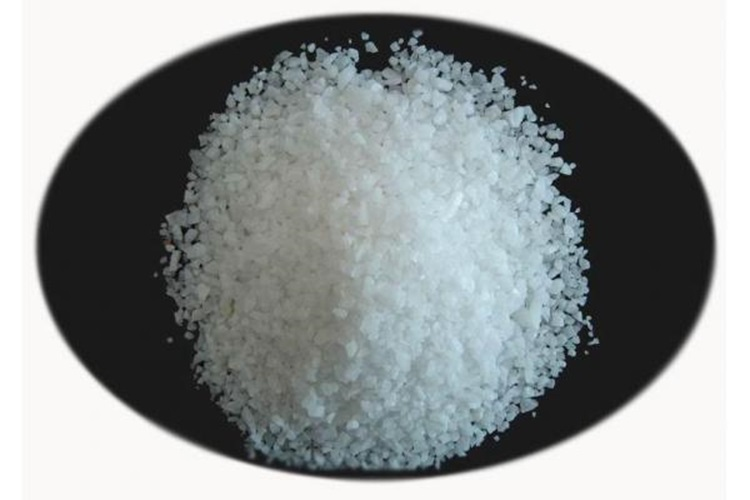
| Physical State (20°C) | Colorless or white sand-like crystalline powder |
| Odor | Strong acidic odor |
| Taste | Strong sour taste |
| Appearance | White crystals, granules, pellets or powder |
SECTION 2: PHYSICAL AND CHEMICAL PROPERTIES
| Property | Value | Test Method / Note |
|---|---|---|
| Appearance | Colorless or white sand-like crystalline powder, granules or pellets | Visual |
| Odor | Strong acidic odor | Olfactometric |
| Taste | Strong sour taste | - |
| Molecular Weight | 61.99 g/mol | Calculated |
| Density | 2.08 g/cm³ | ASTM D4052 |
| Melting Point | > 68 °C (decomposes) | DSC |
| Boiling Point | 270 °C (at 101,325 Pa) | - |
| Decomposition Temperature | ~160 °C (decomposes to NaF and HF) | - |
| Vapor Pressure | 0.01 Pa at 20°C | - |
| Solubility in Water (20°C) | 3.7 g/100 g solution | General Method |
| Solubility in Water (80°C) | 16.4 g/100 g solution | General Method |
| Solubility in Alcohol | Insoluble | General Method |
| pH (Aqueous Solution) | Acidic | pH Meter |
| Hygroscopicity | Hygroscopic; absorbs moisture from air; releases hydrogen fluoride | - |
| Corrosivity | Corrodes glass | - |
| Stability | Decomposes upon heating; releases HF gas in moist air; reacts with acids | - |
| LogP | 1.26 at 20°C | - |
SECTION 3: CHEMICAL PROPERTIES AND REACTIVITY
| Parameter | Information |
|---|---|
| Chemical Character | Acidic fluoride salt; contains bifluoride ion [F-H-F]⁻; strongly acidic in aqueous solution |
| Stability | Stable under normal conditions; decomposes at high temperatures; hygroscopic |
| Reactivity | Decomposes upon heating to sodium fluoride and hydrogen fluoride; reacts with glass; reacts with aluminum at high temperatures; releases HF gas in moist air |
| Incompatible Materials | Glass, strong acids, strong oxidizing agents, aluminum, aluminum alloys, moisture |
| Polymerization | Does not polymerize |
| Decomposition Products (Heating) | Sodium fluoride (NaF), Hydrogen fluoride (HF) |
| Hazardous Reactions | Decomposes at ~160°C to release toxic HF gas; reacts with glass; at high temperatures, aluminum or aluminum alloys are corroded by sodium fluoride |
| Reaction with Heat | NaHF₂ → NaF + HF (at ~160°C) |
| Preparation Reaction | Na₂CO₃ + 4HF → 2NaHF₂ + H₂O + CO₂↑ |
| Aqueous Solution Behavior | Acidic solution; corrodes glass; releases HF upon contact with moisture |
SECTION 4: PRODUCTION METHOD
Neutralization Method (Most Common):
Reaction:
Na₂CO₃ + 4HF → 2NaHF₂ + H₂O + CO₂↑
Process:
-
40% hydrofluoric acid is measured into a plastic reactor
-
The apparatus is cooled with ice or cold water externally to maintain reaction temperature at 5°C or lower
-
Under stirring, filtered saturated soda ash (Na₂CO₃) solution is slowly added in a small stream
-
Neutralization is carried out until Congo red test paper is just red (acidic)
-
Cooling is applied
-
Vacuum suction filtration is performed
-
Crystals are washed with a very small amount of water to remove free acid
-
Centrifugal separation is carried out
-
Drying at 80°C
-
Crushing to obtain sodium hydrogen fluoride product
Process Notes:
-
Temperature control is critical (must be kept at 5°C or lower)
-
Sodium carbonate is used as the neutralizing agent
-
The product is obtained as crystalline powder
-
Proper ventilation and corrosion-resistant equipment are required
SECTION 5: FUNCTIONAL PROPERTIES AND MECHANISM OF ACTION
| Property | Description |
|---|---|
| Preservative Agent | Used as a preservative for food and anatomical specimens; prevents decomposition and microbial growth |
| Etching Agent | Used for etching glass; provides smooth and precise glass etching; corrodes glass surfaces |
| Rust Removal | Acts as an effective rust remover; removes corrosion from metal surfaces |
| Flux Agent | Used as a flux in metal welding; when mixed with potassium hydrogen fluoride, used as a metal welding agent |
| Surface Treatment | Used in textile processing and tin plate manufacturing; provides special surface properties |
| Leather Processing | Used for leather insect prevention and leather treatment |
| Precursor Material | Used for the production of anhydrous hydrogen fluoride (AHF) |
| Acid Source | Provides acidic fluoride source for various industrial applications |
| Corrosion Inhibitor | At high temperatures, aluminum or aluminum alloys have anti-corrosion effect with sodium fluoride |
SECTION 6: MAIN APPLICATION AREAS
| Industry / Application | Function | Typical Use |
|---|---|---|
| Food Industry | Preservative / food protection agent | Food preservation; food protection agent; prevents spoilage |
| Specimen Preservation | Preservative | Preservation of animal specimens and anatomical specimens |
| Glass Industry | Etching agent | Glass etching; engraved glass production; surface modification |
| Metal Processing | Flux / soldering agent | Tin plate manufacturing; metal welding agent (mixed with KHF₂); rust removal |
| Textile Industry | Processing agent | Textile processing; fabric treatment |
| Leather Industry | Insect prevention / treatment | Leather insect prevention; leather processing |
| Chemical Industry | Precursor / raw material | Production of anhydrous hydrogen fluoride (AHF); fluoride compound production |
| Surface Treatment | Cleaning / etching | Metal surface cleaning; oxide removal; corrosion treatment |
SECTION 7: QUALITY SPECIFICATIONS (TECHNICAL GRADE)
| Parameter | Specification | Test Method |
|---|---|---|
| Appearance | Colorless or white sand-like crystalline powder | Visual |
| Assay (NaHF₂) | ≥ 95.0 - 98.0 % | Titrimetric |
| Loss on Drying | ≤ 1.0 % | Gravimetric |
| Free Acid (as HF) | ≤ 0.5 % | Titrimetric |
| Sodium Fluoride (NaF) | ≤ 2.0 % | Titrimetric |
| Water Insoluble Matter | ≤ 0.2 % | Gravimetric |
| Chlorides (as Cl) | ≤ 0.1 % | Nephelometry |
| Sulfates (as SO₄) | ≤ 0.1 % | Turbidimetric |
| Iron (Fe) | ≤ 0.01 % | AAS / ICP |
| Heavy Metals (as Pb) | ≤ 0.005 % | AAS / ICP |
| pH (1% Solution) | Acidic | pH Meter |
| Particle Size | As specified by customer requirement | Sieve Analysis |
| Density | 2.08 g/cm³ | ASTM D4052 |
SECTION 8: TOXICOLOGICAL PROFILE
| Parameter | Value |
|---|---|
| Acute Oral Toxicity (LD50, Rat) | ~ 50 - 150 mg/kg (high toxicity) |
| Acute Dermal Toxicity | Toxic; causes burns |
| Acute Inhalation Toxicity | Severely irritating; toxic |
| Skin Corrosion/Irritation | Causes burns (R34); contact with skin can cause burns |
| Eye Damage/Irritation | Causes severe eye damage |
| Respiratory Irritation | Inhalation of dust severely irritates respiratory organs; may cause pulmonary edema |
| Chronic Toxicity | Fluoride toxicity (fluorosis); damage to bones and teeth; prolonged exposure may cause skeletal fluorosis |
| Carcinogenicity | Not classified (IARC) |
| Mutagenicity | Not classified |
| Reproductive Toxicity | May affect reproductive health at high doses |
| Target Organs | Respiratory system, bones, teeth, skin, eyes |
| Occupational Exposure Limit (8h TWA) | 2.5 mg/m³ (as F, ACGIH/OSHA) |
| Short-Term Exposure Limit (STEL) | 5.0 mg/m³ (as F, ACGIH) |
| Special Toxicity Note | Highly toxic; corrosive; releases toxic hydrogen fluoride gas upon heating or contact with moisture; inhalation of dust severely irritates respiratory organs |
SECTION 9: GHS CLASSIFICATION AND LABELING
GHS Classification (according to 1272/2008/EC and UN GHS):
| Hazard Class | Category | H-Statement |
|---|---|---|
| Acute Toxicity (Oral) | Category 3 | H301 |
| Acute Toxicity (Inhalation) | Category 3 | H331 |
| Skin Corrosion/Irritation | Category 1B | H314 |
| Serious Eye Damage/Irritation | Category 1 | H318 |
| Specific Target Organ Toxicity - SE | Category 3 | H335 |
| Specific Target Organ Toxicity - RE | Category 1 | H372 |
Signal Word: DANGER
Hazard Pictograms: GHS06 (Skull and Crossbones), GHS05 (Corrosion), GHS07 (Exclamation Mark)
Hazard Statements (H-Codes):
| Code | Statement |
|---|---|
| H301 | Toxic if swallowed |
| H314 | Causes severe skin burns and eye damage |
| H318 | Causes serious eye damage |
| H331 | Toxic if inhaled |
| H335 | May cause respiratory irritation |
| H372 | Causes damage to organs through prolonged or repeated exposure |
Risk Codes:
| Code | Statement |
|---|---|
| R25 | Toxic if swallowed |
| R34 | Causes burns |
Safety Descriptions:
| Code | Statement |
|---|---|
| S22 | Do not breathe dust |
| S26 | In case of contact with eyes, rinse immediately with plenty of water and seek medical advice |
| S37 | Wear suitable gloves |
| S45 | In case of accident or if you feel unwell, seek medical advice immediately |
NFPA 704 Hazard Classification:
| Health | Flammability | Reactivity | Special |
|---|---|---|---|
| 3 | 0 | 1 | - |
| (Severe health hazard) | (Non-flammable) | (Slightly reactive) | (None) |
SECTION 10: PRECAUTIONARY STATEMENTS (P-CODES)
| Code | Statement |
|---|---|
| P260 | Do not breathe dust/fume/gas/mist/vapors/spray |
| P262 | Do not get in eyes, on skin, or on clothing |
| P264 | Wash thoroughly after handling |
| P270 | Do not eat, drink or smoke when using this product |
| P271 | Use only outdoors or in a well-ventilated area |
| P280 | Wear protective gloves / protective clothing / eye protection / face protection |
| P301+P310 | IF SWALLOWED: Immediately call a POISON CENTER / doctor |
| P301+P330+P331 | IF SWALLOWED: Rinse mouth. Do NOT induce vomiting |
| P302+P352 | IF ON SKIN: Wash with plenty of soap and water |
| P303+P361+P353 | IF ON SKIN (or hair): Take off immediately all contaminated clothing. Rinse skin with water/shower |
| P304+P340 | IF INHALED: Remove person to fresh air and keep comfortable for breathing |
| P305+P351+P338 | IF IN EYES: Rinse cautiously with water for several minutes. Remove contact lenses if present and easy to do. Continue rinsing |
| P310 | Immediately call a POISON CENTER / doctor |
| P330 | Rinse mouth |
| P403+P233 | Store in a well-ventilated place. Keep container tightly closed |
| P405 | Store locked up |
| P501 | Dispose of contents/container in accordance with local/regional/national/international regulations |
SECTION 11: FIRST AID MEASURES
| Exposure Route | Action to Take |
|---|---|
| Inhalation | Move to fresh air immediately. Keep at rest in a position comfortable for breathing. If breathing is difficult, give oxygen. Seek immediate medical attention. |
| Skin Contact | Remove contaminated clothing immediately. Rinse skin with copious amounts of water for at least 15-20 minutes. Wash with soap and water. Seek medical attention. |
| Eye Contact | Rinse immediately with plenty of water for at least 15-20 minutes. Hold eyelids open. Remove contact lenses if present. Seek immediate medical attention. |
| Ingestion | Rinse mouth. Do NOT induce vomiting. Give milk or calcium-containing liquids (milk, calcium gluconate solution) if conscious. Seek immediate medical attention. |
SECTION 12: FIRE-FIGHTING MEASURES
| Parameter | Information |
|---|---|
| Fire Hazard | Non-flammable; may decompose at high temperatures to release toxic and corrosive fumes |
| Hazards During Fire | Thermal decomposition produces toxic gases including hydrogen fluoride (HF) and sodium fluoride fumes |
| Suitable Extinguishing Media | Dry chemical powder, CO₂, water fog (for cooling), alcohol-resistant foam |
| Unsuitable Extinguishing Media | Water jet (may spread hazardous material; may create corrosive solutions) |
| Special Protective Equipment | Self-contained breathing apparatus (SCBA), full protective clothing, acid-resistant gloves |
| Special Precautions | Cool containers with water fog from safe distance; prevent runoff water from entering drains and waterways; avoid contact with acids and moisture |
SECTION 13: STORAGE AND SHELF LIFE
| Parameter | Information |
|---|---|
| Storage Conditions | Cool, dry, well-ventilated area; away from heat, moisture, acids and glass; protect from humidity |
| Container Requirements | Tightly closed, properly labeled containers; use moisture-resistant packaging; do not use glass containers; use plastic containers |
| Materials to Protect From | Glass, strong acids, strong oxidizing agents, aluminum, aluminum alloys, moisture, sulfuric acid, edible products |
| Shelf Life | 24 months (in unopened original packaging, under proper storage conditions) |
| Stability Note | Stable under normal conditions; hygroscopic; decomposes at ~160°C to release HF; absorbs moisture and releases hydrogen fluoride; corrosive to glass |
SECTION 14: PACKAGING OPTIONS
| Packaging Type | Quantity | Material |
|---|---|---|
| Plastic Bag | 1 kg, 5 kg, 10 kg, 25 kg | PE bag |
| Plastic Jerrycan | 25 kg | HDPE |
| Fiber Drum | 25 kg, 50 kg | PE-lined fiberboard |
| Plastic Drum | 100 kg, 200 kg | HDPE / Polypropylene |
| Bulk Bag (FIBC) | 500 kg, 1000 kg | PE-lined woven PP |
SECTION 15: TRANSPORT INFORMATION
| Parameter | Information |
|---|---|
| UN Number | UN 2439 (Sodium hydrogen difluoride) |
| Hazard Class | 8 (Corrosive Substance) |
| Packing Group | II |
| ADR/RID | UN 2439, Sodium hydrogen difluoride, 8, PG II |
| IMDG Code | UN 2439, Sodium hydrogen difluoride, 8, PG II |
| IATA (Air) | UN 2439, Sodium hydrogen difluoride, 8, PG II |
| Marine Pollutant | Yes |
| Transport Temperature | Ambient; protect from moisture |
| Hazard Class | 8.3 (Corrosive substances) |
SECTION 16: REGULATORY STATUS
| Region / Authority | Status |
|---|---|
| European Union | REACH registered; restricted under various regulations |
| USA (TSCA) | Listed |
| Turkey | Industrial chemical; subject to KKDIK regulation |
| IARC | Not classified as carcinogenic |
| OSHA | Regulated (toxic and corrosive substance) |
| WGK Germany | 1 |
| RTECS | WB0350010 |
SECTION 17: OTHER NAMES AND SYNONYMS
| Type | Name |
|---|---|
| English Synonyms | Sodium Hydrogen Fluoride, Sodium Bifluoride, Sodium Difluoride, Sodium Acid Fluoride, Sodium Hydrogen Difluoride, Natrium Hydrogen Fluoride, Sodium Bifluoride Technical, Sodium Bifluoride Solid, Sodium Bifluoride Solution, Sodium Hydrogen Fluoride Granule, Sodium Hydrogen Fluoride Pellets, Fluoruro Acidode Sodio |
| Turkish Synonyms | Sodyum Hidrojen Florür, Sodyum Biflorür, Sodyum Asit Florür, Natrium Hidrojen Florür |
| Chemical Names | Sodium Hydrogen Difluoride; Sodium Bifluoride; Sodium Acid Fluoride |
| CAS Number | 1333-83-1; 51273-71-3 |
| EC Number | 215-608-3 |
SECTION 18: DOWNSTREAM PRODUCTS
| Product | Application |
|---|---|
| Anhydrous Hydrogen Fluoride (AHF) | Chemical synthesis; fluorination processes |
| Sodium Fluoride (NaF) | Various industrial applications; water fluoridation |
| Hydrogen Fluoride (HF) | Chemical synthesis; etching; cleaning |
| Metal Welding Agents | Mixed with KHF₂ for metal welding |
SECTION 19: SUMMARY TABLE
| Parameter | Value |
|---|---|
| Product | Sodium Hydrogen Fluoride (Sodium Bifluoride) |
| CAS Number | 1333-83-1; 51273-71-3 |
| Molecular Formula | NaHF₂ (F₂HNa) |
| Molecular Weight | 61.99 g/mol |
| Appearance | Colorless or white sand-like crystalline powder |
| Density | 2.08 g/cm³ |
| Melting Point | > 68 °C (decomposes) |
| Boiling Point | 270 °C |
| Solubility in Water | 3.7 g/100 g (20°C); 16.4 g/100 g (80°C) |
| Primary Function | Preservative, etching agent, rust remover, flux |
| Main Applications | Food preservation, glass etching, metal processing, textile, chemical industry |
| Shelf Life | 24 months |
| GHS Signal Word | DANGER |
| UN Number | UN 2439 |
| Hazard Class | 8 (Corrosive) |
SECTION 20: CRITICAL WARNINGS AND BEST PRACTICES
CRITICAL WARNINGS:
-
Toxic if swallowed (H301). Acute toxicity: LD50 ~ 50-150 mg/kg (rat).
-
Causes severe skin burns and eye damage (H314/H318). Use full PPE.
-
Toxic if inhaled (H331). Inhalation of dust severely irritates respiratory organs.
-
Causes damage to organs through prolonged exposure (H372). Monitor exposure levels.
-
Corrodes glass. Do not store in glass containers; use plastic containers only.
-
Hygroscopic: Absorbs moisture from air and releases hydrogen fluoride (HF) gas.
-
Decomposes at ~160°C to release toxic HF gas.
-
Incompatibilities: Glass, strong acids, strong oxidizing agents, aluminum, aluminum alloys, sulfuric acid, edible products.
-
Do not store with sulfuric acid and edible products.
BEST PRACTICE RECOMMENDATIONS:
-
Food Preservation: Use as food protection agent at controlled concentrations; ensure proper labeling and handling.
-
Glass Etching: Use as etching agent for engraved glass production; handle with extreme care; use plastic or PTFE equipment.
-
Metal Processing: Use as flux and rust remover; ensure proper ventilation and PPE.
-
Textile Processing: Use as textile processing agent; monitor concentrations carefully.
-
Handling: Use in well-ventilated areas or under fume hood; wear chemical-resistant gloves (neoprene, butyl rubber), safety goggles, face shield, and appropriate respiratory protection; avoid creating dust.
-
Personal Protective Equipment: Use impervious gloves, chemical safety goggles, full face shield, protective clothing, and NIOSH-approved respiratory protection.
-
Storage: Store in tightly closed, properly labeled plastic containers in dry, well-ventilated conditions; keep away from heat, acids, glass, and moisture; store separately from sulfuric acid and edible products.
-
Spill Response: Avoid creating dust; wear full PPE; vacuum or wet sweep; place in sealed plastic containers for disposal; neutralize with appropriate alkaline materials; do not use acids (releases HF gas).
-
Disposal: Dispose of in accordance with local, regional, and national regulations; do not discharge into drains or water bodies; fluoride compounds are regulated as hazardous waste.
LEGAL DISCLAIMER:
The information provided in this document is based on our current knowledge and experience and is presented in good faith. However, as all conditions of use are beyond our control, it does not constitute a binding specification or warranty. This Technical Data Sheet is for informational purposes only. Users are responsible for testing the suitability of the product for their specific applications. For complete safety, storage, use, handling, waste, and regulatory compliance information, please refer to the official Safety Data Sheet (SDS/MSDS) provided by the manufacturer/supplier.