We unleash your business potential by maximize the business innovation.
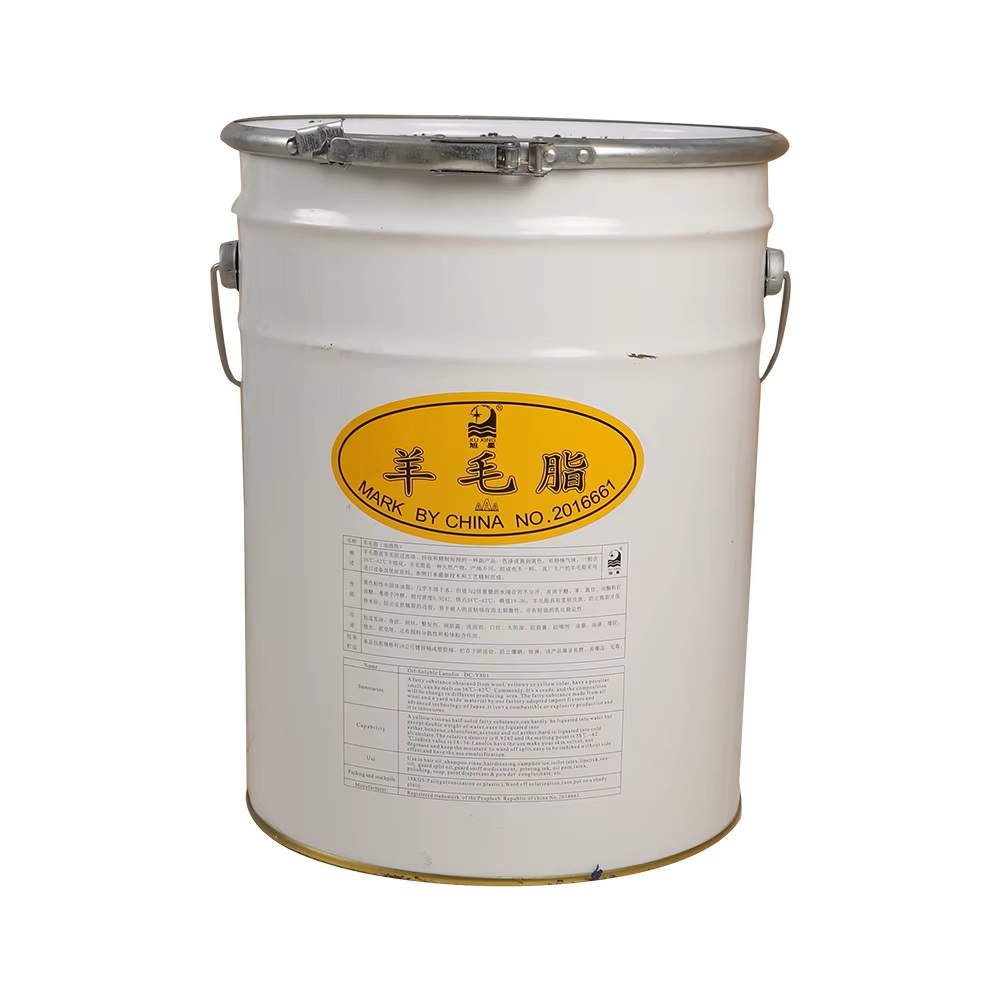
Send EmailLanolin, Stearyl Palmitate, Octadecyl Palmitate, Wool Wax, Wool Fat, 8006-54-0
LANOLIN - YÜN YAĞI
Stearyl Palmitate - Octadecyl Palmitate
CAS: 8006-54-0
| Document No | TDS-LANOLIN-2026-001-EN |
| Revision | 01 |
| Issue Date | 06.2026 |
| Product Name | Lanolin (Stearyl Palmitate) |
| CAS Number | 8006-54-0 |
| EC Number | 232-348-7 |
| Chemical Class | Wax Ester (Natural) |
| Synonyms | Lanolin, Wool Wax, Wool Fat, Stearyl Palmitate, Octadecyl Palmitate, Palmitic Acid Octadecyl Ester, Octadecyl Hexadecanoate, Adeps Lanae |
ITEM 1: PRODUCT IDENTITY AND NOMENCLATURE
| Parameter | Description |
|---|---|
| Chemical Name | Stearyl Palmitate (Lanolin) |
| Chemical Formula | C₃₄H₆₈O₂ |
| Molecular Weight | 508.9 g/mol |
| CAS Number | 8006-54-0 |
| EC Number | 232-348-7 |
| INCI Name | Lanolin |
| Synonyms | Lanolin, Wool Wax, Wool Fat, Stearyl Palmitate, Octadecyl Palmitate, Palmitic Acid Octadecyl Ester, Octadecyl Hexadecanoate, Adeps Lanae, Yün Yağı, Yün Balmumu |
| HS Code | 1505.00.00.00.00 |
| REACH Status | Registered and compliant |
Description: Lanolin, also known as wool wax or wool fat, is a natural wax ester secreted by the sebaceous glands of sheep. It is obtained from the wool of sheep during the wool scouring process. Chemically, it is a complex mixture of esters, sterols, fatty acids, and alcohols. The primary component is stearyl palmitate, formed by the condensation of palmitic acid with stearyl alcohol. Lanolin is widely used in cosmetic, pharmaceutical, and industrial applications due to its excellent emollient, moisturizing, and emulsifying properties. It closely resembles human sebum, making it highly compatible with human skin.
ITEM 2: CHEMICAL STRUCTURE AND COMPOSITION
| Parameter | Description |
|---|---|
| Chemical Family | Wax Ester (Natural) |
| Source | Sebaceous glands of sheep (Ovis aries) |
| Primary Component | Stearyl Palmitate (Palmitic Acid + Stearyl Alcohol) |
| Other Components | Esters, Sterols (Cholesterol), Fatty Acids, Alcohols |
| Triglyceride Content | None (unlike vegetable oils) |
| Cholesterol Content | 8 – 13% |
| Lanolin Alcohols | 20 – 30% |
| Lanolin Acids | 40 – 50% |
| Hydrocarbons | 8 – 12% |
| Water Content | < 0.5% |
Structural Formula (Stearyl Palmitate):
text
CH₃-(CH₂)₁₄-CO-O-(CH₂)₁₇-CH₃
Description: Lanolin is a complex mixture of wax esters, sterols, fatty acids, and alcohols. Unlike vegetable oils, it contains no triglycerides. The primary component is stearyl palmitate (palmitic acid esterified with stearyl alcohol). Lanolin is unique among animal fats because it is a wax, not a fat, and it contains significant amounts of cholesterol (8-13%). This composition makes it highly compatible with human skin and a valuable ingredient in emollient formulations.
ITEM 3: PHYSICAL APPEARANCE AND FORM
| Parameter | Specification | Test Method |
|---|---|---|
| Appearance | White to pale yellow solid | Visual Inspection |
| Physical Form | Crystals, flakes, or powder | Visual Inspection |
| Color | Pale yellow to off-white | Visual Inspection |
| Odor | Slight characteristic odor | Organoleptic |
| Texture | Greasy, waxy | Tactile |
| Translucency | Translucent to opaque | Visual Inspection |
Description: Lanolin is a white to pale yellow solid, typically supplied as crystals, flakes, or powder. It has a slight characteristic odor and a greasy, waxy texture. It is translucent to opaque and does not contain any visible impurities. The color and odor may vary depending on the grade and processing method.
ITEM 4: PRODUCTION PROCESS
| Step | Description |
|---|---|
| Step 1: Wool Scouring | Raw wool is washed with hot water and detergents to remove dirt and grease |
| Step 2: Separation | The wool grease is separated from the washing water by centrifugation |
| Step 3: Saponification | Crude lanolin is saponified with a weak alkali (e.g., Sodium Hydroxide) |
| Step 4: Centrifugation | The saponified emulsion is centrifuged to remove aqueous phase |
| Step 5: Calcium Chloride Treatment | The lanolin soap solution is treated with calcium chloride |
| Step 6: Lime Fusion | The product is fused with quicklime for refining |
| Step 7: Acetone Extraction | The product is extracted with acetone to remove impurities |
| Step 8: Distillation | Acetone is removed by distillation |
| Step 9: Refining | Anhydrous, refined lanolin is obtained |
Description: Lanolin is produced from the wool of sheep. The raw wool is scoured with hot water and detergents to remove dirt and grease. The wool grease is separated from the washing water by centrifugation. The crude lanolin is saponified with a weak alkali (sodium hydroxide) to form a soap emulsion. After centrifugation to remove the aqueous phase, the lanolin soap solution is treated with calcium chloride, followed by lime fusion, acetone extraction, and distillation to obtain refined lanolin.
ITEM 5: PHYSICAL PROPERTIES
| Property | Specification | Typical Value | Test Method |
|---|---|---|---|
| Density (25°C) | 0.93 – 0.94 g/cm³ | 0.935 g/cm³ | ASTM D792 |
| Melting Point | 38 – 45°C | 40 – 43°C | DSC |
| Melting Point (Stearyl Palmitate) | 131.9 – 133.3°C | 132.5°C | DSC |
| Refractive Index (40°C) | 1.475 – 1.480 | 1.477 | ASTM D1218 |
| Saponification Value | 90 – 100 mg KOH/g | 95 | Titration |
| Acid Value | ≤ 1.5 mg KOH/g | 0.5 | Titration |
| Iodine Value | 18 – 38 | 25 | Titration |
| Cholesterol Content | 8 – 13% | 10% | HPLC |
| Water Content | ≤ 0.5% | 0.1% | Karl Fischer |
| Ash Content | ≤ 0.1% | 0.02% | – |
| Solubility | Insoluble in water; soluble in hot alcohol, oils, organic solvents | – | – |
Description: Lanolin is a solid at room temperature with a melting point of 38-45°C. It has a density of approximately 0.935 g/cm³. The stearyl palmitate component has a higher melting point of 131.9-133.3°C. Lanolin has a saponification value of 90-100 and a low acid value (≤1.5), indicating high quality. It is insoluble in water but soluble in hot alcohol, oils, and organic solvents.
ITEM 6: CHEMICAL PROPERTIES
| Property | Specification / Description |
|---|---|
| pH (5% Solution) | 5.0 – 7.0 (neutral) |
| Solubility in Water | Insoluble |
| Solubility in Cold Alcohol | Slightly soluble |
| Solubility in Hot Alcohol | Soluble |
| Solubility in Oils | Soluble |
| Solubility in Organic Solvents | Soluble (acetone, ether, chloroform) |
| Saponification | Reacts with alkalis to form soaps |
| Stability | Stable under normal conditions |
| Oxidative Stability | Good (contains natural antioxidants) |
| Hydrolysis | Hydrolyzes with acids or bases |
| Triglyceride Content | None (unlike vegetable oils) |
Description: Lanolin is chemically stable under normal conditions and has good oxidative stability due to natural antioxidants. It is insoluble in water but soluble in hot alcohol, oils, and organic solvents. Unlike vegetable oils, lanolin contains no triglycerides, which makes it a wax rather than a fat. It hydrolyzes with acids or bases to form fatty acids and alcohols.
ITEM 7: PURITY AND ANALYTICAL SPECIFICATIONS
| Parameter | Specification | Typical Value | Test Method |
|---|---|---|---|
| Purity | ≥ 95% | 98% | – |
| Water Content | ≤ 0.5% | 0.1% | Karl Fischer |
| Acid Value | ≤ 1.5 mg KOH/g | 0.5 | Titration |
| Saponification Value | 90 – 100 mg KOH/g | 95 | Titration |
| Iodine Value | 18 – 38 | 25 | Titration |
| Cholesterol Content | 8 – 13% | 10% | HPLC |
| Melting Point | 38 – 45°C | 40 – 43°C | DSC |
| Ash Content | ≤ 0.1% | 0.02% | – |
| Heavy Metals (Pb) | ≤ 10 ppm | <5 ppm | ICP-MS |
| Arsenic (As) | ≤ 2 ppm | <1 ppm | ICP-MS |
| Color | Pale yellow | Pale yellow | Visual |
| Odor | Slight characteristic | Slight | Organoleptic |
| Microbial Limit | Total < 1000 CFU/g | – | USP <61> |
| Yeast & Mold | < 100 CFU/g | – | USP <61> |
Description: Lanolin is supplied in high purity (>95%). Low acid value indicates good quality. The cholesterol content (8-13%) is a characteristic feature of lanolin. Heavy metal content is strictly controlled to ensure safety for cosmetic and pharmaceutical applications. Microbial limits are controlled for product safety.
ITEM 8: COSMETIC AND PERSONAL CARE APPLICATIONS
| Application | Function / Benefit |
|---|---|
| Moisturizers | Emollient, skin conditioning, moisturizing |
| Skin Creams | Softens and soothes dry skin |
| Body Lotions | Moisturizing, skin conditioning |
| Hand Creams | Nourishing, barrier repair |
| Lip Balms | Moisturizing, protective barrier |
| Cold Creams | Classic ingredient, moisturizing |
| Sun Care Products | Emollient, moisturizing |
| Baby Care Products | Gentle, moisturizing, barrier protection |
| Hair Care Products | Anti-static, conditioning, softening |
| Shampoos | Conditioning, anti-static |
| Hair Conditioners | Softening, moisturizing, shine enhancement |
| Shaving Creams | Lubricity, skin protection |
| Makeup | Emollient, skin conditioning |
| Self-Tanning Products | Emollient, moisturizing |
| Massage Oils | Lubricity, skin conditioning |
| Antiperspirants | Skin conditioning |
Description: In cosmetics, lanolin is valued for its excellent emollient, moisturizing, and skin conditioning properties. It closely resembles human sebum, making it highly compatible with human skin. It softens and soothes dry, chapped skin and provides a protective barrier. Its anti-static properties make it useful in hair care products. It is used in a wide range of products including moisturizers, lip balms, creams, shampoos, conditioners, and self-tanning products.
ITEM 9: SKIN CARE BENEFITS
| Benefit | Description |
|---|---|
| Moisturization | Deeply moisturizes and hydrates the skin |
| Skin Barrier | Strengthens the skin barrier function |
| Emollient | Softens and soothes rough, dry skin |
| Protection | Forms a protective film on the skin |
| Soothes | Soothes irritated and chapped skin |
| Compatibility | Similar to human sebum; highly compatible |
| Absorption | Good skin penetration |
| Water Retention | Reduces transepidermal water loss |
| Skin Elasticity | Improves skin elasticity |
Description: Lanolin provides comprehensive skin care benefits. It acts as a powerful moisturizer by reducing transepidermal water loss. It forms a protective barrier on the skin while allowing it to breathe. Its composition is similar to human sebum, making it highly compatible with human skin and reducing the risk of irritation. It softens and soothes dry, rough, and chapped skin.
ITEM 10: HAIR CARE APPLICATIONS
| Application | Function / Benefit |
|---|---|
| Shampoos | Conditioning, anti-static, softening |
| Hair Conditioners | Moisturizing, softening, shine enhancement |
| Hair Masks | Deep conditioning, repair |
| Hair Serums | Anti-static, shine enhancement |
| Hair Styling Products | Anti-static, conditioning |
| Scalp Treatments | Moisturizing, soothing |
| Anti-dandruff | Moisturizes, soothes scalp |
| Leave-in Products | Conditioning, moisturizing |
| Chemical Treatments | Protective barrier, moisturizing |
Description: In hair care, lanolin is used for its conditioning, moisturizing, and anti-static properties. It penetrates the hair shaft, providing deep hydration and improving hair elasticity. It helps prevent split ends, reduces breakage, and gives hair a healthier, shinier appearance. Its anti-static properties help control flyaway hair and improve manageability.
ITEM 11: PHARMACEUTICAL APPLICATIONS
| Application | Function / Description |
|---|---|
| Ointment Bases | Cream and ointment base |
| Pharmaceutical Creams | Topical formulations |
| Wound Healing | Promotes wound healing, skin protection |
| Dry Skin Treatments | Treatment for dry, cracked skin |
| Dermatological Preparations | Emollient, skin barrier support |
| Hemorrhoid Treatments | Soothing, barrier protection |
| Protective Creams | Barrier protection, moisturizing |
| Topical Ointments | Base ingredient, soothing agent |
| Diaper Rash Creams | Barrier protection, soothing |
| Scabies Treatments | Cream base (with Benzyl Benzoate) |
| Eczema Treatments | Soothing, barrier protection |
| Burn Treatments | Skin protection, moisturizing |
Pharmaceutical Grade Specifications:
| Parameter | Requirement |
|---|---|
| Purity | High purity |
| Microbial Limits | Sterility required |
| Heavy Metals | Strict limits |
| Quality Standard | USP/EP compliant |
Description: In pharmaceutical applications, lanolin is used as an ointment base and as an ingredient in topical formulations. It promotes wound healing and provides skin protection. It is used in creams for dry skin, hemorrhoid treatments, and protective creams. In scabies treatments (with Benzyl Benzoate), it serves as a cream base that enhances emulsion formation, skin moisturization, absorption, and protective barrier formation. Pharmaceutical grade lanolin meets strict USP/EP standards for purity and sterility.
ITEM 12: INDUSTRIAL APPLICATIONS
| Application | Function / Description |
|---|---|
| Catalyst | Used in petroleum cracking |
| Leather Coating | Lubricant, leather treatment |
| Textile Processing | Lubricant, conditioning agent |
| Metalworking | Lubricant, rust preventive |
| Anti-corrosion | Rust preventive coating |
| Industrial Lubricants | Lubricant, additive |
| Petroleum Industry | Catalyst, intermediate |
Description: In industrial applications, lanolin is used as a lubricant and protective coating. It is used in leather coating as a lubricating agent, in textile processing as a conditioning agent, and in metalworking as a rust preventive. It is also used as a catalyst in petroleum cracking and as an intermediate in various industrial processes.
ITEM 13: PET CARE APPLICATIONS
| Application | Function / Benefit |
|---|---|
| Pet Shampoos | Conditioning, moisturizing, softening |
| Pet Coat Conditioners | Moisturizing, shine enhancement |
| Skin Care | Soothing, moisturizing |
| Dry Skin Treatment | Treatment for dry, cracked skin |
| Protective Products | Barrier protection, moisturizing |
Description: Lanolin is used in pet care products such as shampoos, conditioners, and skin care products. It moisturizes and conditions the pet's coat, providing shine and softness. It also helps treat dry, cracked skin and provides a protective barrier.
ITEM 14: LANOLIN GRADES AND TYPES
| Grade | Description | Application |
|---|---|---|
| Anhydrous Lanolin | Water-free, pure lanolin | Cosmetics, pharmaceuticals |
| Hydrous Lanolin | Contains 25-30% water | Cosmetics, pharmaceuticals |
| Refined Lanolin | Purified, deodorized | Premium cosmetics |
| High Purity Lanolin | Ultra-pure, low pesticide content | Pharmaceuticals, baby products |
| Ethoxylated Lanolin | Water-soluble derivative | Shampoos, conditioners |
| Acetylated Lanolin | Modified lanolin | Cosmetics |
| Hydrogenated Lanolin | Stabilized lanolin | Cosmetics, pharmaceuticals |
| Lanolin Alcohols | Cholesterol and other sterols | Emulsifiers |
| Lanolin Acids | Fatty acids from lanolin | Emulsifiers |
| Hypoallergenic Lanolin | Low allergen content | Sensitive skin products |
ITEM 15: BENEFITS AND COMPARISON
| Feature | Lanolin |
|---|---|
| Source | Natural (animal-based) |
| Composition | Wax ester (no triglycerides) |
| Skin Compatibility | Excellent (similar to human sebum) |
| Moisturizing | Excellent |
| Barrier Properties | Excellent |
| Absorption | Good skin penetration |
| Triglyceride Content | None |
| Cholesterol Content | 8-13% |
| Hypoallergenic Options | Available |
| Sustainability | By-product of wool production |
| Vegan | No (animal-derived) |
ITEM 16: SAFETY AND TOXICOLOGICAL PROFILE
| Parameter | Description |
|---|---|
| Acute Oral Toxicity (LD50) | > 5000 mg/kg (low toxicity) |
| Acute Dermal Toxicity | Very low |
| Skin Irritation | Non-irritating (most individuals) |
| Eye Irritation | Mild irritation possible |
| Skin Sensitization | Possible in sensitive individuals |
| Carcinogenicity | Not classified |
| Mutagenicity | Not classified |
| Reproductive Toxicity | Not classified |
| Allergen Potential | Low; some individuals may be sensitive |
| FDA Status | Approved for use |
| EU Cosmetics Regulation | Permitted |
Allergy Warning: Some individuals may be allergic to lanolin. A patch test is recommended for sensitive individuals before use.
Description: Lanolin has very low toxicity and is considered safe for use in cosmetic and pharmaceutical products. It is non-irritating to the skin for most individuals, though some may experience sensitivity or allergic reactions. The allergen potential is relatively low, but individuals with known lanolin sensitivity should avoid products containing it. Hypoallergenic grades are available for sensitive skin formulations.
ITEM 17: HANDLING AND PERSONAL PROTECTIVE EQUIPMENT (PPE)
| Parameter | Recommendation |
|---|---|
| Ventilation | Good ventilation |
| Gloves | Nitrile gloves (for prolonged contact) |
| Eye Protection | Safety goggles |
| Skin Contact | Wash with soap and water |
| Eye Contact | Rinse with plenty of water for 15 minutes |
| Ingestion | Seek medical attention if swallowed |
Description: Standard industrial hygiene practices should be followed when handling lanolin. While generally safe, prolonged contact should be avoided. In case of eye contact, rinse thoroughly with water.
ITEM 18: STORAGE AND SHELF LIFE
| Parameter | Description |
|---|---|
| Storage Temperature | 15 – 30°C |
| Storage Conditions | Cool, dry, well-ventilated area |
| Light | Protect from direct sunlight |
| Moisture | Keep away from moisture |
| Shelf Life | 24 months (unopened, recommended conditions) |
| Signs of Degradation | Discoloration, rancid odor, texture change |
| Materials of Construction | Stainless steel, HDPE, glass |
Description: Lanolin should be stored in a cool, dry place in tightly closed containers. Protect from direct sunlight and moisture. The shelf life is typically 24 months when stored under recommended conditions. Signs of degradation include discoloration, rancid odor, or texture change.
ITEM 19: REGULATORY AND CERTIFICATION STATUS
| Certificate / Standard | Status |
|---|---|
| REACH (EC 1907/2006) | Registered and compliant |
| FDA 21 CFR | Approved for use |
| EU Cosmetics Regulation 1223/2009 | Permitted (INCI listed) |
| USP/EP | Pharmaceutical grade available |
| TSCA (USA) | Listed |
| EINECS (EU) | 232-348-7 |
| Halal | Available upon request |
| Kosher | Available upon request |
| Vegan | Not suitable (animal-derived) |
| ECOCERT | Available (select grades) |
ITEM 20: SYNONYMS AND ALIASES
| Name | Description |
|---|---|
| Lanolin | Most common name |
| Wool Wax | English common name |
| Wool Fat | English common name |
| Stearyl Palmitate | Primary chemical component |
| Octadecyl Palmitate | Chemical name |
| Palmitic Acid Octadecyl Ester | Chemical name |
| Octadecyl Hexadecanoate | Chemical name |
| Yün Yağı | Turkish name |
| Yün Balmumu | Turkish name |
| Adeps Lanae | Latin name |
| Wool Grease | Historical name |
| Lanolin Oil | Liquid fraction |
| Lanolin Wax | Solid fraction |
QUALITY AND CERTIFICATION SUMMARY
| Certificate / Standard | Status |
|---|---|
| ISO 9001:2015 | Certified manufacturing sites |
| REACH (EC 1907/2006) | Registered and compliant |
| FDA 21 CFR | Approved for use |
| EU Cosmetics Regulation | Permitted (INCI listed) |
| USP/EP | Pharmaceutical grade available |
| Halal / Kosher | Available upon request |
| Vegan | Not suitable (animal-derived) |
Disclaimer: This Technical Data Sheet provides typical values for reference purposes only. All values are based on standard laboratory measurements and do not constitute a binding specification. For binding properties, please request the Certificate of Analysis (COA) for each specific batch. The user is solely responsible for determining product suitability for their intended application and for compliance with all applicable regulations. Safety Data Sheet (SDS) must be requested from the supplier before use.