We unleash your business potential by maximize the business innovation.
Send EmailCalcium Thioglycolate, Calcium Mercaptoacetate, 814-71-1
CALCIUM THIOGLYCOLATE
Calcium Mercaptoacetate / Thioglycolic Acid Calcium Salt
CAS Number: 814-71-1
EC Number: 212-402-7
1. IDENTIFICATION
| Property | Information |
|---|---|
| Chemical Name | Calcium Thioglycolate |
| Synonyms | Calcium mercaptoacetate, Thioglycolic acid calcium salt, Mercaptoacetic acid calcium derivative, Calcium bis(sulfanylacetate) |
| Chemical Formula | C₄H₆CaO₄S₂ |
| Molecular Weight | 222.30 g/mol |
| CAS Number | 814-71-1 |
| EC Number (EINECS) | 212-402-7 |
| Appearance (Pure) | White to off-white crystalline powder |
| Odor (Pure) | Odorless |
| Odor (In formulation) | Characteristic pungent mercaptan (sulfur/rotten egg) odor |
2. CHEMICAL CLASSIFICATION & STRUCTURE
| Property | Information |
|---|---|
| Chemical Class | Organocalcium compound; Thiol (mercaptan) derivative |
| Related Compound | Thioglycolic acid (HS-CH₂-COOH) |
| Functional Group | Thiolate (-S⁻) – provides reducing activity |
| Ionic Character | Anionic (in aqueous solution) |
Chemical Structure:
Ca²⁺ [⁻S-CH₂-COO⁻]₂
or
Ca(OOC-CH₂-SH)₂
Dissociation in Water:
Ca(OOC-CH₂-SH)₂ + H₂O → Ca²⁺ + 2 ⁻S-CH₂-COO⁻
Mechanism of Action:
The thiolate group (-S⁻) reduces disulfide bonds (-S-S-) in keratin to thiol groups (-SH):
Keratin-S-S-Keratin + 2 ⁻S-CH₂-COO⁻ → 2 Keratin-S⁻ + ⁻OOC-CH₂-S-S-CH₂-COO⁻
This weakens hair/fiber structure, allowing mechanical removal (depilatories) or reshaping (hair relaxers/perms).
3. PHYSICAL PROPERTIES
| Property | Value |
|---|---|
| Physical State (20°C) | Solid (crystalline powder) |
| Appearance | White to off-white crystalline powder |
| Odor (Pure) | Odorless |
| Odor (In formulation) | Strong mercaptan (sulfur/rotten egg) odor |
| Melting Point | > 95°C (begins to lose crystal water) |
| Decomposition Temperature | > 220°C (decomposes) |
| Density | ~1.8 g/cm³ (estimated) |
| Solubility in Water | Slightly soluble (forms alkaline solution) |
| pH (aqueous solution) | 11 – 12 (strongly alkaline) |
| Purity (Commercial) | ≥ 99.4% |
| Thioglycolic Acid (TGA) Equivalent | ~49.7% of weight |
4. CHEMICAL PROPERTIES
| Property | Information |
|---|---|
| Chemical Formula | C₄H₆CaO₄S₂ |
| Molecular Weight | 222.30 g/mol |
| Active Reducing Agent | Thiolate anion (⁻S-CH₂-COO⁻) |
| Redox Potential | Strong reducing agent |
| pH Stability | Stable in alkaline conditions (pH 10-12) |
| Oxidation Sensitivity | Oxidizes in air to form disulfide (dithiodiglycolate) |
| Thermal Stability | Loses water above 95°C; decomposes above 220°C |
| Incompatible Materials | Strong oxidizing agents, strong acids, metal ions |
Oxidation Reaction:
2 HS-CH₂-COOCa⁰.5 + [O] → Ca⁰.5OOC-CH₂-S-S-CH₂-COOCa⁰.5 + H₂O
Comparison with Potassium Thioglycolate:
| Property | Calcium Thioglycolate | Potassium Thioglycolate |
|---|---|---|
| Counter-ion | Ca²⁺ | K⁺ |
| Solubility | Lower | Higher |
| Cream Consistency | Better (preferred for creams) | Thinner |
| Strength | More potent | Less potent |
| TGA Equivalent (as pure) | ~49.7% | ~75% (as pure) |
5. PRODUCTION PROCESS
| Stage | Description |
|---|---|
| 1. Raw Materials | Thioglycolic acid (HS-CH₂-COOH) and calcium hydroxide (Ca(OH)₂) or calcium oxide (CaO) |
| 2. Neutralization Reaction | Thioglycolic acid is neutralized with calcium hydroxide under controlled conditions |
| 3. Reaction | 2 HS-CH₂-COOH + Ca(OH)₂ → Ca(OOC-CH₂-SH)₂ + 2 H₂O |
| 4. Crystallization | Calcium thioglycolate crystallizes from the solution |
| 5. Filtration | Crystals are separated from mother liquor |
| 6. Drying | Crystals are dried at controlled temperature |
| 7. Milling | Dried product is milled to desired particle size |
| 8. Packaging | Final product is packaged |
Note: Detailed industrial production information is typically proprietary.
6. APPLICATIONS
6.1. Depilatory Products (Hair Removers) – Primary Use
| Product Type | Function |
|---|---|
| Depilatory Creams | Main active ingredient for removing unwanted body hair |
| Facial Depilatories | Gentle formulations for facial hair removal |
| Depilatory Gels | Transparent hair removal products |
| Depilatory Roll-ons | Easy-application depilatory products |
Mechanism: The thioglycolate breaks disulfide bonds in keratin, weakening hair so it can be easily wiped or rinsed away.
Typical Concentration: 5 – 6% in cream formulations
Typical pH Range: 11 – 12.5
Typical Application Time: 5 – 15 minutes (never exceed recommended time)
Formulation Additives:
-
Lidocaine/Benzocaine: Local anesthetics to reduce burning/irritation
-
Aloe vera / Allantoin: Soothing agents
-
Urea / Glycerin: Humectants and skin conditioners
6.2. Hair Straightening Products (Hair Relaxers)
| Product Type | Function |
|---|---|
| Hair Relaxer Creams | Chemically straightens curly hair |
| Professional Straightening Systems | Salon-use permanent straightening |
| At-home Straightening Kits | Consumer hair straightening products |
Process:
-
Apply thioglycolate cream to hair (breaks disulfide bonds)
-
Mechanically straighten hair (comb/flatten)
-
Apply neutralizing agent (oxidizer – hydrogen peroxide or sodium bromate)
-
Disulfide bonds re-form in straight configuration
6.3. Permanent Wave Products (Perms)
| Product Type | Function |
|---|---|
| Perm Solutions | Creates curls in straight hair |
| Waving Lotions | Professional and consumer perm products |
Process:
-
Apply thioglycolate solution (breaks disulfide bonds)
-
Hair is curled using perm rods
-
Apply neutralizing agent
-
Disulfide bonds re-form in curled configuration
6.4. Acne Treatment (Keratolytic Agent)
| Application | Function |
|---|---|
| Acne Creams & Lotions | Dissolves keratinized skin cells that clog pores (comedones) |
| Chemical Peels | Exfoliates dead skin cells |
| Comedone Removers | Softens blackheads and whiteheads |
Mechanism: Keratolytic action breaks down keratin, unclogging pores and promoting skin cell turnover.
6.5. Dermocosmetic Products
| Application | Function |
|---|---|
| Facial Depilatories | Gentle hair removal for sensitive facial skin |
| Callus Removers | Softens hard, thickened skin on feet |
| Keratolytic Creams | For rough, scaly skin conditions |
7. TYPICAL FORMULATION CONCENTRATIONS
| Product Type | Calcium Thioglycolate Concentration | TGA Equivalent |
|---|---|---|
| Body Depilatory Cream | 5 – 6% | ~2.5 – 3% |
| Facial Depilatory Cream | 3 – 5% | ~1.5 – 2.5% |
| Hair Straightening Cream | 8 – 12% | ~4 – 6% |
| Perm Solution (Waving Lotion) | 6 – 10% | ~3 – 5% |
| Acne Treatment Cream | 2 – 5% | ~1 – 2.5% |
8. QUALITY SPECIFICATIONS (Commercial Grade – Typical)
| Parameter | Specification |
|---|---|
| Appearance | White to off-white crystalline powder |
| Purity (C₄H₆CaO₄S₂) | ≥ 99.4% |
| Thioglycolic Acid (TGA) Equivalent | ~49.7% |
| pH (5% solution) | 11 – 12 |
| Loss on Drying | ≤ 0.5% |
| Chlorides (Cl) | ≤ 0.1% |
| Sulfate (SO₄) | ≤ 0.1% |
| Iron (Fe) | ≤ 0.001% |
| Heavy Metals (Pb) | ≤ 0.001% |
| Arsenic (As) | ≤ 0.0002% |
| Residue on Ignition | ≤ 0.5% |
9. STORAGE & HANDLING
| Parameter | Information |
|---|---|
| Storage Conditions | Cool, dry, well-ventilated area; 5-25°C recommended |
| Container Requirements | Tightly closed, moisture-proof containers (HDPE, lined drums) |
| Protect From | Air (oxidation), moisture, heat, strong oxidizing agents, strong acids |
| Shelf Life | 12-24 months (when stored properly in unopened packaging) |
| Hygroscopicity | Slightly hygroscopic |
| Incompatible Materials | Strong oxidizing agents, strong acids, metal ions |
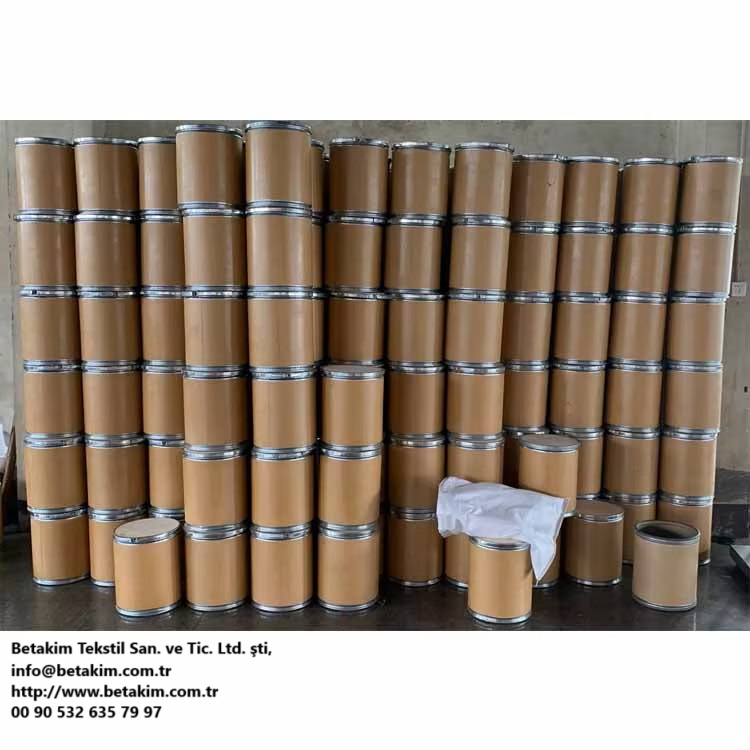
| Packaging Options | 25 kg drums, 50 kg drums, 500 kg/1000 kg FIBC (big bags) |
10. SAFETY & HEALTH INFORMATION
GHS Classification
| Hazard Class | Category |
|---|---|
| Skin Corrosion/Irritation | Category 1B (H314) |
| Serious Eye Damage | Category 1 (H318) |
| Acute Toxicity (Oral) | Category 4 (H302) |
| Skin Sensitization | Category 1 (H317) |
| Specific Target Organ Toxicity (Inhalation) | Category 3 (H335) |
Hazard Statements (H-Codes)
| Code | Statement |
|---|---|
| H302 | Harmful if swallowed |
| H314 | Causes severe skin burns and eye damage |
| H317 | May cause an allergic skin reaction |
| H318 | Causes serious eye damage |
| H335 | May cause respiratory irritation |
Precautionary Statements (P-Codes)
| Code | Statement |
|---|---|
| P260 | Do not breathe dust |
| P280 | Wear protective gloves, protective clothing, eye protection, face protection |
| P301+P312 | IF SWALLOWED: Call a POISON CENTER if you feel unwell |
| P302+P352 | IF ON SKIN: Wash with plenty of water |
| P305+P351+P338 | IF IN EYES: Rinse cautiously with water for several minutes |
| P310 | Immediately call a POISON CENTER or doctor |
Toxicological Information
| Parameter | Value |
|---|---|
| Oral LD50 (rat) | ~1,000 – 2,000 mg/kg (estimated) |
| Dermal LD50 (rabbit) | ~2,000 mg/kg |
| Skin Irritation | Severe – causes burns |
| Eye Irritation | Severe – causes damage |
| Skin Sensitization | May cause allergic reactions |
First Aid Measures
| Exposure Route | Action |
|---|---|
| Inhalation | Remove to fresh air. Seek medical attention if respiratory irritation occurs. |
| Skin Contact | Remove contaminated clothing. Wash with plenty of water for at least 15 minutes. Seek medical attention. |
| Eye Contact | Rinse immediately with plenty of water for at least 15 minutes. Seek immediate medical attention. |
| Ingestion | Do NOT induce vomiting. Rinse mouth. Drink water. Seek immediate medical attention. |
Personal Protective Equipment (PPE)
| Equipment | Recommendation |
|---|---|
| Respiratory Protection | Dust mask (N95) when handling powder |
| Hand Protection | Chemical-resistant gloves (nitrile, neoprene, butyl rubber) |
| Eye Protection | Chemical safety goggles + face shield |
| Body Protection | Chemical-resistant apron, lab coat, protective clothing |
NFPA 704
| Health (Blue) | Fire (Red) | Reactivity (Yellow) | Special (White) |
|---|---|---|---|
| 3 | 0 | 1 | None |
11. ENVIRONMENTAL INFORMATION
| Parameter | Information |
|---|---|
| Biodegradability | Readily biodegradable |
| Aquatic Toxicity | Harmful to aquatic life |
| Bioaccumulation | Low potential |
| Waste Disposal | Dispose according to local regulations. Neutralize before disposal. |
12. TRANSPORT INFORMATION
| Parameter | Information |
|---|---|
| UN Number | 3260 (Corrosive solid, acidic, organic, n.o.s.) |
| Hazard Class | 8 (Corrosive substance) |
| Packing Group | III |
| Proper Shipping Name | CORROSIVE SOLID, ACIDIC, ORGANIC, N.O.S. (Calcium thioglycolate) |
| Marine Pollutant | No |
| ADR/RID Label | 8 |
13. REGULATORY INFORMATION
| Region | Status |
|---|---|
| EU | REACH registered; approved for cosmetic use under Cosmetics Regulation (EC) 1223/2009 |
| Turkey (KKDIK) | Mandatory compliance; requires registration |
| USA (TSCA) | Listed |
| Canada (DSL) | Listed |
| FDA | Approved for use in cosmetics (depilatories, hair straighteners) |
Cosmetic Restrictions (EU Cosmetics Regulation):
-
Depilatories: Maximum concentration limits apply (as thioglycolic acid equivalent)
-
Hair straighteners/perms: Maximum concentration limits apply
-
pH limits: Finished products must meet pH requirements
-
Labeling: Must contain warnings: "Contains thioglycolate. Follow instructions carefully."
14. COMPARISON: CALCIUM vs POTASSIUM THIOGLYCOLATE
| Property | Calcium Thioglycolate | Potassium Thioglycolate |
|---|---|---|
| Chemical Formula | C₄H₆CaO₄S₂ | C₂H₃KO₂S |
| Molecular Weight | 222.30 g/mol | 130.21 g/mol |
| Counter-ion | Ca²⁺ | K⁺ |
| CAS Number | 814-71-1 | 34452-51-2 |
| Form (Commercial) | Powder (solid) | Liquid (42% solution) |
| Solubility | Lower | Higher |
| Cream Consistency | Better (preferred) | Thinner |
| Strength | More potent | Less potent |
| TGA Equivalent (as pure) | ~49.7% | ~75% |
| Primary Use | Depilatory creams, hair relaxers | Depilatory creams, hair relaxers |
Key Difference: Calcium thioglycolate is often preferred over potassium thioglycolate for cream formulations because it provides better consistency and stronger action.
15. SYNONYMS & OTHER NAMES
| Turkish Name | English Name |
|---|---|
| Kalsiyum Tiyoglikolat | Calcium Thioglycolate |
| Kalsiyum Merkaptoasetat | Calcium Mercaptoacetate |
| Tiyoglikolik Asit Kalsiyum Tuzu | Thioglycolic Acid Calcium Salt |
| Kalsiyum Bis(sülfanilasetat) | Calcium Bis(sulfanylacetate) |
| Merkaptoasetik Asit Kalsiyum Türevi | Mercaptoacetic Acid Calcium Derivative |
Database Identifiers:
-
CAS: 814-71-1
-
EC: 212-402-7
-
MDL: MFCD00070457
-
PubChem CID: 13153
-
UNII: 9VK7Y5F521
16. SUMMARY
Calcium Thioglycolate (Calcium Mercaptoacetate, CAS 814-71-1) is the calcium salt of thioglycolic acid. It is a strong reducing agent that breaks disulfide bonds in keratin, making it the key active ingredient in depilatory (hair removal) creams and hair straightening/permanent wave products.
Key Features:
| Feature | Description |
|---|---|
| Appearance | White to off-white crystalline powder |
| Odor (Pure) | Odorless |
| Odor (In formulation) | Strong mercaptan (sulfur) odor |
| pH (solution) | 11-12 (strongly alkaline) |
| TGA Equivalent | ~49.7% |
| Potency | More potent than potassium thioglycolate |
Main Application Areas:
| Sector | Applications |
|---|---|
| Cosmetics | Depilatory creams, facial depilatories, hair straighteners, perms |
| Dermatology | Acne treatment, keratolytic agents, callus removers |
| Dermocosmetics | Gentle facial depilatories |
Advantages over Potassium Thioglycolate:
-
Better cream consistency – preferred for cream formulations
-
More potent – lower concentration needed for same effect
-
Solid form – easier to handle and formulate
Key Safety Points:
-
CORROSIVE – Causes severe skin burns and eye damage
-
SKIN SENSITIZER – May cause allergic reactions
-
STRONG ODOR IN FORMULATION – Characteristic mercaptan (sulfur) smell
-
DO NOT EXCEED APPLICATION TIME – Typically 5-15 minutes maximum
-
PATCH TEST – Always perform on small skin area before first use
17. IMPORTANT NOTES
-
Preferred for Cream Formulations: Calcium thioglycolate is often preferred over potassium thioglycolate for depilatory creams because it provides better cream consistency and stronger action.
-
Odor Profile: Pure calcium thioglycolate is odorless, but when formulated into depilatory products, it releases a characteristic pungent mercaptan (sulfur/rotten egg) odor. This odor is a result of the chemical reaction breaking disulfide bonds and is not an indication of product degradation.
-
Potency vs Potassium: Calcium thioglycolate is more potent than potassium thioglycolate. Lower concentrations may be needed to achieve the same effect.
-
TGA Equivalent: Commercial calcium thioglycolate (≥99.4% purity) has a thioglycolic acid (TGA) equivalent of approximately 49.7%. Always calculate based on TGA equivalent, not the salt weight.
-
Application Time: Depilatory products should never exceed the recommended application time (typically 5-15 minutes). Prolonged exposure can cause chemical burns.
-
pH Importance: The alkaline pH (11-12) is essential for the reducing activity. If pH drops below 10, the product becomes less effective.
-
Patch Test Required: Due to risk of allergic reactions, a patch test on a small skin area is recommended 24-48 hours before first use.
-
Contraindications: Do not use on damaged, irritated, sunburned skin, or on mucous membranes.
-
Neutralization: After depilatory use, the skin should be rinsed thoroughly with water. An after-care cream (neutralizing or soothing) is recommended.
-
Thermal Stability: Calcium thioglycolate begins to lose crystal water above 95°C and decomposes above 220°C. Avoid excessive heat during storage and handling.
Important Disclaimer: This Technical Data Sheet (TDS) is for informational purposes only. For complete safety, handling, storage, and regulatory compliance information, always refer to the official Safety Data Sheet (SDS) provided by the manufacturer/supplier.