We unleash your business potential by maximize the business innovation.
Send EmailBenzyl Alcohol, Phenyl Methanol, Hydroxytoluene, Hydroxymethyl Benzene, 100-51-6
BENZYL ALCOHOL
SECTION 1: PRODUCT IDENTITY AND CHEMICAL IDENTIFICATION
| Parameter | Information |
|---|---|
| Product Name | Benzyl Alcohol |
| Chemical Name (IUPAC) | Phenylmethanol |
| Common Names | Benzyl Alcohol, Benzal Alcohol |
| Other Names | Phenylmethyl alcohol, Hydroxytoluene, Hydroxymethyl benzene, Aromatic alcohol |
| CAS Number | 100-51-6 |
| EC Number (EINECS) | 202-859-9 |
| Molecular Formula | C₇H₈O (C₆H₅CH₂OH) |
| Molecular Weight | 108.14 g/mol |
| Chemical Class | Aromatic primary alcohol |
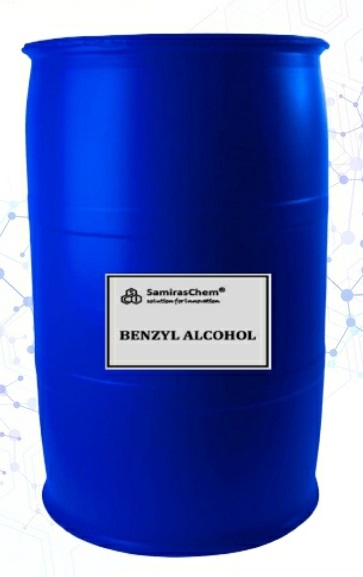
| Appearance | Colorless, clear liquid |
| Odor | Slight, pleasant aromatic odor |
| Physical State (20°C) | Liquid |
Note: Benzyl alcohol is an aromatic primary alcohol containing a hydroxymethyl group (-CH₂OH) attached to a benzene ring. It occurs naturally in many plants, fruits, teas, and essential oils such as jasmine, hyacinth, and ylang-ylang, either free or esterified. Due to its polarity, low toxicity, and low vapor pressure, it is widely used as a versatile solvent, preservative, and chemical intermediate in pharmaceutical, cosmetic, and industrial applications. It also exhibits local anesthetic properties.
SECTION 2: CHEMICAL STRUCTURE
        H
         \
          C
         / \
        /   \
       /     \
      /       \
     /         \
    /           \
   /             \
  C               C
  |               |
  C               C
  |               |
  C——CH₂—OH      C
   \           /
    \         /
     \       /
      \     /
       \   /
        \ /
         C

    Benzyl Alcohol
    Phenylmethanol
    C₆H₅CH₂OH
Simplified Structure:
    C₆H₅ — CH₂OH

    Benzyl Alcohol
    Phenylmethanol
| Parameter | Description |
|---|---|
| Molecular Formula | C₇H₈O (C₆H₅CH₂OH) |
| Molecular Weight | 108.14 g/mol |
| Chemical Class | Aromatic primary alcohol |
| Functional Groups | Hydroxyl (-OH), Aromatic ring (benzene) |
| SMILES | C1=CC=C(C=C1)CO |
| InChI | InChI=1S/C7H8O/c8-6-7-4-2-1-3-5-7/h1-5,8H,6H2 |
| InChI Key | WVDDGKGOMKODPV-UHFFFAOYSA-N |
| Hydrogen Bond Donors | 1 |
| Hydrogen Bond Acceptors | 1 |
| Rotatable Bond Count | 1 |
| Polar Surface Area (PSA) | 20.2 Ų |
SECTION 3: PHYSICAL AND CHEMICAL PROPERTIES
| Property | Value | Test Method / Note |
|---|---|---|
| Appearance | Colorless, clear liquid | Visual |
| Odor | Slight, pleasant aromatic | Olfactometric |
| Molecular Weight | 108.14 g/mol | Calculated |
| Melting Point | -15.2 °C | DSC |
| Boiling Point | 205.3 °C | ASTM D86 |
| Flash Point (Closed Cup) | 93 °C | ASTM D93 |
| Autoignition Temperature | 436 °C | - |
| Density (20°C) | 1.044 g/cm³ | ASTM D4052 |
| Vapor Pressure (20°C) | 0.013 kPa (0.1 mmHg) | - |
| Vapor Density (Air=1) | 3.7 | - |
| Water Solubility (20°C) | ~4 g/100 mL (moderate) | General Method |
| Organic Solvent Solubility | Miscible with alcohol, ether, acetone, chloroform | General Method |
| Viscosity (25°C) | 5.5 mPa·s | - |
| Refractive Index (n²⁰/D) | 1.539 – 1.541 | ASTM D1218 |
| pH (Aqueous Solution) | Neutral (~7) | pH Meter |
| Vapor Pressure (25°C) | 0.13 mmHg | - |
| Dielectric Constant | 13.1 | - |
| Surface Tension | 38.9 mN/m | - |
| Specific Heat | 2.0 J/g·K | - |
SECTION 4: STABILITY AND REACTIVITY
| Parameter | Information |
|---|---|
| Stability | Stable under normal conditions. Slowly oxidizes to benzaldehyde upon exposure to air and light. |
| Incompatible Materials | Strong oxidizing agents (nitric acid, hydrogen peroxide, potassium permanganate), strong acids |
| Hazardous Decomposition Products | Carbon monoxide, carbon dioxide |
| Polymerization | Does not polymerize |
| Oxidation | Slowly oxidizes to benzaldehyde upon exposure to light and air. Antioxidants (BHT, BHA) may be added to prevent oxidation. |
| Compatibility | Compatible with most plastics; however, may soften or dissolve some plastics such as polystyrene and polycarbonate. Glass, HDPE, and stainless steel are preferred. |
SECTION 5: FUNCTIONAL PROPERTIES AND MECHANISM OF ACTION
| Property / Function | Description |
|---|---|
| Solvent | Excellent solvent for many organic substances including resins, dyes, inks, cellulose esters, and gelatin due to its high polarity, low toxicity, and low vapor pressure. Also used in epoxy and polyurethane systems. |
| Preservative (Antimicrobial Agent) | Broad-spectrum antimicrobial activity; effective against bacteria, yeasts, and molds. Used as a preservative in pharmaceutical injectable solutions, cosmetic products, and personal care formulations. FDA approved. |
| Chemical Intermediate | Key building block in the synthesis of benzyl esters, benzyl ethers, benzylamine, and many other organic compounds. Used in the production of esters such as benzyl acetate and benzyl benzoate, widely used in the perfume and flavor industry. |
| Local Anesthetic | Exhibits mild local anesthetic properties. Added to formulations to reduce pain associated with injectable drugs such as lidocaine. Also found in teething gels and topical antipruritic (anti-itch) products. |
| Viscosity Modifier | Functions as a reactive diluent in epoxy resin systems; reduces viscosity for easier application and improves mechanical properties. |
| Fragrance and Flavor Component | Contributes to floral scents such as jasmine and hyacinth; used as a fixative and blender in perfume and flavor formulations. |
| Antimicrobial Mechanism | Disrupts microbial cell membranes; causes protein denaturation; Increases cell membrane permeability leading to cell death. |
SECTION 6: TYPICAL SPECIFICATIONS
| Parameter | Industrial Grade | Pharmaceutical Grade | Test Method |
|---|---|---|---|
| Purity (%) | ≥99.0 | ≥99.5 | GC |
| Water Content (%) | ≤0.2 | ≤0.1 | Karl Fischer |
| Benzaldehyde Content (%) | ≤0.1 | ≤0.05 | GC |
| Acidity (as benzoic acid, %) | ≤0.05 | ≤0.02 | Titration |
| Color (Pt-Co, APHA) | ≤20 | ≤10 | ASTM D1209 |
| Density (20°C) | 1.043-1.045 | 1.043-1.045 | ASTM D4052 |
| Refractive Index (n²⁰/D) | 1.539-1.541 | 1.539-1.541 | ASTM D1218 |
| Ash Content (%) | ≤0.01 | ≤0.005 | USP <281> |
| Heavy Metals (Pb) | ≤10 ppm | ≤5 ppm | ICP-MS |
SECTION 7: USAGE RATES (BY INDUSTRY)
| Industry / Application | Typical Use / Concentration | Function |
|---|---|---|
| Pharmaceutical (Preservative) | 0.5 – 2% (in injectable and topical solutions) | Preservative, local anesthetic |
| Cosmetics and Personal Care (Preservative) | 0.5 – 1.5% | Preservative, solvent |
| Epoxy Resin (Reactive Diluent) | 5 – 20% | Viscosity modifier |
| Paints, Varnishes, and Inks (Solvent) | 2 – 15% | Solvent |
| Perfume and Flavor (Fixative/Solvent) | 1 – 10% | Fragrance fixative, solvent |
| Cleaning Products | 1 – 5% | Solvent, preservative |
| Dermatological Products | 0.5 – 2% | Preservative, local anesthetic |
| Teething Gels | 0.5 – 1% | Local anesthetic |
| Industrial Coatings | 2 – 10% | Solvent, viscosity modifier |
SECTION 8: ADVANTAGES AND DISADVANTAGES
| Advantages | Disadvantages |
|---|---|
| Broad-spectrum preservative efficacy; effective against bacteria, yeasts, and molds | May cause skin and eye irritation at high concentrations |
| Low toxicity profile; FDA approved | Contraindicated in newborns and premature infants due to risk of "gasping syndrome" |
| Low vapor pressure; does not evaporate quickly, provides long-lasting effect | May cause allergic contact dermatitis in sensitive individuals |
| Versatile solvent; dissolves many polar and non-polar substances | Its characteristic aromatic odor may be undesirable in some applications |
| Naturally occurring; suitable for natural cosmetic formulations | Reacts with strong oxidizing agents; storage conditions require attention |
SECTION 9: ALTERNATIVES AND COMPARISON
| Alternative | Comparison with Benzyl Alcohol |
|---|---|
| Phenoxyethanol | Similar preservative profile; weaker yeast and mold activity compared to benzyl alcohol, but effective over a broader pH range. Often combined with benzyl alcohol. |
| Ethyl Alcohol (Ethanol) | Better solvent and disinfectant; however, much more volatile and dries the skin. Not as effective as a preservative as benzyl alcohol. |
| Propylene Glycol | Better humectant and solvent; preservative efficacy is much weaker than benzyl alcohol. |
| Parabens (Methylparaben, Propylparaben) | Strong preservatives; however, consumer perception is negative due to potential endocrine-disrupting effects. Benzyl alcohol is a "cleaner label" alternative. |
| Benzoic Acid / Sodium Benzoate | Common food preservatives; only effective at acidic pH (pH <5). Benzyl alcohol works over a broader pH range. |
| Sorbic Acid / Potassium Sorbate | Preservatives in food and cosmetics; only effective at acidic pH. Benzyl alcohol works over a broader pH range. |
SECTION 10: SAFETY AND HEALTH INFORMATION
GHS Classification (CLP Regulation):
| Hazard Class | Category | H-Statement |
|---|---|---|
| Acute Toxicity (Oral) | Category 4 | H302 |
| Skin Irritation | Category 2 | H315 |
| Eye Irritation | Category 2 | H319 |
| STOT - SE | Category 3 | H335 |
Signal Word: Warning
Hazard Pictograms: GHS07 (Exclamation mark)
Hazard Statements (H-Codes):
| Code | Statement |
|---|---|
| H302 | Harmful if swallowed |
| H315 | Causes skin irritation |
| H319 | Causes serious eye irritation |
| H335 | May cause respiratory irritation |
Precautionary Statements (P-Codes):
| Code | Statement |
|---|---|
| P261 | Avoid breathing dust/fume/gas |
| P264 | Wash hands thoroughly after handling |
| P271 | Use only outdoors or in a well-ventilated area |
| P280 | Wear protective gloves/protective clothing/eye protection/face protection |
| P302+P352 | IF ON SKIN: Wash with plenty of soap and water |
| P304+P340 | IF INHALED: Remove person to fresh air and keep comfortable for breathing |
| P305+P351+P338 | IF IN EYES: Rinse cautiously with water for several minutes. Remove contact lenses if present and continue rinsing |
| P312 | Call a POISON CENTER/doctor if you feel unwell |
| P332+P313 | If skin irritation occurs: Get medical advice/attention |
| P337+P313 | If eye irritation persists: Get medical advice/attention |
| P403+P233 | Store in a well-ventilated place. Keep container tightly closed |
| P501 | Dispose of contents/container in accordance with local/regional/national/international regulations |
NFPA 704 Hazard Classification:
| Health | Flammability | Reactivity | Special |
|---|---|---|---|
| 1 | 1 | 0 | - |
| (Minimal health hazard) | (Combustible) | (Stable) | (None) |
SECTION 11: TOXICOLOGICAL PROFILE
| Parameter | Value |
|---|---|
| Acute Oral Toxicity (LD50, Rat) | ~1,230 mg/kg |
| Acute Dermal Toxicity (LD50, Rabbit) | >2,000 mg/kg |
| Acute Inhalation Toxicity (LC50, Rat) | >4.17 mg/L (4 hours) |
| Skin Irritation | Mild irritant |
| Eye Irritation | Mild-moderate irritant |
| Skin Sensitization | May cause sensitization (rare) |
| Carcinogenicity | Not classified as carcinogenic |
| Mutagenicity | Not mutagenic |
| Reproductive Toxicity | No reproductive toxicity |
| Target Organs | Skin, eyes, respiratory tract |
| NOAEL (Rat, 90 days) | ~200-400 mg/kg/day |
| Special Toxicity Note | Contraindicated in premature infants and newborns due to risk of "gasping syndrome" (metabolic acidosis, respiratory depression). |
SECTION 12: FIRST AID MEASURES
| Route of Exposure | Action |
|---|---|
| Inhalation | If inhaled as vapor or mist, move to fresh air. Seek medical attention if respiratory symptoms persist. |
| Skin Contact | Remove contaminated clothing. Wash with plenty of soap and water. Seek medical attention if irritation develops. |
| Eye Contact | Rinse thoroughly with plenty of water for at least 15 minutes. Keep eyelids open. Remove contact lenses if present. Seek medical attention if irritation persists. |
| Ingestion | Rinse mouth with water. Do NOT induce vomiting. Drink 1-2 glasses of water. Seek medical attention. |
| Note | Symptomatic treatment is administered. No specific antidote available. |
SECTION 13: FIREFIGHTING MEASURES
| Parameter | Information |
|---|---|
| Fire Hazard | Combustible liquid (Flash Point: 93°C) |
| Fire-Related Hazards | Thermal decomposition produces carbon monoxide (CO) and carbon dioxide (CO₂). |
| Suitable Extinguishing Media | Water mist, CO₂, dry chemical powder, alcohol-resistant foam. |
| Unsuitable Extinguishing Media | Water jet (may spread burning liquid) |
| Special Protective Equipment | Self-contained breathing apparatus (SCBA), full protective clothing. |
| Special Precautions | Prevent firefighting water from entering water bodies. |
SECTION 14: STORAGE AND SHELF LIFE
| Parameter | Information |
|---|---|
| Storage Conditions | Store in a cool (<25°C), dry, well-ventilated area in tightly closed original containers. |
| Temperature Limits | 15-25°C (ideal); do not exceed 30°C |
| Humidity | Low humidity environment |
| Light | Protect from light; prolonged light exposure may cause oxidation and formation of benzaldehyde. |
| Oxygen | Antioxidants (BHT, BHA) may be added to prevent oxidation. |
| Incompatible Materials | Strong oxidizing agents (nitric acid, hydrogen peroxide, potassium permanganate) |
| Container Requirements | Glass, HDPE, stainless steel. May soften some plastics such as polystyrene and polycarbonate. |
| Shelf Life | 24-48 months (under proper storage conditions) |
| Signs of Degradation | Darkening of color, almond-like odor (benzaldehyde formation) |
SECTION 15: PACKAGING OPTIONS
| Packaging Type | Quantity / Capacity | Material | Application Area |
|---|---|---|---|
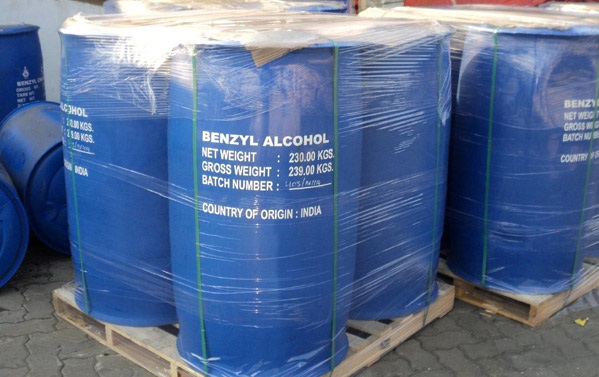
| HDPE Drum | 25 kg, 50 kg, 200 kg | HDPE | Industrial, pharmaceutical |
| Glass Bottle (Amber) | 1 L, 2.5 L, 5 L | Amber glass | Laboratory, high purity |
| Aluminum Foil Bag | 1 L, 5 L, 10 L | Aluminum / PE | High purity, pharmaceutical |
| IBC Container | 500 L, 1000 L | UV-protected HDPE | Large-scale industrial supply |
| Metal Drum (Lined) | 200 L | Lined steel | Industrial, bulk supply |
SECTION 16: TRANSPORTATION INFORMATION
| Parameter | Information |
|---|---|
| UN Number | Not applicable (not classified as dangerous substance) |
| Hazard Class | Not applicable |
| Packing Group | Not applicable |
| ADR/RID | Not classified as dangerous goods |
| IMDG Code | Not marine pollutant |
| IATA (Air) | Not classified as dangerous goods; can be transported by air |
| Transport Temperature | Ambient temperature; protect from heat, moisture, and light |
| Transport Precautions | Light-proof packaging; keep away from strong oxidizing agents |
| Spill Cleanup | Collect with absorbent material; do not allow to enter sewers or water bodies |
| Marine Pollutant | No |
SECTION 17: REGULATORY STATUS
| Region / Authority | Status |
|---|---|
| USA (FDA) | GRAS (21 CFR 182.60); Food additive; Approved as pharmaceutical preservative |
| European Union (EC) | Approved as cosmetic preservative (EC 1223/2009, Annex V/43); Approved as food flavoring |
| Turkey | Approved as cosmetic, pharmaceutical, and food ingredient; Subject to KKDIK regulation |
| ECHA (REACH) | Registered substance |
| TSCA (USA) | Listed |
| California (Prop 65) | Not listed |
| Halal | Yes (synthetic, not animal-derived) |
| Kosher | Yes (with certification) |
| Vegan | Yes (synthetic) |
| FDA Injectable Use | Approved (max. 2%) |
| Cosmetics Maximum Concentration | 1.5% (as preservative) |
SECTION 18: OTHER NAMES AND SYNONYMS
| Type | Name |
|---|---|
| Chemical Name (IUPAC) | Phenylmethanol |
| Common Names | Benzyl Alcohol, Benzal Alcohol |
| Other Names | Phenylmethyl alcohol, Hydroxytoluene, Hydroxymethyl benzene, Aromatic alcohol |
| CAS Number | 100-51-6 |
| EC Number | 202-859-9 |
| PubChem CID | 244 |
| DrugBank ID | DB06770 |
| FDA UNII | LKG8494WBH |
| HS Code | 2906.21 |
| E Number | None (food flavoring) |
SECTION 19: SUMMARY TABLE
| Property | Value |
|---|---|
| CAS Number | 100-51-6 |
| Molecular Formula | C₇H₈O (C₆H₅CH₂OH) |
| Molecular Weight | 108.14 g/mol |
| Appearance | Colorless, clear liquid |
| Odor | Slight, pleasant aromatic |
| Melting Point | -15.2 °C |
| Boiling Point | 205.3 °C |
| Density (20°C) | 1.044 g/cm³ |
| Water Solubility | ~4 g/100 mL |
| Flash Point | 93 °C |
| Primary Function | Solvent, preservative, chemical intermediate, local anesthetic |
| Main Applications | Pharmaceutical, cosmetics, epoxy resins, paints, perfumes |
| Shelf Life | 24-48 months |
| Storage | Cool (<25°C), dry, light-protected |
| GHS Signal Word | Warning |
| UN Number | Not applicable |
| FDA Status | GRAS (21 CFR 182.60) |
| Halal / Kosher / Vegan | Yes |
SECTION 20: CRITICAL WARNINGS AND BEST PRACTICES
CRITICAL WARNINGS:
-
Premature Infants and Newborns: Benzyl alcohol is contraindicated in premature infants and newborns due to risk of "gasping syndrome" (metabolic acidosis, respiratory depression).
-
Allergic Reactions: May cause allergic contact dermatitis in sensitive individuals. Patch testing should be performed before use in individuals with sensitive skin.
-
Skin and Eye Irritation: May cause skin and eye irritation at high concentrations. Use protective equipment.
-
Oxidation: Slowly oxidizes to benzaldehyde upon exposure to light and air. Store in light-protected containers.
-
Incompatibility: May react vigorously with strong oxidizing agents (nitric acid, hydrogen peroxide, potassium permanganate).
-
Plastic Compatibility: May dissolve or soften some plastics such as polystyrene and polycarbonate; use glass, HDPE, or stainless steel for storage and handling.
BEST PRACTICE RECOMMENDATIONS:
-
Concentration: Use 0.5-2% as a preservative in cosmetic and pharmaceutical formulations. Maximum 2% in injectable solutions.
-
Formulation: Effective as a preservative in pH 4-8 range. Combination with phenoxyethanol provides synergistic effect.
-
Dissolution: Moderately soluble in water; miscible with organic solvents. Can be added directly to formulations.
-
Antioxidant Use: Add BHT (0.01-0.1%) or Vitamin E to prevent oxidation.
-
Light Protection: Store in amber glass or opaque containers. Avoid prolonged light exposure.
-
Personal Protective Equipment: Chemical-resistant gloves (nitrile, neoprene), safety goggles, organic vapor respirator (for large quantities).
-
Hygiene: Wash hands thoroughly after handling; Do not eat, drink or smoke when using this product.
-
Storage: Store in cool, dry, light-protected containers. Keep containers tightly closed to minimize air exposure.
-
Quality Control: Regularly perform GC for purity, Karl Fischer for water content, GC for benzaldehyde content, titration for acidity.
-
Spill Cleanup: Collect with absorbent material; prevent entry into sewers or water bodies.
LEGAL DISCLAIMER:
The information provided in this document is based on our current knowledge and experience and is presented in good faith. However, as all conditions of use are beyond our control, it does not constitute a binding specification or guarantee. This Technical Data Sheet is for informational purposes only. Users are responsible for testing suitability for their own applications and for complying with all local, regional, and national regulations. For complete safety, storage, use, handling, waste, and regulatory compliance information, please refer to the official Safety Data Sheet (SDS/MSDS) provided by the manufacturer/supplier.