We unleash your business potential by maximize the business innovation.
Send EmailSodium Gluconate, Monosodium Gluconate, Sodium D-Gluconate, E576, 527-07-1
SODIUM GLUCONATE
1. PRODUCT IDENTIFICATION AND CHEMICAL IDENTITY
| Property | Description |
|---|---|
| Product Name | Sodium Gluconate |
| Chemical Name (IUPAC) | D-Gluconic Acid Monosodium Salt |
| Molecular Formula | C₆H₁₁NaO₇ |
| Molecular Weight | 218.14 g/mol |
| CAS Number | 527-07-1 |
| EINECS Number | 208-407-7 |
| E Number (Food) | E576 |
| Other Names | Monosodium Gluconate, Sodium D-Gluconate, D-Gluconate Sodium Salt, Monosodium D-Gluconate |
| Product Type | Organic Sodium Salt / Chelating Agent |
2. CHEMICAL STRUCTURE
2.1. Molecular Structure
Sodium gluconate is the monosodium salt of D-gluconic acid. It is formed by the oxidation of glucose to gluconic acid, followed by replacement of the hydrogen in the carboxyl group with sodium. The molecule has a six-carbon chain containing five hydroxyl groups (-OH) and one carboxylate group (-COONa).
Structural Formula:
        COONa
         |
    HO — C — H
         |
    H — C — OH
         |
    HO — C — H
         |
    H — C — OH
         |
        CH₂OH
Molecular Structure Properties:
| Property | Description |
|---|---|
| Functional Groups | 5 hydroxyl groups (-OH), 1 carboxylate group (-COONa) |
| Chirality | 4 chiral centers |
| Chelating Structure | Multiple hydroxyl and carboxyl groups chelate metal ions |
| Optical Activity | Optically active |
3. TYPICAL PHYSICAL AND CHEMICAL PROPERTIES
| Parameter | Specification / Typical Value |
|---|---|
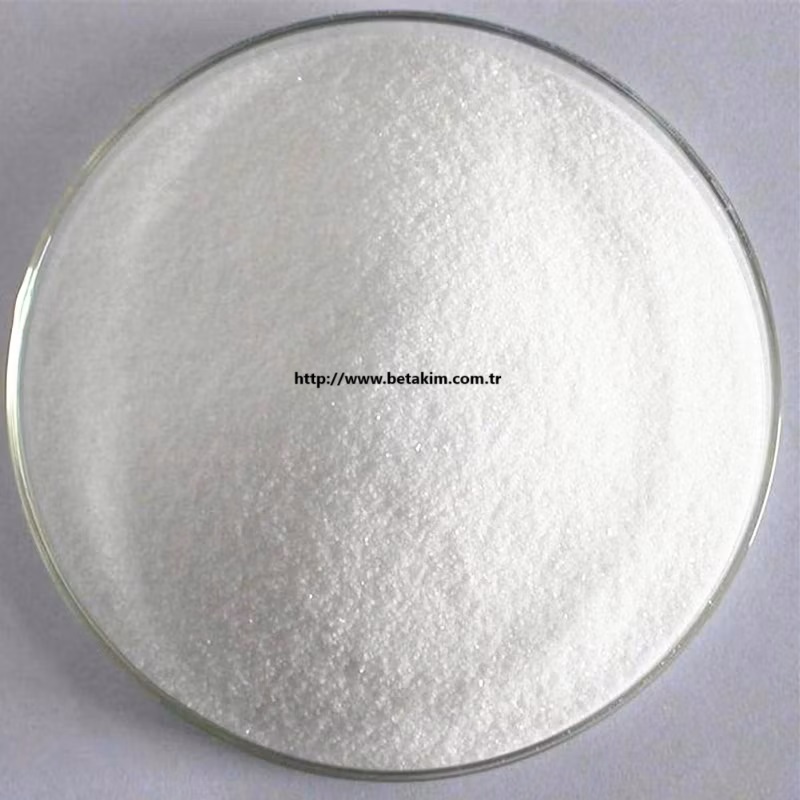
| Physical Appearance | White crystalline powder or free-flowing granules |
| Odor | Odorless |
| Molecular Weight | 218.14 g/mol |
| Density | ~1.80 g/cm³ (20°C) |
| Melting Point | 175 – 180 °C (Decomposition begins) |
| Boiling Point | Not applicable (Decomposes when heated) |
| Solubility (Water, 25°C) | 59 g / 100 ml water (Very soluble) |
| Solubility (Ethanol) | Slightly soluble |
| pH (10% Aqueous Solution) | 6.5 – 7.5 |
| Biodegradability | Readily biodegradable (>98%, OECD 301E) |
| Chelation Capacity | High (Ca²⁺, Mg²⁺, Fe³⁺, Cu²⁺) |
| Alkaline Stability | Stable at high pH (pH > 12) |
4. CHEMICAL ANALYSIS SPECIFICATIONS
The following values are typical for industrial and food grades:
| Analysis Parameter | Standard Value | Unit |
|---|---|---|
| Purity (Dry Basis) | ≥ 98.0 – 99.5 | % |
| Loss on Drying | ≤ 1.0 | % |
| Reducing Sugars (Glucose) | ≤ 1.0 | % |
| Chloride (Cl⁻) | ≤ 0.05 | % |
| Sulfate (SO₄²⁻) | ≤ 0.05 | % |
| Lead (Pb) | ≤ 2.0 | ppm |
| Arsenic (As) | ≤ 1.0 | ppm |
| Heavy Metals (as Pb) | ≤ 10 | ppm |
| Iron (Fe) | ≤ 10 | ppm |
| pH (10% solution) | 6.5 – 7.5 | - |
5. PRODUCTION METHOD
Sodium gluconate is produced by two main methods:
5.1. Chemical Synthesis Method
| Step | Description |
|---|---|
| 1. Gluconic Acid Production | Calcium Gluconate is reacted with Sulfuric Acid to obtain Gluconic Acid solution |
| 2. Neutralization | Gluconic acid is neutralized with Sodium Carbonate (Na₂CO₃) or Sodium Hydroxide (NaOH) |
| 3. Filtration | Precipitates are filtered out |
| 4. Drying | Dried in spray dryer or vacuum dryer |
5.2. Biotechnological (Fermentation) Method
| Step | Description |
|---|---|
| 1. Fermentation | Controlled fermentation of glucose with microorganisms such as Aspergillus niger |
| 2. Neutralization | Gluconic acid formed is neutralized with sodium hydroxide |
| 3. Purification | Decolorization with activated carbon and filtration |
| 4. Crystallization | Purification by crystallization |
| 5. Drying | Drying and milling |
6. MECHANISM AND FUNCTIONAL PROPERTIES
6.1. Chelation Mechanism
Sodium gluconate forms stable complexes with metal ions through its multiple hydroxyl and carboxyl groups. This property makes it a strong chelating agent.
General Chelation Reaction:
Sodium Gluconate + Mⁿ⁺ → [Gluconate-M] complex + nNa⁺
(M: Ca²⁺, Mg²⁺, Fe³⁺, Cu²⁺, Pb²⁺, etc.)
| Metal Ion | Chelation Stability (Log K) |
|---|---|
| Ca²⁺ | ~2.0 |
| Mg²⁺ | ~1.8 |
| Fe³⁺ | ~8.0 |
| Cu²⁺ | ~6.0 |
| Pb²⁺ | ~4.5 |
6.2. Alkaline Stability
Sodium gluconate remains stable even in high pH (pH > 12) environments. This is a significant advantage over other chelating agents such as EDTA.
6.3. Biodegradability
Sodium gluconate is >98% biodegradable according to OECD 301E testing. This makes it an environmentally friendly product.
7. MAIN FUNCTIONAL PROPERTIES AND APPLICATIONS
7.1. Construction and Building Chemicals Industry
| Application | Function | Details |
|---|---|---|
| Concrete Admixture | Set retarder | 0.05-0.30% of cement weight; extends setting time in summer |
| Water Reducer | Plasticizer | Low dosages (0.05%) show water-reducing effect |
| High Performance Concrete | Dispersant | Dispersant in superplasticizer systems |
| Gypsum and Plaster | Set regulator | Extends workability time in gypsum-based products |
Typical Usage Rates:
| Application | Dosage |
|---|---|
| Set Retarder | 0.15 – 0.30% of cement weight |
| Water Reducer | 0.05 – 0.10% of cement weight |
| Gypsum Additive | 0.05 – 0.20% of gypsum weight |
7.2. Industrial Water Treatment
| Application | Function | Details |
|---|---|---|
| Cooling Towers | Scale inhibitor | Binds Ca/Mg ions in circulating water |
| Corrosion Inhibitor | Metal protection | Prevents iron and copper corrosion |
| Boiler Water | Scale inhibitor | Prevents scale formation in boilers |
| Closed Loop Systems | Stabilizer | More stable at high alkali pH than EDTA |
Typical Usage Rates:
| Application | Dosage |
|---|---|
| Cooling Towers | 10 – 50 ppm (mg/L) |
| Boiler Water | 5 – 20 ppm |
| Closed Loop Systems | 20 – 100 ppm |
7.3. Industrial Cleaning and Metal Surface Treatment
| Application | Function | Details |
|---|---|---|
| Alkaline Cleaners | Chelating agent | Used with caustic soda; binds ions removed from metal surfaces |
| Bottle Washing | Descaling agent | In beer and soft drink bottle washing baths |
| Metal Cleaning | Surface polishing | Prevents re-contamination of metal surfaces |
| Electroplating | Bath stabilizer | Stabilizes metal ions in plating baths |
| Descaling | Scale remover | Scale removal in industrial equipment |
Typical Usage Rates:
| Application | Dosage |
|---|---|
| Light Soils / Hard Water | 2 – 5% (total solution) |
| Heavy Soils / Descaling | 5 – 10% (total solution) |
| Bottle Washing (High Hardness) | 10 – 12% (total solution) |
7.4. Food Industry (Additive E576)
| Application | Function | Details |
|---|---|---|
| Bitterness Masker | Taste correction | Suppresses the metallic bitter taste of sweeteners like Stevia |
| Stabilizer | Texture preservation | Used in dairy products and confectionery |
| Chelating Agent | Metal binding | Binds metal ions in food products |
| Acidity Regulator | pH control | pH adjustment in various food products |
Typical Usage Rates:
| Application | Dosage |
|---|---|
| Bitterness Masking | 1 – 3% of sweetener weight |
| Dairy Products/Cheese | 0.1 – 0.5% of total mass |
| Confectionery/Jelly | 0.2 – 1.0% |
7.5. Textile and Dyeing
| Application | Function | Details |
|---|---|---|
| Water Hardness Remover | Sequesterant | Binds hardness ions in dyeing baths |
| Color Enhancer | Color uniformity | Ensures more vivid and uniform colors in dye baths |
| Printing Paste | Stabilizer | Viscosity modifier in textile printing pastes |
Typical Usage Rates:
| Application | Dosage |
|---|---|
| Dyeing Bath | 0.5 – 2.0 g/L |
7.6. Other Applications
| Sector | Application | Function |
|---|---|---|
| Pharmaceutical | Excipient | Binder in tablet formulations |
| Cosmetics | Chelating agent | Metal ion binding in formulations |
| Detergents | Auxiliary agent | In phosphate-free detergent formulations |
| Agriculture | Micronutrient chelator | Chelation of plant nutrients |
| Oil & Gas | Drilling mud | Viscosity control in drilling fluids |
8. SECTOR USAGE SUMMARY TABLE
| Sector | Application | Dosage | Function |
|---|---|---|---|
| Construction | Concrete admixture | 0.05-0.30% | Set retarder, water reducer |
| Water Treatment | Cooling tower | 10-50 ppm | Scale inhibitor, corrosion inhibitor |
| Cleaning | Alkaline cleaner | 2-12% | Chelating agent, descaling |
| Food | Food additive | 0.1-3% | Bitterness masker, stabilizer |
| Textile | Dyeing | 0.5-2 g/L | Water hardness remover, color enhancer |
| Cosmetics | Formulation | Variable | Chelating agent |
| Pharmaceutical | Excipient | Variable | Binder, stabilizer |
9. ALTERNATIVE CHEMICALS AND COMPARISON
| Alternative Chemical | Strength | Weakness | Compared to Sodium Gluconate |
|---|---|---|---|
| EDTA | Very strong chelation, low dosage | Not biodegradable; performance decreases at high alkali pH | Advantage: Biodegradable, alkali stable |
| Sodium Glucoheptonate | Stronger chelation than gluconate | Higher cost | Advantage: More economical |
| Sodium Citrate | Common in food industry, inexpensive | Lower chelation capacity in alkaline conditions | Advantage: Alkaline stability |
| STPP (Sodium Tripolyphosphate) | Effective in detergent sector | Eutrophication risk (phosphate pollution) | Advantage: Phosphate-free, eco-friendly |
| Lignosulfonates | Very cheap in construction | Limited chelation; may entrain air in concrete | Advantage: Chelation capacity |
| Phosphonates (ATMP, HEDP) | Strong scale inhibition | Not biodegradable | Advantage: Biodegradable |
10. TOXICOLOGICAL PROFILE
| Parameter | Value |
|---|---|
| Acute Oral Toxicity (LD50, Rat) | > 5,000 mg/kg (low toxicity) |
| Acute Dermal Toxicity | > 2,000 mg/kg |
| Skin Irritation | Not an irritant |
| Eye Irritation | Mild irritant |
| Inhalation | Dust may cause respiratory irritation |
| Carcinogenicity | Not classified as a carcinogen |
| Mutagenicity | Not mutagenic |
| ADI (Acceptable Daily Intake) | Not specified (safe) |
| FDA Status | GRAS (Generally Recognized as Safe) |
| EU Approval | Approved as food additive E576 |
11. GHS CLASSIFICATION
| Hazard Class | Category | H-Statement |
|---|---|---|
| Not classified as hazardous | – | – |
Signal Word: None
Hazard Pictograms: None
Hazard Statements: No H-codes
12. FIRST AID MEASURES
| Route of Exposure | Action to Be Taken |
|---|---|
| Inhalation | Move to fresh air. If symptoms persist, seek medical attention |
| Skin Contact | Wash with plenty of soap and water |
| Eye Contact | Rinse thoroughly with plenty of water for at least 15 minutes. If irritation persists, seek medical attention |
| Ingestion | Rinse mouth. Drink plenty of water. Do not induce vomiting. Seek medical attention |
13. STORAGE AND SHELF LIFE
| Parameter | Detail |
|---|---|
| Storage Conditions | Store in a cool, dry, well-ventilated area away from moisture and direct sunlight |
| Container Requirements | Keep in closed packaging; PE-lined containers |
| Materials to Avoid | Moisture, high temperature, strong oxidizers |
| Shelf Life | 24 months in original unopened packaging under proper storage conditions |
| After Opening | Keep tightly closed to protect from moisture |
14. PACKAGING OPTIONS
| Packaging Type | Quantity | Material |
|---|---|---|
| Kraft Bag | 25 kg | PE-lined kraft paper bag |
| Fiber Drum | 50 kg | PE-lined fiber drum |
| Big-Bag | 500 kg, 1000 kg | PE-lined PP woven bag |
| Small Containers | 1 kg, 5 kg, 10 kg | HDPE containers |
15. TRANSPORT INFORMATION
| Parameter | Information |
|---|---|
| UN Number | Not applicable (not dangerous goods) |
| Hazard Class | Not applicable |
| Packing Group | Not applicable |
| ADR/RID | Not regulated |
| IMDG | Not regulated |
| IATA | Not regulated |
16. REGULATORY STATUS
| Region / Authority | Status |
|---|---|
| USA (FDA) | GRAS; 21 CFR 184.1318 |
| European Union | Approved as food additive (E576); (EC) No 1333/2008 |
| Turkey | Approved as food additive (Turkish Food Codex) |
| Codex Alimentarius | INS No. 576 |
| JECFA | Evaluated; safe |
| REACH | Registered |
17. ENVIRONMENTAL INFORMATION
| Parameter | Information |
|---|---|
| Biodegradability | Readily biodegradable (>98%, OECD 301E) |
| Aquatic Toxicity | Low toxicity |
| Bioaccumulation | Not expected |
| Eutrophication Risk | Phosphate-free; does not cause eutrophication |
| Waste Disposal | Dispose in accordance with local regulations |
18. OTHER NAMES AND SYNONYMS
-
Sodium Gluconate
-
Monosodium Gluconate
-
D-Gluconic Acid, Sodium Salt
-
Sodium D-Gluconate
-
E576
-
Sodium (2R,3S,4R,5R)-2,3,4,5,6-pentahydroxyhexanoate (IUPAC)
-
Monosodium D-Gluconate
-
Gluconic Acid Sodium Salt
19. QUICK REFERENCE TABLE
| Property | Value |
|---|---|
| CAS Number | 527-07-1 |
| EINECS Number | 208-407-7 |
| E Number | E576 |
| Molecular Formula | C₆H₁₁NaO₇ |
| Molecular Weight | 218.14 g/mol |
| Appearance | White crystalline powder or granules |
| Solubility (Water, 25°C) | 59 g/100 ml |
| pH (10% solution) | 6.5 – 7.5 |
| Biodegradability | >98% |
| FDA Status | GRAS |
| GHS Signal Word | None |
| UN Number | Not applicable |
| Shelf Life | 24 months |
20. CRITICAL NOTICES AND BEST PRACTICES
CRITICAL NOTICES:
-
Moisture Sensitivity: Sodium gluconate is sensitive to moisture. Caking may occur if the packaging is opened and exposed to moisture. Store in a dry environment.
-
Alkaline Stability: Sodium gluconate remains stable even at high pH (pH > 12). This is a significant advantage over other chelating agents such as EDTA.
-
Biodegradability: When chosen as an alternative to EDTA, its biodegradability is its greatest advantage.
-
Dosage Optimization: Optimum dosage for each application should be determined through trial runs. Overdosing may cause economic inefficiency and unwanted side effects.
-
Food Applications: Approved as food additive E576. It is GRAS and safe.
-
Phosphate-Free Alternative: Preferred as a phosphate-free alternative, especially in detergent and water treatment applications.
BEST PRACTICE RECOMMENDATIONS:
Concrete Applications:
-
Use at 0.05-0.30% of cement weight
-
Prefer 0.15-0.30% in summer or for long transport distances
-
Can be used with superplasticizers
Cleaning Applications:
-
Use with caustic soda
-
Adjust dosage according to water hardness
-
More effective at higher temperatures
Storage:
-
Store in a cool, dry, well-ventilated area
-
Protect from direct sunlight
-
Keep tightly closed in original packaging
Handling:
-
Use dust mask and protective goggles
-
Avoid dust formation
-
Use in well-ventilated areas
Waste Management:
-
Dispose in accordance with local regulations
-
Can be disposed of with normal waste due to being eco-friendly and biodegradable
LEGAL DISCLAIMER
This Technical Data Sheet (TDS) is for informational purposes only and is prepared based on available technical data. The user is solely responsible for determining the suitability of the product for their specific application and for complying with all local, national, and international regulations. For complete safety, storage, handling, transport, waste, and regulatory compliance information, the official Safety Data Sheet (SDS/MSDS) provided by the manufacturer/supplier must be consulted. This document does not substitute professional advice. Dosage and application conditions should be optimized through product-specific trials.