We unleash your business potential by maximize the business innovation.
Send EmailCopper Chloride, Cupric Chloride, Copper Chloride Anhydrous, Copper Chloride Dihydrate, 7447-39-4, 7758-89-6, 75763-85-8
CUPRIC CHLORIDE (COPPER CHLORIDE)
PRODUCT IDENTIFIER INFORMATION
| Parameter | Information |
|---|---|
| Product Name | Cupric Chloride (Copper Chloride) |
| Chemical Name (IUPAC) | Copper(II) Chloride |
| CAS Number (Anhydrous) | 7447-39-4 |
| CAS Number (Dihydrate) | 7758-89-6 |
| CAS Number (Synonym Group) | 75763-85-8 |
| EC Number (EINECS) | 231-210-2 |
| Molecular Formula | CuCl₂ |
| Molecular Weight | 134.45 g/mol (anhydrous); 170.48 g/mol (dihydrate) |
CHEMICAL STRUCTURE
        Cl⁻
         |
    Cu²⁺ — Cl⁻

    Cupric Chloride (CuCl₂)
    Ionic Structure
Cupric Chloride Molecular Structure
Molecular Formula: CuCl₂
SMILES: Cl[Cu]Cl
InChI: 1S/2ClH.Cu/h2*1H;/q;;+2/p-2
Crystal System: Anhydrous: Orthorhombic; Dihydrate: Monoclinic
SECTION 1: CHEMICAL IDENTITY AND DESCRIPTION
| Parameter | Information |
|---|---|
| Product Name | Cupric Chloride (Copper Chloride) |
| Chemical Name (IUPAC) | Copper(II) Chloride |
| Synonyms (English) | Cupric Chloride, Copper Chloride, Copper(II) Chloride, Chloro Copper, Copper Dichloride, Copper Chloride Anhydrous, Copper Chloride Dihydrate |
| CAS Number | 7447-39-4 (Anhydrous); 7758-89-6 (Dihydrate); 75763-85-8 (Synonym group) |
| EC Number (EINECS) | 231-210-2 |
| Molecular Formula | CuCl₂ |
| Molecular Weight | 134.45 g/mol (anhydrous); 170.48 g/mol (dihydrate) |
| Chemical Class | Inorganic compound; transition metal halide; copper salt |
| Physical State (20°C) | Crystalline solid |
| Odor | Odorless |
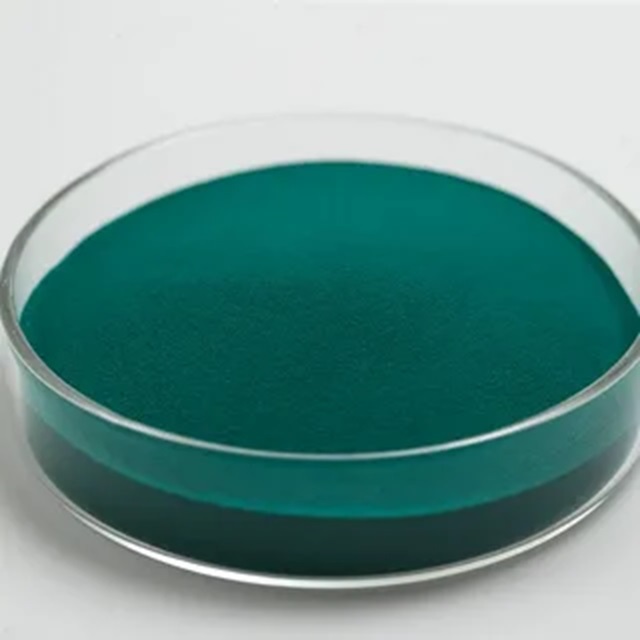
| Appearance | Anhydrous: Brownish-yellow crystalline solid; Dihydrate: Blue-green crystalline solid |
SECTION 2: PHYSICAL AND CHEMICAL PROPERTIES
| Property | Value | Test Method / Note |
|---|---|---|
| Appearance | Brownish-yellow (anhydrous) or blue-green (dihydrate) crystalline solid | Visual |
| Color | Anhydrous: Brownish-yellow; Dihydrate: Blue-green | Visual |
| Odor | Odorless | Olfactometric |
| Molecular Weight | 134.45 g/mol (anhydrous); 170.48 g/mol (dihydrate) | Calculated |
| Density | 3.386 g/cm³ (anhydrous); 2.51 g/cm³ (dihydrate) | ASTM D4052 |
| Melting Point | 498 °C (anhydrous) | DSC |
| Boiling Point | 993 °C (decomposes) | - |
| Solubility in Water | Soluble: 70.6 g/100 mL (0°C); 75.7 g/100 mL (20°C); 107.9 g/100 mL (100°C) | General Method |
| Solubility in Ethanol | Soluble | General Method |
| Solubility in Acetone | Slightly soluble | General Method |
| Solubility in Ether | Slightly soluble | General Method |
| pH (5% Solution) | ~3.0 - 4.0 (acidic) | pH Meter |
| Hygroscopicity | Hygroscopic (absorbs moisture from air) | - |
| Stability | Stable under normal conditions; deliquescent in moist air; decomposes upon heating | - |
| Corrosivity | Corrosive to many metals | - |
SECTION 3: CHEMICAL PROPERTIES AND REACTIVITY
| Parameter | Information |
|---|---|
| Chemical Character | Inorganic transition metal chloride; acidic salt; forms complexes with various ligands; Lewis acid |
| Stability | Stable under normal conditions; hygroscopic; decomposes upon heating |
| Reactivity | Reacts with bases to form copper hydroxide; forms complexes with ammonia, chloride ions, and other ligands; can be reduced to copper(I) chloride or copper metal; reacts with metals to displace less reactive metals |
| Incompatible Materials | Strong oxidizing agents, strong reducing agents, alkali metals, aluminum, magnesium, zinc, acetylene, hydrazine |
| Polymerization | Does not polymerize |
| Decomposition Products (Heating) | Copper(I) chloride (CuCl), Chlorine (Cl₂), Copper oxide (CuO), Copper (Cu) |
| Hazardous Reactions | May react violently with strong reducing agents; can form explosive compounds with acetylene; corrosive to many metals |
| Reaction with Water | Dissolves readily; acidic solution due to hydrolysis |
| Reaction with Bases | CuCl₂ + 2NaOH → Cu(OH)₂↓ + 2NaCl |
| Reaction with Ammonia | CuCl₂ + 4NH₃ → [Cu(NH₃)₄]Cl₂ (deep blue complex) |
| Reaction with Metals | CuCl₂ + Fe → FeCl₂ + Cu (copper deposition) |
| Reduction | 2CuCl₂ → 2CuCl + Cl₂ (upon heating) |
SECTION 4: PRODUCTION METHODS
Method 1: Direct Chlorination
Reaction:
Cu + Cl₂ → CuCl₂
Description:
-
Copper metal is reacted with chlorine gas at elevated temperatures
-
Produces anhydrous copper(II) chloride
-
High purity product
Method 2: Hydrochloric Acid Dissolution
Reaction:
CuO + 2HCl → CuCl₂ + H₂O
Cu(OH)₂ + 2HCl → CuCl₂ + 2H₂O
Cu₂O + 4HCl → 2CuCl₂ + 2H₂O + H₂
Description:
-
Copper oxide or copper hydroxide is dissolved in hydrochloric acid
-
Solution is evaporated and crystallized
-
Product can be obtained as anhydrous or dihydrate depending on drying conditions
Method 3: Copper Scrap Dissolution
Reaction:
Cu + 2HCl + H₂O₂ → CuCl₂ + 2H₂O
Description:
-
Copper scrap is dissolved in hydrochloric acid with an oxidizing agent (H₂O₂)
-
Economic method for industrial production
-
Solution is concentrated and crystallized
SECTION 5: FUNCTIONAL PROPERTIES AND MECHANISM OF ACTION
| Property | Description |
|---|---|
| Catalytic Activity | Acts as a catalyst in organic synthesis; used in chlorination, oxidation, and coupling reactions; catalyzes various chemical transformations |
| Mordant | Used in textile dyeing as a mordant; fixes dyes to fabrics; improves color fastness; used as pigment precursor |
| Wood Preservative | Effective wood preservative; protects against fungal decay and insect attack; used in combination with other preservatives |
| Complex Formation | Forms coordination complexes with various ligands; deep blue complex with ammonia; used in analytical chemistry |
| Copper Source | Provides copper ions for various applications; used in copper plating; source of copper in animal feed and fertilizers |
| Oxidizing Agent | Acts as mild oxidizing agent in organic synthesis; can oxidize alcohols and other organic compounds |
| Chlorinating Agent | Provides chlorine in organic chlorination reactions; used in synthesis of chlorinated organic compounds |
| Analytical Reagent | Used in various analytical procedures; serves as a colorimetric reagent; used in gravimetric analysis |
SECTION 6: MAIN APPLICATION AREAS
| Industry / Application | Function | Typical Use |
|---|---|---|
| Textile Industry | Mordant / pigment precursor | Textile dyeing and printing; fixing dyes to fabrics; pigment precursor in textile processing |
| Chemical Industry | Catalyst / reagent | Catalyst in organic synthesis; chlorination reactions; oxidation reactions; petrochemical catalysts |
| Wood Preservation | Preservative agent | Wood preservative formulations; protection against fungal decay and insects |
| Agriculture | Micronutrient / pesticide | Copper micronutrient in fertilizers; pesticide formulations (limited use) |
| Laboratory | Reagent | Analytical reagent; colorimetric reagent; chemical synthesis; gravimetric analysis |
| Electroplating | Copper source | Copper plating and electroplating baths; surface finishing |
| Catalysis | Catalyst / co-catalyst | Petrochemical catalysts; polymerization catalysts; organic synthesis catalysts |
| Water Treatment | Algaecide / fungicide | Swimming pool algaecides; industrial water treatment (limited) |
| Pigment Industry | Pigment precursor | Production of copper-based pigments; colorants |
| Electronics | Precursor / etchant | Printed circuit board etching; electronic component manufacture |
SECTION 7: QUALITY SPECIFICATIONS
| Parameter | Specification (Industrial) | Specification (Analytical) | Test Method |
|---|---|---|---|
| Appearance | Brownish-yellow or blue-green crystalline solid | Brownish-yellow or blue-green crystalline solid | Visual |
| Assay (CuCl₂) | ≥ 98.0 % | ≥ 99.0 % | Titrimetric |
| Copper Content | ≥ 46.5 % | ≥ 47.0 % | Gravimetric |
| Loss on Drying | ≤ 1.0 % | ≤ 0.5 % | Gravimetric |
| Water Insoluble Matter | ≤ 0.1 % | ≤ 0.02 % | Gravimetric |
| Chlorides (as Cl) | ≥ 52.0 % | ≥ 53.0 % | Titrimetric |
| Sulfates (as SO₄) | ≤ 0.05 % | ≤ 0.01 % | Turbidimetric |
| Iron (Fe) | ≤ 0.01 % | ≤ 0.005 % | AAS / ICP |
| Heavy Metals (as Pb) | ≤ 0.01 % | ≤ 0.005 % | AAS / ICP |
| Zinc (Zn) | ≤ 0.01 % | ≤ 0.005 % | AAS / ICP |
| pH (5% Solution) | 3.0 - 4.0 | 3.0 - 4.0 | pH Meter |
| Particle Size | As specified by customer requirement | - | Sieve / Laser Diffraction |
| Trace Metals | - | By ICP-MS | ICP-MS |
SECTION 8: TOXICOLOGICAL PROFILE
| Parameter | Value |
|---|---|
| Acute Oral Toxicity (LD50, Rat) | ~ 140 - 600 mg/kg (moderate to high toxicity) |
| Acute Dermal Toxicity (LD50, Rabbit) | > 2,000 mg/kg (moderate toxicity) |
| Acute Inhalation Toxicity (LC50, Rat, 4h) | ~ 10 mg/L (dust; toxic) |
| Skin Irritation | Corrosive; causes skin burns upon contact |
| Eye Irritation | Corrosive; causes severe eye damage |
| Respiratory Irritation | Dust causes respiratory tract irritation; may cause pulmonary edema |
| Chronic Toxicity | Chronic copper exposure may affect liver, kidneys, and nervous system; Wilson's disease risk; may cause hemolysis |
| Carcinogenicity | Not classified (IARC) |
| Mutagenicity | Not classified |
| Reproductive Toxicity | May affect reproductive health at high doses |
| Target Organs | Liver, kidneys, eyes, skin, respiratory system, nervous system |
| Occupational Exposure Limit (8h TWA) | 1.0 mg/m³ (as Cu, ACGIH/OSHA) |
| Short-Term Exposure Limit (STEL) | 2.0 mg/m³ (as Cu, ACGIH) |
| Special Toxicity Note | Toxic if ingested/inhaled; corrosive to skin and eyes; harmful to aquatic life with long-lasting effects |
SECTION 9: GHS CLASSIFICATION AND LABELING
GHS Classification (according to 1272/2008/EC and UN GHS):
| Hazard Class | Category | H-Statement |
|---|---|---|
| Acute Toxicity (Oral) | Category 4 | H302 |
| Acute Toxicity (Inhalation) | Category 4 | H332 |
| Skin Corrosion/Irritation | Category 1B | H314 |
| Serious Eye Damage/Irritation | Category 1 | H318 |
| Specific Target Organ Toxicity - SE | Category 3 | H335 |
| Chronic Aquatic Toxicity | Category 1 | H410 |
Signal Word: DANGER
Hazard Pictograms: GHS06 (Skull and Crossbones), GHS05 (Corrosion), GHS07 (Exclamation Mark), GHS09 (Environment)
Hazard Statements (H-Codes):
| Code | Statement |
|---|---|
| H302 | Harmful if swallowed |
| H314 | Causes severe skin burns and eye damage |
| H318 | Causes serious eye damage |
| H332 | Harmful if inhaled |
| H335 | May cause respiratory irritation |
| H410 | Very toxic to aquatic life with long-lasting effects |
NFPA 704 Hazard Classification:
| Health | Flammability | Reactivity | Special |
|---|---|---|---|
| 3 | 0 | 1 | - |
| (Severe health hazard) | (Non-flammable) | (Slightly reactive) | (None) |
SECTION 10: PRECAUTIONARY STATEMENTS (P-CODES)
| Code | Statement |
|---|---|
| P260 | Do not breathe dust/fume/gas/mist/vapors/spray |
| P262 | Do not get in eyes, on skin, or on clothing |
| P264 | Wash thoroughly after handling |
| P270 | Do not eat, drink or smoke when using this product |
| P271 | Use only outdoors or in a well-ventilated area |
| P280 | Wear protective gloves / protective clothing / eye protection / face protection |
| P301+P330+P331 | IF SWALLOWED: Rinse mouth. Do NOT induce vomiting |
| P302+P352 | IF ON SKIN: Wash with plenty of soap and water |
| P303+P361+P353 | IF ON SKIN (or hair): Take off immediately all contaminated clothing. Rinse skin with water/shower |
| P304+P340 | IF INHALED: Remove person to fresh air and keep comfortable for breathing |
| P305+P351+P338 | IF IN EYES: Rinse cautiously with water for several minutes. Remove contact lenses if present and easy to do. Continue rinsing |
| P310 | Immediately call a POISON CENTER / doctor |
| P330 | Rinse mouth |
| P403+P233 | Store in a well-ventilated place. Keep container tightly closed |
| P405 | Store locked up |
| P501 | Dispose of contents/container in accordance with local/regional/national/international regulations |
SECTION 11: FIRST AID MEASURES
| Exposure Route | Action to Take |
|---|---|
| Inhalation | Move to fresh air immediately. Keep at rest in a position comfortable for breathing. If breathing is difficult, give oxygen. Seek immediate medical attention. |
| Skin Contact | Remove contaminated clothing immediately. Rinse skin with copious amounts of water for at least 15-20 minutes. Wash with soap and water. Seek medical attention. |
| Eye Contact | Rinse immediately with plenty of water for at least 15-20 minutes. Hold eyelids open. Remove contact lenses if present. Seek immediate medical attention. |
| Ingestion | Rinse mouth. Do NOT induce vomiting. Seek immediate medical attention. Note: Copper compounds are toxic and may cause liver and kidney damage. |
SECTION 12: FIRE-FIGHTING MEASURES
| Parameter | Information |
|---|---|
| Fire Hazard | Non-flammable; may decompose at high temperatures to release toxic fumes |
| Hazards During Fire | Thermal decomposition produces toxic copper chloride fumes, chlorine gas, and copper oxide fumes |
| Suitable Extinguishing Media | Dry chemical powder, CO₂, water spray (for cooling), alcohol-resistant foam |
| Unsuitable Extinguishing Media | Water jet (may spread hazardous material; may create corrosive solutions) |
| Special Protective Equipment | Self-contained breathing apparatus (SCBA), full protective clothing, acid-resistant gloves |
| Special Precautions | Cool containers with water fog from safe distance; prevent runoff water from entering drains and waterways; avoid contact with reducing agents |
SECTION 13: STORAGE AND SHELF LIFE
| Parameter | Information |
|---|---|
| Storage Conditions | Cool, dry, well-ventilated area; away from heat, moisture, and incompatible materials; airtight, moisture-free containers |
| Container Requirements | Tightly closed, properly labeled containers; use moisture-resistant packaging; use acid-resistant containers (HDPE, glass) |
| Materials to Protect From | Strong reducing agents, alkali metals, aluminum, magnesium, zinc, acetylene, hydrazine, moisture |
| Shelf Life | 24 months (in unopened original packaging, under proper storage conditions) |
| Stability Note | Stable under normal conditions; hygroscopic and deliquescent; absorbs moisture from air; protect from humidity; may form complexes upon exposure to ammonia |
SECTION 14: PACKAGING OPTIONS
| Packaging Type | Quantity | Material |
|---|---|---|
| Laboratory Bottle | 100 g, 500 g, 1 kg | Glass / HDPE |
| Plastic Bag | 5 kg, 10 kg, 25 kg | PE bag |
| Fiber Drum | 25 kg, 50 kg | PE-lined fiberboard |
| Plastic Drum | 25 kg, 50 kg, 100 kg | HDPE / Polypropylene |
| Bulk Bag (FIBC) | 500 kg, 1000 kg | PE-lined woven PP |
SECTION 15: TRANSPORT INFORMATION
| Parameter | Information |
|---|---|
| UN Number | UN 2802 (Copper chloride) |
| Hazard Class | 8 (Corrosive Substance) |
| Packing Group | III |
| ADR/RID | UN 2802, Copper chloride, 8, PG III |
| IMDG Code | UN 2802, Copper chloride, 8, PG III, Marine Pollutant: Yes |
| IATA (Air) | UN 2802, Copper chloride, 8, PG III |
| Marine Pollutant | Yes |
| Transport Temperature | Ambient; protect from moisture |
SECTION 16: REGULATORY STATUS
| Region / Authority | Status |
|---|---|
| European Union | REACH registered; classified as hazardous substance |
| USA (TSCA) | Listed |
| Turkey | Industrial chemical; subject to KKDIK regulation |
| IARC | Not classified as carcinogenic |
| OSHA | Regulated (toxic and corrosive substance) |
| FDA | Not approved for food contact or food additives |
| EPA | Regulated under various environmental laws |
SECTION 17: OTHER NAMES AND SYNONYMS
| Type | Name |
|---|---|
| English Synonyms | Cupric Chloride, Copper Chloride, Copper(II) Chloride, Chloro Copper, Copper Dichloride, Copper Chloride Anhydrous, Copper Chloride Dihydrate |
| Turkish Synonyms | Küprik Klorür, Bakır Klorür, Bakır(II) Klorür, Kloro Bakır |
| Chemical Names | Copper(II) Chloride; Cupric Chloride; Copper Dichloride |
| CAS Number (Anhydrous) | 7447-39-4 |
| CAS Number (Dihydrate) | 7758-89-6 |
| CAS Number (Synonym Group) | 75763-85-8 |
| EC Number | 231-210-2 |
SECTION 18: ALTERNATIVE PRODUCTS / SUBSTITUTES
| Alternative | Best Suited For | Key Difference |
|---|---|---|
| Copper Sulfate (CuSO₄) | Agriculture, water treatment, algaecides | Widely used in agriculture; different anion; similar copper content; less corrosive |
| Iron(III) Chloride (FeCl₃) | Water treatment, coagulant, etching | Different metal; used in water treatment as coagulant; less toxic than copper chloride |
| Nickel Chloride (NiCl₂) | Electroplating, catalysis | Different metal; similar chemistry; different applications |
| Zinc Chloride (ZnCl₂) | Wood preservation, flux | Different metal; similar corrosive properties; different applications |
| Copper Nitrate (Cu(NO₃)₂) | Catalysis, pigment | Different anion; more soluble; different properties |
SECTION 19: SECTORAL SUITABILITY TABLE
| Sector | Suitability | Notes |
|---|---|---|
| Textile Industry | Fully Suitable | Used as mordant and pigment precursor in textile dyeing and printing |
| Chemical Industry | Fully Suitable | Used as catalyst in organic synthesis, chlorination and oxidation reactions |
| Construction | Not Suitable | Not typically used in construction applications |
| Pharmaceuticals | Not Suitable | Not used in pharmaceutical formulations; used as reagent only |
| Agriculture | Partially Suitable | Limited use in pesticide formulations; copper micronutrient |
| Wood Preservation | Fully Suitable | Used in wood preservative formulations |
| Laboratory | Fully Suitable | Used as analytical reagent and in chemical synthesis |
| Electronics | Partially Suitable | Used in PCB etching; limited applications |
SECTION 20: SUMMARY TABLE
| Parameter | Value |
|---|---|
| Product | Cupric Chloride (Copper Chloride) |
| CAS Number (Anhydrous) | 7447-39-4 |
| Molecular Formula | CuCl₂ |
| Molecular Weight | 134.45 g/mol (anhydrous) |
| Appearance | Brownish-yellow (anhydrous) or blue-green (dihydrate) crystalline solid |
| Density | 3.386 g/cm³ (anhydrous) |
| Melting Point | 498 °C |
| Solubility in Water | Soluble: 70.6 g/100 mL (0°C) |
| Primary Function | Catalyst, mordant, wood preservative, reagent |
| Main Applications | Textile, chemical industry, wood preservation, laboratory |
| Shelf Life | 24 months |
| GHS Signal Word | DANGER |
| UN Number | UN 2802 |
SECTION 21: CRITICAL WARNINGS AND BEST PRACTICES
CRITICAL WARNINGS:
-
Harmful if swallowed or inhaled (H302/H332). Copper compounds are toxic.
-
Causes severe skin burns and eye damage (H314/H318). Use full PPE.
-
Very toxic to aquatic life with long-lasting effects (H410). Prevent environmental release.
-
Corrosive to many metals; store in acid-resistant containers.
-
Hygroscopic: Absorbs moisture from air; store in airtight containers.
-
Incompatibilities: Keep away from strong reducing agents, alkali metals, aluminum, magnesium, zinc, acetylene, hydrazine, and moisture.
-
Toxic to aquatic organisms; wastewater treatment required before disposal.
-
REACH registration required for EU trade.
BEST PRACTICE RECOMMENDATIONS:
-
Textile Industry: Use as mordant and pigment precursor; ensure proper wastewater treatment before disposal; recover copper from waste streams when possible.
-
Chemical Industry: Use as catalyst for chlorination and oxidation reactions; handle under controlled conditions; ensure proper waste treatment.
-
Wood Preservation: Use in wood preservative formulations; ensure proper application and disposal; follow environmental regulations.
-
Handling: Use in well-ventilated areas or under fume hood; wear chemical-resistant gloves (neoprene, nitrile), safety goggles, face shield, and appropriate respiratory protection; avoid creating dust.
-
Personal Protective Equipment: Use chemical safety glasses, suitable protective clothing, chemical protective gloves; use respirator when airborne concentration exceeds standards.
-
Hygiene: Do not eat, drink or smoke while handling; wash hands thoroughly after handling; shower at end of work shift.
-
Storage: Store in tightly closed, properly labeled containers in cool, dry, well-ventilated conditions; keep away from heat, moisture, and incompatible materials.
-
Spill Response: Avoid creating dust; wear full PPE; vacuum or wet sweep; place in sealed containers for disposal; prevent discharge to water bodies.
-
Waste Management: Neutralize before disposal; copper recovery possible from electronic waste; follow local, regional and national regulations.
-
Disposal: Dispose of in accordance with local, regional and national regulations; do not discharge into drains or water bodies; copper compounds are regulated as hazardous waste.
LEGAL DISCLAIMER:
The information provided in this document is based on our current knowledge and experience and is presented in good faith. However, as all conditions of use are beyond our control, it does not constitute a binding specification or warranty. This Technical Data Sheet is for informational purposes only. Users are responsible for testing the suitability of the product for their specific applications. For complete safety, storage, use, handling, waste, and regulatory compliance information, please refer to the official Safety Data Sheet (SDS/MSDS) provided by the manufacturer/supplier.
 chloride, chloro copper, 7758-89-6 .jpg)
