We unleash your business potential by maximize the business innovation.
Send EmailCalcium Fluoride, Calcium Difluoride, 7789-75-5
CALCIUM FLUORIDE
PRODUCT IDENTIFIER INFORMATION
| Parameter | Information |
|---|---|
| Product Name | Calcium Fluoride |
| Chemical Name (IUPAC) | Calcium Difluoride |
| CAS Number | 7789-75-5 |
| EC Number (EINECS) | 232-188-7 |
| Molecular Formula | CaF2 |
| Molecular Weight | 78.07 g/mol |
SECTION 1: CHEMICAL IDENTITY AND DESCRIPTION
| Parameter | Information |
|---|---|
| Chemical Name (IUPAC) | Calcium Difluoride |
| Synonyms | Calcium Fluoride, Fluorite, Fluorspar, Calcium Difluoride |
| CAS Number | 7789-75-5 |
| EC Number (EINECS) | 232-188-7 |
| Molecular Formula | CaF2 |
| Molecular Weight | 78.07 g/mol |
| Chemical Class | Inorganic salt (metal halide) |
| Natural Mineral | Fluorite (Fluorspar) |
| Mineral Crystal System | Cubic (Fluorite structure) |
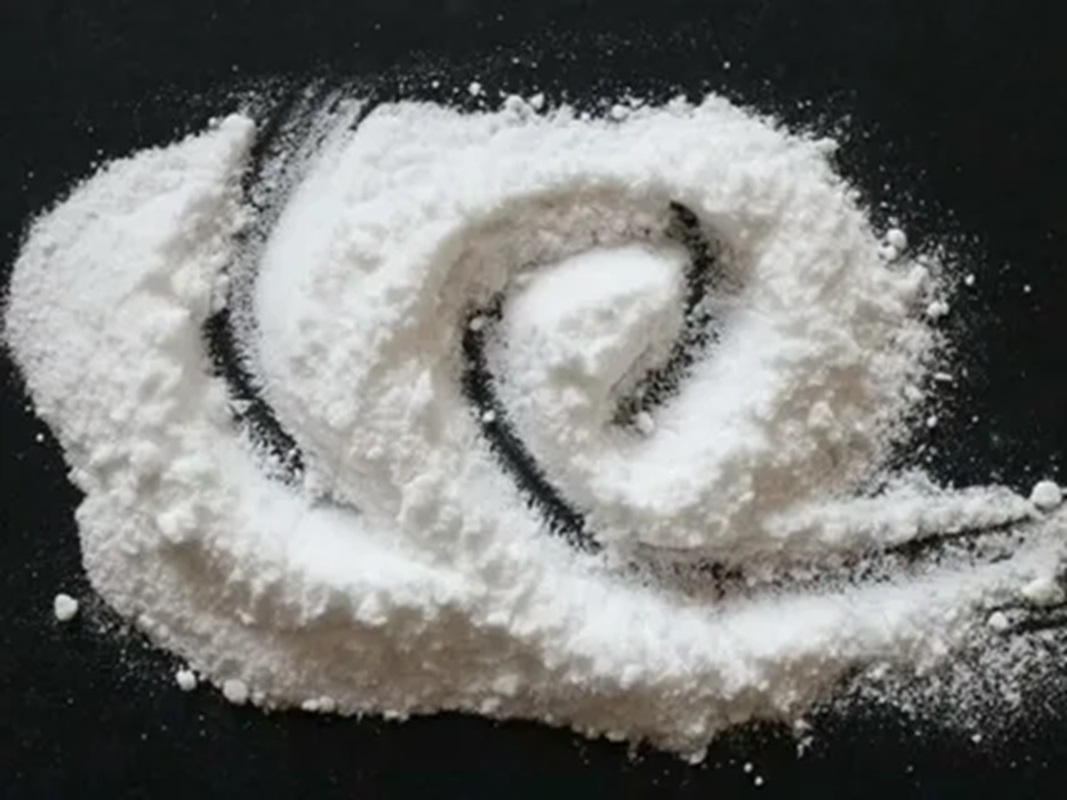
| Physical State (20°C) | Solid (white powder, crystals, or granules; natural mineral may be colored) |
| Odor | Odorless |
| Hygroscopicity | Non-hygroscopic (does not absorb moisture) |
| Chemical Character | Weak oxidizing and reducing properties; chemically highly stable (inert) |
SECTION 2: PHYSICAL AND CHEMICAL PROPERTIES
| Property | Value | Test Method |
|---|---|---|
| Appearance | White crystalline powder or granules; natural fluorite may be colored | Visual |
| Odor | Odorless | Olfactometric |
| Molecular Weight | 78.07 g/mol | Calculated |
| Crystal Structure | Cubic (Fluorite structure); Ca2+ face-centered cubic, F- in all tetrahedral holes | XRD |
| Molecular Structure (Gas Phase) | Linear (F-Ca-F) | Spectroscopic |
| Melting Point | 1402°C | ASTM D3418 |
| Boiling Point | 2500°C | Calculated |
| Density (25°C) | 3.18 g/cm3 | ASTM D4052 |
| Hardness (Mohs) | 4.0 | Mohs Scale |
| Solubility in Water (25°C) | 16 mg/L (practically insoluble) | Gravimetric |
| Solubility in Acids | Soluble in concentrated HCl, H2SO4, HNO3 | General Method |
| Solubility in Ammonium Salt Solution | Soluble in ammonium chloride (NH4Cl) solution | General Method |
| Solubility in Organic Solvents | Insoluble | General Method |
| Refractive Index (nD) | 1.4338 (at 589 nm) | Refractometry |
| Optical Transmission Range | 0.13 - 10 µm (broad range from UV to IR) | Spectrophotometry |
| Thermal Expansion Coefficient | 18.9 × 10⁻⁶ /K (20-1000°C) | Dilatometry |
| Thermal Conductivity (25°C) | 9.71 W/m·K | Laser Flash Method |
| Dielectric Constant (1 MHz) | 6.76 | Impedance Analysis |
| Flash Point | Non-flammable | Not applicable |
| Autoignition Temperature | Non-flammable | Not applicable |
SECTION 3: CRYSTAL STRUCTURE AND CHEMICAL PROPERTIES
| Parameter | Information |
|---|---|
| Crystal Structure Name | Fluorite Structure |
| Crystal System | Cubic |
| Space Group | Fm3m (No. 225) |
| Lattice Parameter | a = 5.463 Å |
| Unit Cell Content | 4 CaF2 formula units |
| Coordination Number (Ca2+) | 8 (cubic) |
| Coordination Number (F-) | 4 (tetrahedral) |
| Bond Type | Ionic |
| Chemical Stability | High; does not readily react with most chemicals |
| Reactivity (with Acids) | Reacts with concentrated sulfuric acid to release HF gas: CaF2 + H2SO4 → CaSO4 + 2HF |
| Incompatible Materials | Strong acids (releases HF), strong oxidizing agents |
| Hazardous Decomposition Products | Hydrogen fluoride (HF) gas upon contact with acids |
SECTION 4: PRODUCTION METHODS AND PURITY GRADES
A. Production Methods:
| Method | Description |
|---|---|
| Mining (Primary Source) | Extraction of fluorite ore from mines (open pit or underground); enrichment via crushing, grinding, and flotation |
| Chemical Synthesis (Precipitation) | Reaction of soluble calcium salt (CaCl2) with fluoride source (NaF, NH4F) in aqueous solution: CaCl2 + 2NaF → CaF2↓ + 2NaCl |
| By-Product Production | Formation as by-product during HF production; reaction of limestone (CaCO3) with HF (not economical) |
B. Commercial Purity Grades:
| Grade | Purity (CaF2) | Typical Impurities | Primary Application |
|---|---|---|---|
| Metallurgical Grade (Metspar) | 60-85% | SiO2, CaCO3, Fe2O3 | Flux in steel and aluminum production |
| Ceramic Grade | 85-97% | SiO2, Fe2O3, CaCO3 | Glass, ceramic, enamel opacifier |
| Acid Grade (Acidspar) | ≥ 97% | SiO2, CaCO3, trace metals | HF production, fluorochemicals |
| Optical Grade | ≥ 99.99% | Trace metals < 1 ppm | Optical lenses, prisms, laser systems |
| Pharmaceutical Grade | ≥ 99.0% | Heavy metals ≤ 20 ppm | Toothpaste, oral care products |
SECTION 5: FUNCTIONAL PROPERTIES AND MECHANISM OF ACTION
| Property | Description |
|---|---|
| Optical Transmission | High transparency across very broad wavelength range from UV to IR (0.13-10 µm) |
| Low Refractive Index | nD = 1.4338; low dispersion in optical systems |
| Thermal Stability | Maintains structural integrity up to 1402°C |
| Chemical Inertness | Resistant to most chemicals; unaffected by moisture |
| Low Solubility | Practically insoluble in water (16 mg/L); controlled fluoride release |
| Flux Effect (Metallurgy) | Increases fluidity of slag in molten metal; facilitates separation of impurities |
| Opacifier (Glass/Ceramic) | Provides opaque (frosted) appearance in glass and enamel |
| Dental Enamel Protection | Slowly dissolves in saliva releasing fluoride ions; prevents demineralization, supports remineralization |
| Low Dielectric Constant | Suitable for high-frequency applications |
SECTION 6: PRIMARY APPLICATION AREAS
| Sector | Application | Grade Used |
|---|---|---|
| Chemical Industry | Production of hydrogen fluoride (HF) and fluorochemicals (refrigerant gases, fluoropolymers, pharmaceuticals, agrochemicals) | Acid Grade |
| Metallurgy | Flux in steel and aluminum production (slag fluidizer); protective cover in aluminum casting | Metallurgical Grade |
| Glass and Ceramics | Opacifier in opaque glass (frosted glass), enamel, ceramic glazes; lowers glass melting temperature | Ceramic Grade |
| Optical Industry | Lenses, prisms, windows for UV, visible, and IR optical systems; excimer laser optics; thermal imaging windows | Optical Grade |
| Dental Health | Toothpastes, mouthwashes, protective dental gels; enamel strengthening and anti-cavity agent | Pharmaceutical Grade |
| Welding Industry | Flux component in welding electrodes and powders | Metallurgical/Ceramic Grade |
| Photonics / Optoelectronics | Mid-infrared microresonators, photonic devices | Optical Grade |
| Nuclear Industry | Refractory material in certain nuclear reactors | High Purity |
| Collection / Jewelry | Natural colored fluorite crystals for collection and ornamental use | Natural Mineral |
SECTION 7: QUALITY SPECIFICATIONS (ACID GRADE - ACIDSPAR)
| Parameter | Specification | Test Method |
|---|---|---|
| CaF2 Content | ≥ 97.0% | XRF / Wet Chemical Analysis |
| SiO2 (Silica) | ≤ 1.5% | Gravimetric / XRF |
| CaCO3 (Calcium Carbonate) | ≤ 1.0% | Acid Titration |
| Fe2O3 (Iron Oxide) | ≤ 0.2% | AAS / ICP-OES |
| Sulfur (as S) | ≤ 0.1% | Combustion / Ion Chromatography |
| Phosphorus (as P) | ≤ 100 ppm | ICP-OES |
| Heavy Metals (as Pb) | ≤ 20 ppm | ICP-MS |
| Arsenic (As) | ≤ 10 ppm | ICP-MS |
| Mercury (Hg) | ≤ 1 ppm | ICP-MS |
| Particle Size | Per customer specification (typical: below 100 mesh) | Sieve Analysis |
| Moisture Content | ≤ 0.5% | Gravimetric (105°C) |
SECTION 8: QUALITY SPECIFICATIONS (OPTICAL GRADE)
| Parameter | Specification | Test Method |
|---|---|---|
| Purity | ≥ 99.99% | GDMS / ICP-MS |
| Transmission (UV, 193 nm) | ≥ 90% (10 mm thickness) | UV-Vis Spectrophotometer |
| Transmission (IR, 5 µm) | ≥ 95% (10 mm thickness) | FTIR Spectrometer |
| Refractive Index Homogeneity | Δn < 1 × 10⁻⁶ | Interferometry |
| Stress Birefringence | < 10 nm/cm | Polarimetry |
| Bubbles and Inclusions | Class 1-2 per ISO 10110 | Microscopic Examination |
| Surface Quality (Polish) | λ/4 or better (at 632.8 nm) | Interferometry |
SECTION 9: TOXICOLOGICAL PROFILE
| Parameter | Value |
|---|---|
| Acute Oral Toxicity (LD50, Rat) | > 5,000 mg/kg (low toxicity) |
| Acute Dermal Toxicity (LD50, Rabbit) | > 2,000 mg/kg |
| Skin Irritation | Slightly irritating (mechanical) |
| Eye Irritation | Mechanically irritating (dust) |
| Respiratory Irritation | Inhalation of dust may cause mechanical irritation |
| Skin Sensitization | Not sensitizing |
| Carcinogenicity | Not classified (IARC, NTP) |
| Mutagenicity | Negative in standard tests |
| Reproductive Toxicity | No known adverse effects |
| Chronic Toxicity | Excessive oral fluoride intake may cause fluorosis (oral route only) |
SECTION 10: GHS CLASSIFICATION AND LABELING
GHS Classification (compliant with 1272/2008/EC):
| Hazard Class | Category | H-Statement |
|---|---|---|
| Not classified | - | Not classified as hazardous |
Signal Word: No signal word (not classified as hazardous)
Hazard Pictograms: No pictograms required
Hazard Statements (H-Codes):
| Code | Statement |
|---|---|
| None | Not classified as hazardous |
Precautionary Statements (P-Codes):
| Code | Statement |
|---|---|
| P261 | Avoid breathing dust |
| P280 | Wear protective gloves/eye protection |
| P305+P351+P338 | IF IN EYES: Rinse cautiously with water for several minutes |
SECTION 11: FIRST AID MEASURES
| Exposure Route | Action to Take |
|---|---|
| Inhalation | Move to fresh air. Seek medical attention if respiratory irritation persists. |
| Skin Contact | Wash with plenty of water and soap. Seek medical attention if irritation persists. |
| Eye Contact | Rinse immediately with plenty of water for at least 15 minutes. Remove contact lenses if present. Seek medical attention if irritation persists. |
| Ingestion | Rinse mouth with water. Drink plenty of water. Seek medical attention if you feel unwell. |
Special Warning for Contact with Acids: Contact of calcium fluoride with strong acids may release hydrogen fluoride (HF) gas. HF is extremely toxic and corrosive. If HF exposure is suspected, immediate medical attention is required.
SECTION 12: FIREFIGHTING MEASURES
| Parameter | Information |
|---|---|
| Fire Hazard | Non-flammable |
| Flash Point | Not applicable (non-flammable) |
| Autoignition Temperature | Not applicable (non-flammable) |
| Hazards During Fire | May release toxic HF gas upon contact with acids |
| Suitable Extinguishing Media | Any extinguishing media appropriate for surrounding fire (water, CO2, dry chemical powder, foam) |
| Special Protective Equipment | Self-contained breathing apparatus (SCBA) and full protective clothing in fire conditions; special protection against potential HF formation |
SECTION 13: STORAGE AND SHELF LIFE
| Parameter | Information |
|---|---|
| Storage Conditions | Cool, dry, well-ventilated area; containers tightly closed |
| Container Requirements | Moisture-proof containers; plastic or stainless steel |
| Keep Away From | Strong acids, strong oxidizing agents |
| Storage Temperature | Ambient (15-25°C); no temperature limitation |
| Shelf Life | Unlimited (non-hygroscopic; stable under appropriate conditions) |
| Stability Note | Completely stable under normal storage conditions; does not decompose |
SECTION 14: PACKAGING OPTIONS
| Packaging Type | Quantity | Material |
|---|---|---|
| Kraft bag with PE inner liner | 25 kg | Kraft paper + PE |
| PP woven bag with PE inner liner | 25 kg | PP woven + PE |
| Fiber drum with PE liner | 50 kg | Fiberboard + PE |
| Big-Bag | 500-1000 kg | Polypropylene (with PE inner liner) |
| Bulk (Silobas) | 20-25 tons | Silo tanker |
| Plastic pail (optical grade) | 1-5 kg | HDPE (special protected) |
SECTION 15: TRANSPORTATION INFORMATION
| Parameter | Information |
|---|---|
| UN Number | Not regulated (not a hazardous substance) |
| Hazard Class | Not applicable |
| Packing Group | Not applicable |
| ADR/RID | Not regulated |
| IMDG Code | Not regulated |
| IATA (Air) | Not regulated |
| Marine Pollutant | No |
| Transport Temperature | Ambient |
SECTION 16: ACCIDENTAL RELEASE AND CLEANUP
| Parameter | Information |
|---|---|
| Personal Protection | Dust mask (N95), safety goggles, nitrile gloves |
| Cleanup Methods | Sweep up or vacuum dry. Minimize dust generation. |
| Environmental Precautions | Prevent entry into drains, soil, and surface water. |
| Waste Disposal | According to local regulations; burial at licensed disposal facility. Avoid contact with acids. |
SECTION 17: REGULATORY STATUS
| Region / Authority | Status |
|---|---|
| European Union | Registered under REACH (exemption may apply) |
| USA (FDA) | Approved in toothpaste and oral care products (OTC monograph) |
| USA (USP-NF) | No official monograph; active ingredient in dental products |
| Turkey | Under Cosmetics Regulation and Turkish Food Codex |
| European Pharmacopoeia | No official monograph; used in specific applications |
| JECFA (FAO/WHO) | Not evaluated as food additive |
| Cosmetics Regulation (EC 1223/2009) | Permitted fluoride source in dental care products |
SECTION 18: OTHER NAMES AND SYNONYMS
| Type | Name |
|---|---|
| Chemical Names | Calcium Fluoride, Calcium Difluoride |
| Mineral Names | Fluorite, Fluorspar |
| Other Names | Natural Calcium Fluoride, Synthetic Calcium Fluoride |
| Optical Grade Names | CaF2 Optical, IR Grade Calcium Fluoride, UV Grade Calcium Fluoride |
| Commercial Grades | Acidspar (Acid Grade), Metspar (Metallurgical Grade), Ceramic Grade |
| CAS Number | 7789-75-5 |
| EC Number | 232-188-7 |
SECTION 19: COMPARISON OF CALCIUM FLUORIDE WITH OTHER FLUORIDE SOURCES
| Property | Calcium Fluoride (CaF2) | Sodium Fluoride (NaF) | Magnesium Fluoride (MgF2) | Lithium Fluoride (LiF) |
|---|---|---|---|---|
| CAS Number | 7789-75-5 | 7681-49-4 | 7783-40-6 | 7789-24-4 |
| Molecular Weight | 78.07 | 41.99 | 62.30 | 25.94 |
| Melting Point | 1402°C | 993°C | 1263°C | 845°C |
| Solubility in Water (25°C) | 16 mg/L (insoluble) | 40 g/L (very soluble) | 130 mg/L (slightly soluble) | 2.7 g/L (moderately soluble) |
| Optical Transmission Range | 0.13 - 10 µm | Limited | 0.12 - 8 µm | 0.12 - 7 µm |
| Refractive Index (nD) | 1.4338 | 1.324 | 1.378 | 1.392 |
| Primary Use | HF production, optics, metallurgy | Toothpaste, water fluoridation | Optical coatings, UV optics | Thermoluminescence dosimetry |
| Toxicity (Oral) | Low | High | Moderate | High |
SECTION 20: SUMMARY TABLE
| Parameter | Value |
|---|---|
| Product | Calcium Fluoride (CaF2) |
| CAS Number | 7789-75-5 |
| Molecular Formula | CaF2 |
| Molecular Weight | 78.07 g/mol |
| Natural Mineral | Fluorite (Fluorspar) |
| Crystal Structure | Cubic (Fluorite Structure) |
| Appearance | White crystalline powder or granules |
| Melting Point | 1402°C |
| Boiling Point | 2500°C |
| Solubility in Water | 16 mg/L (practically insoluble) |
| Optical Transmission | 0.13 - 10 µm (UV to IR) |
| Primary Uses | HF production, metallurgical flux, optical components, dental health, glass/ceramic opacifier |
| GHS Classification | Not classified (non-hazardous) |
| Shelf Life | Unlimited (stable) |
SECTION 21: COMPARISON WITH OTHER OPTICAL MATERIALS
| Property | CaF2 | MgF2 | BaF2 | LiF | Fused Silica (SiO2) |
|---|---|---|---|---|---|
| Transmission Range (µm) | 0.13 - 10 | 0.12 - 8 | 0.15 - 12 | 0.12 - 7 | 0.18 - 3.5 |
| Refractive Index (nD) | 1.4338 | 1.378 | 1.474 | 1.392 | 1.458 |
| Abbe Number | 95.0 | 106.2 | 81.6 | 99.0 | 67.8 |
| Density (g/cm3) | 3.18 | 3.18 | 4.89 | 2.64 | 2.20 |
| Hardness (Knoop, kg/mm2) | 158 | 415 | 82 | 102 | 500 |
| Thermal Expansion (10-6/K) | 18.9 | 13.7 | 18.4 | 37.0 | 0.55 |
| Water Solubility (g/100g) | 0.0016 | 0.013 | 0.17 | 0.27 | Insoluble |
| Primary Advantage | Broad UV-IR range, low dispersion | High hardness, UV transmission | Extended IR range | Shortest UV cutoff | Low thermal expansion |
SECTION 22: CRITICAL WARNINGS AND BEST PRACTICES
CRITICAL SAFETY WARNINGS:
-
Contact with Acids: Contact of calcium fluoride with strong acids (especially sulfuric acid) releases extremely toxic and corrosive hydrogen fluoride (HF) gas. HF exposure can be life-threatening. Do not store or use with acids.
-
Dust Control: Fine dust may cause mechanical irritation. Minimize dust generation; ensure good ventilation.
-
HF Awareness: Facilities processing acid-grade CaF2 should have HF gas detectors and emergency procedures in place.
-
Fluoride Toxicity: Large quantities ingested orally may cause fluoride toxicity. Store out of reach of children.
BEST PRACTICE RECOMMENDATIONS:
-
Select Correct Grade: Determine the appropriate purity grade for your application. Use only optical grade for optical applications, pharmaceutical grade for dental products.
-
Dry Storage: Although non-hygroscopic, store under dry conditions to maintain product integrity.
-
Separate from Acids: Absolutely store separately from strong acids and acidic environments.
-
Use Dust Mask: Wear dust mask when handling large quantities.
-
Quality Certificate: Request certificate of analysis for purity and particle size for each batch.
-
Special Handling for Optical Grade: Handle optical-grade CaF2 under cleanroom conditions; protect against scratches.
SECTION 23: PROCESS AND APPLICATION GUIDE
A. HF Production (Acid Grade):
| Step | Procedure | Control Point |
|---|---|---|
| 1 | Charge acid-grade fluorspar (>97% CaF2) into reaction vessel | Weigh accurately |
| 2 | Add concentrated sulfuric acid (H2SO4) in controlled ratio | Temperature monitoring |
| 3 | Heat to 200-250°C | HF gas evolution |
| 4 | Collect evolved HF gas; purify by condensation/distillation | Purity check |
| 5 | Store HF in appropriate containers | Safety protocols |
B. Metallurgical Flux Application:
| Step | Procedure | Control Point |
|---|---|---|
| 1 | Weigh metallurgical-grade fluorspar | Analytical balance |
| 2 | Add to molten metal bath (steel/aluminum) | Temperature > 1400°C |
| 3 | Allow flux to form fluid slag layer on surface | Visual inspection |
| 4 | Skim off slag containing impurities | Slag analysis |
| 5 | Proceed with casting | Metal purity check |
LEGAL DISCLAIMER:
The information provided in this document is presented in good faith based on our current knowledge and experience; however, since all usage conditions are beyond our control, it does not constitute a binding specification or warranty. This Technical Data Sheet is for informational purposes only. Users are obligated to test the suitability for their own applications. For complete safety, storage, handling, transportation, disposal, and regulatory compliance information, refer to the official Safety Data Sheet (SDS/MSDS) provided by the manufacturer/supplier.