We unleash your business potential by maximize the business innovation.
Send EmailIodine, Molecular Iodine, Diiodine, Elemental Iodine, Prilled Iodine, 7553-56-2
IODINE (ELEMENTAL IODINE - PRILLED IODINE)
PRODUCT IDENTIFIER INFORMATION
| Parameter | Information |
|---|---|
| Product Name | Iodine (Elemental Iodine) |
| Chemical Name (IUPAC) | Diiodine, Molecular Iodine |
| CAS Number | 7553-56-2 |
| EC Number (EINECS) | 231-442-4 |
| Molecular Formula | I2 |
| Molecular Weight | 253.81 g/mol |
SECTION 1: CHEMICAL IDENTITY AND DESCRIPTION
| Parameter | Information |
|---|---|
| Chemical Name (IUPAC) | Diiodine, Molecular Iodine |
| Synonyms | Iodine, Molecular Iodine, Diiodine, Elemental Iodine, Prilled Iodine, Iodine Crystals |
| Alternative CAS Number | 12190-71-5 (technical/commercial grade variant) |
| CAS Number (Primary) | 7553-56-2 |
| EC Number (EINECS) | 231-442-4 |
| Hill Formula | I2 |
| MDL Number | MFCD00011355 |
| Molecular Formula | I2 |
| Molecular Weight | 253.81 g/mol |
| Chemical Class | Halogen element |
| Composition | Diatomic molecule consisting of two iodine atoms |
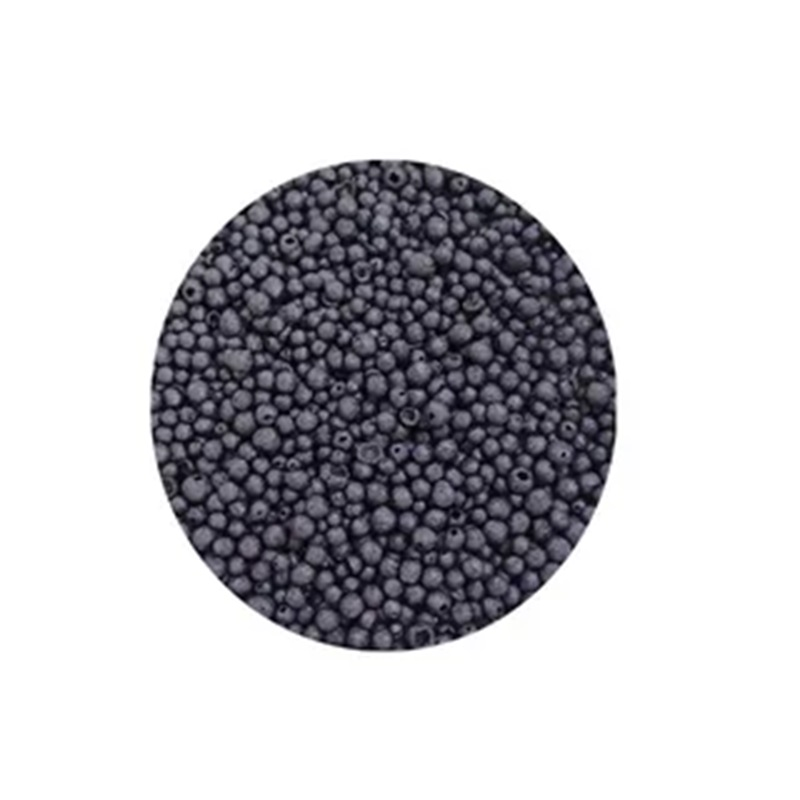
| Physical State (20°C) | Solid (dark violet, metallic lustrous crystals or prilled beads) |
| Odor | Sharp and characteristic iodine odor |
| Chemical Character | Oxidizing agent |
SECTION 2: PHYSICAL AND CHEMICAL PROPERTIES
| Property | Value | Test Method |
|---|---|---|
| Appearance | Dark violet, metallic lustrous crystals or prilled beads | Visual |
| Odor | Sharp and characteristic iodine odor | Olfactometric |
| Molecular Weight | 253.81 g/mol | Calculated |
| Crystal Structure | Orthorhombic | XRD |
| Melting Point | 113°C | DSC |
| Boiling Point | 184°C | ASTM D86 |
| Density (25°C) | 4.93 g/cm3 | ASTM D4052 |
| Vapor Pressure (25°C) | 0.31 mmHg (41.3 Pa) | ASTM D2879 |
| Vapor Pressure (50°C) | 2.15 mmHg (287 Pa) | ASTM D2879 |
| pH (Saturated Solution, 25°C) | 5.4 | pH Meter |
| Solubility in Water (25°C) | 0.33 g/L (limited solubility) | Gravimetric |
| Solubility in Water (100°C) | ~4.5 g/L | Gravimetric |
| Solubility in Ethanol | Soluble | General Method |
| Solubility in Methanol | Soluble | General Method |
| Solubility in Chloroform | Very soluble | General Method |
| Solubility in Carbon Tetrachloride | Very soluble | General Method |
| Solubility in Ethyl Acetate | Soluble | General Method |
| Solubility in Toluene | Soluble | General Method |
| Solubility in Ether | Soluble | General Method |
| Solubility in KI Solution | Very soluble (forms I3- complex) | General Method |
| Sublimation | Pronounced sublimation at room temperature; forms violet vapors | Visual |
| Flash Point | Non-flammable, but oxidizing | Not applicable |
SECTION 3: CHEMICAL PROPERTIES AND REACTIVITY
| Parameter | Information |
|---|---|
| Chemical Character | Oxidizing agent; easily reduced (I2 → 2I-) |
| Stability | Stable under normal conditions; sublimes when heated |
| Decomposition Products | Toxic violet iodine vapors when heated |
| Incompatible Materials | Ammonia, ammonium salts, strong reducing agents, alkali metals, powdered metals (aluminum, magnesium, zinc), sulfur, phosphorus, organic materials, acetylene |
| Reaction with Ammonia | Forms nitrogen triiodide (NI3); violently explosive |
| Reaction with Metals | Violent exothermic reaction with powdered metals (Al, Mg, Zn) |
| Reaction with Reducing Agents | Reduced to iodide (I-) by thiosulfate, sulfite, ascorbic acid |
| Reaction with Starch | Forms blue-violet colored complex; used in iodine detection |
| Reaction with Organic Materials | Contact with combustible organic materials may cause fire |
| Hazardous Polymerization | Does not occur |
SECTION 4: PRODUCTION METHODS
| Method | Description |
|---|---|
| Extraction from Natural Sources | Iodine extraction from Chilean nitrate (caliche) deposits and seawater; oxidation of iodide ions (I-) with chlorine gas |
| Seaweed Processing (Historical) | Iodine extraction from ash obtained by burning seaweed |
| Oil Well Brine Waters | Iodine recovery from brine waters extracted from oil wells |
| Purification | Crude iodine purified by sublimation; high-purity crystalline or prilled form obtained |
SECTION 5: IODINE FORMS COMPARISON TABLE
| Property | Prilled Iodine (Elemental) | Povidone Iodine | Potassium Iodide (KI) | Potassium Iodate (KIO3) |
|---|---|---|---|---|
| CAS Number | 7553-56-2 | 25655-41-8 | 7681-11-0 | 7758-05-6 |
| Chemical Formula | I2 | C6H9I2NO (complex) | KI | KIO3 |
| Molecular Weight | 253.81 g/mol | 364.95 g/mol | 166.00 g/mol | 214.00 g/mol |
| Iodine Content | 100% pure iodine | 9-12% free iodine | ~76.4% | ~59.3% |
| Physical Form | Violet-black crystals/prills | Burgundy powder or liquid | White crystals | White crystalline powder |
| Water Solubility | Low (0.33 g/L) | High (complex) | Very high (1400 g/L) | Moderate (90 g/L) |
| Chemical Character | Oxidizing agent | Stabilized iodine complex | Reducing agent | Strong oxidizing agent |
| Toxicity | High | Low | Moderate | Moderate |
| Primary Use | Synthesis, analysis, industrial | Antiseptic, disinfectant | Radiation protection, salt iodization | Salt iodization, flour treatment |
| Skin Application | Irritating, not suitable | Safe | Not suitable | Not suitable |
SECTION 6: FUNCTIONAL PROPERTIES AND MECHANISM OF ACTION
| Property | Description |
|---|---|
| Oxidizing Agent | Strong oxidizer; acts as electron acceptor in redox reactions |
| Antimicrobial Effect | Broad-spectrum antimicrobial; effective against bacteria, viruses, fungi, and spores |
| Halogenation Reagent | Primary reagent in the production of iodinated compounds in organic synthesis |
| Iodine Number Determination | Reference reagent for determining the degree of unsaturation in fats and oils |
| Starch Indicator | Forms blue-violet colored complex in the presence of starch; qualitative test in analytical chemistry |
| Sublimation Property | Transitions directly from solid to gas phase when heated; used in purification and vapor disinfection |
| Catalytic Effect | Acts as a catalyst in certain organic reactions |
SECTION 7: PRIMARY APPLICATION AREAS
| Sector | Application | Grade Used |
|---|---|---|
| Pharmaceutical | Tincture iodine, iodophor (Povidone Iodine) production, API synthesis | USP/EP Grade |
| Pharmaceutical | Production of antiseptic solutions and iodinated medicines | USP/EP Grade |
| Laboratory / Analytical Chemistry | Titration reagent, iodine number determination, redox reactions | ACS/Analytical Grade |
| Laboratory / Analytical Chemistry | Starch test, HPLC and LC-MS reagent | Analytical Grade |
| Chemical Industry | Halogenation reagent in organic synthesis, catalyst, iodinated compound production | Technical Grade |
| Food Industry | Iodized salt production (indirect); dietary supplement production | Food Grade (USP) |
| Agriculture / Animal Husbandry | Animal feed additive, plant nutrition, soil supplement | Feed Grade |
| Photography | Chemical in film and photographic baths; silver halide emulsions | Technical Grade |
| Pigment / Dye | Iodine-based pigment production; colored compound synthesis | Technical Grade |
| Hygiene / Disinfection | Raw material for iodinated disinfectants and iodophors | USP/Technical Grade |
| Electronics | Semiconductor etching, iodine doping in thin-film processes | High Purity |
| Export / Import | Technical iodine, USP/ACS quality grades | Various |
SECTION 8: QUALITY SPECIFICATIONS (USP GRADE)
| Parameter | Specification | Test Method |
|---|---|---|
| Appearance | Dark violet, metallic lustrous crystals or beads | Visual |
| Odor | Characteristic iodine odor | Olfactometric |
| Purity (I2, Dry Basis) | ≥ 99.8% | Iodometric / Thiosulfate Titration |
| Non-Volatile Residue | ≤ 0.05% | Gravimetric (105°C) |
| Chloride and Bromide (as Cl) | ≤ 0.028% | Argentometric |
| Sulfate (SO4 2-) | ≤ 0.01% | Turbidimetric |
| Heavy Metals (as Pb) | ≤ 10 ppm | ICP-MS / USP <231> |
| Lead (Pb) | ≤ 2 ppm | ICP-MS |
| Arsenic (As) | ≤ 3 ppm | ICP-MS |
| Mercury (Hg) | ≤ 1 ppm | ICP-MS |
| Cadmium (Cd) | ≤ 1 ppm | ICP-MS |
| Iron (Fe) | ≤ 10 ppm | AAS / ICP-OES |
| Particle Size (Prilled) | Per customer specification | Sieve Analysis |
SECTION 9: TOXICOLOGICAL PROFILE
| Parameter | Value |
|---|---|
| Acute Oral Toxicity (LD50, Rat) | ~14,000 mg/kg (elemental iodine) |
| Acute Dermal Toxicity (LD50, Rabbit) | > 2,000 mg/kg |
| Skin Irritation | Severe irritant; may cause chemical burns |
| Eye Irritation | Severe irritant; risk of permanent damage |
| Respiratory Irritation | Vapors severely irritate respiratory tract; risk of pulmonary edema |
| Skin Sensitization | May be sensitizing |
| Carcinogenicity | Not classified (IARC, NTP) |
| Mutagenicity | Negative in in vitro tests |
| Reproductive Toxicity | May affect reproductive system at high doses |
| Chronic Toxicity (Iodism) | Long-term high intake causes iodism (skin rash, headache, increased salivation, metallic taste) |
| Tolerable Upper Intake Level (UL) | 600-1100 µg/day iodine for adults (from all sources) |
SECTION 10: GHS CLASSIFICATION AND LABELING
GHS Classification (compliant with 1272/2008/EC):
| Hazard Class | Category | H-Statement |
|---|---|---|
| Oxidizing Solid | Category 2 | H272 |
| Acute Toxicity (Oral) | Category 4 | H302 |
| Acute Toxicity (Inhalation) | Category 2 | H330 |
| Skin Irritation | Category 2 | H315 |
| Serious Eye Damage/Irritation | Category 2 | H319 |
| Specific Target Organ Toxicity (STOT - SE) | Category 3 | H335 |
| Chronic Aquatic Toxicity | Category 1 | H410 |
Signal Word: DANGER
Hazard Pictograms:
┌─────────┐   ┌─────────┐   ┌─────────┐
│    ☠    │   │   !     │   │   🌍    │
│         │   │         │   │   ☠    │
└─────────┘   └─────────┘   └─────────┘
  GHS06          GHS07          GHS09
Skull and     Exclamation    Environmental
Crossbones       Mark          Toxicity
Hazard Statements (H-Codes):
| Code | Statement |
|---|---|
| H272 | May intensify fire; oxidizer |
| H302 | Harmful if swallowed |
| H315 | Causes skin irritation |
| H319 | Causes serious eye irritation |
| H330 | Fatal if inhaled |
| H335 | May cause respiratory irritation |
| H410 | Very toxic to aquatic life with long lasting effects |
SECTION 11: PRECAUTIONARY STATEMENTS (P-CODES)
Prevention:
| Code | Statement |
|---|---|
| P210 | Keep away from heat, hot surfaces, sparks, open flames. No smoking. |
| P220 | Keep/Store away from combustible/organic materials, reducing agents, metal powders. |
| P260 | Do not breathe dust/fume/gas/mist/vapors/spray |
| P280 | Wear protective gloves/protective clothing/eye protection/face protection |
| P273 | Avoid release to the environment |
Response:
| Code | Statement |
|---|---|
| P301+P312 | IF SWALLOWED: Call a POISON CENTER/doctor if you feel unwell |
| P302+P352 | IF ON SKIN: Wash with plenty of water and soap |
| P304+P340 | IF INHALED: Remove person to fresh air and keep comfortable for breathing |
| P305+P351+P338 | IF IN EYES: Rinse cautiously with water for several minutes. Remove contact lenses, if present and easy to do. Continue rinsing |
| P310 | Immediately call a POISON CENTER/doctor |
Storage:
| Code | Statement |
|---|---|
| P403+P233 | Store in a well-ventilated place. Keep container tightly closed |
| P405 | Store locked up |
Disposal:
| Code | Statement |
|---|---|
| P501 | Dispose of contents/container to an approved waste disposal facility |
SECTION 12: FIRST AID MEASURES
| Exposure Route | Action to Take |
|---|---|
| Inhalation | Move to fresh air. Seek immediate medical attention. Apply artificial respiration if breathing has stopped. |
| Skin Contact | Remove contaminated clothing immediately. Wash with plenty of water and soap for at least 15 minutes. Seek medical attention if skin burns occur. |
| Eye Contact | Rinse immediately with plenty of water for at least 15 minutes. Remove contact lenses if present. Seek immediate medical attention. |
| Ingestion | Rinse mouth with water. Do NOT induce vomiting. Give water or milk if conscious. Seek immediate medical attention. |
Acute Poisoning Symptoms: Burning sensation in mouth and throat, abdominal pain, nausea, vomiting, diarrhea (may be brownish-blue in color), dizziness, shock, weak pulse.
SECTION 13: FIREFIGHTING MEASURES
| Parameter | Information |
|---|---|
| Fire Hazard | Non-flammable, but oxidizing; intensifies fire |
| Hazards During Fire | Toxic and corrosive iodine vapors (I2), hydrogen iodide (HI) gas |
| Suitable Extinguishing Media | Water mist (fog), CO2, dry chemical powder |
| Special Protective Equipment | Self-contained breathing apparatus (SCBA), full chemical protective clothing |
| Special Precautions | Cool containers exposed to fire with water mist. Prevent firefighting water from entering the environment. |
SECTION 14: STORAGE AND SHELF LIFE
| Parameter | Information |
|---|---|
| Storage Conditions | Cool (15-25°C), dry, well-ventilated area; away from light and moisture |
| Container Requirements | Airtight, light-resistant containers; plastic jar, aluminum pouch, or glass bottle |
| Critical Separation | Store separately from ammonia, ammonium salts, strong reducing agents, alkali metals, powdered metals, sulfur, phosphorus, organic materials, acetylene |
| Keep Away From | Heat, direct sunlight, moisture, combustible materials, reducing agents |
| Shelf Life | 48 months (unopened original packaging under appropriate storage conditions) |
| Stability Note | Store in airtight containers due to sublimation tendency; slowly sublimes even at room temperature |
SECTION 15: PACKAGING OPTIONS
| Packaging Type | Quantity | Material |
|---|---|---|
| Plastic jar (light-resistant) | 1 kg | HDPE (amber) |
| Aluminum foil pouch | 1-5 kg | Laminated aluminum |
| Plastic jar (light-resistant) | 5 kg | HDPE (amber) |
| Fiber drum with PE inner liner | 25 kg | Fiberboard + PE |
| HDPE drum (light-protected) | 25-50 kg | HDPE |
| Glass bottle (laboratory) | 100 g - 1 kg | Amber glass |
SECTION 16: TRANSPORTATION INFORMATION
| Parameter | Information |
|---|---|
| UN Number | UN 3495 (Iodine) |
| Hazard Class | 8 (Corrosive) + 6.1 (Toxic) |
| Packing Group | III |
| ADR/RID | UN 3495, Iodine, 8 (6.1), PG III |
| IMDG Code | UN 3495, Iodine, 8 (6.1), PG III |
| IATA (Air) | UN 3495, Iodine, 8 (6.1), PG III (restricted) |
| Marine Pollutant | Yes |
| Transport Temperature | Ambient (15-25°C); protect from heat |
SECTION 17: ACCIDENTAL RELEASE AND CLEANUP
| Parameter | Information |
|---|---|
| Personal Protection | Full chemical protective clothing, nitrile/butyl gloves, safety goggles, organic vapor + particulate cartridge respirator |
| Cleanup Methods | Carefully sweep up or vacuum dry. Collect in closed, labeled containers. Can be neutralized with sodium thiosulfate solution (2Na2S2O3 + I2 → Na2S4O6 + 2NaI). |
| Environmental Precautions | Absolutely prevent entry into drains, soil, and surface water. |
| Waste Disposal | Dispose as hazardous waste according to local/national regulations at licensed disposal facility. Neutralize by reduction with sodium thiosulfate. |
SECTION 18: REGULATORY STATUS
| Region / Authority | Status |
|---|---|
| USA (USP-NF) | Official monograph (USP Iodine) |
| European Pharmacopoeia | Official monograph (Ph. Eur. Iodine) |
| USA (FDA) | Approved in OTC antiseptic products; indirect use as food additive |
| European Union | Approved for cosmetic and pharmaceutical use; under biocidal regulation for disinfectant products |
| Codex Alimentarius | Reference standard for iodized salt production |
| WHO Essential Medicines List | Essential medicine as antiseptic and disinfectant |
| Turkey | Turkish Pharmacopoeia monograph; iodized salt production under Turkish Food Codex |
| IATA / IMDG | Regulated as dangerous goods (UN 3495) |
SECTION 19: OTHER NAMES AND SYNONYMS
| Type | Name |
|---|---|
| Chemical Names | Iodine, Diiodine, Molecular Iodine |
| Trade Names | Prilled Iodine, Elemental Iodine, Iodine Crystals, Resublimed Iodine |
| Pharmacopoeia Names | Iodum (Latin), Iodine (USP), Iodum (Ph. Eur.) |
| Alternative CAS | 12190-71-5 (technical/commercial grade) |
| Commercial Grades | USP Grade, EP Grade, ACS Grade, Technical Grade, Feed Grade |
| CAS Number (Primary) | 7553-56-2 |
| EC Number | 231-442-4 |
| UN Number | UN 3495 |
SECTION 20: SUMMARY TABLE
| Parameter | Value |
|---|---|
| Product | Iodine (Elemental Iodine - Prilled Iodine) |
| CAS Number | 7553-56-2 |
| Molecular Formula | I2 |
| Molecular Weight | 253.81 g/mol |
| Appearance | Dark violet, metallic lustrous crystals or prilled beads |
| Melting Point | 113°C |
| Boiling Point | 184°C |
| Solubility in Water (25°C) | 0.33 g/L (limited) |
| Purity (USP) | ≥ 99.8% |
| Primary Uses | Pharmaceutical, analytical reagent, synthesis, antiseptic production, iodized salt |
| Shelf Life | 48 months (unopened original packaging) |
| GHS Signal Word | Danger |
| UN Number | UN 3495 (Corrosive/Toxic, 8 (6.1), PG III) |
SECTION 21: MANDATORY USE SECTORS
| Sector | Mandatory Use Rationale | Regulatory Reference |
|---|---|---|
| Pharmaceutical Manufacturing | API synthesis, antiseptic formulations | Pure iodine use mandatory per USP/EP standards |
| Laboratory Analysis | Titration reagent, iodine number determination | Mandatory as reference reagent in ISO and ASTM methods |
| Food Additive Production | Iodized salt production | Mandatory per FAO/WHO and national food codex |
| Animal Feed Production | Micronutrient additive | Mandatory per Ministry of Agriculture regulations |
| Hygiene and Disinfectants | Povidone Iodine production | Pure iodine use mandatory per formulation requirements for active iodine content |
| Export/Import | Technical iodine, USP/ACS quality grades | CAS 7553-56-2 identification mandatory on customs declaration and MSDS documents |
SECTION 22: CRITICAL WARNINGS AND BEST PRACTICES
CRITICAL SAFETY WARNINGS:
-
Toxic Vapors: Sublimes even at room temperature forming toxic violet iodine vapors. Use only in well-ventilated areas or under a fume hood.
-
Contact with Ammonia: Contact with ammonia or ammonium salts forms violently explosive nitrogen triiodide (NI3). Absolutely store separately.
-
Skin Irritation: May cause severe skin irritation and chemical burns. Do not handle without protective gloves.
-
Oxidizer: Contact with combustible materials may cause fire. Keep away from organic materials, metal powders, and reducing agents.
-
Environmental Toxicity: Very toxic to aquatic organisms. Avoid release to the environment.
BEST PRACTICE RECOMMENDATIONS:
-
Airtight Storage: Always store in airtight, light-protected containers to prevent sublimation loss.
-
Neutralization Solution: Keep sodium thiosulfate (Na2S2O3) solution available for spill response; effective for neutralizing iodine.
-
Solution Preparation: When preparing aqueous iodine solutions, add KI to increase solubility (formation of I3- complex).
-
First In, First Out (FIFO): Implement stock rotation; sublimation loss may occur during long-term storage.
-
Container Integrity: Close container tightly immediately after use; do not leave open for extended periods.
-
Training: Train all operators on iodine toxicity, oxidizing properties, and emergency procedures.
LEGAL DISCLAIMER:
The information provided in this document is presented in good faith based on our current knowledge and experience; however, since all usage conditions are beyond our control, it does not constitute a binding specification or warranty. This Technical Data Sheet is for informational purposes only and does not constitute medical advice. Users are obligated to test the suitability for their own applications. For complete safety, storage, handling, transportation, disposal, and regulatory compliance information, refer to the official Safety Data Sheet (SDS/MSDS) provided by the manufacturer/supplier. This product is not intended to diagnose, treat, cure, or prevent any disease.
, Diiyodin, Diiyodin, Tentür İyot, Kolloidal İyot, İyodonyum İyodür, 7553-56-2.jpg)
