We unleash your business potential by maximize the business innovation.
Send EmailIodine, Iodine crystals, Iodine solution, Prilled Iodine, Elemental Iodine, 7553-56-2, 12190-71-5
🧪 Iodine – CAS 7553-56-2
| Property | Value |
|---|---|
| CAS Number | 7553-56-2 |
| Chemical Name | Iodine, Molecular Iodine, Diiodine |
| Molecular Formula | I₂ |
| Molecular Weight | 253.81 g/mol |
| EC Number | 231-442-4 |
| Appearance | Dark violet crystals or prilled beads |
| Odor | Sharp, characteristic iodine smell |
| Solubility | Slightly soluble in water; soluble in ethanol, chloroform, ether |
| Melting Point | 113 °C |
| Boiling Point | 184 °C |
| Density | 4.93 g/cm³ |
| Vapor Pressure | 0.31 mmHg at 25 °C |
| pH (saturated sol.) | ~5.4 |
| 🏭 Sector | ⚙️ Application | 📌 Notes |
|---|---|---|
| Chemical Industry | Reagent, catalyst, intermediate | Used in organic synthesis and halogenation reactions |
| Pharmaceutical | Tincture iodine, iodophor production, API synthesis | Required for antiseptic formulations and iodine-based drugs |
| Laboratory | Titration reagent, iodine value determination | Used in redox reactions and analytical chemistry |
| Agriculture | Feed additive, micronutrient | Prevents iodine deficiency in livestock |
| Food Industry | Iodized salt production | Complies with WHO/FAO and Codex Alimentarius standards |
| Photography | Film and developer chemistry | Historical use in silver halide processing |
| Pigments/Dyes | Iodine-based pigment synthesis | Used in specialty colorants |
| Hygiene/Disinfection | Raw material for povidone iodine | Active iodine source in antiseptic production |
| Analytical Chemistry | Starch test, solubility analysis | Forms blue-violet complex with starch |
| Trade & Customs | Export/import of technical iodine (USP/ACS grades) | CAS 7553-56-2 required in customs and MSDS documentation |
| 🏭 Sector | 📌 Mandatory Use Reason | 📋 Regulatory or Technical Basis |
|---|---|---|
| Pharmaceutical Production | API synthesis, antiseptic formulations | USP/EP standards require pure iodine for tinctures and iodophors |
| Laboratory Analysis | Titration, iodine number determination | ISO and ASTM methods specify iodine as reference reagent |
| Food Additive Manufacturing | Iodized salt production | WHO/FAO and Turkish Food Codex mandate iodine content in table salt |
| Animal Feed Production | Micronutrient additive | Ministry of Agriculture regulations require iodine supplementation |
| Hygiene & Disinfection | Povidone iodine manufacturing | Formulation standards require elemental iodine as active source |
| Analytical Chemistry | Starch testing, solubility profiling | Standard methods use iodine for qualitative analysis |
| Trade & Customs | Technical iodine classification | CAS 7553-56-2 must be declared in customs and safety documentation |
| Property | Value |
|---|---|
| CAS Number | 12190-71-5 |
| Chemical Name | Iodine, Elemental Iodine |
| Molecular Formula | I₂ |
| Molecular Weight | 253.81 g/mol |
| EC Number | 231-442-4 |
| SMILES | II |
| InChIKey | PNDPGZBMCMUPRI-UHFFFAOYSA-N |
Appearance: Black to violet crystalline powder or granules
Crystal Structure: Monoclinic or orthorhombic (depending on grade)
Melting Point: ~113 °C
Boiling Point: ~184 °C
Solubility: Poor in water (0.03 g/100 mL); soluble in ethanol, ether, chloroform, acetone
Dielectric Constant: ~11.0 (ambient)
| 🏭 Sector | ⚙️ Application | 📌 Notes |
|---|---|---|
| Chemical Synthesis | Halogenation, catalyst, intermediate | Used in organic reactions requiring high-purity iodine |
| Pharmaceutical | API synthesis, iodine-based formulations | Meets pharmacopoeia standards for iodine content |
| Laboratory | Analytical reagent, iodine value testing | Used in HPLC, LC-MS, and redox titrations |
| Electronics | Semiconductor etching, iodine doping | Applied in specialty materials and thin film processes |
| Food & Feed | Micronutrient additive | Used in fortified salt and animal feed (regulated use) |
| Disinfection | Raw material for povidone iodine | Serves as iodine source in antiseptic production |
| Customs & Trade | Export/import of iodine granules | CAS 12190-71-5 required in customs declarations and MSDS |
FDA Listings: 21 CFR 101.9, 104.20, 107.10, 107.100, 310.545, 582.80
UNII Code: 9679TC07X4
ATC Code: D08AG03 (Antiseptics)
EWG Food Score: 2–5 (depending on formulation)
This form of iodine is often preferred for high-purity applications, especially in pharmaceutical synthesis, analytical chemistry, and regulated feed additives. If you'd like, I can now prepare a bilingual comparison table between CAS 7553-56-2 and CAS 12190-71-5 for catalog or audit use 📄🔍.
| 🧪 Synonym / Trade Name | 📌 Context / Usage |
|---|---|
| Iodine | General name for elemental iodine |
| Diatomic Iodine | Structural reference (I₂ molecule) |
| Iodine Crystals or Liquid | Commercial form description |
| Iodine Solution Standard Substance | Analytical reagent grade |
| Iodine Test Solution (ChP) | Chinese Pharmacopoeia reference |
| Iodine (JP15/USP) | Japanese and US Pharmacopoeia grade |
| Iodine Base | Raw material designation |
| HX968 | Internal or catalog code used by suppliers |
| TIANFU-CHEM Iodine | Supplier-specific trade name |
| Iodien | German variant spelling |
| Iodide (I21-) (8CI,9CI) | Registry variant (not to be confused with iodide ion) |
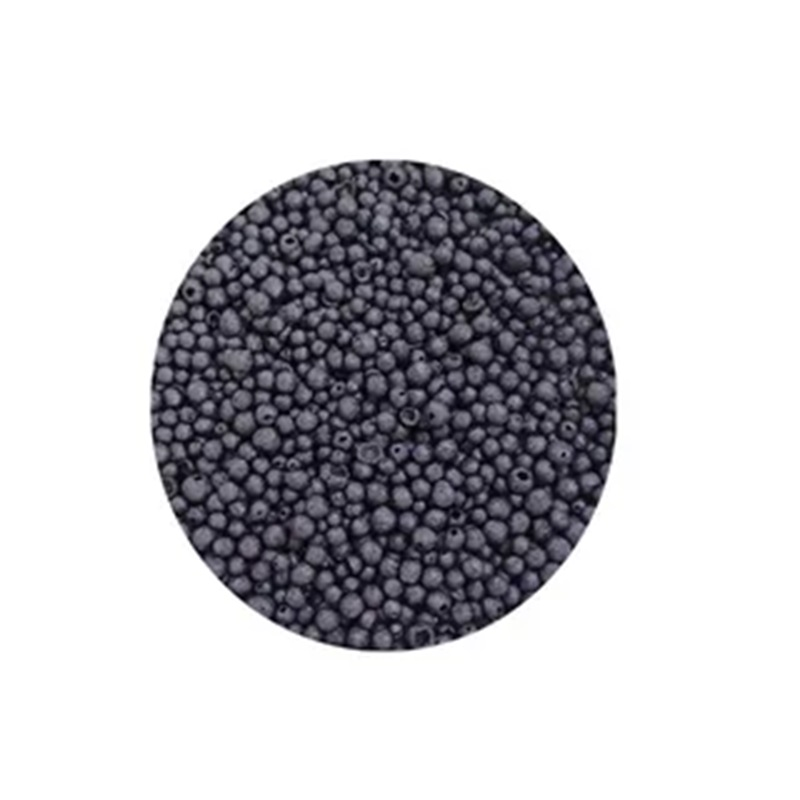
| Name | Iodine |
| Synonyms | iodine iodien Iodine Iodine crystals Iodine solution TIANFU-CHEM Iodine Iodine test solution Iodide (I21-) (8CI,9CI) Iodine,standard solution Iodine Crystals or Liquid Iodine test solution(ChP) Iodine solution standard substance |
| CAS | 7553-56-2 12190-71-5 |
| EINECS | 231-442-4 |
| InChI | InChI=1/I2/c1-2 |
| Molecular Formula | I2 |
| Molar Mass | 253.81 |
| Density | 3.834g/cm3 |
| Melting Point | 114℃ |
| Boling Point | 184.3°C at 760 mmHg |
| Water Solubility | 0.3 g/L (20℃) |
| Vapor Presure | 0.49mmHg at 25°C |
| Refractive Index | 1.788 |
| Physical and Chemical Properties | Purple-black scale crystals or platelets with metallic luster. Friable, with purple vapor. Has a special irritating odor. melting point 113.5 ℃ boiling point 184.35 ℃ relative density 4.93(20/4 ℃) solubility it is slightly soluble in water, and the solubility increases with the increase of temperature; insoluble in sulfuric acid; Soluble in organic solvents; Iodine is also soluble in chloride, bromide; More soluble in iodide solution; Soluble sulfur, selenium, ammonium and alkali metal iodide, aluminum, tin, titanium and other metal iodides. |
| Use | Mainly used in the manufacture of iodide, used in the manufacture of pesticides, feed additives, dyes, iodine, test paper, drugs, etc For the preparation of equivalent solvent, determination of iodine value, calibration of sodium thiosulfate solution concentration, the solution can be used as disinfectant, photographic plate for iodine agent and thinning liquid preparation |
| Hazard Symbols | Xn - Harmful![]() N - Dangerous for the environment ![]() |
| Risk Codes | R20/21 - Harmful by inhalation and in contact with skin. R50 - Very Toxic to aquatic organisms |
| Safety Description | S23 - Do not breathe vapour. S25 - Avoid contact with eyes. S61 - Avoid release to the environment. Refer to special instructions / safety data sheets. |
| UN IDs | UN 1759/1760 |
| Raw Materials | Sodium hydroxide Hydrochloric acid |
| Downstream Products | Sodium iodide Potassium iodide Sodium iodate Potassium iodate Potassium periodate Calciumiodideanhydrous Sodium periodate 3,5-Diiodosalicylic acid Tetrachlorophthalic anhydride Iodine pentoxide Sodium iodate |
blue-black phosphorus crystals or platelets with metallic luster. It is brittle and easy to sublimate, and its vapor is purple at room temperature, with spicy and stimulating smell. Melting point 113. 60 °c; Boiling point 185. 24 °c; d (solid, 25 °c) 4.93,d (liquid 120 °c) 960. Slightly soluble in water, soluble in chloroform, ethanol, benzene, carbon disulfide, carbon tetrachloride. Strong oxidant. Exposure to ammonia and acetylene can cause explosion. A strong reaction can occur with the reducing agent. Ignition is caused by contact with bromine pentafluoride, chlorine trifluoride, fluorine, metal powder, water, phosphorus, etc. A vigorous reaction occurred with acetaldehyde. Corrosive. By high heat decomposition, release of toxic smoke.
Preparation Method
Use
is the basic raw material for the manufacture of inorganic iodide and organic iodide, mainly used in medicine and health, for the manufacture of various iodine preparations, fungicides, disinfectants, deodorants, analgesics and antidotes of radioactive substances. It is a raw material for the production of pesticides, and it is also a feed additive for livestock. Industrial bacteriostatic agent for the synthesis of dyes, smoke extinguishing agents, photographic emulsion and cutting oil emulsion. Single-crystal prisms for the manufacture of electronic instruments, polarizers for optical instruments, and glass capable of transmitting infrared rays. For leather and special soaps. Iodine is a good catalyst for methylation, isomerization and dehydrogenation reactions in organic synthesis. It is also used as a separating agent for alkanes and alkenes. It is used as a stabilizer for Rosin, tall oil and other wood products. It is also used as a refining agent for high purity zirconium, titanium, hafnium, silicon and germanium.
Safety
rat oral LD50:14000mg/kg; Mouse oral LD50: 22000mg/kg. This product has a strong stimulating effect on the eyes, skin and mucous membranes. Human oral lethal dose is about 2~3G. Store in a cool, dry, well-ventilated non-combustible warehouse. Keep the container sealed. Protected from light. It is not allowed to be co-stored and mixed with ammonia and alkali substances. In the transport process to prevent rain, sun exposure. Handling and handling should be light. To prevent the rupture of the packaging bottle.
Introduction
Iodine is a chemical element with the chemical symbol I and atomic number 53. Iodine is a non-metallic element commonly found in nature in the oceans and soil. The following is a description of the nature, use, formulation and safety information of Iodine:
1. Nature:
-Appearance: Iodine is a blue-black crystal, common in solid state.
-Melting point: Iodine can directly change from solid to gaseous state under air temperature, which is called sub-limation. Its melting point is about 113.7 ° C.
-Boiling point: The boiling point of Iodine at normal pressure is about 184.3 ° C.
-Density: The density of Iodine is about 4.93g/cm³.
-Solubility: Iodine is insoluble in water, but soluble in some organic solvents such as alcohol, cyclohexane, etc.
2. Use:
-Pharmaceutical field: Iodine is widely used for disinfection and sterilization, and is commonly found in wound disinfection and oral care products.
-Food industry: Iodine is added as Iodine in table salt to prevent Iodine deficiency diseases, such as goiter.
-Chemical experiments: Iodine can be used to detect the presence of starch.
3. Preparation method:
- Iodine can be extracted by burning seaweed, or by extracting ore containing Iodine through chemical reaction.
-A typical reaction for preparing Iodine is to react Iodine with an oxidizing agent (such as hydrogen peroxide, sodium peroxide, etc.) to generate Iodine.
4. Safety Information:
- Iodine may be irritating to the skin and eyes at high concentrations, so you need to pay attention to the use of personal protective equipment, such as gloves and goggles, when handling Iodine.
- Iodine has low toxicity, but should avoid excessive intake of Iodine to avoid Iodine poisoning.
- Iodine can produce toxic Iodine hydrogen gas at high temperature or open flame, so avoid contact with flammable materials or oxidants.
