We unleash your business potential by maximize the business innovation.
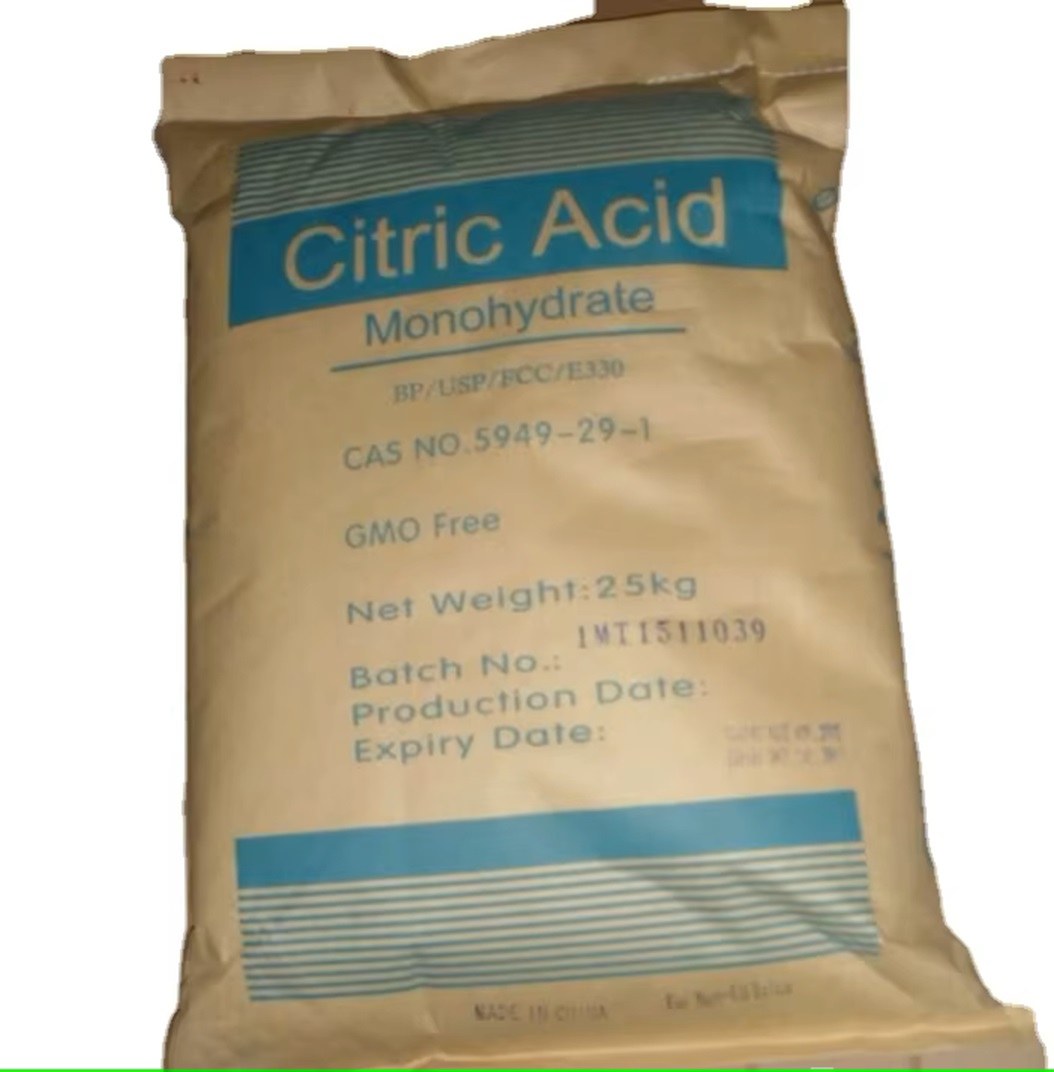
Send EmailCitric Acid Monohydrate, Citric Acid Mono, E330, 5949-29-1
1. General Description and Identification
Citric Acid Monohydrate, commonly known as "sour salt" or "lemon salt," is a weak organic acid found naturally in citrus fruits like lemons, oranges, and grapefruits. It appears as a white, crystalline powder and is a versatile chemical widely used in the food, pharmaceutical, cosmetic, and cleaning industries .
The terms you provided identify the same substance in different ways:
-
Citric Acid Monohydrate / Citric Acid Mono: The chemical name, indicating it contains one molecule of water of hydration.
-
E330: The European Union food additive code.
-
5949-29-1: The unique Chemical Abstracts Service (CAS) number, specifically for the monohydrate form .
Key Identifiers:
-
Common Names: Lemon Salt, Citric Acid Mono, 2-Hydroxypropane-1,2,3-tricarboxylic acid monohydrate .
-
CAS Number: 5949-29-1 .
-
EC Number: 201-069-1 .
-
Food Additive Code: E330 .
-
Molecular Formula: C₆H₈O₇·H₂O .
-
Molecular Weight: 210.14 g/mol .
2. Detailed Physical and Chemical Properties
The following technical properties define the material and determine its applications:
| Property | Value / Description | Special Notes |
|---|---|---|
| Appearance | Colorless or white crystalline powder or granules . | Odorless, with a strong acidic/lemon-like taste . |
| Density | Approx. 1.54 g/cm³ . | |
| Melting Point | 135 °C (decomposes). Some sources give a range of 135-152°C . | Begins to lose its water of crystallization at 100°C . |
| Decomposition Temperature | 175 °C . | |
| Auto-ignition Temperature | 1010 °C (as dust) . | |
| Solubility in Water | 59.2 g/100 mL at 20°C . 1630 g/L at 25°C (highly soluble) . | Dissolves very easily in water; the solution is clear . |
| Solubility in Other Solvents | Freely soluble in ethanol; slightly soluble in ether . | |
| pH Value | Approx. 2.31 for a 1% aqueous solution . | Exhibits weak acidic properties . |
| Water Content (K.F.) | 7.5% - 8.8% . | This is the most critical property distinguishing it from the anhydrous form. |
| Log P (Octanol/Water) | -1.72 . | Indicates a hydrophilic (water-loving) nature. |
| Explosion Hazard | Fine dust can form an explosive mixture with air . | Prevent dust accumulation; avoid sparks. |
3. Production Method (Synthesis)
Commercial Citric Acid Monohydrate is produced mainly through two routes:
-
Extraction from Natural Sources: It can be extracted from lemon juice (containing 5-8% citric acid) or pineapple waste . However, this method does not meet the global industrial demand.
-
Microbial Fermentation (Primary Method): Modern industrial production relies on fermentation using molds like Aspergillus niger .
-
Raw Material: Carbohydrate sources such as sugar beet molasses, corn starch, or sugar cane are used .
-
Process: The solution from fermentation is neutralized with calcium hydroxide (lime) to precipitate citric acid as calcium citrate. This precipitate is filtered and then treated with sulfuric acid to regenerate citric acid .
-
Crystallization: The purified citric acid solution is concentrated under vacuum. When this solution is cooled below 20-25°C, the monohydrate form crystallizes out . The anhydrous (water-free) form is crystallized from hot solutions (above 36.6°C).
-
4. Purity and Quality Standards
Citric acid monohydrate is supplied in different purity grades according to its intended use. For laboratory and high-purity applications, the following standards and specifications apply:
-
Quality Grades: Ph. Eur. (European Pharmacopoeia), BP (British Pharmacopoeia), JP (Japanese Pharmacopoeia), USP (United States Pharmacopeia), FCC (Food Chemicals Codex), ACS (American Chemical Society) .
-
Assay (Purity): Typically 99.5% - 100.5% calculated on the anhydrous basis .
-
Appearance of Solution: A 200 g/L aqueous solution must be clear (turbidity ≤ 3 NTU) and colorless .
4.1. Impurity Limits (ppm - parts per million)
Maximum allowable impurity levels for high-quality material:
| Impurity | Maximum Limit (ppm) | Reference |
|---|---|---|
| Heavy Metals (as Pb) | ≤ 5 ppm | |
| Lead (Pb) | ≤ 0.5 ppm | |
| Arsenic (As) | ≤ 1 ppm | |
| Mercury (Hg) | ≤ 1 ppm | |
| Iron (Fe) | ≤ 3 - 5 ppm | |
| Chloride (Cl) | ≤ 5 ppm | |
| Sulfate (SO₄) | ≤ 10 - 150 ppm | |
| Oxalate (C₂H₂O₄) | ≤ 50 - 100 ppm | |
| Aluminum (Al) | ≤ 0.2 ppm | |
| Readily Carbonizable Substances | Must pass test (solution not darker than a standard) | |
| Residue on Ignition (Sulfated Ash) | ≤ 0.05% - 0.1% | |
| Bacterial Endotoxins | < 0.5 IU/mg (for pharmaceutical grades) |
5. Detailed Applications
The versatility of citric acid monohydrate stems from its core chemical properties: chelation, pH regulation, antioxidant activity, and preservation .
-
Food and Beverage Industry (as E330):
-
Acidity Regulator/Flavoring: Provides a sour taste to soft drinks, fruit juices, candies, jams, and jellies. It also helps prevent sugar crystallization .
-
Preservative and Antioxidant: Lowers the pH of the environment, inhibiting microbial growth. It delays enzymatic browning (oxidation) in fruits and vegetables and stabilizes frozen foods .
-
Antioxidant Synergist: Enhances the effectiveness of other antioxidants like Vitamin C (ascorbic acid) .
-
-
Pharmaceutical Industry:
-
Anticoagulant: Used in blood collection tubes to chelate calcium and prevent blood clotting .
-
Excipient: Serves as an acid source in effervescent tablets, a pH adjuster and flavoring agent in syrups and suspensions. It helps stabilize active ingredients .
-
Biochemistry: Used in laboratories to prepare buffer solutions (e.g., citrate buffer) and in biological culture media .
-
-
Cosmetics and Personal Care:
-
pH Adjuster: Balances the pH of creams, lotions, shampoos, and conditioners to be ideal for skin and hair .
-
Skin Care: Used in anti-aging and anti-acne formulations for its mild exfoliating properties. It can also be found in products for pore tightening and melanin reduction .
-
-
Industrial and Cleaning Applications:
-
Chelation and Water Softening: Binds calcium and magnesium ions in hard water, enhancing the foaming and cleaning performance of soaps and detergents .
-
Descaling Agent: An effective and environmentally friendly solution for removing limescale deposits from kettles, coffee machines, and bathroom fixtures .
-
Metal Processing: Used in passivating steel and copper, in electroplating, and as a complexing agent in metal cleaning .
-
Construction: Acts as a set retarder in concrete and plaster mixtures to delay hardening .
-
6. Safety, Hazards, and First Aid
While recognized as safe (GRAS) by the FDA and EFSA when used appropriately, concentrated Citric Acid Monohydrate poses certain risks .
-
Hazard Classification (GHS): Classified with the exclamation mark pictogram (GHS07). The signal word is "Warning" .
-
Hazard Statements (H-phrases):
-
H319: Causes serious eye irritation .
-
H335: May cause respiratory irritation .
-
R36/37/38: Irritating to eyes, respiratory system, and skin .
-
-
Health Hazards and First Aid Measures:
| Exposure Route | Acute Symptoms / Risks | First Aid Measures |
|---|---|---|
| Inhalation | Coughing, sore throat, respiratory tract irritation . | Move to fresh air, rest. Seek medical attention if breathing difficulties occur . |
| Skin Contact | Redness, irritation. Prolonged contact may cause dermatitis in sensitive individuals . | Remove contaminated clothing. Rinse skin thoroughly with plenty of water and soap . |
| Eye Contact | Redness, pain, burning sensation, serious eye irritation . | Rinse immediately with plenty of water for at least 15-20 minutes, keeping eyelids open. Remove contact lenses if present. Seek medical attention . |
| Ingestion | Burning sensation in mouth and throat, stomach discomfort. Large amounts may cause gastrointestinal irritation . | Rinse mouth. If conscious, drink 1-2 glasses of water. Do NOT induce vomiting. Seek medical attention . |
7. Storage and Disposal
-
Storage Conditions:
-
Store in a cool, dry, well-ventilated area away from direct sunlight .
-
Incompatibilities: Keep away from strong bases (caustics), oxidizing agents, nitrates, and metals (copper, zinc, aluminum, and their alloys), as its aqueous solution can be corrosive to these metals .
-
As it is hygroscopic (absorbs moisture from the air) and slightly efflorescent (loses water in very dry air), it must be kept in its original tightly closed container .
-
-
Packaging: Typically supplied in 25 kg paper bags, 25 kg plastic bottles, or 1000 kg big bags .
-
Disposal: It is a completely biodegradable substance. It can be disposed of with normal waste or down the drain, following local regulations. Large discharges into water bodies can lower the pH, so it is classified as slightly hazardous for water (WGK 1) .