We unleash your business potential by maximize the business innovation.
Send EmailSulfuric Acid, Sulphuric Acid, Battery Acid, Coating Acid, Immersion Acid, Vitrol Oil, Electrolyte Acid, Dipping Acid, 7664-93-9
SULFURIC ACID (H₂SO₄)
Sulphuric Acid / Battery Acid / Oil of Vitriol
CAS Number: 7664-93-9
EC Number: 231-639-5
1. IDENTIFICATION
| Property | Information |
|---|---|
| Chemical Name | Sulfuric Acid |
| Synonyms | Sulphuric acid, Battery acid, Oil of vitriol, Electrolyte acid, Dipping acid, Plating acid |
| Chemical Formula | H₂SO₄ |
| Molecular Weight | 98.08 g/mol |
| CAS Number | 7664-93-9 |
| EC Number (EINECS) | 231-639-5 |
| Appearance | Colorless to brown viscous liquid (depends on purity) |
| Odor | Sharp, pungent odor (odorless when pure) |
2. PHYSICAL PROPERTIES
| Property | Value (Concentrated, 98%) |
|---|---|
| Physical State (20°C) | Liquid (viscous, oily) |
| Appearance | Colorless to slightly yellowish (pure) / brown (technical grade) |
| Odor | Sharp, pungent (due to SO₃ traces in concentrated form) |
| Molecular Weight | 98.08 g/mol |
| Density (20°C) | 1.84 g/cm³ |
| Melting Point | 10 °C (pure) |
| Boiling Point | 337 °C (decomposes at higher temperatures) |
| Refractive Index (20°C) | 1.418 – 1.428 |
| Viscosity (20°C) | 24 – 27 cP (at 100%) |
| Vapor Pressure (20°C) | < 0.001 mmHg (very low) |
| Solubility in Water | Complete (exothermic reaction – highly hazardous) |
3. CHEMICAL PROPERTIES
| Property | Information |
|---|---|
| Chemical Formula | H₂SO₄ |
| Molecular Weight | 98.08 g/mol |
| Acid Type | Strong diprotic mineral acid (releases 2 H⁺ ions) |
| pKa1 | -3 (very strong) |
| pKa2 | 1.99 (moderately strong) |
| pH (1 M solution) | ~0.1 |
| Concentration (Typical Commercial) | 93%, 98%, 99% |
| Most Stable Form | 98% H₂SO₄ (azeotrope) |
| Hygroscopicity | Very high – absorbs water vapor from air |
| Oxidizing Properties | Strong oxidizing agent (especially when hot and concentrated) |
| Decomposition | Decomposes at high temperatures (>337°C) to SO₃ and H₂O |
| Incompatible Materials | Water (violent reaction), organic materials, reducing agents, metals, strong bases, combustibles |
Dissociation (Diprotic Acid):
H₂SO₄ → H⁺ + HSO₄⁻   (complete, pKa1 = -3)
HSO₄⁻ → H⁺ + SO₄²⁻  (partial, pKa2 = 1.99)
Reaction with Water (Highly Exothermic):
H₂SO₄ + H₂O → H₃O⁺ + HSO₄⁻ + Heat (ΔH = -880 kJ/mol)
CRITICAL: ALWAYS ADD ACID TO WATER, NEVER WATER TO ACID.
4. COMMERCIAL GRADES
| Grade | Concentration | Purity | Color | Primary Applications |
|---|---|---|---|---|
| Battery Acid (Electrolyte) | 30 – 37% | Technical | Colorless | Lead-acid batteries (automotive, industrial) |
| Diluted Acid | 10 – 50% | Technical | Colorless | General industrial, metal pickling |
| Industrial (Concentrated) | 93 – 98% | Technical | Colorless to brown | Fertilizers, chemical synthesis, petroleum refining |
| Fuming Sulfuric Acid (Oleum) | 100 – 120% (free SO₃) | Technical | Colorless to brown | Sulfonation, dye manufacturing |
| Reagent Grade | 95 – 98% | High purity | Colorless | Laboratory, analytical chemistry |
| Electronic Grade | 96 – 98% | Ultra-high purity | Colorless | Semiconductor manufacturing |
5. PRODUCTION PROCESS (Contact Process)
| Stage | Description |
|---|---|
| 1. Sulfur Combustion | S (molten) + O₂ → SO₂ + heat |
| 2. SO₂ to SO₃ Conversion | 2 SO₂ + O₂ ⇌ 2 SO₃ (catalyst: V₂O₅, 400-450°C) |
| 3. SO₃ Absorption | SO₃ + H₂O → H₂SO₄ (or absorbed in concentrated H₂SO₄ to form oleum) |
| 4. Dilution | Oleum is diluted with water to desired concentration |
Alternative Raw Materials:
-
Pyrite (FeS₂) roasting for SO₂
-
Smelter gases (non-ferrous metal smelting)
-
Spent acid recovery from industrial processes
6. APPLICATIONS
6.1. Fertilizer Industry (Largest Use – ~60%)
| Application | Function |
|---|---|
| Phosphoric Acid Production | H₂SO₄ + Ca₅(PO₄)₃OH → H₃PO₄ + CaSO₄ (phosphate rock digestion) |
| Ammonium Sulfate Production | 2 NH₃ + H₂SO₄ → (NH₄)₂SO₄ |
| Superphosphate Fertilizers | Single superphosphate (SSP), triple superphosphate (TSP) |
6.2. Petroleum Refining
| Application | Function |
|---|---|
| Alkylation | Catalyzes alkylation of isobutane with olefins to produce high-octane gasoline |
| Desulfurization | Removes sulfur compounds from petroleum products |
| Acid Washing | Removes impurities from refined products |
6.3. Metal Processing & Surface Treatment
| Application | Function |
|---|---|
| Pickling (Descaling) | Removes rust and scale from steel, copper, aluminum |
| Electroplating | Electrolyte in plating baths (zinc, copper, chromium, nickel) |
| Anodizing | Electrolyte for aluminum anodizing |
| Galvanizing | Pre-treatment for galvanizing processes |
6.4. Lead-Acid Batteries (Battery Acid)
| Application | Function |
|---|---|
| Automotive Batteries | Electrolyte (30-37% H₂SO₄) for energy storage |
| Industrial Batteries | Forklift, backup power, UPS systems |
| Stationary Batteries | Telecom, grid storage |
Reaction in Battery:
Discharge: Pb + PbO₂ + 2 H₂SO₄ → 2 PbSO₄ + 2 H₂O
Charge: 2 PbSO₄ + 2 H₂O → Pb + PbO₂ + 2 H₂SO₄
6.5. Chemical Synthesis
| Application | Function |
|---|---|
| Hydrochloric Acid Production | 2 NaCl + H₂SO₄ → Na₂SO₄ + 2 HCl |
| Nitric Acid Production | NaNO₃ + H₂SO₄ → NaHSO₄ + HNO₃ |
| Organic Synthesis | Sulfonation, nitration, esterification, dehydration |
| Dye Manufacturing | Sulfonation of aromatic compounds |
| Pharmaceutical Intermediates | Various syntheses |
6.6. Steel & Metallurgy
| Application | Function |
|---|---|
| Pickling (Steel) | Removes scale from hot-rolled steel |
| Titanium Dioxide Production | Sulfate process (TiO₂ pigment manufacturing) |
| Copper Leaching | Hydrometallurgical copper extraction |
| Uranium Processing | Uranium ore leaching |
6.7. Water & Wastewater Treatment
| Application | Function |
|---|---|
| pH Adjustment | Neutralizes alkaline streams |
| Coagulant Aid | Enhances coagulation in water treatment |
| Heavy Metal Precipitation | Adjusts pH for metal hydroxide precipitation |
6.8. Other Applications
| Application | Function |
|---|---|
| Textile Processing | pH adjustment, fabric treatment |
| Paper & Pulp | pH adjustment, chlorine dioxide generation |
| Detergent Manufacturing | Sulfonation of alkylbenzenes (LAS production) |
| Explosives | Nitration of organic compounds (TNT, nitrocellulose) |
| Refining (Edible Oils) | Removes free fatty acids |
7. TYPICAL QUALITY SPECIFICATIONS
| Parameter | Technical Grade (98%) | Battery Grade (37%) | Reagent Grade (96-98%) |
|---|---|---|---|
| H₂SO₄ Content | ≥ 98.0% | 30 – 37% | ≥ 96.0 – 98.0% |
| Appearance | Colorless to brown liquid | Colorless liquid | Colorless liquid |
| Density (20°C) | 1.836 – 1.841 g/cm³ | 1.22 – 1.28 g/cm³ | 1.836 – 1.841 g/cm³ |
| Residue on Ignition | ≤ 0.05% | ≤ 0.02% | ≤ 0.01% |
| Iron (Fe) | ≤ 0.005% | ≤ 0.001% | ≤ 0.0005% |
| Chlorides (Cl) | ≤ 0.001% | ≤ 0.0005% | ≤ 0.0002% |
| Nitrates (NO₃) | ≤ 0.0005% | – | ≤ 0.0002% |
| Arsenic (As) | ≤ 0.0001% | – | ≤ 0.0001% |
| Lead (Pb) | ≤ 0.0005% | ≤ 0.0005% | ≤ 0.0002% |
8. STORAGE & HANDLING
| Parameter | Information |
|---|---|
| Storage Conditions | Cool, dry, well-ventilated area; protect from freezing |
| Container Requirements | Carbon steel (for concentrated, dry acid), stainless steel (316L), HDPE, PTFE-lined |
| Protect From | Water (violent reaction), organic materials, reducing agents, metals (corrosion), moisture |
| Shelf Life | Indefinite (if stored properly in sealed containers) |
| Hygroscopicity | Very high – absorbs moisture from air (dilutes and may cause container corrosion) |
| Incompatible Materials | Water (violent exothermic reaction), organic materials (charring/ignition), alkalis (neutralization), metals (hydrogen gas generation) |
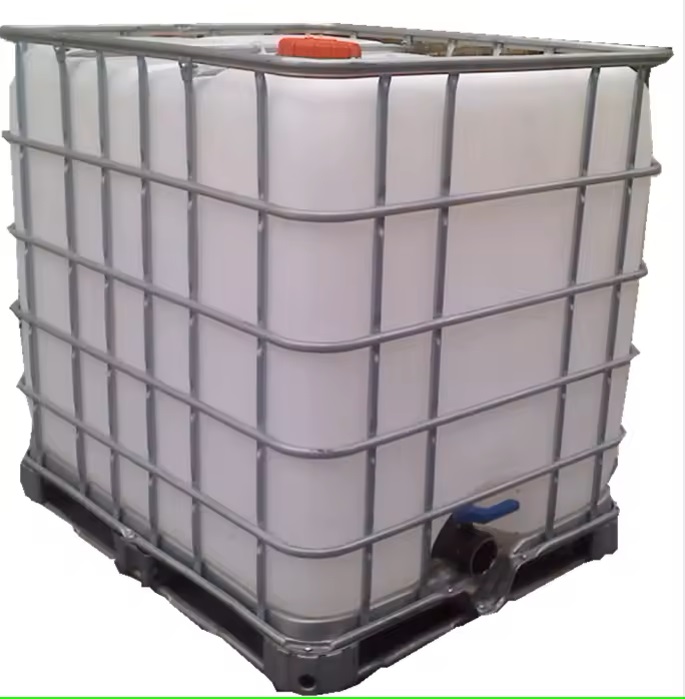
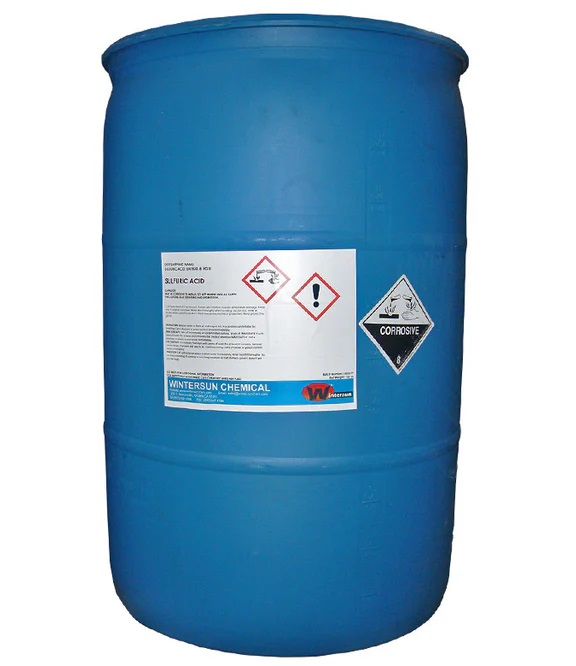
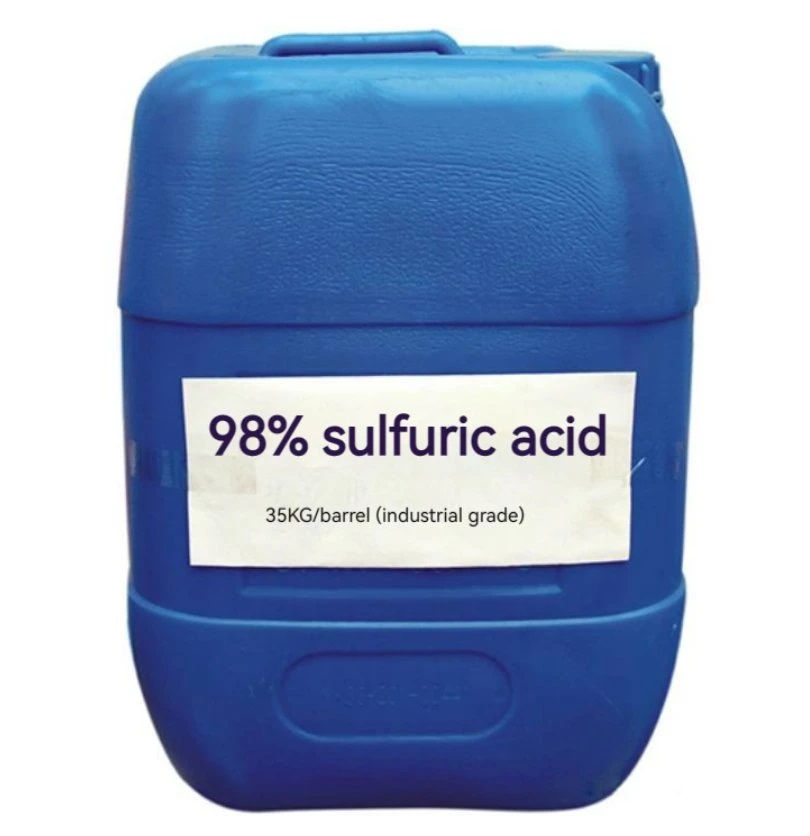
| Packaging Options | 200 L drums (HDPE/steel), 1000 kg IBC, bulk tankers (road/rail), 20 L jerry cans |
Critical Safety Note – Always Add Acid to Water:
When diluting, ALWAYS pour concentrated sulfuric acid INTO water, never water into acid. Water into acid causes violent boiling and splashing of hot acid.
9. SAFETY & HEALTH INFORMATION
GHS Classification
| Hazard Class | Category |
|---|---|
| Skin Corrosion/Irritation | Category 1A (H314) |
| Serious Eye Damage | Category 1 (H318) |
| Specific Target Organ Toxicity (Inhalation) | Category 3 (H335) |
| Acute Aquatic Toxicity | Category 3 (H402) |
Hazard Statements (H-Codes)
| Code | Statement |
|---|---|
| H314 | Causes severe skin burns and eye damage |
| H318 | Causes serious eye damage |
| H335 | May cause respiratory irritation |
| H402 | Harmful to aquatic life |
Precautionary Statements (P-Codes)
| Code | Statement |
|---|---|
| P260 | Do not breathe mist/vapors |
| P280 | Wear protective gloves, protective clothing, eye protection, face protection |
| P301+P330+P331 | IF SWALLOWED: Rinse mouth. Do NOT induce vomiting. |
| P302+P352 | IF ON SKIN: Wash with plenty of water |
| P305+P351+P338 | IF IN EYES: Rinse cautiously with water for several minutes |
| P310 | Immediately call a POISON CENTER or doctor |
Toxicological Information
| Parameter | Value |
|---|---|
| Oral LD50 (rat) | 2,140 mg/kg |
| Inhalation LC50 (rat) | 0.51 mg/L (4 hours) |
| Skin Irritation | Corrosive – causes severe burns |
| Eye Irritation | Corrosive – causes permanent damage |
First Aid Measures
| Exposure Route | Action |
|---|---|
| Inhalation | Remove to fresh air. Seek medical attention if respiratory irritation occurs. |
| Skin Contact | Remove contaminated clothing. Rinse with plenty of water for at least 15 minutes. Do NOT use neutralizing agents. Seek medical attention. |
| Eye Contact | Rinse immediately with plenty of water for at least 15 minutes. Seek immediate medical attention. |
| Ingestion | Do NOT induce vomiting. Rinse mouth. Drink water or milk. Seek immediate medical attention. |
Personal Protective Equipment (PPE)
| Equipment | Recommendation |
|---|---|
| Respiratory Protection | Acid gas respirator (if ventilation inadequate) |
| Hand Protection | Chemical-resistant gloves (neoprene, butyl rubber, nitrile – heavy duty) |
| Eye Protection | Chemical safety goggles + face shield |
| Body Protection | Chemical-resistant apron, acid suit, protective clothing |
10. FIRE FIGHTING MEASURES
| Parameter | Information |
|---|---|
| Fire Hazard | Non-flammable, but reacts violently with water (heat generation) |
| Extinguishing Media | Dry chemical, CO₂ (avoid water – may cause violent reaction) |
| Special Hazards | Decomposes at high temperatures, releasing toxic SOₓ gases |
| Protective Equipment | Self-contained breathing apparatus (SCBA), full protective clothing |
11. ENVIRONMENTAL INFORMATION
| Parameter | Information |
|---|---|
| Aquatic Toxicity | Harmful to aquatic life (low pH) |
| Bioaccumulation | Not expected |
| Persistence | Low (neutralizes in natural waters) |
| Waste Disposal | Neutralize with base (NaOH, Ca(OH)₂) and dispose according to local regulations. |
12. TRANSPORT INFORMATION
| Parameter | Information |
|---|---|
| UN Number | 1830 (Sulfuric acid, >51%) / 2796 (Sulfuric acid, ≤51%) |
| Hazard Class | 8 (Corrosive substance) |
| Packing Group | II |
| Proper Shipping Name | SULFURIC ACID |
| Marine Pollutant | No |
| ADR/RID Label | 8 |
| EMS | F-A, S-B |
13. REGULATORY INFORMATION
| Region | Status |
|---|---|
| EU | REACH registered |
| Turkey (KKDIK) | Mandatory compliance; requires registration |
| USA (TSCA) | Listed |
| Canada (DSL) | Listed |
| Australia (AICS) | Listed |
| China (IECSC) | Listed |
14. COMPARISON: CONCENTRATED vs DILUTED
| Property | Concentrated (98%) | Diluted (10-50%) | Battery Acid (37%) |
|---|---|---|---|
| Density (20°C) | 1.84 g/cm³ | 1.05-1.40 g/cm³ | 1.28 g/cm³ |
| Viscosity | High (oily) | Low (water-like) | Moderate |
| Reactivity with Water | Violent exothermic | Less exothermic | Low exothermic |
| Corrosivity | Very high | High | Moderate |
| Hygroscopicity | Very high | Low | Low |
| Oxidizing Power | Strong (hot) | Weak | Very weak |
15. SYNONYMS & OTHER NAMES
| Turkish Name | English Name |
|---|---|
| Sülfürik Asit | Sulfuric Acid |
| Akü Asidi | Battery Acid |
| Kaplama Asidi | Plating Acid |
| Daldırma Asidi | Dipping Acid |
| Elektrolit Asit | Electrolyte Acid |
| Vitrol Yağı | Oil of Vitriol |
| H₂SO₄ | H₂SO₄ |
16. SUMMARY
Sulfuric Acid (H₂SO₄, CAS 7664-93-9) is the most produced industrial chemical worldwide. It is a strong, diprotic mineral acid with powerful oxidizing and hygroscopic properties. It appears as a colorless to brown viscous liquid (depending on purity) and is highly corrosive.
Key Features:
| Feature | Description |
|---|---|
| Molecular Weight | 98.08 g/mol |
| Density (98%) | 1.84 g/cm³ |
| Melting Point | 10 °C |
| Boiling Point | 337 °C |
| Acid Strength | Very strong (diprotic) |
Main Application Areas:
| Sector | Applications |
|---|---|
| Fertilizers | Phosphoric acid, ammonium sulfate, superphosphate production |
| Petroleum Refining | Alkylation, desulfurization, acid washing |
| Metal Processing | Pickling, electroplating, anodizing, galvanizing |
| Lead-Acid Batteries | Electrolyte (battery acid) |
| Chemical Synthesis | HCl, HNO₃ production, sulfonation, nitration |
| Water Treatment | pH adjustment, coagulation aid |
Key Safety Points:
-
EXTREMELY CORROSIVE – Causes severe burns to skin and eyes
-
VIOLENT REACTION WITH WATER – Always add acid to water, never water to acid
-
HYGROSCOPIC – Absorbs moisture from air
-
OXIDIZER – Can react violently with organic materials
-
STORE IN APPROVED CONTAINERS – Carbon steel (dry), HDPE, PTFE-lined
17. IMPORTANT NOTES
-
Most Important Safety Rule – ALWAYS Add Acid to Water: When diluting concentrated sulfuric acid, ALWAYS pour the acid slowly into cold water, never water into acid. Adding water to acid causes violent boiling and splashing of hot acid, which can cause severe burns and blindness.
-
Lead-Acid Battery Acid Concentration: Battery acid is dilute sulfuric acid (30-37% H₂SO₄, density ~1.28 g/cm³). Never use concentrated sulfuric acid in batteries – it will destroy the plates and generate excessive heat.
-
Hygroscopic Nature: Concentrated sulfuric acid is highly hygroscopic and will absorb water vapor from the air. This can dilute the acid and cause containers to corrode from the inside. Keep containers tightly sealed.
-
Stability of 98% Acid: The 98% concentration is the most stable form (azeotrope) with minimal vapor pressure of SO₃. Above 98%, fuming sulfuric acid (oleum) forms, which releases SO₃ gas.
-
Reaction with Organics: Sulfuric acid chars organic materials (paper, wood, cotton, sugar) due to its strong dehydrating properties. This reaction is exothermic and can ignite the material.
-
Safety in Battery Applications: When handling battery acid, use appropriate PPE. During charging, batteries produce hydrogen gas, which is explosive. Ensure adequate ventilation.
-
Environmental Neutralization: Spilled sulfuric acid should be neutralized with soda ash (Na₂CO₃) or lime (Ca(OH)₂) before disposal. Never flush concentrated acid down drains without neutralization – it will damage plumbing and harm aquatic life.
-
Storage Containers: For concentrated (dry) sulfuric acid, carbon steel is acceptable (passivation layer forms). For dilute acid or where moisture may enter, use HDPE, PTFE-lined, or stainless steel (316L) containers.
-
Freezing Point: Pure sulfuric acid freezes at 10°C (50°F). In cold climates, battery acid may freeze at lower temperatures (depends on concentration). Store above freezing or dilute further.
-
LeBlanc Process Historical Note: The industrial importance of sulfuric acid grew significantly with the LeBlanc process for sodium carbonate production in the 19th century. Today, sulfuric acid production is a key indicator of a country's industrial development.
Important Disclaimer: This Technical Data Sheet (TDS) is for informational purposes only. For complete safety, handling, storage, and regulatory compliance information, always refer to the official Safety Data Sheet (SDS) provided by the manufacturer/supplier.