We unleash your business potential by maximize the business innovation.
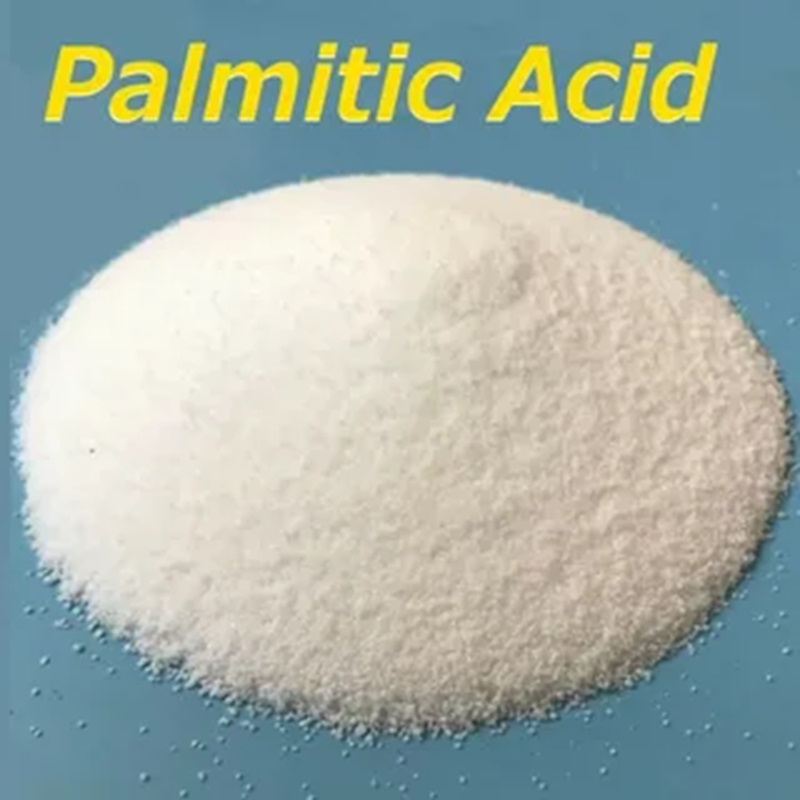
Send EmailPalmitic Acid, Hexadecanoic Acid, Pentadecanecarboxylic Acid, 57-10-3
PALMITIC ACID (HEXADECANOIC ACID)
PRODUCT IDENTIFIER INFORMATION
| Parameter | Information |
|---|---|
| Product Name | Palmitic Acid |
| Chemical Name (IUPAC) | Hexadecanoic Acid |
| CAS Number | 57-10-3 |
| EC Number (EINECS) | 200-312-9 |
| FEMA Number | 2832 |
| Molecular Formula | C₁₆H₃₂O₂ |
| Molecular Weight | 256.42 g/mol |
CHEMICAL STRUCTURE
        O
        ||
CH₃-(CH₂)₁₄-C-OH

Palmitic Acid (C₁₆H₃₂O₂)
Hexadecanoic Acid
Saturated Fatty Acid (C16:0)
Palmitic Acid Molecular Structure
Molecular Formula: C₁₆H₃₂O₂
SMILES: CCCCCCCCCCCCCCCC(=O)O
InChI: 1S/C16H32O2/c1-2-3-4-5-6-7-8-9-10-11-12-13-14-15-16(17)18/h2-15H2,1H3,(H,17,18)
InChIKey: IPCSVZSSVZVIGE-UHFFFAOYSA-N
MDL Number: MFCD00002747
BRN Number: 607489
JECFA Number: 115
SECTION 1: CHEMICAL IDENTITY AND DESCRIPTION
| Parameter | Information |
|---|---|
| Product Name | Palmitic Acid |
| Chemical Name (IUPAC) | Hexadecanoic Acid |
| Synonyms (English) | Palmitic Acid, Hexadecanoic Acid, Hexadecan Acid, 1-Hexadecanoic Acid, Pentadecanecarboxylic Acid, NAA 160, Lunac P95, Neo-Fat 16, Kortacid 1698, Industrene 4516, Loxiol EP278 |
| CAS Number | 57-10-3 |
| EC Number (EINECS) | 200-312-9 |
| Molecular Formula | C₁₆H₃₂O₂ (CH₃(CH₂)₁₄COOH) |
| Molecular Weight | 256.42 g/mol |
| Chemical Class | Saturated fatty acid; long-chain carboxylic acid |
| Physical State (20°C) | White crystalline waxy solid |
| Odor | Characteristic slight fatty odor |
| Taste | Characteristic fatty taste (not for consumption) |
| Occurrence | One of the most widely distributed fatty acids in nature; found in palm oil, tallow, butter, cottonseed oil, soybean oil, peanut oil, corn oil, fish oil, and animal fats |
SECTION 2: PHYSICAL AND CHEMICAL PROPERTIES
| Property | Value | Test Method / Note |
|---|---|---|
| Appearance | White crystalline waxy solid (pearly phosphorescent scales) | Visual |
| Color | White or almost white | Visual |
| Odor | Characteristic slight fatty odor | Olfactometric |
| Molecular Weight | 256.42 g/mol | Calculated |
| Density (25°C) | 0.852 g/cm³ | ASTM D4052 |
| Relative Density | 0.8388 | - |
| Melting Point | 61 - 62.5 °C (lit.) | DSC |
| Boiling Point | 351.5 °C | ASTM D86 |
| Flash Point | > 230°F (> 110°C) | ASTM D93 |
| Vapor Pressure | 10 mm Hg at 210°C | - |
| Refractive Index | 1.4273 | Refractometry |
| Solubility in Water | Insoluble | General Method |
| Solubility in Cold Ethanol | Insoluble | General Method |
| Solubility in Hot Ethanol | Soluble | General Method |
| Solubility in Ether | Soluble | General Method |
| Solubility in Acetone | Soluble | General Method |
| Solubility in Chloroform | Soluble | General Method |
| Solubility in Acetic Acid | Soluble | General Method |
| Solubility in Petroleum Ether | Slightly soluble | General Method |
| pKa (Predicted) | 4.78 ± 0.10 | - |
| Hygroscopicity | Easily absorbs moisture (hygroscopic) | - |
| Stability | Stable; combustible; incompatible with bases, oxidizing agents, reducing agents | - |
SECTION 3: CHEMICAL PROPERTIES AND REACTIVITY
| Parameter | Information |
|---|---|
| Chemical Character | Saturated long-chain fatty acid; weak acid (pKa ~4.78); carboxylic acid functionality |
| Stability | Stable under normal conditions; stable to heat and light; may oxidize slowly upon prolonged exposure to air |
| Reactivity | Reacts with bases to form salts (palmitates); reacts with alcohols to form esters; can be hydrogenated; undergoes esterification, saponification, and amidation reactions |
| Incompatible Materials | Strong bases (NaOH, KOH), strong oxidizing agents, strong reducing agents |
| Polymerization | Does not polymerize |
| Decomposition Products (Heating) | Carbon monoxide (CO), Carbon dioxide (CO₂), acrolein, other fatty acid decomposition products |
| Hazardous Reactions | Combustible; can react violently with strong oxidizing agents; contact with strong bases may generate heat |
| Esterification | RCOOH + R'OH → RCOOR' + H₂O (forms esters with alcohols) |
| Saponification | RCOOH + NaOH → RCOONa + H₂O (forms sodium palmitate - soap) |
| Acid-Base Reactions | Reacts with bases to form metal salts (palmitates) |
SECTION 4: COMMON FATTY ACIDS COMPARISON TABLE
| Property | Palmitic Acid (C16:0) | Stearic Acid (C18:0) | Myristic Acid (C14:0) | Oleic Acid (C18:1) |
|---|---|---|---|---|
| CAS Number | 57-10-3 | 57-11-4 | 544-63-8 | 112-80-1 |
| Formula | C₁₆H₃₂O₂ | C₁₈H₃₆O₂ | C₁₄H₂₈O₂ | C₁₈H₃₄O₂ |
| Molecular Weight | 256.42 | 284.48 | 228.37 | 282.46 |
| Melting Point | 61 - 62.5 °C | 69 - 70 °C | 53 - 54 °C | 13 - 14 °C |
| Degree of Saturation | Saturated | Saturated | Saturated | Unsaturated (one double bond) |
| Density (g/cm³) | 0.852 | 0.847 | 0.862 | 0.891 |
| Solubility in Water | Insoluble | Insoluble | Insoluble | Insoluble |
| Primary Use | Soap, cosmetics, surfactants | Candles, rubber, cosmetics | Cosmetics, soaps, esters | Soap, surfactants, lubricants |
SECTION 5: FUNCTIONAL PROPERTIES AND MECHANISM OF ACTION
| Property | Description |
|---|---|
| Surfactant | Acts as a surfactant; when neutralized, forms palmitate salts (soaps) with excellent surface-active properties |
| Emulsifier | Serves as an emulsifier in cosmetic, pharmaceutical, and food formulations; sorbitan monopalmitate and polyoxyethylene sorbitan monopalmitate are widely used |
| Lubricant | Provides lubricating properties in plastic processing, metalworking, and textile applications |
| Thickening Agent | Used to increase viscosity and provide body in cosmetic and industrial formulations |
| Solvent | Acts as a solvent for certain organic compounds and waxes |
| Binder | Used as a binding agent in solid formulations and tablets |
| Coating Agent | Provides protective coating on surfaces; used as a waterproofing agent |
| Defoamer | Effective as a defoaming agent in food processing, papermaking, and industrial applications |
| Ester Precursor | Raw material for producing various esters (isopropyl palmitate, methyl palmitate, butyl palmitate, chloramphenicol palmitate, etc.) |
| Metal Salt Precursor | Raw material for producing metal salts (sodium palmitate, zinc palmitate, aluminum palmitate, etc.) |
SECTION 6: MAIN APPLICATION AREAS
| Industry / Application | Function | Typical Use |
|---|---|---|
| Soap and Detergent Industry | Surfactant / saponification | Production of fatty acid soaps (sodium palmitate, potassium palmitate); synthetic detergents; emulsifiers for various formulations |
| Cosmetics and Personal Care | Emulsifier / thickener / emollient | Lipsticks, creams, lotions, hair oils, hair pastes; used in all types of cosmetics and toiletries; lipophilic emulsifier |
| Pharmaceutical Industry | Emulsifier / coating agent | Production of chloramphenicol palmitate (odorless antibiotic); tablet coatings; pharmaceutical emulsions; surfactants in drug delivery |
| Plastic and Polymer Industry | Lubricant / slip agent | PVC slip agents, processing aids; plastic emulsifiers; internal and external lubricants for polymer processing |
| Food Industry | Emulsifier / defoamer / additive | Production of fatty acid glycerides, sorbitan fatty acid esters, sugar esters; food defoaming agents; permitted food additive (FEMA 2832); maximum usage in seasonings 1.0 mg/kg |
| Candle and Wax Industry | Raw material | Production of candles, wax products; greases and wax formulations |
| Textile Industry | Lubricant / emulsifier | Fabric softening agents; textile lubricants; fiber processing aids |
| Paint and Coating Industry | Additive / emulsifier | Paint and coating formulations; pigment wetting agents; dispersant for pigment inks |
| Rubber Industry | Processing aid / lubricant | Rubber processing; mold release agents; rubber additives |
| Leather Industry | Lubricant / fatliquoring agent | Leather processing and fatliquoring; leather finishing |
| Metalworking | Lubricant / anti-corrosion | Metalworking fluids; rust preventive additives; lubricating oil additives |
| Chemical Synthesis | Intermediate / raw material | Production of isopropyl palmitate (cosmetic oil phase), methyl palmitate (lubricating oil additives), butyl palmitate, amine compounds, chlorides, etc.; organic synthesis intermediates |
| Waterproofing | Water repellent | Waterproofing agents for paper, textiles, and building materials |
| Laboratory | Reagent / standard | Chemical reagent; analytical standard; precipitating agent; gas chromatography reference material; hardness determination of water (calcium, magnesium, barium, lead, mercury, zinc) |
SECTION 7: QUALITY SPECIFICATIONS (TECHNICAL GRADE)
| Parameter | Specification | Test Method |
|---|---|---|
| Appearance | White crystalline waxy solid (pearly phosphorescent scales) | Visual |
| Assay (Palmitic Acid) | ≥ 95.0 % | GC-FID |
| Acid Value | 218 - 222 mg KOH/g | Titrimetric |
| Saponification Value | 220 - 224 mg KOH/g | Titrimetric |
| Iodine Value | ≤ 2.0 g I₂/100 g | Titrimetric |
| Melting Point | 58 - 65 °C | DSC |
| Moisture Content | ≤ 1.0 % | Karl Fischer Titration |
| Unsaponifiable Matter | ≤ 1.5 % | Gravimetric |
| Ash Content | ≤ 0.1 % | Gravimetric |
| Color (Lovibond) | ≤ 3.0R / 20.0Y | Colorimeter |
| Heavy Metals (as Pb) | ≤ 0.001 % | AAS / ICP |
| Arsenic (As) | ≤ 0.0003 % | AAS / ICP |
| Peroxide Value | ≤ 5.0 meq/kg | Titrimetric |
SECTION 8: TOXICOLOGICAL PROFILE
| Parameter | Value |
|---|---|
| Acute Oral Toxicity (LD50, Rat) | > 5,000 mg/kg (low toxicity) |
| Acute Dermal Toxicity (LD50, Rabbit) | > 2,000 mg/kg (low toxicity) |
| Acute Intravenous Toxicity (LD50, Mouse) | 57 ± 3.4 mg/kg (Or, Wretlind) |
| Skin Irritation | May cause irritation; repeated exposure may cause dermatitis |
| Eye Irritation | Irritating to eyes (R36) |
| Respiratory Irritation | Dust may cause respiratory irritation (R36/37/38) |
| Carcinogenicity | Not classified (IARC, NTP) |
| Mutagenicity | Negative in standard tests |
| Reproductive Toxicity | No known adverse effects at occupational exposure limits |
| Sensitization | Low potential for sensitization |
| Target Organs | Skin, eyes, respiratory system |
| Occupational Exposure Limit (8h TWA) | Not established (generally considered safe) |
| Special Toxicity Note | Naturally occurring fatty acid; considered safe for food and cosmetic use (FDA, §172.860); low toxicity; natural fatty acid, non-toxic |
SECTION 9: GHS CLASSIFICATION AND LABELING
GHS Classification (according to 1272/2008/EC and UN GHS):
| Hazard Class | Category | H-Statement |
|---|---|---|
| Skin Irritation | Category 2 | H315 |
| Eye Irritation | Category 2 | H319 |
| Specific Target Organ Toxicity - SE | Category 3 | H335 |
Signal Word: WARNING
Hazard Pictograms: GHS07 (Exclamation Mark)
Hazard Statements (H-Codes):
| Code | Statement |
|---|---|
| H315 | Causes skin irritation |
| H319 | Causes serious eye irritation |
| H335 | May cause respiratory irritation |
Risk Codes:
| Code | Statement |
|---|---|
| R36 | Irritating to eyes |
| R36/38 | Irritating to eyes and skin |
| R36/37/38 | Irritating to eyes, respiratory system and skin |
Safety Descriptions:
| Code | Statement |
|---|---|
| S26 | In case of contact with eyes, rinse immediately with plenty of water and seek medical advice |
| S36 | Wear suitable protective clothing |
| S37/39 | Wear suitable gloves and eye/face protection |
NFPA 704 Hazard Classification:
| Health | Flammability | Reactivity | Special |
|---|---|---|---|
| 1 | 1 | 0 | - |
| (Slight health hazard) | (Slightly flammable) | (Stable) | (None) |
SECTION 10: PRECAUTIONARY STATEMENTS (P-CODES)
| Code | Statement |
|---|---|
| P261 | Avoid breathing dust/fume/gas/mist/vapors/spray |
| P264 | Wash thoroughly after handling |
| P271 | Use only outdoors or in a well-ventilated area |
| P280 | Wear protective gloves / protective clothing / eye protection / face protection |
| P302+P352 | IF ON SKIN: Wash with plenty of soap and water |
| P304+P340 | IF INHALED: Remove person to fresh air and keep comfortable for breathing |
| P305+P351+P338 | IF IN EYES: Rinse cautiously with water for several minutes. Remove contact lenses if present and easy to do. Continue rinsing |
| P312 | Call a POISON CENTER / doctor if you feel unwell |
| P332+P313 | If skin irritation occurs: Get medical advice/attention |
| P337+P313 | If eye irritation persists: Get medical advice/attention |
| P403+P233 | Store in a well-ventilated place. Keep container tightly closed |
| P501 | Dispose of contents/container in accordance with local/regional/national/international regulations |
SECTION 11: FIRST AID MEASURES
| Exposure Route | Action to Take |
|---|---|
| Inhalation | Move to fresh air. Keep at rest in a position comfortable for breathing. If symptoms persist, seek medical attention. |
| Skin Contact | Remove contaminated clothing. Wash with plenty of soap and water. If irritation develops, seek medical attention. |
| Eye Contact | Rinse immediately with plenty of water for at least 15 minutes. Remove contact lenses if present. Seek medical attention if irritation persists. |
| Ingestion | Rinse mouth. Do NOT induce vomiting. Seek medical attention if discomfort occurs. |
SECTION 12: FIRE-FIGHTING MEASURES
| Parameter | Information |
|---|---|
| Fire Hazard | Combustible solid; flash point > 110°C |
| Hazards During Fire | Thermal decomposition produces irritating and toxic fumes (CO, CO₂, acrolein) |
| Suitable Extinguishing Media | Dry chemical powder, CO₂, alcohol-resistant foam, water fog |
| Unsuitable Extinguishing Media | Water jet (may spread the fire) |
| Special Protective Equipment | Self-contained breathing apparatus (SCBA), full protective clothing |
| Special Precautions | Keep away from strong oxidizing agents; cool exposed containers with water fog; prevent runoff water from entering drains and waterways |
SECTION 13: STORAGE AND SHELF LIFE
| Parameter | Information |
|---|---|
| Storage Conditions | Cool, dry, well-ventilated area; away from heat, sparks, and open flames; protect from moisture and oxidizing agents |
| Container Requirements | Tightly closed, properly labeled containers; use moisture-resistant packaging; store away from oxidizing agents and bases |
| Materials to Protect From | Strong oxidizing agents, strong bases (NaOH, KOH), strong reducing agents, moisture |
| Shelf Life | 24 months (in unopened original packaging, under proper storage conditions) |
| Stability Note | Stable under normal conditions; may oxidize slowly upon prolonged exposure to air; protect from moisture to prevent caking; keep away from heat |
SECTION 14: PACKAGING OPTIONS
| Packaging Type | Quantity | Material |
|---|---|---|
| Paper Bag | 25 kg | Multi-layer kraft paper with plastic liner |
| Plastic Bag | 25 kg, 50 kg | PE bag |
| Fiber Drum | 25 kg, 50 kg | Fiberboard with PE liner |
| Plastic Drum | 100 kg, 200 kg | HDPE / Polypropylene |
| Bulk Bag (FIBC) | 500 kg, 1000 kg | Woven PP with PE liner |
SECTION 15: TRANSPORT INFORMATION
| Parameter | Information |
|---|---|
| UN Number | Not regulated (not classified as dangerous goods) |
| Hazard Class | Not applicable |
| Packing Group | Not applicable |
| ADR/RID | Not regulated |
| IMDG Code | Not regulated |
| IATA (Air) | Not regulated |
| Marine Pollutant | No |
| Transport Temperature | Ambient; protect from moisture and heat |
| HS Code | 29157015 |
SECTION 16: REGULATORY STATUS
| Region / Authority | Status |
|---|---|
| European Union | REACH registered; approved for food and cosmetic applications |
| USA (TSCA) | Listed |
| USA (FDA) | Approved for food use (FDA, §172.860); Generally Recognized As Safe (GRAS) |
| USA (USP) | Monograph for palmitic acid |
| Europe (Ph. Eur.) | Monograph for palmitic acid |
| Cosmetics (EU) | Approved for use in cosmetics (Cosing database) |
| Food Additives | Approved as food additive in many countries (FEMA 2832) |
| Turkey | Industrial chemical; subject to KKDIK regulation; approved for food contact applications |
| IARC | Not classified as carcinogenic |
| OSHA | Not specifically regulated |
| RTECS | RT4550000 |
| WGK Germany | Not classified |
SECTION 17: OTHER NAMES AND SYNONYMS
| Type | Name |
|---|---|
| English Synonyms | Palmitic Acid, Hexadecanoic Acid, Hexadecan Acid, 1-Hexadecanoic Acid, Pentadecanecarboxylic Acid, NAA 160, Lunac P95, Neo-Fat 16, Kortacid 1698, Industrene 4516, Loxiol EP278, Palmitic Acid Tech, Pure Palmitic Acid, Palmitic Acid (1.00509) |
| Chemical Names | Hexadecanoic Acid; 1-Hexadecanoic Acid; Pentadecanecarboxylic Acid; C16 Fatty Acid |
| CAS Number | 57-10-3 |
| EC Number | 200-312-9 |
| FEMA Number | 2832 |
| MDL Number | MFCD00002747 |
| BRN Number | 607489 |
| RTECS | RT4550000 |
SECTION 18: PRODUCTION METHODS
Method 1: Direct Extraction from Palm Oil
-
Directly extracted from palm fruit and palm oil
-
Hydrolysis of palm oil to obtain mixed fatty acids
-
Fractionation and separation of palmitic acid
Method 2: From Natural Oils and Fats
-
Oils and fats (tallow, palm oil, cottonseed oil, wood wax) hydrolyzed at high temperature (250°C) and high pressure (50.67 × 10⁵ Pa)
-
Mixed fatty acids are obtained
-
Fractionation and pressing separation of unsaturated fatty acids
-
Recrystallization to obtain palmitic acid
Method 3: From Oleic Acid
-
Alkali fusion at 350°C
-
Double bond isomerization to conjugated position
-
Catalytic oxidation to decompose into palmitic acid
Method 4: Vacuum Fractionation
-
Mixed fatty acids from rice bran oil, coconut oil, palm kernel oil, etc.
-
Vacuum fractionation to isolate palmitic acid
SECTION 19: DOWNSTREAM PRODUCTS
| Product | Application |
|---|---|
| Isopropyl Palmitate | Cosmetic oil phase raw material; lipsticks, creams, hair oils, hair pastes |
| Methyl Hexadecanoate | Lubricating oil additives; surfactant raw materials; PVC slip agents |
| Chloramphenicol Palmitate | Odorless antibiotic; pharmaceutical formulations |
| Sorbitan Monopalmitate | Cosmetic emulsifier; pharmaceutical emulsifier; food emulsifier; pigment ink dispersant; defoaming agent |
| Polyoxyethylene Sorbitan Monopalmitate (Polysorbate 40) | Lipophilic emulsifier; cosmetic and pharmaceutical applications |
| Sodium Palmitate | Fatty acid soap; plastic emulsifier; surfactant raw material |
| Zinc Palmitate | Cosmetic and plastic stabilizer |
| Butyl Palmitate | Esters; plasticizers; lubricants |
| Palmitic Amides | Surfactants; amide compounds |
SECTION 20: SUMMARY TABLE
| Parameter | Value |
|---|---|
| Product | Palmitic Acid (Hexadecanoic Acid) |
| CAS Number | 57-10-3 |
| Molecular Formula | C₁₆H₃₂O₂ |
| Molecular Weight | 256.42 g/mol |
| Appearance | White crystalline waxy solid (pearly phosphorescent scales) |
| Density (25°C) | 0.852 g/cm³ |
| Melting Point | 61 - 62.5 °C |
| Boiling Point | 351.5 °C |
| Solubility | Insoluble in water; soluble in hot ethanol, ether, acetone, chloroform, acetic acid |
| Primary Function | Surfactant, emulsifier, lubricant, intermediate |
| Main Applications | Soap, cosmetics, pharmaceuticals, plastics, food additives, candles, textiles, chemical synthesis |
| Shelf Life | 24 months |
| GHS Signal Word | WARNING |
| UN Number | Not regulated |
SECTION 21: CRITICAL WARNINGS AND BEST PRACTICES
CRITICAL WARNINGS:
-
Causes skin and eye irritation (H315/H319). Wear protective gloves and eye protection.
-
May cause respiratory irritation (H335). Use adequate ventilation.
-
Combustible solid; keep away from heat, sparks, and open flames.
-
Incompatibilities: Keep away from strong oxidizing agents and strong bases.
-
Hygroscopic: Absorbs moisture from air; store in tightly closed containers.
-
May oxidize slowly upon prolonged exposure to air; protect from excessive heat.
BEST PRACTICE RECOMMENDATIONS:
-
Soap and Detergent Industry: Use as a raw material for soap production; saponification with sodium hydroxide or potassium hydroxide; control reaction temperature and conditions for optimal product quality.
-
Cosmetic Industry: Use as an emulsifier and thickener in creams, lotions, and lipsticks; typical usage 1-5%; can be used to produce isopropyl palmitate for cosmetic oil phase formulations.
-
Pharmaceutical Industry: Use as an excipient and coating agent; produce chloramphenicol palmitate for antibiotic formulations; use as emulsifier in pharmaceutical emulsions.
-
Plastic Industry: Use as a lubricant and slip agent in PVC processing; improves flow properties and surface finish; typical usage 0.5-2%.
-
Food Industry: Use as permitted food additive (FEMA 2832); maximum usage in seasonings 1.0 mg/kg; use as food defoamer and emulsifier.
-
Handling: Use in well-ventilated areas; wear protective gloves and safety goggles; avoid creating dust; handle with care to prevent spills.
-
Storage: Store in cool, dry, well-ventilated area; keep containers tightly closed; protect from moisture and oxidizing agents; store away from heat and open flames.
-
Spill Response: Sweep up and place in sealed containers for disposal; avoid creating dust; clean area thoroughly.
-
Disposal: Dispose of in accordance with local, regional, and national regulations; may be incinerated in appropriate facilities.
LEGAL DISCLAIMER:
The information provided in this document is based on our current knowledge and experience and is presented in good faith. However, as all conditions of use are beyond our control, it does not constitute a binding specification or warranty. This Technical Data Sheet is for informational purposes only. Users are responsible for testing the suitability of the product for their specific applications. For complete safety, storage, use, handling, waste, and regulatory compliance information, please refer to the official Safety Data Sheet (SDS/MSDS) provided by the manufacturer/supplier.