We unleash your business potential by maximize the business innovation.
Send EmailTaurine, Tauric Acid, Ethane Sulfonic Acid, Aminoethyl Sulfonic Acid, Beta-Amino Ethyl Sulfonate, 107-35-7
TAURINE
PRODUCT IDENTIFIER INFORMATION
| Parameter | Information |
|---|---|
| Product Name | Taurine |
| Chemical Name (IUPAC) | 2-Aminoethanesulfonic acid |
| CAS Number | 107-35-7 |
| EC Number (EINECS) | 203-483-8 |
| FEMA Number | 3813 |
| Molecular Formula | C2H7NO3S |
| Molecular Weight | 125.15 g/mol |
SECTION 1: CHEMICAL IDENTITY AND DESCRIPTION
| Parameter | Information |
|---|---|
| Chemical Name (IUPAC) | 2-Aminoethanesulfonic acid |
| Synonyms | Taurine, Tauric Acid, Ethanesulfonic Acid, Aminoethylsulfonic Acid, Beta-Aminoethylsulfonate, 2-Aminoethanesulfonic Acid |
| Trade Names | TATU, TURIN (certain brands) |
| CAS Number | 107-35-7 |
| EC Number (EINECS) | 203-483-8 |
| FEMA Number | 3813 (as flavoring agent) |
| Molecular Formula | C2H7NO3S |
| Molecular Weight | 125.15 g/mol |
| Chemical Class | Aminosulfonic acid (sulfur-containing amino acid-like compound) |
| Natural Source | Derived from methionine and cysteine metabolism; found free in animal tissues (fish, squid, mussels, shrimp, mammalian organs) |
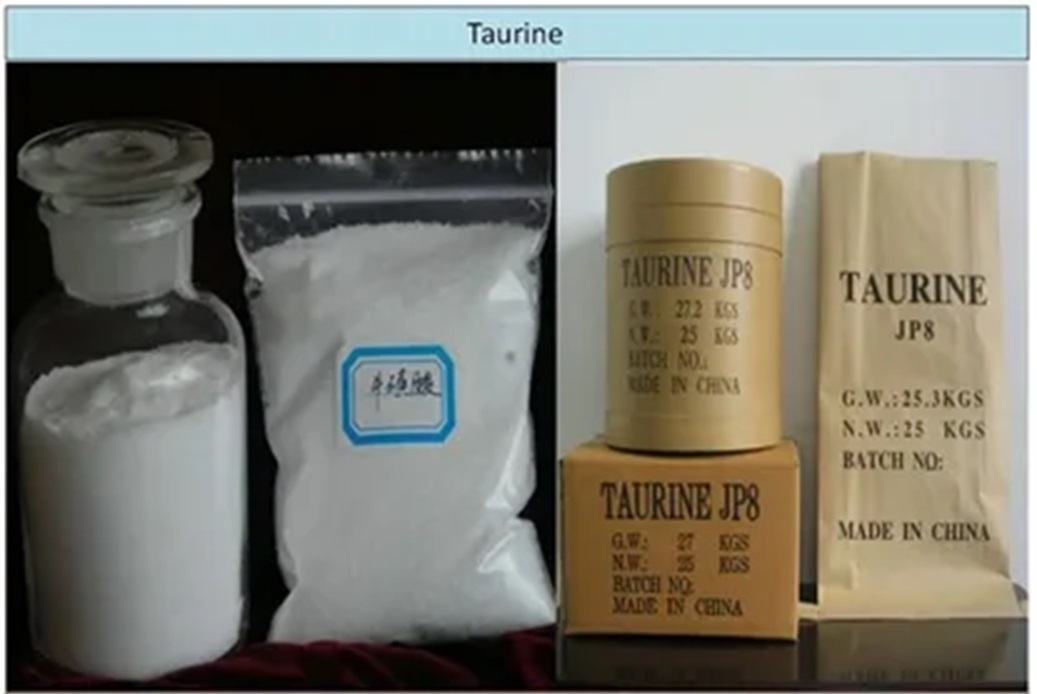
| Physical State (20°C) | Solid (white or colorless crystalline powder) |
| Odor | Odorless |
| Taste | Slightly acidic |
SECTION 2: PHYSICAL AND CHEMICAL PROPERTIES
| Property | Value | Test Method |
|---|---|---|
| Appearance | White or colorless crystalline powder | Visual |
| Odor | Odorless | Olfactometric |
| Taste | Slightly acidic | Sensory |
| Molecular Weight | 125.15 g/mol | Calculated |
| Melting Point | >300°C (approximately 325–328°C, with decomposition) | DSC |
| Density | ~1.7 g/cm3 | ASTM D4052 |
| Solubility in Water (23-25°C) | 65 g/L (moderately soluble) | Gravimetric |
| Solubility in Ethanol | Insoluble | General Method |
| Solubility in Ether | Insoluble | General Method |
| Solubility in Acetone | Insoluble | General Method |
| pH (2.5% aqueous solution, 25°C) | 4.5 – 6.0 | pH Meter |
| Hygroscopicity | Hygroscopic (absorbs moisture) | Visual |
| Flash Point | Non-flammable | Not applicable |
| Stability | Stable under normal conditions |
SECTION 3: CHEMICAL PROPERTIES AND REACTIVITY
| Parameter | Information |
|---|---|
| Chemical Character | Aminosulfonic acid (zwitterionic structure); does not participate in protein synthesis |
| Zwitterionic Structure | Dipolar ion at physiological pH (H3N+-CH2-CH2-SO3-) |
| Stability | Stable under normal conditions |
| Decomposition Products (Heating) | Decomposes above 300°C; sulfur oxides (SOx), nitrogen oxides (NOx), CO, CO2 |
| Incompatible Materials | Strong oxidizing agents |
| Acid-Base Character | Amphoteric; both acidic (sulfonic acid group, pKa ~1.5) and basic (amino group, pKa ~8.8) character |
| Hazardous Polymerization | Does not occur |
SECTION 4: PRODUCTION METHODS
| Method | Description |
|---|---|
| Chemical Synthesis (Industrial) | Ethylene oxide + sodium bisulfite → intermediates; addition of liquid ammonia and sulfuric acid to obtain taurine; crystallization, centrifugation, drying, and purification |
| Natural Extraction (Historical) | Extraction from fish, squid, mussels, shrimp, mammalian organs (liver, heart, brain); first isolated from bovine gallstone (bezoar) |
SECTION 5: BIOLOGICAL FUNCTIONS
| Function | Mechanism of Action / Role |
|---|---|
| Osmoregulation | Maintenance of intracellular fluid balance; regulation of cell volume |
| Antioxidant | Neutralization of free radicals; mitochondrial protection; maintenance of cell membrane integrity |
| Cardiovascular | Blood pressure regulation; antiarrhythmic effect; support of cardiac muscle contractility |
| Nervous System | Brain development; modulation of neurotransmission; calming (inhibitory) effect; interaction with GABA receptors |
| Eye Health | High concentration in retina; protection of photoreceptor cells; support of visual function |
| Liver / Bile | Conjugation with bile acids (formation of taurocholic acid); lipid digestion and absorption |
| Metabolism | Enhancement of insulin sensitivity; regulation of glucose metabolism; improvement of lipid profile |
| Reproduction | Support of sperm motility and fertility |
SECTION 6: AMINO ACID ANALOGUES AND ALTERNATIVES COMPARISON
| Compound | Mechanism of Action | Compared to Taurine |
|---|---|---|
| Beta-Alanine | Uses the same transporter systems (TauT) as taurine; may decrease intracellular taurine levels; increases muscle buffering capacity | Different: Reduces taurine levels; performance enhancer in sports supplements |
| GABA | Inhibitory neurotransmitter in central nervous system; calming and anxiolytic effects | Different: Shares some nervous system effects but lacks osmoregulation and antioxidant functions |
| Glycine | Simplest amino acid; can conjugate with bile acids; antioxidant properties | Similar: Can partially replace taurine in bile salt formation. Different: Weaker cell protector and osmolyte |
| Creatine | Energy metabolism; increases muscle cell volume by drawing in water; high-intensity exercise performance | Different: Often used together with taurine in energy drinks but completely different mechanism |
| Inositol | Cell membrane structure and signal transduction | Different: Does not perform fundamental functions such as osmoregulation |
SECTION 7: PRIMARY APPLICATION AREAS
| Sector | Application | Typical Usage Rate |
|---|---|---|
| Energy Drinks | Performance enhancer, anti-fatigue (usually combined with caffeine) | 200-400 mg/100 mL |
| Infant Formula | Brain and eye development support | 0.1-0.5 g/kg |
| Dairy Products | Supplement in functional products | Maximum 0.5 g/kg |
| Dietary Supplements | Daily supplementation in capsule, tablet, or powder form | 500-2000 mg/day |
| Pharmaceutical - Eye Drops | Retinal degeneration treatment, eye health support | 0.5-4.0% |
| Pharmaceutical - Cardiovascular | Heart failure, antiarrhythmic treatment | 2-6 g/day (clinical) |
| Pharmaceutical - Neurological | Parkinson's, neurological diseases (adjunctive therapy) | 1-3 g/day |
| Veterinary - Cat Food | Mandatory additive (no endogenous synthesis); heart and retina health | Minimum 1000 mg/kg dry food |
| Veterinary - Dog/Bird | Additional support | Variable |
| Cosmetic | Skincare creams, anti-aging products (cell membrane vitality) | 0.1-2.0% |
| Sports Nutrition | Performance-enhancing products, endurance support | 1-3 g/day |
SECTION 8: QUALITY SPECIFICATIONS (FOOD/PHARMACEUTICAL GRADE)
| Parameter | Specification | Test Method |
|---|---|---|
| Appearance | White or colorless crystalline powder | Visual |
| Odor | Odorless | Olfactometric |
| Purity (C2H7NO3S, Dry Basis) | 98.5 – 101.5% | Titrimetric / HPLC |
| Loss on Drying (105°C, 2 hours) | ≤ 0.5% | Gravimetric |
| pH (2.5% solution, 25°C) | 4.5 – 6.0 | pH Meter |
| Water Insoluble Matter | ≤ 0.05% | Gravimetric |
| Chloride (Cl-) | ≤ 0.01% | Argentometric |
| Sulfate (SO4 2-) | ≤ 0.01% | Turbidimetric |
| Ash Content | ≤ 0.1% | Gravimetric (600°C) |
| Heavy Metals (as Pb) | ≤ 10 ppm | ICP-MS |
| Lead (Pb) | ≤ 2 ppm | ICP-MS |
| Arsenic (As) | ≤ 3 ppm | ICP-MS |
| Mercury (Hg) | ≤ 1 ppm | ICP-MS |
| Cadmium (Cd) | ≤ 1 ppm | ICP-MS |
| Iron (Fe) | ≤ 10 ppm | AAS / ICP-OES |
| Total Microbial Count | ≤ 1,000 CFU/g | USP <61> |
| Yeast and Mold | ≤ 100 CFU/g | USP <61> |
| E. coli | Negative in 10g | USP <62> |
| Salmonella spp. | Negative in 25g | USP <62> |
SECTION 9: TOXICOLOGICAL PROFILE
| Parameter | Value |
|---|---|
| Acute Oral Toxicity (LD50, Rat) | > 5,000 mg/kg (low toxicity) |
| Acute Dermal Toxicity (LD50, Rabbit) | > 2,000 mg/kg |
| Skin Irritation | Mild irritant |
| Eye Irritation | Irritant |
| Respiratory Irritation | Inhalation of dust may cause mechanical irritation |
| Skin Sensitization | Not sensitizing |
| Carcinogenicity | Not classified (IARC, NTP) |
| Mutagenicity | Negative in in vitro and in vivo tests |
| Reproductive Toxicity | No known adverse effects; supports fertility |
| Chronic Toxicity | Gastrointestinal discomfort at high doses (above 10 g/day) |
| GRAS Status | Recognized as GRAS by FDA |
| NOAEL (No Observed Adverse Effect Level) | 1,000 mg/kg body weight/day |
SECTION 10: GHS CLASSIFICATION AND LABELING
GHS Classification (compliant with 1272/2008/EC):
| Hazard Class | Category | H-Statement |
|---|---|---|
| Eye Irritation | Category 2 | H319 |
| Skin Irritation | Category 2 | H315 |
| Specific Target Organ Toxicity (STOT - SE) | Category 3 | H335 |
Signal Word: WARNING
Hazard Pictograms: GHS07 (Exclamation Mark)
Hazard Statements (H-Codes):
| Code | Statement |
|---|---|
| H315 | Causes skin irritation |
| H319 | Causes serious eye irritation |
| H335 | May cause respiratory irritation |
Precautionary Statements (P-Codes):
| Code | Statement |
|---|---|
| P261 | Avoid breathing dust |
| P264 | Wash hands thoroughly after handling |
| P271 | Use only outdoors or in a well-ventilated area |
| P280 | Wear protective gloves/eye protection/face protection |
| P302+P352 | IF ON SKIN: Wash with plenty of water and soap |
| P305+P351+P338 | IF IN EYES: Rinse cautiously with water for several minutes. Remove contact lenses, if present and easy to do. Continue rinsing |
| P312 | Call a POISON CENTER/doctor if you feel unwell |
SECTION 11: FIRST AID MEASURES
| Exposure Route | Action to Take |
|---|---|
| Inhalation | Move to fresh air. Seek medical attention if respiratory irritation persists. |
| Skin Contact | Wash with plenty of water and soap. Seek medical attention if irritation persists. |
| Eye Contact | Rinse immediately with plenty of water for at least 15 minutes. Remove contact lenses if present. Seek medical attention. |
| Ingestion | Rinse mouth with water. Drink plenty of water. Seek medical attention if you feel unwell. |
SECTION 12: FIREFIGHTING MEASURES
| Parameter | Information |
|---|---|
| Fire Hazard | Non-flammable |
| Hazards During Fire | Releases CO, CO2, NOx, SOx when heated or burned |
| Suitable Extinguishing Media | Any extinguishing media appropriate for surrounding fire (water, CO2, dry chemical powder, foam) |
| Special Protective Equipment | Self-contained breathing apparatus (SCBA), full protective clothing |
SECTION 13: STORAGE AND SHELF LIFE
| Parameter | Information |
|---|---|
| Storage Conditions | Cool (15-25°C), dry, well-ventilated area; light-protective packaging |
| Container Requirements | Tightly closed, moisture-proof containers (hygroscopic) |
| Keep Away From | Moisture (hygroscopic), direct sunlight, strong oxidizing agents |
| Shelf Life | 36 months (unopened original packaging under appropriate storage conditions) |
| Stability Note | Hygroscopic; absorbs moisture; store in airtight containers |
SECTION 14: PACKAGING OPTIONS
| Packaging Type | Quantity | Material |
|---|---|---|
| Aluminum foil pouch (moisture-proof) | 1 kg | Laminated aluminum |
| Aluminum foil pouch (moisture-proof) | 5 kg | Laminated aluminum |
| Kraft bag with PE inner liner | 25 kg | Kraft paper + PE |
| PP woven bag with PE inner liner | 25 kg | PP woven + PE |
| Fiber drum | 25-50 kg | Fiberboard + PE |
SECTION 15: TRANSPORTATION INFORMATION
| Parameter | Information |
|---|---|
| UN Number | Not regulated (not hazardous) |
| Hazard Class | Not applicable |
| Packing Group | Not applicable |
| ADR/RID | Not regulated |
| IMDG Code | Not regulated |
| IATA (Air) | Not regulated |
| Marine Pollutant | No |
| Transport Temperature | Ambient (15-25°C); protect from moisture |
SECTION 16: ACCIDENTAL RELEASE AND CLEANUP
| Parameter | Information |
|---|---|
| Personal Protection | Nitrile gloves, safety goggles, dust mask (N95) |
| Cleanup Methods | Sweep up or vacuum dry. Collect in closed, labeled containers. |
| Environmental Precautions | Prevent entry of large quantities into water sources. |
| Waste Disposal | According to local regulations; dispose at licensed disposal facility. |
SECTION 17: REGULATORY STATUS
| Region / Authority | Status |
|---|---|
| USA (FDA) | GRAS status; approved for energy drinks and supplements |
| European Union | Permitted in food supplements and infant formula; specific maximum levels |
| European Pharmacopoeia | No official monograph; used in specific applications |
| Turkey | Permitted as food and feed additive; subject to Food Supplement Regulation |
| China | Approved as food additive and flavoring agent; infant formula 0.1-0.5 g/kg |
| Australia | Use as flavoring agent under GMP with "minimum required amount" principle |
| FEMA | 3813 (as flavoring agent) |
| Kosher | Available |
| Halal | Available |
SECTION 18: OTHER NAMES AND SYNONYMS
| Type | Name |
|---|---|
| Chemical Names (IUPAC) | 2-Aminoethanesulfonic acid |
| Other Chemical Names | Ethanesulfonic Acid, Aminoethylsulfonic Acid, Beta-Aminoethylsulfonate, Tauric Acid |
| Common Names | Taurine |
| Trade Names | TATU, TURIN (certain brands) |
| CAS Number | 107-35-7 |
| EC Number | 203-483-8 |
| FEMA Number | 3813 |
SECTION 19: SECTORAL SUITABILITY TABLE
| Sector | Suitability | Typical Purpose | Notes |
|---|---|---|---|
| Food & Beverage | High | Energy drinks, functional beverages, infant formula, dairy products | Approved as food additive and flavoring agent in EU, China, Australia |
| Nutraceutical / Supplements | High | Dietary supplements (capsule, tablet, powder forms) | One of the fastest-growing segments |
| Pharmaceutical | High | Eye drops, cardiovascular drugs, neurological treatments | Pharmaceutical grade purity required |
| Veterinary / Animal Nutrition | High | Mandatory additive in cat food, dog and bird food | Vital for heart and retina health in cats |
| Cosmetic | Medium | Skincare creams, anti-aging products | Cell membrane vitality enhancing effect |
| Sports Nutrition | High | Performance-enhancing products, anti-fatigue supplements | Usually combined with caffeine |
SECTION 20: SUMMARY TABLE
| Parameter | Value |
|---|---|
| Product | Taurine |
| CAS Number | 107-35-7 |
| Molecular Formula | C2H7NO3S |
| Molecular Weight | 125.15 g/mol |
| Appearance | White or colorless crystalline powder |
| pH (2.5% solution) | 4.5 – 6.0 |
| Solubility in Water (25°C) | 65 g/L |
| Melting Point | >300°C |
| Primary Function | Osmoregulation, antioxidant, cardiovascular support, nervous system modulation |
| Shelf Life | 36 months |
| GHS Signal Word | Warning |
SECTION 21: CRITICAL WARNINGS AND BEST PRACTICES
CRITICAL SAFETY WARNINGS:
-
Hygroscopic: Absorbs moisture; store in airtight containers in a dry environment. Close container immediately after opening.
-
Eye Irritation: Causes serious eye irritation. Wear protective goggles.
-
Incompatibility with Oxidizers: Avoid contact with strong oxidizing agents.
-
Essential for Cat Food: Taurine is vital in cat food as cats cannot synthesize taurine; deficiency leads to blindness and heart failure.
-
Beta-Alanine Interaction: Beta-alanine uses the same transporter systems as taurine; high-dose beta-alanine supplementation may decrease intracellular taurine levels.
BEST PRACTICE RECOMMENDATIONS:
-
Moisture Control: Maintain relative humidity below 60% in storage area; store with desiccants such as silica gel.
-
Energy Drink Formulation: Typical use 200-400 mg/100 mL; shows synergistic effect with caffeine.
-
Sports Supplementation: Intake of 1-2 g 30-60 minutes before exercise supports performance.
-
Solution Preparation: Moderate water solubility (65 g/L); use warm water to increase solubility.
-
Quality Verification: Use high-purity (>99%) taurine for food and pharmaceutical applications.
LEGAL DISCLAIMER:
The information provided in this document is presented in good faith based on our current knowledge and experience; however, since all usage conditions are beyond our control, it does not constitute a binding specification or warranty. This Technical Data Sheet is for informational purposes only and does not constitute medical advice. Users are obligated to test the suitability for their own applications. For complete safety, storage, handling, transportation, disposal, and regulatory compliance information, refer to the official Safety Data Sheet (SDS/MSDS) provided by the manufacturer/supplier. This product is not intended to diagnose, treat, cure, or prevent any disease.