We unleash your business potential by maximize the business innovation.
Send EmailFumaric Acid, Trans Butenedioic Asit, Allomaleic Acid, Tumaric Acid, E297, 110-17-8
FUMARIC ACID
PRODUCT IDENTIFIER INFORMATION
| Parameter | Information |
|---|---|
| Product Name | Fumaric Acid |
| Chemical Name (IUPAC) | (2E)-But-2-enedioic Acid |
| CAS Number | 110-17-8 |
| EC Number (EINECS) | 203-743-0 |
| Food Additive Code | E297 |
| HS Code | 2917.19.10 |
| Molecular Formula | C4H4O4 |
| Molecular Weight | 116.07 g/mol |
SECTION 1: CHEMICAL IDENTITY AND DESCRIPTION
| Parameter | Information |
|---|---|
| Chemical Name (IUPAC) | (2E)-But-2-enedioic Acid |
| Systematic Name | Trans-Butenedioic Acid |
| Synonyms | Fumaric Acid, Trans-Butenedioic Acid, Allomaleic Acid, Lichenic Acid, Tumaric Acid, Boletate, (E)-2-Butenedioic Acid, Trans-1,2-Ethylenedicarboxylic Acid |
| Salt Forms | Sodium Fumarate, Ammonium Fumarate, Ferrous Fumarate |
| CAS Number | 110-17-8 |
| EC Number (EINECS) | 203-743-0 |
| Food Additive Code | E297 |
| HS Code | 2917.19.10 |
| Molecular Formula | C4H4O4 |
| Molecular Weight | 116.07 g/mol |
| Chemical Class | Organic dicarboxylic acid (unsaturated) |
| Isomer | Maleic Acid (cis form); Fumaric Acid (trans form - more stable) |
| Physical State (20°C) | Solid (white crystalline powder or colorless crystals) |
| Odor | Odorless |
| Taste | Characteristic sour, fruity; approximately 1.5 times more sour than citric acid |
SECTION 2: PHYSICAL AND CHEMICAL PROPERTIES
| Property | Value | Test Method |
|---|---|---|
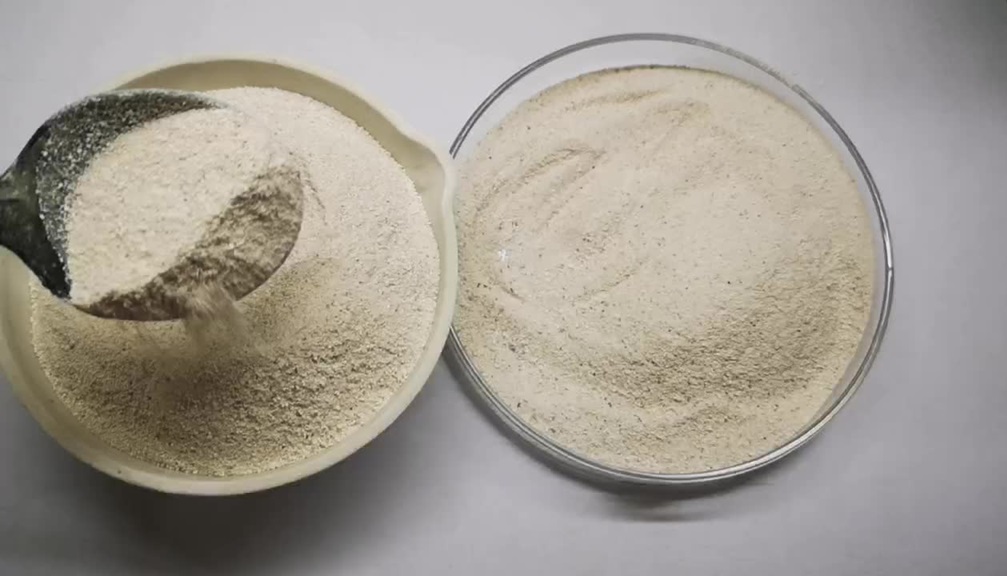
| Appearance | White crystalline powder or colorless crystals | Visual |
| Odor | Odorless | Olfactometric |
| Taste | Characteristic sour, fruity (~1.5x more sour than citric acid) | Sensory |
| Molecular Weight | 116.07 g/mol | Calculated |
| Melting Point | 287°C (in sealed tube) | DSC |
| Sublimation | Sublimes above 200°C | Visual |
| Decomposition | Converts to Maleic Anhydride by losing water when heated to 230°C | TGA |
| Density (20°C) | 1.635 g/cm3 | ASTM D4052 |
| pH (0.1% aqueous solution, 25°C) | 2.6 – 2.8 | pH Meter |
| Acid Dissociation Constant (pKa1) | 3.03 | Potentiometric |
| Acid Dissociation Constant (pKa2) | 4.44 | Potentiometric |
| Solubility in Water (25°C) | 0.63 g/100 mL (slightly soluble) | Gravimetric |
| Solubility in Water (100°C) | ~9.8 g/100 mL (increases with temperature) | Gravimetric |
| Solubility in Ethanol | Soluble | General Method |
| Solubility in Acetone | Slightly soluble | General Method |
| Solubility in Diethyl Ether | Very slightly soluble | General Method |
| Solubility in Concentrated Sulfuric Acid | Soluble | General Method |
| Solubility Enhancer | Dioctyl Sodium Sulfosuccinate increases water solubility | General Method |
| Buffering Capacity | Highest buffering value among organic acids | Titrimetric |
| Flash Point | Non-flammable | Not applicable |
| Hygroscopicity | Low (does not absorb moisture) | Visual |
SECTION 3: CHEMICAL PROPERTIES AND REACTIVITY
| Parameter | Information |
|---|---|
| Chemical Character | Organic dicarboxylic acid (unsaturated, trans isomer); stronger acid than citric acid |
| Stability | Stable under normal conditions; thermodynamically more stable than maleic acid (cis) |
| Decomposition (230°C) | Converts to Maleic Anhydride by losing water |
| Isomerization | Maleic Acid (cis) → Fumaric Acid (trans); catalyst: mineral acid, peroxide, heat/UV |
| Incompatible Materials | Strong bases, strong oxidizing agents, strong reducing agents |
| Reaction with Bases | Forms fumarate salts (sodium fumarate, ammonium fumarate, ferrous fumarate) |
| Reaction with Alcohols | Forms fumarate esters |
| Polymerization | Forms copolymer with styrene (unsaturated polyester resins) |
| Hazardous Polymerization | Does not occur |
SECTION 4: PRODUCTION METHOD
| Stage | Process | Description |
|---|---|---|
| 1 | Catalytic Oxidation | Benzene or n-butane/n-butene mixtures are oxidized with air to obtain Maleic Anhydride (MA) |
| 2 | Hydrolysis | Maleic Anhydride reacts with water to convert to Maleic Acid |
| 3 | Isomerization | Maleic Acid (cis form) undergoes cis-trans isomerization with suitable catalyst (mineral acid, peroxide, or heat/UV) to convert to thermodynamically more stable Fumaric Acid (trans form) |
| 4 | Purification | High-purity fumaric acid (>99.5%) obtained through crystallization, filtration, and drying |
Catalyst: Vanadium-phosphorus oxide (VPO) based catalysts embedded in fixed-bed tubular reactors.
SECTION 5: ORGANIC ACIDS COMPARISON
| Property | Fumaric Acid (E297) | Citric Acid (E330) | Malic Acid (E296) | Tartaric Acid (E334) | Lactic Acid (E270) |
|---|---|---|---|---|---|
| CAS Number | 110-17-8 | 77-92-9 | 6915-15-7 | 87-69-4 | 50-21-5 |
| Molecular Formula | C4H4O4 | C6H8O7 | C4H6O5 | C4H6O6 | C3H6O3 |
| pKa1 | 3.03 | 3.13 | 3.40 | 2.98 | 3.86 |
| Sourness (Citric Acid=1) | ~1.5 | 1.0 | ~1.0-1.2 | ~1.2-1.3 | ~0.8-1.0 |
| Solubility in Water (25°C) | 0.63 g/100mL | ~59 g/100mL | ~55 g/100mL | ~20 g/100mL | Completely miscible |
| Buffering Capacity | Highest | High | Medium | High | Low |
| Hygroscopicity | Low | Moderate | Low | Low | Very High (liquid) |
| Physical Form | Powder/crystals | Powder/crystals | Powder/crystals | Powder/crystals | Liquid |
| Taste Profile | Sharp, lingering sour | Sharp sour, lemon | Smooth sour, apple | Hard sour, grape | Mild sour, milk |
SECTION 6: FUNCTIONAL PROPERTIES AND MECHANISM OF ACTION
| Property | Description |
|---|---|
| Acidity Regulator | Lowers pH in foods and beverages; approximately 1.5 times more effective sour taste than citric acid |
| Preservative / Antimicrobial | Inhibits bacterial, mold, and yeast growth by creating low pH environment |
| Buffering Agent | Highest buffering capacity among organic acids; effective in pH range 3.0-4.5 |
| Antioxidant Synergist | Inhibits oxidation by chelating metal ions; synergistic with other antioxidants |
| Malolactic Fermentation Inhibitor | Inhibits Oenococcus oeni bacteria in wine; wine stabilization |
| Silage Additive | Rapidly lowers pH in silage preventing mold and yeast growth; improves digestibility |
| Gel Strength Enhancer | Increases gel strength by enhancing cross-linking in gelatin gels |
| Low Hygroscopicity | Does not absorb moisture; prevents caking in powder-coated products |
| Copolymer Component | Forms copolymer with styrene increasing mechanical strength of unsaturated polyester resins |
SECTION 7: PRIMARY APPLICATION AREAS
| Sector | Application | Typical Usage Rate |
|---|---|---|
| Food - Soft Drinks | Acidity regulator, flavor enhancer | 0.05 – 0.3% |
| Food - Confectionery/Gums | Sour taste agent (powder coating) | 0.1 – 0.5% |
| Food - Cake Fillings/Creams | Taste stability, acidity | 0.1 – 0.4% |
| Food - Dairy Products | Stabilizer, sour taste | 0.05 – 0.2% |
| Food - Cereal Products | Shelf life, flavor improvement | 0.05 – 0.2% |
| Food - Processed Meat | Preservative effect, taste | 0.1 – 0.3% |
| Food - Wine Production | Malolactic fermentation inhibitor | 0.5 – 1.5 g/L |
| Food - Gelatin Gels | Gel strength enhancer | 0.1 – 0.8% |
| Animal Feed - Silage | Acidity reducer, mold/yeast inhibitor | 0.2 – 1.0% |
| Pharmaceutical - Psoriasis | Active ingredient (fumaric acid esters) | Pharmaceutical formulation |
| Pharmaceutical - Anemia | Intermediate in ferrous fumarate production | - |
| Adhesive Industry | Foil lamination, latex thickener | 0.1 – 5% |
| Composite/Fiberglass | Unsaturated polyester resin modification | 1 – 5% |
| Oil and Gas | Matrix acidizing, scale inhibitor | 1 – 10% |
| Cosmetic | pH adjuster, buffer | 0.01 – 0.2% |
SECTION 8: APPLICATION RECIPES (EXAMPLE FORMULATIONS)
8.1. Sour Confectionery (Powder Coating Mixture):
| Component | Ratio (%) |
|---|---|
| Powdered Sugar | 85.0 |
| Citric Acid | 8.0 |
| Fumaric Acid | 5.0 |
| Malic Acid | 2.0 |
| Flavor | q.s. |
8.2. Wine Stabilization (per 100 L):
| Stage | Amount |
|---|---|
| Wine (after alcohol fermentation) | 100 L |
| Fumaric Acid (pre-dissolved in small amount of water) | 50 – 150 g |
8.3. Silage Additive (per 1000 kg silage):
| Component | Amount |
|---|---|
| Fumaric Acid | 2 – 5 kg |
| Propionic Acid | 1 – 2 kg |
| Water (dilution) | 10 – 20 L |
SECTION 9: QUALITY SPECIFICATIONS (FOOD GRADE - E297)
| Parameter | Specification | Test Method |
|---|---|---|
| Appearance | White crystalline powder | Visual |
| Odor | Odorless | Olfactometric |
| Purity (C4H4O4, Dry Basis) | ≥ 99.5% | Titrimetric (NaOH) / HPLC |
| Melting Range | 286 – 289°C (sealed tube) | DSC |
| Loss on Drying (105°C, 2 hours) | ≤ 0.5% | Gravimetric |
| Ash Content | ≤ 0.1% | Gravimetric (600°C) |
| Sulfate (SO4 2-) | ≤ 0.01% | Turbidimetric |
| Chloride (Cl-) | ≤ 0.005% | Argentometric |
| Maleic Acid | ≤ 0.1% | HPLC |
| Heavy Metals (as Pb) | ≤ 10 ppm | ICP-MS |
| Lead (Pb) | ≤ 2 ppm | ICP-MS |
| Arsenic (As) | ≤ 3 ppm | ICP-MS |
| Mercury (Hg) | ≤ 1 ppm | ICP-MS |
| Cadmium (Cd) | ≤ 1 ppm | ICP-MS |
| Iron (Fe) | ≤ 10 ppm | AAS |
SECTION 10: TOXICOLOGICAL PROFILE
| Parameter | Value |
|---|---|
| Acute Oral Toxicity (LD50, Rat) | > 10,000 mg/kg (very low toxicity) |
| Skin Irritation | Mild irritant |
| Eye Irritation | Irritant (dust) |
| Respiratory Irritation | Inhalation of dust may cause mechanical irritation |
| Carcinogenicity | Not classified |
| Mutagenicity | Negative in in vitro tests |
| GRAS Status | Recognized as GRAS by FDA |
| ADI (Acceptable Daily Intake) | Not limited (JECFA) |
SECTION 11: GHS CLASSIFICATION AND LABELING
GHS Classification (compliant with 1272/2008/EC):
| Hazard Class | Category | H-Statement |
|---|---|---|
| Serious Eye Damage/Irritation | Category 2 | H319 |
Signal Word: WARNING
Hazard Pictograms: GHS07 (Exclamation Mark)
Hazard Statements: H319 – Causes serious eye irritation
Precautionary Statements: P261, P280, P305+P351+P338
SECTION 12: STORAGE AND SHELF LIFE
| Parameter | Information |
|---|---|
| Storage Conditions | Cool (<30°C), dry, well-ventilated area; protect from direct sunlight |
| Container Requirements | Tightly closed, moisture-proof containers |
| Shelf Life | 24 months (unopened original packaging under appropriate storage conditions) |
| Stability Note | Low hygroscopicity; does not absorb moisture; stable under appropriate conditions |
SECTION 13: PACKAGING OPTIONS
| Packaging Type | Quantity | Material |
|---|---|---|
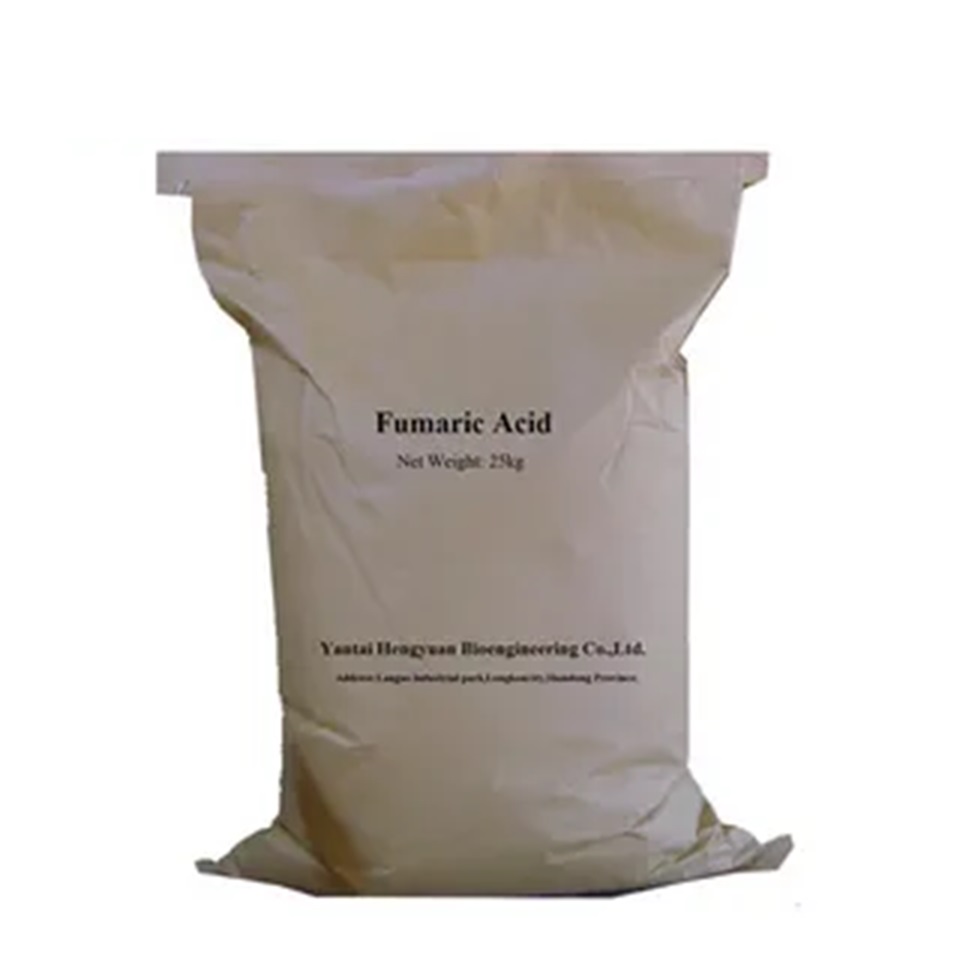
| Kraft bag with PE inner liner | 25 kg | Kraft paper + PE |
| Big-Bag | 500-1000 kg | Polypropylene (with PE inner liner) |
| Custom packaging | Variable | Variable |
SECTION 14: TRANSPORTATION INFORMATION
| Parameter | Information |
|---|---|
| UN Number | Not regulated (not hazardous) |
| ADR/RID | Not regulated |
| IMDG Code | Not regulated |
| IATA (Air) | Not regulated |
| Marine Pollutant | No |
SECTION 15: REGULATORY STATUS
| Region / Authority | Status |
|---|---|
| European Union | Food additive E297; approved for use quantum satis |
| USA (FDA) | GRAS (21 CFR 172.350) |
| JECFA (FAO/WHO) | ADI not limited |
| Turkey | Approved as E297 under Turkish Food Codex |
| USP-NF / EP | Pharmacopoeia monographs available |
| Halal / Kosher / Vegan | Available |
SECTION 16: OTHER NAMES AND SYNONYMS
| Type | Name |
|---|---|
| Chemical Names | Trans-Butenedioic Acid, (2E)-But-2-enedioic Acid, Trans-1,2-Ethylenedicarboxylic Acid |
| Common Names | Fumaric Acid, Allomaleic Acid, Lichenic Acid, Tumaric Acid, Boletate |
| Salt Forms | Sodium Fumarate, Ammonium Fumarate, Ferrous Fumarate |
| Food Additive Code | E297 |
| CAS Number | 110-17-8 |
SECTION 17: SUMMARY TABLE
| Parameter | Value |
|---|---|
| Product | Fumaric Acid |
| CAS Number | 110-17-8 |
| Food Additive Code | E297 |
| Molecular Formula | C4H4O4 |
| Molecular Weight | 116.07 g/mol |
| Appearance | White crystalline powder |
| Melting Point | 287°C |
| pH (0.1% solution) | 2.6 – 2.8 |
| Solubility in Water (25°C) | 0.63 g/100 mL |
| Primary Function | Acidity regulator, preservative, buffer, antioxidant synergist |
| Shelf Life | 24 months |
| GHS Signal Word | Warning |
SECTION 18: CRITICAL WARNINGS AND BEST PRACTICES
CRITICAL WARNINGS:
-
Eye Irritation: Causes serious eye irritation. Wear protective goggles.
-
Dust Control: Fine dust may irritate respiratory tract. Use dust mask.
-
Low Solubility: Solubility in cold water is limited (0.63 g/100mL). Increase solubility by using hot water or adding Dioctyl Sodium Sulfosuccinate.
-
High Temperature: Converts to Maleic Anhydride above 230°C; use caution in high-temperature processes.
BEST PRACTICE RECOMMENDATIONS:
-
Powder Coating: Ideal for powder-coated confectionery due to low hygroscopicity advantage; does not cake.
-
Solution Preparation: Increase solubility using hot water; increase dissolution rate by reducing particle size.
-
Synergistic Use: When used with citric acid, provides immediate + lingering sourness.
-
Wine Application: Check legal limits for malolactic fermentation control.
-
Storage: Despite low hygroscopicity advantage, protect from humid environments.
LEGAL DISCLAIMER:
The information provided in this document is presented in good faith based on our current knowledge and experience; however, since all usage conditions are beyond our control, it does not constitute a binding specification or warranty. This Technical Data Sheet is for informational purposes only. Users are obligated to test the suitability for their own applications. For complete safety, storage, handling, transportation, disposal, and regulatory compliance information, refer to the official Safety Data Sheet (SDS/MSDS) provided by the manufacturer/supplier.