We unleash your business potential by maximize the business innovation.
Send EmailFumaric Acid, Trans Butenedioic Asit, Allomaleic Acid, Tumaric Acid, Boletate, Lichenic Acid, E297, 110-17-8
FUMARIC ACID
1. PRODUCT IDENTIFICATION
| Parameter | Value |
|---|---|
| Chemical Name | Trans-Butenedioic Acid |
| Common Name | Fumaric Acid |
| Molecular Formula | C₄H₄O₄ |
| Molecular Weight | 116.07 g/mol |
| CAS Number | 110-17-8 |
| E Code | E297 |
| EC Number | 203-743-0 |
| HS Code | 2917.19.10 |
Other Names:
-
Trans-1,2-Ethylenedicarboxylic Acid
-
Allomaleic Acid
-
Lichenic Acid
-
Tumaric Acid
-
Boletate
-
(E)-2-Butenedioic Acid
-
Sodium Fumarate (salt form)
-
Ammonium Fumarate (salt form)
2. PHYSICAL AND CHEMICAL PROPERTIES
| Property | Value / Description |
|---|---|
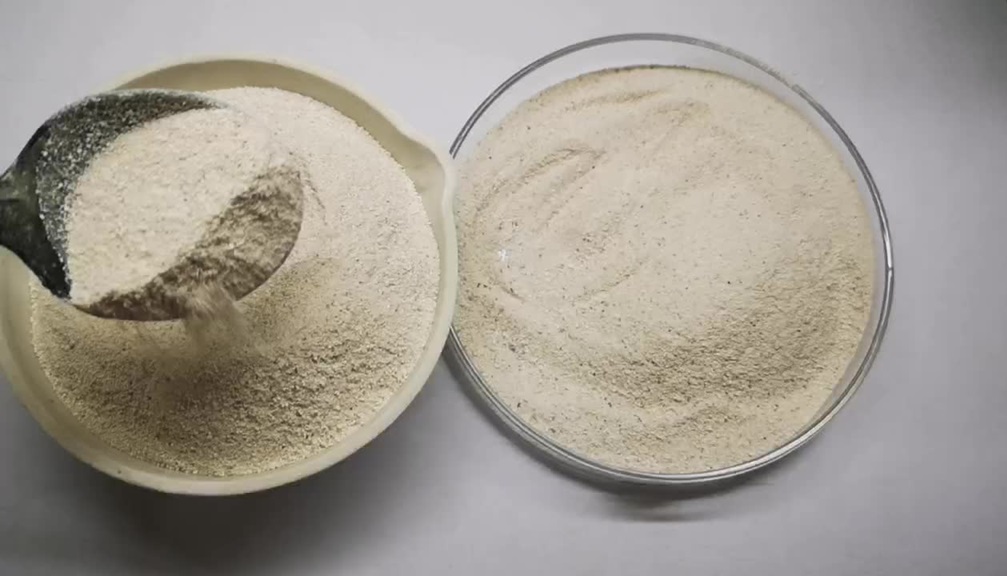
| Appearance | White crystalline powder or colorless crystals |
| Odor | Odorless |
| Taste | Characteristic sour, fruity; approx. 1.5 times more sour than citric acid |
| pH (0.1% aqueous solution, 25°C) | Approx. 2.6 – 2.8 |
| Melting Point | 287°C (sealed tube) |
| Sublimation | Sublimes above 200°C |
| Decomposition | When heated to 230°C, loses water and converts to Maleic Anhydride |
| Density | 1.635 g/cm³ (20°C) |
| Solubility (25°C, water) | 0.63 g/100 mL (slightly soluble) |
| Solubility (ethanol) | Soluble |
| Solubility (acetone) | Slightly soluble |
| Solubility (diethyl ether) | Very slightly soluble |
| Solubility (conc. sulfuric acid) | Soluble |
| Solubility enhancer | Solubility in water increases when mixed with Dioctyl Sodium Sulfosuccinate |
| Buffering Capacity | Higher than citric acid and malic acid; one of the highest buffering values among organic acids |
| Acidity Constants (pKa₁/pKa₂) | pKa₁ = 3.03 / pKa₂ = 4.44 |
| Flammability | Non-flammable |
| Toxicity | Non-toxic (food grade) |
3. PRODUCTION DETAILS
3.1. Raw Material
Today, fumaric acid is produced via Maleic Anhydride. Maleic anhydride is obtained by catalytic oxidation of suitable hydrocarbons (benzene, n-butane or n-butene mixtures).
3.2. Catalysts
Vanadium-phosphorus oxide (VPO) based catalysts embedded in fixed-bed tubular reactors are used. Water is formed as a by-product.
3.3. Production Steps
-
Catalytic Oxidation: Benzene or n-butane/n-butene mixtures are oxidized with air to obtain Maleic Anhydride (MA).
-
Hydrolysis: Maleic Anhydride reacts with water to form Maleic Acid.
-
Isomerization: Maleic Acid (cis form) undergoes cis-trans isomerization in the presence of a suitable catalyst (usually mineral acid, peroxide, or heat/UV) to convert into the thermodynamically more stable Fumaric Acid (trans form).
-
Purification: High-purity (>99.5%) fumaric acid is obtained through crystallization, filtration, and drying processes.
4. SECTORAL SUITABILITY TABLE
| Sector / Sub-Application | Purpose | Typical Dosage (%) |
|---|---|---|
| Food & Beverage | ||
| - Soft drinks, fruit juices | Acidity regulator, flavor enhancer | 0.05 – 0.3% |
| - Confectionery, chewing gum | Sour taste agent | 0.1 – 0.5% |
| - Pie fillings, creams | Taste stability, acidity | 0.1 – 0.4% |
| - Dairy products (chocolate milk, eggnog, cream soups) | Stabilizer, sour taste | 0.05 – 0.2% |
| - Cereal products (oatmeal, breakfast cereals, rice pudding, pasta) | Shelf life, flavor improvement | 0.05 – 0.2% |
| - Processed meat (bacon, canned meat) | Preservative effect, taste | 0.1 – 0.3% |
| - Mustard, vinegar, apple juice | Acidity balancing | 0.05 – 0.2% |
| - Wine production | Malolactic fermentation inhibitor | 0.5 – 1.5 g/L |
| - Gelatin jellies | Gel strength enhancer | 0.1 – 0.8% |
| - Alginate-containing systems | Calcium release trigger | Formulation-dependent |
| Animal Feed | ||
| - Silage additive, poultry/cattle feed | Acidity reducer, bacteria/yeast inhibitor, digestion enhancer, antioxidant | 0.2 – 1.0% |
| Pharmaceuticals | ||
| - Psoriasis treatment | Active ingredient (fumaric acid esters) | Pharmaceutical formulation |
| - Iron deficiency anemia | Intermediate in iron fumarate production | - |
| Adhesive Industry | ||
| - Foil lamination adhesives | Vinyl acetate-fumaric acid copolymer | 0.5 – 5% (as monomer) |
| - Latex adhesives | Thickening agent | 0.1 – 1% |
| Composites / Glass Fiber | ||
| - Unsaturated polyester resin (styrene copolymer) | Resin modification in glass fiber reinforced plastics | 1 – 5% (based on resin) |
| Oil & Gas | ||
| - Matrix acidizing | Component of scale-inhibiting solution | 1 – 10% (in solution) |
| Cosmetics & Personal Care | pH adjuster, buffer | 0.01 – 0.2% |
5. USAGE RECIPES (EXAMPLE FORMULATIONS)
5.1. Sour Candy (Powder Coating Mix)
| Ingredient | Ratio (%) |
|---|---|
| Powdered sugar | 85.0 |
| Citric Acid | 8.0 |
| Fumaric Acid | 5.0 |
| Malic Acid | 2.0 |
| Flavor | q.s. |
Application: After shaping and drying the candy mass, it is coated with this mixture. Fumaric acid provides lasting sourness and low hygroscopicity.
5.2. Wine Stabilization (Malolactic Fermentation Control)
| Stage | Amount |
|---|---|
| Wine (after alcoholic fermentation) | 100 L |
| Fumaric Acid (pre-dissolved in a little water) | 50 – 150 g |
Note: After addition, stir and wait for 1 week. Inhibition of malolactic bacteria (Oenococcus oeni) is achieved. Legal limits must be observed.
5.3. Silage Additive (Cattle Feed)
| Ingredient | Amount (per 1000 kg silage) |
|---|---|
| Fumaric Acid | 2 – 5 kg |
| Propionic Acid | 1 – 2 kg |
| Water (for dilution) | 10 – 20 L |
Application: Sprayed onto silage in layers, rapidly lowering pH, preventing mold and yeast growth, and improving digestibility.
5.4. Latex Adhesive Viscosity Adjustment
| Ingredient | Ratio (%) |
|---|---|
| Latex emulsion (50% solids) | 90.0 |
| Fumaric Acid (10% solution) | 5.0 – 10.0 |
| Preservative, stabilizer | q.s. |
Application: Add fumaric acid solution with slow mixing, continue until desired viscosity is reached.
6. ALTERNATIVE PRODUCTS AND COMPARISON
| Alternative | Comparison with Fumaric Acid |
|---|---|
| Citric Acid (E330) | The most common food acid. Very high solubility (~147 g/100mL). Fumaric acid is less soluble, provides 1.5 times more sourness perception, higher buffering capacity, and is non-hygroscopic. |
| Malic Acid (E296) | Apple acid. Smooth sourness profile. Fumaric acid is sharper and has a longer-lasting taste. Lower dosage achieves equivalent sourness. |
| Tartaric Acid (E334) | Grape acid. Common in winemaking. Fumaric acid is a specific alternative for malolactic inhibition in wine. Tartaric acid is a stronger acid (pKa₁ 2.98), but fumaric acid is superior in buffering. |
| Lactic Acid (E270) | Milk acid. Sold in liquid form. Fumaric acid offers the advantages of powder form – easier handling, transport, and storage. |
| Phosphoric Acid (E338) | Inorganic acid, liquid. Fumaric acid is preferred as an organic acid for clean-label products. |
| Glucono Delta Lactone (GDL) | Slow acid release. Fumaric acid provides immediate acidity; GDL is an alternative for a milder profile. |
Note: Acid selection should be made based on taste profile, solubility requirements, processing temperature, moisture sensitivity, and legal limits.
7. PACKAGING, STORAGE AND SHELF LIFE
-
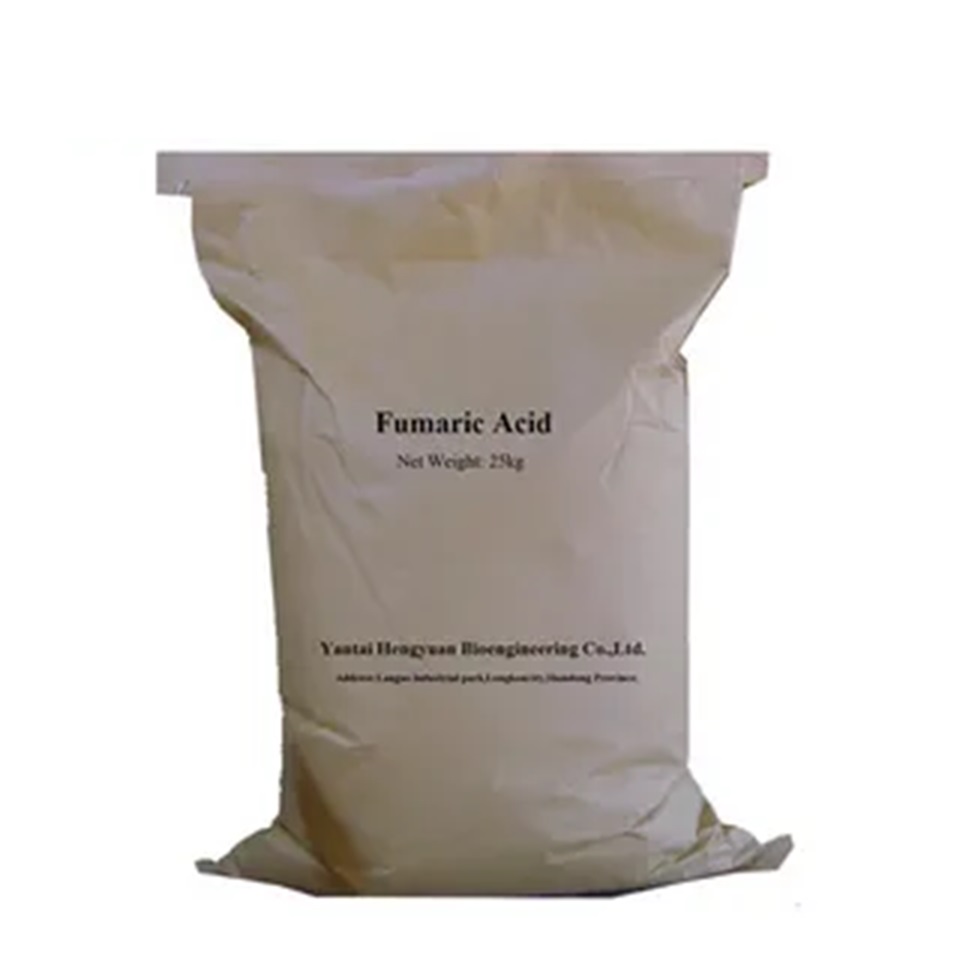
Packaging: 25 kg kraft bag with PE liner, big bag (500-1000 kg) or customized packaging upon request.
-
Storage: Store in a cool (<30°C), dry, well-ventilated area, protected from direct sunlight and moisture.
-
Shelf Life: 24 months from the date of manufacture when stored under appropriate conditions.
-
Safety: Although non-toxic; in case of dust generation, use of a dust mask and goggles is recommended to prevent eye and respiratory irritation.
8. FREQUENTLY ASKED QUESTIONS (FAQ)
Q1: Why is fumaric acid more sour than other acids?
The molecular structure and low solubility of fumaric acid generate a longer-lasting and more intense signal in taste receptors. It is perceived as 1.5 times more sour than citric acid, especially in powder-coated candies.
Q2: Fumaric acid has low water solubility; does this cause problems in use?
Yes, solubility in cold water is limited (0.63 g/100 mL). However, solubility increases in heated water, and surfactants like Dioctyl Sodium Sulfosuccinate can improve solubility. In powder applications (coatings), solubility is not required. In liquid systems, pre-dispersing the acid into the dough or micronizing to reduce particle size increases dissolution rate.
Q3: Is fumaric acid halal/kosher/vegan?
Commercially, it is produced from petrochemical (benzene, n-butane) or biotechnological sources. It does not contain animal-derived components. Generally, halal, kosher, and vegan certifications are available (must be confirmed with supplier).
Q4: Is the use of fumaric acid legal in wine?
In many countries (EU, OIV), limited use is permitted for inhibiting malolactic fermentation. In Turkey, it is allowed as a food additive under the E297 code within the Turkish Food Codex. Maximum usage dosage must be checked according to specific wine legislation.
Q5: Can fumaric acid be used together with citric acid?
Yes, it provides a synergistic effect. Citric acid gives an immediate sourness sensation, while fumaric acid provides lasting sourness. A mixture of both is ideal, especially in sour candies.
Q6: What are the non-food uses of fumaric acid?
It forms copolymers with styrene in unsaturated polyester resins to increase the mechanical strength of glass fiber reinforced plastics. It is also used in adhesives, oil well acidizing, and pharmaceutical production (psoriasis treatment, iron fumarate).
Q7: Why is the buffering capacity of fumaric acid important?
Maintaining a constant pH in foods is critical for microbiological stability, color protection, and flavor balance. Fumaric acid provides effective pH control even at low concentrations with its higher buffering value compared to citric and malic acid.
9. LEGAL STATUS AND CERTIFICATIONS
-
Food Additive: E297, approved by EFSA and the Turkish Food Codex. Used according to the principle of quantum satis within good manufacturing practices (special limits may exist for certain products).
-
Pharmacopoeia: Grades compliant with USP/NF and EP monographs are available.
-
Certifications: ISO 9001, ISO 22000, FSSC 22000, Halal, Kosher, GMO-Free can be provided upon request.
Disclaimer: This Technical Data Sheet is for general informational purposes. For exact specifications and application guidance, please contact your supplier and perform necessary tests on your final product.