We unleash your business potential by maximize the business innovation.
Send EmailSodium Nitrate, Chile Saltpeter, Soda Niter, Nitratine, Sodium Saltpeter, Cubic Niter, E251, 7631-99-4
SODIUM NITRATE (NaNO₃, E251)
1. Chemical Identity and Material Classification
-
Chemical Name: Sodium Nitrate, Nitric Acid Sodium Salt
-
Synonyms: Chile Saltpeter, Soda Niter, Nitratine, Sodium Saltpeter, Cubic Niter
-
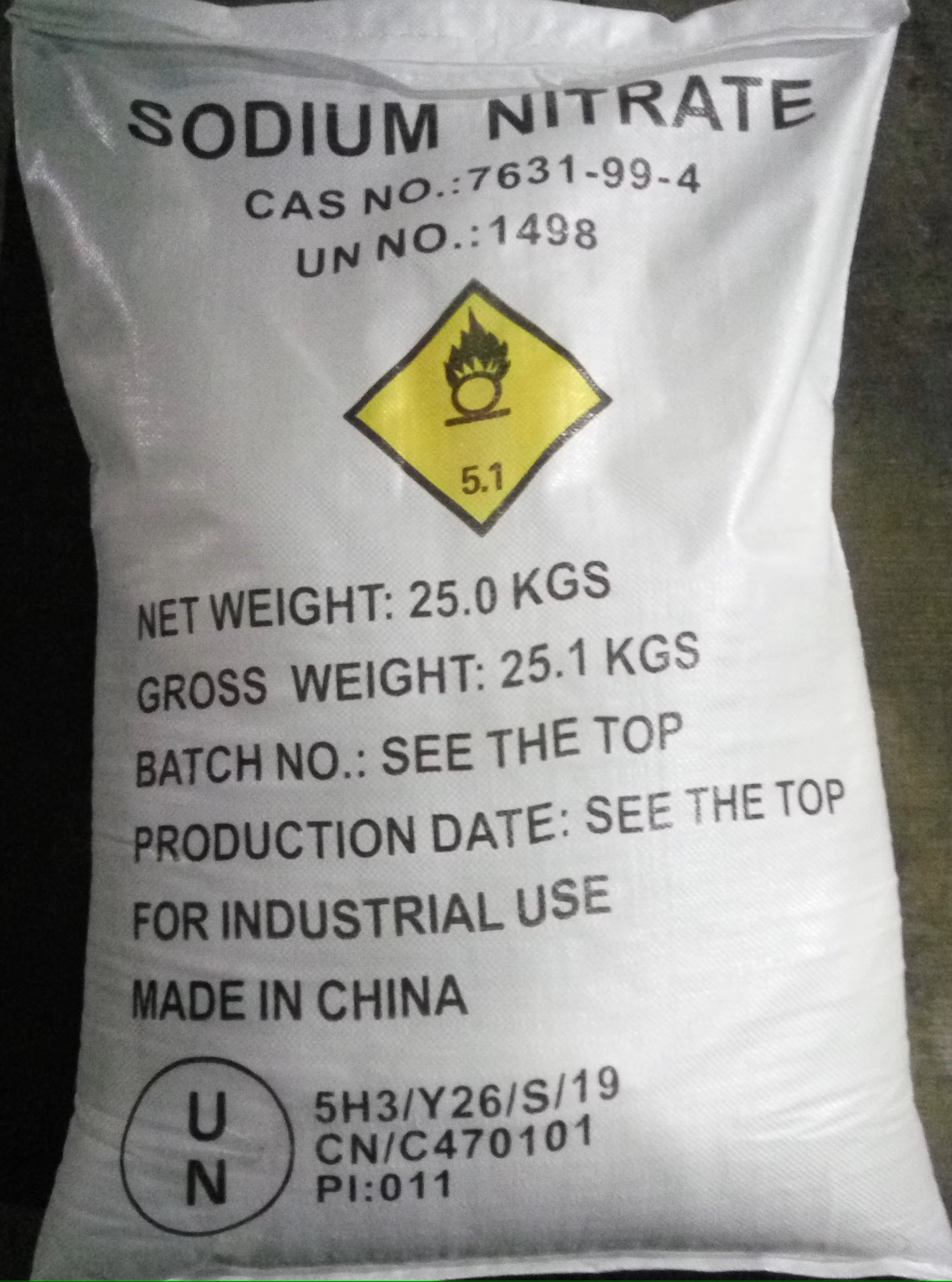
CAS Number: 7631-99-4
-
EC Number (EINECS): 231-554-3
-
Molecular Formula: NaNO₃
-
Molecular Weight: 84.995 g/mol
-
E Number: E251 (food additive)
-
Chemical Class: Inorganic nitrate salt (oxidizing agent)
-
HS Code: 3102.50
-
UN Number: 1498 (Sodium nitrate, 5.1)
2. Physical Properties
2.1 General Physical Properties
| Property | Value |
|---|---|
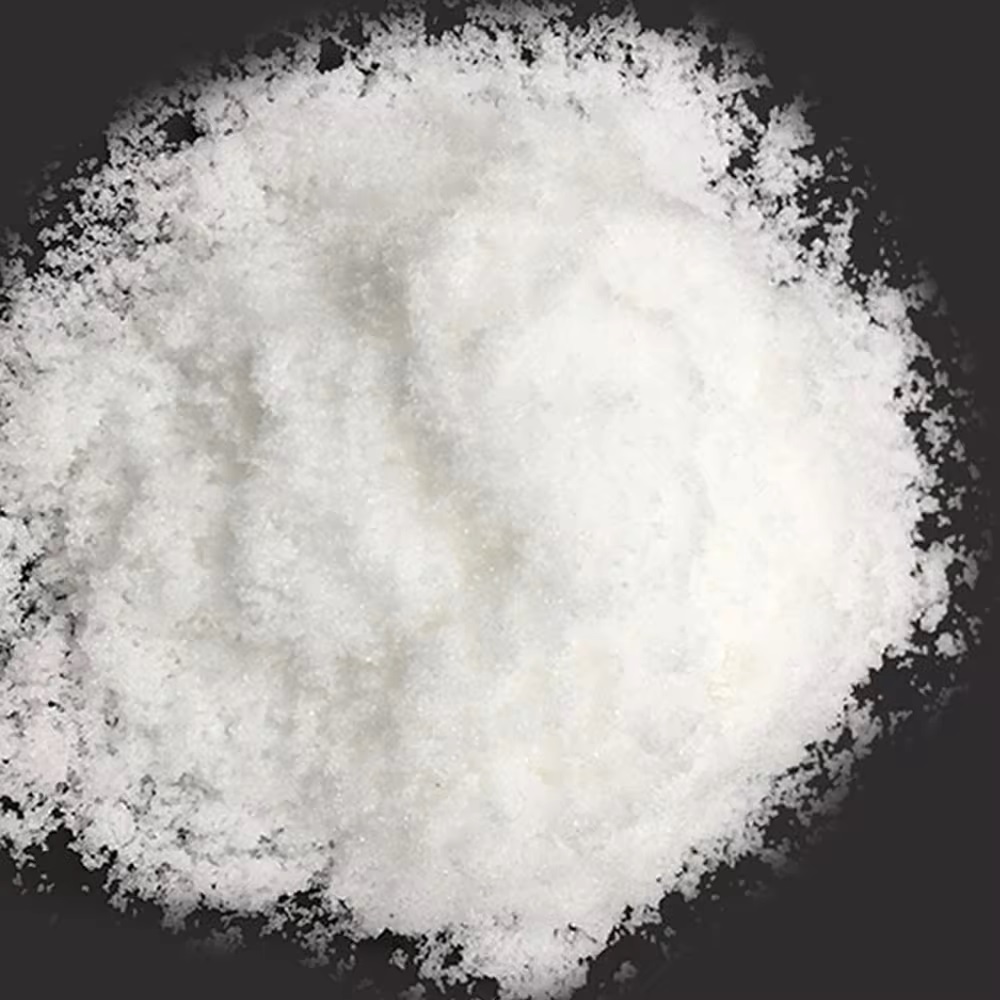
| Appearance | White, odorless, crystalline powder or granules |
| Physical state (20°C) | Solid (crystalline) |
| Odor | Odorless |
| Taste | Slightly salty and bitter |
| Density (20°C) | 2.257–2.30 g/cm³ |
| Bulk density (typical) | 1.0–1.2 g/cm³ |
| Melting point | 306.8–308°C (584°F) |
| Boiling point | 380°C (716°F) (decomposes) |
| Decomposition temperature | >380°C → NaNO₂ + O₂ |
| Flash point | Non-flammable (oxidizer) |
| Autoignition temperature | Not applicable |
| Refractive index (nD20) | 1.587–1.588 |
| Specific gravity | 2.257 |
| Solubility in water | Very soluble (91.2 g/100 mL at 25°C) |
2.2 Temperature-Dependent Solubility in Water
| Temperature (°C) | Solubility (g/100 mL water) |
|---|---|
| 0°C | 73.0 |
| 10°C | 79.0 |
| 20°C | 86.0 |
| 25°C | 91.2 |
| 30°C | 93.0 |
| 40°C | 98.0 |
| 50°C | 103.0 |
| 60°C | 108.0 |
| 80°C | 118.0 |
| 100°C | 130.0 |
2.3 Solubility in Other Solvents
| Solvent | Solubility |
|---|---|
| Ethanol | Slightly soluble (0.2 g/100 mL) |
| Methanol | Slightly soluble |
| Acetone | Insoluble |
| Glycerol | Soluble |
| Liquid ammonia | Soluble |
2.4 Aqueous Solution Properties
| Parameter | Value |
|---|---|
| pH (1% solution, 20°C) | 6.5–8.0 (neutral to slightly alkaline) |
| pH (10% solution, 20°C) | 6.5–7.5 |
| Heat of solution | Endothermic (cools water) |
3. Chemical Properties
3.1 Molecular Structure
Structure: Na⁺ NO₃⁻
-
Ionic crystal (sodium cations, nitrate anions)
-
Strong oxidizing agent (contains nitrogen in +5 oxidation state)
-
Nitrate ion (NO₃⁻) is planar trigonal
3.2 Thermal Decomposition
| Temperature | Reaction | Products |
|---|---|---|
| <380°C | Stable | No decomposition |
| 380–500°C | 2NaNO₃ → 2NaNO₂ + O₂↑ | Sodium nitrite + oxygen |
| >500°C | 2NaNO₂ → Na₂O + NO↑ + NO₂↑ (plus further decomposition) | Sodium oxide, nitrogen oxides |
3.3 Chemical Reactivity
| Reaction | Description |
|---|---|
| Reduction (by reducing agents) | NO₃⁻ → NO₂⁻ → NO → N₂O → N₂ (depending on conditions) |
| With strong acids | NaNO₃ + H₂SO₄ → NaHSO₄ + HNO₃ (nitric acid formation) |
| With organic matter | Oxidizes organic compounds; may cause combustion (fire hazard when mixed with combustibles) |
| With metal powders (Al, Zn, Mg) | Redox reaction → metal oxide + NOₓ; may be pyrophoric |
| With charcoal/sulfur | Pyrotechnic compositions (gunpowder component) |
3.4 Oxidizing Properties
| Parameter | Value |
|---|---|
| Oxidizing class (UN) | Division 5.1 (Oxidizing substance) |
| Compatible with | Most non-combustible materials |
| Incompatible with | Organic matter, reducing agents, metal powders, charcoal, sulfur, phosphorus, cyanides, ammonium salts (under heat) |
3.5 Stability
| Parameter | Behavior |
|---|---|
| Stability in dry air | Stable (non-hygroscopic) |
| Hygroscopicity | Slightly hygroscopic (absorbs moisture at >70% RH) |
| Light sensitivity | Stable |
| Thermal stability | Stable up to 380°C |
3.6 Incompatibilities
| Substance | Hazard |
|---|---|
| Organic matter (paper, wood, oil, grease) | Fire/explosion risk (oxidizer) |
| Reducing agents (metal powders, hydrides, sulfides) | Violent reaction, fire hazard |
| Acids (H₂SO₄, HCl) | Formation of toxic NOₓ gases |
| Ammonium salts | When heated, may form explosive mixtures |
| Charcoal, sulfur, phosphorus | Pyrotechnic compositions |
4. Quality Specifications
4.1 Technical / Industrial Grade
| Parameter | Specification |
|---|---|
| Sodium nitrate (NaNO₃) | ≥ 99.0% |
| Sodium nitrite (NaNO₂) | ≤ 0.05% |
| Chlorides (Cl) | ≤ 0.1% |
| Sulfates (SO₄) | ≤ 0.1% |
| Insoluble matter | ≤ 0.05% |
| Iron (Fe) | ≤ 0.005% |
| Moisture (H₂O) | ≤ 1.0% |
| pH (5% solution) | 6.5–8.0 |
| Appearance | White crystalline powder |
4.2 Food Grade (E251 – FCC / USP)
| Parameter | Specification |
|---|---|
| Assay (NaNO₃, dried basis) | 99.0–100.5% |
| Loss on drying (105°C) | ≤ 1.0% |
| Chlorides (Cl) | ≤ 0.05% |
| Sulfates (SO₄) | ≤ 0.05% |
| Nitrites (NaNO₂) | ≤ 0.05% |
| Heavy metals (as Pb) | ≤ 10 ppm |
| Lead (Pb) | ≤ 2 mg/kg |
| Arsenic (As) | ≤ 3 mg/kg |
| Iron (Fe) | ≤ 20 ppm |
| Insoluble matter | ≤ 0.05% |
| pH (5% solution) | 6.0–8.0 |
4.3 Agricultural Grade (Fertilizer)
| Parameter | Specification |
|---|---|
| Total nitrogen (N) | ≥ 16.0% |
| Sodium nitrate (NaNO₃) | ≥ 97.0% |
| Moisture | ≤ 1.5% |
| Particle size | As specified |
5. Production Methods
5.1 Natural Mining (Chile Saltpeter – Historical)
Source: Natural deposits in northern Chile (Atacama Desert)
Process: Crushing → dissolution → crystallization → purification
Current status: Limited production; largely replaced by synthetic processes
5.2 Synthetic Production – Nitric Acid Neutralization (Most Common)
Reaction: HNO₃ (nitric acid) + NaOH (sodium hydroxide) → NaNO₃ + H₂O
Process:
-
Nitric acid is neutralized with sodium hydroxide or sodium carbonate
-
Solution concentrated by evaporation
-
Crystallization
-
Drying
Alternative: Na₂CO₃ + 2HNO₃ → 2NaNO₃ + H₂O + CO₂
5.3 Absorption of Nitrogen Oxides
Process: Absorption of NOₓ gases in sodium hydroxide or sodium carbonate solution
Reaction: NO + NO₂ + 2NaOH → 2NaNO₂ + H₂O (primarily nitrite, then oxidized to nitrate)
6. Mechanism of Action (Food Preservation – E251)
6.1 Antimicrobial Mechanism
-
Sodium nitrate itself has limited antimicrobial activity
-
Bacterial reduction (by Micrococcus, Lactobacillus, Staphylococcus) converts nitrate (NO₃⁻) to nitrite (NO₂⁻)
-
Nitrite further converts to nitric oxide (NO) under acidic conditions (meat pH ~5.5–6.0)
-
Nitric oxide reacts with iron-sulfur proteins and heme iron in bacteria
-
Disrupts bacterial electron transport and metabolism
-
Specifically effective against Clostridium botulinum (botulism prevention)
6.2 Color Fixation (Curing)
-
Nitric oxide (NO) reacts with myoglobin → nitrosomyoglobin (pink-red color)
-
Heat-stable pink color characteristic of cured meats (ham, bacon, sausages)
6.3 Antioxidant (Lipid Oxidation Prevention)
-
Nitric oxide (NO) acts as a radical scavenger
-
Prevents lipid oxidation (rancidity) in cured meats
-
Extends shelf life
7. Industrial Applications
7.1 Agriculture (Fertilizer) – Largest Application (~60–70%)
| Application | Function | Typical Application Rate |
|---|---|---|
| Direct soil application | Source of soluble nitrogen (16% N) | 50–200 kg N/hectare |
| Fertilizer blends | Component of NPK fertilizers | Variable |
| Foliar spray | Quick nitrogen supply | 1–5% solution |
| Fertigation | Soluble nitrogen source | 50–500 mg/L |
Benefits:
-
Highly soluble nitrogen source
-
Rapid plant uptake (nitrate form is immediately available)
-
Ideal for chlorine-sensitive crops (potatoes, tobacco, citrus, berries)
-
No soil acidification (unlike ammonium-based fertilizers)
7.2 Food Industry (E251) – Curing and Preservation
| Application | Function | Typical Usage |
|---|---|---|
| Cured meats (ham, bacon, sausages, corned beef) | Color fixative, preservative, flavor development, C. botulinum inhibitor | 100–200 mg/kg (as sodium nitrite equivalent) |
| Fish curing (salmon, herring) | Color fixative, preservative | 100–200 mg/kg |
| Cheese (some varieties) | Preservative | 50–100 mg/kg |
| Food additive code | E251 | Permitted with maximum residue limits |
Regulatory limits (EU, US, Codex):
-
Added alone or with nitrite: max 150–300 mg/kg (varies by product)
-
Residual nitrate in finished product: typically <200 mg/kg
Important safety note: Nitrate is converted to nitrite in the product; nitrite is the active antimicrobial species. Use limited to prevent nitrosamine formation.
7.3 Explosives and Pyrotechnics (~10–15%)
| Application | Function | Composition |
|---|---|---|
| Black powder substitute | Oxidizer | NaNO₃ + charcoal + sulfur |
| Pyrotechnics (fireworks) | Oxidizer for colored flames | With metal salts |
| Smoke compositions | Oxidizer | With organic fuels |
| Rocket propellants | Oxidizer | With binders and fuels |
7.4 Glass and Ceramic Industry
| Application | Function |
|---|---|
| Glass refining | Oxidizer, decolorizer (removes iron impurities) |
| Glass melting | Refining agent |
| Enamel production | Oxidizer |
| Ceramic glazes | Oxidizer, flux |
7.5 Metallurgy and Metal Treatment
| Application | Function |
|---|---|
| Heat treatment salts | Oxidizing salt bath |
| Aluminum anodizing | Electrolyte component |
| Metal cleaning | Oxidizing agent |
| Steel bluing | Oxidizing agent (forms black oxide coating) |
7.6 Chemical Industry
| Application | Product |
|---|---|
| Nitric acid production | Via reaction with sulfuric acid |
| Sodium nitrite production | Reduction of NaNO₃ |
| Organic synthesis | Nitrating agent, oxidizing agent |
| Mordant in dyeing | Oxidizing agent |
| Laboratory reagent | Analytical chemistry |
7.7 Pharmaceuticals
| Application | Function |
|---|---|
| Excipient | In some formulations (limited) |
| Nitrate salts production | Starting material |
7.8 Water Treatment
| Application | Function |
|---|---|
| Corrosion inhibitor | In cooling water systems (with other inhibitors) |
| Oxygen scavenger | Limited use |
8. Toxicology and Safety
8.1 Acute Toxicity
| Parameter | Value | Classification |
|---|---|---|
| Oral LD₅₀ (rat) | 3,230–4,500 mg/kg | Acute Tox. 4 (H302) |
| Dermal LD₅₀ (rabbit) | >2,000 mg/kg | Not classified |
| Inhalation LC₅₀ | Not determined (dust) | Not classified |
| Eye irritation | Mild to moderate irritant | Eye Irrit. 2 |
| Skin irritation | Non-irritant | Not classified |
8.2 Chronic Toxicity
| Endpoint | Classification |
|---|---|
| Carcinogenicity | IARC Group 2A – Probably carcinogenic to humans (when converted to nitrite/nitrosamines under conditions of endogenous nitrosation) |
| Mutagenicity | Negative (but nitrite derivatives may be mutagenic) |
| Reproductive toxicity | Not classified |
| Target organ toxicity | Blood (methemoglobinemia – nitrate/nitrite toxicity) |
8.3 Methemoglobinemia (Blue Baby Syndrome)
| Parameter | Value |
|---|---|
| Affected population | Infants (<6 months) most susceptible |
| Mechanism | Nitrate → nitrite (by intestinal bacteria) → oxidizes hemoglobin to methemoglobin → reduced oxygen transport |
| NOAEL (infants) | ~0.1 mg/kg/day (as nitrite) |
| Drinking water limit | 50 mg/L (as NO₃⁻) – WHO; 10 mg/L (as N) – EU |
8.4 GHS Classification
| Classification | Category |
|---|---|
| Signal word | Danger (oxidizer) |
| Hazard statements | H272 – May intensify fire; oxidizer |
| H302 – Harmful if swallowed | |
| H319 – Causes serious eye irritation | |
| Precautionary statements | P210, P220, P221, P264, P280, P301+P312, P305+P351+P338, P337+P313, P370+P378 |
8.5 NFPA Rating
| Health | Flammability | Instability | Special |
|---|---|---|---|
| 1 | 0 | 1 | OX (oxidizer) |
UN Classification: 5.1 (Oxidizing substance)
UN Number: 1498 (Sodium nitrate)
9. Safety Precautions and Personal Protective Equipment (PPE)
-
Hazards:
-
Strong oxidizer (H272) – Contact with combustible material may cause fire
-
Harmful if swallowed (H302)
-
Causes serious eye irritation (H319)
-
Non-combustible but accelerates burning of combustible materials
-
May form explosive mixtures with reducing agents (metal powders, charcoal, sulfur, ammonium salts under heat)
-
-
PPE (recommended – industrial handling):
-
Safety glasses (EN 166) or chemical goggles – mandatory (eye hazard)
-
Dust mask (FFP2/N95) – for dusty operations
-
Chemical-resistant gloves (nitrile)
-
Protective clothing (dust protection)
-
Fire-resistant clothing when handling large quantities
-
-
Engineering controls:
-
Local exhaust ventilation (LEV) for dust control
-
Keep away from combustible materials, reducing agents
-
Grounding to prevent static discharge
-
Eyewash stations and safety showers
-
-
Storage conditions:
-
Store in tightly closed original container (HDPE, PP, lined steel)
-
Keep away from combustible materials (wood, paper, oil, grease, organic matter)
-
Store away from reducing agents (metal powders, charcoal, sulfur, hydrides)
-
Store in cool, dry, well-ventilated area
-
Separate from acids (NOₓ gas evolution)
-
Protect from moisture (slightly hygroscopic)
-
-
Firefighting:
-
Use water fog or spray (DO NOT use dry chemical, CO₂, or foam – may not suppress)
-
Flood with water; large amounts of water recommended
-
Wear full protective clothing and SCBA
-
Move containers away from fire if possible
-
-
First aid:
-
Inhalation: Move to fresh air; if breathing difficult, give oxygen; if stopped, give artificial respiration; seek medical attention
-
Eye contact: Rinse with water for at least 15 minutes, lifting eyelids; remove contact lenses; seek medical attention
-
Skin contact: Wash with soap and water
-
Ingestion: Rinse mouth; do NOT induce vomiting; drink water; seek medical attention (methemoglobinemia risk with large doses)
-
10. Environmental Fate
| Parameter | Value |
|---|---|
| Biodegradability | Not applicable (inorganic) |
| Aquatic toxicity (fish, LC₅₀, 96 hours) | 100–1,000 mg/L (low to moderate toxicity) |
| Daphnia magna (EC₅₀, 48 hours) | 100–500 mg/L |
| Algal toxicity (EC₅₀, 72 hours) | 10–100 mg/L |
| Eutrophication potential | Moderate (nitrogen source – can contribute to eutrophication) |
| Bioaccumulation | Low potential |
| Soil mobility | Very high (high water solubility) |
| WGK Germany | 1 (low hazard to water) |
| Disposal method | Dissolve in water, flush to wastewater treatment (check local regulations) |
11. Storage and Shelf Life
11.1 Storage Conditions
| Parameter | Requirement |
|---|---|
| Storage temperature | Ambient (5–30°C) |
| Container | Keep tightly closed (HDPE, PP, lined steel – NOT carbon steel) |
| Protect from | Moisture (slightly hygroscopic), combustible materials, reducing agents |
| Environment | Cool, dry, well-ventilated area, separate from combustibles |
11.2 Shelf Life
| Parameter | Value |
|---|---|
| Shelf life (sealed, dry) | 24–36 months |
| Degradation indicators | Caking (moisture absorption), decomposition (yellower color) |
12. Transport Information
| Regulation | Classification |
|---|---|
| UN Number | 1498 |
| Proper shipping name | Sodium nitrate |
| ADR/RID | Class 5.1 (Oxidizing substance), Packing group III |
| IMDG | Class 5.1, PG III |
| IATA | Class 5.1, PG III |
| DOT | Class 5.1, PG III |
| Hazard label | 5.1 (Oxidizer) |
| Marine pollutant | No |
13. Synonyms and Common Names
-
English: Sodium Nitrate, Chile Saltpeter, Soda Niter, Nitratine, Sodium Saltpeter, Cubic Niter
-
Trade names: Nitratina, Soda Nitre
-
Spanish: Nitrato de sodio, Salitre
-
German: Natriumnitrat
-
French: Nitrate de sodium
-
Turkish: Sodyum Nitrat
14. Regulatory Status
| Regulation | Status |
|---|---|
| REACH (EU) | Registered |
| TSCA (US) | Listed |
| FDA | GRAS for certain uses (curing of meat, poultry, fish – 21 CFR 172.170) |
| EFSA | Permitted as food additive (E251) with maximum residue limits |
| EPA | Not restricted |
15. Why Choose Sodium Nitrate?
| Advantage | Description |
|---|---|
| Highly soluble | 91.2 g/100 mL at 25°C – easy to prepare solutions |
| Effective nitrogen source | 16% nitrogen – immediately available to plants (no conversion required) |
| Chlorine-free | Ideal for chlorine-sensitive crops (potatoes, tobacco, citrus, berries) |
| Non-acidifying | Does not lower soil pH (unlike ammonium-based fertilizers) |
| Food preservative (E251) | Prevents botulism (Clostridium botulinum) in cured meats |
| Color fixative | Produces characteristic pink-red color of cured meats |
| Oxidizing agent | Used in pyrotechnics, explosives, glass refining |
| Economical | Low cost compared to specialty nitrates |
| Long shelf life | 24–36 months when stored properly |
Limitations:
-
Strong oxidizer – Fire hazard when in contact with combustible materials
-
Health concerns (nitrosamines) – Limited use in food; strict regulations
-
Methemoglobinemia risk – Especially in infants; drinking water limits apply
-
Eutrophication potential – Nitrogen runoff contributes to algal blooms
-
Not organic – Not permitted in certified organic production
16. Comparison with Other Nitrates
| Property | Sodium Nitrate (NaNO₃) | Potassium Nitrate (KNO₃) | Calcium Nitrate (Ca(NO₃)₂) | Ammonium Nitrate (NH₄NO₃) |
|---|---|---|---|---|
| N content | 16% | 13% | 15% | 34% |
| K/Ca content | 0% K | 38% K | 19% Ca | 0% |
| Solubility (g/100 mL) | 91 (25°C) | 32 (20°C) | 121 (20°C) | 150 (20°C) |
| pH effect on soil | Neutral | Neutral | Alkaline | Acidifying |
| Main use | Fertilizer, food preservation | Fertilizer, pyrotechnics | Fertilizer, concrete | Explosives, fertilizer |
| Oxidizer class | 5.1 | 5.1 | 5.1 (when organic) | 5.1 / explosive |
| Food additive code | E251 | E252 | E509 (preservative – not nitrate salt) | Not permitted |
17. Sodium Nitrate vs. Sodium Nitrite – Key Differences
| Property | Sodium Nitrate (NaNO₃) | Sodium Nitrite (NaNO₂) |
|---|---|---|
| Formula | NaNO₃ | NaNO₂ |
| Oxidation state of N | +5 | +3 |
| Toxicity | Lower (converted to nitrite in vivo) | Higher (directly toxic) |
| Oral LD₅₀ (rat) | 3,230–4,500 mg/kg | 180–200 mg/kg |
| Food use | Curing (converted to nitrite by bacteria) | Direct curing agent |
| Meat color | Slower development | Immediate development |
| Antimicrobial | Via conversion to nitrite | Directly active |
| Regulatory limit (food) | Typically ≤200 mg/kg (as nitrite equivalent) | Typically ≤100–150 mg/kg |
| E number | E251 | E250 |
18. Frequently Asked Questions (FAQs)
Q1: Is sodium nitrate safe to eat?
A1: Yes, at regulated levels (E251). Sodium nitrate is used as a curing agent in meats (ham, bacon, sausages) to prevent botulism and preserve color. However, high intake may form nitrosamines (potential carcinogens). Regulatory limits apply.
Q2: Is sodium nitrate the same as sodium nitrite?
A2: No. Sodium nitrate (NaNO₃) has nitrogen in +5 oxidation state; sodium nitrite (NaNO₂) has nitrogen in +3 oxidation state. Nitrate is less toxic and must be converted to nitrite by bacteria to be active as a food preservative.
Q3: Why is sodium nitrate used in fertilizers?
A3: It provides immediately available nitrogen (16% N) that plants can absorb directly (nitrate form). It is chlorine-free, non-acidifying, and ideal for chlorine-sensitive crops (potatoes, tobacco, citrus, berries).
Q4: Can sodium nitrate explode?
A4: No. Sodium nitrate itself does not explode. However, when mixed with combustible materials (charcoal, sulfur, metal powders, organic matter), it forms pyrotechnic or explosive mixtures (black powder substitute, fireworks).
Q5: Is sodium nitrate bad for the environment?
A5: Excess nitrate runoff from fertilizers can cause eutrophication (algal blooms) in water bodies. However, sodium nitrate is highly water-soluble and does not bioaccumulate.
19. Storage Recommendations
| Condition | Recommendation |
|---|---|
| Containers | HDPE, polypropylene, lined steel (NOT carbon steel – may corrode) |
| Temperature | 5–30°C (avoid high temperatures – decomposition risk) |
| Humidity | <60% RH (slightly hygroscopic) |
| Incompatibles | Combustible materials (wood, paper, oil), reducing agents, charcoal, sulfur, metal powders, ammonium salts |
| Separation | Store in dedicated area for oxidizers; separate from flammables |
20. Summary Table – Key Specifications at a Glance
| Parameter | Value |
|---|---|
| Product Name | Sodium Nitrate (E251) |
| CAS Number | 7631-99-4 |
| EC Number | 231-554-3 |
| Molecular Formula | NaNO₃ |
| Molecular Weight | 84.995 g/mol |
| Appearance | White crystalline powder/granules |
| Density | 2.257 g/cm³ |
| Melting Point | 308°C |
| Boiling Point | 380°C (decomposes) |
| pH (5% solution) | 6.5–8.0 |
| Water Solubility (25°C) | 91.2 g/100 mL |
| Nitrogen content | 16.0% |
| Assay (food grade) | 99.0–100.5% |
| E Number | E251 |
| UN Number | 1498 |
| Hazard Class | 5.1 (Oxidizing substance) |
| Primary Applications | Fertilizer (N source), food preservative/curing agent (E251), pyrotechnics, glass refining, metallurgy |
| GHS Signal Word | Danger (oxidizer) |
| Hazard Statements | H272, H302, H319 |
| Oral LD₅₀ (rat) | 3,230–4,500 mg/kg |
| Biodegradability | Not applicable (inorganic) |
| Shelf Life | 24–36 months |
This TDS is prepared in compliance with ISO 11014-1 format and is intended for agricultural specialists, food technologists, pyrotechnicians, glass manufacturers, metallurgists, chemical engineers, and procurement professionals. Certificates of Analysis (CoA), Safety Data Sheets (SDS), and sample validation reports are available upon request.