We unleash your business potential by maximize the business innovation.
Send EmailChlorine Gas, Chlorine, Liquefied Chlorine, Dichlorine, Bertholite, 7782-50-5
CHLORINE GAS (Cl₂)
1. Chemical Identity and Material Classification
-
Chemical Name: Chlorine, Molecular Chlorine
-
Synonyms: Liquefied Chlorine, Chlorine Gas, Dichlorine, Bertholite
-
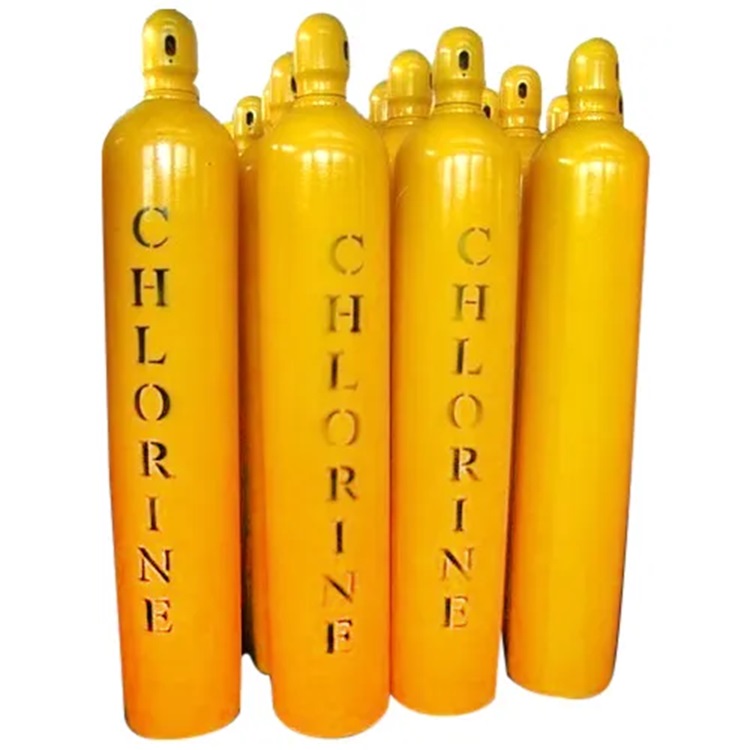
CAS Number: 7782-50-5
-
Molecular Formula: Cl₂
-
Molecular Weight: 70.91 g/mol
-
EC Number: 231-959-5
-
UN Number: 1017 (Poisonous gas)
-
RTECS Number: FO2100000
-
DOT Hazard Class: 2.3 (Toxic gas), Hazard Zone B
2. Physical Properties
2.1 General Physical Properties
| Property | Value |
|---|---|
| Appearance (gas) | Yellow-green gas |
| Appearance (liquid) | Clear, yellow-green to amber liquid |
| Odor | Highly pungent, bleach-like (detectable at 0.02–3.4 ppm, mean 0.08 ppm) |
| Density (gas, 0°C, 1 atm) | 3.214 g/L (approx. 2.48 times heavier than air) |
| Density (liquid, 0°C) | 1.468 g/cm³ (1.468 × density of water) |
| Density (liquid, -35°C) | 1.5649 g/cm³ |
| Melting point | -101°C (-149.8°F) |
| Boiling point | -34°C (-29.2°F) |
| Critical temperature | 144°C (291°F) |
| Critical pressure | 76.1 atm (7.71 MPa) |
| Critical density | 0.573 g/cm³ |
| Vapor pressure (20°C) | 4,800 mmHg (6.4 bar / 640 kPa) |
| Vapor density (air = 1) | 2.48 |
| Refractive index (liquid) | 1.375 |
| Electrical resistivity (liquid, 20°C) | 1 × 10⁹ Ω·cm |
| log P (octanol/water) | -0.85 (at 20°C) |
2.2 Thermal Properties
| Parameter | Value |
|---|---|
| Enthalpy of vaporization (at boiling point) | 20.41 kJ/mol (288 kJ/kg) |
| Enthalpy of fusion | 6.41 kJ/mol (90.4 kJ/kg) |
| Specific heat capacity (C_p, gas, 25°C) | 0.479 J/(g·K) |
| Specific heat capacity (C_p, liquid, -34°C) | 0.946 J/(g·K) |
| Thermal conductivity (gas, 25°C) | 0.0089 W/(m·K) |
| Gas expansion ratio | 1 L liquid → 456–460 L gas (at 20°C, 1 atm) |
3. Chemical Properties and Reactivity
3.1 Basic Chemical Characteristics
-
Oxidation state: 0 (elemental chlorine)
-
Electron affinity: 349 kJ/mol (highest among halogens after fluorine)
-
Electronegativity (Pauling): 3.16 (third highest, after fluorine 3.98 and oxygen 3.44)
-
Bond dissociation energy (Cl–Cl): 242.6 kJ/mol (relatively low → high reactivity)
-
Standard reduction potential (Cl₂ + 2e⁻ → 2Cl⁻): +1.358 V (vs. SHE)
3.2 Reactivity with Water
| Parameter | Value |
|---|---|
| Solubility in water (0°C) | 1.46 g/100 mL (14.6 g/L) |
| Solubility in water (20°C) | 0.73 g/100 mL (7.3 g/L) |
| Solubility in water (30°C) | 0.57 g/100 mL (5.7 g/L) |
| Solubility in water (60°C) | 0.33 g/100 mL (3.3 g/L) |
| Hydrolysis reaction | Cl₂ + H₂O → HOCl + HCl (hypochlorous acid + hydrochloric acid) |
| Equilibrium constant (K, 25°C) | 4.5 × 10⁻⁴ |
| Dissolved species at pH 7 | Cl₂, HOCl (~75%), OCl⁻ (~25%) |
3.3 Reactivity with Other Substances
| Substance | Reaction | Hazard |
|---|---|---|
| Hydrogen (H₂) | 2H₂ + Cl₂ → 2HCl (explosive in sunlight/UV) | Explosion |
| Hydrocarbons | Substitution/addition reactions (exothermic) | Fire/explosion |
| Ammonia (NH₃) | 3Cl₂ + 2NH₃ → N₂ + 6HCl | Toxic fumes |
| Acetylene (C₂H₂) | Forms explosive chloroacetylenes | Severe explosion |
| Metals (Al, Ti, Fe, Cu, Zn) | Metal chloride formation (exothermic, may be pyrophoric) | Fire, corrosion |
| Alkalis (NaOH, KOH) | Cl₂ + 2OH⁻ → OCl⁻ + Cl⁻ + H₂O | Exothermic |
| Reducing agents | Strong reaction | Fire/explosion |
| Organic compounds | Chlorination (violent at elevated temperatures) | Fire/explosion |
4. Production Methods
4.1 Electrolysis of Brine (Chlor-Alkali Process – Primary Industrial Method)
-
Reaction: 2NaCl + 2H₂O → 2NaOH + Cl₂ + H₂
-
Process: Electrolysis of saturated sodium chloride solution
-
Cell types:
-
Mercury cell (diaphragm-free, declining)
-
Diaphragm cell (asbestos/PTFE diaphragm)
-
Membrane cell (modern standard – ion-exchange membrane)
-
-
Current efficiency: 95–98%
-
Power consumption: 2,500–3,000 kWh/ton Cl₂
-
Co-products: Sodium hydroxide (NaOH) and hydrogen (H₂)
4.2 Historical Methods (Obsolete)
-
Scheele's method (1774): 4HCl (conc.) + MnO₂ → MnCl₂ + 2H₂O + Cl₂↑
-
Deacon process (gas phase): 4HCl + O₂ ⇌ 2Cl₂ + 2H₂O (with CuCl₂ catalyst, 450°C) – limited use
4.3 Liquefaction for Liquid Chlorine
-
Process: Chlorine gas from electrolysis → drying (H₂SO₄) → compression → cooling to -25 to -35°C → liquefaction
-
Refrigerant: Calcium chloride brine or ammonia evaporator
-
Liquefaction pressure (20°C): 6.4 bar (abs)
-
Storage: Liquid chlorine in cylinders, drums, tank cars, or storage tanks
5. Thermodynamic Properties
| Parameter | Value |
|---|---|
| Standard enthalpy of formation (ΔH_f°) | 0 kJ/mol (reference state) |
| Standard Gibbs free energy (ΔG_f°) | 0 kJ/mol |
| Standard entropy (S° at 298 K) | 223.1 J/(mol·K) |
| Heat of vaporization (ΔH_vap) | 20.41 kJ/mol |
| Heat of fusion (ΔH_fus) | 6.41 kJ/mol |
| Adiabatic flame temperature (with H₂) | ~2,200°C |
6. Toxicological Profile and Health Hazards
6.1 Acute Toxicity
| Parameter | Value |
|---|---|
| LC₅₀ (rat, 1 hour inhalation) | 293 ppm |
| LC₅₀ (mouse, 1 hour inhalation) | 137 ppm |
| LC₅₀ (human, 30 min) | ~50–100 ppm (estimated lethal) |
| Immediate health effects (1–3 ppm) | Eye/nose/throat irritation |
| Moderate effects (5–15 ppm) | Coughing, chest tightness, dyspnea |
| Severe effects (15–30 ppm) | Pulmonary edema, chemical pneumonitis |
| Rapidly fatal (>30–50 ppm) | Respiratory failure, death within 30–60 min |
| IDLH (Immediately Dangerous to Life and Health) | 10 ppm (NIOSH) |
6.2 Odor Threshold and Detection
| Parameter | Value |
|---|---|
| Odor threshold (pungent, bleach-like) | 0.02–3.4 ppm (mean 0.08 ppm) |
| Eye irritation threshold | 0.5–1 ppm |
| OSHA PEL (ceiling) | 1 ppm (3 mg/m³) |
| ACGIH TLV (TWA) | 0.5 ppm (1.5 mg/m³) |
| NIOSH REL (ceiling, 15 min) | 0.5 ppm |
| NIOSH IDLH | 10 ppm |
| MSHA permissible limit | 1 ppm (TWA) |
6.3 Mechanism of Toxicity
-
Primary target: Respiratory tract (nose, pharynx, larynx, trachea, bronchi, alveoli)
-
Mechanism: Cl₂ + H₂O → HOCl + HCl → corrosive acid formation in moist mucous membranes → oxidative damage to epithelial cells → pulmonary edema
-
Delayed effects: Reactive airway dysfunction syndrome (RADS), chronic bronchitis, reduced lung function
7. Health Effects and Medical Management
7.1 Symptoms by Exposure Level
| Concentration (ppm) | Symptoms |
|---|---|
| 0.02–3.4 | Detectable odor |
| 0.5–1 | Mild eye/nose/throat irritation |
| 1–3 | Moderate mucous membrane irritation |
| 3–5 | Chest tightness, cough, dyspnea on exertion |
| 5–15 | Severe coughing, choking sensation, substernal pain |
| 15–30 | Immediate dyspnea, chemical pneumonitis, pulmonary edema |
| 30–50 | Potentially fatal within 30–60 minutes |
| >50 | Rapidly fatal (respiratory arrest) |
7.2 Chronic Effects
-
Occupational asthma (reactive airways dysfunction syndrome)
-
Chronic bronchitis and reduced forced expiratory volume (FEV₁)
-
Dental erosion (long-term exposure)
-
Possible increased risk of lung cancer (limited evidence, IARC Group 3)
7.3 Emergency Medical Response
| Action | Procedure |
|---|---|
| Rescue | Move victim to fresh air immediately (use SCBA for rescuer) |
| Respiratory support | Administer 100% oxygen if breathing is difficult |
| Severe cases | Intubation and mechanical ventilation may be required |
| Pulmonary edema management | Positive pressure ventilation (PEEP/CPAP), corticosteroids |
| Eye exposure | Irrigate with water for at least 15 minutes |
| Skin exposure (liquid) | Remove contaminated clothing, flush with copious water |
| Prohibited | Do NOT give epinephrine (may exacerbate arrhythmias in hypoxic patients) |
8. Industrial Applications
8.1 Water and Wastewater Disinfection (Primary Application)
| Parameter | Value |
|---|---|
| Application | Disinfection of drinking water, swimming pools, wastewater |
| Typical dosage (drinking water) | 1–4 mg/L (as Cl₂) |
| Contact time | 30–60 minutes |
| Residual chlorine (free) | 0.2–0.5 mg/L at point of use |
| CT value (Cryptosporidium inactivation) | 1,000–10,000 mg·min/L (ineffective – UV or ozone preferred) |
| By-products | Trihalomethanes (THMs), haloacetic acids (HAAs), chloramines |
8.2 Bleaching (Pulp and Paper, Textile)
| Application | Description |
|---|---|
| Pulp bleaching | Elemental chlorine-free (ECF) bleaching now dominant; Cl₂ used for chlorine bleaching (declining) |
| Textile bleaching | Bleaching of cotton and linen (historically important, now largely replaced by hypochlorite or H₂O₂) |
8.3 Chemical Synthesis (Largest Use: ~70% of chlorine production)
| Product | Application | Chlorine Consumption |
|---|---|---|
| PVC (polyvinyl chloride) | Pipes, siding, wire insulation, medical devices | ~40% of Cl₂ production |
| MDI/TDI (polyurethanes) | Foams, adhesives, coatings | ~10% |
| Epichlorohydrin (ECH) | Epoxy resins | ~5% |
| Chlorinated solvents | Degreasers, dry cleaning (declining) | ~10% |
| Chlorinated intermediates | Pharmaceuticals, agrochemicals, dyes | ~15% |
| Titanium dioxide (TiO₂, chloride process) | Pigments, paints | ~10% |
| Chlorinated methanes (CH₂Cl₂, CHCl₃, CCl₄) | Refrigerants, solvents (regulated) | Declining |
8.4 Metallurgy and Ore Processing
| Application | Description |
|---|---|
| Titanium production | Cl₂ + TiO₂ + C → TiCl₄ → Ti (Kroll process) |
| Magnesium production | Cl₂ + MgO + C → MgCl₂ → Mg (electrolysis) |
| Gold extraction | Used in chlorination leaching (historical, replaced by cyanide) |
| Rare earth processing | Chlorination of rare earth oxides to chlorides |
8.5 Disinfection and Sanitization
| Application | Description |
|---|---|
| Drinking water treatment | Primary disinfectant (kills bacteria, viruses) |
| Swimming pools | Continuous chlorination (HOCl as active agent) |
| Wastewater disinfection | Effluent disinfection before discharge |
| Food processing | Sanitization of fruits, vegetables, poultry chill water |
| Cooling towers | Biofouling control (algicide/bactericide) |
9. Safe Handling and Storage
9.1 Material Compatibility
| Material | Compatibility with Cl₂ (dry, gas/liquid) |
|---|---|
| Carbon steel | Suitable (dry Cl₂ only, below 200°C) |
| Stainless steel (304, 316) | Suitable (dry Cl₂) |
| Titanium | NOT suitable (pyrophoric reaction) |
| Aluminum | NOT suitable (violent reaction) |
| Copper | Suitable (dry) but forms CuCl₂ if moist |
| PTFE / Teflon | Excellent |
| PVC | Suitable (ambient temperature) |
| Natural rubber | NOT suitable (degradation) |
| Water | Highly reactive (forms HOCl + HCl) |
9.2 Storage Requirements
| Parameter | Requirement |
|---|---|
| Container types | Steel cylinders (50 kg, 500 kg, 1,000 kg), ton containers (1,000 lb), tank cars (15–90 tons), storage tanks |
| Storage temperature | Ambient (but not above 50°C) |
| Ventilation | Continuous mechanical exhaust at low level (Cl₂ heavier than air) |
| Detection | Continuous chlorine gas detectors with audible/visual alarms (set at 0.5 ppm) |
| Isolation | Separate from incompatible materials (acetylene, hydrogen, ammonia, metal powders, reducing agents) |
| Secondary containment | Required for liquid Cl₂ storage |
| Signs | "Poison – Inhalation Hazard" and "Non-flammable Gas" (Class 2.3) |
9.3 Inspection and Testing
| Component | Frequency | Test Method |
|---|---|---|
| Cylinders | 5 years (minimum) | Hydrostatic test, ultrasonic thickness measurement |
| Valves | Per use | Leak check with ammonia vapor or soap solution |
| Piping systems | Annually | Visual, ultrasonic, leak detection |
| Pressure relief devices | Annually | Calibration verification |
10. Personal Protective Equipment (PPE)
10.1 Minimum PPE for Handling
| Equipment | Specification |
|---|---|
| Respiratory protection | Self-contained breathing apparatus (SCBA) or airline respirator with full facepiece (mandatory for >1 ppm) |
| Chemical protective suit | Full-body, acid-resistant (butyl rubber or neoprene) |
| Gloves | Butyl rubber, neoprene, or Viton (minimum 0.5 mm thickness) |
| Eye protection | Chemical splash goggles plus full face shield |
| Footwear | Steel-toed rubber boots (chemical resistant) |
10.2 Emergency Equipment
-
Deluge showers and eyewash stations – within 10 seconds of handling area
-
SCBA – readily accessible, inspected monthly
-
Chlorine emergency kit ("C-Kit", "B-Kit") – for cylinder leak containment
-
Ammonia vapor or NH₄OH solution – for leak detection (produces white smoke of NH₄Cl)
11. Leak Detection and Emergency Response
11.1 Leak Detection Methods
| Method | Sensitivity | Notes |
|---|---|---|
| Odor | 0.02–3.4 ppm | Unreliable (olfactory fatigue occurs rapidly) |
| Ammonia vapor (NH₃) | Moderate | Produces dense white smoke (NH₄Cl) – do NOT use inside, toxic |
| Potassium iodide (KI) solution | 0.5 ppm | Impregnated paper turns blue-black |
| Electrochemical sensors | 0.1 ppm | Continuous monitoring, preferred method |
| UV-visible photometry | 0.1 ppm | Fixed-point analyzers |
11.2 Emergency Response (Small Leak – Cylinder)
| Step | Action |
|---|---|
| 1 | Evacuate area – isolate for 200–500 m downwind |
| 2 | Wear full SCBA and protective suit |
| 3 | Identify leak location (ammonia vapor – do NOT use inside occupied spaces) |
| 4 | Rotate cylinder so leak is at top (vapor phase) |
| 5 | Apply chlorine emergency kit (C-Kit) – contain leak |
| 6 | Move cylinder to outdoor ventilated area or gas destruction system |
11.3 Large Leak or Tank Release
-
Immediate actions: Evacuation of 1–3 km radius downwind (depending on quantity, weather)
-
Respiratory protection: Full SCBA mandatory
-
Containment: Water spray to knock down chlorine gas (forms HOCl/HCl, runoff is corrosive) – do NOT apply to liquid chlorine pool
-
Dispersion: Chlorine gas is heavier than air; it travels along ground into low-lying areas
-
Notification: Local emergency planning committee (LEPC), fire department, environmental agency
12. Environmental Fate and Ecotoxicity
| Parameter | Value |
|---|---|
| Aquatic toxicity (fish, LC₅₀, 96 hours) | 0.05–0.5 mg/L (as residual chlorine) |
| Daphnia magna (EC₅₀, 48 hours) | 0.01–0.1 mg/L |
| Algal toxicity (EC₅₀, 72 hours) | 0.01–0.1 mg/L |
| Ozone depletion potential | 0.005 (very low – but degrades stratospheric ozone) |
| Atmospheric lifetime | ~1–2 days (reactive) |
| Degradation in atmosphere | Photodissociation: Cl₂ + hν → 2Cl· |
| Effect on stratospheric ozone | Cl· + O₃ → ClO· + O₂ → catalytic ozone destruction |
| Drinking water residual limit | 0.2–0.5 mg/L (free chlorine) |
| Wastewater discharge limit | <0.1–0.5 mg/L (depending on jurisdiction) |
13. Fire and Explosion Hazards
| Parameter | Value |
|---|---|
| Flash point | Not applicable (non-flammable gas) |
| Autoignition temperature | Not applicable (supports combustion) |
| Fire hazard | Not flammable, but supports combustion (strong oxidizer) |
| Explosion hazard | Forms explosive mixtures with hydrogen, acetylene, hydrocarbons, metal powders, ammonia |
| Combustible materials | Chlorine can ignite or explode on contact (e.g., turpentine, diethyl ether, phosphine) |
| Special firefighting | Do NOT apply water to liquid chlorine pool (violent reaction, toxic gas release). Use water spray to cool containers (from distance). Evacuate immediately. SCBA required. |
14. Transport Information
| Regulation | Classification |
|---|---|
| UN Number | 1017 |
| Proper shipping name | Chlorine |
| DOT hazard class | 2.3 (Poisonous gas) |
| Hazard Zone | B (gases poisonous by inhalation) |
| Subsidiary hazard | 5.1 (Oxidizer – not consistently assigned, but recognized) |
| Label(s) | Poison gas, Non-flammable gas |
| Packing group | Not applicable (gas) |
| Marine pollutant | Yes (USA; not under MARPOL Annex III) |
| Special provisions | T43 (portable tanks), T50 (low pressure tanks) |
15. Regulatory Information
| Regulation | Classification / Requirement |
|---|---|
| OSHA PEL | Ceiling = 1 ppm (3 mg/m³) |
| ACGIH TLV | TWA = 0.5 ppm (1.5 mg/m³), STEL = 1 ppm |
| NIOSH REL | Ceiling = 0.5 ppm (15 min) |
| IDLH | 10 ppm |
| EPA EPCRA (SARA Title III) | Extremely Hazardous Substance (EHS) – TPQ = 100 lb (45 kg) |
| EPA RMP (40 CFR 68) | Regulated – threshold 2,500 lb (1,134 kg) |
| EPA CAA | Hazardous Air Pollutant (HAP) |
| Clean Water Act | Priority pollutant (residual chlorine) |
| EU CLP Regulation | Hazard class: Acute Tox. 2 (H330), Skin Corr. 1A (H314), Ox. Gas 1 (H270), Aquatic Acute 1 (H400) |
| IARC carcinogenicity | Group 3 (not classifiable) – inadequate evidence in humans |
16. First Aid Measures
| Exposure Route | Immediate Action |
|---|---|
| Inhalation | Remove to fresh air; administer 100% oxygen; if breathing stops, give artificial respiration (avoid mouth-to-mouth – use pocket mask); seek immediate medical attention |
| Eye contact | Irrigate with copious water for at least 15 minutes, lifting eyelids; seek ophthalmological evaluation |
| Skin contact (gas) | Flush with water; remove contaminated clothing (may adhere to skin) |
| Skin contact (liquid) | Do NOT rub; flood with water for at least 15 minutes; seek medical attention (cold burns/frostbite) |
| Ingestion | Very unlikely (gas/liquid); if liquid chlorine ingested, do NOT induce vomiting; dilute with milk or water; seek emergency medical attention |
17. Storage Code and Shelf Life
| Parameter | Requirement |
|---|---|
| Storage temperature | Ambient (10–40°C) – avoid temperatures >50°C |
| Pressure | Containers designed for vapor pressure at ambient temperature |
| Shelf life | Indefinite in sealed cylinders (product does not degrade) |
| Cylinder inspection | Hydrostatic testing every 5–10 years (depending on jurisdiction) |
18. Synonyms and Common Names
-
English: Chlorine gas, Liquefied chlorine, Molecular chlorine, Dichlorine, Bertholite
-
French: Chlore, Chlore liquéfié
-
German: Chlor, Flüssigchlor, Chlorgas
-
Spanish: Cloro, Cloro líquido
-
Italian: Cloro, Cloro liquido
-
Turkish: Klor gazı, Sıvı klor
19. Why Choose Chlorine? (Technical Summary)
| Advantage | Description |
|---|---|
| Proven efficacy as disinfectant | Kills bacteria, viruses, and protozoa (except Cryptosporidium) |
| Residual disinfection | Free chlorine residual prevents recontamination in distribution systems |
| Low cost | Most economical large-scale disinfectant (cost ~$0.10–0.30/kg Cl₂) |
| Well-established production | Chlor-alkali industry produces >70 million metric tons annually |
| Versatile chemical intermediate | Essential for PVC, polyurethanes, epoxies, solvents, agrochemicals |
| Oxidizing power (E° = 1.36 V) | Effective for bleaching, wastewater oxidation, metal extraction |
| High gas expansion ratio | 1 L liquid → 456 L gas at 20°C (efficient storage/transport) |
| Readily analyzable | Simple DPD colorimetric test, amperometric titration, etc. |
| Multiple application forms | Gas, liquid (compressed), hypochlorite solutions, chlorine dioxide (derived) |
| Limitation note: | Highly toxic and corrosive – requires rigorous safety protocols (SCBA, leak detection, emergency planning). Forms toxic by-products (THMs, HAAs) in water treatment. Alternative disinfectants (ozone, UV, chlorine dioxide) are gaining share where by-products are regulated. |
20. Sectoral Suitability Summary Table
| Sector | Application | Typical Concentration | Alternatives |
|---|---|---|---|
| Drinking Water | Primary disinfection | 1–4 mg/L residual | Ozone, UV, chloramines, chlorine dioxide |
| Swimming Pools | Sanitization, oxidation | 1–3 mg/L free chlorine | Bromine, ozone, UV, salt chlorine generators |
| Wastewater | Effluent disinfection | 5–15 mg/L (contact) | UV, ozone, peracetic acid |
| Pulp & Paper | Bleaching (ECF – elemental chlorine-free) | Historical; now largely ClO₂, H₂O₂, O₂ | Chlorine dioxide, oxygen, hydrogen peroxide, ozone |
| Chemical Industry | PVC production (via EDC, VCM) | Largest use (~40% of Cl₂) | None (feedstock essential) |
| Metallurgy | Ti, Mg production | Process gas | None (essential) |
| Food Processing | Poultry, produce sanitization | 5–20 ppm (wash water) | Peracetic acid, ozone, UV |
| Cooling Towers | Biofouling control | 0.5–1 mg/L residual | Bromine, chlorine dioxide, non-oxidizing biocides |
| Textile | Bleaching (historical) | Declining | H₂O₂, sodium hypochlorite |
This TDS is prepared in compliance with ISO 11014-1 format and is intended for water treatment plant operators, chemical process engineers, safety professionals, industrial hygienists, emergency responders, and procurement specialists. Safety Data Sheets (SDS), emergency response plans, and chlorine handling training materials are available upon request.
, Sıvı Klor Gazı, Mayi (Gaz) Klor, Chlorine, 7782-50-5, UN1017.jpg)
.jpg)
