We unleash your business potential by maximize the business innovation.
Send EmailPhenoxyethanol, Phenoxy Ethanol, 2-Phenoxyethanol, Ethylene Glycol Monophenyl Ether, Rose Ether, 122-99-6, 204-589-7
PHENOXYETHANOL (2-PHENOXYETHANOL) - 122-99-6
SECTION 1: PRODUCT IDENTITY AND DEFINITION
| Parameter | Description |
|---|---|
| Product Name | Phenoxyethanol (2-Phenoxyethanol) |
| Chemical Name (IUPAC) | 2-Phenoxyethanol |
| Chemical Formula | C₈H₁₀O₂ |
| Molecular Weight | 138.16 g/mol |
| CAS Number | 122-99-6 |
| EC Number | 204-589-7 |
| EINECS Number | 204-589-7 |
| Chemical Class | Glycol Ether / Phenyl Ether |
| REACH Status | Registered and compliant |
| TSCA (USA) | Listed |
Description: Phenoxyethanol is an organic glycol ether compound. Its most important characteristic is its function as an effective broad-spectrum antimicrobial and antifungal preservative. It is widely used in cosmetic, pharmaceutical, and industrial applications. Its stability across a wide pH range makes it a preferred preservative. It exhibits synergistic effects when combined with other antimicrobial agents such as sorbic acid.
SECTION 2: SYNONYMS AND OTHER NAMES
| No | Synonym / Other Name |
|---|---|
| 1 | 2-Phenoxyethanol |
| 2 | Ethylene Glycol Monophenyl Ether |
| 3 | Ethylene Glycol Phenyl Ether |
| 4 | Phenoxyethyl Alcohol |
| 5 | Phenyl Monoglycol Ether |
| 6 | Phenyl Cellosolve |
| 7 | 2-Hydroxyethyl Phenyl Ether |
| 8 | β-Hydroxyethyl Phenyl Ether |
| 9 | Arosol |
| 10 | Rose Ether |
| 11 | Phenoxytol |
| 12 | Dowanol EP |
| 13 | Emery 6705 |
| 14 | Ethanol, 2-phenoxy- |
| 15 | 2-Fenoksietanol |
| 16 | Fenoksietanol |
| 17 | Fenoksitetil Alkol |
| 18 | Etilen Glikol Monofenil Eter |
| 19 | Fenilmonoglikol Eter |
| 20 | 2-Hidroksi Fenil Eter |
SECTION 3: CHEMICAL STRUCTURE AND MOLECULAR PROPERTIES
| Parameter | Description |
|---|---|
| Chemical Family | Glycol Ethers / Phenyl Ethers |
| Structure | Phenyl group attached to ethylene glycol ether |
| Functional Groups | Ether (-O-), Primary Alcohol (-OH), Aromatic Ring |
| Molecular Structure | C₆H₅-O-CH₂-CH₂-OH |
| SMILES Notation | c1ccc(cc1)OCCO |
| InChI | InChI=1S/C8H10O2/c9-6-7-10-8-4-2-1-3-5-8/h1-5,9H,6-7H2 |
| InChI Key | QCDWFXQBSFUVSP-UHFFFAOYSA-N |
| Log P (Hydrophobicity) | 1.16 (moderately lipophilic) |
| pKa (25°C) | ~15.0 (alcohol proton) |
| Dipole Moment | ~1.5 D |
| Refractive Index (n²⁰/D) | 1.537 – 1.540 |
Structural Formula:
text
        O - CH₂ - CH₂ - OH
       /
      /
     /
    C₆H₅ (Phenyl Ring)
Description: The phenoxyethanol molecule consists of a phenyl ring attached to an ethylene glycol ether group. The aromatic ring provides lipophilic properties, while the hydroxyl group provides hydrophilic properties. This amphiphilic structure allows for partial solubility in both water and oils. The Log P value of 1.16 indicates moderate lipophilicity.
SECTION 4: PHYSICAL APPEARANCE AND FORM
| Parameter | Specification | Test Method |
|---|---|---|
| Physical State | Liquid | Visual Inspection |
| Color | Colorless or slightly yellow | Visual Inspection (APHA ≤ 50) |
| Odor | Pleasant, slightly rose-like | Organoleptic |
| Clarity | Clear, free from turbidity | Visual Inspection |
| Fluidity | Oily, medium viscosity | Viscosity Measurement |
| Color Number (APHA) | ≤ 50 | ASTM D1209 |
Description: Phenoxyethanol is a colorless or slightly yellow, clear, oily liquid at room temperature. It has a pleasant, slightly rose-like odor. High purity (>99%) products exhibit low color (APHA ≤ 50). Appearance quality is an important indicator of purity and product quality.
SECTION 5: MELTING AND BOILING POINT
| Parameter | Specification | Typical Value | Test Method |
|---|---|---|---|
| Melting Point Range | 11 – 13 °C | 11.5 – 12.5 °C | DSC |
| Melting Point Onset | ≥ 11 °C | 11.5 °C | Capillary Tube Method |
| Melting Point Endset | ≤ 13 °C | 12.5 °C | Capillary Tube Method |
| Boiling Point | 244 – 247 °C | 245 – 247 °C | ASTM D86 |
| Boiling Point (760 mmHg) | 247 °C | 247 °C | ASTM D86 |
| Boiling Point (10 mmHg) | ~130 °C | – | – |
| Melting Enthalpy (ΔHm) | ~18 kJ/mol | – | DSC |
Description: Phenoxyethanol has a relatively low melting point in the range of 11-13°C, which ensures it remains liquid at room temperature. The boiling point is 247°C, which is relatively high. This property facilitates processing in formulations and reduces evaporation losses at elevated temperatures.
SECTION 6: DENSITY AND SPECIFIC GRAVITY
| Parameter | Specification | Typical Value | Test Method |
|---|---|---|---|
| Density (20°C) | 1.102 – 1.110 g/cm³ | 1.107 g/cm³ | Pycnometer / ASTM D4052 |
| Density (25°C) | – | 1.102 g/cm³ | Pycnometer |
| Specific Gravity (20°C/20°C) | 1.102 – 1.110 | 1.107 | Pycnometer |
| Vapor Density | 4.8 (air = 1) | – | Calculated |
| Coefficient of Expansion | ~0.0007/°C | – | – |
Description: Phenoxyethanol has a density of 1.107 g/cm³ (20°C), which is higher than water (1.0 g/cm³). This property can affect sedimentation or phase separation risks in formulations. The vapor density is 4.8, which is heavier than air, so it may accumulate in lower areas in case of spills.
SECTION 7: VISCOSITY AND FLOW PROPERTIES
| Parameter | Specification | Typical Value | Test Method |
|---|---|---|---|
| Dynamic Viscosity (20°C) | – | ~25 – 30 cP (mPa·s) | Brookfield / ASTM D2196 |
| Dynamic Viscosity (25°C) | – | ~22 – 25 cP (mPa·s) | Brookfield |
| Kinematic Viscosity (20°C) | – | ~23 cSt | Calculated |
| Viscosity Temperature Dependency | Arrhenius-like | – | – |
| Pour Point | < -20°C | – | ASTM D97 |
Description: Phenoxyethanol is a low-viscosity liquid. At 25°C, the viscosity is approximately 22-25 cP. This low viscosity facilitates easy mixing and homogeneous distribution in formulations. As temperature increases, viscosity decreases significantly, offering easy processability in hot processes.
SECTION 8: SOLUBILITY AND MISCIBILITY
| Solvent / Medium | Solubility / Miscibility (25°C) | Temperature Effect |
|---|---|---|
| Water | Partially soluble (~27 g/L = 2.7%) | Increases with heat |
| Ethanol (Absolute) | Freely miscible | – |
| Methanol | Freely miscible | – |
| Isopropyl Alcohol | Freely miscible | – |
| Acetone | Freely miscible | – |
| Ethyl Acetate | Freely miscible | – |
| Chloroform | Freely miscible | – |
| Ether | Freely miscible | – |
| Sodium Hydroxide (10%) | Readily soluble | – |
| Oils (Vegetable, Mineral) | Partially miscible | Increases with heat |
| Propylene Glycol | Freely miscible | – |
| Glycerin | Partially miscible | Increases with heat |
| PEG 400 | Freely miscible | – |
Description: Phenoxyethanol is soluble in water at approximately 27 g/L (2.7%), thus it is classified as "water-soluble." However, due to its oily nature, its solubility in water is limited. It is fully miscible with most organic solvents. This property allows its use in both aqueous and oil-based formulations. It dissolves well in alkaline solutions.
SECTION 9: PURITY AND ANALYTICAL SPECIFICATIONS
| Parameter | Specification | Typical Value | Test Method |
|---|---|---|---|
| Purity (GC) | ≥ 99.0% | 99.5% | GC (FID) |
| Purity (HPLC) | ≥ 99.0% | 99.5% | HPLC |
| Water Content (Karl Fischer) | ≤ 0.10% | < 0.05% | USP <921> / ISO 760 |
| Color Number (APHA) | ≤ 50 | < 20 | ASTM D1209 |
| Acidity | ≤ 0.05 (mg KOH/g) | < 0.02 | Titration |
| Density (20°C) | 1.102 – 1.110 g/cm³ | 1.107 | ASTM D4052 |
| Refractive Index (20°C) | 1.537 – 1.540 | 1.538 | ASTM D1218 |
| Distillation Range | 244 – 247 °C | 245 – 247 | ASTM D86 |
| Phenol Content | ≤ 50 ppm | < 10 ppm | GC |
| Heavy Metals (Pb) | ≤ 10 ppm | < 5 ppm | USP <231> |
| Arsenic | ≤ 2 ppm | < 1 ppm | USP <211> |
| Residual Solvents | ≤ 100 ppm | < 50 ppm | GC |
Description: Phenoxyethanol is supplied in high purity (≥99.0%). Purity analysis is performed by gas chromatography (GC). The water content is low (≤0.10%), which is important for product stability. Phenol content is strictly controlled (≤50 ppm) as phenol is a toxic impurity. Heavy metal and arsenic content is kept low in accordance with pharmaceutical standards.
SECTION 10: SPECTROSCOPIC PROPERTIES
| Parameter | Value / Description |
|---|---|
| UV-Vis Maximum Absorbance (λmax) | ~218 nm, ~270 nm (in ethanol) |
| UV-Vis Molar Absorptivity (ε) | ~7,500 L·mol⁻¹·cm⁻¹ (270 nm) |
| IR (ATR) Characteristic Bands | 3350-3450 cm⁻¹ (O-H stretch), 3050-3100 cm⁻¹ (C-H aromatic), 2870-2950 cm⁻¹ (C-H aliphatic), 1600-1580 cm⁻¹ (C=C aromatic), 1240-1280 cm⁻¹ (C-O ether), 1050-1100 cm⁻¹ (C-O alcohol) |
| ¹H-NMR (CDCl₃) | δ 7.4-6.9 (m, 5H, Ar-H), 4.1 (t, 2H, OCH₂), 3.9 (t, 2H, CH₂OH), 2.0 (s, 1H, OH) |
| ¹³C-NMR (CDCl₃) | δ 158.5 (C-O aromatic), 129.5 (Ar-C), 121.0 (Ar-C), 114.5 (Ar-C), 69.5 (OCH₂), 61.5 (CH₂OH) |
| Mass Spectrum (MS - EI) | m/z 138 [M⁺], 107 [M-31]⁺, 94, 77, 51, 44 |
| GC-MS Identification | Retention index ~1130 (DB-5 column) |
Description: These spectroscopic data are used for structural identification and purity control of phenoxyethanol. The characteristic absorbances at 218 nm and 270 nm in the UV-Vis spectrum indicate the presence of the phenyl ring. The IR spectrum shows characteristic alcohol OH and ether C-O bands. GC-MS provides definitive identification through mass spectrum and retention index.
SECTION 11: THERMAL PROPERTIES AND STABILITY
| Parameter | Value / Description |
|---|---|
| Decomposition Onset Temperature | ~250 °C (by TGA) |
| Maximum Decomposition Rate | ~320-340 °C (by TGA) |
| Melting Enthalpy (ΔHm) | ~18 kJ/mol |
| Vaporization Enthalpy (ΔHv) | ~55 kJ/mol |
| Thermal Stability | Stable up to 150 °C |
| pH Stability | Stable in pH 3 – 11 range |
| Light Stability | May yellow upon UV exposure |
| Hydrolytic Stability | Stable across a wide pH range |
| Oxidative Stability | Stable in air; reacts with strong oxidizing agents |
Description: Phenoxyethanol is thermally stable up to 150°C and begins to decompose above 250°C. It is stable across a wide pH range (pH 3-11), making it ideal for many formulations. It can react with strong oxidizing agents. Yellowing may occur upon prolonged UV exposure. It is stable in air and does not show oxidation.
SECTION 12: ANTIMICROBIAL ACTIVITY AND MECHANISM OF ACTION
| Microorganism Type | Activity | MIC (Minimum Inhibitory Concentration) |
|---|---|---|
| Gram-Positive Bacteria | Strong | 100 – 250 ppm |
| Staphylococcus aureus (ATCC 6538) | Strong | 100 – 200 ppm |
| Bacillus subtilis (ATCC 6633) | Strong | 150 – 300 ppm |
| Streptococcus pyogenes | Moderate - Strong | 200 – 400 ppm |
| Gram-Negative Bacteria | Moderate - Weak | 200 – >400 ppm |
| Pseudomonas aeruginosa (ATCC 9027) | Weak - Moderate | > 400 ppm |
| Escherichia coli (ATCC 8739) | Moderate | 200 – 400 ppm |
| Salmonella typhimurium | Moderate | 200 – 400 ppm |
| Yeasts | Strong | 100 – 200 ppm |
| Candida albicans (ATCC 10231) | Strong | 100 – 200 ppm |
| Saccharomyces cerevisiae | Strong | 150 – 250 ppm |
| Molds | Strong | 100 – 200 ppm |
| Aspergillus niger (ATCC 16404) | Strong | 100 – 200 ppm |
| Penicillium chrysogenum | Strong | 150 – 250 ppm |
| Fusarium oxysporum | Strong | 150 – 300 ppm |
Activity Spectrum and Mechanism: Phenoxyethanol exhibits broad-spectrum antimicrobial and antifungal activity. The mechanism of action involves disruption of cell membrane integrity, causing leakage of cellular contents and subsequent cell death. It is relatively less effective against Gram-negative bacteria such as Pseudomonas aeruginosa. Therefore, it is often used in combination with other preservatives such as sorbic acid or caprylyl glycol to achieve synergistic effects. Combination usage is typically at 0.2 – 0.5% concentration.
SECTION 13: COSMETIC APPLICATIONS AND FORMULATION
| Application Category | Function / Benefit | Typical Use Level |
|---|---|---|
| Skin Care Products | ||
| Moisturizing Creams | Preservative, antimicrobial protection | 0.2 – 0.5% |
| Facial Lotions | Preservative, antimicrobial protection | 0.2 – 0.5% |
| Sunscreens | Preservative, antimicrobial protection | 0.2 – 0.5% |
| Night Creams | Preservative, antimicrobial protection | 0.2 – 0.5% |
| Hair Care Products | ||
| Shampoos | Preservative, antimicrobial protection | 0.2 – 0.5% |
| Hair Conditioners | Preservative, antimicrobial protection | 0.2 – 0.5% |
| Hair Gels | Preservative, antimicrobial protection | 0.2 – 0.5% |
| Baby Care Products | ||
| Baby Creams | Preservative, antimicrobial protection | 0.2 – 0.5% |
| Wet Wipes | Preservative, antimicrobial protection | 0.2 – 0.5% |
| Baby Lotions | Preservative, antimicrobial protection | 0.2 – 0.5% |
| Makeup Products | ||
| Foundations | Preservative, antimicrobial protection | 0.2 – 0.5% |
| Eyeliners | Preservative, antimicrobial protection | 0.2 – 0.5% |
| Other Personal Care | ||
| Deodorants (Roll-on) | Preservative, antimicrobial protection | 0.2 – 0.5% |
| Toothpastes | Preservative | 0.2 – 0.5% |
| Body Washes | Preservative, antimicrobial protection | 0.2 – 0.5% |
| Hand Soaps | Preservative, antimicrobial protection | 0.2 – 0.5% |
Formulation Recommendations: Phenoxyethanol can be added directly to the aqueous or oil phase of the formulation. Due to its limited water solubility (<3%), cloudiness may occur at high concentrations. It is often used in combination with caprylyl glycol or sorbic acid. Formulation pH can range from 3 to 11.
SECTION 14: PHARMACEUTICAL APPLICATIONS
| Application | Function / Description | Typical Use Level |
|---|---|---|
| Vaccines | Preservative (thiomersal alternative) | 0.2 – 0.5% |
| Injectable Vaccines | Preservative, antimicrobial protection | 0.2 – 0.5% |
| Intranasal Vaccines | Preservative, antimicrobial protection | 0.2 – 0.5% |
| Topical Preparations | ||
| Creams | Preservative, antimicrobial protection | 0.2 – 0.5% |
| Ointments | Preservative, antimicrobial protection | 0.2 – 0.5% |
| Gels | Preservative, antimicrobial protection | 0.2 – 0.5% |
| Ear Drops | Preservative, antimicrobial protection | 0.2 – 0.5% |
| Acne Treatment Products | Preservative, antimicrobial protection | 0.2 – 0.5% |
| Antiseptic Solutions | Preservative, antiseptic properties | 0.2 – 0.5% |
| Topical Antifungals | Preservative, antifungal support | 0.2 – 0.5% |
| Reference Standards | Used as USP/EP reference standard | – |
Description: Phenoxyethanol is preferred in pharmaceutical products, especially in vaccines, as a safe alternative to mercury-containing preservatives like thiomersal. Its wide pH stability and low toxicity make it ideal for pharmaceutical applications. It is used as a preservative in the production of topically applied drugs for treating bacterial infections.
SECTION 15: INDUSTRIAL APPLICATIONS
| Application | Function / Description | Typical Use Level |
|---|---|---|
| Paints and Coatings | Solvent, film-forming aid | – |
| Ink Production | Solvent and preservative in pen inks | – |
| Cleaning Products | Solvent, antiseptic properties | – |
| Metalworking Fluids | Preservative, bactericidal | – |
| Adhesives | Solvent, preservative | – |
| Textile Chemicals | Wetting agent, solvent | – |
| Agrochemicals | Formulation auxiliary | – |
| Industrial Cleaning | Antimicrobial protection | – |
Description: Phenoxyethanol is used in industrial applications as a solvent, antiseptic, and preservative. It is an important component in pen ink production as a solvent and preservative. It provides antimicrobial protection in industrial cleaning products. Its chemical inertness ensures compatibility with many industrial formulations.
SECTION 16: REGULATORY STATUS AND RESTRICTIONS
| Region / Authority | Status | Maximum Concentration | Description |
|---|---|---|---|
| European Union | Permitted | ≤ 1.0% | EU Cosmetics Regulation (EC) No 1223/2009, Annex V/49 |
| Turkey | Permitted | ≤ 1.0% | Compliant with EU legislation |
| USA (FDA) | Permitted | ≤ 1.0% | FDA 21 CFR (Cosmetics and Food applications) |
| Japan | Permitted | ≤ 1.0% | Japanese Cosmetics Standards |
| Canada | Permitted | ≤ 1.0% | Health Canada Cosmetic Classification |
| REACH (EU) | Registered | – | EC 1907/2006 |
| TSCA (USA) | Listed | – | Toxic Substances Control Act |
| EINECS (EU) | 204-589-7 | – | European Inventory of Existing Chemical Substances |
| USP/EP | Recognized as pharmacopoeia standard | – | Analytical and quality standards |
| FDA Vaccine Applications | Permitted | – | Approved as a preservative in vaccines |
| SCCS (Scientific Committee) | Evaluated as safe | – | SCCS/1595/18 |
Description: Phenoxyethanol is permitted in most countries for cosmetic and pharmaceutical applications. In the EU and Turkey, the maximum concentration is limited to 1.0%. The FDA has approved it as a preservative in cosmetics and vaccines. It has been evaluated as safe by the SCCS (European Commission's Scientific Committee). Its skin irritation and allergenic potential are very low.
SECTION 17: SAFETY AND TOXICOLOGICAL PROFILE
| Parameter | Value / Assessment | Test System |
|---|---|---|
| Acute Oral Toxicity (LD50) | ~1,200 – 1,500 mg/kg | Rat |
| Acute Dermal Toxicity (LD50) | ~4,000 – 5,000 mg/kg | Rabbit |
| Acute Inhalation Toxicity (LC50) | > 500 mg/L | Rat |
| Skin Irritation | Mildly irritating (at use levels) | Rabbit (Draize test) |
| Eye Irritation | Moderately irritating | Rabbit (Draize test) |
| Skin Sensitization | Potential sensitizer (low) | Human Patch Test / GPMT |
| Carcinogenicity | Not classified (IARC, NTP) | Long-term studies |
| Mutagenicity | Not classified (Ames test negative) | Ames Test / Micronucleus Test |
| Reproductive Toxicity | Not classified | Animal studies |
| Endocrine Disruption | No potential concern | In vitro studies |
| NOAEL (No Observed Adverse Effect Level) | 100 – 200 mg/kg/day | Rat (chronic studies) |
| Allergenic Potential | Very low (rare allergic reactions) | Clinical observations |
| Irritation Potential | Low (at use levels) | Clinical observations |
| Skin Penetration | Moderate | In vitro skin penetration studies |
| Bioaccumulation Potential | Low | Calculated |
Description: Phenoxyethanol has moderate acute oral toxicity (LD50 ~1,200-1,500 mg/kg). At use levels (≤1.0%), skin irritation and allergy potential are very low. It is not classified as carcinogenic, mutagenic, or reproductive toxicant. It has no or negligible endocrine-disrupting potential. Skin penetration is moderate, resulting in low systemic exposure. Bioaccumulation potential is low.
SECTION 18: STORAGE, SHELF LIFE, AND PACKAGING
| Parameter | Description |
|---|---|
| Storage Temperature | 15 – 30°C (cool and dry) |
| Storage Conditions | Well-ventilated, moisture-protected area |
| Light Protection | Protect from direct sunlight |
| Moisture Sensitivity | Protect from moisture (leak prevention) |
| Materials to Avoid | Strong oxidizing agents, strong acids, strong bases |
| Incompatible Materials | Avoid contact with iron and other heavy metals |
| Shelf Life | 24 – 36 months (unopened, under recommended conditions) |
| Degradation Signs | Color change (yellowing), turbidity, odor change |
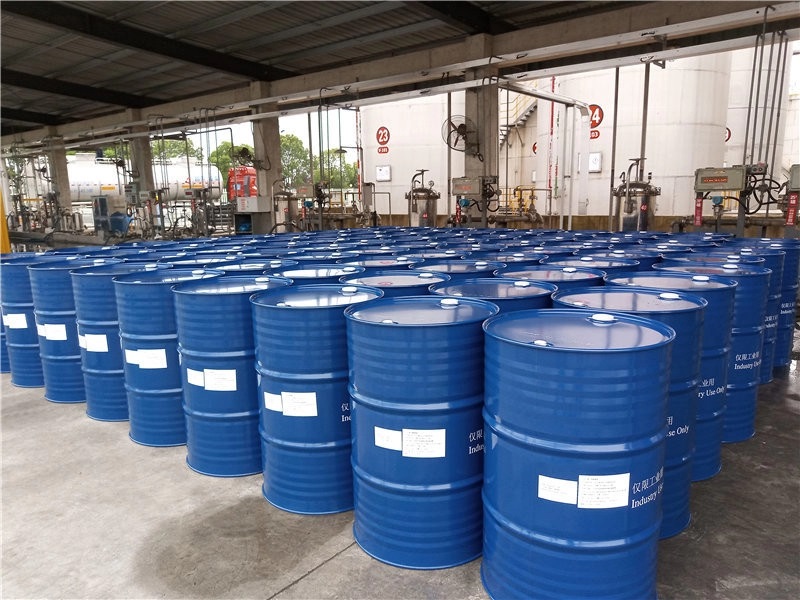
| Standard Packaging | 25 kg, 50 kg, 100 kg HDPE drums |
| Bulk Packaging | 200 kg, 1000 kg IBC (Intermediate Bulk Container) |
| Small Packaging (Upon Request) | 1 kg, 5 kg, 10 kg |
| Packaging Material | HDPE drums, aluminum foil bags, glass bottles |
| Closure Recommendation | Keep tightly closed when not in use |
Description: Phenoxyethanol should be stored in a cool and dry place in its original packaging. Color change and turbidity may occur in humid environments. Contact with strong oxidizing agents, acids, and bases should be avoided. Standard packaging includes 25-100 kg HDPE drums or IBC tanks. Shelf life is 24-36 months under recommended storage conditions. Each package should bear the manufacturing date and batch number for traceability.
SECTION 19: TRANSPORTATION AND SHIPPING INFORMATION
| Parameter | Description |
|---|---|
| UN Number | 3082 (Environmentally Hazardous Substance, Liquid, N.O.S.) |
| Hazard Class | Class 9 (Miscellaneous Dangerous Goods) |
| Packing Group | PG III |
| Marine Pollutant | Yes |
| Transport Classification | |
| ADR (Road) | Class 9, UN 3082, PG III |
| RID (Rail) | Class 9, UN 3082, PG III |
| ADN (Inland Waterway) | Class 9, UN 3082, PG III |
| IMDG (Maritime) | Class 9, UN 3082, PG III, EMS: F-A, S-F |
| IATA/ICAO (Air) | Class 9, UN 3082, PG III |
| Transport Temperature | Ambient temperature (15-30°C) |
| Transport Precautions | Protect from leakage, protect from moisture |
| Packaging Precautions | Use leak-proof, sturdy packaging |
Description: Phenoxyethanol is classified as UN 3082 "Environmentally Hazardous Substance, Liquid" under Class 9 dangerous goods. It should be marked as a marine pollutant for maritime transport due to potential marine pollution. Leakage prevention measures should be taken during transport, and it should be protected from excessive moisture and heat. Packaging must be leak-proof and sturdy. The GTIP/HS code is 2909.49.00.00.00.
SECTION 20: ENVIRONMENTAL INFORMATION AND ECOTOXICOLOGY
| Parameter | Value / Assessment |
|---|---|
| Aquatic Toxicity (Fish, LC50, 96h) | ~100 – 500 mg/L (Zebra fish) |
| Aquatic Toxicity (Daphnia, EC50, 48h) | ~200 – 400 mg/L |
| Algal Toxicity (EC50, 72h) | ~100 – 300 mg/L |
| Bioaccumulation Factor (BCF) | Low (<100) |
| Biodegradability | Readily biodegradable (OECD 301F) |
| Biochemical Oxygen Demand (BOD5) | ~1.0 – 1.5 g O₂/g |
| Chemical Oxygen Demand (COD) | ~2.0 – 2.5 g O₂/g |
| Log Koc (Soil Adsorption) | ~1.5 – 2.0 |
| Atmospheric Degradation | Reactive (reaction with OH radicals) |
| Persistence | Low (biodegradable) |
| Environmental Classification | Hazardous to the environment (Aquatic Acute 1, Aquatic Chronic 2) |
| Water Hazard Class (WGK, Germany) | Class 1 (slightly hazardous to water) |
Description: Phenoxyethanol is readily biodegradable. It exhibits moderate toxicity to fish, crustaceans, and algae in aquatic environments. Bioaccumulation potential is low. It is classified as "aquatic acute toxic" and "aquatic chronic toxic" categories. Large releases into water should be avoided. Proper waste management is required to minimize environmental exposure.
SECTION 21: MANUFACTURING PROCESS
| Parameter | Description |
|---|---|
| Primary Synthetic Route | Reaction of phenol with ethylene oxide under basic conditions |
| Reaction Type | Williamson Ether Synthesis / Epoxide Ring Opening |
| Reactants | Phenol (C₆H₅OH) + Ethylene Oxide (C₂H₄O) |
| Catalyst / Base | Sodium Hydroxide (NaOH) or Potassium Hydroxide (KOH) |
| Reaction Conditions | |
| Temperature | 120 – 160 °C |
| Pressure | Atmospheric – 5 bar |
| Duration | 2 – 4 hours |
| Reaction Equation | C₆H₅OH + C₂H₄O → C₆H₅-O-CH₂-CH₂-OH |
| By-products | Diethylene glycol phenyl ether, polymeric phenyl ethers |
| Purification Method | Vacuum distillation |
| Production Capacity | 10,000 – 50,000 tons/year (depending on facility) |
| Yield | > 90% (under optimized conditions) |
Description: Phenoxyethanol is produced by the reaction of phenol with ethylene oxide under basic conditions. In this Williamson ether synthesis reaction, phenol (C₆H₅OH) is converted to phenoxide anion using sodium hydroxide (NaOH). This anion attacks ethylene oxide, opening the epoxide ring to form 2-phenoxyethanol. The reaction is carried out at approximately 120-160°C for 2-4 hours. Purification is achieved by vacuum distillation to obtain high-purity (>99%) product. By-products may include diethylene glycol phenyl ether and polymeric phenyl ethers.
SECTION 22: QUALITY CERTIFICATES AND STANDARDS
| Certificate / Standard | Status | Description |
|---|---|---|
| ISO 9001:2015 | Certified | Manufacturing facilities have quality management system |
| ISO 14001:2015 | Certified | Environmental management system (optional) |
| REACH (EC 1907/2006) | Registered | Compliant with EU chemical regulations |
| FDA 21 CFR | Compliant | Suitable for cosmetic and pharmaceutical applications |
| USP/EP | Available | Pharmaceutical quality standard |
| Halal | Upon request | Certified according to Islamic standards |
| Kosher | Upon request | Certified according to Jewish standards |
| Certificate of Analysis (COA) | Provided with each batch | Includes binding specifications |
| Safety Data Sheet (SDS/MSDS) | Available | Current 16-section document |
| Technical Data Sheet (TDS) | Available | Comprehensive technical information |
| Good Manufacturing Practices (GMP) | Compliant | Cosmetic / Pharmaceutical GMP |
SECTION 23: DISCLAIMER AND LEGAL NOTICE
| Item | Description |
|---|---|
| Information Purpose | This Technical Data Sheet (TDS) is for informational purposes only and does not constitute a binding specification. |
| Typical Values | Values stated herein are based on typical laboratory results and may vary slightly between production batches. |
| Binding Data | For binding specifications, the Certificate of Analysis (COA) for each batch should be requested. |
| User Responsibility | The user is solely responsible for determining the suitability of the product for the intended application and ensuring compliance with all applicable regulations. |
| SDS Requirement | A current Safety Data Sheet (SDS) should be requested from the supplier prior to use. |
| Safety Information | Safety information in this document is based on current knowledge but does not constitute a guarantee of the product's health and safety risks. |
| Regulatory Changes | The user is responsible for monitoring local and international regulatory changes. |
| Product Quality | Product quality is guaranteed in accordance with the standards specified in this document. |
| License / Patents | This document does not grant any license or patent rights for use of the product. |
| Side Effects | Allergic reactions may occur in sensitive individuals; users should conduct suitability tests. |
DISCLAIMER (LEGAL NOTICE): This Technical Data Sheet (TDS) is for informational purposes only and does not constitute a binding specification. The values stated herein are based on typical laboratory results. The user is solely responsible for determining the suitability of the product for the intended application and for ensuring compliance with all local regulations. A current Safety Data Sheet (SDS) and Certificate of Analysis (COA) should be requested prior to use. Allergic reactions may occur in sensitive individuals; suitability tests should be conducted. This document does not grant any license or patent rights for use of the product.