We unleash your business potential by maximize the business innovation.
Send EmailDimethylol Dimethyl Hydantoin, Dimethyloldimethylhydantoin, DMDMH, 6440-58-0
DMDM HYDANTOIN (1,3-DIMETHYLOL-5,5-DIMETHYLHYDANTOIN) - 6440-58-0
SECTION 1: PRODUCT IDENTITY AND DEFINITION
| Parameter | Description |
|---|---|
| Product Name | DMDM Hydantoin |
| Chemical Name (IUPAC) | 1,3-Bis(hydroxymethyl)-5,5-dimethylimidazolidine-2,4-dione |
| Other Names | 1,3-Dimethylol-5,5-dimethylhydantoin, Dimethylol Dimethyl Hydantoin, DMDMH |
| Chemical Formula | C₇H₁₂N₂O₄ |
| Molecular Weight | 188.18 g/mol |
| CAS Number | 6440-58-0 |
| EC Number | 229-222-8 |
| Chemical Class | Hydantoin Derivative / Formaldehyde Donor |
| REACH Status | Registered and compliant |
| TSCA (USA) | Listed |
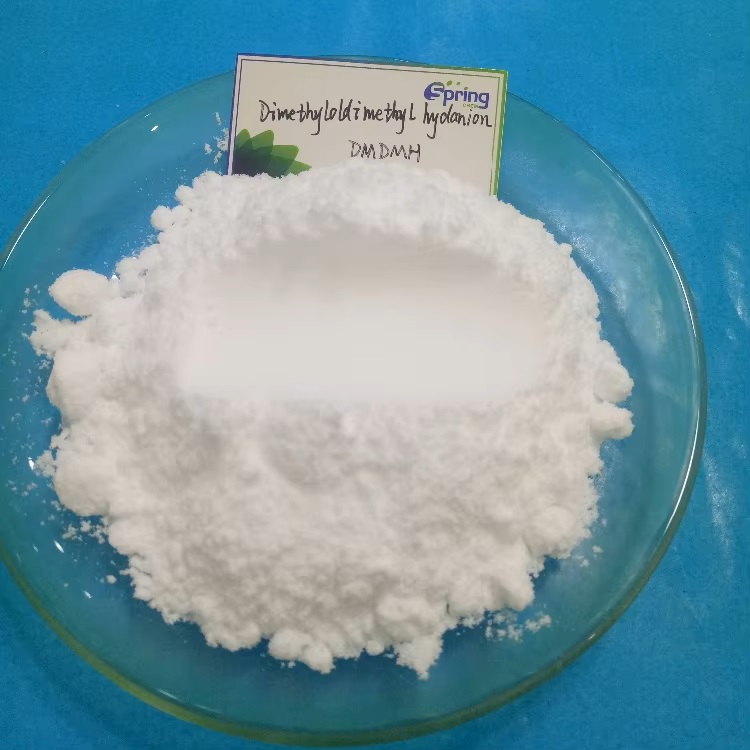
Description: DMDM Hydantoin is a powerful, highly water-soluble antimicrobial preservative belonging to the hydantoin class of compounds. It functions as a formaldehyde-releasing preservative, slowly releasing small amounts of formaldehyde over time to provide broad-spectrum antimicrobial activity. It is widely used in personal care products, detergents, and various industrial applications to prevent the growth of bacteria, mold, and yeast. It is supplied as a white crystalline solid or as a 55% aqueous solution.
SECTION 2: SYNONYMS AND OTHER NAMES
| No | Synonym / Other Name |
|---|---|
| 1 | DMDM Hydantoin |
| 2 | 1,3-Dimethylol-5,5-dimethylhydantoin |
| 3 | Dimethylol Dimethyl Hydantoin |
| 4 | DMDMH |
| 5 | 1,3-Bis(hydroxymethyl)-5,5-dimethylhydantoin |
| 6 | 1,3-Bis(hydroxymethyl)-5,5-dimethylimidazolidine-2,4-dione |
| 7 | 5,5-Dimethyl-1,3-bis(hydroxymethyl)hydantoin |
| 8 | 5,5-Dimethyl-1,3-dimethylolhydantoin |
| 9 | DMDM Hydantoin (Glydant) |
| 10 | Glydant |
| 11 | Mackstat DM |
| 12 | Germall II |
| 13 | Germaben II (with parabens) |
| 14 | 1,3-Dihydroxymethyl-5,5-dimethylhydantoin |
| 15 | N,N'-Dimethylol-5,5-dimethylhydantoin |
| 16 | DMDM Hydantoin 55% Solution |
| 17 | Antimicrobial DMDMH |
| 18 | Preservative DMDMH |
| 19 | Glidant |
| 20 | 6440-58-0 |
SECTION 3: CHEMICAL STRUCTURE AND MOLECULAR PROPERTIES
| Parameter | Description |
|---|---|
| Chemical Family | Hydantoins / Imidazolidinediones |
| Structure | 5,5-dimethylhydantoin with two hydroxymethyl groups at N-1 and N-3 |
| Functional Groups | Two Hydroxymethyl (-CH₂OH), Two Amide/Carbonyl (C=O), Imidazolidine Ring |
| Molecular Structure | (HOCH₂)₂-C₅H₈N₂O₂ |
| SMILES Notation | O=C1N(CO)C(=O)N(CO)C1(C)C |
| InChI | InChI=1S/C7H12N2O4/c1-7(2)5(12)8(3-10)6(13)9(7)4-11/h10-11H,3-4H2,1-2H3 |
| InChI Key | WSDJXRYWTMHGOF-UHFFFAOYSA-N |
| Log P (Hydrophobicity) | -1.2 (highly hydrophilic) |
| pKa | ~8.5 - 9.0 |
| Dissociation Constant | Weak base |
Structural Formula:
text
        O         O
        ||        ||
        C - N - C - N - C
       /   |   |   |   \
      /    |   |   |    \
     CH₂   |   |   |     CH₂
     OH    CH₃ CH₃ OH
           |   |
           C - C
           CH₃ CH₃

    1,3-Bis(hydroxymethyl)-5,5-dimethylhydantoin
Description: DMDM Hydantoin is a heterocyclic organic compound containing an imidazolidine-2,4-dione (hydantoin) ring. The molecule features two hydroxymethyl groups attached to the nitrogen atoms at positions 1 and 3 of the hydantoin ring, and two methyl groups at position 5. These hydroxymethyl groups are responsible for the controlled release of formaldehyde, which provides the antimicrobial activity. The molecule is highly hydrophilic due to its polar functional groups.
SECTION 4: PHYSICAL APPEARANCE AND FORM
| Parameter | Specification | Test Method |
|---|---|---|
| Physical State | Solid (crystalline powder) | Visual Inspection |
| Color | White to off-white | Visual Inspection |
| Odor | Odorless or faint characteristic | Organoleptic |
| Crystal Shape | Needle-like or prismatic | Microscopic Examination |
| Powder Properties | Free-flowing | Flowability Test |
| Solution Form | 55% aqueous solution (clear, colorless to slightly yellow) | Visual Inspection |
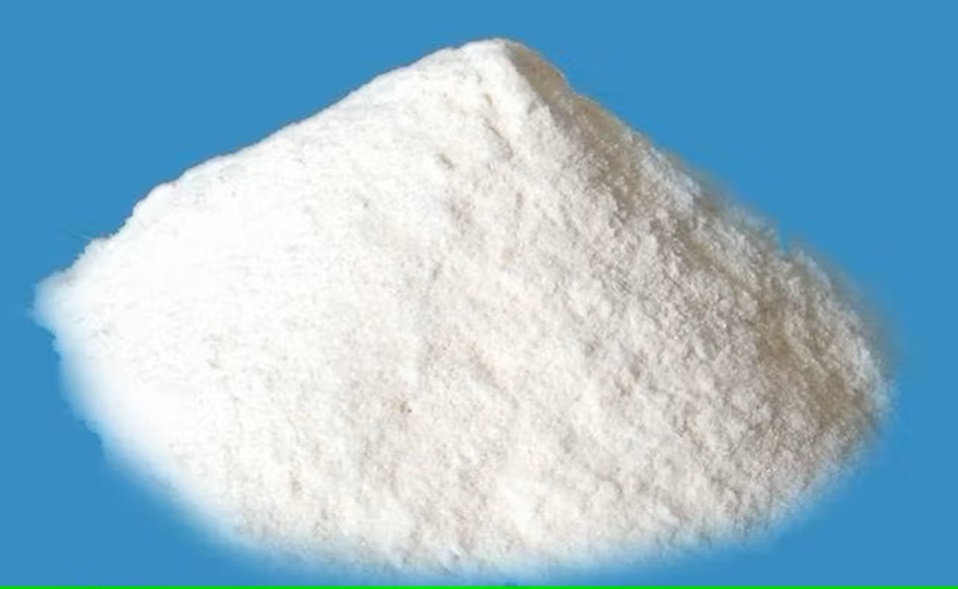
Description: DMDM Hydantoin is a white to off-white, odorless, crystalline powder. It is supplied as a free-flowing powder or as a 55% aqueous solution. The 55% solution is clear, colorless to slightly yellow, and ready-to-use in aqueous formulations. The crystalline form is preferred for dry blending applications, while the solution form is used for liquid formulations.
SECTION 5: MELTING AND DECOMPOSITION POINT
| Parameter | Specification | Typical Value | Test Method |
|---|---|---|---|
| Melting Point Range | 95 – 100 °C | 97 – 98 °C | DSC / Capillary Tube |
| Melting Point Onset | ≥ 95 °C | 96.5 °C | Capillary Tube Method |
| Melting Point Endset | ≤ 100 °C | 98.5 °C | Capillary Tube Method |
| Decomposition Temperature | > 200 °C | ~210 °C | TGA |
| Decomposition Products | Formaldehyde, Carbon dioxide, Ammonia | – | – |
Description: DMDM Hydantoin has a melting point in the range of 95-100°C. The narrow melting range indicates high purity. The compound decomposes above 200°C, releasing formaldehyde and other decomposition products. This thermal stability allows for use in moderate-temperature processing conditions. Heating above the decomposition temperature should be avoided to prevent formaldehyde release.
SECTION 6: DENSITY AND BULK PROPERTIES
| Parameter | Specification | Typical Value | Test Method |
|---|---|---|---|
| Density (Solid, 20°C) | – | ~1.4 g/cm³ | Pycnometer |
| Density (55% Solution, 20°C) | – | ~1.12 – 1.15 g/cm³ | Pycnometer |
| Bulk Density (Powder) | – | ~0.40 – 0.50 g/cm³ | Graduated Cylinder |
| Tapped Density | – | ~0.55 – 0.65 g/cm³ | Graduated Cylinder |
| Specific Gravity (55% Solution) | – | 1.12 – 1.15 | Hydrometer |
Description: DMDM Hydantoin has a density of approximately 1.4 g/cm³ in solid form. The 55% aqueous solution has a density of 1.12-1.15 g/cm³. The bulk density of the powder form ranges from 0.40-0.50 g/cm³, which is important for handling, storage, and blending operations. The solution form is easier to handle and incorporate into aqueous formulations.
SECTION 7: SOLUBILITY AND MISCIBILITY
| Solvent / Medium | Solubility / Miscibility (25°C) | Temperature Effect |
|---|---|---|
| Water | Highly soluble (>500 g/L) | Increases with heat |
| Ethanol (Absolute) | Moderately soluble (~50-100 g/L) | Increases with heat |
| Methanol | Moderately soluble | Increases with heat |
| Isopropyl Alcohol | Slightly soluble | Increases with heat |
| Acetone | Slightly soluble | – |
| Propylene Glycol | Soluble | Increases with heat |
| Glycerin | Soluble | Increases with heat |
| PEG 400 | Soluble | Increases with heat |
| Oils (Vegetable, Mineral) | Insoluble | – |
| Surfactant Solutions | Highly soluble | – |
| Nonionic Surfactants | Compatible (no activity loss) | – |
| Anionic Surfactants | Compatible | – |
Description: DMDM Hydantoin is highly soluble in water (>500 g/L), which is one of its key advantages. It is moderately soluble in alcohols such as ethanol and methanol. It is practically insoluble in oils and non-polar solvents. The high water solubility allows for easy incorporation into aqueous formulations. It remains stable and active in the presence of both nonionic and anionic surfactants.
SECTION 8: PURITY AND ANALYTICAL SPECIFICATIONS
| Parameter | Specification | Typical Value | Test Method |
|---|---|---|---|
| Purity (HPLC) | ≥ 98.0% | 99.0% | HPLC |
| Purity (Titration) | ≥ 98.0% | 98.5% | Titration |
| Water Content (Karl Fischer) | ≤ 1.0% | < 0.5% | USP <921> / ISO 760 |
| Formaldehyde Content (Free) | ≤ 0.5% | < 0.2% | Titration / Spectrophotometry |
| Formaldehyde Content (Total) | 28 – 32% | ~30% | Titration / Spectrophotometry |
| pH (1% Aqueous Solution) | 6.0 – 8.0 | 6.5 – 7.5 | USP <791> |
| pH (55% Solution) | 5.5 – 7.5 | 6.0 – 7.0 | USP <791> |
| Color (APHA, 55% Solution) | ≤ 50 | < 20 | ASTM D1209 |
| Heavy Metals (Pb) | ≤ 10 ppm | < 5 ppm | USP <231> |
| Arsenic | ≤ 2 ppm | < 1 ppm | USP <211> |
| Residual Solvents | ≤ 100 ppm | < 50 ppm | GC |
| Ash Content (Sulfated) | ≤ 0.5% | < 0.1% | USP <281> |
| Chlorides | ≤ 0.1% | < 0.05% | Titration |
Description: DMDM Hydantoin is supplied in high purity (≥98.0%). The total formaldehyde content is typically 28-32%, which is the source of its antimicrobial activity. Free formaldehyde content is strictly controlled (≤0.5%) to minimize irritation potential. The pH of a 1% aqueous solution ranges from 6.0-8.0. Heavy metal and arsenic content are kept low in accordance with pharmaceutical and cosmetic standards.
SECTION 9: SPECTROSCOPIC PROPERTIES
| Parameter | Value / Description |
|---|---|
| UV-Vis Maximum Absorbance (λmax) | ~220 nm (in water) |
| IR (KBr) Characteristic Bands | 3300-3400 cm⁻¹ (O-H stretch), 2960-2980 cm⁻¹ (C-H aliphatic), 1760-1780 cm⁻¹ (C=O stretch, hydantoin), 1700-1720 cm⁻¹ (C=O stretch, hydantoin), 1480-1500 cm⁻¹ (C-H deformation), 1250-1300 cm⁻¹ (C-N stretch) |
| ¹H-NMR (D₂O) | δ 4.8 (s, 4H, N-CH₂-OH), 1.4 (s, 6H, C-CH₃) |
| ¹³C-NMR (D₂O) | δ 177.0 (C=O), 156.0 (C=O), 67.0 (N-CH₂OH), 50.0 (C-(CH₃)₂), 24.0 (CH₃) |
| Mass Spectrum (MS - EI) | m/z 188 [M⁺], 156 [M-32]⁺, 143, 113, 85, 71, 44 |
Description: These spectroscopic data are used for structural identification and purity control of DMDM Hydantoin. The IR spectrum shows characteristic hydantoin carbonyl bands at 1760-1780 cm⁻¹ and 1700-1720 cm⁻¹. The ¹H-NMR spectrum clearly shows the hydroxymethyl protons at δ 4.8 ppm and the methyl protons at δ 1.4 ppm. GC-MS provides definitive identification through mass spectrum and fragmentation pattern.
SECTION 10: THERMAL PROPERTIES AND STABILITY
| Parameter | Value / Description |
|---|---|
| Decomposition Onset Temperature | ~200 °C (by TGA) |
| Maximum Decomposition Rate | ~230-250 °C (by TGA) |
| Melting Enthalpy (ΔHm) | ~25 kJ/mol |
| Thermal Stability | Stable up to 60-70°C for processing |
| pH Stability | Superior activity in pH 3 – 8 range |
| pH Stability (Extended) | Stable in pH 2 – 10 range |
| Light Stability | Stable under normal light conditions |
| Hydrolytic Stability | Stable in aqueous solutions |
| Oxidative Stability | Stable in air; reacts with strong oxidizing agents |
| Storage Stability (55% Solution) | Stable at room temperature (15-30°C) |
Description: DMDM Hydantoin is thermally stable up to 60-70°C, which is sufficient for most cosmetic and personal care processing conditions. It exhibits superior antimicrobial activity in the pH range of 3-8. At higher pH values (>9), the release of formaldehyde may be accelerated. It is stable under normal light conditions and in aqueous solutions. The 55% aqueous solution is stable at room temperature when stored properly.
SECTION 11: ANTIMICROBIAL ACTIVITY AND MECHANISM OF ACTION
| Microorganism Type | Activity | MIC (Minimum Inhibitory Concentration) |
|---|---|---|
| Gram-Positive Bacteria | Strong | 50 – 150 ppm |
| Staphylococcus aureus (ATCC 6538) | Strong | 50 – 100 ppm |
| Bacillus subtilis (ATCC 6633) | Strong | 50 – 150 ppm |
| Streptococcus pyogenes | Strong | 100 – 200 ppm |
| Gram-Negative Bacteria | Moderate - Strong | 100 – 300 ppm |
| Pseudomonas aeruginosa (ATCC 9027) | Moderate | 200 – 400 ppm |
| Escherichia coli (ATCC 8739) | Moderate - Strong | 100 – 200 ppm |
| Salmonella typhimurium | Moderate | 150 – 300 ppm |
| Klebsiella pneumoniae | Moderate | 150 – 300 ppm |
| Yeasts | Strong | 50 – 150 ppm |
| Candida albicans (ATCC 10231) | Strong | 50 – 150 ppm |
| Saccharomyces cerevisiae | Strong | 50 – 150 ppm |
| Molds | Strong | 50 – 150 ppm |
| Aspergillus niger (ATCC 16404) | Strong | 50 – 150 ppm |
| Penicillium chrysogenum | Strong | 50 – 150 ppm |
| Fusarium oxysporum | Strong | 100 – 200 ppm |
Activity Spectrum and Mechanism: DMDM Hydantoin exhibits broad-spectrum antimicrobial activity against Gram-positive bacteria, Gram-negative bacteria, yeasts, and molds. The mechanism of action is based on the controlled release of formaldehyde. Formaldehyde acts as a potent antimicrobial agent by cross-linking proteins and nucleic acids, disrupting cellular metabolism, and ultimately leading to cell death. The slow release mechanism provides long-lasting preservation. It is particularly effective in detergent-based formulations that may be prone to microbial contamination.
SECTION 12: COSMETIC AND PERSONAL CARE APPLICATIONS
| Application Category | Function / Benefit | Typical Use Level (Active) |
|---|---|---|
| Hair Care Products | ||
| Shampoos | Preservative, antimicrobial protection | 0.15 – 0.40% |
| Hair Conditioners | Preservative, antimicrobial protection | 0.15 – 0.40% |
| Hair Styling Gels | Preservative, antimicrobial protection | 0.15 – 0.40% |
| Hair Colorants | Preservative, antimicrobial protection | 0.15 – 0.40% |
| Skin Care Products | ||
| Body Lotions | Preservative, antimicrobial protection | 0.15 – 0.40% |
| Moisturizing Creams | Preservative, antimicrobial protection | 0.15 – 0.40% |
| Facial Cleansers | Preservative, antimicrobial protection | 0.15 – 0.40% |
| Sunscreens | Preservative, antimicrobial protection | 0.15 – 0.40% |
| Baby Care Products | ||
| Baby Shampoos | Preservative, antimicrobial protection | 0.15 – 0.30% |
| Baby Lotions | Preservative, antimicrobial protection | 0.15 – 0.30% |
| Wet Wipes | Preservative, antimicrobial protection | 0.15 – 0.40% |
| Makeup Products | ||
| Foundations | Preservative, antimicrobial protection | 0.15 – 0.40% |
| Eyeliners | Preservative, antimicrobial protection | 0.15 – 0.40% |
| Mascaras | Preservative, antimicrobial protection | 0.15 – 0.40% |
| Other Personal Care | ||
| Deodorants | Preservative, antimicrobial protection | 0.15 – 0.40% |
| Toothpastes | Preservative | 0.15 – 0.40% |
| Body Washes | Preservative, antimicrobial protection | 0.15 – 0.40% |
| Hand Soaps | Preservative, antimicrobial protection | 0.15 – 0.40% |
Formulation Recommendations: DMDM Hydantoin is typically used at concentrations of 0.15-0.40% (as active ingredient). The 55% aqueous solution is added directly to aqueous formulations. For hot processes (e.g., emulsification), it is recommended to add DMDM Hydantoin during the cooling step, preferably at temperatures below 60°C, to minimize formaldehyde release and loss. It is compatible with nonionic, anionic, and cationic surfactants. It is cost-effective, water-soluble, and shows broad-spectrum activity at low concentrations.
SECTION 13: DETERGENT AND BULK SURFACTANT APPLICATIONS
| Application | Function / Description | Typical Use Level |
|---|---|---|
| Liquid Detergents | Preservative, antimicrobial protection | 0.10 – 0.30% |
| Dishwashing Liquids | Preservative, antimicrobial protection | 0.10 – 0.30% |
| Laundry Detergents | Preservative, antimicrobial protection | 0.10 – 0.30% |
| Industrial Cleaners | Preservative, antimicrobial protection | 0.10 – 0.30% |
| Bulk Surfactants | Preservative, antimicrobial protection | 0.10 – 0.30% |
| Instrument Cleaning Solutions | Preservative, antimicrobial protection | 0.10 – 0.30% |
Description: DMDM Hydantoin is particularly effective in detergent-based formulations that have inherent microbial activity but may be prone to developing certain microorganism types. It is the ideal preservative for bulk surfactants. It is inexpensive, water-soluble, has low oil solubility, exhibits broad-spectrum activity, is active at low concentrations, is non-volatile, and has good heat stability. The only disadvantage is that it is a formaldehyde donor.
SECTION 14: INDUSTRIAL APPLICATIONS
| Application | Function / Description | Typical Use Level |
|---|---|---|
| Water Treatment | Antimicrobial, algae control | 10 – 50 ppm |
| Cooling Water Systems | Preservative, biocide | 10 – 50 ppm |
| Paper Products | Antimicrobial protection | 0.10 – 0.30% |
| Wood Treatment | Antimicrobial protection, mold control | 0.10 – 0.30% |
| Adhesives | Preservative, antimicrobial protection | 0.10 – 0.30% |
| Paints and Coatings | Preservative, in-can protection | 0.10 – 0.30% |
| Metalworking Fluids | Preservative, bactericidal | 0.10 – 0.30% |
| Textile Chemicals | Antimicrobial protection | 0.10 – 0.30% |
Description: DMDM Hydantoin can be used in a variety of industrial processes to control bacteria and microorganisms. In water treatment processes, it helps control bacteria and other microbes in water. In cooling water systems, it is used as a biocidal preservative. Paper products and wood materials can be treated with DMDM Hydantoin to prevent microbial contamination and extend product life.
SECTION 15: REGULATORY STATUS AND RESTRICTIONS
| Region / Authority | Status | Maximum Concentration | Description |
|---|---|---|---|
| European Union | Permitted | ≤ 0.6% (as formaldehyde) | EU Cosmetics Regulation (EC) No 1223/2009, Annex V/42 |
| Turkey | Permitted | ≤ 0.6% (as formaldehyde) | Compliant with EU legislation |
| USA (FDA) | Permitted | ≤ 0.6% (as formaldehyde) | FDA 21 CFR (Cosmetics and OTC) |
| Japan | Permitted | ≤ 0.6% | Japanese Cosmetics Standards |
| Canada | Permitted | ≤ 0.6% | Health Canada Cosmetic Classification |
| REACH (EU) | Registered | – | EC 1907/2006 |
| TSCA (USA) | Listed | – | Toxic Substances Control Act |
| EINECS (EU) | 229-222-8 | – | European Inventory of Existing Chemical Substances |
| USP/EP | Recognized as pharmacopoeia standard | – | Analytical and quality standards |
| CIR (Cosmetic Ingredient Review) | Safe as used | ≤ 0.6% | CIR Safety Assessment |
| SCCS (Scientific Committee) | Evaluated as safe | ≤ 0.6% | SCCS/1595/18 |
Description: DMDM Hydantoin is permitted for use in cosmetics and personal care products in most countries. The maximum concentration is limited to 0.6% when expressed as formaldehyde in the EU and other regions. The Cosmetic Ingredient Review (CIR) Expert Panel has concluded that DMDM Hydantoin is safe as used in cosmetic products when formulated to avoid exceeding 0.6% formaldehyde. The SCCS has evaluated it as safe for use in cosmetics.
SECTION 16: SAFETY AND TOXICOLOGICAL PROFILE
| Parameter | Value / Assessment | Test System |
|---|---|---|
| Acute Oral Toxicity (LD50) | ~1,500 – 2,000 mg/kg | Rat |
| Acute Dermal Toxicity (LD50) | > 2,000 mg/kg | Rabbit |
| Acute Inhalation Toxicity (LC50) | > 5 mg/L | Rat |
| Skin Irritation | Non-irritating (at use levels) | Rabbit (Draize test) |
| Eye Irritation | Non-irritating (at use levels) | Rabbit (Draize test) |
| Skin Sensitization | Potential sensitizer (low to moderate) | Human Patch Test / GPMT |
| Carcinogenicity | Not classified (IARC, NTP) | Long-term studies |
| Mutagenicity | Not classified (Ames test negative) | Ames Test / Micronucleus Test |
| Reproductive Toxicity | Not classified | Animal studies |
| Endocrine Disruption | No potential concern | In vitro studies |
| NOAEL (No Observed Adverse Effect Level) | 100 – 200 mg/kg/day | Rat (chronic studies) |
| Allergenic Potential | Low to moderate | Clinical observations |
| Irritation Potential | Very low (at use levels) | Clinical observations |
| Formaldehyde Release | Controlled, low-level release | – |
| Mucous Membrane Irritation | Non-irritating (at use levels) | – |
Description: DMDM Hydantoin has moderate acute oral toxicity (LD50 ~1,500-2,000 mg/kg). At use levels (0.15-0.40%), it is non-irritating to eyes, skin, and mucous membranes. It has a low to moderate sensitization potential. It is not classified as carcinogenic, mutagenic, or reproductive toxicant. The safety profile is excellent, and it has been used safely in cosmetics for decades. The controlled release of formaldehyde occurs at levels below the safety limits established by regulatory agencies.
SECTION 17: ADVANTAGES AND DISADVANTAGES
| Parameter | Description |
|---|---|
| Advantages | |
| Broad-Spectrum Activity | Effective against bacteria, yeasts, and molds |
| Water Solubility | Highly soluble in water, easy to incorporate |
| Cost-Effective | Inexpensive compared to many alternatives |
| Low Use Levels | Active at 0.15-0.40% concentrations |
| pH Stability | Superior activity in pH 3-8 range |
| Surfactant Compatibility | Compatible with nonionic, anionic, and cationic surfactants |
| Thermal Stability | Good stability up to 60-70°C |
| Non-Volatile | Low vapor pressure, no loss during processing |
| Toxicity Profile | Excellent safety profile at use levels |
| Disadvantages | |
| Formaldehyde Donor | Releases formaldehyde, a potential allergen |
| Irritation Potential | May cause skin irritation or sensitization in sensitive individuals |
| Regulatory Restrictions | Limited to ≤0.6% formaldehyde equivalent |
| pH Limitations | Reduced activity at pH > 8 |
| Temperature Sensitivity | Should be added below 60°C to minimize loss |
Description: DMDM Hydantoin offers many advantages as a preservative, including broad-spectrum activity, high water solubility, cost-effectiveness, low use levels, and excellent compatibility with surfactants. However, it is a formaldehyde donor, which can be a concern for some consumers and regulatory bodies. It should be used within recommended concentration limits (0.15-0.40%) and pH range (3-8) to ensure optimal performance and safety.
SECTION 18: STORAGE, SHELF LIFE, AND PACKAGING
| Parameter | Description |
|---|---|
| Storage Temperature (Powder) | 15 – 30°C (cool and dry) |
| Storage Temperature (55% Solution) | 15 – 30°C (protect from freezing) |
| Storage Conditions | Well-ventilated, moisture-protected area |
| Light Protection | Normal light conditions acceptable |
| Moisture Sensitivity | Protect from excessive moisture (powder) |
| Materials to Avoid | Strong oxidizing agents, strong acids, strong bases |
| Shelf Life (Powder) | 24 – 36 months (unopened, recommended conditions) |
| Shelf Life (55% Solution) | 12 – 24 months (unopened, recommended conditions) |
| Degradation Signs | Color change (yellowing), odor (formaldehyde), turbidity (solution) |
| Standard Packaging (Powder) | 25 kg, 50 kg PE-lined multi-layer bags |
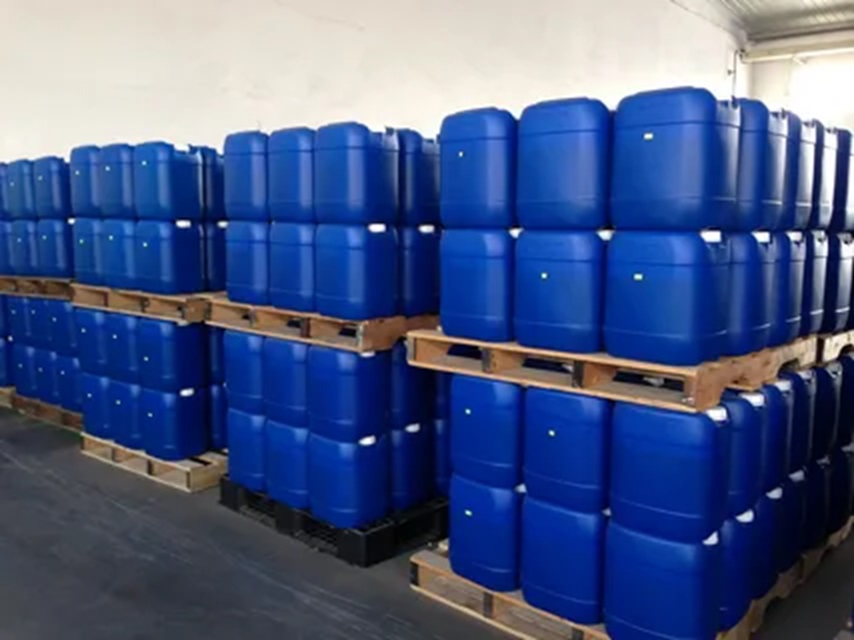
| Standard Packaging (55% Solution) | 25 kg, 50 kg, 100 kg HDPE drums |
| Bulk Packaging | 200 kg, 1000 kg IBC (Intermediate Bulk Container) |
| Small Packaging (Upon Request) | 1 kg, 5 kg, 10 kg |
| Packaging Material | PE-lined bags, HDPE drums, IBC containers |
| Closure Recommendation | Keep tightly closed when not in use |
Description: DMDM Hydantoin should be stored in a cool and dry place. The powder form should be protected from excessive moisture to prevent caking. The 55% solution should be protected from freezing. Contact with strong oxidizing agents, acids, and bases should be avoided. Shelf life is 24-36 months for the powder and 12-24 months for the 55% solution under recommended storage conditions. Each package should bear the manufacturing date and batch number for traceability.
SECTION 19: TRANSPORTATION AND SHIPPING INFORMATION
| Parameter | Description |
|---|---|
| UN Number (Powder) | Not regulated (non-hazardous) |
| UN Number (55% Solution) | Not regulated (non-hazardous) |
| Hazard Class | Not classified as dangerous goods |
| Packing Group | Not applicable |
| Marine Pollutant | No |
| Transport Classification | |
| ADR (Road) | Not classified |
| RID (Rail) | Not classified |
| ADN (Inland Waterway) | Not classified |
| IMDG (Maritime) | Not classified |
| IATA/ICAO (Air) | Not classified |
| Transport Temperature | Ambient temperature (15-30°C) |
| Transport Precautions | Protect from moisture (powder), protect from freezing (solution) |
| Packaging Precautions | Use leak-proof, sturdy packaging for liquid form |
Description: DMDM Hydantoin in both powder and 55% solution form is not classified as dangerous goods for transportation. It does not require UN number or hazard labeling. However, proper packaging should be used to prevent leakage of the liquid form and moisture ingress for the powder form. Transport should be at ambient temperatures, and the solution should be protected from freezing. The GTIP/HS code for DMDM Hydantoin is 2933.29.90.00.00.
SECTION 20: ENVIRONMENTAL INFORMATION AND ECOTOXICOLOGY
| Parameter | Value / Assessment |
|---|---|
| Aquatic Toxicity (Fish, LC50, 96h) | ~100 – 500 mg/L (Zebra fish) |
| Aquatic Toxicity (Daphnia, EC50, 48h) | ~100 – 300 mg/L |
| Algal Toxicity (EC50, 72h) | ~50 – 200 mg/L |
| Bioaccumulation Factor (BCF) | Low (<100) |
| Biodegradability | Readily biodegradable (OECD 301F) |
| Biochemical Oxygen Demand (BOD5) | ~0.5 – 1.0 g O₂/g |
| Chemical Oxygen Demand (COD) | ~1.0 – 1.5 g O₂/g |
| Hydrolysis | Slow hydrolysis in water |
| Persistence | Low (biodegradable) |
| Environmental Classification | Slightly hazardous to the environment |
| Water Hazard Class (WGK, Germany) | Class 1 (slightly hazardous to water) |
Description: DMDM Hydantoin is readily biodegradable and does not persist in the environment. It exhibits moderate toxicity to aquatic organisms. Bioaccumulation potential is low. The formaldehyde released during degradation is biodegraded or volatilized. Environmental exposure should be minimized through proper waste management. Large releases into water should be avoided.
SECTION 21: MANUFACTURING PROCESS
| Parameter | Description |
|---|---|
| Primary Synthetic Route | Methylolation of 5,5-dimethylhydantoin with formaldehyde |
| Reaction Type | Methylolation / Hydroxymethylation |
| Starting Materials | 5,5-Dimethylhydantoin + Formaldehyde |
| Reaction Conditions | |
| Temperature | 50 – 80 °C |
| pH | Alkaline (pH 8-10) |
| Duration | 2 – 4 hours |
| Reaction Equation | C₅H₈N₂O₂ + 2 CH₂O → C₇H₁₂N₂O₄ |
| By-products | Monomethylolated hydantoin, polymeric products |
| Purification Method | Crystallization / Filtration |
| Production Capacity | 5,000 – 20,000 tons/year (depending on facility) |
| Yield | > 90% (under optimized conditions) |
Description: DMDM Hydantoin is produced by the methylolation reaction of 5,5-dimethylhydantoin with formaldehyde under alkaline conditions. In this reaction, the two active hydrogen atoms on the nitrogen atoms of the hydantoin ring are replaced by hydroxymethyl groups. The reaction is carried out at 50-80°C for 2-4 hours. The product is purified by crystallization and filtration. The 55% aqueous solution is prepared by dissolving the crystalline product in water. This manufacturing process is well-established and yields high-purity product.
SECTION 22: QUALITY CERTIFICATES AND STANDARDS
| Certificate / Standard | Status | Description |
|---|---|---|
| ISO 9001:2015 | Certified | Manufacturing facilities have quality management system |
| ISO 14001:2015 | Certified | Environmental management system (optional) |
| REACH (EC 1907/2006) | Registered | Compliant with EU chemical regulations |
| FDA 21 CFR | Compliant | Suitable for cosmetic and OTC applications |
| USP/EP | Available | Pharmaceutical quality standard |
| Halal | Upon request | Certified according to Islamic standards |
| Kosher | Upon request | Certified according to Jewish standards |
| Certificate of Analysis (COA) | Provided with each batch | Includes binding specifications |
| Safety Data Sheet (SDS/MSDS) | Available | Current 16-section document |
| Technical Data Sheet (TDS) | Available | Comprehensive technical information |
| Good Manufacturing Practices (GMP) | Compliant | Cosmetic / Pharmaceutical GMP |
SECTION 23: DISCLAIMER AND LEGAL NOTICE
| Item | Description |
|---|---|
| Information Purpose | This Technical Data Sheet (TDS) is for informational purposes only and does not constitute a binding specification. |
| Typical Values | Values stated herein are based on typical laboratory results and may vary slightly between production batches. |
| Binding Data | For binding specifications, the Certificate of Analysis (COA) for each batch should be requested. |
| User Responsibility | The user is solely responsible for determining the suitability of the product for the intended application and ensuring compliance with all applicable regulations. |
| SDS Requirement | A current Safety Data Sheet (SDS) should be requested from the supplier prior to use. |
| Safety Information | Safety information in this document is based on current knowledge but does not constitute a guarantee of the product's health and safety risks. |
| Regulatory Changes | The user is responsible for monitoring local and international regulatory changes. |
| Product Quality | Product quality is guaranteed in accordance with the standards specified in this document. |
| License / Patents | This document does not grant any license or patent rights for use of the product. |
| Side Effects | Allergic reactions may occur in sensitive individuals; users should conduct suitability tests. |
DISCLAIMER (LEGAL NOTICE): This Technical Data Sheet (TDS) is for informational purposes only and does not constitute a binding specification. The values stated herein are based on typical laboratory results. The user is solely responsible for determining the suitability of the product for the intended application and for ensuring compliance with all local regulations. A current Safety Data Sheet (SDS) and Certificate of Analysis (COA) should be requested prior to use. Allergic reactions may occur in sensitive individuals; suitability tests should be conducted. This document does not grant any license or patent rights for use of the product.