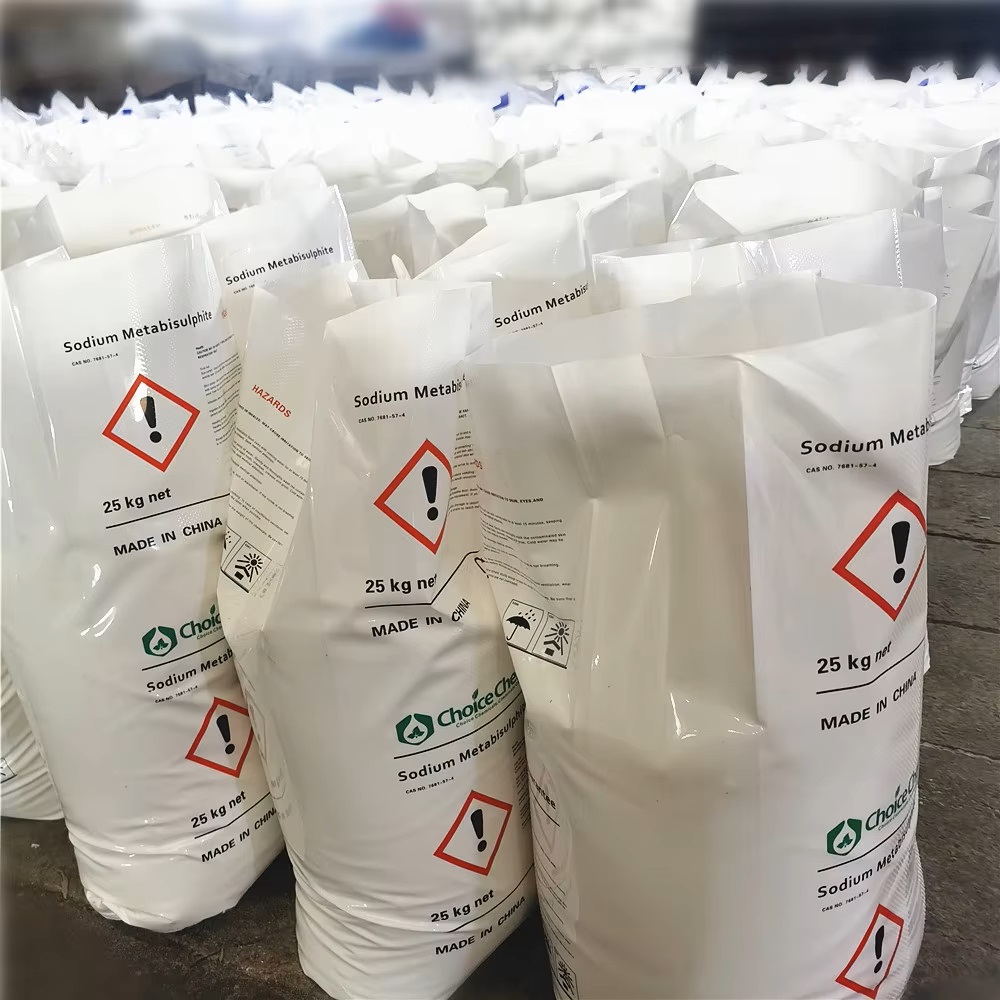
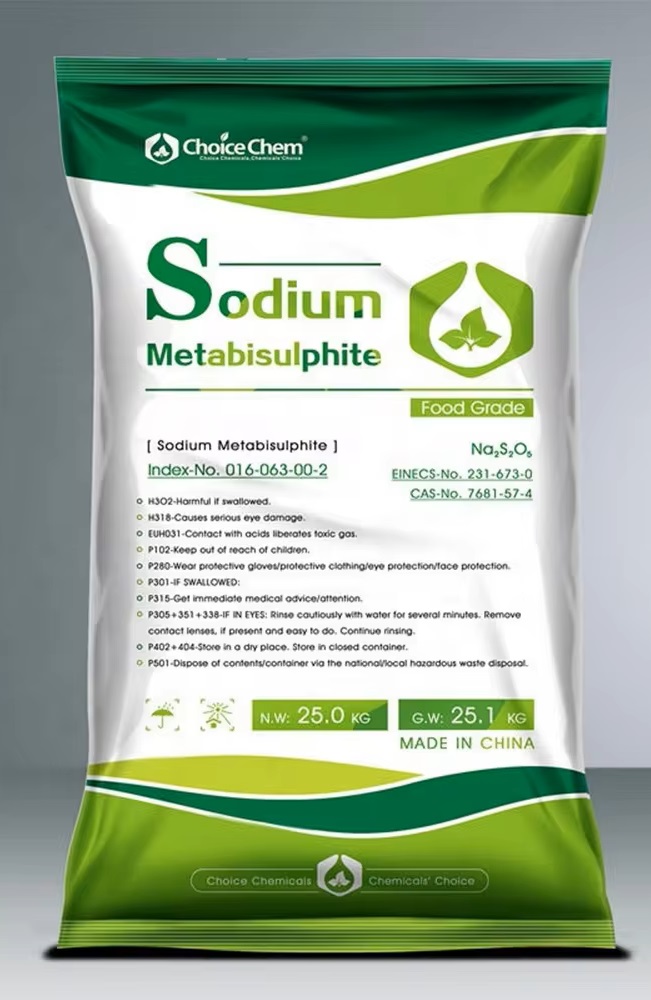
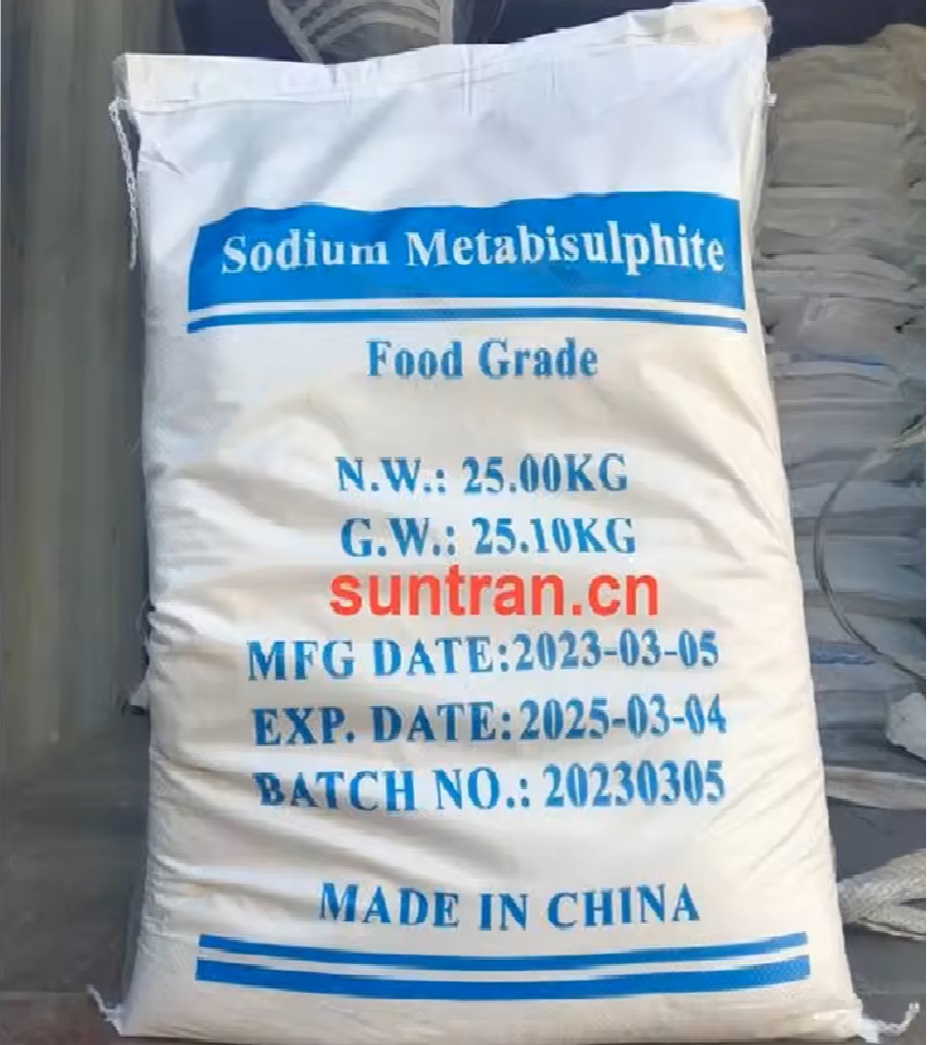
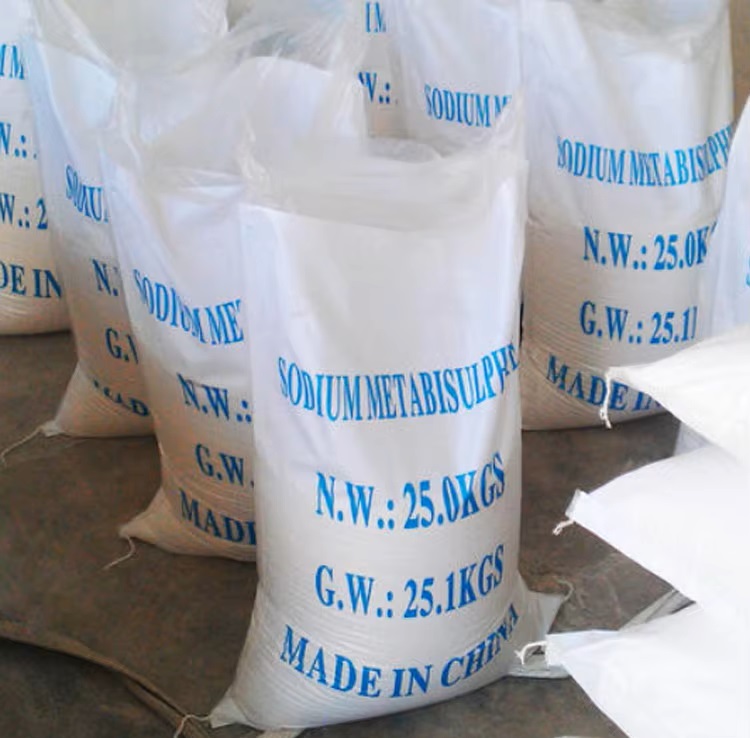
We unleash your business potential by maximize the business innovation.
Send EmailSodium Metabisulfite, Sodium Pyrosulfite, Sodium Bisulfite Anhydrous, Natrium Pyrosulfite, SMBS, E223, 7681-57-4
General Information
-
Chemical Name: Sodium Metabisulfite
-
E Number: E223
-
CAS Number: 7681-57-4
-
Molecular Formula: Na₂S₂O₅
-
Molecular Weight: 190.05 g/mol
-
Other Names: Sodium Pyrosulfite, Disodium Disulfite, Metabisulfite, SMBS
Physical Properties
-
Appearance: White crystalline powder (sometimes slightly yellowish)
-
Odor: Faint sulfur smell
-
Density: 1.48 g/cm³
-
Melting Point: Decomposes at 150 °C (does not truly melt)
-
Solubility: Highly soluble in water (540 g/L at 20 °C)
-
Stability: Sensitive to air and moisture; must be stored in dry conditions
Chemical Properties
-
pH in solution: 3.5 – 5 (acidic)
-
Reactivity:
-
Incompatible with strong oxidizers and strong acids
-
Releases toxic sulfur dioxide (SO₂) gas when in contact with acids
-
-
Toxicity: Harmful if inhaled; irritant to skin and mucous membranes
Chemical Behavior
-
In aqueous solution: Produces bisulfite ions (HSO₃⁻), which act as strong reducing agents.
-
With acids: Produces SO₂ gas, which is toxic and pungent.
-
With oxidizing agents: Can react violently, so storage must avoid such chemicals.
Industrial Applications
-
Textile Industry: Used as an antichlor (neutralizes chlorine after bleaching) and dye fixative.
-
Paper and Adhesives: Processing aid.
-
Leather Industry: Depilatory agent (removes hair from hides).
-
Organic Chemistry: Raw material for producing sodium hydrosulfite.
-
Cosmetics: Preservative and disinfectant.
-
Rubber and Electroplating: Processing additive.
Food Industry Applications
Sodium Metabisulfite is widely used as a food additive (E223):
-
Antioxidant: Prevents oxidation, extending shelf life.
-
Preservative: Inhibits microbial growth.
-
Color Stabilizer: Maintains color in dried fruits, juices, and wines.
-
Fermentation Control: In winemaking, suppresses unwanted microorganisms and regulates fermentation.
Examples:
-
Wine: Controls fermentation and prevents spoilage.
-
Dried Fruits (apricots, raisins): Preserves color and prevents browning.
-
Canned Foods & Pickles: Acts as a disinfectant and preservative.
-
Fruit Juices: Prevents oxidation and stabilizes flavor.
Health and Safety
-
Inhalation: Can cause respiratory irritation and trigger asthma-like reactions.
-
Skin Contact: Irritant; may cause allergic reactions.
-
Food Consumption: Safe within regulated limits, but sensitive individuals (especially asthmatics) may react adversely.
-
Storage: Must be kept dry, away from acids and oxidizers.
Summary Table
| Property | Value |
|---|---|
| Chemical Name | Sodium Metabisulfite |
| E Number | E223 |
| CAS No | 7681-57-4 |
| Formula | Na₂S₂O₅ |
| Appearance | White crystalline powder |
| Density | 1.48 g/cm³ |
| Decomposition | 150 °C |
| Solubility | 540 g/L (20 °C) |
| Uses | Food additive, textile, leather, paper, cosmetics |
| Risks | Irritant, releases toxic SO₂ with acids |
Industrial Sectors
1. Textile Industry
-
Used as an antichlor to neutralize residual chlorine after bleaching.
-
Acts as a dye fixative, helping colors bind more permanently to fibers.
2. Paper & Adhesives
-
Functions as a processing aid in paper manufacturing.
-
Improves adhesive formulations by stabilizing chemical reactions.
3. Leather Industry
-
Serves as a depilatory agent, removing hair from hides during leather preparation.
4. Chemical Manufacturing
-
Key raw material in producing sodium hydrosulfite, a strong reducing agent.
-
Used in synthesis of cellulose esters and other organic compounds.
5. Cosmetics
-
Acts as a preservative and disinfectant in certain formulations.
-
Helps prevent microbial growth in creams and lotions.
6. Rubber & Electroplating
-
Used as a stabilizer and processing additive.
-
In electroplating, helps control oxidation reactions.
Food Industry
Preservative & Antioxidant
-
Prevents oxidation, extending shelf life of foods.
-
Inhibits microbial growth, reducing spoilage.
Color Stabilizer
-
Maintains bright color in dried fruits (apricots, raisins, apples).
-
Prevents browning in juices and processed foods.
Winemaking
-
Controls fermentation by suppressing unwanted microorganisms.
-
Preserves flavor and prevents spoilage.
Canned Foods & Pickles
-
Acts as a disinfectant and preservative.
Safety Considerations
-
Inhalation: Can irritate respiratory system, especially in asthmatic individuals.
-
Skin Contact: May cause irritation or allergic reactions.
-
Food Use: Safe within regulated limits, but sensitive individuals may react.
-
Storage: Must be kept dry, away from acids and oxidizers to prevent toxic SO₂ release.
In short:
-
Industrial sectors use it for bleaching, fixing, depilating, stabilizing, and chemical synthesis.
-
Food industry uses it as a preservative, antioxidant, and color stabilizer.