We unleash your business potential by maximize the business innovation.
Send EmailCarnauba Wax, Ceara Wax, Copernicia Cerifera Wax, Brazil Wax, E903, 8015-86-9
CARNAUBA WAX (KARNAUBA MUMU)
E903 | CAS 8015-86-9 | EC 232-399-4
SECTION 1: PRODUCT IDENTITY AND DEFINITION
| Parameter | Description |
|---|---|
| Product Name | Carnauba Wax |
| Other Names | Brazil Wax, Ceara Wax, Palm Wax (misleading), Copernicia Cerifera Wax, E903 |
| Botanical Source | Copernicia cerifera (formerly Copernicia prunifera) – Carnauba Palm |
| CAS Number | 8015-86-9 |
| EC Number (EINECS) | 232-399-4 |
| E Number | E903 (Food Additive) |
| Chemical Formula | C₃₀H₆₂O₂ (average composition) |
| Molecular Weight | ~450 g/mol (average) |
| Chemical Class | Natural Vegetable Wax / Ester Mixture |
| INCI Name | Copernicia Cerifera Wax |
| Source | Leaves of the Carnauba palm tree (Northeast Brazil) |
Description: Carnauba Wax is a natural vegetable wax obtained from the leaves of the carnauba palm tree (Copernicia cerifera), which is native to northeastern Brazil. It is one of the hardest natural waxes known and is often referred to as the "Queen of Waxes." The wax is secreted by the palm tree to prevent water evaporation during dry seasons. It is a complex mixture of esters, fatty acids, alcohols, and hydrocarbons. Carnauba wax is widely used in food (E903), cosmetics, pharmaceuticals, automotive polishes, and many industrial applications due to its exceptional gloss, hardness, and water-repellent properties.
SECTION 2: SYNONYMS AND OTHER NAMES
| No | Synonym / Other Name |
|---|---|
| 1 | Carnauba Wax |
| 2 | Karnauba Mumu (Turkish) |
| 3 | Brazil Wax |
| 4 | Ceara Wax |
| 5 | Ceara Mumu |
| 6 | Palm Wax (misleading – may cause confusion) |
| 7 | Copernicia Cerifera Wax |
| 8 | E903 |
| 9 | Carnauba Palm Wax |
| 10 | Brazilian Wax |
| 11 | Plant Wax |
| 12 | Vegetable Wax |
| 13 | 8015-86-9 |
| 14 | EC 232-399-4 |
| 15 | Carnauba Wax Yellow (Type 1) |
| 16 | Carnauba Wax Refined |
| 17 | Carnauba Wax Flakes |
| 18 | Carnauba Wax Powder |
| 19 | Copernicia prunifera Wax |
| 20 | Natural Hard Wax |
SECTION 3: CHEMICAL COMPOSITION AND STRUCTURE
| Component | Percentage (%) | Description |
|---|---|---|
| Esters | ~38-40% | Mainly aliphatic esters (C₂₄ – C₃₄) |
| Free Fatty Acids | ~8-10% | e.g., Cerotic acid, palmitic acid |
| Free Alcohols | ~10-12% | Long-chain aliphatic alcohols |
| Hydrocarbons | ~2-3% | Alkanes and alkenes |
| Lactones | ~5-7% | Cyclic esters |
| Resins | ~8-10% | Complex resinous materials |
| Water/Solids | ~2-3% | Moisture and insoluble matter |
Average Chemical Formula: C₃₀H₆₂O₂
Key Characteristics:
-
Complex mixture of aliphatic esters (myricyl cerotate, myricyl palmitate)
-
High melting point (82-86°C) – the hardest natural wax
-
High myricyl alcohol content
-
Contains dihydroxy fatty acids (carnaubic acid)
SECTION 4: TYPES AND GRADES OF CARNAUBA WAX
4.1 Brazilian Traditional Classification (by Color & Quality)
| Type | Color/Appearance | Leaf Source | Application | Properties |
|---|---|---|---|---|
| Olho (Type 1) | Light yellow, bright | Upper leaves | Food, cosmetics, pharmaceuticals | Purest and highest quality |
| Light Fat (Type 3) | Light brown | Lower leaves | Industrial polishes, textiles | Medium quality; oilier structure |
| Dark Sandy (Type 4) | Gray-brown | Lower leaves | Automotive, furniture polishes | Hardest, lowest quality, low gloss |
4.2 US Refining Classification (by Refining Degree)
| Type | Process | Application |
|---|---|---|
| Type 1 | Refined, filtered | Purest form; food and pharmaceutical |
| Type 3 | Filtered and re-refined | Industrial, cosmetics |
| Type 4 | Centrifuged | Low purity; technical applications |
4.3 Commercial Forms
| Form | Description | Application |
|---|---|---|
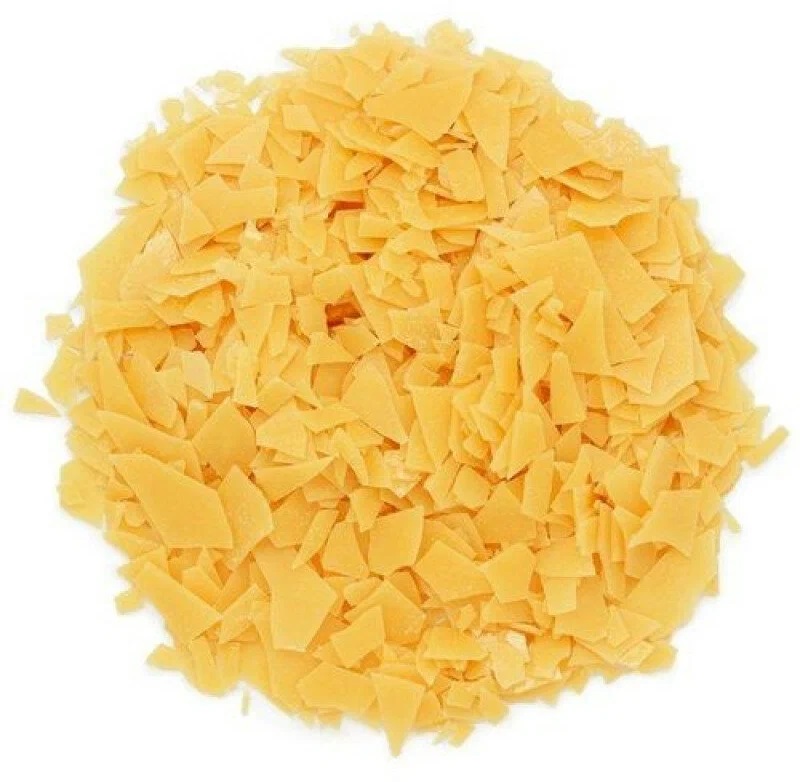
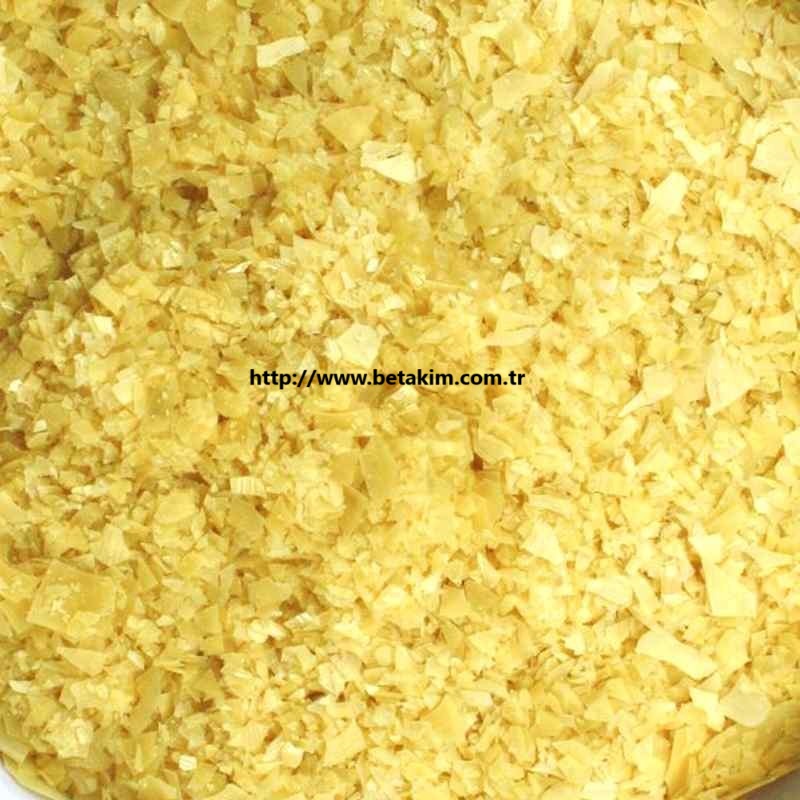
| Flakes | Refined, easy to dose | Cosmetics, food, pharmaceuticals |
| Powder | Micronized | Tablet coating, dispersions |
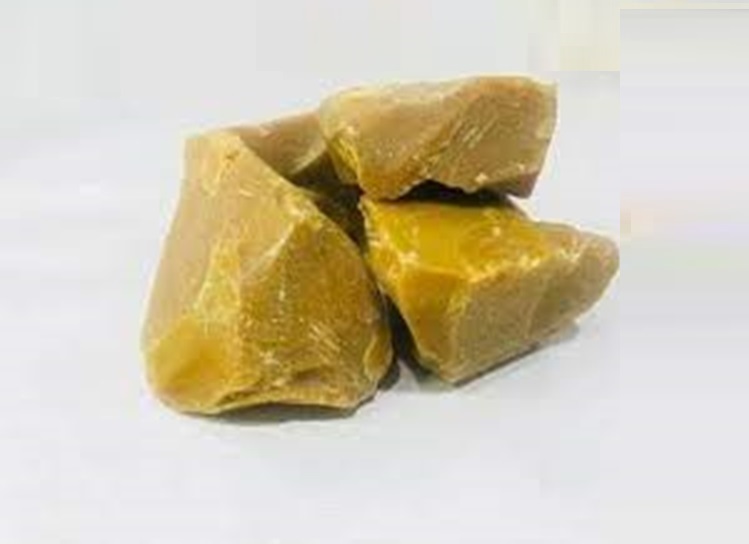
| Slabs | Industrial production | Polishes, automotive |
| Emulsion | Aqueous dispersion | Spray polishes, textile finishing |
SECTION 5: PHYSICAL PROPERTIES
| Parameter | Specification | Typical Value | Test Method |
|---|---|---|---|
| Physical State (20°C) | Solid | - | Visual |
| Appearance | Hard, yellowish-brown flakes | - | Visual |
| Color (Type 1) | Light yellow | - | Visual |
| Color (Type 3) | Light brown | - | Visual |
| Color (Type 4) | Gray-brown | - | Visual |
| Odor | Mild, characteristic | - | Organoleptic |
| Melting Point | 82 – 86 °C | 83 – 85 °C | DSC / Capillary Tube |
| Density (20°C) | 0.990 – 0.999 g/cm³ | ~0.995 g/cm³ | ASTM D4052 |
| Specific Gravity (20°C) | 0.990 – 0.999 | ~0.995 | Pycnometer |
| Refractive Index (90°C) | 1.450 – 1.460 | ~1.455 | ASTM D1218 |
| Acid Value | 2 – 9 | 4 – 6 | Titration |
| Saponification Value | 78 – 95 | 85 – 90 | Titration |
| Iodine Value | 5 – 14 | 7 – 10 | Titration |
| Ester Value | 70 – 85 | 75 – 80 | Calculation |
| Loss on Drying | ≤ 1.0% | < 0.5% | USP <731> |
| Ash Content | ≤ 0.5% | < 0.2% | USP <281> |
| Water Solubility | Insoluble | - | - |
| Solubility in Hot Ethanol | Soluble | - | - |
| Solubility in Chloroform | Soluble | - | - |
| Solubility in Ether | Soluble (when heated) | - | - |
| Flash Point | > 300 °C | ~320 °C | ASTM D93 |
SECTION 6: CARNAUBA WAX vs PALM WAX COMPARISON
| Parameter | Carnauba Wax (8015-86-9) | Palm Wax (68440-10-6) |
|---|---|---|
| Plant Source | Copernicia cerifera (Brazil) | Elaeis guineensis (Malaysia, Indonesia) |
| CAS Number | 8015-86-9 | 68440-10-6 (or variants) |
| Melting Point | 82 – 86 °C (very hard) | 58 – 65 °C (moderate hardness) |
| Physical Form | Hard, yellowish flakes | Granules or blocks |
| Surface Effect | High gloss, slip, UV protection | Matte or crystallized appearance |
| Natural Hardness | Very High (“Queen of Waxes”) | Moderate |
| Food Approval | Yes (E903) | Limited |
| FDA Status | GRAS (Generally Recognized as Safe) | Technical grade |
| USP/BP Status | Available | Not typical |
| Applications | Food glazing, cosmetics, pharmaceuticals, automotive polishes, textiles | Candle manufacturing, packaging, cosmetics, paper coating |
| Alias Confusion Risk | High (often confused with Palm Wax) | Low |
| Certification | BP/USP/FDA documentation available | Technical TDS/MSDS sufficient |
SECTION 7: CARNAUBA WAX TYPES – DETAILED COMPARISON
| Property | Type 1 (Olho) | Type 3 (Light Fat) | Type 4 (Dark Sandy) |
|---|---|---|---|
| Color | Light Yellow | Light Brown | Gray-Brown |
| Purity | Highest | Medium | Lowest |
| Gloss | Very High | High | Low |
| Hardness | Very High | High | Very High |
| Oil Content | Low | Medium | High |
| Price | Highest | Medium | Lowest |
| Food Use | ✅ Yes | ⛔ No | ⛔ No |
| Cosmetics | ✅ Yes | ✅ Limited | ⛔ No |
| Pharmaceuticals | ✅ Yes | ⛔ No | ⛔ No |
| Automotive Polishes | ✅ Yes | ✅ Yes | ✅ Yes |
| Industrial Waxes | ✅ Yes | ✅ Yes | ✅ Yes |
SECTION 8: FOOD INDUSTRY APPLICATIONS (E903)
| Application | Function | Preferred Grade |
|---|---|---|
| Confectionery Glazing | Provides gloss and shine to candies, chocolates, nuts | Type 1 (Olho) |
| Chewing Gum Base | Plasticizer, texture modifier | Type 1 (Olho) |
| Fruit Coating | Moisture barrier, gloss for fruits (apples, citrus) | Type 1 (Olho) |
| Tablet Coating | Polishing and glazing for pharmaceutical tablets | Type 1 (Olho) |
| Nut Coating | Glazing for almonds, hazelnuts, walnuts | Type 1 (Olho) |
| Cheese Coating | Protective coating for cheese rinds | Type 1 (Olho) |
| Coffee Bean Coating | Gloss and protection | Type 1 (Olho) |
| Food Packaging | Paper coating and barrier | Type 3 (Limited) |
E903 Specifications:
-
Acid Value: 2–9
-
Saponification Value: 78–95
-
Ester Value: 70–85
-
Melting Point: 82–86°C
-
Heavy Metals (Pb): ≤ 5 ppm
-
Arsenic (As): ≤ 1 ppm
-
ADI (Acceptable Daily Intake): 0–7 mg/kg body weight (FAO/WHO)
SECTION 9: COSMETIC AND PERSONAL CARE APPLICATIONS
| Application | Function / Benefit | Typical Use Level | Preferred Grade |
|---|---|---|---|
| Lipsticks | Thickener, gloss, texture enhancer | 2 – 10% | Type 1 (Olho) |
| Mascara | Thickener, film former, water resistance | 2 – 8% | Type 1 (Olho) |
| Eyeliners | Texture, gloss, stability | 2 – 8% | Type 1 (Olho) |
| Creams and Lotions | Thickener, stabilizer, emollient | 1 – 5% | Type 1 (Olho) |
| Deodorant Sticks | Solidifier, texture enhancer | 2 – 5% | Type 1 (Olho) |
| Lip Balms | Emollient, gloss, protection | 3 – 10% | Type 1 (Olho) |
| Foundation | Thickener, water resistance | 1 – 5% | Type 1 (Olho) |
| Nail Polishes | Gloss, hardness | 1 – 3% | Type 1 (Olho) |
| Sun Care Products | Water resistance, thickener | 1 – 5% | Type 1 (Olho) |
| Hair Styling Products | Hold, gloss, texture | 1 – 5% | Type 1 (Olho) |
SECTION 10: PHARMACEUTICAL APPLICATIONS
| Application | Function / Benefit | Preferred Grade |
|---|---|---|
| Tablet Coating | Polishing agent, glazing | Type 1 (Olho) |
| Ointments | Thickener, water-repellent base | Type 1 (Olho) |
| Pills | Coating and glazing | Type 1 (Olho) |
| Capsules | Glazing and protection | Type 1 (Olho) |
| Suppositories | Hardening agent | Type 1 (Olho) |
| Patches | Adhesive base | Type 1 (Olho) |
USP/BP Specifications:
-
Complies with USP (United States Pharmacopeia)
-
Complies with BP (British Pharmacopoeia)
-
FDA approved for pharmaceutical applications
SECTION 11: AUTOMOTIVE AND INDUSTRIAL APPLICATIONS
| Application | Function / Benefit | Preferred Grade |
|---|---|---|
| Car Polishes | High gloss, UV protection, water repellency | Type 3, Type 4 |
| Automotive Waxes | Gloss, protection, durability | Type 3, Type 4 |
| Furniture Polishes | Gloss, protection, water resistance | Type 3 |
| Floor Polishes | Durability, gloss, slip resistance | Type 3, Type 4 |
| Leather Finishing | Waterproofing, gloss | Type 3 |
| Shoe Polish | Gloss, water resistance, protection | Type 3 |
| Wood Finishing | Gloss, protection, water resistance | Type 3 |
| Textile Finishing | Water repellency, gloss | Type 3 |
| Paper Coating | Gloss, water resistance | Type 3 |
| Sizing Agents | Paper and textile treatment | Type 3 |
| Asphalt | Hardening, water resistance | Type 4 |
| Roofing Coatings | Waterproofing, durability | Type 4 |
SECTION 12: OTHER APPLICATIONS
| Application | Function / Benefit |
|---|---|
| Musical Instruments | Polishing and surface protection |
| Art and Crafts | Encaustic painting, wax casting |
| Candle Making | Hardening agent, gloss (blended with other waxes) |
| 3D Printing | Filament additive, release agent |
| Adhesives | Component in some adhesive formulations |
| Flame Retardants | Coating component |
| Rust Prevention | Protective coatings |
| Mold Release Agent | Prevents sticking in metal and plastic molds |
SECTION 13: REGULATORY STATUS
| Region / Authority | Status | Description |
|---|---|---|
| European Union | Permitted | E903 – Food additive approved; no specific cosmetic restrictions |
| Turkey | Permitted | E903 – Compliant with EU legislation |
| USA (FDA) | Permitted | GRAS (Generally Recognized as Safe) for food applications |
| Japan | Permitted | Approved as food additive |
| Canada | Permitted | Health Canada approved |
| USP/BP | Available | Pharmacopoeia quality standard available |
| Halal | Available | Certified upon request (vegetable source, no animal content) |
| Kosher | Available | Certified upon request |
SECTION 14: VEGAN STATUS AND SUSTAINABILITY
| Parameter | Information |
|---|---|
| Source | Plant-derived (Carnauba palm leaves) |
| Vegan Suitability | ✅ Yes – fully vegan |
| Vegetarian Suitability | ✅ Yes |
| Halal Status | ✅ Yes (vegetable source) |
| Kosher Status | ✅ Yes (upon request) |
| Sustainability | Renewable resource; sustainably harvested |
| Environmental Impact | Low; supports regional economies in Northeast Brazil |
SECTION 15: SAFETY AND TOXICOLOGICAL PROFILE
| Parameter | Assessment |
|---|---|
| Acute Oral Toxicity | Non-toxic; GRAS recognized |
| Acute Dermal Toxicity | Non-toxic |
| Skin Irritation | Non-irritating |
| Eye Irritation | May be mildly irritating |
| Skin Sensitization | Not a sensitizer |
| Carcinogenicity | Not classified (IARC, NTP) |
| Mutagenicity | Not mutagenic |
| Reproductive Toxicity | Not classified |
| ADI (FAO/WHO) | 0 – 7 mg/kg body weight |
| FDA Status | GRAS (Generally Recognized as Safe) |
| EC Status | E903 – Approved food additive |
SECTION 16: STORAGE AND SHELF LIFE
| Parameter | Information |
|---|---|
| Storage Temperature | 15 – 30°C (cool, dry place) |
| Storage Conditions | Well-ventilated, dry area; avoid moisture |
| Container Requirements | Sealed containers; avoid contamination |
| Protect From | Heat (melts above 86°C), moisture, strong oxidizing agents |
| Shelf Life | 24 – 60 months (under proper storage) |
| Degradation Signs | Color change (darkening), rancid odor, texture change |
| Hygroscopicity | Low (water-repellent) |
| Compatibility | Compatible with most oils, fats, waxes, and organic solvents |
| Incompatible Materials | Strong oxidizing agents |
Packaging Options:
-
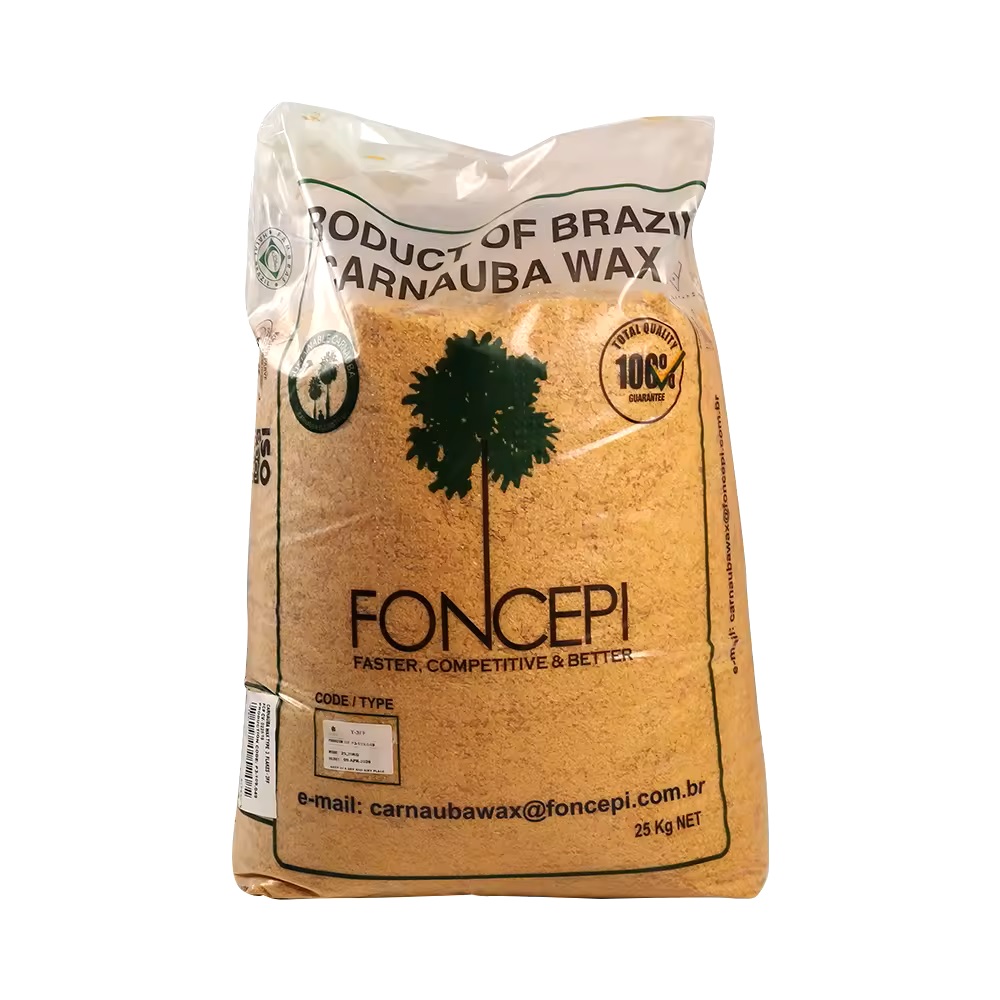
25 kg multi-layer paper bags (flakes)
-
25 kg PE-lined bags (powder)
-
25 kg, 50 kg blocks
-
500 kg, 1000 kg big-bags
SECTION 17: TRANSPORTATION AND SHIPPING INFORMATION
| Parameter | Description |
|---|---|
| UN Number | Not regulated (non-hazardous) |
| Hazard Class | Not classified as dangerous goods |
| Packing Group | Not applicable |
| Marine Pollutant | No |
| Transport Classification | |
| ADR (Road) | Not classified |
| RID (Rail) | Not classified |
| ADN (Inland Waterway) | Not classified |
| IMDG (Maritime) | Not classified |
| IATA/ICAO (Air) | Not classified |
| Transport Temperature | Ambient temperature (15-30°C) |
| Transport Precautions | Protect from moisture; avoid temperatures above 40°C |
| Packaging Precautions | Use sturdy, moisture-protected packaging |
Description: Carnauba wax is not classified as dangerous goods for transportation. It does not require UN number or hazard labeling. Temperatures above 40°C should be avoided during transport to prevent softening or melting. The GTIP/HS code is 1521.20.00.00.00.
SECTION 18: SECTORAL SUITABILITY TABLE
| Product Name | CAS No | Food | Cosmetic | Candles | Packaging | Textile | Description |
|---|---|---|---|---|---|---|---|
| Carnauba Wax | 8015-86-9 | ✅ | ✅ | ⛔ | 🟨 | ✅ | E903 food additive; high gloss |
| Candelilla Wax | 8006-44-8 | ✅ | ✅ | 🟨 | 🟨 | 🟨 | Vegan alternative; lip balms and lipsticks |
| Carnauba Wax Refined | 8015-86-9 | ✅ | ✅ | 🟨 | 🟨 | 🟨 | Light yellow; high purity |
| Carnauba Wax Technical | 8015-86-9 | ⛔ | 🟨 | 🟨 | ✅ | ✅ | Dark grades; industrial use |
✅ = Suitable | 🟨 = Limited | ⛔ = Not Suitable
SECTION 19: QUALITY CERTIFICATES AND STANDARDS
| Certificate / Standard | Status | Description |
|---|---|---|
| ISO 9001:2015 | Certified | Quality management system |
| ISO 14001:2015 | Certified | Environmental management system |
| FDA 21 CFR | Compliant | Food and cosmetic applications |
| USP/BP | Available | Pharmaceutical quality standard |
| E903 | Approved | EU Food Additive |
| Halal | Available | Certified upon request |
| Kosher | Available | Certified upon request |
| Certificate of Analysis (COA) | Provided with each batch | Includes binding specifications |
| Safety Data Sheet (SDS) | Available | Current 16-section document |
| Technical Data Sheet (TDS) | Available | Comprehensive technical information |
| Good Manufacturing Practices (GMP) | Compliant | Manufacturing quality standards |
SECTION 20: DISCLAIMER AND LEGAL NOTICE
| Item | Description |
|---|---|
| Information Purpose | This Technical Data Sheet (TDS) is for informational purposes only and does not constitute a binding specification. |
| Typical Values | Values stated herein are based on typical laboratory results and may vary slightly between batches. |
| Binding Data | For binding specifications, the Certificate of Analysis (COA) for each batch should be requested. |
| User Responsibility | The user is solely responsible for determining the suitability of the product for the intended application and ensuring compliance with all applicable regulations. |
| SDS Requirement | A current Safety Data Sheet (SDS) should be requested from the supplier prior to use. |
| Safety Information | Safety information in this document is based on current knowledge but does not constitute a guarantee of the product's health and safety risks. |
| Regulatory Changes | The user is responsible for monitoring local and international regulatory changes. |
| Product Quality | Product quality is guaranteed in accordance with the standards specified in this document. |
| License / Patents | This document does not grant any license or patent rights for use of the product. |
| Side Effects | Allergic reactions are rare but possible in sensitive individuals; users should conduct suitability tests. |
DISCLAIMER (LEGAL NOTICE): This Technical Data Sheet (TDS) is for informational purposes only and does not constitute a binding specification. The values stated herein are based on typical laboratory results. The user is solely responsible for determining the suitability of the product for the intended application and for ensuring compliance with all local regulations. A current Safety Data Sheet (SDS) and Certificate of Analysis (COA) should be requested prior to use. Allergic reactions are rare but possible in sensitive individuals; suitability tests should be conducted. This document does not grant any license or patent rights for use of the product.