We unleash your business potential by maximize the business innovation.
Send EmailPanthenol, DL-Panthenol, DL-Pantothenyl Alcohol, 16485-10-2
PANTHENOL (DL-PANTHENOL / DEXPANTHENOL)
CAS 16485-10-2 (DL) | CAS 81-13-0 (D) | C₉H₁₉NO₄
SECTION 1: PRODUCT IDENTITY AND DEFINITION
| Parameter | DL-Panthenol | Dexpanthenol (D-Panthenol) |
|---|---|---|
| Product Name | DL-Panthenol (Racemic) | Dexpanthenol (Optically Active) |
| Other Names | Panthenol, D,L-Panthenol, DL-Pantothenyl Alcohol, DL-N-Pantoyl-E-Propanolamine | D-Panthenol, (+)-Panthenol, Pantothenyl Alcohol, Bepanthen, Ilopan, Cozyme, Motilyn, Panyonyl, Bepantol, Intrapan, Pantenyl, Bepanthene, Panthoderm |
| CAS Number | 16485-10-2 | 81-13-0 |
| EC Number | 240-540-6 | 201-327-3 |
| Chemical Formula | C₉H₁₉NO₄ | C₉H₁₉NO₄ |
| Molecular Weight | 205.25 g/mol | 205.25 g/mol |
| Chemical Class | Vitamin B5 Derivative / Alcohol Amide | Vitamin B5 Derivative / Alcohol Amide |
| Optical Activity | Racemic (0°) | Optically Active (+30.5°) |
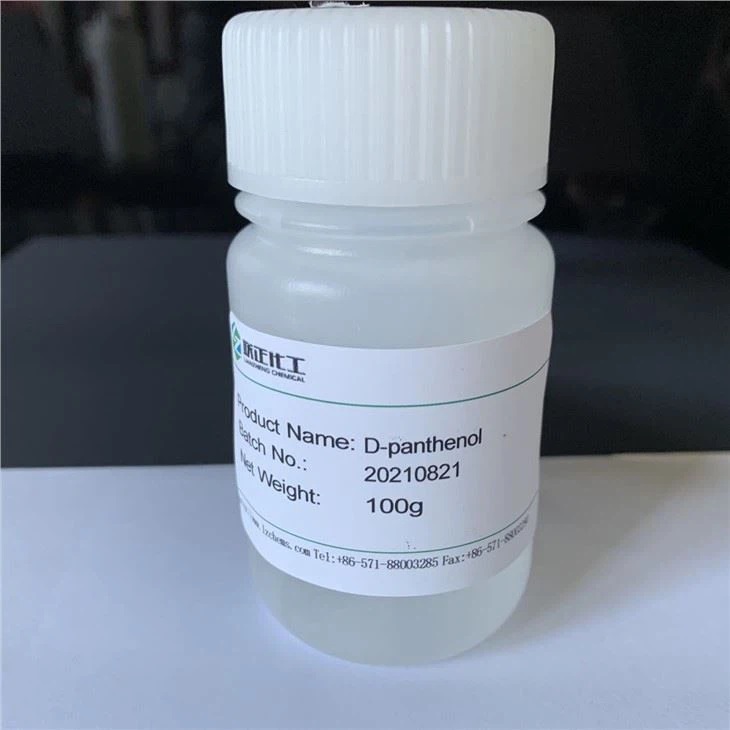
| Appearance | White Crystalline Powder | Clear – Slightly Yellow Viscous Liquid |
| Source | Synthetic | Synthetic (D-Pantolactone + 3-Aminopropanol) |
Description: Panthenol is the alcohol form of vitamin B5 (pantothenic acid) and is also known as provitamin B5. In the body, it is converted to pantothenic acid and serves as a precursor to coenzyme A. There are two forms: DL-Panthenol (racemic mixture, optically inactive) and Dexpanthenol (optically active D-form). Dexpanthenol is the biologically active form and can be converted to pantothenic acid. Panthenol is widely used in the cosmetic, pharmaceutical, and food industries for its moisturizing, soothing, skin-regenerating, and hair care properties.
SECTION 2: SYNONYMS AND OTHER NAMES
| No | DL-Panthenol | Dexpanthenol |
|---|---|---|
| 1 | DL-Panthenol | D-Panthenol |
| 2 | Panthenol | (+)-Panthenol |
| 3 | DL-Pantothenyl Alcohol | Dexpanthenol |
| 4 | DL-N-Pantoyl-E-Propanolamine | Bepanthen |
| 5 | 2,4-Dihydroxy-N-(3-hydroxypropyl)-3,3-dimethylbutanamide | Bepanthene |
| 6 | 16485-10-2 | Ilopan |
| 7 | EC 240-540-6 | Cozyme |
| 8 | - | Motilyn |
| 9 | - | Panyonyl |
| 10 | - | Bepantol |
| 11 | - | Intrapan |
| 12 | - | Pantenyl |
| 13 | - | Panthoderm |
| 14 | - | Pantothenol |
| 15 | - | 81-13-0 |
| 16 | - | EC 201-327-3 |
SECTION 3: CHEMICAL STRUCTURE AND PROPERTIES
| Parameter | DL-Panthenol | Dexpanthenol |
|---|---|---|
| Chemical Family | Vitamin B5 Derivative / Alcohol Amide | Vitamin B5 Derivative / Alcohol Amide |
| Structure | Alcohol form of pantothenic acid | Alcohol form of pantothenic acid (D-isomer) |
| Functional Groups | Primary Alcohol (-CH₂OH), Secondary Alcohol (-CHOH), Amide (-CONH-), Dimethyl | Primary Alcohol (-CH₂OH), Secondary Alcohol (-CHOH), Amide (-CONH-), Dimethyl |
| Chirality | Racemic (1:1 D/L mixture) | Optically pure D-isomer |
| Optical Rotation [α]²⁵ | 0° (c=5, H₂O) | +30.5° (c=5, H₂O) |
| pKa | ~13.0 | ~13.0 |
Structural Formula (Dexpanthenol / D-Panthenol):
text
          OH
          |
    HOCH₂ - C - CHOH - CONH - CH₂ - CH₂ - CH₂OH
          |
         CH₃

    (R)-2,4-Dihydroxy-N-(3-hydroxypropyl)-3,3-dimethylbutanamide
Description: Dexpanthenol is the alcohol analog of pantothenic acid (vitamin B5). It is formed by the reaction of D-pantolactone with 3-aminopropanol. The molecule contains a primary alcohol, a secondary alcohol, and an amide group. The optically active D-isomer is the biologically active form. DL-Panthenol is an equal (1:1) mixture of D and L isomers and has approximately half the biological activity of the D-form.
SECTION 4: PHYSICAL PROPERTIES
| Parameter | DL-Panthenol | Dexpanthenol |
|---|---|---|
| Physical State (25°C) | Solid (Crystalline Powder) | Liquid (Viscous) |
| Appearance | White Crystalline Powder | Clear – Slightly Yellow Viscous Liquid |
| Odor | Slight characteristic | Slight characteristic |
| Melting Point | 66 – 69 °C | 64 – 69 °C |
| Boiling Point | 118-120°C (0.02 Torr) | 118-120°C (2.7 mmHg) |
| Density | - | ~1.20 g/mL (20°C) |
| Optical Rotation [α]²⁵ | 0° (c=5, H₂O) | +30.5° (c=5, H₂O) |
| Refractive Index | - | 1.495 – 1.502 |
| pH (10% Aqueous Solution) | - | 8.5 – 10.5 |
| Water Solubility | Soluble | Soluble |
| Ethanol Solubility | Soluble | Soluble |
| Methanol Solubility | Soluble | Soluble |
| Chloroform Solubility | Soluble | Slightly soluble |
| Ether Solubility | Slightly soluble | Slightly soluble |
| Glycerin Solubility | Slightly soluble | - |
| Oil/Fat Solubility | Insoluble | Insoluble |
| Hygroscopicity | Hygroscopic | Hygroscopic |
| Stability | Stable in air and light | Stable in air and light |
| Flash Point | 246.3°C | 118-120°C/0.02m |
| Vapor Pressure | 0.004 Pa at 25°C | 0 Pa at 25°C |
| Log P | -1.02 at 22°C | -1.06 at 22°C |
| pKa | 13.03±0.20 (Predicted) | 13.03±0.20 (Predicted) |
SECTION 5: BIOLOGICAL FUNCTION AND MECHANISM
| Parameter | Description |
|---|---|
| Vitamin B5 (Pantothenic Acid) | Member of the B-complex vitamin group |
| Panthenol Conversion | Panthenol → Pantothenic Acid (oxidation in the body) |
| Coenzyme A (CoA) Precursor | Pantothenic acid is the fundamental building block for Coenzyme A synthesis |
| Biological Role | Plays a role in fat, carbohydrate, and protein metabolism |
| Skin Care Effect | Strengthens skin barrier, moisturizes, soothes, and regenerates |
| Hair Care Effect | Moisturizes, strengthens, adds shine to hair |
| Wound Healing | Promotes epidermal cell growth and migration |
Mechanism of Action:
-
Panthenol is rapidly oxidized to pantothenic acid upon application to skin or hair
-
Pantothenic acid is used in coenzyme A (CoA) synthesis
-
Coenzyme A plays a critical role in energy metabolism and fatty acid synthesis
-
Supports cell proliferation and tissue regeneration
-
Improves skin barrier function and reduces transepidermal water loss (TEWL)
SECTION 6: COSMETIC AND PERSONAL CARE APPLICATIONS
| Application Category | Function / Benefit | Typical Use Level |
|---|---|---|
| Skin Care Products | ||
| Moisturizing Creams | Moisturizer, soothing, skin regenerating | 0.5 – 5.0% |
| Facial Lotions | Moisturizer, soothing | 0.5 – 3.0% |
| Night Creams | Skin regenerating, moisturizing | 1.0 – 5.0% |
| After-Sun Products | Soothing, skin repairing | 1.0 – 5.0% |
| Anti-aging Creams | Skin regenerating, moisturizing | 0.5 – 3.0% |
| Facial Serums | Moisturizing, skin repairing | 0.5 – 5.0% |
| Baby Care Products | Soothing, moisturizing | 0.5 – 3.0% |
| Hair Care Products | ||
| Shampoos | Moisturizing, hair strengthening | 0.2 – 2.0% |
| Conditioners | Moisturizing, shine, softening | 0.5 – 3.0% |
| Hair Masks | Deep moisturizing, repair | 1.0 – 5.0% |
| Leave-in Treatments | Moisturizing, shine | 0.5 – 2.0% |
| Hair Serums | Moisturizing, shine | 0.5 – 2.0% |
| Lip Care | ||
| Lip Balms | Moisturizing, soothing | 0.5 – 3.0% |
| Other Personal Care | ||
| Deodorants | Skin soothing | 0.5 – 2.0% |
| After-Shave Lotions | Soothing, skin repairing | 0.5 – 3.0% |
| Hand Creams | Moisturizing, repairing | 0.5 – 5.0% |
| Foot Creams | Moisturizing, soothing | 0.5 – 5.0% |
Formulation Recommendations:
-
Panthenol is readily soluble in the water phase and easily incorporated into formulations
-
Suitable for hot or cold processes (stable up to 80°C)
-
Prolonged heating may cause racemization (loss of D-form activity)
-
Stable in pH range 4.0 – 9.0
-
Compatible with most cosmetic ingredients
-
Due to its hygroscopic nature, protect from moisture
SECTION 7: PHARMACEUTICAL APPLICATIONS
| Application | Function / Benefit | Typical Use Level |
|---|---|---|
| Ointments and Creams | Wound healing, skin repair, moisturizing | 2.0 – 5.0% |
| Eye Drops | Moisturizing, soothing | 1.0 – 5.0% |
| Oral Liquids | Nutritional supplement (Vitamin B5) | Varies |
| Multi-Vitamin Injections | Vitamin B5 source | Varies |
| Wound Care Products | Supports epidermal growth | 2.0 – 5.0% |
| Dermatological Preparations | Skin barrier repair | 2.0 – 5.0% |
| Baby Diaper Rash Creams | Soothing, skin repairing | 2.0 – 5.0% |
Pharmaceutical Formulation Tips:
-
Dexpanthenol (D-form) is preferred for pharmaceutical applications
-
Biologically active form
-
Sterilization: Can be sterilized by autoclaving or filtration
-
pH: Optimal stability at 4.0 – 7.0
-
Should be protected from light
SECTION 8: FOOD APPLICATIONS (Nutritional Supplements)
| Application | Function / Benefit |
|---|---|
| Nutritional Supplements | As a source of Vitamin B5 |
| Multivitamin Formulations | B-complex vitamin component |
| Energy Drinks | Nutritional support |
| Functional Foods | Vitamin fortification |
| Infant Formulas | Vitamin B5 fortification |
Food Usage Limits:
-
FDA (GRAS): Subject to GMP limits (FDA § 182.5580)
-
ADI (Acceptable Daily Intake): Not specified (safe)
-
As nutritional supplement: 5-10 mg/day (adult)
SECTION 9: DL-PANTHENOL vs DEXPANTHENOL COMPARISON
| Property | DL-Panthenol | Dexpanthenol (D-Panthenol) |
|---|---|---|
| CAS Number | 16485-10-2 | 81-13-0 |
| Optical Activity | Racemic (0°) | Optically Active (+30.5°) |
| Biological Activity | ~50% of D-form | Fully active |
| Physical State | Solid (Crystalline Powder) | Liquid (Viscous) |
| Melting Point | 66-69°C | 64-69°C |
| Color | White | Clear – Slightly Yellow |
| Hygroscopicity | High | High |
| Cost | Lower | Higher |
| Application Areas | Cosmetics (less critical) | Pharmaceutical, Cosmetics (active) |
SECTION 10: REGULATORY STATUS
| Region / Authority | DL-Panthenol | Dexpanthenol |
|---|---|---|
| European Union | Permitted (Cosmetics) | Permitted (Cosmetics, Pharmaceuticals) |
| Turkey | Permitted | Permitted |
| USA (FDA) | GRAS (§ 182.5580) | GRAS (FDA § 182.5580) |
| Japan | Permitted | Permitted |
| Canada | Permitted | Permitted |
| INCI | Panthenol | Panthenol |
| USP/EP | - | Available |
| REACH | Registered | Registered |
Important Regulatory Notes:
-
Panthenol is considered safe in cosmetics worldwide
-
Dexpanthenol has USP/EP pharmacopoeia monographs
-
GRAS (Generally Recognized as Safe) as a food additive
SECTION 11: SAFETY AND TOXICOLOGICAL PROFILE
| Parameter | DL-Panthenol | Dexpanthenol |
|---|---|---|
| Acute Oral Toxicity (LD50) | - | > 15 g/kg (mouse) |
| Acute Dermal Toxicity | Low | Low |
| Skin Irritation | Non-irritating | Non-irritating |
| Eye Irritation | Mildly irritating | Mildly irritating |
| Skin Sensitization | Not a sensitizer | Not a sensitizer |
| Carcinogenicity | Not classified | Not classified |
| Mutagenicity | Not mutagenic | Not mutagenic |
| Reproductive Toxicity | Not classified | Not classified |
| Endocrine Disruption | No known potential | No known potential |
| GRAS | Yes | Yes |
| RTECS | ES4316500 | ES4316000 |
GHS Classification (DL-Panthenol):
-
Xn – Harmful (R36/37/38, R41, R48, R20/21/22)
Safety Recommendations:
-
S26: In case of eye contact, rinse with plenty of water and seek medical advice
-
S37: Wear suitable gloves
-
S22: Do not breathe dust
-
S45: In case of accident, seek medical advice
SECTION 12: STORAGE AND SHELF LIFE
| Parameter | DL-Panthenol | Dexpanthenol |
|---|---|---|
| Storage Temperature | 15 – 30°C (room temperature) | 15 – 30°C (room temperature) |
| Storage Conditions | Cool, dry, inert atmosphere | 2-8°C (long-term) or room temperature |
| Container Requirements | Sealed containers | Sealed containers |
| Protect From | Moisture, heat, prolonged heating | Moisture, heat, prolonged heating |
| Hygroscopicity | High | High |
| Shelf Life | 24 – 36 months (under proper storage) | 24 – 36 months (under proper storage) |
| Degradation Signs | Caking, color change | Caking, color change, racemization (heat) |
Special Storage Notes:
-
Prolonged heating may cause racemization in D-panthenol (conversion to DL-form)
-
Avoid prolonged heating in aqueous solutions
-
Dexpanthenol may crystallize during long-term low-temperature storage
SECTION 13: IDENTIFICATION TESTS
| Test | Method | Result |
|---|---|---|
| Color Test | Add NaOH and CuSO₄ to 10% sample solution | Dark blue color formation |
| Hydroxylamine Test | Sample + HCl (heating) → cool → hydroxylamine HCl → NaOH → HCl → FeCl₃ | Red-purple color formation |
| Optical Rotation | Measured by polarimeter | Dexpanthenol: +30.5° (c=5, H₂O) |
| IR Spectrum | Comparison with reference spectrum | Conforms |
| Melting Point | Capillary tube method | 64-69°C |
SECTION 14: QUALITY CERTIFICATES AND STANDARDS
| Certificate / Standard | DL-Panthenol | Dexpanthenol |
|---|---|---|
| ISO 9001:2015 | Certified | Certified |
| ISO 14001:2015 | Certified | Certified |
| FDA 21 CFR | Compliant (GRAS) | Compliant (GRAS) |
| USP/EP | - | Available |
| REACH | Registered | Registered |
| INCI | Listed | Listed |
| Halal | Upon request | Upon request |
| Kosher | Upon request | Upon request |
| Certificate of Analysis (COA) | Provided with each batch | Provided with each batch |
| Safety Data Sheet (SDS) | Available | Available |
| Technical Data Sheet (TDS) | Available | Available |
| GMP | Compliant | Compliant |
SECTION 15: DISCLAIMER AND LEGAL NOTICE
| Item | Description |
|---|---|
| Information Purpose | This Technical Data Sheet (TDS) is for informational purposes only and does not constitute a binding specification. |
| Typical Values | Values stated herein are based on typical laboratory results and may vary slightly between batches. |
| Binding Data | For binding specifications, the Certificate of Analysis (COA) for each batch should be requested. |
| User Responsibility | The user is solely responsible for determining the suitability of the product for the intended application and ensuring compliance with all applicable regulations. |
| SDS Requirement | A current Safety Data Sheet (SDS) should be requested from the supplier prior to use. |
| Safety Information | Safety information in this document is based on current knowledge but does not constitute a guarantee of the product's health and safety risks. |
| Regulatory Changes | The user is responsible for monitoring local and international regulatory changes. |
| Product Quality | Product quality is guaranteed in accordance with the standards specified in this document. |
| License / Patents | This document does not grant any license or patent rights for use of the product. |
| Side Effects | Allergic reactions are rare but possible in sensitive individuals; users should conduct suitability tests. |
DISCLAIMER (LEGAL NOTICE): This Technical Data Sheet (TDS) is for informational purposes only and does not constitute a binding specification. The values stated herein are based on typical laboratory results. The user is solely responsible for determining the suitability of the product for the intended application and for ensuring compliance with all local regulations. A current Safety Data Sheet (SDS) and Certificate of Analysis (COA) should be requested prior to use. Allergic reactions are rare but possible in sensitive individuals; suitability tests should be conducted. This document does not grant any license or patent rights for use of the product.