We unleash your business potential by maximize the business innovation.
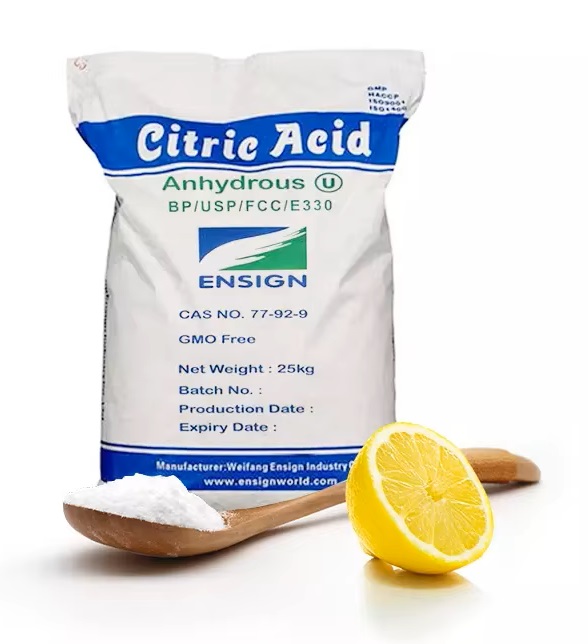
Send EmailCitric Acid, Citric Acid Anhydrate, Citric Acid Anhydrous, E330, 77-92-9
CITRIC ACID (ANHYDROUS & MONOHYDRATE, E330)
PRODUCT IDENTIFIER INFORMATION
| Parameter | Anhydrous | Monohydrate |
|---|---|---|
| Product Name | Citric Acid Anhydrous | Citric Acid Monohydrate |
| Chemical Name (IUPAC) | 2-Hydroxypropane-1,2,3-tricarboxylic acid | 2-Hydroxypropane-1,2,3-tricarboxylic acid monohydrate |
| CAS Number | 77-92-9 | 5949-29-1 |
| EC Number (EINECS) | 201-069-1 | 201-069-1 |
| Food Additive Code | E330 | E330 |
| Molecular Formula | C6H8O7 | C6H8O7·H2O |
| Molecular Weight | 192.12 g/mol | 210.14 g/mol |
SECTION 1: CHEMICAL IDENTITY AND DESCRIPTION
| Parameter | Information |
|---|---|
| Chemical Name (IUPAC) | 2-Hydroxypropane-1,2,3-tricarboxylic acid |
| Synonyms | Citric Acid, Citrate, 2-Hydroxytricarballylic Acid, 3-Carboxy-3-hydroxypentane-1,5-dioic acid, β-Hydroxytricarballylic Acid |
| Foreign Languages | Acide citrique (French), Citronensäure (German), Ácido cítrico (Spanish) |
| Food Additive Code | E330, INS 330 |
| HS Code | 2918.14 |
| Chemical Class | Organic tricarboxylic acid (weak acid) |
| Functional Groups | Three carboxyl groups (-COOH), one tertiary hydroxyl group (-OH) |
| Chirality | Chiral center (commercial product is racemic mixture) |
| Physical State (20°C) | Solid (white crystalline powder or colorless crystals) |
| Odor | Odorless |
| Taste | Sour, acidic (characteristic citrus taste) |
SECTION 2: PHYSICAL AND CHEMICAL PROPERTIES
| Property | Anhydrous (C6H8O7) | Monohydrate (C6H8O7·H2O) |
|---|---|---|
| Appearance | White crystalline powder or colorless crystals | White crystalline powder or colorless crystals |
| Odor | Odorless | Odorless |
| Taste | Sour, acidic | Sour, acidic |
| Molecular Weight | 192.12 g/mol | 210.14 g/mol |
| Density (20°C) | 1.665 g/cm3 | 1.542 g/cm3 |
| Bulk Density (Typical) | 0.8–0.9 g/cm3 | 0.8–0.9 g/cm3 |
| Melting Point | 153–159°C (decomposes) | 100°C (loses crystal water) |
| Decomposition Temperature | 175–310°C | 135–152°C (anhydrous form) |
| Boiling Point | Decomposes (~310°C) | Decomposes |
| pH (0.1% solution, 20°C) | 2.5–2.8 | 2.5–2.8 |
| pH (1% solution, 20°C) | 2.1–2.3 | 2.1–2.3 |
| pH (5% solution, 20°C) | 1.8–2.0 | 1.8–2.0 |
| pH (10% solution, 20°C) | 1.6–1.8 | 1.6–1.8 |
| Refractive Index (nD20) | 1.493–1.509 | - |
| Specific Heat Capacity (20°C) | 1.23–1.26 J/(g·K) | Similar |
| Heat of Combustion | -1,960 kJ/mol | -1,960 kJ/mol (anhydrous basis) |
| Hygroscopicity | Higher | Lower (more stable in humid air) |
| Flash Point | Non-flammable | Non-flammable |
SECTION 3: SOLUBILITY
3.1 Solubility in Water (Anhydrous):
| Temperature (°C) | Solubility (g/100 mL water) |
|---|---|
| 0°C | 59.2 |
| 10°C | 64.3 |
| 20°C | 70.0 |
| 30°C | 75.0 |
| 40°C | 80.0 |
| 50°C | 85.0 |
| 60°C | 90.0 |
| 70°C | 95.0 |
| 80°C | 100.0 |
3.2 Solubility in Other Solvents (20°C):
| Solvent | Solubility (g/100 mL) |
|---|---|
| Ethanol (96%) | 56.0 |
| Methanol | 120.0 (very soluble) |
| Acetone | 50.0 |
| Diethyl ether | 2.2 (slightly soluble) |
| Ethyl acetate | 30.0 |
| Glycerol | 60.0 |
| Isopropanol | 50.0 |
SECTION 4: CHEMICAL PROPERTIES AND REACTIVITY
| Parameter | Information |
|---|---|
| Chemical Character | Weak organic acid (tribasic); excellent chelating agent |
| Acid Dissociation Constants (25°C) | pKa1 = 3.13, pKa2 = 4.76, pKa3 = 6.39 |
| Stability | Stable under normal conditions |
| Decomposition (>175°C) | Aconitic acid, itaconic acid, CO2, H2O, acetone |
| Incompatible Materials | Strong oxidizing agents (nitrates, permanganates, peroxides, chromates), strong bases, metal nitrates, alkali metal carbonates and bicarbonates |
| Neutralization with Bases | Forms citrate salts (sodium citrate, potassium citrate, calcium citrate, etc.) |
| Esterification | Forms citrate esters with alcohols (plasticizers, emulsifiers) |
| Chelation | Forms stable complexes with Ca2+, Fe3+, Cu2+, Mg2+, Al3+ |
| Reaction with Metals | Aqueous solution is mildly corrosive to copper, zinc, aluminum and their alloys |
SECTION 5: CITRIC ACID FORMS COMPARISON
| Property | Anhydrous (77-92-9) | Monohydrate (5949-29-1) |
|---|---|---|
| Molecular Formula | C6H8O7 | C6H8O7·H2O |
| Molecular Weight | 192.12 g/mol | 210.14 g/mol |
| Water Content | ≤ 0.5% | 7.5–9.0% (8.57% theoretical) |
| Crystallization Temperature | >36.5°C | <36.5°C |
| Density (20°C) | 1.665 g/cm3 | 1.542 g/cm3 |
| Melting Point | 153–159°C | 100°C (loses water) |
| Hygroscopicity | Higher | Lower |
| Caking Tendency | Higher | Lower |
| Dissolution Rate | Faster | Slightly slower |
| Typical Applications | Pharmaceuticals, effervescent tablets, chemical synthesis | Food, beverages, detergents, general purpose |
SECTION 6: PRODUCTION METHOD
| Parameter | Description |
|---|---|
| Primary Method | Microbial fermentation (>90% of production) |
| Microorganism | Aspergillus niger (mold) |
| Substrate | Carbohydrate sources (corn syrup, molasses, sugar cane, sugar beet, starch hydrolysate) |
| Fermentation Conditions | 28–32°C, 5–14 days, pH 3–4 |
| Purification | Calcium citrate precipitation → sulfuric acid treatment → crystallization → drying |
| Typical Yield | 70–90% based on sugar consumed |
| Monohydrate Crystallization | Crystallization below 36.5°C → Monohydrate |
| Anhydrous Crystallization | Crystallization above 36.5°C → Anhydrous |
SECTION 7: FUNCTIONAL PROPERTIES AND MECHANISM OF ACTION
| Property | Description |
|---|---|
| Acidity Regulator | Lowers pH by donating H+ ions; buffer capacity in pH range 2.5–5.5 |
| Chelating Agent | Binds metal ions (Ca2+, Fe3+, Cu2+, Mg2+, Al3+) via three carboxyl and one hydroxyl group |
| Antioxidant Synergist | Prevents metal-catalyzed oxidation by chelating metal ions; enhances efficacy of primary antioxidants |
| Preservative | Inhibits microbial growth by creating low pH environment |
| Water Softener | Binds Ca2+ and Mg2+ ions, improving detergent performance |
| Descaling Agent | CaCO3 + H3C6H5O7 → CaC6H5O7- + H2O + CO2↑ |
| Rust Remover | Chelates Fe3+ ions forming soluble iron citrate complexes |
| Exfoliant (AHA) | Alpha hydroxy acid providing mild skin peeling effect in cosmetics |
SECTION 8: PRIMARY APPLICATION AREAS
| Sector | Application | Typical Usage Rate |
|---|---|---|
| Food - Soft Drinks | Acidulant, flavor enhancer, pH regulator | 0.1–0.5% |
| Food - Jams, Jellies, Canned | pH regulator, antioxidant | 0.1–1.0% |
| Food - Confectionery | Acidulant, flavor enhancer | 0.5–2.0% |
| Food - Dairy Products | Emulsifier, pH regulator | 0.1–0.5% |
| Food - Meat Products | Antioxidant synergist, color stabilizer | 0.1–0.5% |
| Food - Oils and Fats | Antioxidant synergist | 0.01–0.1% |
| Pharmaceutical - Effervescent Tablets | Acid component (produces CO2 with bicarbonate) | 10–50% |
| Pharmaceutical - Syrups | pH regulator, flavor enhancer | 0.1–2% |
| Pharmaceutical - Anticoagulant | Calcium chelator in blood bags | 0.01–0.1 M |
| Cosmetic - Skincare | Exfoliant (AHA), pH regulator | 0.5–30% |
| Cosmetic - Shampoo | pH regulator, chelating agent | 0.1–1.0% |
| Cleaning - Descaling | Dissolves calcium carbonate scale | 5–20% |
| Cleaning - Detergents | Chelating agent, water softener | 1–10% |
| Metal Processing - Rust Removal | Fe3+ chelator | 5–15% |
| Water Treatment | Scale inhibitor, corrosion control | 1–50 mg/L |
| Construction | Concrete set retarder | 0.05–0.5% |
SECTION 9: QUALITY SPECIFICATIONS (USP/EP/FCC)
| Parameter | Specification (Anhydrous) | Specification (Monohydrate) | Test Method |
|---|---|---|---|
| Assay (Anhydrous Basis) | 99.5–100.5% | 99.5–100.5% | Titration (NaOH) |
| Water Content | ≤ 0.5–1.0% | 7.5–9.0% | Karl Fischer |
| Solution Appearance | Clear and colorless | Clear and colorless | Visual |
| Solution Clarity | ≤ 5 NTU | ≤ 5 NTU | Nephelometry |
| Solution Color | ≤ 20 APHA | ≤ 20 APHA | Visual |
| Sulfated Ash | ≤ 0.05% | ≤ 0.05% | Ignition (800°C) |
| Chloride (Cl-) | ≤ 50 ppm | ≤ 50 ppm | Turbidimetric |
| Sulfate (SO4 2-) | ≤ 150 ppm | ≤ 150 ppm | Turbidimetric |
| Oxalate (C2O4 2-) | ≤ 100 ppm | ≤ 100 ppm | Colorimetric |
| Calcium (Ca) | ≤ 200 ppm | ≤ 200 ppm | AAS |
| Iron (Fe) | ≤ 50 ppm | ≤ 50 ppm | Colorimetric |
| Heavy Metals (as Pb) | ≤ 10 ppm | ≤ 10 ppm | Colorimetric |
| Arsenic (As) | ≤ 1 ppm | ≤ 1 ppm | AAS |
| Lead (Pb) | ≤ 1 ppm | ≤ 1 ppm | AAS |
| Mercury (Hg) | ≤ 1 ppm | ≤ 1 ppm | AAS |
| Aluminum (Al) | ≤ 0.2 ppm | ≤ 0.2 ppm | AAS |
SECTION 10: TOXICOLOGICAL PROFILE
| Parameter | Value |
|---|---|
| Acute Oral Toxicity (LD50, Rat) | 3,000–5,400 mg/kg (low toxicity) |
| Acute Dermal Toxicity (LD50, Rabbit) | > 2,000 mg/kg |
| Skin Irritation | Mild irritant (concentrated solutions) |
| Eye Irritation | Moderate to severe irritant (H319) |
| Respiratory Irritation | Inhalation of dust may cause mechanical irritation |
| Skin Sensitization | Not sensitizing |
| Carcinogenicity | Not classified |
| Mutagenicity | Negative in in vitro and in vivo tests |
| GRAS Status | Recognized as GRAS by FDA |
| ADI | Not limited (JECFA) |
| NFPA 704 | Health: 1, Flammability: 0, Reactivity: 0 |
SECTION 11: GHS CLASSIFICATION AND LABELING
GHS Classification (compliant with 1272/2008/EC):
| Hazard Class | Category | H-Statement |
|---|---|---|
| Serious Eye Damage/Irritation | Category 2 | H319 |
Signal Word: WARNING
Hazard Pictograms: GHS07 - Exclamation Mark
Hazard Statements (H-Codes): H319 - Causes serious eye irritation
Precautionary Statements (P-Codes): P264, P280, P305+P351+P338, P337+P313
SECTION 12: FIRST AID MEASURES
| Exposure Route | Action to Take |
|---|---|
| Eye Contact | Rinse immediately with water for at least 15 minutes; remove contact lenses; seek medical attention if irritation persists |
| Skin Contact | Wash with soap and water |
| Inhalation | Move to fresh air |
| Ingestion | Rinse mouth; drink water (low toxicity) |
SECTION 13: STORAGE AND SHELF LIFE
| Parameter | Anhydrous | Monohydrate |
|---|---|---|
| Storage Temperature | 5–30°C | 5–30°C |
| Container Requirements | Tightly closed, moisture-proof (HDPE, PP) | Tightly closed, moisture-proof |
| Keep Away From | Moisture, strong oxidizing agents, strong bases | Excessive heat, strong oxidizing agents |
| Shelf Life | 24–36 months | 24–36 months |
| Degradation Indicators | Caking (moisture absorption), yellowing | Efflorescence (crystal water loss) |
SECTION 14: TRANSPORTATION INFORMATION
| Parameter | Information |
|---|---|
| UN Number | Not regulated (non-hazardous) |
| ADR/RID | Not classified as dangerous goods |
| IMDG | Not subject to regulation |
| IATA | Not subject to regulation |
SECTION 15: ENVIRONMENTAL INFORMATION
| Parameter | Value |
|---|---|
| Biodegradability | Readily biodegradable (OECD 301 – 90–100% in 28 days) |
| Aquatic Toxicity (Fish, LC50, 96h) | 1,000–3,000 mg/L (low toxicity) |
| Daphnia magna (EC50, 48h) | 500–2,000 mg/L |
| Bioaccumulation | Very low (log P = -1.64) |
| WGK Germany | 1 (low hazard to water) |
SECTION 16: CITRATE SALTS REFERENCE TABLE
| Salt | Formula | Primary Application |
|---|---|---|
| Sodium Citrate (Trisodium) | Na3C6H5O7 | Buffer, emulsifier, anticoagulant |
| Potassium Citrate | K3C6H5O7 | Urinary alkalinizer, buffer |
| Calcium Citrate | Ca3(C6H5O7)2 | Calcium supplement |
| Magnesium Citrate | Mg3(C6H5O7)2 | Magnesium supplement, laxative |
| Triethyl Citrate (TEC) | (C2H5)3C6H5O7 | Plasticizer |
| Tributyl Citrate (TBC) | (C4H9)3C6H5O7 | Plasticizer |
| Acetyl Tributyl Citrate (ATBC) | Acetyl-(C4H9)3C6H5O7 | Phthalate-free plasticizer |
SECTION 17: SUMMARY TABLE
| Parameter | Anhydrous | Monohydrate |
|---|---|---|
| CAS Number | 77-92-9 | 5949-29-1 |
| Molecular Formula | C6H8O7 | C6H8O7·H2O |
| Molecular Weight | 192.12 g/mol | 210.14 g/mol |
| Appearance | White crystalline powder | White crystalline powder |
| Water Content | ≤ 0.5% | 7.5–9.0% |
| pH (1% solution) | 2.1–2.3 | 2.1–2.3 |
| Solubility in Water (20°C) | 70 g/100 mL | 70 g/100 mL (anhydrous basis) |
| E Number | E330 | E330 |
| Primary Applications | Pharmaceuticals, effervescent, synthesis | Food, beverages, detergents, cleaning |
| GHS Signal Word | Warning | Warning |
| Shelf Life | 24–36 months | 24–36 months |
SECTION 18: ORGANIC ACIDS COMPARISON TABLE
| Property | Citric Acid (E330) | Malic Acid (E296) | Tartaric Acid (E334) | Lactic Acid (E270) |
|---|---|---|---|---|
| CAS Number | 77-92-9 / 5949-29-1 | 6915-15-7 | 87-69-4 | 50-21-5 |
| Molecular Formula | C6H8O7 | C4H6O5 | C4H6O6 | C3H6O3 |
| Acidity (pKa1) | 3.13 | 3.40 | 3.04 | 3.86 |
| Taste Profile | Sharp sour, citrus | Smooth sour, apple | Hard sour, grape | Mild sour, milk |
| Chelating Strength | Very High | Medium | High | Low |
| Hygroscopicity | Moderate (Anh.) / Low (Mono.) | Low | Low | Very High (liquid) |
| Primary Use | Food, pharma, cleaning | Food, confectionery | Food, winemaking | Food, cosmetics, bioplastics |
SECTION 19: FREQUENTLY ASKED QUESTIONS
Q1: What is the difference between citric acid anhydrous and monohydrate?
A1: Anhydrous citric acid contains no crystal water; monohydrate contains one molecule of water (8.57% water). Monohydrate is more stable in humid conditions (less caking), while anhydrous dissolves faster and has higher concentration per weight.
Q2: Is citric acid safe to eat?
A2: Yes, food-grade citric acid (E330) is designated as GRAS (Generally Recognized As Safe) by FDA and EFSA. It occurs naturally in citrus fruits and is used as a food additive in countless products.
Q3: Is citric acid vegan?
A3: Yes, commercially produced citric acid is made through fermentation of carbohydrates with Aspergillus niger (mold). It is vegan and vegetarian-friendly.
Q4: Does citric acid remove rust?
A4: Yes, citric acid chelates Fe3+ ions forming soluble iron citrate complexes. It is effective for removing rust from metal surfaces (5–15% solution recommended).
Q5: Why does citric acid clean coffee makers?
A5: Citric acid dissolves calcium carbonate scale (limescale) that accumulates in coffee makers: CaCO3 + H3C6H5O7 → CaC6H5O7- + H2O + CO2↑. The soluble calcium citrate complex is then rinsed away.
Q6: Is citric acid the same as vitamin C (ascorbic acid)?
A6: No. Citric acid (C6H8O7) is a different compound from ascorbic acid (C6H8O6, vitamin C). Both are organic acids but have different chemical structures and biological functions.
SECTION 20: CRITICAL WARNINGS AND BEST PRACTICES
CRITICAL SAFETY WARNINGS:
-
Eye Irritation: Causes serious eye irritation. Wear protective goggles.
-
Dust Explosion Risk: Fine dust may form explosive mixtures with air. Prevent dust accumulation.
-
Incompatibility with Metals: Aqueous solution is mildly corrosive to copper, zinc, aluminum and their alloys.
-
Reaction with Strong Bases: Exothermic neutralization; heat is released.
-
Anhydrous Hygroscopicity: Anhydrous form absorbs moisture; store in tightly closed containers.
BEST PRACTICE RECOMMENDATIONS:
-
Moisture Control: For anhydrous, maintain relative humidity below 50%; monohydrate is more tolerant.
-
Stainless Steel Equipment: Use 316L stainless steel or HDPE equipment.
-
Solution Preparation: Add acid to water (never the reverse).
-
Storage: Store below 25°C, protected from direct sunlight.
-
Quality Verification: Use products conforming to USP/EP/FCC standards.
LEGAL DISCLAIMER:
The information provided in this document is presented in good faith based on our current knowledge and experience; however, since all usage conditions are beyond our control, it does not constitute a binding specification or warranty. This Technical Data Sheet is for informational purposes only. Users are obligated to test the suitability for their own applications. For complete safety, storage, handling, transportation, disposal, and regulatory compliance information, refer to the official Safety Data Sheet (SDS/MSDS) provided by the manufacturer/supplier.