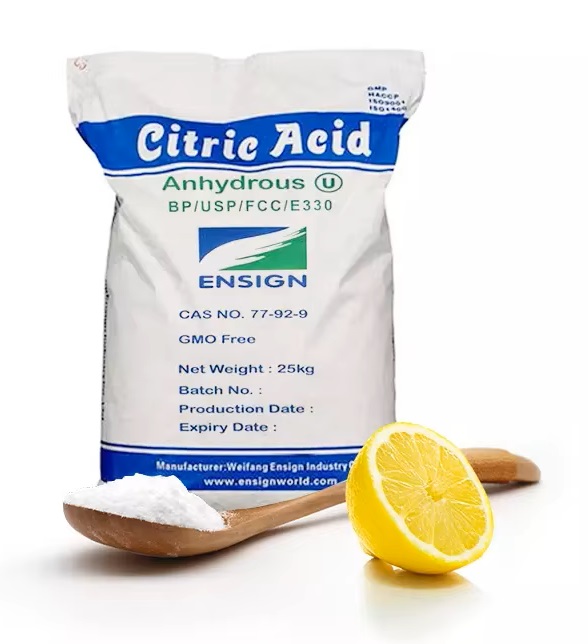
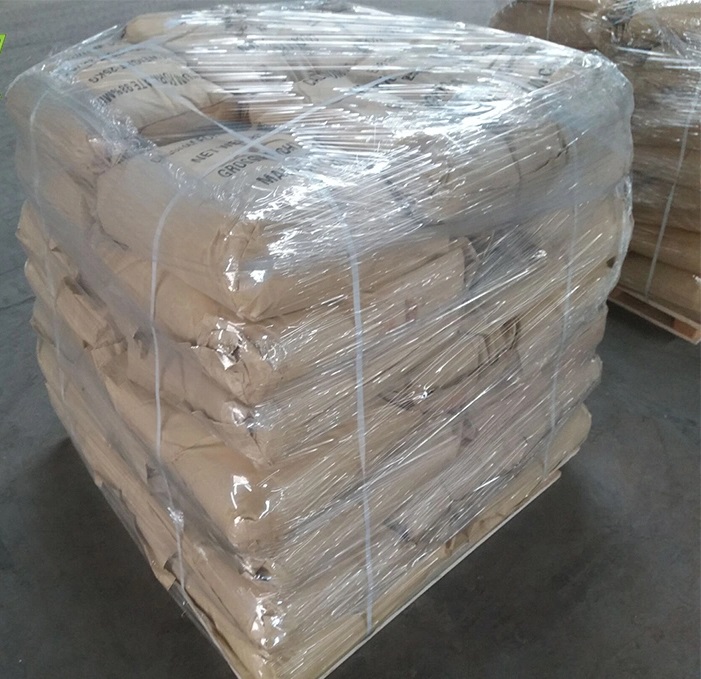
We unleash your business potential by maximize the business innovation.
Send EmailCitric Acid, Citric Acid Anhydrate, Citric Acid Anhydrous, Citric Acid Monohydrate, 77-92-9, E330, 5949-29-1
CITRIC ACID (ANHYDROUS & MONOHYDRATE, E330)
1. Chemical Identity and Material Classification
-
Chemical Name: Citric Acid, 2-Hydroxypropane-1,2,3-tricarboxylic acid
-
Synonyms: Anhydrous Citric Acid, Citrate, 2-Hydroxytricarballylic Acid, 3-Carboxy-3-hydroxypentane-1,5-dioic acid, β-Hydroxytricarballylic Acid
-
CAS Numbers:
-
Anhydrous: 77-92-9
-
Monohydrate: 5949-29-1
-
-
EC Number (EINECS): 201-069-1
-
Molecular Formulas:
-
Anhydrous: C₆H₈O₇
-
Monohydrate: C₆H₈O₇·H₂O
-
-
Molecular Weights:
-
Anhydrous: 192.12 g/mol
-
Monohydrate: 210.14 g/mol
-
-
E Number: E330 (food additive)
-
Chemical Class: Organic tricarboxylic acid (weak acid)
-
HS Code: 2918.14
-
UN Number: Not regulated (non-hazardous for transport)
2. Physical Properties
2.1 General Physical Properties (Anhydrous)
| Property | Value |
|---|---|
| Appearance | White, odorless, crystalline powder or colorless crystals |
| Physical state (20°C) | Solid (crystalline) |
| Odor | Odorless |
| Taste | Sour, acidic (characteristic citrus taste) |
| Density (20°C) | 1.665 g/cm³ |
| Bulk density (typical) | 0.8–0.9 g/cm³ |
| Melting point | 153–159°C (decomposes) |
| Boiling point | Decomposes (≈310°C) |
| Flash point | Not flammable (non-combustible) |
| Vapor pressure | Negligible |
| Refractive index (nD20) | 1.493–1.509 |
| Particle size | Variable (10–100 μm typical for fine powder) |
2.2 General Physical Properties (Monohydrate)
| Property | Value |
|---|---|
| Appearance | White, odorless, crystalline powder or colorless crystals |
| Physical state (20°C) | Solid (crystalline) |
| Odor | Odorless |
| Taste | Sour, acidic |
| Density (20°C) | 1.542 g/cm³ |
| Bulk density (typical) | 0.8–0.9 g/cm³ |
| Melting point | 100°C (loses water of crystallization) |
| Decomposition temperature | ≈135–152°C (anhydrous form) |
| Flash point | Not flammable |
| Vapor pressure | Negligible |
| Hygroscopicity | Slightly hygroscopic (less than anhydrous in normal conditions) |
2.3 Thermal Properties (Both Forms)
| Parameter | Anhydrous | Monohydrate |
|---|---|---|
| Loss on drying (105°C, 1 hour) | ≤ 0.5% | 7.5–9.0% (water of crystallization) |
| Dehydration temperature | N/A | ≈100°C |
| Specific heat capacity (20°C) | 1.23–1.26 J/(g·K) | Similar |
| Heat of combustion | -1,960 kJ/mol | -1,960 kJ/mol (calculated on anhydrous basis) |
2.4 Particle Size Specifications (Typical)
| Sieve | Anhydrous | Monohydrate |
|---|---|---|
| > 500 μm | ≤ 5% | ≤ 5% |
| < 63 μm | ≤ 10% | ≤ 10% |
3. Solubility
3.1 Solubility in Water (Anhydrous)
| Temperature (°C) | Solubility (g/100 mL water) |
|---|---|
| 0°C | 59.2 |
| 10°C | 64.3 |
| 20°C | 70.0 |
| 30°C | 75.0 |
| 40°C | 80.0 |
| 50°C | 85.0 |
| 60°C | 90.0 |
| 70°C | 95.0 |
| 80°C | 100.0 |
3.2 Solubility in Other Solvents (20°C)
| Solvent | Solubility (g/100 mL) |
|---|---|
| Ethanol (96%) | 56.0 |
| Methanol | 120.0 (very soluble) |
| Acetone | 50.0 |
| Diethyl ether | 2.2 (sparingly soluble) |
| Ethyl acetate | 30.0 |
| Glycerol | 60.0 |
| Isopropanol | 50.0 |
3.3 Aqueous Solution Properties
| Parameter | Value |
|---|---|
| pH (0.1% solution, 20°C) | 2.5–2.8 |
| pH (1% solution, 20°C) | 2.1–2.3 |
| pH (5% solution, 20°C) | 1.8–2.0 |
| pH (10% solution, 20°C) | 1.6–1.8 |
| Heat of solution (in water) | Endothermic (cools water) |
4. Chemical Properties
4.1 Molecular Structure
Structure: HOOC–CH₂–C(OH)(COOH)–CH₂–COOH
-
Tricarboxylic acid (three carboxyl groups – COOH)
-
One tertiary hydroxyl group (–OH)
-
Weak organic acid (tribasic)
-
Chiral center (optically active; commercial product is racemic mixture)
4.2 Acid Dissociation Constants (pKa, 25°C)
| Dissociation Step | pKa | Equation |
|---|---|---|
| First dissociation | 3.13 | H₃C₆H₅O₇ ⇌ H₂C₆H₅O₇⁻ + H⁺ |
| Second dissociation | 4.76 | H₂C₆H₅O₇⁻ ⇌ HC₆H₅O₇²⁻ + H⁺ |
| Third dissociation | 6.39 | HC₆H₅O₇²⁻ ⇌ C₆H₅O₇³⁻ + H⁺ |
4.3 Chelation Properties
Citric acid is an excellent chelating agent (sequestrant), forming stable complexes with metal ions:
| Metal Ion | Complex Stability | Application |
|---|---|---|
| Ca²⁺ (Calcium) | High (water softening) | Scale prevention, detergents |
| Mg²⁺ (Magnesium) | Moderate | Water softening |
| Fe³⁺ (Iron) | Very high | Rust removal, antioxidant synergist |
| Cu²⁺ (Copper) | High | Metal cleaning |
| Al³⁺ (Aluminum) | High | Metal cleaning |
| Pb²⁺ (Lead) | Moderate | Heavy metal sequestration |
4.4 Chemical Reactivity
| Reaction | Description |
|---|---|
| Neutralization with bases | Forms citrate salts (sodium citrate, potassium citrate, calcium citrate, etc.) |
| Esterification | With alcohols → citrate esters (plasticizers, emulsifiers) |
| Decarboxylation | Heating >175°C → aconitic acid, itaconic acid |
| Oxidation | With strong oxidizers → CO₂ + H₂O |
| Chelation | Forms stable complexes with multivalent metal ions |
4.5 Thermal Decomposition
| Temperature | Products |
|---|---|
| 100°C (monohydrate) | Loss of water → anhydrous citric acid |
| 153–159°C | Melting (anhydrous) |
| 175–310°C | Decomposition → aconitic acid, itaconic acid, CO₂, H₂O, acetone |
| >310°C | Complete decomposition → CO₂ + H₂O |
4.6 Incompatibilities
-
Strong oxidizing agents (nitrates, permanganates, peroxides, chromates)
-
Strong bases (neutralization – exothermic)
-
Metal nitrates (potential for explosive mixtures)
-
Alkali metal carbonates and bicarbonates (CO₂ evolution)
5. Quality Specifications (Food / Pharmaceutical Grade)
5.1 Anhydrous Citric Acid (Ph. Eur., BP, USP, FCC)
| Parameter | Specification | Test Method |
|---|---|---|
| Assay (anhydrous basis) | 99.5–100.5% | Titration (NaOH) |
| Identification | Passes tests | Chemical / IR |
| Appearance of solution | Clear and colorless | Visual |
| Clarity of solution | Clear (≤ 5 NTU) | Nephelometry |
| Color of solution | ≤ 20 APHA | Visual |
| Water content (K. Fischer) | ≤ 0.5–1.0% | Karl Fischer |
| Readily carbonizable substances | Passes test | Color comparison |
| Sulfated ash | ≤ 0.05% | Ignition (800°C) |
| Chlorides (Cl) | ≤ 50 ppm | Turbidimetric |
| Sulfates (SO₄) | ≤ 150 ppm | Turbidimetric |
| Oxalates (C₂O₄) | ≤ 100 ppm | Colorimetric |
| Calcium (Ca) | ≤ 200 ppm | Atomic absorption |
| Iron (Fe) | ≤ 50 ppm | Colorimetric |
| Heavy metals (as Pb) | ≤ 10 ppm | Colorimetric |
| Arsenic (As) | ≤ 1 ppm | Atomic absorption |
| Lead (Pb) | ≤ 1 ppm | Atomic absorption |
| Mercury (Hg) | ≤ 1 ppm | Atomic absorption |
| Aluminum (Al) | ≤ 0.2 ppm (pharma) | Atomic absorption |
| Bacterial endotoxins | ≤ 5 IU/g (pharma) | LAL test |
5.2 Monohydrate Citric Acid (Ph. Eur., BP, USP, FCC)
| Parameter | Specification |
|---|---|
| Assay (anhydrous basis) | 99.5–100.5% |
| Water content (K. Fischer) | 7.5–9.0% (theoretical: 8.57%) |
| All other tests | Same as anhydrous |
6. Production Methods
6.1 Fermentation Process (Industrial Standard – >90% of production)
Microorganism: Aspergillus niger (mold)
Substrate: Carbohydrate sources (corn syrup, molasses, beet molasses, cane molasses, starch hydrolysate)
Process:
-
Substrate is sterilized and inoculated with Aspergillus niger spores
-
Fermentation at 28–32°C for 5–14 days
-
pH maintained at 3–4 (optimizes citric acid production, inhibits other acids)
-
Citric acid precipitates as calcium citrate
-
Calcium citrate treated with sulfuric acid → citric acid + calcium sulfate (gypsum)
-
Purification → crystallization → drying
Typical yield: 70–90% (based on sugar consumed)
6.2 Extraction from Citrus Fruits (Minor – less than 5% of production)
-
Lemon, lime, orange, grapefruit juices contain 5–8% citric acid
-
Extraction via lime precipitation → sulfuric acid treatment
6.3 Anhydrous vs. Monohydrate Crystallization
| Condition | Product |
|---|---|
| Crystallization below 36.5°C | Monohydrate (C₆H₈O₇·H₂O) |
| Crystallization above 36.5°C | Anhydrous (C₆H₈O₇) |
7. Mechanism of Action
7.1 Acidity Regulation (pH Control)
-
Donates H⁺ ions in solution → lowers pH
-
Weak acid (pKa 3.13) provides buffer capacity in acidic range (pH 2.5–5.5)
7.2 Chelation (Sequestration)
Citric acid binds metal ions via its three carboxyl groups and one hydroxyl group:
Ca²⁺ + C₆H₅O₇³⁻ → [Ca(C₆H₅O₇)]⁻ (soluble complex)
Effect: Prevents metal ion precipitation, scale formation, and metal-catalyzed oxidation.
7.3 Antioxidant Synergist
-
Chelates metal ions (Fe, Cu) that catalyze oxidation reactions
-
Enhances effectiveness of primary antioxidants (e.g., BHA, BHT, tocopherols)
8. Industrial Applications
8.1 Food and Beverage Industry (Largest Application – ~50% of consumption)
| Application | Function | Typical Concentration |
|---|---|---|
| Soft drinks (cola, lemonade, fruit drinks) | Acidulant, flavor enhancer, pH adjuster | 0.1–0.5% |
| Jams, jellies, fruit preserves | pH adjuster (pectin setting), antioxidant | 0.1–1.0% |
| Canned fruits and vegetables | pH adjuster (prevents browning), chelator | 0.1–0.5% |
| Confectionery (candies, gums) | Acidulant, flavor enhancer | 0.5–2.0% |
| Wine and juice | Acidulant, pH adjuster, stabilizer | 0.1–0.5% |
| Dairy products (cheese, ice cream) | Emulsifier, pH adjuster | 0.1–0.5% |
| Meat products (processed meats) | Antioxidant synergist, color stabilizer | 0.1–0.5% |
| Oil and fats | Antioxidant synergist | 0.01–0.1% |
| Baking powders | Acid component (with bicarbonate) | 10–30% of baking powder |
Food additive status: E330 – GRAS (FDA), permitted worldwide
8.2 Pharmaceutical Applications
| Application | Function | Typical Concentration |
|---|---|---|
| Effervescent tablets (vitamins, analgesics) | Acid component (reacts with bicarbonate → CO₂) | 10–50% |
| Syrups and liquids | pH adjuster, flavor enhancer | 0.1–2% |
| Anticoagulant (blood collection tubes) | Chelates calcium (prevents clotting) | 0.01–0.1 M |
| Tablet excipient (granulation aid) | Binder, disintegrant | 1–10% |
| Iron supplements | Antioxidant, stabilizer | 0.1–1.0% |
| Antacid formulations | pH adjuster | 0.5–5% |
8.3 Cosmetics and Personal Care
| Application | Function | Typical Concentration |
|---|---|---|
| Skin care (exfoliants, peels) | Exfoliant, pH adjuster (AHAs) | 5–30% (peels); 0.5–2% (daily products) |
| Shampoos and conditioners | pH adjuster, chelator | 0.1–1.0% |
| Soaps (liquid and bar) | Chelator (prevents soap scum), pH adjuster | 0.1–1.0% |
| Hair dyes and bleaches | pH adjuster | 1–5% |
| Bath bombs | Acid component (with bicarbonate) | 10–30% |
| Hand sanitizers | pH adjuster, mild preservative booster | 0.1–1.0% |
8.4 Industrial Cleaning and Detergents
| Application | Function | Typical Concentration |
|---|---|---|
| Descaling agents (coffee makers, kettles, dishwashers) | Dissolves calcium carbonate scale | 5–20% |
| Laundry detergents | Chelator, water softener, builder | 1–10% |
| Dishwashing detergents | Chelator, water softener, glass protectant | 1–5% |
| Metal cleaners (rust removal) | Chelates Fe³⁺ → soluble complex | 5–15% |
| Concrete cleaners | Dissolves efflorescence (calcium salts) | 5–20% |
| Dairy and brewery cleaning (CIP) | Chelator, scale remover | 0.5–2% |
8.5 Water Treatment
| Application | Function | Typical Dosage |
|---|---|---|
| Boiler water treatment | Chelator (prevents scale) | 1–50 mg/L |
| Cooling water treatment | Scale inhibitor, corrosion control | 1–20 mg/L |
| Heavy metal removal | Chelation → soluble complexes | Variable |
8.6 Chemical Industry
| Application | Product |
|---|---|
| Citrate salts production | Sodium citrate, potassium citrate, calcium citrate, ferric citrate, etc. |
| Citrate esters (plasticizers) | Tributyl citrate (TBC), triethyl citrate (TEC), acetyl tributyl citrate (ATBC) |
| Biodegradable polymers | Polycitrate polymers |
| Fine chemicals synthesis | Intermediate for organic synthesis |
8.7 Agriculture
| Application | Function |
|---|---|
| Fertilizer chelator | Chelates micronutrients (Fe, Zn, Mn, Cu) for plant uptake |
| Soil pH amendment | Lowers soil pH (for acid-loving plants) |
9. Toxicology and Safety
9.1 Acute Toxicity
| Parameter | Value | Classification |
|---|---|---|
| Oral LD₅₀ (rat) | 3,000–5,400 mg/kg (low toxicity) | Not classified |
| Dermal LD₅₀ (rabbit) | >2,000 mg/kg | Not classified |
| Inhalation LC₅₀ | Not determined (dust may be irritating) | Not classified |
| Skin irritation | Mild irritant (concentrated solutions) | Not classified |
| Eye irritation | Moderate to severe irritant (concentrated solutions) | Eye Irrit. 2 |
| Skin sensitization | Non-sensitizer | Not classified |
9.2 GHS Classification (Concentrated solid/dust)
| Classification | Category |
|---|---|
| Signal word | Warning |
| Hazard statements | H319 – Causes serious eye irritation |
| Precautionary statements | P264, P280, P305+P351+P338, P337+P313 |
9.3 NFPA Rating
| Health | Flammability | Reactivity |
|---|---|---|
| 1 | 0 | 0 |
9.4 Occupational Exposure Limits
| Authority | Limit | Type |
|---|---|---|
| OSHA PEL | 15 mg/m³ (total dust), 5 mg/m³ (respirable) | TWA (8 hour) |
| ACGIH TLV | Not established | — |
10. Safety Precautions and Personal Protective Equipment (PPE)
-
Hazards:
-
Low acute toxicity
-
Dust may cause eye and respiratory tract irritation
-
Slightly combustible (dust explosion possible at high concentrations)
-
Hygroscopic (absorbs moisture – monohydrate less so)
-
-
PPE (recommended – industrial handling):
-
Safety glasses (EN 166) or chemical goggles – mandatory
-
Dust mask (FFP2/N95) – for dusty operations
-
Chemical-resistant gloves (nitrile – for concentrated solutions)
-
Protective clothing (dust protection)
-
-
Engineering controls:
-
Local exhaust ventilation (LEV) for dust control
-
Eyewash stations
-
-
First aid:
-
Eye contact: Rinse immediately with water for at least 15 minutes; remove contact lenses; seek medical attention if irritation persists
-
Skin contact: Wash with soap and water
-
Inhalation: Move to fresh air
-
Ingestion: Rinse mouth; drink water (low toxicity)
-
11. Environmental Fate
| Parameter | Value |
|---|---|
| Biodegradability | Readily biodegradable (OECD 301) – 90–100% in 28 days |
| Aquatic toxicity (fish, LC₅₀, 96 hours) | 1,000–3,000 mg/L (low toxicity) |
| Daphnia magna (EC₅₀, 48 hours) | 500–2,000 mg/L |
| Algal toxicity (EC₅₀, 72 hours) | 100–500 mg/L |
| Bioaccumulation | Very low (log P = -1.64) |
| Mobility in soil | High (high water solubility) |
| WGK Germany | 1 (low hazard to water) |
| Disposal method | Incineration or landfill (non-hazardous waste) |
12. Storage and Shelf Life
12.1 Storage Conditions
| Parameter | Requirement |
|---|---|
| Storage temperature | 5–30°C (room temperature) |
| Container | Keep tightly closed in original container (HDPE, PP, paper bags with liner) |
| Protect from | Moisture (hygroscopic – anhydrous more than monohydrate), strong oxidizing agents |
| Environment | Cool, dry, well-ventilated area |
| Incompatibles | Strong oxidizing agents, strong bases, alkali metal carbonates/bicarbonates (CO₂ evolution) |
12.2 Shelf Life
| Parameter | Anhydrous | Monohydrate |
|---|---|---|
| Shelf life (proper storage) | 24–36 months | 24–36 months |
| Degradation indicators | Caking (moisture absorption), discoloration (yellowing) | Efflorescence (loss of water of crystallization – white powder on surface) |
13. Transport Information
| Regulation | Classification |
|---|---|
| UN Number | Not regulated (non-hazardous) |
| ADR/RID | Not classified as dangerous goods |
| IMDG | Not regulated |
| IATA | Not regulated |
| Proper shipping name | Citric acid (non-hazardous) |
14. Synonyms and Common Names
-
English: Citric Acid, Anhydrous Citric Acid, Citric Acid Monohydrate, 2-Hydroxypropane-1,2,3-tricarboxylic acid, β-Hydroxytricarballylic Acid, 3-Carboxy-3-hydroxypentane-1,5-dioic acid
-
Trade names: Citric Acid (anhydrous), Citric Acid Monohydrate (crystallized), 99% Citric Acid
-
Other languages:
-
Turkish: Sitrik Asit, Sitrik Asit Anhidrat, Sitrik Asit Monohidrat
-
French: Acide citrique
-
German: Citronensäure
-
Spanish: Ácido cítrico
-
15. Regulatory Status
| Regulation | Status |
|---|---|
| REACH (EU) | Registered (EC 201-069-1) |
| TSCA (US) | Listed |
| FDA | GRAS – food additive (E330) – 21 CFR § 184.1033 |
| EFSA | Permitted as food additive (E330) |
| USP / Ph. Eur. / BP / FCC | Monographed for pharmaceutical and food use |
| EPA | Not restricted |
16. Why Choose Citric Acid?
| Advantage | Description |
|---|---|
| Natural origin | Produced via fermentation from renewable carbohydrate sources (corn, molasses) |
| Non-toxic and safe | GRAS status; widely used in food, pharmaceutical, and cosmetic products |
| Biodegradable | Readily biodegradable – environmentally friendly |
| Excellent chelating agent | Forms stable complexes with Ca²⁺, Fe³⁺, Cu²⁺, Mg²⁺ – effective water softener, scale remover |
| Versatile acidulant | Provides sour taste, pH control, buffering capacity |
| Antioxidant synergist | Chelates metal ions that catalyze oxidation – extends shelf life of fats and oils |
| Easily soluble | High water solubility (70 g/100 mL at 20°C) |
| Two forms available | Anhydrous (faster dissolution) and monohydrate (larger crystals, less caking) |
| Pharmaceutical applications | Effervescent tablets, anticoagulant, excipient |
| Cleaning applications | Excellent descaling agent (removes calcium carbonate scale) |
Limitations:
-
Hygroscopic (anhydrous more than monohydrate) – absorbs moisture; requires airtight storage
-
Decomposes at high temperatures (>175°C) – limited thermal stability
-
May cause eye irritation (concentrated dust/solutions) – requires PPE (goggles)
-
Slightly corrosive to metals in concentrated solutions (due to acidity)
17. Comparison: Anhydrous vs. Monohydrate Citric Acid
| Property | Anhydrous (C₆H₈O₇) | Monohydrate (C₆H₈O₇·H₂O) |
|---|---|---|
| CAS Number | 77-92-9 | 5949-29-1 |
| Molecular weight | 192.12 g/mol | 210.14 g/mol |
| Water content | ≤ 0.5% | 7.5–9.0% (8.57% theoretical) |
| Crystallization temperature | >36.5°C | <36.5°C |
| Density (20°C) | 1.665 g/cm³ | 1.542 g/cm³ |
| Melting point | 153–159°C | 100°C (loses water) |
| Hygroscopicity | Higher | Lower (more stable in humid air) |
| Caking tendency | Higher | Lower |
| Dissolution rate | Faster | Slightly slower |
| Typical applications | Pharmaceuticals, effervescent tablets, chemical synthesis | Food, beverages, detergents, general purpose |
| Cost | Slightly higher (less water weight) | Slightly lower (contains water weight) |
18. Citrate Salts Derived from Citric Acid
| Salt | Formula | Primary Application |
|---|---|---|
| Sodium citrate (trisodium citrate) | Na₃C₆H₅O₇ | Buffer, emulsifier, anticoagulant |
| Potassium citrate | K₃C₆H₅O₇ | Urine alkalinizer, buffer |
| Calcium citrate | Ca₃(C₆H₅O₇)₂ | Calcium supplement |
| Ferric citrate | FeC₆H₅O₇ | Iron supplement, nutrient |
| Zinc citrate | Zn₃(C₆H₅O₇)₂ | Zinc supplement |
| Magnesium citrate | Mg₃(C₆H₅O₇)₂ | Magnesium supplement, laxative |
| Triethyl citrate (TEC) | (C₂H₅)₃C₆H₅O₇ | Plasticizer |
| Tributyl citrate (TBC) | (C₄H₉)₃C₆H₅O₇ | Plasticizer |
| Acetyl tributyl citrate (ATBC) | Acetyl-(C₄H₉)₃C₆H₅O₇ | Plasticizer (non-phthalate) |
19. Frequently Asked Questions (FAQs)
Q1: What is the difference between citric acid anhydrous and monohydrate?
A1: Anhydrous citric acid contains no water of crystallization; monohydrate contains one water molecule (8.57% water). Monohydrate is more stable in humid conditions (less caking), while anhydrous dissolves faster and has higher concentration per weight.
Q2: Is citric acid safe to eat?
A2: Yes, food-grade citric acid (E330) is GRAS (Generally Recognized as Safe) by FDA and EFSA. It is naturally present in citrus fruits and used as a food additive in countless products.
Q3: Is citric acid vegan?
A3: Yes, commercially produced citric acid is made via fermentation of carbohydrates by Aspergillus niger (fungus). It is vegan and vegetarian friendly.
Q4: Can citric acid remove rust?
A4: Yes, citric acid chelates Fe³⁺ ions, forming soluble iron citrate complexes. It is effective for removing rust from metal surfaces (5–15% solution recommended).
Q5: Why does citric acid clean coffee makers?
A5: Citric acid dissolves calcium carbonate scale (limescale) that accumulates in coffee makers: CaCO₃ + H₃C₆H₅O₇ → CaC₆H₅O₇⁻ + H₂O + CO₂↑. The soluble calcium citrate complex is then rinsed away.
Q6: Is citric acid the same as vitamin C (ascorbic acid)?
A6: No. Citric acid (C₆H₈O₇) is a different compound from ascorbic acid (C₆H₈O₆, vitamin C). Both are organic acids, but they have different chemical structures and biological functions.
20. Summary Table – Key Specifications at a Glance
| Parameter | Anhydrous | Monohydrate |
|---|---|---|
| CAS Number | 77-92-9 | 5949-29-1 |
| Molecular Formula | C₆H₈O₇ | C₆H₈O₇·H₂O |
| Molecular Weight | 192.12 g/mol | 210.14 g/mol |
| Appearance | White crystalline powder | White crystalline powder |
| Density (20°C) | 1.665 g/cm³ | 1.542 g/cm³ |
| Melting Point | 153–159°C | 100°C (dehydrates) |
| pH (1% solution) | 2.1–2.3 | 2.1–2.3 |
| Water Solubility (20°C) | 70 g/100 mL | 70 g/100 mL (anhydrous basis) |
| Water Content | ≤ 0.5% | 7.5–9.0% |
| Assay (anhydrous basis) | 99.5–100.5% | 99.5–100.5% |
| E Number | E330 | E330 |
| Primary Applications | Pharmaceuticals, effervescent tablets, chemical synthesis | Food, beverages, detergents, cleaning, water treatment |
| GHS Signal Word | Warning | Warning |
| Hazard Statements | H319 (Causes serious eye irritation) | H319 |
| Biodegradability | Readily biodegradable | Readily biodegradable |
| Shelf Life | 24–36 months | 24–36 months |
This TDS is prepared in compliance with ISO 11014-1 format and is intended for food technologists, pharmaceutical scientists, cosmetic formulators, chemical engineers, cleaning product manufacturers, and procurement professionals. Certificates of Analysis (CoA), Safety Data Sheets (SDS), and sample validation reports are available upon request.