We unleash your business potential by maximize the business innovation.
Send EmailAmmonium Bifluoride, Ammonium Hydrogen Fluoride, Ammonium Hydrogen Difluoride, Etching Powder, 1341-49-7
Ammonium Bifluoride (NH₄HF₂)
1. Chemical Identity
-
Name: Ammonium Bifluoride (also called Ammonium Hydrogen Fluoride)
-
Formula: NH₄HF₂
-
Molecular Weight: 57.04 g/mol
-
CAS Number: 1341-49-7
-
Structure: Contains an ammonium cation (NH₄⁺) and a bifluoride anion (HF₂⁻). The HF₂⁻ ion is stabilized by a strong hydrogen bond, giving the compound high reactivity.
2. Physical and Chemical Properties
-
Appearance: White, odorless crystalline solid (orthorhombic, tetragonal, or rhombic forms).
-
Density: 1.50 g/cm³
-
Melting Point: 125.6 °C
-
Boiling Point: 240 °C
-
Solubility: Highly soluble in water and ethanol; poorly soluble in ether.
-
pH (5% solution): ~3.5 (acidic).
-
Reactivity: Strongly corrosive, reacts violently with bases, and in humid conditions corrodes glass, cement, and metals.
3. Production
-
Main route: Reaction of hydrofluoric acid (HF) with ammonia (NH₃).
-
Alternative methods:
-
Dehydration of ammonium fluoride solutions.
-
Reaction involving sulfuric acid.
-
Reductive ammonation in glycol media.
-
4. Industrial Applications
-
Glass industry: Etching and smoothing of silica-based glass surfaces.
-
Electronics: Surface treatment and cleaning chemicals.
-
Metallurgy:
-
Steel: Rust removal, surface preparation.
-
Aluminum: Polishing and etching.
-
-
Petroleum & Gas:
-
Acidizing wells to dissolve silicates and sandstone.
-
Enhancing productivity by generating HF in situ.
-
-
Energy plants: Cleaning calcium-silica deposits in cooling towers.
-
Food industry: Sterilization of milk and certain food-processing equipment.
-
Ceramics & coatings: Component in bright dipping baths and surface finishing agents.
-
Cleaning products: Degreasing and heavy-duty detergents.
5. Safety and Health Hazards
-
Corrosive: Causes severe burns on skin and eyes.
-
Inhalation risk: Dust and vapors irritate respiratory tract.
-
Toxicity: Can lead to hypocalcemia, cardiac arrhythmias, and respiratory distress.
-
First aid measures:
-
Skin → rinse with water, apply calcium gluconate gel.
-
Eyes → flush with water for at least 15 minutes.
-
Inhalation → move to fresh air, provide oxygen if needed.
-
Ingestion → seek immediate medical attention (do not induce vomiting).
-
6. Environmental Impact
-
Water pollution: Releases fluoride ions, toxic to aquatic life.
-
Soil contamination: Alters pH, reduces fertility, harms microorganisms.
-
Ecosystem risk: Hydrofluoric acid formation damages plants and animals.
7. Packaging and Trade
-
Packaging: Resistant plastic bottles or drums (never steel, nickel, or aluminum).
-
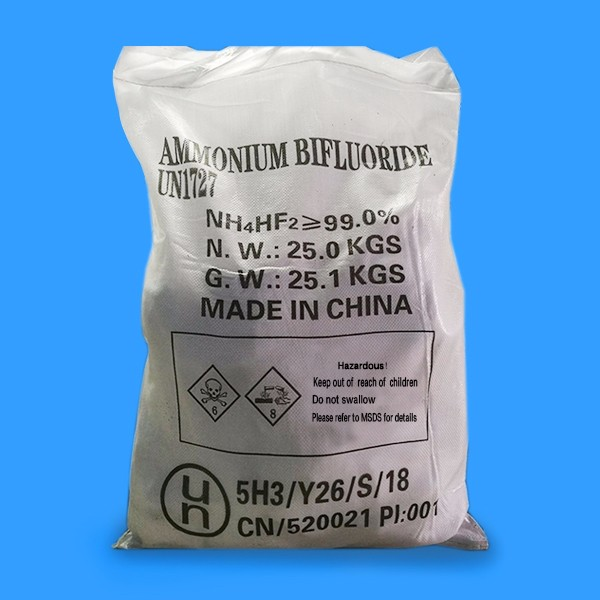
Labeling: Must include hazard warnings, handling instructions, and first aid guidelines.
-
Trade: Subject to strict international regulations for transport, storage, and import/export.
8. Key Comparisons
-
Ammonium Bifluoride vs. Hydrofluoric Acid:
-
ABF is a crystalline salt that releases HF upon dissolution.
-
HF is a pure, highly corrosive acid.
-
-
Ammonium Bifluoride vs. Ammonium Chloride:
-
ABF is corrosive and fluoride-based.
-
Ammonium chloride is milder, often used as fertilizer.
-
Summary
Ammonium Bifluoride is a highly versatile but hazardous industrial chemical. It plays a critical role in glass etching, metal treatment, petroleum extraction, and cleaning formulations, but requires strict safety protocols due to its corrosive and toxic nature. Its dual role as a surface treatment agent and a controlled HF source makes it indispensable in several industries, yet environmentally and biologically dangerous if mishandled.