We unleash your business potential by maximize the business innovation.
Send EmailBarium Sulfate, Barium Sulphate, Baryte, Barite, E171, 7727-43-7
BARIUM SULFATE (BaSO₄)
PRODUCT IDENTIFICATION INFORMATION
| Parameter | Information |
|---|---|
| Product Name | Barium Sulfate |
| Chemical Name (IUPAC) | Barium Sulfate |
| CAS Number | 7727-43-7 |
| EC Number (EINECS) | 231-784-4 |
| Molecular Formula | BaSO₄ |
| Molecular Weight | 233.39 g/mol |
CHEMICAL STRUCTURE
        O
        ||
    Ba²⁺ — O—S—O⁻
             ||
             O

    Barium Sulfate (BaSO₄)
    Ionic Structure
    (Orthorhombic Crystal System)
Molecular Formula: BaSO₄
SMILES: [Ba+2].[O-]S(=O)(=O)[O-]
InChI: InChI=1S/Ba.H2O4S/c;1-5(2,3)4/h;(H2,1,2,3,4)/q+2;/p-2
Crystal System: Orthorhombic (Natural barite)
Synonyms: Barium Sulphate, Baryte, Barite, Blanc Fixe, Artificial Barite, C.I. Pigment White 21, Baritop, Barytes
SECTION 1: CHEMICAL IDENTITY AND DEFINITION
| Parameter | Information |
|---|---|
| Product Name | Barium Sulfate |
| Chemical Name (IUPAC) | Barium Sulfate |
| Synonyms (English) | Barium Sulfate, Barium Sulphate, Baryte, Barite, Blanc Fixe, Artificial Barite, C.I. Pigment White 21, C.I. 77120, Baritop, Barytes, Barium White |
| Synonyms (Turkish) | Baryum Sülfat, Barit, Blanc Fixe, Baryum Beyazı |
| CAS Number | 7727-43-7 |
| EC Number (EINECS) | 231-784-4 |
| Molecular Formula | BaSO₄ |
| Molecular Weight | 233.39 g/mol |
| Chemical Class | Inorganic compound; alkaline earth metal sulfate |
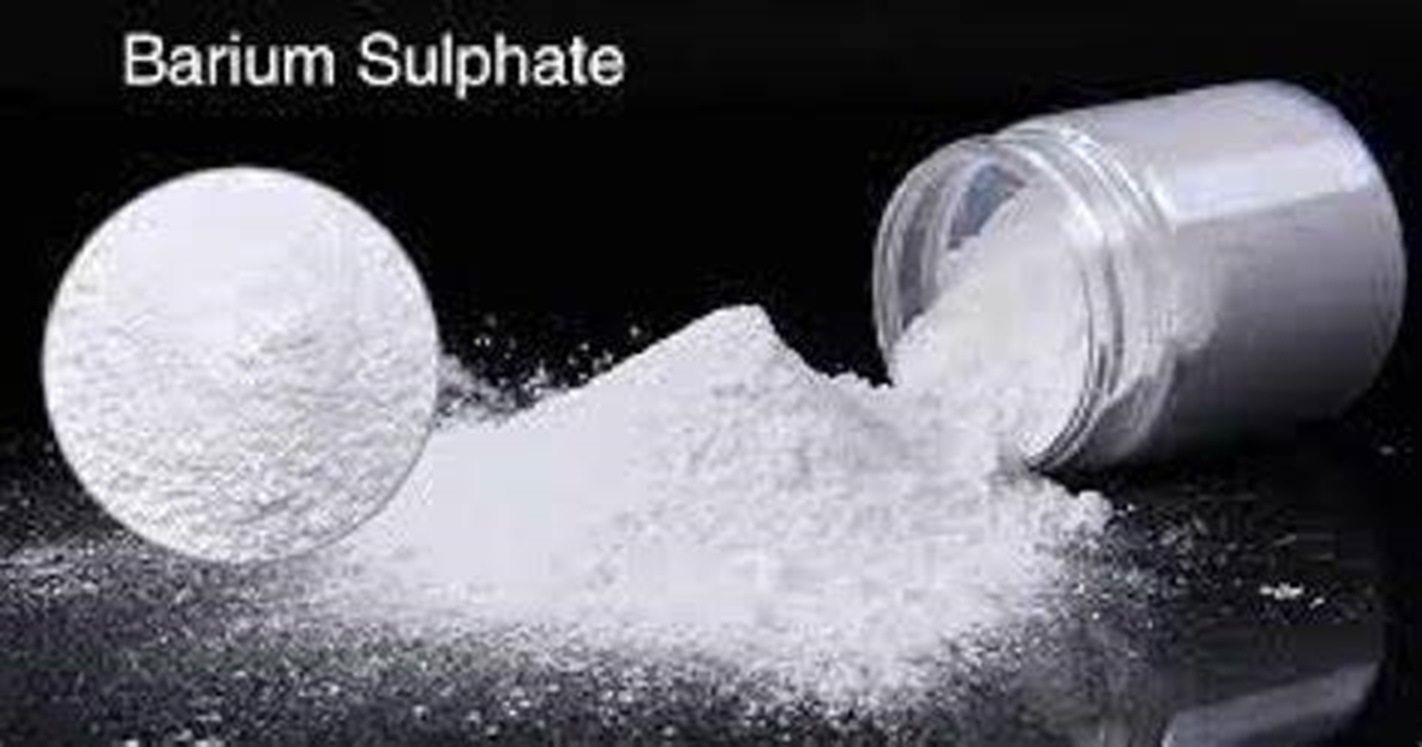
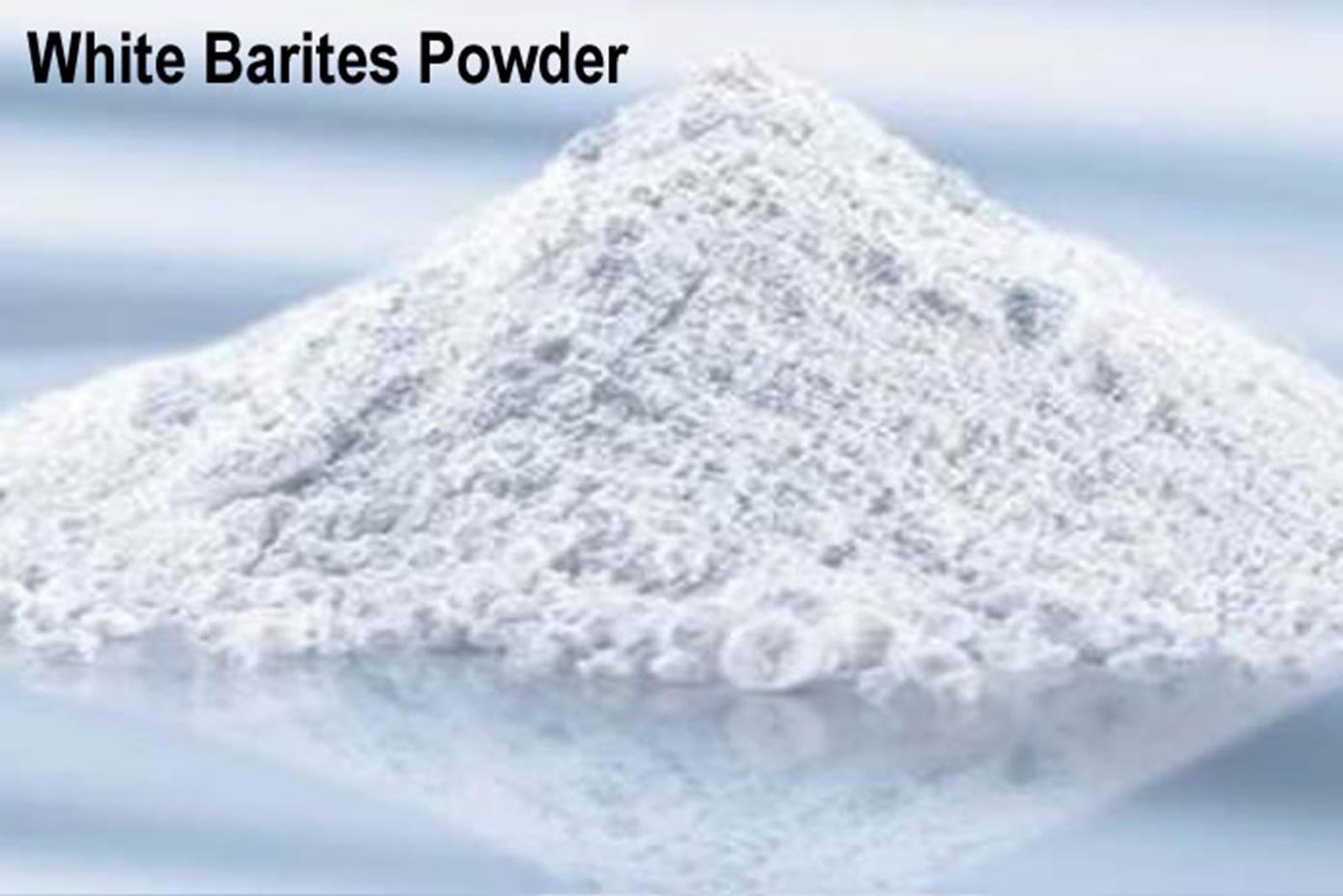
| Physical State (20°C) | Solid powder |
| Odor | Odorless |
| Color | White to yellowish-white powder |
| Taste | Tasteless |
SECTION 2: PHYSICAL AND CHEMICAL PROPERTIES
| Property | Value | Test Method / Note |
|---|---|---|
| Appearance | White to yellowish-white powder or crystalline | Visual |
| Odor | Odorless | Olfactometric |
| Molecular Weight | 233.39 g/mol | Calculated |
| Density (20°C) | 4.5 g/cm³ (barite); 4.3-4.7 g/cm³ (natural) | ASTM D4052 |
| Melting Point | 1,580°C (decomposes) | DSC |
| Decomposition Temperature | ~1,580°C (decomposes to BaO and SO₃) | - |
| Solubility in Water | Insoluble (2.448 × 10⁻⁴ g/100 mL at 20°C) | General Method |
| Solubility in Acids | Slightly soluble in hot concentrated sulfuric acid | General Method |
| Solubility in Organic Solvents | Insoluble | General Method |
| Solubility in Alkali Carbonate | Soluble (forms barium carbonate) | General Method |
| Solubility Product (Ksp) | ~1.08 × 10⁻¹⁰ (pKsp: 9.97) | - |
| pH (Suspension, 100g/L, 20°C) | 3.5 - 10.0 | pH Meter |
| Crystal System | Orthorhombic (barite); Monoclinic (above 1,149°C) | XRD |
| Refractive Index | 1.637 (orthorhombic); 1.649 (monoclinic) | - |
| Hardness (Mohs) | 3 - 3.5 (natural barite) | Mohs Scale |
| Specific Gravity | 4.5 | - |
| Color | White to yellowish-white | Visual |
| Stability | Stable; Chemically inert; Non-flammable | - |
| Sensitivity | Slightly hygroscopic (absorbs moisture) | - |
| X-Ray Absorption | High (opaque to X-rays) | - |
SECTION 3: CHEMICAL PROPERTIES AND REACTIVITY
| Parameter | Information |
|---|---|
| Chemical Character | Inorganic alkaline earth metal sulfate; chemically stable; highly insoluble in water and most solvents |
| Stability | Stable under normal conditions; Thermally stable up to 1,580°C; Inert and non-reactive in most environments |
| Reactivity | Reduced to barium sulfide when heated with carbon (at 600-800°C): BaSO₄ + 4C → BaS + 4CO; Reacts with concentrated sulfuric acid (dissolves); Reacts with alkali carbonate solutions to form barium carbonate |
| Incompatible Materials | Aluminum (explosive reaction), phosphorus, reducing agents, carbon (at high temperature), strong acids |
| Polymerization | Will not polymerize |
| Decomposition Products (Heating) | Barium oxide (BaO), Sulfur trioxide (SO₃), Sulfur dioxide (SO₂) |
| Hazardous Reactions | Explosive with aluminum or phosphorus; Reduces to barium sulfide when heated with carbon; Decomposes at high temperatures releasing toxic sulfur oxide fumes |
| Carbothermal Reduction | BaSO₄ + 4C → BaS + 4CO (at 600-800°C) |
| Acid Reaction (Conc. H₂SO₄) | BaSO₄ + H₂SO₄ → Ba(HSO₄)₂ (soluble in hot concentrated sulfuric acid) |
| Carbonate Conversion | BaSO₄ + Na₂CO₃ → BaCO₃ + Na₂SO₄ |
| Metathesis | BaCl₂ + Na₂SO₄ → BaSO₄↓ + 2NaCl |
| X-Ray Absorption | Strong X-ray absorption property (medical applications) |
SECTION 4: COMPARISON OF COMMON BARIUM COMPOUNDS
| Property | Barium Sulfate (BaSO₄) | Barium Chloride Dihydrate (BaCl₂·2H₂O) | Barium Carbonate (BaCO₃) | Barium Hydroxide (Ba(OH)₂) |
|---|---|---|---|---|
| CAS Number | 7727-43-7 | 10326-27-9 | 513-77-9 | 17194-00-2 |
| Formula | BaSO₄ | BaCl₂·2H₂O | BaCO₃ | Ba(OH)₂ |
| Molecular Weight | 233.39 | 244.26 | 197.34 | 171.34 |
| Appearance | White powder | Colorless crystals | White powder | White crystals |
| Density (g/cm³) | 4.5 | 3.86 | 4.29 | 3.74 |
| Water Solubility | Insoluble | Soluble | Insoluble | Soluble |
| Primary Use | Drilling mud, radiocontrast | Analysis, barium salts | Rat poison, ceramics | Analysis, lubrication |
| Toxicity | Non-toxic (insoluble) | Highly toxic | Toxic | Toxic |
SECTION 5: PRODUCTION METHODS
Method 1: Precipitation Method (From Barium Chloride and Sodium Sulfate)
-
Reaction: BaCl₂ + Na₂SO₄ → BaSO₄↓ + 2NaCl
-
Description: Barium chloride dihydrate is dissolved in hot water; Sulfuric acid or sodium sulfate solution is heated and slowly added; The barium sulfate precipitate is formed; After standing, the precipitate is washed with hot water (5-6 times by decantation); Filtered with a Buchner funnel, washed and dried; Dried product is refined to obtain pure barium sulfate (Blanc Fixe)
Method 2: Mirabilite - Black Ash Method (Industrial Production)
-
Reaction: BaSO₄ + 4C → BaS + 4CO (black ash formation); BaS + Na₂SO₄ → BaSO₄↓ + Na₂S
-
Description: Barite is reacted with pulverized coal to form barium sulfide (black ash); The black ash leaching solution is clarified to prepare barium sulfide solution (14-17% concentration) and heated to 80°C; After removal of calcium and magnesium, mirabilite solution (22-25%) is prepared and heated to 90°C; Barium sulfide solution is added to the mirabilite under stirring at 90°C; Barium sulfate precipitate is formed; After filtration, washing, acid washing (pH 5-6 with sulfuric acid), drying, and crushing, precipitated barium sulfate product is obtained
Method 3: Brine - Sodium Sulfate Method
-
Reaction: BaCl₂ + Na₂SO₄ → BaSO₄↓ + 2NaCl
-
Description: Barium chloride (from brine) is reacted with sodium sulfate; Acid-boiling, washing with water, separation, dehydration, and drying yield barium sulfate product
Method 4: Mining and Beneficiation (Natural Barite)
-
Process: Mining (open-pit or underground) → Crushing → Beneficiation (hand separation, gravity separation, magnetic separation, flotation) → Milling → Classifying → Barite product
-
Description: Natural barite ore is mined and processed through beneficiation methods; Open-pit mining for residual slope deposits; Underground mining for primary mines; Main beneficiation methods: hand separation, gravity separation, magnetic separation, and flotation
Method 5: Sulfuric Acid Precipitation
-
Reaction: Ba(OH)₂ + H₂SO₄ → BaSO₄↓ + 2H₂O
-
Description: Barium hydroxide is reacted with sulfuric acid to form barium sulfate precipitate; Used for specialized high-purity applications
SECTION 6: FUNCTIONAL PROPERTIES AND MECHANISM OF ACTION
| Property | Description |
|---|---|
| Weighting Agent (Drilling Mud) | High specific gravity (4.5 g/cm³) makes it ideal as a weighting agent for oil and gas drilling mud; Increases mud density to control formation pressure; Prevents blowouts and stabilizes boreholes; Most important application (80% of consumption) |
| Radiocontrast Agent (Medical) | High X-ray absorption due to high atomic number of barium (Z=56); Used as barium meal for gastrointestinal imaging (esophagus, stomach, duodenum, small intestine, colon); Non-toxic because it is insoluble and not absorbed; Available as powder, suspension, or paste; Shows gastrointestinal anatomy and function |
| Pigment / Filler | White pigment with high opacity and brightness; Used in paints, coatings, inks, plastics, rubber; Provides excellent whiteness and opacity; Chemically inert and lightfast |
| Paper Coating | Used as coating pigment for printing and coated paper; Provides smoothness, opacity, and brightness; Improves printability |
| Rubber and Plastics | Used as filler and reinforcing agent; Improves dimensional stability; Reduces cost; Imparts chemical resistance |
| Glass and Ceramics | Used as clarifying agent for glass products; Defoaming and gloss enhancement; Used in ceramic glazes and enamels |
| Oil and Gas Industry | Drilling mud weighting agent; Barite consumption; Prevents blowouts; Controls formation pressure |
| Chemical Industry | Raw material for production of other barium compounds (barium carbonate, barium chloride, barium hydroxide, barium oxide, barium peroxide, barium chromate, barium nitrate, lithopone); Used in barium-based greases, oil refining, beet sugar processing, rayon production |
| Agricultural Applications | Used as pesticide, sterilant, rodenticide; Used in explosives and pyrotechnics (green pyrotechnic compositions, signal flares, tracers) |
| Electronics and Metallurgy | Used in electronics, instrumentation, metallurgy; Barium metal used as getter and binder for TV and vacuum tubes; Barium alloys with aluminum, magnesium, lead, silver used in bearings |
| Construction Materials | Used as protective wall material for radiation shielding; Building materials applications |
SECTION 7: MAIN APPLICATION AREAS
| Industry / Application | Function | Typical Use |
|---|---|---|
| Oil & Gas Drilling | Weighting agent | Drilling mud (80% of global consumption); Increases mud density; Controls formation pressure; Prevents blowouts; Borehole stabilization |
| Medical / Radiology | Radiocontrast agent | Barium meal for gastrointestinal imaging (esophagus, stomach, duodenum, small intestine, colon); Single and double-contrast radiography; Diagnostic imaging |
| Paints & Coatings | Pigment / extender | White pigment in paints; Industrial coatings; Primers; Undercoats; Provides opacity and brightness |
| Paper Industry | Coating pigment | Printing paper; Coated paper; Cardboard; Provides smoothness, opacity, and gloss |
| Plastics & Rubber | Filler / reinforcing agent | Plastic products; Rubber compounds; Dimensional stability; Chemical resistance; Cost reduction |
| Glass Industry | Clarifying agent | Glass production; Defoaming; Gloss enhancement; Optical glass |
| Ceramics Industry | Additive | Ceramic glazes; Enamels; Porcelain; Tile production |
| Chemical Industry | Raw material | Production of barium carbonate; Barium chloride; Barium hydroxide; Barium oxide; Barium peroxide; Barium chromate; Barium nitrate; Lithopone |
| Agriculture | Pesticide / rodenticide | Pest control; Rodent control; Sterilants; Explosives; Pyrotechnics |
| Electronics & Metallurgy | Getter / binder | TV and vacuum tubes (barium metal); Barium alloys for bearings; Instrumentation |
SECTION 8: QUALITY SPECIFICATIONS
Barium Sulfate - Precipitated (Blanc Fixe) Specifications
| Parameter | Specification | Test Method |
|---|---|---|
| Appearance | White to yellowish-white powder | Visual |
| Assay (BaSO₄) | ≥ 98.0% - 99.5% | Gravimetric / ICP |
| Barium Content | ≥ 58.8% | Gravimetric / ICP |
| Loss on Drying | ≤ 0.5% | Gravimetric (105°C) |
| Loss on Ignition | ≤ 0.5% - 1.0% | Gravimetric (800°C) |
| Water Soluble Matter | ≤ 0.2% | Gravimetric |
| pH (Suspension) | 3.5 - 10.0 | pH Meter |
| Acid Soluble Matter | ≤ 0.2% | Gravimetric |
| Iron (Fe) | ≤ 0.001% - 0.005% | AAS / ICP |
| Heavy Metals (as Pb) | ≤ 0.001% - 0.005% | Colorimetric |
| Arsenic (As) | ≤ 0.0005% | AAS / ICP |
| Chloride (Cl) | ≤ 0.01% | Titrimetric |
| Sulfide (S²⁻) | ≤ 0.005% | Colorimetric |
| Particle Size | As per requirement (1-50 µm) | Laser Diffraction / Sieve |
| Whiteness (Hunter) | ≥ 95% | Colorimetry |
| Oil Absorption | 10-20 g/100g | ASTM D281 |
| Specific Gravity | 4.3 - 4.5 | Pycnometer |
Natural Barite Specifications (Drilling Grade)
| Parameter | Specification | Test Method |
|---|---|---|
| Appearance | White to gray powder | Visual |
| Assay (BaSO₄) | ≥ 92.0% - 98.0% | Gravimetric / ICP |
| Specific Gravity | ≥ 4.2 g/cm³ | Pycnometer |
| Particle Size (325 Mesh) | ≥ 90% passing | Sieve |
| Moisture Content | ≤ 1.0% | Gravimetric |
| Acid Soluble Matter | ≤ 1.0% | Gravimetric |
| Iron (Fe) | ≤ 0.5% | AAS / ICP |
| Water Soluble Salts | ≤ 0.1% | Gravimetric |
Medical Grade Barium Sulfate Specifications
| Parameter | Specification | Test Method |
|---|---|---|
| Appearance | White fine powder | Visual |
| Assay (BaSO₄) | ≥ 99.0% | Gravimetric / ICP |
| Acid Soluble Matter | ≤ 0.5% | Gravimetric |
| Water Soluble Barium | ≤ 0.001% | AAS / ICP |
| Particle Size (D50) | 1-5 µm | Laser Diffraction |
| pH (Suspension) | 6.0 - 8.0 | pH Meter |
| Heavy Metals (as Pb) | ≤ 0.001% | AAS / ICP |
| Arsenic (As) | ≤ 0.0001% | AAS / ICP |
| Specific Gravity | 4.3 - 4.5 | Pycnometer |
| Viscosity (Suspension) | As per requirement | Viscometer |
Paint / Pigment Grade Specifications
| Parameter | Specification | Test Method |
|---|---|---|
| Appearance | White powder | Visual |
| Assay (BaSO₄) | ≥ 98.0% | Gravimetric / ICP |
| Whiteness (Hunter) | ≥ 97% | Colorimetry |
| Particle Size (D50) | 1-10 µm | Laser Diffraction |
| Oil Absorption | 10-15 g/100g | ASTM D281 |
| Specific Gravity | 4.3 - 4.5 | Pycnometer |
SECTION 9: TOXICOLOGICAL PROFILE
| Parameter | Value |
|---|---|
| Acute Oral Toxicity (LD50, Rabbit) | > 20,000 mg/kg (very low toxicity) |
| Acute Dermal Toxicity | Non-irritant; Non-toxic (insoluble) |
| Acute Inhalation Toxicity | Low toxicity; May cause mechanical irritation due to dust; Prolonged inhalation may cause baritosis (barium pneumoconiosis) |
| Skin Irritation | Non-irritant; Mechanical irritation |
| Eye Irritation | Non-irritant; Mechanical irritation |
| Respiratory Irritation | May cause mechanical irritation; Chest tightness, chest pain, cough (with prolonged exposure) |
| Chronic Toxicity | Low toxicity due to insolubility; Prolonged inhalation may cause baritosis (benign pneumoconiosis) |
| Carcinogenicity | Not classified as carcinogenic; IARC Group 3 (Not classifiable) |
| Mutagenicity | Not classified as mutagenic |
| Reproductive Toxicity | Not classified as reproductive toxicant |
| Target Organs | Respiratory system (dust irritation), lungs (baritosis) |
| Occupational Exposure Limit (8h TWA) | 5 mg/m³ (ACGIH TLV); 15 mg/m³ (OSHA PEL - total dust); 5 mg/m³ (OSHA PEL - respirable) |
| Short-Term Exposure Limit | 10 mg/m³ (NIOSH) |
| Special Toxicity Note | Barium sulfate is the only non-toxic barium salt because it is insoluble and not absorbed by the body; Used medically as radiocontrast agent (barium meal); Must contain no soluble barium salts (e.g., BaCl₂) which are highly toxic; Prolonged inhalation of dust may cause baritosis (benign pneumoconiosis); Eye and respiratory tract irritation due to mechanical action |
SECTION 10: GHS CLASSIFICATION AND LABELING
GHS Classification (Compliant with CLP and UN GHS):
| Hazard Class | Category | H-Statement |
|---|---|---|
| Acute Toxicity (Oral) | Not classified (low toxicity) | - |
| Eye Irritation | Category 2 | H319 (optional) |
| STOT - SE (Single Exposure) | Category 3 | H335 (optional) |
Note: Barium sulfate is generally considered non-hazardous and non-toxic due to its insolubility. However, dust may cause mechanical irritation.
Signal Word: WARNING (optional, based on dust irritation)
Hazard Pictograms: GHS07 (optional)
Hazard Statements (H-Codes) - if classified:
| Code | Statement |
|---|---|
| H319 | Causes serious eye irritation |
| H335 | May cause respiratory irritation |
Note: In many regions, Barium Sulfate is not classified as hazardous under GHS, but fine dust should still be handled with care.
NFPA 704 Hazard Classification:
| Health | Flammability | Reactivity | Special |
|---|---|---|---|
| 0 | 0 | 0 | - |
| (Minimal health hazard) | (Will not burn) | (Stable) | (None) |
SECTION 11: PRECAUTIONARY STATEMENTS (P-CODES)
| Code | Statement |
|---|---|
| P261 | Avoid breathing dust/fume/gas/mist/vapors/spray |
| P264 | Wash hands thoroughly after handling |
| P271 | Use only outdoors or in a well-ventilated area |
| P280 | Wear protective gloves/protective clothing/eye protection/face protection |
| P302+P352 | IF ON SKIN: Wash with plenty of soap and water |
| P304+P340 | IF INHALED: Remove person to fresh air and keep comfortable for breathing |
| P305+P351+P338 | IF IN EYES: Rinse cautiously with water for several minutes. Remove contact lenses if present and continue rinsing |
| P312 | Call a POISON CENTER/doctor if you feel unwell |
| P332+P313 | If skin irritation occurs: Get medical advice/attention |
| P337+P313 | If eye irritation persists: Get medical advice/attention |
| P362+P364 | Take off contaminated clothing and wash it before reuse |
| P403+P233 | Store in a well-ventilated place. Keep container tightly closed |
| P501 | Dispose of contents/container in accordance with local/regional/national/international regulations |
SECTION 12: FIRST AID MEASURES
| Exposure Route | Action to Take |
|---|---|
| Inhalation | Move to fresh air immediately. Rest in a position comfortable for breathing. If symptoms persist, get medical attention. |
| Skin Contact | Wash with plenty of soap and water. Remove contaminated clothing. If skin irritation occurs, get medical advice/attention. |
| Eye Contact | Rinse immediately with plenty of water for at least 15 minutes. Keep eyelids open. Remove contact lenses if present. Continue rinsing. If eye irritation persists, get medical advice/attention. |
| Ingestion | Rinse mouth with water. Do NOT induce vomiting. Drink plenty of water. Get medical attention if symptoms occur. |
SECTION 13: FIREFIGHTING MEASURES
| Parameter | Information |
|---|---|
| Fire Hazard | Non-combustible. Does not burn. High heat may decompose producing toxic sulfur oxide fumes. |
| Hazards During Fire | Thermal decomposition produces toxic sulfur oxide fumes (SOx); May produce barium oxide fumes |
| Suitable Extinguishers | Use appropriate extinguishing media for surrounding fire. Water fog, CO₂, dry chemical powder, foam. |
| Unsuitable Extinguishers | None. |
| Special Protective Equipment | Self-contained breathing apparatus (SCBA), full protective clothing (for surrounding fire). |
| Special Precautions | Avoid dust generation. Prevent dust from entering sewers and waterways. |
SECTION 14: STORAGE AND SHELF LIFE
| Parameter | Information |
|---|---|
| Storage Conditions | Store in a cool, dry, well-ventilated area; Keep away from moisture and incompatible substances |
| Container Requirements | Tightly closed, properly labeled containers; Moisture-proof containers recommended |
| Materials to Protect From | Aluminum, phosphorus, reducing agents, carbon (at high temperature), strong acids |
| Shelf Life | 60 months (in unopened original packaging, under proper storage conditions) |
| Stability Note | Stable under normal conditions; Inert and non-reactive; Slightly hygroscopic (absorbs moisture) |
| Special Storage Requirements | Store separately from reducing agents, flammable/combustible materials, and metal powders; Keep containers closed to prevent contamination; Avoid contact with air (for special applications) |
SECTION 15: PACKAGING OPTIONS
| Packaging Type | Quantity | Material |
|---|---|---|
| Plastic Bag | 5 kg, 10 kg, 25 kg | PE bag with inner liner |
| Plastic Drum | 25 kg, 50 kg, 100 kg | HDPE / Polypropylene |
| Fiber Drum | 25 kg, 50 kg | PE-lined fiberboard |
| Steel Drum | 100 kg, 200 kg | Corrosion-resistant lined steel |
| IBC Container | 500 kg, 1000 kg | HDPE with corrosion-resistant coating |
| Big Bag (FIBC) | 500 kg, 1000 kg, 1500 kg | PE-lined woven polypropylene |
| Bulk Bags | 1,000 - 2,000 kg | Woven polypropylene with liner |
SECTION 16: TRANSPORT INFORMATION
| Parameter | Information |
|---|---|
| UN Number | Not regulated (non-hazardous) |
| Hazard Class | Not applicable |
| Packing Group | Not applicable |
| ADR/RID | Not regulated |
| IMDG Code | Not regulated (not a dangerous good) |
| IATA (Air) | Not regulated |
| Marine Pollutant | No |
| Transport Temperature | Ambient temperature; Protect from moisture |
| HS Code | 28332700 |
SECTION 17: REGULATORY STATUS
| Region / Authority | Status |
|---|---|
| European Union | REACH registered; Not classified as hazardous under CLP |
| USA (TSCA) | Listed |
| USA (EPA) | Not regulated as hazardous substance |
| Turkey | Industrial chemical; Subject to KKDIK regulation; Not classified as hazardous under GHS |
| IARC | Group 3 (Not classifiable as to carcinogenicity to humans) |
| NTP | Not listed |
| OSHA | Regulated as nuisance dust (total dust 15 mg/m³; respirable 5 mg/m³) |
| California (Prop 65) | Not listed |
| EU Restrictions | Not restricted under REACH Annex XVII |
| FDA | Approved for medical use (barium meal/radiocontrast) as per USP/Ph.Eur. |
| USP | Listed in U.S. Pharmacopeia |
| Ph.Eur. | Listed in European Pharmacopoeia |
| Codex Alimentarius | E171 (White pigment for food) - restricted use |
SECTION 18: OTHER NAMES AND SYNONYMS
| Type | Name |
|---|---|
| Turkish Names | Baryum Sülfat, Barit, Blanc Fixe, Baryum Beyazı, Sülfürik Asit Baryum Tuzu |
| English Names | Barium Sulfate, Barium Sulphate, Baryte, Barite, Blanc Fixe, Artificial Barite, Barium White, C.I. Pigment White 21, C.I. 77120, Baritop, Barytes |
| Trade Names | Baritop, Baritopp, Baritop G Powder, Baritogen Deluxe, Barium Andreu, Barium 100, Blanc Fixe, E-Z-HD (medical), Barosperse, E-Z-CAT (medical), Bar-Test, Barium Sulfate |
| Chemical Names | Barium Sulfate; Barium Sulphate; Sulfuric Acid Barium Salt |
| CAS Number | 7727-43-7 |
| EC Number | 231-784-4 |
| Molecular Formula | BaSO₄ |
| Mineral Names | Barite, Baryte, Heavy Spar, Desert Rose |
SECTION 19: SUMMARY TABLE
| Parameter | Value |
|---|---|
| Product | Barium Sulfate (BaSO₄) |
| CAS Number | 7727-43-7 |
| Molecular Formula | BaSO₄ |
| Molecular Weight | 233.39 g/mol |
| Appearance | White to yellowish-white powder |
| Density | 4.5 g/cm³ |
| Melting Point | 1,580°C (decomposes) |
| Water Solubility | Insoluble (2.448 × 10⁻⁴ g/100 mL) |
| Hardness (Mohs) | 3 - 3.5 (natural barite) |
| Primary Function | Weighting agent, radiocontrast, pigment, filler |
| Main Applications | Oil & gas drilling (drilling mud), medical (barium meal), paints & coatings, paper, plastics & rubber, glass, ceramics, chemical industry |
| Shelf Life | 60 months |
| GHS Signal Word | No signal word required (non-hazardous) |
| UN Number | Not regulated |
| Toxicity | Very low toxicity (insoluble); Only non-toxic barium salt |
| Special Feature | Insoluble, high density, X-ray opaque, chemically inert |
SECTION 20: CRITICAL WARNINGS AND BEST PRACTICES
CRITICAL WARNINGS:
-
Non-hazardous material but fine dust may cause mechanical irritation to eyes and respiratory tract. Use appropriate dust control measures.
-
Non-combustible. Does not burn. Stable at high temperatures.
-
Avoid inhalation of fine dust. Use dust extraction systems in handling areas.
-
The only non-toxic barium salt due to its insolubility. However, must be pure and contain NO soluble barium compounds (e.g., BaCl₂) which are highly toxic.
-
Incompatibilities: Keep away from aluminum (explosive reaction), phosphorus, reducing agents, and carbon (at high temperature).
-
Slightly hygroscopic. Protect from moisture.
-
Medical Use: Must meet pharmacopoeia purity requirements (USP, Ph.Eur.). Must contain no soluble barium salts. Contraindicated in acute gastrointestinal perforation, gastrointestinal bleeding, acute gastroenteritis, congenital esophageal atresia, esophageal tracheal fistula.
-
Natural barite may contain impurities. Beneficiation required for specific applications.
-
Prolonged inhalation may cause baritosis (benign pneumoconiosis). Use appropriate respiratory protection.
BEST PRACTICE RECOMMENDATIONS:
-
Oil & Gas Drilling: Use as weighting agent for drilling mud; Increases mud density; Controls formation pressure; Barite consumption represents ~80% of global production; Requires high specific gravity (≥4.2 g/cm³) and 325 mesh fineness; Standard API-13A specifications apply.
-
Medical / Radiology: Use as radiocontrast agent (barium meal); Must meet pharmacopoeia specifications (USP, Ph.Eur.); Must contain NO soluble barium salts; Available as powder, suspension, or paste; Ideal for gastrointestinal imaging (esophagus, stomach, duodenum, small intestine, colon); Patients must fast 6-12 hours before oral barium examination; Contraindicated in acute gastrointestinal perforation, gastrointestinal bleeding, acute gastroenteritis, esophageal tracheal fistula, congenital esophageal atresia.
-
Paints & Coatings: Use as white pigment and extender; Provides opacity, brightness, and chemical inertness; Excellent lightfastness; Used in industrial coatings, primers, undercoats.
-
Paper Industry: Use as coating pigment for printing and coated paper; Provides smoothness, opacity, and brightness; Improves printability and paper quality.
-
Plastics & Rubber: Use as filler and reinforcing agent; Improves dimensional stability; Reduces material cost; Imparts chemical resistance and dimensional stability.
-
Handling: Use in well-ventilated areas; Use dust extraction systems; Wear protective gloves, safety goggles, and respiratory protection when handling powder; Avoid dust generation.
-
Personal Protective Equipment: Safety goggles, protective clothing (dust-resistant), NIOSH-approved dust mask/respirator, protective gloves (nitrile, neoprene).
-
Hygiene: Wash hands thoroughly after handling; Do not eat, drink, or smoke when using; Remove contaminated clothing and wash before reuse.
-
Storage: Store in tightly closed, properly labeled containers in dry conditions; Keep away from aluminum, phosphorus, and reducing agents; Moisture-proof containers recommended.
-
Spill Response: Avoid dust generation; Use dust extraction systems; Vacuum or wet-sweep; Place in closed containers for disposal; Do not use dry sweeping methods that generate dust.
-
Disposal: Dispose of in accordance with local, regional, and national regulations; Barium sulfate is considered non-hazardous waste; Recycle where possible; Do not discharge into sewers or water sources.
SPECIAL NOTE ON MEDICAL APPLICATION (BARIUM MEAL):
Barium sulfate is the only non-toxic barium salt and is widely used in medical imaging:
-
Pharmacokinetics: Not absorbed after oral administration or GI infusion; Non-irritating, non-toxic; Does not affect GI function; Excretion time similar to food transit time
-
Indications: Single and double-contrast examination of esophagus, stomach, duodenum, small intestine, colon; Bronchography (mucilage suspension)
-
Contraindications: Acute GI perforation; GI bleeding; Acute gastroenteritis; Esophageal tracheal fistula; Congenital esophageal atresia
-
Precautions: Must not contain soluble barium salts (highly toxic); Patients fast 6-12 hours before; Pyloric obstruction patients require gastric lavage; Avoid drugs with high atomic weight (bismuth, calcium) 3 days before examination
SPECIAL NOTE ON BARITOSIS (PNEUMOCONIOSIS):
-
Cause: Prolonged inhalation of barium sulfate dust
-
Symptoms: Chest tightness, chest pain, cough
-
Nature: Benign pneumoconiosis (no significant fibrosis)
-
Prevention: Use respiratory protection; Ensure workplace ventilation; Regular medical surveillance
-
Occupational Exposure Limits: TWA 5 mg/m³ (ACGIH); TWA 15 mg/m³ (OSHA - total dust); TWA 5 mg/m³ (OSHA - respirable)
LEGAL DISCLAIMER:
The information provided in this document is based on our current knowledge and experience and is presented in good faith. However, as all conditions of use are beyond our control, this document does not constitute a binding specification or warranty. This Technical Data Sheet is for informational purposes only. Users are responsible for testing suitability for their own applications. For complete safety, storage, handling, transportation, waste, and regulatory compliance information, please refer to the official Safety Data Sheet (SDS/MSDS) provided by the manufacturer/supplier.